
Engaging With The Qur’an - A Compendium Of Admonitions, Commandments, Prescriptions, Proscriptions, Injunctions, Edicts, And Sermons

By
Moin Qazi, New Age Islam
6 August 2022
The Biggest Casualty Of The Suppression Of Islam’s
Speculative Tradition Was The “Muslim Mind”, Which Shut Itself Off To “Ijtihad”
(Independent Reasoning), Allowing ‘Over-Inclusive Scripturalism’ To Dominate
The Islamic World, Turning Even Trivial Questions Into Scholastic Religious
Debates.
-----
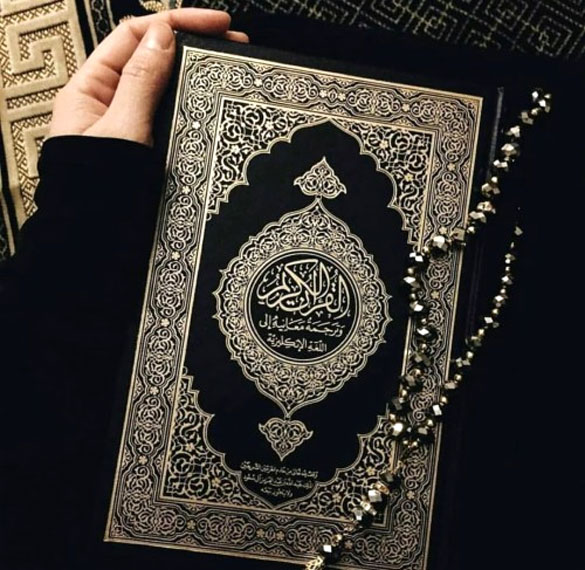
The Qur’an,
literally “the recitation”, also transliterated as Qur'an, Koran, or Al-Qur'an,
is the Word of God, revealed to the Prophet Muhammad through the medium of a
human language. This is the book, about it there can be no doubt; it is a path
for those who are aware of God”.
The Qur’an
is the central religious text or scripture of Islam. It stands as a moral
compass and primary source of belief and practice for Muslims. It informs
Muslim conduct, law, faith and practice across the whole spectrum of religious
and temporal life. "
No other
sacred scripture has ever had a similarly immediate impact upon the lives of
the people who first heard its message and, through them and the generations
that followed them, on the entire course of civilization. The Qur’an provides a
comprehensive answer to the question, "How shall I behave to achieve the
good life in this world and happiness in the life to come?” The Qur’an was revealed by the angel Gabriel
to Prophet Muhammad in the west Arabian towns Mecca and Medina beginning in 610
and ending with Muhammad's death in 632 CE.
The word
Qur’an is derived from the verb Qara’a- "to read", "to
recite". The Qur’an was revealed by the angel Gabriel to Prophet Muhammad
in the west Arabian towns Mecca and Medina beginning in 610 and ending with
Muhammad's death in 632 CE. It is shorter than the Christian New Testament and
is divided into 114 chapters (Sura, plural Suwar) and 6,616 verses (Aya,
plural Ayat). The word Aya means "sign".
As a
literal transcript of God's speech, the Qur’an is regarded as sacred, pure,
uncorrupted and infallible. It is the earthly reproduction of an uncreated and
eternal heavenly original, according to the general view referred to in the
Qur’an itself as "the well-preserved tablet" (al-law al-Mahfuz;
Qur’an 85:22). The Qur’an was sent down in Arabic: “Indeed, we have sent it
down as an Arabic Qur’an that you might understand” (Q. 12:2).
The special
message of Islam is twofold. It first completes the message of the previous
prophets— Muslims recognize the Judaic
prophets such as Isaiah and Jeremiah who have also been adopted by
Christianity—by putting an end to the dispute between the Nestorians and
Jacobites about the nature of Christ: Muslims believe that Christ is of the
Spirit of God, not God Himself, because God "begetteth not nor was
begotten. And there is none comparable unto Him" (112:1-4). In other
words, Christ, for Islam, is a prophet, not part of the Godhead. Then the Qur’an
goes on to support the message of Christ, and to reproach those who denied it:
"And verily We gave unto Moses the Scripture and We caused a train of
messengers to follow after him, and We gave unto Jesus, son of Mary, clear
proofs (of Allah's sovereignty) and We supported him with the Holy Spirit. Is
it ever so, that, when there cometh unto you, a messenger (from Allah) with
that which ye yourselves desire not, ye grow arrogant, and some ye disbelieve
and some ye slay?" (2:87).
Islam is
thus seen as a continuation of the true spirit of religion as revealed by God
to the earlier prophets: "Say (O Mohammed), We believe in Allah and that
which is revealed unto us and that which was revealed unto Abraham and Ismael
and Isaac and Jacob and the tribes, and that which was vouchsafed unto Moses
and Jesus and the prophets from their Lord. We make no distinction between any
of them, and unto Him we have surrendered" (3:84).
The Qur’an is not arranged either
chronologically or thematically—for the most part, the suras are arranged from
beginning to end in descending order of length. The first surah, al-Fatiha, is
the most recited chapter of the Qur’an as it is said multiple times in every
ritual prayer.
The Suras
range in length from three to 286 verses. They also vary in style and content.
Each surah is named after some conspicuous word in the text, such as “The
Elephant”, “Light”, “Dawn”, “Thunder”, “The Cave”, “The Moon” or “Smoke”. The
largest number of verses deal with God's majesty and power and with the various
aspects of His creation. Most of the Qur’an's legal or quasi-legal
pronouncements are concentrated in a few of the longest surahs. The subjects
covered by Qur’anic law include dietary regulations (e.g., the prohibition of
consuming pork or wine), matters of family law (e.g., inheritance rules),
ritual law (e.g., the performance of ablution before prayer or the duty to fast
during the month of Ramadan), commercial law (the prohibition of usury) and
criminal law (e.g., the punishment for theft or manslaughter).
There are
didactic parables about former biblical and Arabian personages and communities.
Adam, the first man, is expelled from Paradise for eating from the forbidden
tree. Noah builds an ark to save a select few from a flood brought on by the
wrath of God. Abraham prepares himself to sacrifice his son at God's bidding.
Moses leads the Israelites out of Egypt and receives a revelation on Mount
Sinai. Jesus‒born of the Virgin Mary and referred to as the Messiah‒works miracles, has disciples, and
rises to heaven.
In the same
way that the universe has its fundamental laws and its finely regulated order,
the Qur’an lays down laws, a moral code and a body of practice that Muslims
must respect, whatever their epoch and their environment. The Qur’an speaks to
the nature of reality and the cosmos and pronounces moral and spiritual
principles for the individual and society. In its core message, it exhorts its
adherents to stand by fairness and justice and replace vices like hatred,
arrogance, greed, lust and anger with the virtues of love, compassion, mercy
and forgiveness.
The tragedy
is that the Qur’an is still inaccessible to the majority of Muslims either on
account of illiteracy or because they are resorting to self-exclusion,
harbouring a notion that the Qur’an can be handled only by specialists. Most
Muslims today know the message of the Qur’an from secondary sources, which may
not be reliable.
The Qur'an
is an “open” book, a spiritual and moral resource that, properly understood,
provides Muslims with useful guidance through the complex maze of modern life.
The Qur’an came to speak to all of humanity. However, it came to speak not in a
vacuum, but within a historical context. Hence, its immediate objective was the
moral and religious situation of the Arabs of the Prophet’s time
Through the
science of Tafsir (exegesis), the Qur’an is kept alive as a force in the
lives and cultures of Muslims everywhere. It remains relevant to every age
through commentaries that are no longer limited to Arabic. However, the
ecosystem of Islamic thought is no longer as vibrant as it was in its formative
years. Unlike the great scholars of the past, who were polymaths and valued
criticism, most of today’s traditional scholars lack the tools of contemporary
critical scholarship.
Much of the
Qur’an is recounting stories of people and communities from the past who
received revelations in the form of various scriptural texts. And, much of the Qur’an
is also a relaying of past peoples who transgressed the boundaries set by God
and who worshipped other than God—all as a way of warning and redirecting
readers and believers to a life of what is good and right and to an absolute
and pure monotheism in which nothing and no one is taken as a god besides
God.
To Muslims,
the sacredness of the Qur’an is expressed even in their relationship to its
physical presence. Islamic teaching spells out that Muslims must not touch the
Qur'an without first undergoing a ritual hand-washing called ghusl, which makes
them ritually pure. I still remember my childhood days when the Qur’an used to
be wrapped in a specially stitched satin or velvet cover. We could not dare to
have an access to the Qur’an; our Qur’anic recitation and learning came from
the Qur’an primers. The Qur’an and the primers were placed on the head of a
tall shelf to be absolutely out of reach of teenagers. The entire Qur’an was
spread over thirty such primers called a Juz. If these primers, perchance,
fell to the ground they had to be hastily priced up, kissed, and placed against
our forehead to renew our commitment to their sanctity. A hard reprimand was a
usual penalty. Our teacher used to tell us to give out a Kaffara (an
equal amount of food grain as a charity) to atone for this sin.
The Qur’an
is eternal. It is timeless, its words unchanged since it was first revealed.
The Qur’an itself says: “And if all the trees on earth were pens and the ocean
(were ink), with seven oceans behind it to add to its (supply), yet would not
the words of Allah be exhausted (in the writing): for Allah is Exalted in
Power, Full of Wisdom”(Q31:27). We call it Holy Qur’an, Noble Qur’an, Glorious
Qur’an, Al-Furqan, Al-Kitab, Al-Zikr, Al-Noor, Al-Huda. We studied the
Qur’an with the aid of several classical and contemporary commentaries, under
the guidance of a cleric.
The Qur’an
is a compendium of admonitions, commandments, prescriptions, proscriptions,
injunctions, edicts, and sermons. If the Qur’an is the divine word of guidance,
the Prophet’s life is a model that transmuted this message into a persona. He
was the Qur’anic figurehead, an individual who expressed best, the ideals of
the Islamic faith in human incarnation. He was sent with this Book to serve as
an all-embracing code of ethics, morality, and religious duties that was to
last unto eternity. Just as the Qur’an embraces every facet of human life, so
the life of the Prophet penetrates with
exceptional versatility the complete domain of human experience, both public
and private.
While there
are several translations of the Qur’an in several languages they cannot
substitute the original Arabic, where we can see the real import of the verses
through their application to our changing context. While every language has
words and concepts, which have no counterpart in others, oriental languages are
suffused with words that are invested with meanings not recorded in
dictionaries. I have always carried a
conviction that English is not adequately equipped to convey the subtleties of
an eastern language like Arabic whose individual words are laden with great
luminosity. It is virtually impossible
to find an accurate and succinct equivalent in English for Arabic words. Hence
all translations of the Qur’an are at best functional translations. One of the
most evident problems in the translation of any religious text is the
differences between the culture of the original text and the new culture for
which the text is being translated. In cases where there are doctrinal differences
among groups within the faith, competing translations of ambiguous passages
tend to be composed and promoted.
It would
not be out of place to remember the great intellectual, Martin Lings who
provided a very distinct and unique perspective on the understanding of the
message of the Qur’an. He feels that we have heard many times the words
“development. (tatawwur)” and “progress (taqaddum)” and “renewal (tajdîd)” and
“renaissance (nahdah)”, and perhaps it will not be a waste of time to pause and
consider what they mean. “Development” means moving away from the principles;
and although it is necessary to move a certain distance from the principles to
make applications of them, it is of vital importance to remain near enough for
contact with them to be fully effective. Development must, therefore, never go
beyond a certain point. It implies that
we should not fear increasing our distance from the principles to the point
where development becomes degeneration: Guide us upon the way of
transcendence. Yet the Prophet said,
“The best of my people are my generation, then they that come after them, then
they that come after those.” And we must conclude from the Qur’an that with the
passage of the centuries a general hardening of hearts is inevitable. The hope
of communities must lie, not in “progress” or “development,” but in “renewal,”
that is restoration. In its traditional, apostolic sense, renewal is the
opposite of development, for it means a restoration of something of the
primordial vigour of Islam. Renewal is thus
for Muslims, a movement of return, that is, a movement in a backward
rather than a forward direction
Renewal and
reform are the essential components of the new learning methodology of the
Qur’an. The most powerful movement in this direction is led by the Salafis.
They signify a stripping away of accumulated misreadings and wrong or lapsed
practices, as in the Protestant Reformation, and a return to the founding texts
of the Koran and the Sunna—guidelines based on the recorded words and deeds of
the Prophet.
The Qur’an
continuously invites its readers to ponder and reflect. Hence the recurring
Qur’anic invitations and exhortations, “Do you reflect”, “Do you think?”, “Do
you not take heed?” Although we can always hear the Qur’an speaking anew to a
particular situation.
The Qur’an
has historically exhibited a unique potency for invigorating the spirits with optimism,
rattling the conscience to wakefulness, and uprooting from people’s minds their
most deeply entrenched false convictions. Is there nothing remarkable, the
votaries would ponder about multiple notorious Arabs who were goaded by the
motivation of assassinating him were disarmed by the recitation of the Qur’an
and transformed from enemies to allies and from staunch disbelievers to the
sincerest devotees?
Ibn
Taymīyah (d. 1328 AH) says, “Whoever listens carefully to the words of Allah,
and the words of His Messenger with his mind and ponders over them with his
heart, he will arrive through them at certain meanings, sweetness, guidance,
remedy for the hearts, blessings, and benefits that he would never find in any
other words, whether poetry or prose.”
The biggest
casualty of the suppression of Islam’s speculative tradition was the “Muslim
mind”, which shut itself off to “ijtihad” (independent reasoning), allowing
‘over-inclusive scripturalism’ to dominate the Islamic world, turning even
trivial questions into scholastic religious debates.
To refresh
our minds with Iqbal’s words we must forget that we can no longer afford to
keep wallowing in our past glory and composing paeans and ballads in its
praise. We have been doing it for centuries and the time has come when we must
give proof of the deeds of these exemplary women by actually emulating them
instead of turning them into revered respected icons of our great civilization.
If the
early Muslim women icons are to serve as prime examples of Islam’s Golden Age,
Muslim women have to strive to live up to their ideals. The pride which
permeates our current generation has had to be harnessed into equally
spectacular achievements. If Muslim women could attain such great merit at a
time when they what is it that impedes us from emulating those lives?
How can
people believe that a society which produced such great figures cannot offer
models who are even a faint shadow of their predecessors? The tragedy is that
we are only relying on achievements that may be historically authentic but
creates doubts when they examine the lives and achievements of today’s women.
If the past glory has any significant relevance for us it should spur us
towards efforts to redeem the entire community before they fade from the documented
history, which is already being biased at the hands of prejudiced historians.
All
scriptures are above all, a spiritual and moral resource that, if they are
properly understood and internalized both in letter and spirit, the reader can
negotiate the complexities of modern life. It is the nature of the human
dialogue that finally culminates in the direction one is seeking for his
salvation. The real wisdom that we can glean from our genuine moral books is
the one that enhances our spirituality and helps us constantly think outside
the box of our earthly concerns by keeping in mind the intersection of time and
timelessness.
-----
Moin
Qazi is the author of the bestselling book, Village Diary of a Heretic Banker.
He has worked in the development finance sector for almost four decades.
URL: https://newageislam.com/islamic-ideology/quran-admonitions-commandments-edicts-sermons/d/127653
New Age Islam, Islam Online, Islamic
Website, African Muslim News, Arab World News, South Asia News, Indian Muslim News, World Muslim News, Women in Islam, Islamic Feminism, Arab Women, Women In Arab, Islamophobia in America, Muslim Women in West, Islam Women and Feminism