
Bans on the Hijab: A Serious Challenge to Human Dignity, Freedom, and Social Harmony
By Kaniz Fatma, New Age Islam
17 December 2025
Coercion in the Name of Choice: The Problem with Hijab Bans
Main Points
· The hijab ban undermines human dignity and violates basic freedoms, including religious liberty, freedom of conscience, and the right to personal choice.
· By targeting only Muslim girls, the policy sends a message of exclusion, reinforcing inequality and making young Muslims feel their identity is unacceptable.
· Rather than promoting integration, such bans deepen social divisions, marginalize communities, and risk strengthening extremist narratives in an already Islamophobic climate.
· Forcing girls to remove the hijab is itself a form of coercion; true empowerment comes from respecting girls’ voices and allowing them to choose their own identity freely.
…
Austria’s recent decision to ban the hijab for Muslim girls under the age of fourteen is not merely a legal measure. It raises profound questions about human dignity, religious freedom, and social justice. This decision has come at a time when the world is already grappling with sensitive issues of identity, diversity, and mutual acceptance. The Council on American-Islamic Relations (CAIR), a leading Muslim civil rights organization in the United States, has rightly described this move as discriminatory and harmful. This concern is not limited to one organization alone; it echoes the voice of everyone who believes in human rights and social harmony.
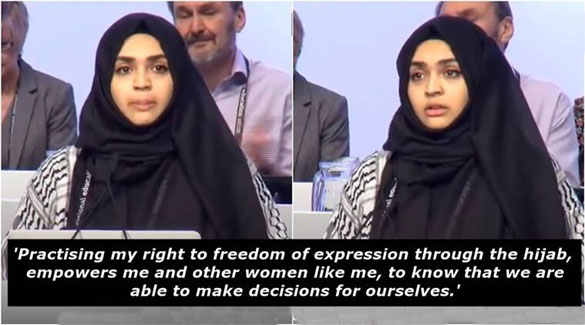
If we look at this issue not only through a legal lens, but through the lens of humanity, conscience, and ethics, one truth becomes clear: decisions like banning the hijab do not resolve problems, rather they deepen them.
Beyond Clothing: A Question of Identity and Choice
Clothing is not merely about covering the body. It reflects a person’s identity, dignity, and inner values. For many Muslim girls, the hijab is not a symbol of coercion, but a simple, personal, and dignified expression of faith. When the state interferes with such a choice, it effectively sends a painful message to a young girl that her identity is not acceptable.
Such interference stands in direct conflict with universally recognized human rights, including freedom of religion, freedom of conscience, and the right to make personal choices. Singling out one religious symbol undermines the principle of state neutrality on which multicultural societies are meant to stand.
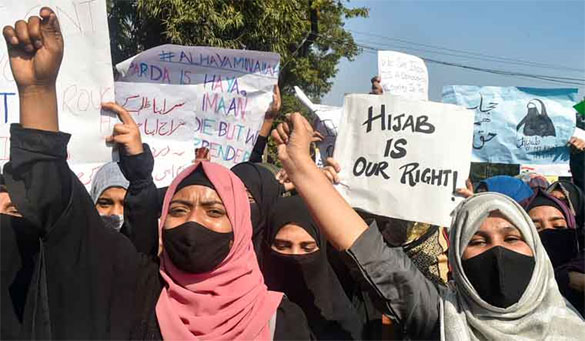
Discrimination That Does Not Remain Silent
When a law applies only to girls from a particular community, it ceases to be just a law—it becomes a message. And that message is clear: some identities are less acceptable than others. Policies like these do not remain silent. They seep into the collective subconscious of society and weigh heavily on young minds.
These restrictions push Muslim girls, at a formative age, toward feelings of inferiority. They force them to question whether they can belong to society only by hiding who they are. Such measures do not promote integration; they widen the distance.
Social Harmony Cannot Be Forced
Social harmony cannot be created through decrees. It grows out of trust, dialogue, and mutual respect. When the state places limits on a group’s identity, it unintentionally builds walls: the walls that separate hearts and divide societies.
CAIR has rightly warned that such laws push Muslims further to the margins, deepen social divisions, and embolden extremist narratives. The path to harmony is not paved with closed doors, but with open hearts.
A Dangerous Path Amid Growing Hatred
Rising incidents of Islamophobia across Europe, attacks on mosques, hate speech, and violence, show that prejudice is no longer a theoretical concern. In such an environment, state decisions carry immense symbolic weight.
When governments enact laws that disproportionately target one religious group, they unintentionally legitimize broader social bias. Instead of countering extremism, such measures risk fuelling it.
Empowerment, Not Control
Supporters of hijab bans often argue that such measures are necessary to protect girls. But the real question is this: can forcing a girl to remove her hijab against her will truly be called protection? Changing the form of coercion does not eliminate coercion.
True protection means listening to girls, respecting their voices, ensuring they can make informed choices, and removing genuine pressure where it exists, and not imposing a new one. Real empowerment lies in allowing a girl to define her own identity.
The Voice of Conscience and Collective Responsibility
CAIR’s appeal to international human rights bodies and courts is not merely a legal action; it is a call of conscience. It reminds Europe of its own foundational values: freedom, equality, and human dignity.
A society grows stronger not by restricting the freedoms of its most vulnerable members, but by protecting them.
Measures such as banning the hijab may appear simple on the surface, but their consequences are deep and long-lasting. They do not protect girls, nor do they promote equality. Instead, they narrow freedom and weaken social harmony.
If we truly seek a society where every girl feels safe, dignified, and accepted, the path forward does not lie in bans and prohibitions, but in respect, dialogue, and the sincere acceptance of diversity. Human societies are built through hearts, not through unnecessary laws.
…
Kaniz Fatma an Islamic scholar and regular columnist for New Age Islam
URL: https://newageislam.com/islamic-ideology/hijab-bans-challenge-freedom-dignity-/d/138028
New Age Islam, Islam Online, Islamic Website, African Muslim News, Arab World News, South Asia News, Indian Muslim News, World Muslim News, Women in Islam, Islamic Feminism, Arab Women, Women In Arab, Islamophobia in America, Muslim Women in West, Islam Women and Feminism