
Message Of Hajj: Never Lose Faith In Lord And Fight Against Devil
By
Grace Mubashir, New Age Islam
28 June
2023
The Holy
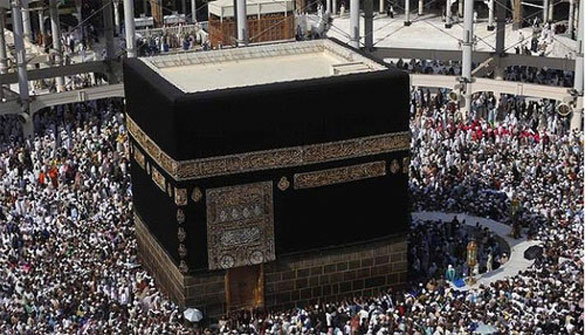
Qur'an described Mecca as the 'Mother of Villages' (Umm al-Qura), where the
Ka’ba, the centre of Islamic civilization, is located. It is also a model city
that presents Islam to the world. A centre full of peace and tranquillity in
every sense of the word 'Islam'. Peace has been there since ancient times. A
safe haven where one would not seek revenge even if he met his own father's
killer. There is no violence or destruction here. It exudes indescribable
purity and peace.
The Qur'an
described the Meccan Ka’ba as the 'Eternal Heaven' (Albait al-Ateeq).
The Qur'an also describes it as 'the first temple on the face of the earth,
built for all mankind to worship God' (3:96). In introducing the Ka’ba to
entire humanity, the broad humanistic conception (Linnas) initiated by
the Qur'an is conceivable. Allah is the Lord of the people (Rabbinas);
Prophet Muhammad is a blessing to the world (21:107) and a warner to all
nations; The Qur'an is 'a guidance for all mankind' (Hudal Linnas);
Muslims are the best community raised for the people. Allah has given Ka’ba an
epithet that is closely related to this.
Ka’ba
occupies the central place like that of the heart in the human body. The heart
is the venous centre of the circulatory system. In human society, Ka’ba plays
the role of the heart in maintaining the pulse of life by repeatedly purifying
the blood that has been corrupted by use. In the words of Allama Iqbal, “Our
first direction is our Qibla (Ka’ba). We constantly maintain our relationship
with it: it also protects us (our unity).''The Ka’ba is the centre that enables
the unity of the community of believers on a global basis. That is possible and
should be possible through the deeds of Hajj and Umrah.
The acts of Hajj have soul. If one do it
without invoking it, s/he will not get the multifaceted benefits that should be
achieved through Hajj. The Holy Qur'an does not specify the benefits of Hajj
but says that 'they should experience the multifaceted benefits of Hajj'
(22:28). Not everyone has the same experience in Hajj. According to each
person's spiritual - inner - depth, the feelings that can be gained through
Hajj. That is why the Qur'an said that one should prepare well for Hajj and
ready for the path. Prepare properly for Hajj both spiritually and physically.
The greatest preparation is piety.
Taqwa (piety) is repeatedly emphasized
when teaching the rules of hajj (2:196,197,203).
The `Ihram''
and Niyyat, which marks the beginning of Hajj and Umrah, have many
layers of meaning. Niyyat (intention) is to ensure purity of intention.
It inculcates in Hajj a precise sense of what is to be attained through Hajj.
The secret of Ihram (ritual beginning for Hajj) is that many things that
are permissible, desirable and even sacred become completely forbidden until
entering into Ihram. An inquisitor who does not know the details of this
may sometimes ask: "Are things that were allowed and desired for so long
suddenly become completely forbidden?" What is this? .....'' The answer to
this is the secret of Ihram. What can happen in our life, what can't
happen, when it can happen, when it can't happen is not for us or creatures
like us to decide? Rather, it is the Creator, Creator, and Ruler who has
absolute power to determine it all. If he allows it. If not, you can't. This
should be the position of a believer.
Yes, Ihram
should be with complete submission to Allah's Ownership, Sovereignty and
Discipline and taking it into the heart. Ihram should also be a pledge and a
prayer to hold on
to this
reality that we often forget throughout our lives. We come to the Ka’ba in
response to the proclamation of Allah, the King of Kings, through Prophet
Ibrahim (PBUH), the Creator (2:124) and the restorer of the Ka’ba and the
architect of Mecca (22:27). For the trope 'Labbaik Allahumma Labbaik...'
is the battle of the servant's call to the master. It is the proclamation of
the true and firm Monotheism (Tawheed) and the humble submission to the
Lord.
Our journey
is to Allah; to his royal court. Come to the presence of the Almighty and
Omniscient Master with utmost humility and extreme simplicity. This simple
garment of the servant truly recognizing his master's servitude is equivalent
to the shroud we wear on our final journey. Many people have fallen in love
with this issue when entering Ihram and donning this garb. It is very important
to be careful not to embrace the struggle of Ihram and become like a play.
There should be no violence or destruction in Ihram; must be perfectly peaceful
and humble. Haji must have had many aliases earlier. Now there is only one
address. It means 'Abdullah' (Servant of God). That is the real title
and the best title - Allah lovingly called the great prophets as 'Abd' (slave).
Allah called His beloved servants 'Ibadur Rahman'.
Tawaf is the first act of the pilgrim who
reaches the Ka’ba. Walking around the Ka’ba on the left side is not
circumambulation or circumambulation. It is a prayerful expression of
submission and disciplined obedience to the Lord. A great act of unity of
believers over all differences. It starts in front of Hajarul Aswad. By
chanting the holy name of Allah. This black marker stone, which does neither
good nor harm, has a lot of antiquity and history. Kissed and touched by many
generations, this landmark is the oldest witness of history there. No matter
who, when or where he comes from, Tawaf should start from that point. All,
whether king or subject, black or white, Arab or non-Arab, start from this
point. On this point, as in Ka’ba, the Muslims of the world are united.
"Surely this community of yours is one community (Ummat); I am
your Lord. Here we see the beautiful form of the Qur'anic statement, "Submit
yourself to me (21:92).
Tawaf is a prayer of mind, word and
action, realizing that Tawheed is also integration and unification. Prayer to
be performed with physical and mental purity. A Tawaf is seven times. This
number (seven) is also thought provoking. Not only the Tawaf but the Sa'i
and then the stone thrown at the Jamrahs are seven. The sky is also
seven. The human race is of the same opinion that a week is seven days. Thus many
things are seven. The pattern of rotation to the left is similar to the
rotations in the universe. In solar systems and galaxies, down to the very
core, motion—rotation—is of the same order.
The Tawaf,
which the angels constantly perform around the throne of Allah in the upper
world, is in the same order. And so the strict system of the creator is
dawning. The believer surrenders the little freedom available to him before the
match of the lord and says, "Rab, I am satisfied with your provision."
Tawaf is a vow and a prayer to confess that I am always ready to stick to your
condition. Tawaf gives us the knowledge that those who move in disharmony with
Allah's system will degenerate into anarchy that does not match the rhythm of
the universe.
Safa and Marwa are the two hills
described by the Qur'an as the signs of Allah (2:158). Sai’ is the walk in
between. Sai means effort. The message is that prayer should be accompanied by
efforts to fulfil it. The walk is reminiscent of Bibi Hajra, the mother, who ran
after her young son in search of water. Don't get hopeless and do nothing and
adopt a suicidal inaction. In any environment we should do our best with
prayer. All such efforts are part of God's worship.
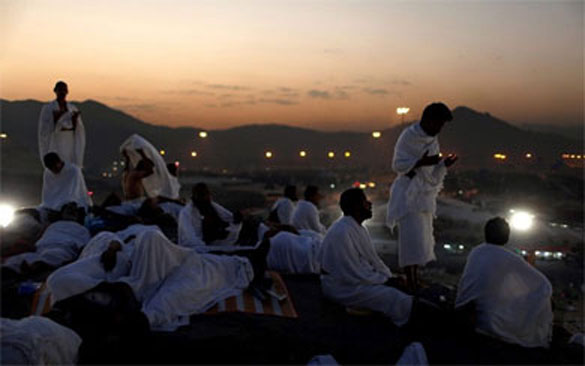
(Representational Photo)
Dhul Hajj is held for six days from 8th to 13th in Mina-Arafah-Muzdalifa-Mina, and is being rolled and laid down in three fields, and we are being raised from the absolute state of average sympathy to the great state of empathy. Here you can experience the suffering of the street child, the homeless, and the refugee. The day of Arafah is the best of days. There the prayer is Jam and Qasr. There the activity of the day is self-examination and repentance. Be willing and committed to correction and remedial action based on self-inquiry. Then, repent and seek forgiveness. The Prophet (PBUH) has informed that the devil will tremble on the day of Arafah.
The day of Arafah
is a reminder of the Day of Judgment in the Hereafter. At Arafah,
millions of people stand in the scorching sun for only a few hours. In the Hereafter,
all men from the beginning to the end of the human race must stand for eons in
a fiery atmosphere. If you are being judged here, you will be judged fiercely
tomorrow in the Hereafter. The more fruitful the present self-examination, the
more comfort will be found in the hereafter.
The essence
of 'Arafah' is recognition. We can get some insights from Arafah. Realization
is all it takes to correct and be better. But there is a sad truth, not all
those who are aware become better. Realizations are often lost. That is where Muzdalifah
is relevant. The term used by the Qur'an for Muzdalifa is 'Mashar
al-Haram'. It means the place where sacred consciousness germinates. The
precious realizations of the day of the ninth of Dhul Hajj (Arafah) become
intense awareness that riots within us. This awareness is the mood of Hajj.
"The evil power that deceived me should no longer lead anyone astray. I
will continue to fight against all the evil forces that have misled me and many
others. Because I have wronged myself and wronged others, but the only
atonement is the constant struggle against evil forces...''
As the
beginning of the swift implementation of this firm decision, he gathers seven
small stones as a symbolic weapon and marches towards the Jamrah of Mina
on the morning of Dhul-Hajj 10, reciting the Talbiyath with fervour.
There he begins and ends the battle against all demonic forces. The Hajis, who
had recited the Talbayat, returned triumphantly reciting the Takbeer.
There he begins and ends the battle against all demonic forces. The pilgrims
who had recited the Talbayat returned victoriously reciting the Takbeer.
There he begins and ends the battle against all demonic forces. The pilgrims
who had recited the Talbayat returned victoriously reciting the Sahlad
Takbeer.
Sacrifice
is not just sacrifice. It is a solemn act of self-sacrifice following the
illustrious example of Abraham's willingness to sacrifice his beloved son
Ishmael (as) as commanded by God. Ibrahim (AS) prepared to sacrifice his
dearest - the golden son whom he had looked after in his old age - as per the
command of the Lord. We also need to be ready to sacrifice our precious and
beloved (yes, our Ishmael) if need be. Then our sacrifice has meaning. "Neither
the flesh nor the blood of the sacrificial animal reaches Allah; rather, let
your piety be towards Allah” (22:37). "You will not attain virtue
unless you spend (sacrifice) what is most dear to you" (3:92).
After
fighting and winning against the devil, he shaves his head to reaffirm his
dedication to the fighting path; Is the devil lost forever? No; it is history
that those who fled Badr came back to Uhd with new weapons and strategies. So
don't stop fighting. So Dhul Hajj continues on 11th, 12th and 13th. Finally we
can think of the merciful Rabb as saying to us: ''Poor Haji, thou hast come
from far away, and hast been busy for some days; is tested; let’s stop for now.
But there is one thing, if you come back to your country, you have to continue
the fight that you stopped here for the time being till the end of your life,
tirelessly and unceasingly..." Thus, Haji becomes an active fighter and
returns to the country as a new man with the innocence of a new-born child. The
return comes with realization and heightened awareness, and a fighting spirit
against evil. When millions of holy warriors come to every nook and cranny of
the world like this every year, the change is indescribable.
-----
A
regular columnist for NewAgeIslam.com, Mubashir V.P is a PhD scholar in Islamic
Studies at Jamia Millia Islamia and freelance journalist.
URL: https://newageislam.com/islamic-ideology/message-hajj-faith-lord-devil-hajj-bakrid/d/130090
New Age Islam, Islam Online, Islamic Website, African Muslim News, Arab World News, South Asia News, Indian Muslim News, World Muslim News, Women in Islam, Islamic Feminism, Arab Women, Women In Arab, Islamophobia in America, Muslim Women in West, Islam Women and Feminism