
Tafakkur (Thinking) in the Qur'an: Why the Qur'an Repeatedly Calls Human Beings to Reflect

By Ghulam Ghaus Siddiqi, New Age Islam
10 January 2026
The Qur’an was not revealed merely to be recited. It is a living book that shakes human intellect and awareness, awakens the conscience, and constantly invites people to think, understand, and ask questions. The Qur’an addresses those who are willing to see with open eyes, listen with open ears, and reflect with open hearts. This is why it repeatedly stresses the use of reason, thoughtful reflection, and the awakening of human awareness.
The Qur’an does not use only one word for reflection. Instead, it employs a rich variety of terms; tafakkur (deep thinking), tadabbur (deliberation), ta‘aqqul (reasoning), tafaqquh (understanding), tadhakkur (remembrance), fahm (comprehension), and dirayah (insight), to activate different dimensions of the human mind. Among all these, the word used most frequently is tafakkur, meaning to think deeply, reach conclusions, and recognize the truth.
Reflection in the Qur’an: The Purpose of Revelation
The Qur’an itself clearly states the purpose of its revelation: that its verses should be pondered over and that people of understanding should take guidance from them. Those who encounter the Qur’an yet refuse to think are sternly warned; perhaps their hearts have been locked. This makes it clear that only those who approach the Qur’an with sound reason and open hearts truly benefit from it.
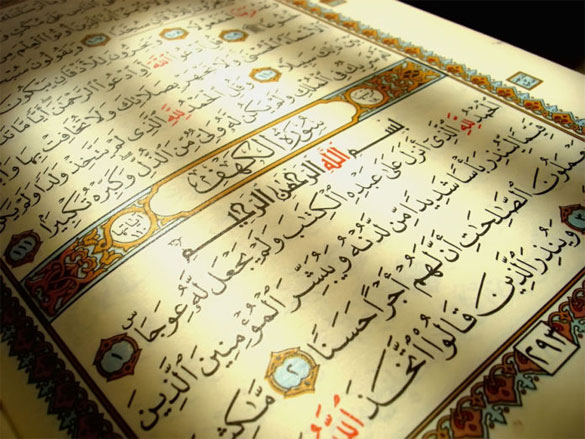
Neglecting reflection on the Qur’an leads to doubt, confusion, and intellectual chaos. In contrast, those who reflect deeply find that truth gradually becomes clear to them. Step by step, they move through stages of faith and certainty until they reach the highest levels of guidance.
Reflecting on the Universe: Opening the Doors of Knowledge
The Qur’an does not confine human reflection to the pages of a book; it invites people to reflect on the entire universe. The vastness of the skies, the structure of the earth, the alternation of night and day, the movement of winds, the travel of clouds, the falling of rain, and the revival of life; all these are described as signs for people who use their intellect.
This is not only a spiritual call but also a scientific one. Careful reflection reveals clear indications toward cosmology, astronomy, physics, geography, geology, and marine sciences. It is as if the Qur’an tells humanity: open your eyes, observe carefully, ask questions, and reach conclusions, so that you may recognize the power and wisdom of the Creator of the universe.
Reflecting on Creation: Living Signs of Divine Power
The Qur’an repeatedly directs human attention toward animals, birds, bees, camels, plants, crops, and fruits. The pure formation of milk, the disciplined system of the honeybee, birds suspended in the air, and the growth of vegetation; all of this is not the result of blind chance, but evidence of wise and deliberate design.
Anyone who seriously studies the animal and plant worlds cannot escape the conclusion that behind all of this stands a knowledgeable and powerful Creator. Such reflection leads human beings to their true purpose and forces them to ask an essential question: if nothing in the universe is purposeless, how can human beings themselves be without purpose?
Reflecting on the Self: From Self-Knowledge to God-Consciousness
One of the deepest and most powerful methods of reflection in the Qur’an is its call for human beings to reflect on their own selves. Human creation, physical and mental development, weakness and strength, childhood, youth, and old age; all are signs of God.
When a person reflects on his own creation, understands the beginning of his existence, and observes the stages of life, it becomes clear that he is not a mere accident but a being created with a defined purpose. Modern science, in fact, is uncovering layer after layer of these same signs that the Qur’an pointed to centuries ago.
Reflecting on Divine Commands
The commandments of the Qur’an are not meant for blind obedience; they are meant to be accepted with understanding and awareness. Alongside commands related to alcohol, gambling, fasting, retribution, Friday prayer, and others, the Qur’an also explains their wisdom, so that people may understand their benefits and purposes and adopt them wholeheartedly.
Such reflection leads to the true spirit of jurisprudence, self-purification, and moral elevation. The Qur’an presents a faith that harmonizes reason and revelation, not one based on superstition or empty rituals.
Reflecting on History: The Laws of Rise and Decline
The Qur’an does not narrate the stories of past nations as mere tales. Instead, it presents them as lessons. Their rise, rebellion, rejection of prophets, and eventual downfall all point to a consistent divine law.
The study of history teaches which factors lead nations to progress and which cause their decline. This is the same principle that modern science calls the Law of Nature, while the Qur’an describes it as Sunnatullah—the unchanging way of God.
The Unity of the Qur’an and Knowledge
From all these perspectives, it becomes clear that the Qur’an makes no division between “religious” and “worldly” knowledge. Wherever a person discovers the signs of God, knowledge itself becomes an act of worship, provided the intention is to seek God’s pleasure.
History bears witness that when Muslims understood this Qur’anic call, they led the world not only in jurisprudence, hadith, and exegesis, but also in science, mathematics, and philosophy. When they ignored this call, decline followed.
Today, once again, there is a pressing need to treat the Qur’an not merely as a book of routine recitation without understanding, but as a book of thought, research, and action. We must pause at its verses, reflect upon them, and shape both our individual and collective lives in their light. This reflective engagement with the Qur’an can restore lost insight, and revive lost dignity.
…
Ghulam Ghaus Siddiqi Dehlvi is a regular columnist with NewAgeIslam.com. He is a classical Islamic scholar, an ʿĀlim and Fāzil, with specialization in al-Adab al-ʿArabī wa al-ʿUlūm al-Sharīʿah—and comes from a Sufi-Sunni intellectual tradition. He is also a translator of English, Arabic, and Urdu. He holds two Master’s degrees from Jamia Millia Islamia, one in Arabic and another in English. Alongside his academic training, he has authored hundreds of articles, published on NewAgeIslam.com in multiple languages, focusing on De-radicalization, peace-building, social harmony, human rights, Counter-Terrorism, and the dispelling of widespread misconceptions about Islam and its teachings, particularly through Refuting Ideological Narratives of Terrorism and correcting misinterpretations of War-Related Qur’anic Verses. His writings consistently emphasize ethical clarity, intellectual rigor, and constructive engagement with contemporary issues.
URL: https://newageislam.com/islamic-ideology/tafakkur-in-quran-calls-human-beings-reflect/d/138388
New Age Islam, Islam Online, Islamic Website, African Muslim News, Arab World News, South Asia News, Indian Muslim News, World Muslim News, Women in Islam, Islamic Feminism, Arab Women, Women In Arab, Islamophobia in America, Muslim Women in West, Islam Women and Feminism