
Islam Transformed Seventh Century from the Age of Jahiliya to the Age of Light

By
Arman Neyazi, New Age Islam
29 May 2021
The
Prevailing Social Ills Of The Pre-Islamic Era Were The Reason That Prophet
Muhammad (SAW) Called It A ‘Daur E Jahiliya’, The ‘Time Of Ignorance’
Main
Points
1. Islam called
the pre-Islamic era an age of Jahiliya (ignorance) because of the religious,
social and political ills widespread in the society.
2. Islam
transformed the people of savage Arabia into a people of peace.
3. Scholars of
every hue study this century for various reasons of their own.
4. The
revelation of the Holy Quran is the most auspicious event in the history of the
7th century.
-----
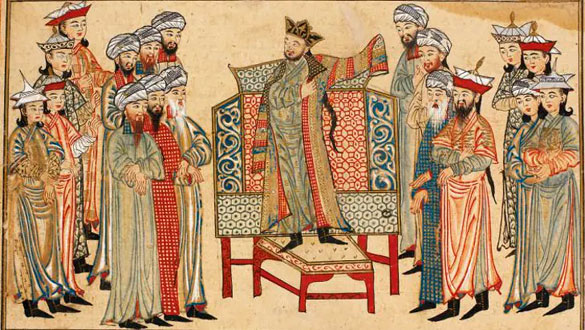
Photo courtesy/ The Conversation: The
wealthy Quraysh tribe of ancient Arabia dominated the region for centuries.
Qantara, CC BY
-----
The seventh
century is the most talked-about century from the beginning till date. Scholars
of every hue study this century for various reasons of their own. The
religious, social and political information of this century seems to be more
important for the world because of the advent of Islam, the religion of peace,
harmony, justice and social reforms. People must be interested in knowing how
Islam transformed the people of savage Arabia into a people of peace. Islam
called this century age of Jahiliya (ignorance) because of the religious,
social and political ills widespread in the society.
Evils of
injustices, malpractices and inhuman acts were embedded in the social fabric of
the seventh-century Arabian peninsula. Socially ingrained injustices in the
psyche of seventh-century Arabia gave birth to barbarity towards the
downtrodden, weak and the women. The most inhuman ritual and system of the Arab
society of the 7th century was to bury the female child as they took birth.
Attraction towards the seventh century is obvious in the background of the
above mentioned.
Stealing
and killing the members of other tribes was a common practice during the age of
ignorance. The people did not see anything wrong with it. People used to be
constantly engaged in wars between the tribes. This warfare brought the weak,
the poor, the old, the women and the children in a mental state of fear and
chaos. There was no peace and development even for the namesake. Before the
birth of ‘Rahmat ul Lil Alameen’, Prophet Muhammad (SAW) the area used to
constantly witness drought and famine. This had brought the life of the people
to the knees, asking for alleviation from poverty and a life of peace from the
earthly gods they worshipped. In this deplorable era of the seventh century
came the good news of the birth of Prophet Muhammad (SAW), as a mercy for the
world.
The Seventh
century is remembered and studied with wide-eyed expression because the social
and moral condition prevailing during that period was more than hellish. People
cried and begged for help in front of the wealthy and barbaric tribal warlords
who never respected human lives. People of seventh-century Arabia, before the
advent of Islam, had no law of the land but the words of the rich and the
wealthy tribal warlords.
Birth of
Rahmat ul Lil Alameen’ And The End The Age Of Jahiliya
Prophet
Muhammad (SAW)’ birth around the year 570 AD proved to be a turning point in
the life of the Arab peninsula in the beginning and the people of the planet
earth in general. It was the age of ignorance for the Arabs and the Apostle of
Allah was sent as ‘Rahmat ul Lil Alameen’ to end the age of Jahiliya in the
light of the commands of Allah, the Most Gracious.
The
prevailing social ills of the pre-Islamic era were the reason that Prophet
Muhammad (SAW) called it a ‘Daur e Jahiliya’, the ‘Time of Ignorance’.
The seventh
century is curiously remembered and continuously mentioned also because the
Last of the Prophets (خاتم النبيين) Prophet Muhammad (SAW) was
born during this period for whom Allah, the Most Gracious says:
"Muhammad is not the father of any of your
men, but (he is) the Messenger of Allah, and the Seal of the Prophets: and
Allah has full knowledge of all things." (Qur'an 33:40) - Yusuf Ali
And indeed, you are of a great moral character. (Surah Al-Qalam - 4) — Saheeh
International
And We have not sent you, [O Muhammad], except
as a mercy to the worlds. (Surah Al-Anbiyaa: 107) — Saheeh International
‘Mercy
to the Worlds’, the
‘Man of a Great Moral Character’ and many such titles are used in the
Holy Quran to describe Prophet Muhammad (SAW) and truly so because no one with
fewer adjectives ingrained in his humane traits would have been successful
during that dire situation of the Seventh century.
Hoards of
wealth were confined to few class-conscious members of Muhammad (SAW)’s tribe,
the Quraish. The rest of the weaker and marginalised members of the Quraish
tribe were living a life of misery. The Quraish tribe unconsciously felt the
birth of a noble soul as Allah’ mercies transformed the deserted area into
greeneries. Fields were full of crops, trees were laden with fruits and sheep
and camel were always ready to be milked.
Unification
of Tribes and Islamic Conquests
Prophet
Muhammad (SAW) started preaching to the people of Mecca about the ‘Oneness of
Allah’ in about 570 AD. He was not much successful in his endeavour in Mecca
during that time. Unification of the tribes especially after the signing of
Charter of Medina (Arabic: صحيفة المدينة) in AD 622 proved to be the beginning of the
advent of Islam on the world stage.
The 7th
century is also much sought after because of various Islamic conquests such as
the downfall of the Sasanian Empire, known as the conquest of Persia, Syria,
Palestine, Armenia, Egypt and North Africa.
Courtesy: slideplayer/slide/4894952/
-----
The
Revelation Of The Holy Quran
The
seventh-century also has the remarkable achievement of the revelation of the
Holy Quran on the Apostle of Allah, Prophet Muhammad (SAW). The revelation of
the Holy Quran at some point in the early 7th century is the most auspicious
event in the history of Islam. The Holy Quran exemplifies a boundary line
between the Age of Jahiliya and the Age of Light, Mercy and Education.
The
commands of Allah, the Most Gracious and Compassionate in the forms of
revelation were later compiled in the form of a book, that is the Holy Quran,
by Zayd ibn Thabit and other scholars of the time under the guidance of Abu
Bakr Siddiq (RA), the first Caliph.
The
Lesson Of Equality In Islam Makes Seventh Century Remarkable
Islam
gained its ground with its roots well spread and strong during the lifetime of
Prophet Muhammad (SAW) itself. His Last Sermon on the occasion of his last Haj
is reckoned to be the most authentic lesson of equality in the history of
humanity and the ethical and religious ideals of Islam. People listening to him
stood in silence and learnt how Islamic ethos has to be maintained even after
Rahmat ul Lil Alameen leaves for his heavenly abode. Let us consider and follow
the lesson left for mankind in the Last Sermon of Prophet Muhammad (SAW), in
letter and spirit.
“All humans are descended from Adam and Eve.
There is no superiority of an Arab over a non-Arab, or of a non-Arab over an
Arab, and no superiority of a white person over a black person or of a black
person over a white person, except on the basis of personal piety and
righteousness.”
There are
enough reasons for the people to be in hunt of Seventh century. It attracts
people around the world for it has the proud legacy of the birth of Prophet
Muhammad (SAW) and the advent and spread of Islam.
And
Allah knows the best.
----
Arman
Neyazi is a columnist with NewAgeIslam.com.
URL: https://www.newageislam.com/islamic-ideology/seventh-century-jahiliya-light-pre-islamic/d/124903
New Age Islam, Islam Online, Islamic
Website, African Muslim News, Arab World News, South Asia News, Indian Muslim News, World Muslim News, Women in Islam, Islamic Feminism, Arab Women, Women In Arab, Islamophobia in America, Muslim Women in West, Islam Women and Feminism