
Mullahs and Heretics: A Secular History of Islam (Concluding Part)
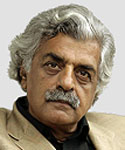
By Tariq Ali
October17-19, 2014
Each of these regions had different traditions, and each had its own material interests and needs, which determined its policy of alliances and coexistence with the non-Islamic world. Religion had played a major part in building the new empire, but its rapid growth had created the conditions for its own dismemberment. Baghdad, the most powerful of the three caliphates, lacked the military strength and the bureaucracy needed to administer such a large empire. Sectarian schisms, notably a thirty-year war between the Sunni and Shia factions, had also played their part. Key rulers, politicians and military leaders in both camps had died in the years immediately preceding the First Crusade. ‘This year,’ the historian Ibn Taghribirdi wrote in 1094, ‘is called the year of the death of caliphs and commanders.’ The deaths sparked off wars of succession in both Sunni and Shia camps, further weakening the Arab world. The notion of a monolithic and all-powerful Islamic civilisation had ceased to have any purchase by the beginning of the 11th century, and probably earlier.
In 1099, after a forty-day siege, the Crusaders took Jerusalem. The killing lasted two whole days, at the end of which most of the Muslim population – men, women and children – had been killed. Jews had fought with Muslims to defend the city, but the entry of the Crusaders created panic. In remembrance of tradition, the Elders instructed the Jewish population to gather in the synagogue and to offer up a collective prayer. The Crusaders surrounded the building, set fire to it and made sure that every single Jew burned to death.
News of the massacres spread slowly through the Muslim world. The Caliph al-Mustazhir was relaxing in his palace in Baghdad when the venerable qadi 4 Abu Sa’ad al-Harawi, his head clean-shaven in mourning, burst into the royal quarters. He had left Damascus three weeks earlier, and the scene he encountered in the palace did not please him:
How dare you slumber in the shade of complacent safety, leading lives as frivolous as garden flowers, while your brothers in Syria have no dwelling place save the saddles of camels and the bellies of vultures? Blood has been spilled! Beautiful young girls have been shamed . . . Shall the valorous Arabs resign themselves to insult and the valiant Persians accept dishonour . . . Never have the Muslims been so humiliated. Never have their lands been so savagely devastated.
The Crusaders settled in the region in the course of the 12th century, and many Muslim potentates, imagining that they were there to stay, began to collaborate with them commercially and militarily. A few of the Crusaders broke with Christian fundamentalism and made peace with their neighbours, but a majority continued to terrorise their Muslim and Jewish subjects, and reports of their violence circulated. In 1171, a Kurdish warrior, Salah al-Din (Saladin), defeated the Fatimid regime in Cairo and was acclaimed Sultan of Egypt. A few months later, on the death of his patron Nur al-Din, he marched to Damascus with his army and was made its Sultan. City after city accepted his suzerainty. The Caliph was afraid that Baghdad, too, would fall under the spell of the young conqueror. Though there was never any question of his assuming the Caliphate itself – caliphs had to be from the Quraysh, and Saladin was a Kurd – there may have been some concern that he would take the Caliphate under his aegis, as previous sultans had done. Saladin knew this, but he also knew that the Syrian aristocracy resented his Kurdish origins and ‘low upbringing’. It was best not to provoke them, and others like them, at a time when maximum unity was necessary. Saladin stayed away from Baghdad.
The union of Egypt and Syria, symbolised by prayers offered in the name of the one Caliph in the mosques of Cairo and Damascus, formed the basis for a concerted assault against the Crusaders. Patiently, Saladin embarked on an undertaking that had until then proved impossible: the creation of a unified Muslim army to liberate Jerusalem. The barbarousness of the First Crusade was of enormous assistance to him in uniting his soldiers: ‘Regard the Franj,’ he exhorted them. 5 ‘Behold with what obstinacy they fight for their religion, while we, the Muslims, show no enthusiasm for waging holy war.’ 6
Saladin’s long march ended in victory: Jerusalem was taken in 1187 and once again made an open city. The Jews were provided with subsidies to rebuild their synagogues; the churches were left untouched. No revenge killings were permitted. Like Caliph Umar five hundred years before him, Saladin proclaimed the freedom of the city for worshippers of all faiths. But his failure to take Tyre was to prove costly. Pope Urban despatched the Third Crusade to take back the Holy City, and Tyre became the base of its operations. Its leader, Richard Plantagenet, reoccupied Acre, executing prisoners and slaughtering its inhabitants. Jerusalem, however, could not be retaken. For the next seven hundred years, with the exception of one short-lived and inconsequential Crusader occupation, the city remained under Muslim rule, and no blood was spilled.
The Crusades had disrupted a world already in slow decline. Saladin’s victories had temporarily halted the process, but the internal structures of the Caliphate were damaged beyond repair, and new invaders were on the way. A Mongol army from Central Asia led by Timur (Marlowe’s Tamburlaine) laid siege to Baghdad in 1401, calling on the Caliph to surrender and promising that if he did so, the city would be spared. Foolish and vain till the last, the Caliph refused, and the Mongol armies sacked the city. A whole culture perished as libraries were put to the torch, and Baghdad never recovered its pre-eminence as the capital of Islamic civilisation.
Despite its presence in India, which its armies had first entered in the eighth century, and, later, in north-western China, and despite its merchant fleets trading in the Indonesian archipelago, in southern China, and off the east and west coasts of Africa, Islam’s centre of gravity was by the 14th century moving in the direction of the Bosphorus. On four occasions Muslim armies had laid siege to Constantinople, the capital of Eastern Christianity. Each time the city had survived. But from 1300, the frontier emirate of Anatolia began slowly to eat into Byzantine territory, and in 1453 old dreams were realised and the ancient city of Byzantium acquired its present name: Istanbul. Its new ruler was Mehmet II, whose forebear, Uthman, had founded the dynasty bearing his name over a hundred years earlier.
The Ottoman dynasty inaugurated its reign by opening a new Islamic front in South-East Europe, just as Islamic civilisation was about to collapse in the Iberian peninsula. In the course of the 14th century, the Ottomans took Hungary, swallowed the Balkans, nibbled away at the Ukraine and Poland, and threatened Vienna. Throughout the 15th and 16th centuries, a majority of Muslims lived under the rule of the Ottoman, the Safavid (Persian) or the Mughal (Indian) empires. The Sultan in Istanbul was recognised as Caliph by the majority and became the caretaker of the holy cities of Mecca and Medina. Arabic remained the religious language but Turkish became the Court vernacular, used by the ruling family and administrative and military elites throughout the Empire, though most of the religious, scientific, literary and legal vocabulary was lifted from Persian and Arabic. The Ottoman state, which was to last five hundred years, recognised and protected the rights of Christians and Jews. Many of the Jews expelled from Spain and Portugal after the Re-conquest were granted refuge in Ottoman lands and a large number returned to the Arab world, settling not just in Istanbul, but in Baghdad, Cairo and Damascus.
Jews were not the only privileged refugees. During the wars of the Reformation German, French and Czech Protestants fleeing Catholic revenge-squads were also given protection by the Ottoman sultans. Here, there was an additional political motive. The Ottoman state closely followed developments in the rest of Europe, and vigorously defended its interests by means of diplomatic, trade and cultural alliances with major powers. The Pope, however, was viewed with suspicion, and revolts against Catholicism were welcomed in Istanbul.
Ottoman sultans began to feature in European folklore, often demonised and vulgarised, but the sultans themselves were always conscious of their place in geography and history, as evidenced in this modest letter of introduction sent by Suleiman the Magnificent, who reigned from 1520 to 1566, to the French King:
I who am the Sultan of Sultans, the sovereign of sovereigns, the dispenser of crowns to the monarchs on the face of the earth, the shadow of God on Earth, the Sultan and sovereign lord of the White Sea and of the Black Sea, of Rumelia and of Anatolia, of Karamania, of the land of Rum, of Zulkadria, of Diyarbekir, of Kurdistan, of Aizerbaijan, of Persia, of Damascus, of Aleppo, of Cairo, of Mecca, of Medina, of Jerusalem, of all Arabia, of Yemen and of many other lands which my noble fore-fathers and my glorious ancestors (may Allah light up their tombs!) conquered by the force of their arms and which my August Majesty has made subject to my flaming sword and my victorious blade, I, Sultan Suleiman Khan, son of Sultan Selim, son of Sultan Bayezid: To thee, who art Francis, King of the land of France.
The tolerance shown to Jews and Protestants was rarely, if ever, extended to heretics within Islam, however. The mullahs ensured that punishment was brutal and swift. To deter heresies they jealously safeguarded their monopoly of information and power, opposing all moves to import a printing press to Istanbul. ‘Remember Martin Luther,’ the qadi warned the Sultan. The Reformation could be supported because it served to divide Christianity, but the very idea of a Muslim Luther was unacceptable. The clerics knew the early history of Islam and were determined not to repeat it.
Unlike Christianity, Islam had not spent its first hundred years in the wilderness. Instead, its early leaders had rapidly found themselves at the head of large empires, and a great deal of improvisation had been required. According to some scholars, the first authorised version of the Koran was published some thirty years after the death of Muhammad, its accuracy guaranteed by the third Caliph, Uthman. Others argued that it appeared much later, but Quranic prescriptions, while quite detailed on certain subjects, could not provide the complete code of social and political conduct needed to assert an Islamic hegemony. The Hadith filled the gap: it consisted of what the Prophet had said at a particular time to X or Y, who had then passed it on to Z, who had informed the author, who in turn recorded the ‘tradition’. Christianity had done something similar, but confined it to four gospels, editing out or smoothing over contradictions along the way. Scholars and scribes began collating the Hadith in the seventh and eighth centuries, and there have been ferocious arguments regarding the authenticity of particular traditions ever since. It is likely that more than 90 per cent of them were invented.
The point is not their authenticity, however, but the political role they have played in Islamic societies. The origins of Shi’ism, for example, lie in a disputed succession. After Muhammad’s death, his Companions elected Abu-Bakr as his successor and, after his death, Umar. If Ali, Muhammad’s son-in-law, resented this, he did not protest. His anger was provoked, however, by the election of the third Caliph, Uthman. Uthman, from the Umayya clan, represented the tribal aristocracy of Mecca, and his victory annoyed a loyalist old guard. Had the new Caliph been younger and more vigorous he might have managed to effect a reconciliation, but Uthman was in his seventies, an old man in a hurry, and he appointed close relatives and clan members to key positions in the newly conquered provinces. In 656 he was murdered by Ali’s supporters, whereupon Ali was anointed as the new Caliph.
Islam’s first civil war followed. Two old Companions, Talha and al-Zubair, called on troops who had been loyal to Uthman to rebel against Ali. They were joined by Aisha, the Prophet’s young widow. Aisha, mounted on a camel, exhorted her troops to defeat the usurper at Basra, in what has come to be known as the Battle of the Camel, but it was Ali’s army that triumphed. Talha and al-Zubair died in the battle; Aisha was taken prisoner and returned to Medina, where she was placed under virtual house-arrest. Another battle took place, in which Ali was outmanoeuvred by the Umayyads. His decision to accept arbitration and defeat annoyed hardliners in his own faction, and in 661 he was assassinated outside a mosque in Kufa. His opponent, the brilliant Umayyad General Muawiya, was recognised as Caliph, but Ali’s sons refused to accept his authority and were defeated and killed in the Battle of Kerbala by Muawiya’s son Yazid. That defeat led to a permanent schism within Islam. Henceforth, Ali’s faction – or shiat – were to create their own traditions, dynasties and states, of which modern Iran is the most prominent example.
It would have been surprising if these military and intellectual civil wars – tradition v. counter-tradition, differing schools of interpretation, disputes about the authenticity of the Koran itself – had not yielded a fine harvest of sceptics and heretics. What is remarkable is that so many of them were tolerated for so long. Those who challenged the Koran were usually executed, but many poets, philosophers and heretics expanded the frontiers of debate and dissent. Andalusian philosophers, for example, usually debated within the codes of Islam, but the 12th-century Córdoban, Ibn Rushd, occasionally transgressed them. Known in the Latin world as Averroes, he was the son and grandson of Quadis, and his other grandfather had served as the Imam of the Great Mosque of Córdoba. Ibn Rushd himself had been the Quadi in both Seville and Córdoba, though he had to flee the latter when the mullahs banned him from entering the Great Mosque and ordered his books to be burned. These clashes with orthodoxy sharpened his mind, but also put him on his guard. When the enlightened Sultan Abu Yusuf questioned him about the nature of the sky, the astronomer-philosopher did not initially reply. Abu Yusuf persisted: ‘Is it a substance which has existed for all eternity or did it have a beginning?’ Only when the ruler indicated his awareness of ancient philosophy did Ibn Rushd respond by explaining why rationalist methods were superior to religious dogma. When the Sultan indicated that he found some of Aristotle’s work obscure and wished it to be explained, Ibn Rushd obliged with his Commentaries, which attracted the attention of Christian and Jewish theologians. The Commentaries served a dual function. They were an attempt to systematise Aristotle’s vast body of work and to introduce rationalism and anti-mysticism to a new audience, but also to move beyond it and promote rational thought as a virtue in itself.
Two centuries earlier, Ibn Sina (980-1037), a Persian scholar known in the Latin world as Avicenna, had laid the basis for a study of logic, science, philosophy, politics and medicine. His skills as a physician led his employers, the native rulers of Khurasan and Isfahan, to seek his advice on political matters. Often, he gave advice that annoyed his patrons, and had to leave town in a hurry. His Kanun fi’l-Tibb (‘Medical Canon’) became the major textbook in medical schools throughout the Islamic world – sections of it are still used in contemporary Iran. His Kitab al-Insaf (‘Book of Impartial Judgment’), dealing with 28,000 different philosophical questions, was lost when Isfahan was sacked during his lifetime by a rival potentate: he had lodged his only copy at the local library.
The stories of Ibn Hazm, Ibn Sina and Ibn Rushd demonstrate the potential for semi-official thought during Islam’s first five hundred years. The last two, in particular, chafed at the restrictions of religious orthodoxy, but like Galileo after them, chose to live and continue their researches in preference to martyrdom. Others, however, were more outspoken. The ninth-century Baghdad heretic, Ibn al-Rawandi, wrote several books that questioned the basic principles of monotheism. The Mu’tazilite sect, to which he had once belonged, believed that it was possible to combine rationalism and belief in one God. They questioned the Revelation, rejected predestination, insisted that the Koran was a created and not a revealed book, and criticised the quality of its composition, its lack of eloquence and the impurity of its language. Only Reason dictated obligation to God. 7 Ibn al-Rawandi went further still, arguing that religious dogma was always inferior to reason, because only through reason could one attain integrity and moral stature. The ferocity of his assault first surprised, then united Islamic and Jewish theologians, who denounced him mercilessly. None of his original work has survived, and we know of him and his writings mainly through Muslim and Jewish critics’ attempts to refute his heresies. However, he also makes a remarkable appearance in the work of the poet-philosopher Abu al-Ala al-Ma’ari (973-1058), whose epic poem Risalat al-Ghufran (‘Treatise on Forgiveness’), set in Paradise and Hell, has Ibn al-Rawandi berating God: ‘Thou didst apportion the means of livelihood to Thy creatures like a drunk revealing his churlishness. Had a man made such a division, we would have said to him: “You swindler! Let this teach you a lesson.”’
The guardians of Islam during the Ottoman period knew this history well and were determined to prevent any challenge to Muslim orthodoxy. This may have preserved the dynasty, but it sank the Empire. By keeping Western European inventions, ideologies and scientific advances at bay, the clerics sealed the fate of the caliphate. But in the view of the majority of Muslims, the Ottomans had preserved the Islamic heritage, extended the frontiers of their religion, and, in the Arab East, created a new synthesis: an Ottoman Arab culture that united the entire region by means of a state bureaucracy presiding over a common administration and financial system. The Ottoman state, like other Muslim empires of the period, was characterised by three basic features: the absence of private property in the countryside, where the cultivator did not own and the owner (the state) did not cultivate; the existence of a powerful, non-hereditary bureaucratic elite in the administrative centres; and a professional, trained army with a slave component.
By abolishing the traditional tribal aristocracy and forbidding the ownership of landed estates, the Ottomans had preserved their position as the only dynasty in the Empire, and the only repository of a quasi-divine power. To combat dynastic threats, they created a civil service recruited from every part of the Empire. The devshirme system forced Christian families in the Balkans and elsewhere to part with a son, who became the property of the state. He was sheltered, fed and educated until he was old enough to train in the academy as a soldier or bureaucrat. Thus Circassians, Albanians, Slavs, Greeks, Armenians and even Italians rose to occupy the highest offices of the Empire.
Traditional hostility to the ploughshare determined the urban bias of the dynasties that ruled large tracts of the Islamic world, but to what extent was this attitude also responsible for the absence of landed property? This was not a local phenomenon: not one of the caliphates favoured the creation of a landed gentry or peasant-ownership or the existence of communal lands. Any combination of these would have aided capital-formation, which might have led to industrialisation, as it later did in Western Europe. The sophisticated agricultural techniques employed by the Arabs in Spain can be adduced to prove that working on the land was not taboo, but these techniques were generally confined to land surrounding towns, where cultivation was intense and carried out by the townsfolk. Rural land was rented from the state by middlemen, who in turn hired peasants to work on it. Some of the middlemen did become wealthy, but they lived and spent their money in the towns.
In Western Europe, the peculiarities of the feudal system – the relative autonomy enjoyed by village communities organised round communal lands, combined with the limited but real sovereignties of vassals, lords and liege lords – encouraged the growth of small towns in the Middle Ages. The countryside still dominated, but political power was feudal power – that is, it wasn’t centralised. In the towns, trade and manufacturing was controlled by the guilds. In this arrangement lay the origins of modern capitalism. The subordination of the countryside in the Islamic world, with its a rigidly dynastic political structure dependent on a turbulent military caste, meant that the caliphates could not withstand the political and economic challenge posed by Western Europe. Radical nationalist impulses began to develop in the Ottoman lands as early as the late 18th century, when Turkish officers, influenced by the French Revolution and, much later, by Comte, began to plot against the regime in Istanbul. The main reason that the Ottomans staggered on till the First World War is that the three vultures eyeing the prey – the British Empire, tsarist Russia and the Habsburgs – could not agree on a division of the spoils. The only solution appeared to be to keep the Empire on its knees.
The First World War ended with the defeat of the Ottomans, who had aligned themselves with the Kaiser. As the triumphant powers were discussing how to divide their booty, a Turkish nationalist force led by Kemal Pasha (later Ataturk) staked its claim to what is now Turkey, preventing the British from handing over Istanbul to the Greeks. For the first time in its history, thanks to Ataturk, Islam was without a caliph or even a pretender. Britain would have preferred to defeat and dump Ataturk, while hanging on to the Caliph, who could have become a pensioner of imperialism, kept for ceremonial occasions, like the last Mughal in Delhi before the 1857 Mutiny. It was the discovery of black gold underneath the Arabian desert that provided the old religion with the means and wherewithal to revive its culture while Britain created new sultans and emirs to safeguard their newest and most precious commodity. Throughout the 20th century, the West, to safeguard its own economic interests, supported the most backward, despotic and reactionary survivals from the past, helping to defeat all forms of secularism. As we know, the story is unfinished.
Tariq Ali is the author of The Obama Syndrome (Verso).
This
essay originally appeared in the London Review of Books in 2002.
Source:
http://www.counterpunch.org/2014/10/17/a-secular-history-of-islam/
URL
of Part 1: http://www.newageislam.com/islamic-history/tariq-ali/mullahs-and-heretics--a-secular-history-of-islam-(part-1)/d/99665