
From Preservation to Scholarship: Dr Abid Raza Bedar and the Intellectual Revival of the Khuda Bakhsh Oriental Public Library

By Syed Amjad Hussain, New Age Islam
11 July 2026
Dr Abid Raza Bedar transformed the Khuda Bakhsh Oriental Public Library, Patna into a thriving centre of research, strengthening manuscript studies, promoting Urdu scholarship and leaving an enduring legacy in India's intellectual and cultural heritage.
Main Points:
1. Dr Abid Raza Bedar transformed the Khuda Bakhsh Oriental Public Library into a leading research institution.
2. He strengthened manuscript cataloguing, publications and academic programmes.
3. His scholarship enriched Urdu, Persian and Islamic studies.
4. He encouraged intellectual debate despite public controversies.
5. His vision continues to shape the library's research culture and enduring scholarly legacy.
Introduction
Few individuals leave such a lasting imprint on an institution that their name becomes inseparable from its history. For the Khuda Bakhsh Oriental Public Library in Patna, that individual was Dr Abid Raza Bedar. During more than two decades as its Director, he transformed one of India's finest manuscript libraries into a vibrant centre of scholarship, breathing fresh life into an institution whose remarkable collections deserved far greater academic attention.
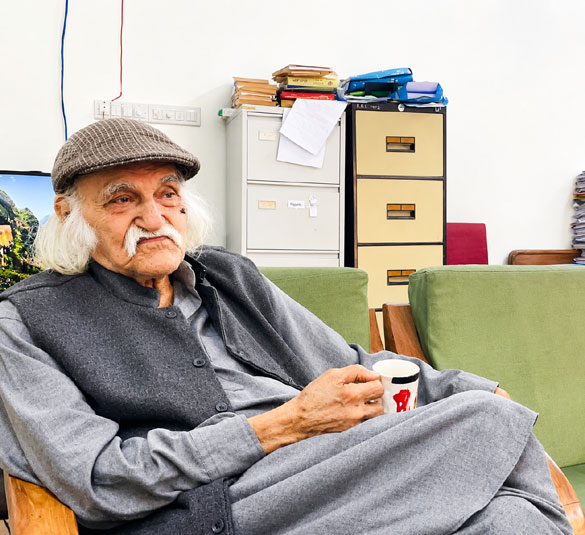
Dr Bedar was much more than a librarian. He was an accomplished Urdu scholar, an author, a researcher and an institution-builder who believed that libraries should not merely preserve knowledge—they should inspire it. His work reshaped the intellectual culture of Khuda Bakhsh Library and strengthened its reputation amongst scholars in India and overseas.
A Scholar Rooted in Tradition
Born as Abid Raza Khan on 4 February 1936 in Rampur, Uttar Pradesh, Bedar grew up in an environment where literature, history and learning occupied an important place. His education at Aligarh Muslim University gave him a strong grounding in Urdu, Persian and Arabic, languages that later became central to both his research and his professional life.
Before moving to Patna, he served at the renowned Raza Library in Rampur and later worked at the Indian Institute of International Studies in New Delhi. These experiences introduced him to the world of archives, manuscripts and historical research, equipping him with the skills that would later define his remarkable career.
A Library Rich in Treasures
The importance of Dr Bedar's achievements becomes clearer when one considers the institution he led.
Founded in 1891, the Khuda Bakhsh Oriental Public Library is recognised as one of India's most significant repositories of Islamic and Oriental manuscripts. Its collections include nearly 21,000 rare manuscripts and around 250,000 printed books, covering subjects ranging from Islamic theology and Persian literature to Mughal history, philosophy, medicine, astronomy and the arts.
For generations, historians, linguists and researchers have travelled to Patna to consult these invaluable collections. Yet every great library depends not only upon what it possesses but also upon how effectively those collections are organised, interpreted and shared. Without active scholarship, even the rarest manuscripts can remain largely unknown.
Dr Bedar understood this better than most.
Reviving an Institution
When he assumed charge as Director in 1972, Khuda Bakhsh Library already enjoyed enormous historical prestige. What it needed, however, was renewed academic energy.
Rather than viewing the library as a quiet archive, Bedar envisioned it as a living institution where research would flourish. Under his leadership, seminars, scholarly conferences, public lectures and academic discussions became regular features of the library's calendar. Historians, linguists, literary critics and Islamic scholars increasingly gathered there to exchange ideas and examine rare source material.
This transformation altered public perception of the library. It was no longer seen merely as a repository of priceless manuscripts but as a thriving intellectual centre where new knowledge was constantly being produced.
Making Manuscripts Accessible
One of Bedar's greatest strengths lay in recognising that preservation alone was not enough.
A manuscript locked safely in a cupboard has limited value if scholars cannot locate or understand it. Bedar therefore devoted considerable attention to cataloguing, bibliographical work and scholarly publishing, ensuring that the library's collections became more accessible to researchers.
During his tenure, the library strengthened its publication programme, and its research journal emerged as an important platform for academic writing. Bedar himself contributed through editorial work and research publications, helping to introduce many rare sources to a wider scholarly audience.
This painstaking work may not have attracted public headlines, but it laid the foundation for generations of future research.
A Director Who Thought Like a Scholar
What distinguished Dr Bedar from many administrators was that he never stopped being a scholar.
His writings covered an impressive range of subjects, including Urdu literature, literary criticism, Islamic studies, biography and history. Works such as Ghalib Ki Azmat, his study of Maulana Abul Kalam Azad, and later publications including Kashmeer Darpan: Ek Ta'rruf demonstrated both intellectual depth and literary refinement.
Because he understood manuscripts from a scholar's perspective, he appreciated their historical significance far beyond their physical preservation. His decisions as Director were shaped by this academic outlook.
Speaking His Mind
Dr Bedar was also known for his willingness to engage with difficult questions.
He believed scholarship demanded openness, debate and critical enquiry. That approach occasionally brought him into controversy, particularly over his views concerning the term "Kafir", communal harmony and certain social issues. Some religious organisations strongly opposed his interpretations, and reports suggest that a fatwa was issued against him.
Whether one agreed with his views or not, few questioned his intellectual courage. He remained committed to expressing his convictions respectfully and believed that meaningful scholarship could not flourish without freedom of thought.
An Enduring Influence
Many of the initiatives associated with Khuda Bakhsh Library today—including research fellowships, scholarly publications, academic outreach and wider public engagement—reflect the institutional culture that matured during Bedar's years as Director.
He understood that preserving heritage required more than protecting manuscripts. It demanded creating an environment in which those manuscripts continued to inform new generations of historians, linguists, writers and researchers.
That philosophy helped ensure that Khuda Bakhsh Library remained relevant in a rapidly changing academic landscape.
Remembering Dr Abid Raza Bedar
Dr Abid Raza Bedar passed away on 28 March 2025 in Aligarh at the age of ninety-two. His death marked the end of a remarkable career devoted to scholarship, public institutions and the preservation of India's intellectual heritage.
Today, his legacy lives on not only through his books but also through the institution he helped reshape. Every researcher who consults a carefully catalogued manuscript, every scholar who publishes work based upon the library's collections and every student who discovers the richness of India's manuscript tradition benefits, in some measure, from the foundations he helped strengthen.
In an age when cultural heritage is increasingly discussed in terms of monuments and museums, Dr Bedar's life reminds us that libraries are equally vital to a nation's civilisation. They preserve memory, encourage enquiry and connect generations through ideas.
Few people understood that responsibility more deeply than Dr Abid Raza Bedar, and few served it with greater distinction.
-----
Syed Amjad Hussain is an author and independent research scholar with a deep interest in Sufism and Islamic history, particularly in eastern India. His work is driven by a passion for rediscovering and documenting the lives of forgotten saints and the region's rich spiritual heritage. He is the author of Bihar Aur Sufivad, a widely appreciated bestselling book that explores the history of Sufism in Bihar. Through his writing, he seeks to connect the past with the present in a meaningful and accessible manner. He is currently a student at Lovely Professional University.
New Age Islam, Islam Online, Islamic Website, African Muslim News, Arab World News, South Asia News, Indian Muslim News, World Muslim News, Women in Islam, Islamic Feminism, Arab Women, Women In Arab, Islamophobia in America, Muslim Women in West, Islam Women and Feminism