
Islamic reformer: Ali Suavi a theologian
By Hakan Arslanbenzer
28 September 2018
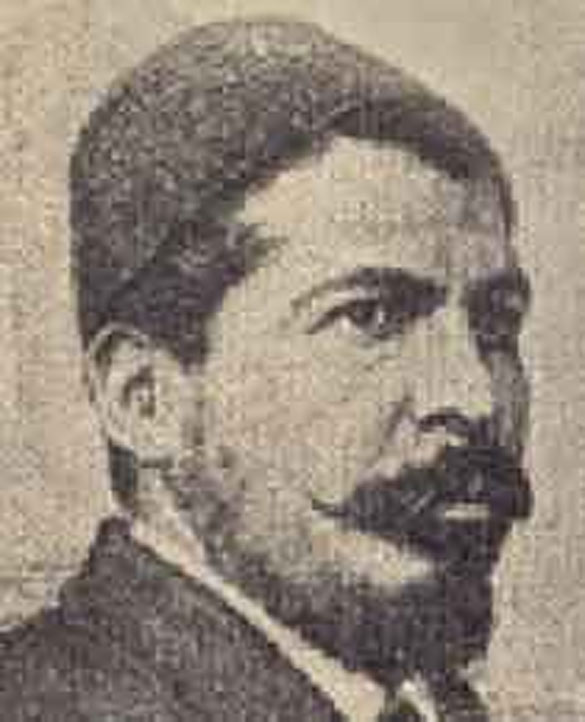
Photo: Ali Suavi, who worked as an educator, theologian and writer, was also a fervent reformer and opposed injustice whenever he saw it.
-----
State reform has a long history in Turkey; however, Westernization as the main axis of reforms emerged after the Edict of Gülhane, which was announced under Sultan Abdülmecid's rule in 1839. The Edict of Gülhane or Tanzimat ("Reorganization"), as referred to by most historians, erased the supremacy of the Muslim Ottomans over their non-Muslim compatriots and initiated the Ottoman citizenship as a lawful concept. The mastermind of the Edict of Gülhane, Mustafa Resit Pasha, the grand vizier of Abdülmecid, was educated in Europe and carried influences of Western ideas such as democracy, citizenship, supremacy of law, liberty and nationalism.
Resit Pasha was saluted by the young Ottoman intellectuals as "the prophet of liberty," though he would later be criticized as "a loyal friend of Britain." The circumstances formed after the Edict of Gülhane yielded a revolutionary young intellectual circle in Istanbul. The Young Ottomans, officially known as the New Ottomans Union, were a group of young intellectual bureaucrats who were trying to conceptualize the new constitutional Ottoman state in order to save it from decline. Chaired by Mustafa Fazil Pasha, the Young Ottomans Union was a secret club of intellectuals aimed at finding a solution for the state's crisis. Namik Kemal and Ziya Pasha, major poets and thinkers, were among the members of the union as well as Ali Suavi, a colorful revolutionary.
The Young Ottomans have been studied by scholars and ideologues as a group but also as individuals. Yet, Ali Suavi's portrait has stayed controversial since nationalists have embraced him as the initiator of Turkish nationalism and even Turanism, while some non-partisan scholars define him as a Muslim Ottoman nationalist.
Early life
Ali Suavi was born in 1839 in the Cerrahpasa neighborhood of Istanbul. His father Hüseyin Agha, a paper merchant, was originally from Çankiri province. According to Suavi, his father had great respect for people with knowledge and he learned literacy from his wife, who was a native of Istanbul. He portrays his father as a man loving justice, which should have influenced him from the very beginning.
After primary school, Suavi attended the Davutpasa Rüsdiyesi, which was one of the modern high schools founded during the Tanzimat reforms. Rüsdiye schools were aimed at raising young bureaucrats for the Ottoman State.
Suavi received a post from the Ministry of War after graduating from Rüsdiye, when he was 14 years old. He worked for the ministry for three years before he left Istanbul for the hajj together with his rich father.
At age 17, thanks to the Hajj, Ali Suavi saw different parts of the Ottoman land and spoke with various religious scholars from all over the Islamic world. During his voyage to Mecca, Suavi memorized many hadiths. He wrote that the Hajj voyage made him a "Hodja" (a Muslim teacher). Hadiths made him think of opposing injustice and become a hero against the oppressor, which would lead him to his fate as a religious revolutionary and eventually to his tragic end.
Teacher
After the Hajj, Ali Suavi made other trips to Anatolia. He became a teacher at Kosulu Madrasah, a traditional school for Islamic knowledge, which reflects one of his two-sided character and scholarship. While teaching at the Kosulu Madrasah in Simav district of Kütahya province, Suavi was deeply affected by incidents of injustice and corruption at the Ottoman law circuits. Ali Suavi won an examination held by the state and became a teacher at the Rüsdiye schools. Now, twenty years old, he would enter the Rüsdiye, where he was educated earlier, as a teacher. Ali Suavi worked in Bursa as a Rüsdiye teacher for only one year before he returned to Istanbul upon invitation by the Grand Vizier Ali Pasha.
Abdurrahman Sami Pasha, the Minister of Education, showed special interest in Ali Suavi and give him a room in his mansion. Suavi learned French from a special tutor together with the Pasha's children. Ali Suavi received several posts at various departments of the state including Sophia commercial court head, Plovdiv madrasah teacher and general secretary of Plovdiv. He quarreled with the Plovdiv governor and was sent back to Istanbul after that.
Preacher
Upon his return to Istanbul in 1866, Ali Suavi began preaching at the Sehzadebasi Mosque. Though he had no official madrasah diploma, Suavi had raised himself as a Muslim scholar. His preaching touched people and he managed to collect a popular audience at the mosque. Namik Kemal approached him after listening to his preaching. The famous Fuat Pasha is also said to have attended. As his popularity and his influence over people grew rapidly, the government showed close interest in Suavi.
He began writing essays on Philip Efendi's Muhbir (Reporter) newspaper, which brought him more fame. He criticized Ali Pasha, the Grand Vizier, after the Beograd defeat in 1867, which caused that the state to close the newspaper and exile Suavi to Kastamonu province. The officials kept Suavi in close surveillance in Kastamonu. So, he decided to run away and secretly moved to Paris with the help of Mustafa Fazil Pasha, the sponsor of the Young Ottomans. His seatmates were Namik Kemal and Ziya Pasha. Suavi moved to London and began to publish Muhbir. Yet, he had to move back to Paris after a while since Mustafa Fazil Pasha made an agreement with Sultan Abdülaziz and stopped sponsoring the Young Ottoman rebels in Europe. After the German-French War exploded in 1870, Ali Suavi moved to Lyon.
Suavi was very productive in writing. He wrote articles, essays and published small brochures in order to announce his ideas about constitutionalism, Muslim Ottoman nationalism, justice and liberty. In 1876, Abdülaziz was killed and Abdülhamid II was crowned after the short reign of Murad V, who was dismissed because of his poor mental health. Abdülhamid pardoned the young exiles living in Europe and invited all of them to the capital. Ali Suavi returned to Istanbul and was assigned to the Translation Committee, which would be dissolved after Namik Kemal and Ziya Pasha were also appointed to the same committee. The duo and Suavi had bad memories. Their friendship ended because of Ali Suavi's fervent and unstable character. Though having had joined the same secret society and having runaway to Europe together, Namik Kemal, Ziya Pasha and Ali Suavi had little in common. The duo criticized the state and administrators, but they never thought of overthrowing it with force.
A tragic end
Being dismissed from all his official posts after 10 years' work, Ali Suavi was not happy with Abdülhamid's rule like many of his peers. On the other hand, unlike his peers, he was fervent and ardent enough to collect hundreds of people to overthrow the sultan by wanting to crown Murad V, who suffered from mental illness and close down the Çiragan Palace in Besiktas. On May 20, 1878, Ali Suavi and some 250 followers attacked the Çiragan Palace, which led to his death. Yedi Sekiz Hasan Pasha, the police chief, killed him by hitting him with a heavy wood stick. Ali Suavi's body was transferred and buried around the Yildiz Palace, Sultan Abdülhamid's residence.
Source: dailysabah.com/portrait/2018/09/28/ali-suavi-islamic-reformer
URL: https://www.newageislam.com/islamic-history/islamic-reformer-ali-suavi-theologian/d/116558