
The Bad Girl of Urdu Literature - Part II
By Rakhshanda Jalil
11 Jan, 2012
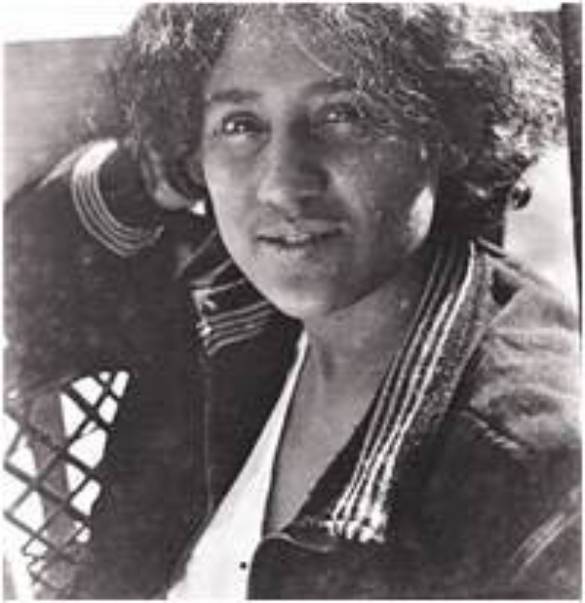
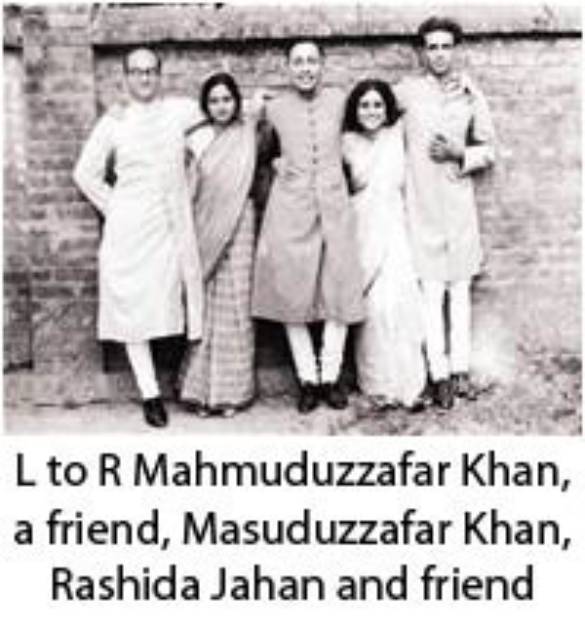
Others too have testified to Rashid Jahan's great personal charisma that drew people to her like moths to a flame. Faiz Ahmad Faiz, who met Rashid Jahan when Mahmuduzzafar was the principal of the M.A.O. College in Amritsar from 1934-36, was drawn into the activities of the Progressive Writers' Movement primarily due to her. Rashida's house became a meeting place for a motley bunch of people - party workers, poets, writers, patients, young girls seeking counsel, young men in search of political advice. People from all walks of life and of all political dispensations flocked around them. Rashid Jahan's vivacity and quick-wittedness was the perfect foil for her husband's sobriety and courtesy. Together, they presented a picture of dedication to a cause that they considered larger than themselves. Rashid Jahan gave all her earnings as a successful and much-sought-after gynecologist to the Party; the Party in turn gave the husband and wife duo Rs. 50 each for their living expenses.
Faiz was drawn into the Progressive Writers' Movement due to her
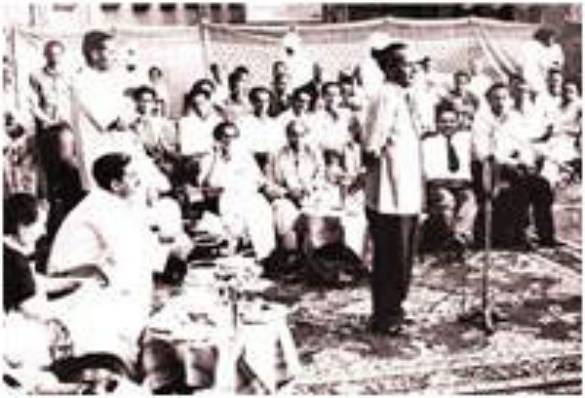
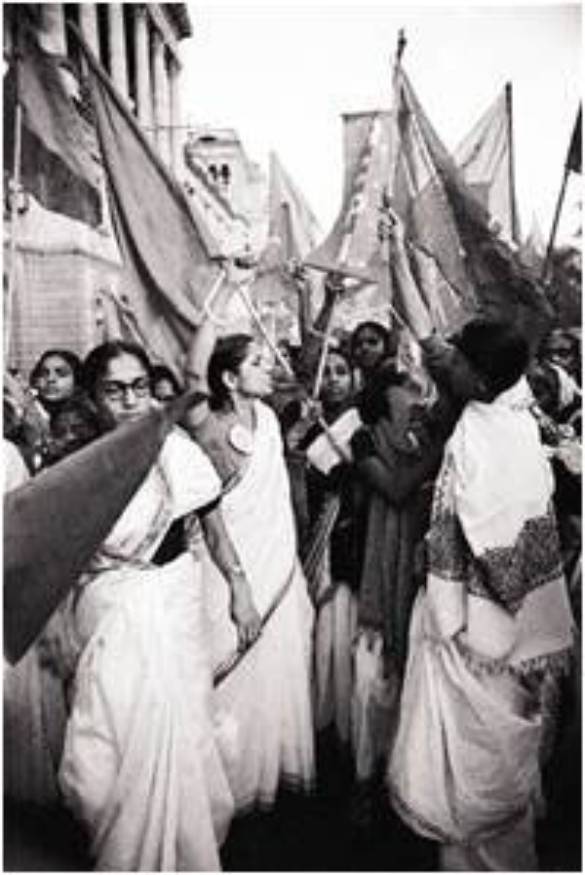
Mahmuduzzafar spent many years in and out of jail or "underground". During all such occasions, Rashid Jahan worked harder than before, throwing herself with ever-increasing zeal into a web of intertwining activities. When she was not conducting adult education classes sitting on the floor of sweepers' colonies or gathering women from Arya Samaj mandirs to join hands on women's health and education issues, or participating in trade union rallies and protest marches, she was either busy running her practice to raise funds for underground colleagues or bullying friends and admirers to contribute to her many 'causes'. Or she would be writing, translating and editing political pieces for the Party magazine Chingari. Treating the sick and writing short, stringent stories continued side by side, seamlessly bringing together her many interests.
Rashid Jahan gave all her earnings as a gynecologist to the Communist Party
The years after Angarey ushered in a period of mellow fruitfulness for Dr Rashid Jahan. In 1936, she was at the heart of the movement that laid the foundation for the establishment of the Progressive Writers' Association. She was instrumental in organizing the First Progressive Writers' Conference in Lucknow on 9 April 1936 where Premchand, invited to deliver the Presidential Address, outlined the aim of literature and chastised his audience thus:
'If you cannot see beauty in a poor woman whose perspiration flows as, laying down her sleeping child on a mound along the field, she works in the field, then, it is your vision that is to blame. For behind those wilted lips and withered cheeks lie sacrifice, devotion and endurance.'
Rashid Jahan did not have the luxury to hone her craft
Gradually this social realism began to overlay the overtly political message in Rashid Jahan's stories too. In stories like 'Chor' while there is anger against the system that produces those thieves who milk the system dry but do not get caught, there is also an earnest desire to bring about change. Always in a hurry, always on the go with so much to do and very little time to achieve everything, Rashid Jahan did not have the luxury to hone her craft or even polish and perfect her first drafts. Consequently, they sometimes have an incomplete-ness. However, what they lack in skill and craft, they more than make up for in the freshness and innovativeness of their approach and the zesty, true-to-life language employed by her characters. Rashid Jahan wrote as she spoke - freely and fearlessly. She wrote about issues that no writer - male or female - had hitherto touched: she wrote without the slightest trace of false modesty about veneral disease, the lack of family planning, the absence of taking a woman's consent for marriage and the false notion of "manliness" in traditional Muslim households. She wrote about these things not so much to shock but because she wanted to confront and expose issues that had always been conveniently concealed. Stories such as 'Nayi Bahu ke Naye Aib', 'Gharibon ke Bhagwan', 'Pul', and 'Nayi Musibatein' even managed to garner some praise from the New Age critics. Some of her writings have appeared in collections like Aurat aur Dusre Afsane wa Drame (1937) and Woh aur Dusre Afsane wa Drame (Maktaba Jamia, published posthumously in 1977). She is believed to have written 25-30 short stories and 15-20 plays, many of them for the radio.
The epitaph on her grave reads: 'Communist Doctor and Writer'
In her play Aurat, Rashid Jahan turned the image of the suffering woman on its head and made her a votary of progress. Fatima, a childless woman, is married to Atiq, a maulvi who is bent upon marrying again, ostensibly to beget an heir but actually to get a younger wife, the daughter of a 'devotee' who will also be more pliable. For all his ostentatious piety and dispensing of charms and amulets to the needy, Atiq is a wily, greedy, typically chauvinistic man who does not think twice about cursing and beating his wife when she questions his authority and wisdom. The format of the play, longer than most of her short stories, allowed Rashid Jahan to develop her characters and gave freer rein to the idiomatic, earthy language that enhanced the naturalness of her writing. Its length allowed her to take up several issues she had only touched upon in the Angarey play, Parde ke Peeche.
Unlike Parde ke Peeche, however, the wronged woman in Aurat is no longer willing to accept her lot. Where Muhammadi Begum was content to bemoan her fate and share her misfortune with a confidante who could offer little more than clucks of sympathy, Fatima finds a more receptive, more proactive support group: her male cousins who offer unconditional support and her tenant's wife who expresses outrage and indignation at Atiq's behaviour.
In a moving epitaph, noted Urdu critic Ale Ahmad Suroor observed, 'Dr Rashid Jahan had a magic and that magic was her khuloos, her sincerity.' It was this magic that drew the most talented and gifted people of her generation: Firaq Gorakhpuri, Josh Malihabadi, Hiren Mukherjee, Mian Iftikharuddin among many others. A generation of women writers, notably Ismat Chughtai, Attia Hussain, Razia Sajjad Zaheer, and Sadiqa Begum Soharvi have acknowledged the influence Rashid Jahan had on their lives and style of writing. Rashid Jahan died in 1952 in Moscow where she had gone for treatment for uterine cancer, and is buried in a cemetery there. The epitaph on her grave reads: 'Communist Doctor and Writer'. Her legacy lives in the lives of all those who raise their voice whenever they see oppression and injustice. Brief though her life was and slender her literary output, together they serve to illustrate the truth in the words of Majrooh Sultanpuri, who said:
Main akela hi chala tha jaanib-e-manzil magar
Log saath aate gaye aur caravan banta gaya.
(I alone set out towards the destination but
People kept joining me and a caravan was formed.)
Source: http://www.thefridaytimes.com/beta3/tft/article.php?issue=20130111&page=16
URL: https://newageislam.com/islamic-culture/the-bad-girl-urdu-literature/d/9978