
Islam And Music: Music Therapy Has Been Rediscovered In The West As A Form Of Treatment To Cure Various Neurological Illnesses Following Its Eclipse After Ottoman Period
By
New Age Islam Staff Writer
27
September 2023
Use Of
Music As A Therapy Finds Mention Since The 18th Century, But Chinese And Other
Cultures Claim Its Use In Antiquity, From The Time Of Confucius
Main
Points:
1. Muslim
physicians and scientists contributed greatly to the development of music
therapy in the middle ages.
2. Music is
approved by some Sufi orders.
3. The Quran is
silent over the use of music.
4. Maulana Rumi
and Shams Tabrez used music to enhance spiritual ecstasy.
------
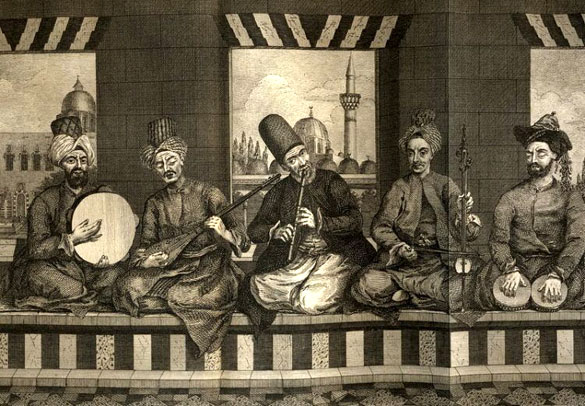
File Photo
----
Music has
always enchanted and spellbound human beings. Even animals respond to good
music. The camel riders in Arab deserts sang Hudi that is said to energise
camels. The Prophet David is believed to have sung the Psalms in accompaniment
to the lyre. In Vedas, the musical instrument Veena is mentioned as an
accompaniment to devotional songs.
Therefore,
serene music has always been used as a means to enhance spiritual experience
among the devotees. Islam does not discourage the use of music, though the
Quran does not mention music. However, it discourages law al hadith (vain
entertainment) which includes the kind of music that creates vulgar emotions
and passion. Some Sufi orders have approved of music as a means of spiritual
enhancement. Maulana Rumi and Shams Tabrez used music during Samaa (devotional
music sessions).
In the
modern era, music is being used as a therapy or a means of curing physical and
mental illnesses. Music therapy has become a branch of medical science. It aims
to provide physical and mental benefit. Benefits of music therapy include
improved heart rate, reduced anxiety, stimulation of the brain and improved
learning. Music therapists use their techniques to help their patients in many
areas, ranging from stress relief before and after surgeries to
neuropathologies such as Alzheimer's disease. Studies on patients diagnosed
with mental health disorders such as anxiety, depression and schizophrenia have
shown some improvements in mental health after going through music therapy.
The
American Music Therapy Association's website says about the earliest mention of
music therapy in the west says:
"The
earliest known reference to music therapy appeared in 1789 in an unsigned
article in Columbian Magazine titled "Music Physically Considered."
In the early 1800s, writings on the therapeutic value of music appeared in two
medical dissertations, the first published by Edwin Atlee (1804) and the second
by Samuel Mathews (1806). Atlee and Mathews were both students of Dr. Benjamin
Rush, a physician and psychiatrist who was a strong proponent of using music to
treat medical diseases. The 1800s also saw the first recorded music therapy
intervention in an institutional setting (Blackwell’s Island in New York) as
well as the first recorded systematic experiment in music therapy (Corning’s
use of music to alter dream states during psychotherapy)."
Music
Therapy is of two kinds. One is receptive and the other is active. In the
former, the patient only listens to a particular kind of music to cure certain
mental illness while in active music therpy, the patient is involved in creating
music. Music therapy is also found to be useful in curing insomnia or less
sleep.
But the use
of music as a therapy was developed by the Muslim scientists of the 9th and
10th century and by the 18th century, the West adopted music therapy as a branch
of medical science. The Muslim scientist Al Kindi (9th century) first produced
the idea that music could be used to cure physical and mental illnesses. He can
be considered the father of music therapy. Another Muslim scientists Al Razi
(854-932), Al Farabi (870-950) and Ibn Sina (980-1037) also developed music
therapy.
During
Abbasid period, hospitals used music therapy. Pinar Somakci in her article
"Music Therapy in Islamic culture" writes :
"Although the first serious music therapy
was practiced during the Ottoman period, various healing attempts were
undertaken in pre-Anatolian central Asia by shaman musicians known as Baksi.
Even today, there are Baksis among the central Asian Turks who continue there
activities.
Ibn Sina,
in a hospital established in Damascus by a Seljuk Turk engaged in the healing
of mental disorders with music. The influence of Ibn Sina continued into the
Ottoman period.
The Ottoman
palace doctor, Musa bin Hamun used musical therapeutic means in the healing of
the tooth diseases and children's psychological disorders.
Hekimbasi
Gevrekzade Hsan Effendi was the student of Tokati Mustafa Effendi (18th
century) who translated Ibn Sina 's famous work Al Kanun fit Tibbi. In his own
work, he said that he drew heavily upon Ibn Sina's work".
Therefore,
Muslim scientists presented the idea of music therapy to the world and
developed it as a medical science. They wrote books on music therapy and
prescribed various kinds of music and pitches for different illnesses. They
also prescribed times of day and night for playing music for particular
illnesses. The modern music therapy borrows from the knowledge of the Muslim
scientists of the middle ages.
In some
hospitals in Islamic countries, the recitation of particular Surahs of the
Quran have also been included in the treatment protocol in the hospital.
But some
researchers say that music therapy is not the idea of the Muslim scientists.
The ancient Egyptians, Chinese, Romans and the Greek scientists used music
therapy. Prophet David treated Saul with music for a mental illness. Confucius
believed that music could heal eyesight, hearing and blood circulation
disorders. Greek poet Homer also believed that music could stop bleeding.
Nevertheless,
it is a fact that Muslims developed the Music therapy in the modern era and
formulated methods for treatment with music. They even wrote books on the
subject.
However,
the larger section of Islamic scholars or ulema are still undecided on the
justification of music as a therapy and there is no consensus on the issue.
Prof. Dr Ibrahim B. Syed in his article "Music Therapy" writes on the
issue:
"Currently
there is an aversion to music by some of the ulema (religious scholars) in the
Islamic world. The paper analyses the Islamic perspective on music and singing.
It concludes that utilisation of music as a therapeutic agent in medicine is
not haram or forbidden. There is documentary evidence that shows the power of
music can be tapped to heal the body, strengthen the mind and unlock the
creative spirit. Published papers nd journal articles after dramatic accounts
of how doctors, musicians nd health care professionals use music to deal with
everything from anxiety to cancer, high blood pressure, chronic pain, dyslexia,
even mental illness. During childbirth, music can relieve expectant mothers'
anxiety and help release endorphins the body 's natural pain killers,
dramatically reducing the need for anaesthesia. Exposure to sound, music and
other acoustical vibrations can have a life long effect on health, learning and
behaviour. They stimulate learning and memory, strengthen listening abilities.
Music has been used as a treatment or cure from migraine to substance
abuse."
Therefore,
it can be rightly said that the Muslim physicians and scientists have
contributed greatly to the development of music therapy in the middle ages. The
world today acknowledges the benefits of music therapy.
New Age Islam, Islam Online, Islamic Website, African Muslim News, Arab World News, South Asia News, Indian Muslim News, World Muslim News, Women in Islam, Islamic Feminism, Arab Women, Women In Arab, Islamophobia in America, Muslim Women in West, Islam Women and Feminism