
The Dark Year for Women in Afghanistan: Ongoing Deprivation and Despair Under Taliban Rule
New Age Islam News Bureau
01 January 2026
· 'Flat De Denge, Bas AapApna Hijab Utaar Dena': Kashmiri Muslim Girl Alleges Discrimination While Searching For Flat In Delhi
· The Dark Year for Women in Afghanistan: Ongoing Deprivation and Despair Under Taliban Rule
· When hijab becomes a public problem: understanding gendered Islamophobia
· Woman arrested for spitting at police, insulting Islam in AlorSetar
· The Syrian woman… A story of struggle against repression
· Experience Resilience and Hope Through Quilts by Syrian Women at Gibson House Museum
· Breaking barriers, Muslim woman relives Hyderali’s legacy in kathakali music
· Bhavnagar Officials Bar Hijab-Wearing Girl from Taking Gujarat Railway Exam
· Hijab-wearing TikTok creator faces backlash over controversial posts
Compiled by New Age Islam News Bureau
URL: https://newageislam.com/islam-women-feminism/women-afghanistan-under-taliban-rule/d/138267
-----
The Dark Year for Women in Afghanistan: Ongoing Deprivation and Despair Under Taliban Rule
Amin Kawa
1January 2026
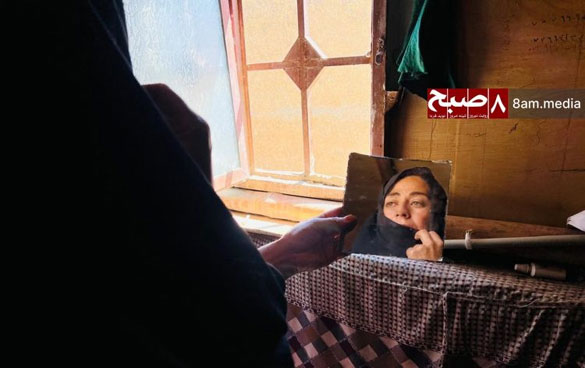
Some women in Afghanistan who once worked in international organizations and media outlets under Taliban rule, or who were later dismissed from their jobs, describe 2025 as the worst year of their lives and a year overwhelmed by despair. They say no clear future exists for women under Taliban rule. Each day, hope fades further, while psychological pressure, economic hardship, and violence against women continue to rise. Even those who have managed to keep their jobs in a few private institutions and with the United Nations live with constant fear of losing them. They say Taliban restrictions have pushed many institutions to avoid hiring women, to claim that women’s presence disrupts their work, or to pay women only half the salaries given to men.
Mehrangiz (pseudonym) is a journalist who calls 2025 the hardest and most painful year she has ever endured. After more than four years of Taliban rule, she says she still cannot accept the reality forced upon her. She explains that local media outlets deliberately hire men to avoid the complications that come with employing female journalists. At the same time, some media organizations use women’s names on project proposals to meet foreign funding requirements, since the presence of women remains a condition for support.
She says, “Discrimination never disappeared. It only changed shape. Female journalists do most of the work for very little pay, while male employees earn several times more. Even in places that claim to support journalism, some men act as if women cannot work without them. In this environment, female journalists are exploited, humiliated, and stripped of dignity. Their work is questioned, their abilities doubted, and their contributions dismissed. Many believe that women lack the capacity to work across different fields of journalism.”
Mehrangiz adds, “Every year, instead of improvement, things grow worse. I can say with certainty that working in the media in 2025 has become far more restricted and exhausting than during the first two years after the government collapsed. We live without personal safety or job security. Peace of mind no longer exists. Stress and fear have replaced it, leaving us trapped in an uncertain and discouraging future.”
Sitayish (pseudonym), once taught at Herat University before Taliban orders removed her from her position, just like thousands of other women. She says that in 2025, pressure and discrimination against women did not ease but instead became more organized and deliberate. Women, she explains, endured the harshest conditions this year and lost much of their hope for what lies ahead. The ban on female lecturers not only destroys their livelihoods and mental well-being, but also pushes universities and academic institutions into a deeper crisis.
She says, “Losing our jobs threw female lecturers into uncertainty and emotional distress. Most of us see no clear future anymore. Each day, the psychological pressure grows heavier. Years of academic achievement and teaching experience mean nothing now. This reality has weakened the quality of education and harmed female students who are already barred from attending universities.”
Sitayish adds, “As restrictions against women tighten, universities have become closed and lifeless spaces. The production of knowledge has suffered, students have lost motivation, and over time, this will weaken the country’s human and scientific potential.”
Nastaran (pseudonym), who works for the United Nations and describes 2025 as the darkest year for women in Afghanistan. During the last six months of the year, the Taliban ban forced her to work from home. She says this made it nearly impossible to manage her workload while fulfilling the need for field-based work.
She worries that if this situation continues, the United Nations may stop renewing contracts for women altogether, since staff presence in offices and field locations remains essential.
Nastaran says, “A home is not a workplace. Electricity cuts, poor internet, and isolation make serious work almost impossible. Many tasks require field presence, and office work allows faster communication and coordination. This situation has deeply affected me and constantly raises the fear of losing my contract. Being barred from the office and the field is not a minor issue. If this continues, organizations will stop hiring women, because no employer pays someone who cannot work.”
A former employee of the Herat Directorate of Education also calls 2025 the worst year for women, particularly in Herat. She lost her job after the Taliban takeover, briefly found work again, then faced renewed orders that confined her to her home. Eventually, she had no choice but to leave the country. Migration, she says, brought new struggles, including language barriers, isolation, and the challenge of adapting to an unfamiliar world.
Earlier, the United Nations Development Programme (UNDP) reported that 90 percent of women have been excluded from employment, while only 7 percent worked outside the home in the previous Gregorian year.
A report by the United Nations Security Council Monitoring Team confirms that conditions for women and girls in Afghanistan remain severe. Citing the Afghanistan Gender Index 2024 by UNICEF, the report states that eight out of ten women lack access to both education and employment. It also notes that Afghanistan has the second-largest gender gap worldwide. According to one estimate, Taliban policies toward women cost the country’s economy more than one billion dollars each year.
The United Nations Assistance Mission in Afghanistan (UNAMA) also reported in its latest briefing to the Security Council that officials from the Taliban Ministry for the Propagation of Virtue and Prevention of Vice in Kandahar ordered male dentists not to treat female patients and instructed clinics to hire female dentists instead.
Source: 8am.media
https://8am.media/eng/the-dark-year-for-women-in-afghanistan-ongoing-deprivation-and-despair-under-taliban-rule/
-------
'Flat De Denge, Bas AapApna Hijab Utaar Dena': Kashmiri Muslim Girl Alleges Discrimination While Searching For Flat In Delhi
December 31, 2025
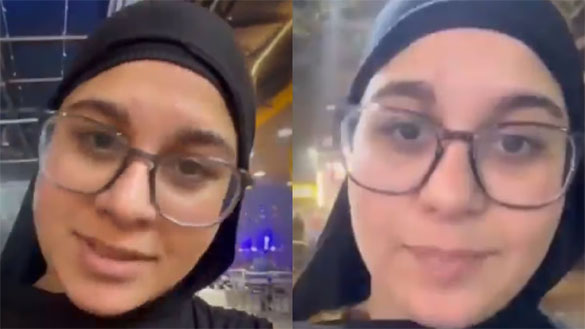
A purported video of a Kashmiri girl living in Delhi has gone viral on social media, triggering outrage over alleged religious discrimination in the rental housing market. In the clip, the woman narrates her struggle to find a flat in the national capital, claiming she was repeatedly denied accommodation because of her identity.
According to social media posts, the girl has been identified as Munazza, a Kashmiri Muslim student searching for a rented flat in Delhi. The video was shared by an X handle named The Muslim, which alleged that Munazza was refused housing for being Muslim and was even asked to remove her hijab to be considered for a flat.
In the video, Munazza, wearing a hijab, says that living in Delhi itself is a struggle for students, but the real hardship begins when searching for accommodation. She claims that many landlords outright refuse to rent flats to Muslims and that the situation worsens when she reveals she is a Kashmiri Muslim. She further alleges that one person told her she could get a flat only if she removed her hijab.
"Subah se ab takmainelagbhag 7–8 flats dekhehonge. Ek ne kahakiaaphumwatanho? Aurekbande ne yehbhiboldiyaki koi problem nahihai, hum aapko flat de denge, bas aapapna hijab utaardena. Bhai, karoon main kya?” the woman says in the video.
The clip has sparked widespread criticism online, with users calling it a clear case of religious discrimination. Several social media users questioned how long such practices would continue, while others described the incident as a reflection of deep-rooted bias against minorities.
Source: freepressjournal.in
https://www.freepressjournal.in/india/flat-de-denge-bas-aap-apna-hijab-utaar-dena-kashmiri-muslim-girl-alleges-discrimination-while-searching-for-flat-in-delhi
------
When hijab becomes a public problem: understanding gendered Islamophobia
Dr Amina Hussain
1,January 2026
The hijab is not new to controversy. It has long served as a troubling object within secular public discourse, and is repeatedly framed as a badge of backwardness, coercion, or, at worst, a dangerous religiosity. When Muslim women’s veiling is questioned, banned or interfered with in public and institutional settings, it brings out the most insidious form of Islamophobia, which should be understood as gendered Islamophobia. And these incidents do not merely concern dress or decorum; they, in fact, reveal how Muslim women’s bodies are rendered available for scrutiny, correction, and intervention by the state and its dominant cultural norms. Scholars like Jasmine Zine, Alimahomed-Wilson and Abu-Lughod are among the first to theorise gendered Islamophobia as a distinct analytical category explicitly. Jasmine Zine defines it as “a form of racialised gender violence that targets Muslim women through intersecting regimes of patriarchy, racism and imperialism”
The public unveiling of a Muslim woman at a state-held function by Bihar Chief Minister Nitish Kumar in full media glare is symptomatic of a political culture rooted in gendered Islamophobia, where Muslim women are both hyper-visible and denied agency at the same time. Muslim women are disembodied, and hijab/burka becomes a symbolic battleground where anxieties about secularism, national identity, and modernity are projected and propagated.
Over the past several decades, feminist scholarship on hijab has evolved beyond the binary framework to a more nuanced understanding of its cultural and political context. Western liberal feminists used veiling as a sign of patriarchal oppression and religious backwardness, implying that visibility and emancipation were synonymous. Mary Wollstonecraft, hailed as the mother of liberal feminism, described Muslim women as ‘soulless’ in her seminal essay A Vindication of The Rights of Women. She used Muslim women’s image to argue for the education of Western women. The contrast here is strategic, in projecting Western women’s education through the binary of civilised/ barbaric.
Later postcolonial feminist scholars like Mohanty and Mernissi questioned the oversimplified, static and ahistorical framework situating Muslim women as ‘other’ of Western women. Saba Mahmood’s intervention in the Politics of Piety remains foundational in redefining agency. She maintains that agency cannot be just resistance to norms, but must also account for ethical self-fashioning within religious traditions. Leila Ahmed’s historical analysis of the resurgence of veiling since 1970 after the unveiling era of 1940 and 50’s in A Quiet Revolution further demonstrates how Muslim women’s veiling is a complex and multilayered phenomenon and was central to colonial projects of domination, where unveiling was projected as both civilisational progress and a ‘moral rescue’ of Muslim women, precluding the imperialist designs underway. One can see the same colonial logic and its crude persistence in contemporary secular governance, where the hijab is repeatedly positioned as a problem requiring state intervention. Joan Wallach Scott also exposes the hypocrisy behind the fixation on the veil as a veiled strategic displacement for the liberal democracies to proclaim their commitments to gender equality while at the same time refusing to interrogate their own forms of control and coercion. Islamic feminist scholars argue that the controversies surrounding hijab is more about controlling Muslim visibility, disciplining religious differences and asserting state authority over minority bodies than about women’s rights.
The meaning of hijab has never been singular, just like its diverse styles and ways of draping; its meaning is also contingent and is discursively produced through power-laden encounters. In Iran, when the Shah banned public veiling following Turkey‘s example, popularly known as kashf e hijab, in 1937, many women stopped moving out of their houses as they refused to be unveiled, and not surprisingly, hijab or the chador later became a symbol of the 1979 Islamic revolution in Iran. When political authorities presume the right to question, touch, or remove a woman’s veil, they assert interpretive sovereignty over her body, reinscribing precisely the forms of domination and control that feminist critique today seeks to dismantle. The act of unveiling a woman without her consent, whether through physical touch or symbolic coercion, in reality, constitutes an assertion of power over her body and is emblematic of rape culture.
Judith Butler argues that bodies that are marked by religious and gendered differences are rendered precarious in places saturated with state authority. The public stage is far from being neutral; in stark contrast, it is organised through norms and codes that determine whose bodies are legible, respectable, and safe. Veiling often intensifies this precarity, exposing Muslim women to both surveillance and violation under the guise of visibility and transparency. Their participation in public life is frequently made conditional upon modifying their appearance, suggesting that their acceptance remains provisional and supervised. There have been media reports about the Muslim woman doctor in Bihar who was forcibly unveiled, felt so humiliated that she considered not taking the job.
One must understand that gendered Islamophobia is a more intimate and insidious form of Islamophobia as it operates through concern, protection, and moral anxiety, often targeting ‘visible’ Muslim women through their hijab and burkas, as both victims in need of saving and as symbols of cultural excess that must be managed and their supposed ‘oppression’ become the rationale for their intense securitization. As a result, they are subjected to heightened surveillance where their dress, mobility, and comportment are monitored not only by state institutions but also by media, social networks, and public opinion. Such surveillance is not always codified in law but are interspersed through everyday gestures, language, interruptions, mockery, and corrections that normalise domination while appearing benign.
The logic that Muslim women must unveil to be ‘recognised’ mirrors older imperial intervention in which emancipation was imposed rather than chosen, and one can see a colonial continuum equating visibility with progress and conformity with inclusion. The obsessive scrutiny of the hijab/burka in public life needs a reorientation of feminist politics today. Any form of feminism which is attentive to power, difference, and history must reject the regulation of Muslim women’s bodies as a route to equality. Consent and bodily autonomy cannot be selectively applied; they must hold equally. Anyone can see that the hijab is not the site of oppression here, but the persistence of surveillance, touch, and control over Muslim women’s bodies is.
Source: maktoobmedia.com
https://maktoobmedia.com/opinion/when-hijab-becomes-a-public-problem-understanding-gendered-islamophobia/
------
Woman arrested for spitting at police, insulting Islam in AlorSetar
31 Dec 2025
A 34-year-old woman was arrested in AlorSetar for spitting at police, hurling insults, and making remarks offensive to Islam, with the incident going viral.
ALOR SETAR: Police have arrested a woman for aggressive behaviour towards officers and disturbing public order in Mergong.
Kota Setar district police chief ACP Syed Basri Syed Ali said the 34-year-old suspect was detained around 2.30 pm yesterday following a report.
The report concerned an individual, believed to be mentally unstable, who had allegedly punched a company worker.
Two officers were dispatched to the location to provide assistance.
Upon arrival, they found the local woman creating a disturbance and disrupting public order.
The officers identified themselves and attempted to calm the suspect by persuading her to cooperate.
“The suspect suddenly acted aggressively and provocatively by raising her voice, hurling insults, and making obscene gestures towards one of the officers,” said Syed Basri.
He added that the suspect also threw her identity card at the officer.
The suspect then spat at the officer while uttering remarks that insulted the Islamic religion.
The incident was recorded by members of the public and later went viral on the TikTok social media platform.
The case is being investigated under Section 353 of the Penal Code for using criminal force to deter a public servant.
The suspect is also being investigated under Section 298 for words that could offend religious feelings and Section 509 of the Penal Code. – Bernama
Source: thesun.my
https://thesun.my/news/malaysia-news/crime/woman-arrested-spitting-police-insulting-islam/
------
The Syrian woman… A story of struggle against repression
1,January 2026
Damascus, (SANA) – Since the outbreak of the Syrian revolution in 2011, the Syrian woman has emerged as one of the essential pillars of the popular movement and as a central actor in the struggle against the regime of repression and tyranny.
The Syrian woman was not merely a witness to events, but an active participant on the ground: present in demonstrations, engaged in humanitarian, medical, and media work, and paying a heavy price in freedom, security, and family stability.
A Crucial Role in the Revolution and Social Fabric
From the very first days of the revolution, Syrian women took part in organizing peaceful demonstrations, raising slogans calling for freedom and dignity, defying a repressive machine that made no distinction between men and women.
They also played a key role in documenting violations, conveying the truth to the world through alternative media, as well as aiding the wounded, sheltering the displaced, and supporting the families of detainees and the disappeared.
Prisons… The Cruelest Face of Suffering
Thousands of women paid the price of their positions through arrest and detention in the prisons of the deposed regime, where they endured the most atrocious forms of physical and psychological torture, in blatant violation of all laws and humanitarian norms.
In Sednaya Prison and other detention centers, female prisoners suffered systematic torture, denial of medical care, malnutrition, forced isolation, and constant humiliation aimed at breaking their human dignity.
Many of them emerged from prison with exhausted bodies and souls deeply scarred by pain, while the fate of thousands of other women remains unknown to this day, within the framework of the regime’s policy of abduction and enforced disappearance.
Loss… A Wound That Does Not Heal
The suffering of the Syrian woman was not limited to prison; it extended through the loss of sons, brothers, and husbands.
Mothers lost their children under torture, while others still await news of the fate of their sons who were victims of enforced disappearance.
This loss transformed the lives of many women into a state of permanent waiting and silent pain, accompanied by feelings of helplessness and oppression.
After Liberation… The Shock of Truth
With the gradual revelation of certain truths after the liberation of several regions, Syrian women were confronted with the painful shock of learning of the martyrdom of their sons, their death under torture, or the confirmation of their definitive disappearance.
The Syrian Woman: Symbol of Struggle and Hope
The Syrian woman remains a symbol of resilience and struggle, a living memory of the revolution and its sacrifices.
Despite repression, prison, and loss, her will has not been broken, and she has never renounced her role in building society and in the pursuit of justice.
Recognizing the sacrifices of the Syrian woman, defending her rights, and involving her in the future of Syria is not only a moral duty, but an essential condition for building a free and just homeland worthy of the sacrifices of its daughters and sons.
The Syrian woman has never been marginal in the history of the revolution; she has been and remains its beating heart, the face of dignity, the witness of suffering, and the bearer of hope.
Source: sana.sy
https://sana.sy/en/syria/2288045/
------
Experience Resilience and Hope Through Quilts by Syrian Women at Gibson House Museum
December 31, 2025
A unique and deeply moving exhibition showcasing textile art created by Syrian women is currently open to the public at the Gibson House Museum in Toronto. As part of the Toronto Arts Council’s Animating Historic Sites program, this remarkable collection features handcrafted quilts, with each square representing the personal stories and emotions of the women who created them. These women, all newcomers to Toronto, have come together to share their individual experiences through the art of quilting, creating a beautiful and powerful tapestry of resilience, hope, and solidarity.
A Shared Tapestry of Connection and Strength
The quilts displayed at the Gibson House Museum are not just pieces of fabric sewn together. They are powerful stories of displacement, loss, and resilience, woven together with each stitch. The quilts are collaborative works, each square representing the voice of one woman. Every piece tells a unique story of personal struggle and triumph, illustrating the individual and collective experiences of these Syrian women who have faced hardship, hardship, and trauma in their journey from Syria to Canada. Each woman involved in the project has crafted her square, reflecting her emotions, memories, hopes, and personal narratives.
As the women worked together on this project, they built more than just artwork; they forged a sense of community and shared understanding. Through storytelling, emotional expression, and the act of textile-making, they found support in each other, creating a bond rooted in common experiences. This exhibit not only showcases beautiful artwork but also exemplifies the power of shared experiences in helping individuals heal, build connections, and find a sense of belonging in their new home.
Emotions Woven into Every Stitch
The exhibit is much more than just a collection of quilts. It is a living, breathing testament to the resilience of the human spirit. The quilts are a physical manifestation of the hardships and triumphs of the Syrian women who created them, each stitch weaving together the emotions and memories of their past experiences. The squares, crafted from various fabrics, each tell a part of the story, contributing to the larger, cohesive whole that makes up the final quilts.
Through the diverse range of fabrics and colors used, the quilts come together to form a shared narrative, one that speaks to the universal themes of belonging, pain, hope, and strength. The exhibition allows visitors to step into the lives of these women, offering a glimpse into their personal stories of survival, resilience, and the challenges they face as they build new lives in Canada. The quilts speak to the power of human connection and the ability to transform pain and loss into something meaningful and beautiful.
The emotional depth of the artwork makes this exhibition particularly poignant. It is not just about the art itself but about the healing power of shared experiences and the strength of community. Through art, these women have found a way to express their stories and preserve their memories, turning them into a shared experience for all who visit the exhibit. The quilts are more than just pieces of art; they are a testament to the resilience and strength of these women, who, despite the challenges they face, have found hope and connection in their new home.
A Space for Healing and Solidarity
This exhibition offers visitors a rare opportunity to experience the transformative power of art as a form of healing. It is a place where stories of pain, displacement, and resilience come together to create a powerful narrative of solidarity and strength. The quilts provide a visual language for the emotions these women have experienced and continue to live through, creating a space where visitors can connect with the stories of these women, who have used their craft as a means of processing and healing.
The act of quilting has long been a way for people to express their emotions and create something meaningful from difficult experiences. For these Syrian women, quilting has become a way to reclaim their agency, to turn the pain and loss they have experienced into something beautiful. By sharing their stories through the art of textile making, these women have created a collective voice that speaks not only to their personal experiences but to the strength of their community.
As visitors walk through the exhibition, they are invited to reflect on the power of art to bridge divides and connect people from different walks of life. The shared experience of these women is a powerful reminder of the importance of empathy, solidarity, and human connection in overcoming adversity. The exhibition invites visitors to witness the healing process of displacement and to connect with a universal theme of human strength.
Event Details
The exhibition is currently open at the Gibson House Museum, located at 5172 Yonge St, North York, ON, M2N 5P6. It is open to the public every Wednesday, Thursday, Friday, Saturday, and Sunday from 11 a.m. to 4 p.m. This exhibition will run until February 1, 2026. The museum offers free admission, and no reservations or advance tickets are required.
This is an exhibition not to be missed. It is an opportunity to witness the power of art in the lives of these Syrian women, whose stories of loss, resilience, and hope have been transformed into something deeply beautiful. Visitors are invited to engage with the quilts, to reflect on the personal stories behind them, and to experience the strength of the women who created them.
A Place of Healing and Belonging
The exhibition at Gibson House Museum stands as a powerful testament to the resilience of the Syrian women who have used art to express their stories of hardship, loss, and hope. It is a reminder of the importance of community, connection, and solidarity in the face of adversity. Through their quilts, these women have created a space of healing, where their shared experiences of displacement and resilience can be witnessed and celebrated.
This exhibition provides a unique opportunity to engage with the personal stories of these women, whose strength and resilience are reflected in every stitch. It is an invitation to witness the power of art as a tool for healing and transformation, as well as a celebration of the beauty that can emerge from shared experiences. The quilts on display at the Gibson House Museum are more than just works of art; they are a collective voice rising from the hearts of these women, creating beauty, solidarity, and hope for all who experience them.
Source: travelandtourworld.com
https://www.travelandtourworld.com/news/article/experience-resilience-and-hope-through-quilts-by-syrian-women-at-gibson-house-museum/
-----
Breaking barriers, Muslim woman relives Hyderali’s legacy in kathakali music
Manoj Viswanathan
01 Jan 2026
KOCHI: In October, 16-year-old Sabri scripted history by becoming the first Muslim girl to perform kathakali at Kalamandalam.
On December 27, FathimaIsthik, another Muslim woman broke the barriers of religion as she sang a verse from the kathakali play ‘LavanasuraVadham’ at the Porur Siva temple in Malappuram district. If anything, these women are building bridges through art.
As Fathima sang the verse ‘Sukhamo Devi...’ in front of a gathering of kathakali enthusiasts, the audience was reminded of the late KalamandalamHyderali, the versatile kathakali musician who was known for his modulations that conveyed the emotional depth of the scene. The verse she sang represented the emotional moment when Hanuman met Sita, years after she was abandoned by Rama, at the hermitage of Valmiki.
Born into an orthodox Muslim family at Vaniyambalam in Malappuram district, Fathima had an innate sense of music and participated in light music competitions during her school days.
“It was Rasheeda teacher of WIC School in Vandoor who told me that my song matches kathakali recital,” Fathima told TNIE.
“I was studying in Class 9 at the time. She introduced me to my guru, DeepaPalanad, who trained me in kathakalisangeetham. I was able to compete in the state school youth festival in 2016 under her training.”
After completing Class 12, she joined the BA Music course at Maharaja’s College and later earned her master’s in music.
“Though I have studied Carnatic music, I like kathakalisangeetham, melodies, and folk music,” she said.
It was her performance at a competition at Kalamandalam last year that made her voice famous among kathakali aficionados.
Fathima’s blessed voice has helped her earn a huge fan following on social media, which prompted the Porur Siva temple authorities to invite her for a performance.
“It was a rare honour. I haven’t had an opportunity to sing live for a kathakali performance. I’m planning to sing for a performance at the SangeethaNatakaAkademi in Thrissur during Women’s Day in March. My husband Naji Raheem works as a civil engineer in Dubai. He supports me and encourages to pursue music as a profession. I will be performing kathakalisangeetham at the Changampuzha Cultural Centre in Kochi on January 5,” Fathima said.
Though Muslim artists face restrictions from the community, it was the firm support of her father Isthikarudheen, a school teacher, that inspired Fathima to chase her dream.
Source: newindianexpress.com
https://www.newindianexpress.com/states/kerala/2026/Jan/01/breaking-barriers-muslim-woman-relives-hyderalis-legacy-in-kathakali-music
------
Bhavnagar Officials Bar Hijab-Wearing Girl from Taking Gujarat Railway Exam
January 1, 2026
BHAVNAGAR — A serious dispute has surfaced in this city of Gujarat after a Muslim girl was stopped from taking the Railway Recruitment Board examination because she was wearing a hijab, prompting protests and a formal complaint to the district administration.
The examination was held on 24 December at JPM Infotech, a government school in Trasmiya, Bhavnagar. According to the complaint, the candidate reached the centre on time and followed all exam rules. Trouble began when invigilators asked her to remove her hijab.
The girl refused to remove it in front of male staff and offered a clear option. “I am ready to show my face and ID card to a woman officer. Please call a female inspector,” she told the staff present, as stated in the memorandum.
Despite this, she was not allowed to sit the exam. JamiatUlema-e-Hind alleged that the invigilator rejected her request and used offensive language. One invigilator allegedly told her, “It would be better if people like you do not take the exam,” words that the organisation described as insulting and discriminatory.
In its memorandum to the Additional Collector, JamiatUlema-e-Hind said the candidate did not create any disturbance. “She fully cooperated with the checking process and did not obstruct any duty,” the organisation stated, adding that the refusal came only from the staff at the centre.
The group has demanded strict action against those responsible after checking CCTV footage from the examination hall. It has also called for a written apology to the student and a fresh chance for her to appear in the exam.
“This is not just one girl’s case. It is about the dignity and equal rights of Muslim women,” a Jamiat representative said. “Religious dress cannot be used as an excuse to deny education or employment.”
The organisation has also asked the administration to issue clear instructions so that no candidate is treated differently because of religion, language or background.
Past guidelines from several exam bodies have allowed religious dress, including hijab, when identity checks are done privately by women staff. In this case, no such arrangement was provided, despite the student’s request.
At the time of filing this report, there was no official statement from the Railway Recruitment Board or the Gujarat Police. The family of the student said they are waiting for action. “My daughter studied hard and reached the centre with hope. She came back in tears,” a relative said. “We want justice, nothing else.”
The incident has again raised questions about fair treatment of Indian Muslims in public examinations and the duty of authorities to protect constitutional rights.
Source: clarionindia.net
https://clarionindia.net/bhavnagar-officials-bar-hijab-wearing-girl-from-taking-gujarat-railway-exam/
------
Hijab-wearing TikTok creator faces backlash over controversial posts
January 1, 2026
By SaheedOyelakin
A TikTok content creator known as Adeola, who uses the handle @niqobprintertondoyati, has sparked widespread online discussion across religious communities with videos that blend Islamic attire, personal business promotions and candid commentary.
Wearing a niqab—a face veil worn by some Muslim women—Adeola’s posts have been praised by some viewers for their authenticity, while others have criticised them as disrespectful to Islamic norms, drawing reactions from both Muslim and Christian users online.
Most of her videos focus on promoting her printing business.
However, what has largely fuelled the controversy are clips perceived as “unconventional,” including those in which she appears in a niqab while engaging in humour, vulgar expressions and sexual talk that some viewers consider inconsistent with traditional expectations of modesty.
Reacting to one of her videos in which she expressed a wish for a “halal (permissible) hotel,” shared on X by @Teeniiola, some users welcomed her remarks, while others condemned them.
One user wrote, “She likes entertainment, but religion doesn’t tolerate that, hajia. This world is a cell for the believers and paradise for non-believers. Al-duniyasijinulmu’minwajannatulkafir, so don’t worry, you will see it all in paradise in the hereafter.”
Some commentators were particularly vocal, stressing the niqab’s role as a “garment of piety, honour and respect.”
Another X user said, “It is deeply saddening to see some of our Muslim brothers and sisters come online to utter filthy words.
“Even giving da‘wah online while wearing the niqab is not even recommended, yet it is being used to engage in filthy conversations?”
On TikTok, accusations of disrespect towards Islam also surfaced, with one user sharing Adeola’s video, warning her to desist and calling for her arrest.
Others, however, defended her, arguing that faith is a personal matter.
One user wrote, “She’s a grown woman; she knows what she’s doing and owns her choices. Whether she’s having sex or praying, that’s her business, so leave her alone.”
Another commenter, expressing understanding, said, “I thank God for how God created me. I will never judge people because I believe everyone is passing through a lot of things. Much love for you, stranger.”
Source: punchng.com
https://punchng.com/hijab-wearing-tiktok-creator-faces-backlash-over-controversial-posts/#google_vignette
------
URL: https://newageislam.com/islam-women-feminism/women-afghanistan-under-taliban-rule/d/138267