
Watchdog Exposes 2025's Hidden War on Afghan Women's Freedom
New Age Islam News Bureau
18 February 2026
· Watchdog Exposes 2025’s Hidden War on Afghan Women’s Freedom
· Where are the bodies of Iranian women? Erasure as a political strategy of the regime
· Australian Muslim women face violence, prejudice, exclusion
· I would scream in my sleep: Women from Syria's Alawite minority tell of kidnap and rape
· Sheikha Alya, UNGA President discuss multilateral action
· Spain's far-right Vox pushes bill to criminalise niqab, burqa
· Welcome to a New Era for Muslim Women in Fiction
Compiled by New Age Islam News Bureau
------
Watchdog Exposes 2025’s Hidden War on Afghan Women’s Freedom
17 FEB 2026
Credit: New Lines Magazine
---------
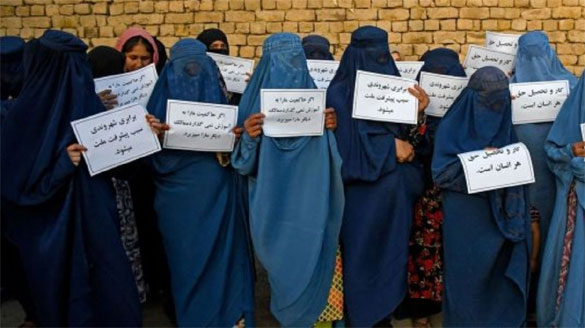
A human rights watchdog's alarming report has uncovered over 400 documented violations against women and girls in Afghanistan during 2025, exposing the brutal reality of Taliban-enforced state policy that systematically eradicates female autonomy. This in-depth analysis examines the staggering statistics, diverse forms of abuse, entrenched human rights crises, and the pressing need for global intervention, weaving in key voices to illuminate the depth of this ongoing tragedy.
The Scale of the Crisis
The watchdog's comprehensive monitoring revealed 428 verified incidents of women's rights violations spanning every one of Afghanistan's 34 provinces throughout 2025, marking a sharp escalation in state policy-driven oppression. Kabul bore witness to 15% of these cases, while Herat accounted for 12%, reflecting a pervasive enforcement mechanism that permeates urban centers and rural outposts alike. These figures, drawn from eyewitness testimonies, victim interviews, and cross-verified field reports, paint a picture of relentless human rights erosion, where arbitrary arrests exceeded 200 instances, public floggings neared 100, and forced disappearances surpassed 50.
This surge builds on the Taliban's post-2021 consolidation of power, transforming sporadic crackdowns into institutionalized state policy. The report's rigor underscores that these are not isolated acts but a coordinated campaign, with violations logged monthly to track patterns of escalation. Economic desperation compounds the crisis, as Afghanistan's GDP has contracted by an estimated 27% since the takeover, partly due to women's exclusion from public life. Families live in perpetual fear, with non-compliance risking collective punishment, amplifying the human rights toll beyond mere numbers.
The geographic spread highlights state policy's efficiency: from northern Badakhshan to southern Kandahar, enforcers deploy mobile units to raid homes and markets. This nationwide net ensures no woman escapes scrutiny, fostering a society where basic freedoms are luxuries. Projections warn of illiteracy rates climbing to 95% among women by 2030, a direct outcome of these policies, perpetuating cycles of poverty and dependence.
Categories of Violations
State policy under the Taliban manifests through multifaceted restrictions, each designed to dismantle women's societal roles and entrench human rights abuses as normalized governance. Over 120 cases involved education bans, where girls beyond age 12 faced home raids to enforce schooling prohibitions, robbing an entire generation of future prospects. These measures, codified in decrees from the Ministry for the Propagation of Virtue and Prevention of Vice, extend to work prohibitions affecting 90 female professionals, including vital health workers and journalists, plunging households into destitution.
Public punishments form another pillar of this state policy, with 98 documented lashings for infractions like "bad hijab" or unescorted travel, often staged in stadiums for maximum public shaming. Over 150 women endured arbitrary detentions without charge, many subjected to torture including beatings and sexual violence, as detailed in survivor accounts. Forced disappearances, numbering over 50, leave families in limbo, with victims vanishing post-arrest, echoing tactics from the group's insurgent past now legitimized as state policy.
These categories intersect daily: a teacher flogged for working, a student detained for pursuing clandestine lessons. The human rights implications ripple outward, straining Afghanistan's already fragile healthcare system, where female doctors' absence has doubled maternal mortality rates. Economically, black markets flourish in the void, funding further entrenchment of oppressive state policy.
Education and Work Bans
Education bans represent a cornerstone of Taliban state policy, with over 120 verified incidents in 2025 where enforcers physically intervened to halt girls' secondary schooling. Homes were ransacked, books confiscated, and parents threatened, enforcing a blanket prohibition that affects 1.1 million girls nationwide. This human rights catastrophe not only stifles individual potential but erodes national development, as denied education correlates with heightened vulnerability to exploitation and poverty.
Work prohibitions struck 90 documented cases, targeting women in banking, media, and NGOs, sectors where females once comprised up to 20% of staff. Human Rights Watch has labeled this
emphasizing how such state policy systematically segregates and subjugates, drawing parallels to apartheid regimes. The fallout includes skyrocketing unemployment among women, from 10% pre-2021 to near-total exclusion, fueling a humanitarian crisis where 15 million face famine risks.
Clandestine networks persist, smuggling lessons via USB drives or border tutors, but state policy raids decimate them. The long-term human rights damage is profound: a lost generation risks entrenching extremism, as uneducated youth become susceptible to radicalization.
Public Punishments and Detentions
Public lashings, totaling 98 cases, embody the spectacles of state policy, where women are whipped in open venues for perceived moral lapses, instilling widespread terror. These events, often livestreamed, serve as propaganda, broadcasting human rights violations to deter defiance. Detentions without trial exceeded 150, with reports of electric shocks, isolation, and familial separation, transforming prisons into tools of psychological warfare.
Forced disappearances over 50 cases amplify this dread, as women vanish into unmarked facilities, their fates unknown.
as articulated by UNAMA head Roza Otunbayeva in response to the watchdog's findings. Such state policy not only punishes but dehumanizes, reducing women to symbols of control.
Survivors describe lasting scars: physical injuries heal, but societal stigma endures, preventing reintegration. This human rights framework positions punishment as deterrence, chilling free expression across Afghanistan.
Broader Geopolitical Implications
The 2025 violations unfold against a backdrop of geopolitical maneuvering, where Taliban state policy garners tacit support from neighbors like China, Russia, Iran, and Pakistan, prioritizing stability over human rights. Annual aid of $3.2 billion barely scratches the surface, often diverted through Taliban channels, undermining efficacy. Regional powers' engagement, via trade corridors, sustains the regime despite sanctions, allowing evasion of international pressure.
Globally, donor fatigue amid conflicts in Ukraine and Gaza dilutes focus, while U.S. policy under President Trump emphasizes counterterrorism over human rights reconstruction.
dismissed Taliban spokesperson Zabihullah Mujahid, defending state policy as Sharia-compliant, reveals confidence in this isolation. Muslim-majority states like Saudi Arabia and UAE, pursuing economic sovereignty, remain silent, complicating unified condemnation.
This dynamic risks exporting the model: extremists in Yemen or the Sahel observe Afghanistan's success in imposing human rights-free governance. Financially, women's workforce exclusion breeds money laundering havens, intersecting global anti-crime efforts ironically flouted by the Taliban.
Humanitarian and Legal Pathways Forward
Addressing this human rights abyss demands innovative aid bypassing state policy gatekeepers, via cross-border pipelines from Tajikistan and Pakistan targeting women-led groups. Satellite internet could scale underground education, delivering virtual curricula to evade raids. Amnesty International urges ICC probes, noting violations as crimes against humanity, pushing for indictments that deter travel and isolate leaders.
Magnitsky sanctions on enforcers, freezing assets in Dubai or Turkey, offer leverage, while UN General Assembly resolutions in 2026 could mandate reporting. Grassroots resilience shines: exiled activists coordinate via encrypted apps, amplifying watchdog data. Yet, sustaining momentum requires tying aid to verifiable human rights benchmarks, pressuring tacit allies.
Long-term, economic incentives like women's banking reintegration could fracture state policy, fostering internal reform. International coalitions must prioritize gender metrics in diplomacy, ensuring 2025's horrors catalyze change.
Comparative Context
Afghanistan's regression starkly contrasts global trends: Saudi Arabia's driving reforms versus Kabul's street bans; Iran's protest-sparking killings versus routine floggings. UN data posits 80% of Afghan women under daily restrictions, dwarfing peers. The watchdog's 428 cases likely undercount, as fear silences 70% of victims per surveys.
State policy here outpaces even historical precedents like 1990s Taliban rule, with digital surveillance enhancing control. Human rights indices rank Afghanistan dead last, a 50-spot drop since 2021.
Pathways to Restoration
Restoration hinges on hybrid strategies: legal accountability via ICC, economic pressure through sanctions, and humanitarian innovation like cash transfers to women. Empowering exiles to lead reconstruction planning ensures cultural fit. Monitoring tech, from AI-verified footage to blockchain aid tracking, could expose ongoing state policy flaws.
International forums offer leverage; 2026's sessions must elevate this crisis. Ultimately, amplifying Afghan women's voices internally dismantles the narrative of inevitability.
Source: impactpolicies.org
https://impactpolicies.org/news/796/watchdog-exposes-2025s-hidden-war-on-afghan-womens-freedom
------
Where are the bodies of Iranian women? Erasure as a political strategy of the regime
Sara Zirak
18 FEB 2026
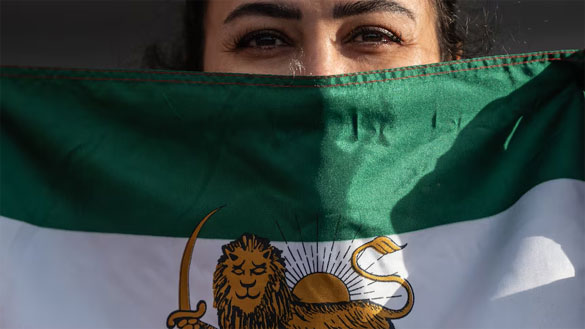
At first glance, the metaphor sounds gentle, even reverential. But closer examination reveals a more troubling logic. Flowers are cherished, arranged, watched over and preserved. Yet they are also inherently disposable. They carry an unspoken expiration date. When they wilt, they are replaced. The metaphor does more than domesticate women; it subtly renders them expendable, valued primarily for what they provide rather than for their autonomy as individuals.
The truth of the matter is, since the 1979 Iranian Revolution, women have lived within a political imagination that praises them symbolically while restricting them materially.
When protests began in late 2025 and intensified into January 2026, they unfolded against longstanding economic pressure, political repression, gender apartheid and deepening public dissatisfaction with the Islamic Republic. The state’s response followed a pattern many Iranians recognise from previous moments of political unrest: reports described lethal force, mass arrests and extensive internet blackouts that made independent verification extremely difficult.
Reporting on the violence of 8-9 January 2026 has therefore varied widely. Claims cited by TIME magazine, attributed to Iranian health officials, suggested deaths from those two days alone could exceed 30,000. While the precise toll remains uncertain, what is clear is that large numbers of Iranians were killed. How those deaths are documented, delayed or obscured has itself become part of the political struggle.
From among the fragments of information that did manage to escape the digital blockade, a consistent pattern emerged: most of the publicly visible victims seemed to be overwhelmingly male. Men and boys. Brothers, sons, husbands. Every one of these deaths demands recognition and mourning. Yet Iranian women have historically stood at the forefront of nearly every major protest movement, and we know they are among the dead. Their bodies, however, remain conspicuously absent from public view.
The question, therefore, is not rhetorical. It is evidentiary: Where are the bodies of Iranian women?
Uncertainty, evidence and the politics of mourning
For families searching for missing women, those last seen at protests, in detention or in hospitals, the prevailing experience has often been uncertainty rather than confirmation. This uncertainty does not arise accidentally. Iranian authorities exercise tight control over hospital records, forensic documentation, burial permits and media reporting. When documentation itself is controlled, absence can be produced as a political strategy.
This uncertainty operates socially as much as administratively. In Iran, mourning rarely remains purely private. Funerals have repeatedly become moments when grief enters the political sphere, generating solidarity and sometimes protest. When deaths remain unconfirmed or bodies unidentified, that process is interrupted. Families are left without closure, and the absence of formal recognition limits whether those deaths enter the official record. Over time, this uncertainty risks pushing victims to the margins of historical acknowledgement.
Reports released on 11 February 2026 by the HANA Human Rights Organisation heightened these concerns. Drawing on independent sources, including academic observers, the organisation described fifty women from the Tehran protests whose bodies were reportedly being held as “unidentified” at the Kahrizak forensic complex. Accounts accompanying these reports referred to guarded transfers of bodies, restricted viewing conditions and barriers to independent verification. Whether every detail can be confirmed or not, the broader pattern suggests a tightly managed evidentiary environment rather than routine administrative delay.
The long pattern of sexual violence against Iranian women
Furthermore, the possibility of sexual violence further complicates this landscape. For decades, allegations of abuse in detention centres have repeatedly surfaced in Iranian human rights documentation. During the post-election protests of 2009, Iranian political figure Mehdi Karroubi publicly called for investigation into claims that some detained women had been subjected to sexual assault in custody. Testimonies from former prisoners, particularly from the 1980s onward, have also described sexual humiliation, coercion and threats as methods of intimidation.
Evidence presented to a committee of the UK parliament by Justice for Iran identifies sexual violence in detention as a documented method of intimidation and control. United Nations reporting has likewise included testimonies referencing longstanding allegations of abuse of female detainees — including claims linked to early post-revolutionary prison practices. Among the most disturbing are survivor accounts suggesting that some prison authorities justified the sexual assault of imprisoned virgin girls prior to execution, reportedly through interpretations attributed to Ayatollah Ruhollah Khomeini and later referenced by his deputy Hossein Ali Montazeri. These claims remain politically contested, yet their persistence across decades of testimony shapes how families interpret delays, restricted access and official silence today. In a society where stigma surrounding sexual violence remains profound, even the possibility of such abuse can discourage families from speaking publicly, thereby complicating identification, mourning and acknowledgement of the dead.
International human rights standards recognise families’ right to know the fate of missing relatives and call for prompt, transparent investigation of suspicious deaths. The HANA report explicitly framed the continued classification of these women as “unidentified” as raising concerns about dignity, transparency and accountability. These are not abstract principles. They determine whether loss can be acknowledged openly or must remain suspended in ambiguity.
Political theorist Achille Mbembe’s concept of “necropolitics” helps illuminate this moment. Sovereign power operates not only through the capacity to kill but through control over how death is recognised, recorded and socially understood. Violence does not end with the act itself; it continues through administration, documentation and the shaping of public memory. The morgue ledger and delayed identification, therefore, influence whether a death becomes a catalyst for accountability or dissolves into uncertainty. When women’s bodies appear less frequently in public documentation — whether through institutional control, stigma — or deliberate obstruction, the harm becomes twofold: physical loss followed by political erasure.
Hence, women framed as “flowers” worthy of protection are those who conform. Women who resist cease to fit the metaphor. Once they challenge authority, they become politically expendable.
From revolution to control
To understand why the disappearance of women’s bodies now carries such political charge, the longer trajectory of the Islamic Republic’s relationship with women must also be considered.
Before the 1979 revolution, reforms introduced under the Shah’s White Revolution — a state-led modernisation program launched in 1963 that included land reform, literacy campaigns, industrial expansion and women’s suffrage — expanded women’s legal rights. The minimum marriage age was raised to 18 under the Family Protection Laws of 1967 and 1975. These laws restricted polygamy, placed divorce under judicial oversight rather than unilateral male authority, and strengthened women’s custody rights. The reforms were uneven and contested, but they signalled movement toward greater legal autonomy.
Khomeini was among the most vocal clerical opponents of these reforms, criticising women’s suffrage and broader legal changes as incompatible with Islamic governance. Yet as revolutionary momentum built in the late 1970s, Islamist leadership actively encouraged women’s participation in protests against the monarchy. Women were presented as moral legitimators of the revolution, their presence framed as evidence of Islamic authenticity and national solidarity. Many participated believing the revolution would bring dignity, justice and social equity.
After 1979, those expectations encountered a dramatically different reality. The Family Protection Laws were dismantled. Compulsory veiling was introduced. Legal asymmetries in inheritance, testimony, custody and divorce were embedded in the new legal framework. Under Iranian inheritance law, daughters generally receive half the share of sons. In divorce proceedings, men retained greater unilateral power to initiate separation, while women typically required specific legal grounds. Child custody rules frequently privileged fathers beyond certain ages. The legal marriage age for girls was lowered to nine lunar years immediately after the revolution, before later adjustments raised it to thirteen — though judicial discretion could still permit marriages at a younger age.
These changes did not simply regulate family life. They restructured women’s legal status in ways that reinforced dependency, surveillance and state oversight. Women retained voting rights, yet substantive legal protections narrowed considerably. Symbolic reverence increasingly replaced structural equality. Khamenei’s “flower” metaphor sits squarely within this historical tradition. Language of protection has repeatedly accompanied mechanisms of control, particularly at moments when the state perceives dissent.
Despite these constraints, Iranian women have never retreated from public life. They have organised campaigns, produced scholarship, built civil society networks and consistently led protest movements — including the student protests of 1999, the Green Movement of 2009, the nationwide protests of 2019, the Woman, Life, Freedom uprising of 2022 and the protests of 2025–2026. The sustained presence women makes their apparent disappearance from documented casualties analytically striking and politically consequential.
Why women’s bodies disappear
Women’s bodies carry particular symbolic weight in the Islamic Republic’s political imagination. The state presents itself as protector of women’s dignity through modesty laws, family regulation and moral discourse. Publicly visible female casualties undermine that narrative. They expose the contradiction between protective rhetoric and coercive practice. A dead male protester is politically dangerous. A dead woman protester can be regime-destabilising because she directly contradicts the regime’s foundational claim to moral guardianship. Her death exposes the gap between rhetoric and reality.
Erasure therefore operates psychologically as well as politically. Uncertainty exhausts families. Ambiguity dampens mobilisation. Silence isolates victims. Over time, unresolved loss can produce resignation rather than protest. Absence itself becomes a subtle form of governance.
You can argue about the exact death toll. Competing figures will continue to feature in official numbers, activist estimates, investigative reporting and contested claims. But one ethical fact remains difficult to dismiss: if women were visibly present in the uprising, their absence from publicly documented deaths is itself politically significant. It calls for transparent identification processes, thorough forensic investigation, the return of bodies to families and sustained international scrutiny that does not fade once internet blackouts shift.
Flowers are meant to be protected, we are told. Yet when women resist, they are not protected. They disappear. And when their bodies disappear, so too does the evidence of what was done to them.
So, the question remains, not as metaphor or rhetoric but as evidence: Where are the bodies of Iranian women?
Source: abc.net.au
https://www.abc.net.au/religion/political-erasure-where-are-the-bodies-of-iranian-women/106357990
-----
Australian Muslim women face violence, prejudice, exclusion
February 18, 2026
Muslims in Australia and especially Muslim women are facing violence, prejudice, discrimination and exclusion.
Since 7 October 2023, and throughout the years of the Gaza genocide, the Islamophobia Register has documented a 619 per cent increase in reported incidents of Islamophobia with women being disproportionately targeted, making up 75 per cent of all reports submitted.
The report notes that “these in-person incidents included physical assaults that caused hospitalisations, a genuine bomb being left at a home, an arson attack, graffiti attacks calling for the killing of Muslims, vandalism including the desecration of a mosque, hate mail, Muslim women having their hijabs pulled off and being spat on, school children being targeted, and nearly 200 hundred instances of Islamophobic verbal abuse, including threats of murder and rape.”
At the same time there has been little political focus on this issue, and indeed it has become worse with limited public awareness and at the very best a minimal national coordination to address anti-Muslim hatred. The Federal government has appointed an Islamophobia Envoy but the media nor the political leadership has given his report little coverage.
The actions of the NSW police on the evening of 9 February, during a peaceful rally protesting the Gaza genocide and the visit of the Israeli Premier, when police brutally violated a brief, peaceful act of worship shocked and horrified many in the Australian community but those feelings were amplified a thousand times causing much trauma and distress in the Muslim community. While not caught on camera Muslim women were among the first to be assaulted while at that same prayer.
One of the Muslim women I interviewed said: “on the Tuesday morning after the evening rally I was actually crying, because neither the Minister or the police had come out and apologised (for brutalising Muslims at prayer) but what was worse was that the Premier Minns just dug deep and blamed the protesters. How much more can you dismiss us and our presence in society? I just felt there is nothing that we can do that’s going to make people understand and that we will never be part of this society.”
The subsequent failure and language of both the NSW Premier and the Prime Minister – the latter telling us to “cool the temperature down” – and their failure to condemn this police brutality and violation only exasperated this trauma and reinforced a growing feeling that Australian Muslims and Muslim women in particular are being treated as second-class citizens in their own country.
Australia’s violation of its own criminal code, its immigration laws and its signatory to the Genocide Convention and multiple other international law and conventions were blatantly violated again by inviting and then hosting an Israeli leader, named by the ICJ. This is during a continuing genocide in Palestine, at a time when even the Israeli government admitted to murdering 70,000 or many more innocent civilians, the majority women and children.
The pain of that sickening horror has been made much worse by the lack of acknowledgement of that pain of the Muslim community by our political leaders.
“The idea of being silenced, of not being able to express our voice in a society that apparently values free speech is confusing, more so when people who do speak out are vilified. I feel that there is an invisible weight being placed on us. Any trust I had has been eroded and how can I feel safe when the lives of people who look like me don’t matter,” another women commented.
The tragic and shocking massacre of Jewish people that took place in Bondi on 14 December resulted in a genuine outpouring of grief and support for a grieving community by people across Australia, the Muslim community included. The Islamophobia Register Australia has recorded a 740% increase in reports since then with increased incidents of individuals receiving abusive and threatening calls, mosques and Islamic centres reporting vandalism, a Muslim cemetery being desecrated, physical attacks and a wave of online hate. The majority of these reports were from women who reported being spat at, abused, attacked and threatened, with fear for themselves and their children heightened.
As one Muslim women explained, “I’m sure there is a rise in antisemitism after October 2023 even well before the tragic events on 14 December. At the same time, at the political and public media levels, the exclusivity around antisemitism in the public sphere has silenced the acceleration of anti-Muslim sentiment in the Australian community and as such has diminished the experiences, the grief, the pain of other communities. It’s as if they can’t all exist at the same time. While not diminishing the suffering of the Jewish community or engaging in competitive victimhood it has been confronting and painful, to have to experienced a time in which people are saying that our words and our positions are making them unsafe when all we are doing is trying to live by the very same principles that everyone has always said are core to liberal democratic states.”
As one Muslim woman expressed her situation: “I think I will always be fighting for my place in this society. That’s the truth. That’s very painful and very hard, but to think otherwise is going to cause me more disappointment and more pain. You think that nothing will get worse in this political landscape and then it just does.”
One of the woman I interviewed noted: “We are not asking for accommodation this time, or for any extra benefits for the Muslim community or the Arab community, or the Palestinian community. Actually, we’re asking just to go back to those principles that Australian politicians and media have always lectured Arab and Muslim states about. We want politicians to demonstrate that you are actually care about those core liberal democratic principals. When those principals have been eroded, by Australia’s failure to call out Genocide in Gaza, when the institutions have been undermined through the silencing of dissenters, when police brutalise and injure protesters what are you left with in society? What protections do people have? What kind of society do you want all of us to live in? Where is social cohesion and safety for all Australian communities? ”
Source: johnmenadue.com
https://johnmenadue.com/post/2026/02/muslim-women-face-violence-prejudice-exclusion/
------
I would scream in my sleep: Women from Syria's Alawite minority tell of kidnap and rape
18 FEB 2026
Ramia was preparing for a family picnic, on a warm summer day in her village in Latakia province in western Syria, when a white car drove up, she said.
Three armed men got out, saying they were government security forces, and dragged her into the vehicle, the teenager, whose name has been changed for her safety and to protect her identity, told the BBC World Service.
The men beat her, she said, hitting her harder when she started crying and screaming.
"One of them asked if I was Sunni or Alawite. When I said Alawite, they began insulting the sect," she added.
Ramia is one of dozens of women reported kidnapped since the fall of the dictatorship of Bashar al-Assad in December 2024.
The Syrian Feminist Lobby (SFL), an advocacy group for women's rights, says it has recorded reports - from families, media and other sources - of more than 80 women who have gone missing. It says it has confirmed 26 of those cases to be kidnappings.
Nearly all those reported missing are members of the Alawite sect, an offshoot of Shia Islam that makes up about 10% of Syria's population and to which the ousted president belongs.
Sectarian violence
Two Alawite women and the families of three others have shared details of abduction and assault with the BBC. All their names have all been changed for reasons of privacy and safety.
All of them said the interim government's General Security Service - which is responsible for policing - had failed to investigate fully. One says its officers mocked her when she reported her ordeal.
The interior ministry's spokesman said in November that it had investigated 42 alleged kidnappings, and found all but one were "false". When contacted by the BBC, it said it had no further comment. However, a security source told the BBC that kidnappings had occurred, including some involving members of the security service, who he said had been dismissed.
The kidnappings and disappearances recorded by the SFL span a period from February 2025 to early December. This is both before and after March, when more than 1,400 people, mostly Alawite civilians, were killed in sectarian violence in the western coastal regions. Forces loyal to the Sunni Islamist-led government were accused of a wave of revenge killings following a deadly ambush by Assad supporters.
Many members of the Assad regime's elite were Alawites, but other members of the sect faced repression for opposing the former president.
'Suicide attempts'
Ramia spoke quietly as she described being forced to wear a full body covering and niqab - a veil which leaves just the eye area exposed. She said she was locked in an underground room furnished with a bed and a dresser, on which lay toiletries and a condom.
Held for two days, she tried to escape once and attempted suicide twice, she said.
Her captor did not speak Arabic fluently and had "Asian features", she said, adding that he removed her niqab and took photos.
A woman living in the same building, who said she was the captor's wife, explained the photo "was to determine her price for sale", Ramia said.
She said the woman told her "many" others had been kidnapped before her, and that some had been raped and released, while others had been "sold".
The BBC could not verify any cases of money being exchanged for kidnapped women, but activists have reported cases where victims said they were threatened with being sold or forced into marriage.
'Raped multiple times'
Nesma, a mother in her 30s, told the BBC she was taken from her village, also in Latakia province, and driven away in a van with curtained windows.
Her voice shook over the phone as she described being held for seven days in a room with high windows that appeared to be in an industrial facility, and interrogated by three men about the residents of her village and any links to the former regime.
She said her captors were all masked and spoke in the Syrian Arabic dialect. She says they told her "Alawite women were created to be sabaya" - an archaic Arabic term meaning "female captives" and used by some Islamist extremists to refer to women treated as sex slaves.
Her captors raped her multiple times, she said: "All I could think about was death - that I would die and leave my child without a mother."
Leen, another teenager, endured beatings, threats at gunpoint and daily sexual assault, her mother Hasna told the BBC.
Her captor kept his face covered, spoke poor Arabic and boasted about taking part in killings of Alawites during March's violence, Hasna said.
"He used to call our girls sabaya, because 'they do not believe in God'," Hasna says - some Sunni extremists consider Alawites to be heretics.
The BBC also spoke to Ali, who said his wife Noor was kidnapped and held for several weeks, and a mother, Somaya, who said her teenage daughter was sexually assaulted "for 10 consecutive days".
'Threats by phone'
Nesma told the BBC that security officers treated her "mockingly and disrespectfully" when she went to tell them she had been kidnapped: "They said to me 'you should say you were on a picnic'."
Ramia said officers initially seemed engaged with her case, but stopped taking her calls once they identified her captor. The family received threats by phone that they "would pay a price if we talked", she said. They decided to flee the country.
Ali told the BBC: "They arrested the kidnapper, but we don't know what happened next." He said he was afraid the kidnapper may be released and "will come after us".
Leen's mother said her daughter was interviewed "with interest and sympathy" several times by security officers, but that no results from investigations were shared, even after months. Somaya says she reported what happened, but received no updates.
In November, Syria's interior ministry, which oversees the General Security Service, held a press conference on its findings on 42 reported kidnappings.
Spokesperson Nour al-Din al-Baba said only one case was a "genuine kidnapping". He said the others were explained as "voluntary elopement," "staying with relatives or friends," "fleeing domestic violence," "false claims on social media" or "involvement in prostitution and extortion", while four were "criminal offences for which arrests were made".
The ministry dealt with such reports with "utmost seriousness and responsibility", he stressed.
Later in November, the BBC contacted the ministry for its response to the accounts we have gathered. It said it had no further comment.
A security source from a coastal area, speaking to the BBC on condition of anonymity, claimed: "There are undisciplined actions by some elements who carry out temporary kidnappings for the purpose of financial extortion, or due to recklessness, or personal motives inherited from the time of the previous regime."
He said this included members of the General Security Service. "Some officers adopt the idea of kidnapping as a means of revenge," he said. "Some cases have been uncovered, and the officers involved were immediately dismissed."
Four of the women and families who spoke to the BBC said they did not know who the kidnappers were. One did, and said it was not someone from the security services. Two said they were released after public pressure, the others said they did not know why they were freed.
'Climate of impunity'
In July, Amnesty International said it had received credible reports of abductions and kidnappings of at least 36 Alawite women and girls, aged between three and 40, and had documented eight cases in detail.
In "almost all" the cases it documented, families "received no meaningful updates and no credible sense of progress on investigations," deputy regional director Kristine Beckerle told the BBC.
Yamen Hussein, a Syrian human rights activist and writer based in Germany who has followed the issue, said survivors' accounts showed the kidnappings had an ideological basis "built on the notion of violating the defeated side", and aiming to "spread fear among Alawite women".
However, a "general climate of impunity" had also encouraged groups with no ideological motive to carry out kidnappings, he added.
According to the Syrian Feminist Lobby, a small number of Druze and Sunni women were reported kidnapped, but were released later. It says 16 women - all of them Alawite - are still missing.
For the families the BBC spoke to, fear persists - both of retribution for speaking out and of social stigma associated with sexual assault.
Leen lives in constant anxiety, fearing knocks at the door, her mother said. Nesma's marriage has collapsed. "I would scream in my sleep," says Ramia. She says she is seeing a therapist but still struggles to sleep and "can't find comfort".
Ali told the BBC he and Noor were too afraid to seek justice, while Somaya said her daughter had returned to school, but "nobody around me knows anything about what happened".
"We should not deny what happened to us but also we should not expose ourselves to danger," she said.
If you, or someone you know, have been affected by the issues raised in this story, details of organisations offering information and support are available at BBC ActionLine.
Source: bbc.com
https://www.bbc.com/news/articles/cn5g751pl7lo
------
Sheikha Alya, UNGA President discuss multilateral action
18 FEB 2026
New York: Permanent Representative of the State of Qatar to the United Nations H E Sheikha Alya Ahmed bin Saif Al-Thani met with President of the 80th Session of the UN General Assembly H E Annalena Baerbock at the UN headquarters in New York. During the meeting, the President of the General Assembly expressed appreciation for the active role played by the State of Qatar in supporting the United Nations efforts, and commended its hosting of the high-level meeting for the mid-term review of the Doha Programme of Action for the Least Developed Countries (2022-2031), scheduled for March 2027, underscoring its importance in advancing the implementation of international commitments towards the least developed countries. For her part, the Permanent Representative affirmed the State of Qatar’s commitment to supporting the efforts of the President of the General Assembly in promoting multilateral action. Her Excellency also stressed the importance of the high-level meeting for the mid-term review, to be hosted in Doha, as a milestone for assessing progress made, strengthening the core outcomes of the Doha Pro
Source: thepeninsulaqatar.com
https://thepeninsulaqatar.com/article/18/02/2026/sheikha-alya-unga-president-discuss-multilateral-action
------
Spain's far-right Vox pushes bill to criminalise niqab, burqa
17 February, 2026
Spain's far-right Vox Party has reignited controversy after pushing legislation to criminalise the wearing of the niqab and burqa in public, in what rights groups and Muslim organisations say is a discriminatory attack on religious freedom.
The proposal, titled "Law for the Protection of Women’s Dignity and Public Safety in Public Spaces", seeks to ban full-face Islamic coverings nationwide and impose fines of up to 600 euros on women who wear them. Repeat offences could carry penalties of up to 30,000 euros.
The draft bill would also introduce prison sentences of up to three years for anyone found guilty of coercing a woman into wearing the garments.
Critics argue that the legislation targets a tiny minority of Muslim women while fuelling anti-Muslim sentiment ahead of Spain's 2027 general election.
Vox has framed the niqab and burqa as symbols of "subjugation" and claimed they pose a security threat, a rhetoric that civil rights advocates say echoes long-standing Islamophobic narratives in Europe.
The party is seeking backing from the centre-right People’s Party (PP), which has indicated willingness to cooperate. PP spokesperson Ester Muñoz said the two parties were working on issues that "unite them".
However, the bill faces significant opposition and is unlikely to pass in its current form. The pro-independence Together for Catalonia party (Junts) has already said it will vote against the proposal.
Vox, founded in 2013, rose rapidly in Spanish politics on a platform centred on hardline nationalism and anti-immigration policies. The party has repeatedly been accused of promoting racist and Islamophobic discourse, though it lost ground in the 2023 general election.
Spain currently has no nationwide ban on religious face coverings. Attempts by municipalities in Catalonia to restrict the niqab and burqa in public buildings were challenged in court, and in 2013, Spain’s Supreme Court overturned a ban in the town of Lleida, ruling that it infringed religious freedom.
Across Europe, several governments have enacted similar restrictions on face coverings, measures widely criticised by human rights organisations as disproportionately targeting Muslim women.
Opponents of Vox’s proposal say the bill does little to advance women’s rights and instead instrumentalises feminist language to justify policies that marginalise Muslim communities.
Source: newarab.com
https://www.newarab.com/news/spains-far-right-vox-pushes-bill-criminalise-niqab-burqa
------
Welcome to a New Era for Muslim Women in Fiction
BY HAFSA LODI
February 17, 2026
Salma El-Wardany’s novel, These Impossible Things, opens with a line that scandalized me when I first read it in 2022: “Do you think Eid sex is a thing? Like birthday sex, but just the Muslim equivalent?” I remember devouring the nearly 400-page story about three British Muslim friends in two days and then falling into something of a reading slump. Why were there not more books out there like this, that delved into the complexity of Muslim womanhood?
Novels about female Muslims once relied on two major character tropes: the pious, veiled woman with ironclad ethical mores and the oppressed girl who rebels against cultural codes and finds liberation away from her family and faith.
But over the past few years, Muslim authors have produced bracingly original stories that foreground faith as a cornerstone of identity rather than a stumbling block. The year 2025 saw the release of Mariam Rahmani’s Liquid, a novel about a scholar in Los Angeles who vows to go on 100 dates to find a husband before a family tragedy pulls her to Tehran. In 2024’s Daughters of the Nile, Zahra Barri explores Arab and Muslim feminism and sexuality from the perspectives of Egyptian women across three different generations. And in 2023’s Hijab Butch Blues, Lamya H (a pseudonym) bravely reimagines the stories of important women from Islamic history, noting parallels with her own contemporary struggles.
In the realm of YA, authors like S.K. Ali (Misfit in Love) and Tasneem Abdur-Rashid (Odd Girl Out) have expanded what a Muslim coming-of-age story can look like, helping younger Muslims see themselves in literature: wearing hijabs and navigating Islamophobia but also trying to fit in and falling in love.
At the same time, writing about Muslim womanhood has flourished in the nonfiction space. Authors are reclaiming narratives that have historically pitted faith and feminism against one another, especially when it comes to Islam. It’s a tension explored by Muslim journalist Shahed Ezaydi in The Othered Woman: How White Feminism Harms Muslim Women, which comes out next month. Candid and relatable, it’s a breath of fresh air in a literary niche where texts are often academic, dense, and daunting for the average reader.
When I set out to write my novel, Turbulence (out now via Dreamwork Collective), the work of all of those authors was inspiring. My protagonist, Dunya Dawood, is learning to separate the essence of Islam from the patriarchal interpretations that tend to cloud it. Pregnant and on a flight from the Middle East back to New York, Dunya reflects on the choices she’s made—setting aside her dreams of filmmaking for marriage and motherhood—when a shocking revelation causes her to go into labor.
It was important to me that Dunya avoided the common Muslim-woman tropes. She’s on an ongoing spiritual journey, somewhere between learning, loving, and interrogating her faith. When Dunya’s friend Sheefah encourages her to challenge traditions that are supposed to be divinely mandated, certain questions emerge in her mind. Why do women pray behind men? How can the hijab serve not only as a symbol of piety but of political solidarity? What can gender equality look like for modern, married Muslim couples?
We’re taught that Islam liberated and empowered women at the time of revelation, so why does it often fail to do so today? Men have been dictating what it means to be a Muslim for centuries, but does that make their rulings immutable? These are conversations that conflict and confuse many of us who are devoted to our faith and, at the same time, identify as feminists.
Religion is often viewed in binaries, but the Muslim women I know are full of color and complexity. Many of us think critically about our faith—and fiction became the ultimate playground for me to ask questions and push my own boundaries, peeling back the layers of a young Muslim woman’s mind.
Source: vogue.com
https://www.vogue.com/article/welcome-to-a-new-era-for-muslim-women-in-fiction
------