
UN Women Warns New Taliban Decree Undermines Rights of Afghan Women and Girls
New Age Islam News Bureau
27 May 2026
· UN Women Warns New Taliban Decree Undermines Rights of Afghan Women and Girls
· Taliban legalizes child marriage in Afghanistan
· Centre moves Supreme Court seeking transfer of all pleas against transgender law from high courts
· Group of women and children with alleged ISIL ties returns to Australia
· South Africa to Launch 70-Year Commemoration of Historic 1956 Women’s March
· St Stephen's College to appoint Susan Elias as first woman principal despite DU objections
· Justice delayed, for women in law
· Period poverty, stigma deepen hardships for Iranian women
Compiled by New Age Islam News Bureau
------
Taliban legalizes child marriage in Afghanistan
by Hamasa
May 26, 2026
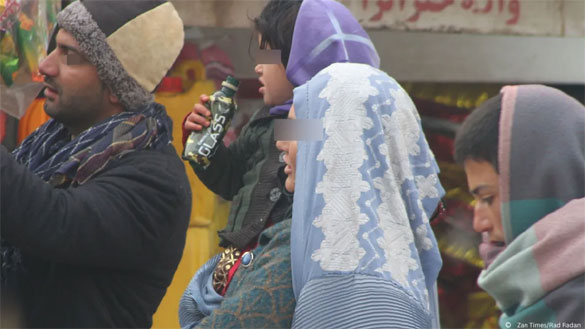
The Taliban’s Islamic Emirate has launched another legal offensive against women’s human dignity: its new “Code on Judicial Separation of Spouses.”
This law is testament to how the Taliban use state institutions, especially the Ministry of Justice and the judiciary, as instruments of oppression and violence against women. It legalizes child marriage, denies women the right to divorce even if husband is permantly absent, and denies women legal autonomy and allows a guardian and judge to determine their fate.
Encouraging child marriage throughout Afghanistan is clearly the main focus behind the drafting and publication of this code. Articles 5 and 6 of this law effectively legitimizes the marriage of girls while they are still minors. It does so without setting a specific age limit — something that, at the very least, might have made the law appear outwardly consistent with jurisprudential principles on this issue.
In these two articles of the code, the Taliban consider the marriage of a minor girl valid with the permission of her father or paternal grandfather. They even consider such a marriage valid in cases where it is arranged by other relatives so long as the issues of suitability are observed.
Article 6 explicitly states that a marriage contract concluded by relatives other than the father or paternal grandfather is invalid if the contract is made with someone who is not a suitable match. The inverse implication of this article is that marrying off a minor girl to someone who is not a suitable match, is valid if it is done by the father or paternal grandfather.
How can one speak of a marriage in which consent and legal capacity — the essential pillars of marriage — are presumed to exist in the marriage of a minor? Is this law not attempting to promote the buying and selling of young girls?
In relation to this issue, the former Civil Code contained a very good provision in Articles 70 and 71. It set the age of legal capacity for marriage at the completion of 16 years for girls and 18 years for boys. Only in cases where a girl was 15 could her father or paternal grandfather contract her marriage and have it considered valid, provided they had legal capacity to act. Of course, many women’s rights and children rights advocates campaigned against that law.
At the global level, there are very clear norms regarding the prohibition of child marriage in the Universal Declaration of Human Rights and the Convention on the Rights of the Child. In particular, Articles 19, 24, and 34 of the convention guarantee the physical well-being of children, protect them from sexual exploitation, and require their protection from all forms of abuse.
Another important issue in the new code are the provisions concerning legal avenues available for a separation from a person who is absent and missing. Paragraph 2 of Article 15 describes a specific form of a husband’s disappearance which, because of the importance it may have for the fate of a woman as a human being, I quote here exactly:
“Whenever the missing person is not among those missing in wars or in circumstances where death is presumed, the wife of the missing person shall, in accordance with Hanafi jurisprudence, wait for such a period of time until the death of the missing person becomes certain and all the people of his generation — his peers — have died!”
This article cannot be considered to be just. On the mere assumption that a man may one day feel like returning to the family he abandoned, the Taliban are demanding that a woman must be made to wait for the death of all his contemporaries so that justice may be secured for this man?
This is a ruling removed from reason and logic, removed from justice, and removed from the age in which we live.
Under the former Civil Code, which was repealed before the publication of this new code, precise provisions had been established regarding absence and disappearance, and their effects on marriage. Under Article 194 of that law, the wife of a person who had been absent without reasonable excuse for more than three years could seek judicial separation. Under Article 196, in cases where the husband’s absence was due to imprisonment, the wife could request separation five years after the start of his imprisonment. These provisions were closer to the spirit of justice, and no woman was forced to wait a full century for a disappeared man.
The Taliban code also erases the will and legal autonomy of women to be one of the parties to marriage and to separation claims. It gives the authority to determine a woman’s fate, sometimes to a judge, sometimes to a guardian, and sometimes to the husband. It does not view a woman as an independent legal person.
Article 3 of this code prohibits the marriage of a woman without a guardian to someone who is not considered a suitable match. The woman’s own desire and will in her marriage are given no importance or legal effect. Under previous laws, an adult woman of sound judgment could enter into a valid and binding marriage contract without the permission of a guardian.
It is evident that the “Code on Judicial Separation of Spouses” is nothing more than a tool for further restricting women during family court proceedings and to formally legalize child marriage; disregarding all national and international norms concerning the protection of children’s rights; and arming families and the judicial system against women and young children.
In a society where around 20 million people face acute food insecurity and five million children suffer from malnutrition, this law is nothing more than an effort to promote the marriage of hungry young girls. By once again ignoring women’s real will, this law has built yet another legal prison.
Source: zantimes.com
https://zantimes.com/2026/05/26/taliban-legalizes-child-marriage-in-afghanistan/
------
UN Women Warns New Taliban Decree Undermines Rights of Afghan Women and Girls
27 May 2026
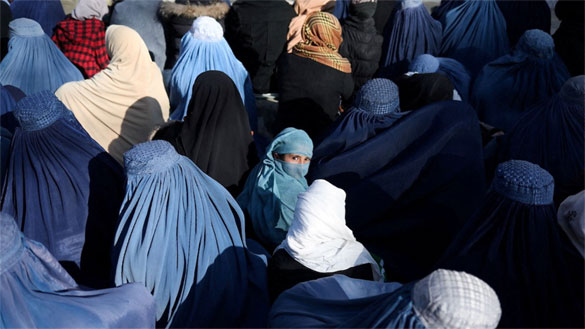
The Kabul Tribune (KT) — UN Women Afghanistan has raised serious concerns over a newly issued Taliban decree, warning that it could further erode the rights and safety of women and girls in Afghanistan.
In a statement, Susan Ferguson said Decree No. 18, published by the Taliban’s Ministry of Justice on May 14, 2026, represents a troubling development as the country nears five years since the Taliban’s return to power.
According to the statement, the decree outlines conditions for separation from a spouse but introduces measures that could heighten risks of child marriage and limit women’s autonomy. Unlike previous laws that set a minimum age for marriage and criminalized forced and child marriage, the new decree does not specify a minimum age.
Instead, it provides mechanisms for invalidating child marriages only after a person reaches puberty, a provision that UN Women says may effectively legitimize the practice and contribute to its normalization.
The decree also imposes additional legal barriers for women seeking separation from their spouses. Women are required to present multiple witness testimonies, while in some cases, a husband may override a woman’s request through a statement or by withholding consent.
Ferguson noted that these provisions reflect a broader pattern of legal inequality, adding that recent Taliban policies indicate that men and women are no longer treated equally before the law in Afghanistan.
UN Women reiterated that Afghan women and girls are entitled to live free from violence and discrimination, with full access to dignity, safety, freedom of movement, and participation in public life.
The agency called on the Taliban to ensure that all laws and policies align with international human rights obligations and protect the fundamental rights of women and girls.
Source: thekabultribune.com
https://thekabultribune.com/en/0009010
------
Centre moves Supreme Court seeking transfer of all pleas against transgender law from high courts
27 May 2026
The Centre on Wednesday approached the Supreme Court seeking transfer of all petitions against the Transgender Persons (Protection of Rights) (Amendment) Act, 2026, pending before various High Courts to the apex court, arguing that parallel proceedings could result in conflicting verdicts.
Solicitor General Tushar Mehta mentioned the matter before a Bench led by Chief Justice of India Surya Kant and Justice Joymalya Bagchi, pressing for an urgent hearing of the transfer pleas on Friday.
"We have filed transfer petitions to bring the challenges against the Transgender Amendment Act to this Court," the Solicitor General submitted.
"If the petitions are listed on Friday and notice is issued, we can request the high courts to defer their proceedings," he added.
Mehta contended that several High Courts were already hearing challenges to the law, raising the likelihood of “divergent views” on the constitutional validity of a parliamentary enactment.
The Bench, however, appeared unconvinced about the immediacy of the request. The Chief Justice observed that opinions rendered by constitutional courts often aid the Supreme Court’s own adjudication.
"Sometimes we can have the advantage of a high court view as well," the CJI said.
When the law officer reiterated the Centre’s apprehension, the Chief Justice responded briefly, saying he “will see”.
The amendment law has triggered sharp criticism from rights advocates and sections of the LGBTQ+ community over provisions said to dilute the principle of gender self-identification recognised by the Supreme Court in its landmark NALSA ruling.
Petitioners challenging the law have argued that any requirement of medical or bureaucratic intervention for gender recognition strikes at the heart of constitutional protections guaranteeing dignity, privacy and bodily autonomy.
Earlier this month, the Supreme Court issued notice to the Union government on separate petitions instituted directly before it assailing the constitutional validity of the amended legislation.
Source: newindianexpress.com
https://www.newindianexpress.com/india/2026/May/27/centre-moves-supreme-court-seeking-transfer-of-all-pleas-against-transgender-law-from-high-courts
-------
Group of women and children with alleged ISIL ties returns to Australia
27 May 2026
A group of 19 women and children with alleged links to ISIL (ISIS) has returned to Australia, with the government warning that anyone found to have engaged in criminal activity will be prosecuted.
The six women and 13 children arrived from a Syrian refugee camp on Tuesday, with one group landing in Sydney and the other in Melbourne.
It is the second cohort of Australian women and children to return from Syria this month. Responding to criticism over their arrival, the Australian government said it had not assisted them in any capacity.
“These are people who have made the horrific choice to join a dangerous terrorist organisation and to place their children in an unspeakable situation,” Minister for Home Affairs Tony Burke said.
Australian women began travelling to Syria to marry members of ISIL in 2012, with some allegedly taken against their will.
At the height of its power in 2015, ISIL controlled territory across Syria and Iraq roughly equivalent in size to the United Kingdom.
Australian Federal Police did not arrest any members of the group upon their arrival but said that investigations were ongoing.
The group’s return has sparked anger in some sections of Australian society.
According to local media, a large police presence was deployed at Melbourne airport, where a scuffle reportedly broke out as the group of women and children was escorted out through a side entrance.
Australia is one of several Western countries that have shown reluctance to repatriate citizens who travelled to the Middle East to join ISIL about a decade ago.
Both France and the UK have expressed opposition to allowing former ISIL members to return.
In 2022, the UN Committee on the Rights of the Child said that France’s failure to repatriate children born to French nationals in Syria violated their right to life and exposed them to inhumane treatment.
Meanwhile, the UK stripped British national Shamima Begum of her citizenship in 2019 on national security grounds.
In February, the Australian government issued a temporary exclusion order against a woman in Syria, preventing her from returning home.
Her child, who was not barred from returning, chose to stay with her.
The order prevents the woman from returning to Australia until February 2028, and her family is currently challenging the decision.
Afzal Ashraf, a visiting fellow at Loughborough University specialising in international relations and security, said the risk posed by people returning from countries including Syria needs to be viewed proportionately.
“There will be some security challenges, because people like this are likely to suffer from issues such as PTSD,” Ashraf told Al Jazeera.
“The fact of the matter is that there are security challenges in Australia and other countries, but statistically speaking, the return of these nationals doesn’t increase that risk very much, while the threat to life from terrorism is far lower than the threat posed by road accidents, for example.”
“That said, these threats can be reduced by providing comprehensive mental health support for returnees and ensuring they are reintegrated into society in a positive way, with follow-up programmes to address any dangerous ideas they may have adopted,” Ashraf said.
“It’s worth remembering that ISIL has killed far more Muslims than Westerners.”
Earlier this month, four women and 13 children arrived in Australia from Syria. Three of the women were arrested upon arrival.
Source: aljazeera.com
https://www.aljazeera.com/news/2026/5/27/group-of-women-and-children-with-alleged-isil-ties-returns-to-australia
------
South Africa to Launch 70-Year Commemoration of Historic 1956 Women’s March
26-05-2026
South Africa will officially launch the national commemoration programme marking 70 years since the historic 1956 Women's March, one of the country's most significant moments in the struggle for freedom, equality, and women's rights.
Minister in the Presidency for Women, Youth and Persons with Disabilities, Sindisiwe Chikunga, is scheduled to lead the official launch on Friday, 29 May 2026, at the Freedom Park Heritage Site and Museum in Pretoria.
The event forms part of South Africa's broader National Milestones programme and will initiate a nationwide series of commemorative activities leading up to Women's Month in August 2026.
Honouring the Legacy of the 1956 Women's March
The 1956 Women's March remains one of the defining moments in South Africa's liberation history.
On 9 August 1956, more than 20,000 women from diverse racial, political, and social backgrounds marched to the Union Buildings in Pretoria to protest against apartheid pass laws imposed on Black women by the apartheid government.
The demonstration became a powerful symbol of resistance, unity, courage, and collective activism in the struggle against oppression and inequality.
The women delivered petitions opposing pass laws and stood in silent protest, an act that continues to symbolize the strength and determination of South African women in the fight for justice and human dignity.
The upcoming 70-year commemoration aims to celebrate and preserve this legacy while reflecting on the ongoing journey toward gender equality and social transformation.
Theme Focuses on Freedom and Future Progress
According to the Department of Women, Youth and Persons with Disabilities, the commemorative programme will be held under the national milestones theme:
"Honouring the Past, Delivering the Future."
Officials said the programme seeks not only to remember the sacrifices and achievements of the women of 1956 but also to focus attention on current challenges affecting women and girls in contemporary South Africa.
The launch event will also unveil the broader national programme of activities that will continue throughout the year and culminate during Women's Month in August 2026.
Women's Month activities will take place under the theme:
"Empowered Women Empower The Nation."
Reflection on Progress and Remaining Challenges
The department stated that the commemoration will serve as an opportunity to reflect on progress made in advancing:
Women's rights
Gender equality
Social justice
Women's empowerment
Democratic inclusion in South Africa
At the same time, officials acknowledged that many challenges continue to affect women and girls across the country despite democratic gains achieved since the end of apartheid.
The event is expected to include discussions and awareness initiatives focused on addressing:
Gender-Based Violence and Femicide (GBVF)
Economic exclusion
Workplace inequality
Discrimination against women and girls
Social vulnerability and poverty
Platform for Mobilisation Against Gender-Based Violence
One of the major priorities of the commemoration programme will be mobilising society against Gender-Based Violence and Femicide, which remains one of South Africa's most serious social challenges.
Government officials stated that the anniversary provides an important platform to strengthen national awareness and collective action against violence targeting women and children.
South Africa continues to face high levels of GBVF, prompting government, civil society organizations, activists, and community leaders to intensify campaigns focused on prevention, protection, accountability, and support for survivors.
The department indicated that the commemorative activities will seek to connect the spirit of resistance shown by the women of 1956 with current efforts to confront violence, discrimination, and inequality in modern society.
Freedom Park Chosen as Symbolic Venue
The launch event will take place at Freedom Park Heritage Site and Museum in Pretoria, a location widely regarded as one of South Africa's most important national heritage and remembrance sites.
Freedom Park commemorates the country's struggle history, honoring those who contributed to freedom, democracy, reconciliation, and nation-building.
Officials said the venue was selected to reinforce the historical significance of the Women's March and its enduring contribution to South Africa's democratic identity.
Women's Role in South Africa's Liberation History
The 1956 Women's March remains one of the most iconic demonstrations in South African history and continues to inspire generations of women leaders, activists, and social justice movements.
The march included women from organizations such as:
The Federation of South African Women (FEDSAW)
African National Congress Women's League
Trade unions and civic organizations
Community groups across racial and ethnic lines
The famous protest slogan associated with the march:
"You strike a woman, you strike a rock"
has become one of South Africa's most enduring symbols of women's resilience and resistance.
Government Emphasises Inclusive Empowerment
The Department of Women, Youth and Persons with Disabilities said the commemorative programme will also focus on promoting inclusive development and ensuring that women continue to play a central role in economic, political, and social transformation.
Issues expected to feature prominently during the national programme include:
Women's economic empowerment
Leadership representation
Youth empowerment
Access to education and opportunities
Social inclusion for vulnerable groups
Protection of human rights
Officials noted that empowering women remains critical for achieving broader national development goals and strengthening social cohesion.
National Reflection on Democracy and Equality
The 70-year commemoration of the Women's March is also expected to encourage broader national reflection on South Africa's democratic journey and the ongoing work required to build a more equal and inclusive society.
Observers believe the anniversary offers an important opportunity to celebrate historical achievements while also confronting contemporary inequalities that continue to affect women and marginalized communities.
As South Africa prepares for Women's Month 2026, the commemorative programme is expected to combine historical remembrance with renewed calls for action on gender justice, empowerment, and social transformation.
Source: devdiscourse.com
https://www.devdiscourse.com/article/law-order/3922523-suvendu-adhikari-urges-expedited-deportation-of-illegal-bangladeshis
-----
St Stephen's College to appoint Susan Elias as first woman principal despite DU objections
26.05.26
St Stephen's College is set to proceed with the appointment of its 14th principal, Susan Elias, despite Delhi University's objections, according to official sources.
Elias's appointment was announced in a notification issued on May 12, after which DU wrote to the college, asking it not to proceed with the appointment, claiming that the University Grants Commission (UGC) regulations had not been followed. The university also wrote to the UGC seeking intervention.
Elias is expected to be the first woman principal of St Stephen's College in its 145-year history, since its founding in 1881.
Sources within the college confirmed on Tuesday that Elias is set to assume charge from June 1, as stated in the college's May 12 notification.
An official, on the condition of anonymity, told PTI, "Elias is expected to take over charges as the 14th principal from June 1. Meanwhile, John Varghese, the last principal, has been absorbed as a faculty member in the English department, though there are a lot of ambiguities surrounding that, and not much is clear to us either."
The development adds to the long-standing tussle between DU and the college, including an ongoing court matter over the recognition of former principal John Varghese's second term in office, which ended in February 2026.
The latest dispute centres on DU's objection that the selection committee constituted for Elias's appointment did not comply with UGC regulations. However, college authorities are understood to have relied on the institution's minority status in proceeding with the appointment process.
The issue has also revived discussions around a 2008 Delhi High Court judgment delivered during the appointment of former principal Valson Thampu. In that ruling, the court had held that St Stephen's College, as a minority institution, was not bound by provisions of the Delhi University Ordinance relating to the constitution of selection committees for appointing principals.
A second official told PTI, "Even after Thampu had taken over as the principal and the court had passed its judgment, in the initial phase, he was not formally recognised as the principal, and his salary would not come from UGC but from a private fund of the college."
The official added that Thampu was formally recognised by the university much later.
"The university has even refused to recognise Varghese's second term, but he did continue as the principal. Likewise, Elias is expected to take over, too," the official said.
The latest standoff is expected to further deepen tensions between the university administration and the college over the extent of autonomy minority institutions enjoy in matters of appointments and governance.
Source: telegraphindia.com
https://www.telegraphindia.com/india/st-stephens-college-to-appoint-susan-elias-as-first-woman-principal-despite-du-objections/cid/2162552
------
Justice delayed, for women in law
26 MAY 2026
Despite a steady rise in the number of female lawyers in Bangladesh over recent decades, women continue to face discrimination, limited opportunities, harassment and structural barriers in the justice system.
Legal experts and practitioners say although more women are entering the profession than ever before, their representation remains disproportionately low. They add that numerical growth has not translated into equal opportunities, recognition, or supportive working conditions.
According to a 2016 survey by Justice Audit Bangladesh, a Germany-based project, women made up around 13 percent of lawyers in the country at the time. Of nearly 57,000 lawyers nationwide, only 7,309 were women.
Bangladesh Bar Council Secretary Mohammad Kamal Hossain Sikder told The Daily Star that there are now around 80,000 lawyers across the country, but could provide the figures for women. He said the council is working to compile the data, which may take at least three months.
Senior Supreme Court lawyer and former president of the Bangladesh National Woman Lawyers Association, Advocate Fawzia Karim Feroze said women remain significantly underrepresented despite overall growth in numbers.
“Even if the number of female lawyers rises to 15,000, their representation would still remain below 20 percent because the number of male lawyers is also increasing simultaneously,” she said.
She said that although many female lawyers regularly attend court and remain active in practice, a large number fail to receive adequate courtroom exposure and mentorship.
Often female lawyers are confined to chamber-based work such as drafting and paperwork, she said, adding that as a result, many women are unable to develop the confidence and advocacy skills required to establish independent practices. That, in turn, contributes to their low presence in senior legal positions, she said.
Fawzia Karim put down women candidates in bar association elections to window dressing. She alleged that women lawyers frequently face sexual harassment, mental pressure, and professional discrimination throughout their careers.
Barrister Sarwat Siraj Shukla said the number of women in courts has increased significantly over the past three decades, but the nature of their struggles remains largely unchanged.
“Women need a supportive ecosystem to thrive in their profession,” she said, adding that many begin their careers with enthusiasm but later face setbacks after marriage and motherhood due to a lack of childcare support and family cooperation. She described this interruption as a “pregnant pause”, noting that many women find it difficult to return to practice after raising children. The absence of nursing stations, reliable crèches, and paid maternity leave in most law chambers discourages continued participation.
Supreme Court lawyer Ishrat Hasan said women continue to face professional, social and institutional challenges. She added that women also struggle to balance professional duties with family and social expectations, and remain underrepresented in leadership positions within bar associations and law firms.
According to her, the absence of daycare centres, breastfeeding rooms, and flexible working arrangements in many court premises creates additional difficulties for lawyer mothers.
Supreme Court lawyer, Advocate Momtaj Parvin Mou said low income during the initial years makes it difficult for families and in-laws to support women pursuing legal careers. The absence of institutional maternity programmes and adequate daycare facilities further affects professional growth.
She also alleged that women lawyers are often paid less than male colleagues and struggle to gain clients’ trust or opportunities to handle important cases, forcing them to work harder to prove competence.
Although the Supreme Court and Dhaka Bar Association have daycare centres, most other bar associations do not. Even existing facilities are inadequate, often consisting a single small room serving thousands of women lawyers with only one or two caregivers.
Bangladesh Bar Council Chair and Attorney General Md Ruhul Quddus Kazal declined to comment on the issue when contacted.
Source: thedailystar.net
https://www.thedailystar.net/news/bangladesh/news/justice-delayed-women-law-4185031
------
Period poverty, stigma deepen hardships for Iranian women
May 26, 2026
Rising prices for menstrual hygiene products and persistent social stigma are worsening conditions for women in Iran, with many forced to miss school, reuse disposable products or forgo basic care altogether, the Shargh newspaper reported ahead of World Menstrual Hygiene Day.
The report described how menstruation remains shrouded in shame and silence for many Iranian girls, particularly in smaller towns and poorer communities, where limited education and cultural taboos leave adolescents unprepared for puberty.
One student in a village near Miandoab told Shargh she avoided leaving her classroom during breaks out of fear classmates would notice blood stains on her clothes. Another girl believed she had cancer when she experienced her first period.
“Absence from school is one of the first reactions many girls have when they experience menstruation,” a teacher identified as Nazanin told the newspaper. “The less awareness there is in the family, the more common this behavior becomes.”
Rising costs force unsafe alternatives
Inflation, the report said, has sharply increased the cost of sanitary pads and other hygiene products, particularly affecting women in low-income and marginalized areas.
Somayeh, a 38-year-old worker in a food packaging workshop near Tehran, said long shifts and limited bathroom access often force her to delay changing sanitary products for hours.
“When you have to choose between buying food for your children or sanitary pads for yourself, you choose food,” she said.
Social worker Mahya Vahedi said some women have turned to cloth and other non-hygienic substitutes because they cannot afford sanitary pads, leading to infections and untreated wounds.
“Buying hygiene products has become a luxury for many families,” Vahedi said.
Unlike several countries that provide free menstrual products in schools and public spaces, Iran offers almost no free access to sanitary products in schools, universities or public facilities, the report said.
Debate grows over menstrual leave
The report also highlighted growing debate around menstrual leave policies in workplaces.
Shima, an office worker interviewed by Shargh, said menstruation remains difficult to discuss openly at work despite the physical pain many women endure.
“How can part of the workforce spend several days each month working through pain and bleeding with no recognition of those conditions?” she said.
Political economy analyst Anisha Asadollahi said menstrual leave has become a point of tension between gender equality demands and Iran’s labor market realities.
Some critics, she said, fear additional labor protections for women could discourage employers from hiring them, citing past labor policies that unintentionally reduced women’s employment opportunities.
But Asadollahi argued recognizing menstrual leave remains important because workplace norms are still built around “the male body as the standard worker.”
“Giving up rights because of fear of discrimination only strengthens unequal structures,” she said.
Source: iranintl.com
https://www.iranintl.com/en/202605264094
-----