
Taliban Fire 90 Female Literacy Teachers In Eastern Afghanistan
New Age Islam News Bureau
06 October 2025
· Taliban Fire 90 Female Literacy Teachers In Eastern Afghanistan
· 38 Women Executed In E. Kurdistan, Iran Since The Beginning Of 2025
· Nigerian singer Tems: Authenticity and Empowerment for African Women in Music
· Afghan Women Medical Students On Their New Lives In Scotland
· Baghdad Festival Honours Iraqi Women’s Legacy With A Cultural Festival Titled ‘From Sumer To Today’
· Dhi Qar Women Hold Handcraft Bazaar To Counter Economic Impact Of Climate Change
Compiled by New Age Islam News Bureau
URL: https://newageislam.com/islam-women-feminism/taliban-female-literacy-afghanistan-teachers/d/137127
-----
Taliban Fire 90 Female Literacy Teachers In Eastern Afghanistan
By Ahmad Azizi
6 October, 2025
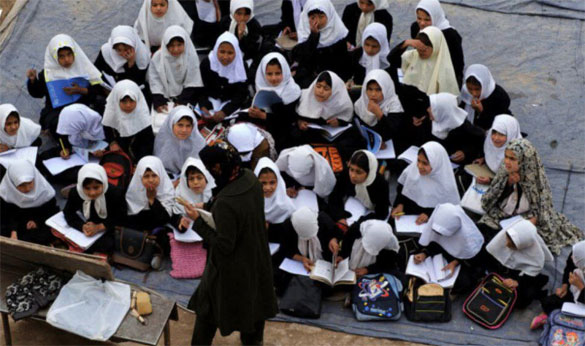
Taliban have dismissed 90 female teachers working in literacy programs in the eastern province of Nangarhar, local sources told Amu on Sunday.
The teachers were employed under the Directorate of Education and were teaching in adult literacy classes, mostly operating in rural districts of the province, the sources said.
According to the sources, the teachers’ salaries had been paid by humanitarian organizations supporting community education programs. Taliban have now shut down the literacy classes entirely and dismissed all female instructors, they added.
The move is the latest in a series of restrictions imposed by the Taliban on women’s employment and education since they returned to power in 2021. Taliban have barred girls from attending secondary schools and universities and limited women’s work to a few sectors, such as health care.
Aid agencies say women’s exclusion from the education sector has severely affected humanitarian and development programs, particularly those focused on community learning and literacy for women and girls.
Taliban have not commented on the reported dismissals.
Here’s a concise, AP-style paragraph you can add at the end for global context:
According to UNESCO, fewer than 30 percent of Afghan women are literate, one of the lowest rates in the world. The UN agency has warned that the Taliban’s bans on girls’ education and restrictions on women teachers risk erasing two decades of progress in literacy and learning across Afghanistan.
Source: amu.tv
https://amu.tv/203703/
-------
38 women executed in E. Kurdistan, Iran Since the Beginning of 2025
OCTOBER 6, 2025
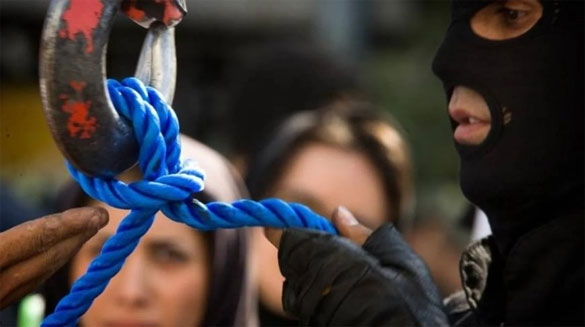
The Women's Affairs Committee of the National Council of Resistance of Iran (NCRI) published a report on the executions carried out by the authorities against male and female detainees.
The report indicated that the total number of executions in Eastern Kurdistan and Iran over the past nine months reached 1,175 people, including 38 women. It also stated that between July 30 and September 30, 14 women were executed, an average of one woman every four days, according to Roj News Agency.
The report explained that the high number of women executed is a means of suppressing women and spreading fear, especially since women have always been at the forefront of protests and uprisings against the regime.
The report recorded the number of women executed in previous years as follows:
34 women in 2024
26 women in 2023
15 women in 2022
The report also confirmed that more than 300 women have been executed since 2007, amid the ongoing repression of women in Iran and Eastern Kurdistan.
Source: hawarnews.com
https://hawarnews.com/en/38-women-executed-in-e-kurdistan-iran-since-the-beginning-of-2025
-------
Nigerian singer Tems: Authenticity and Empowerment for African Women in Music
6 October, 2025
From Lagos to the world stage: Nigerian singer Tems continues to pave the way for future generations of African women in music, staying true to herself at every step toward great achievements.
During a performance at MetLife Stadium in New York during the halftime of the FIFA Club World Cup, the musician admitted that performing before millions of viewers made her nervous, but this opportunity was a great honour. “It was a great honour just to be there,” she recalls, a moment of gratitude and nerves at once.
For many, the Nigerian artist became the first global contact with the soul of contemporary African pop music. Tems was born Temilade Openiyi in Lagos and from an early age wrote songs, taught herself to produce, and built her path in show business, as at that time many did not see potential in her.
This struggle became a source of energy and a driver for success. Her collaboration with Wizkid on the track Essence (2020) made it one of the first real hits on the Billboard Hot 100 for Nigerian music. In 2022, clips from her song Higher were used in Future and Drake’s Wait for U, which was a significant step in global pop music. Also her voice and lyrics appeared in Rihanna’s tracks Move and Lift Me Up, and her own single Free Mind achieved notable success on American charts.
In 2025, Tems cemented her status among the world’s music elite, winning a Grammy for Best African Music Performance for Love Me Jeje – a move many see as a reinterpretation of Nigerian musical heritage.
“I didn’t aim to simply become famous. I was myself. If being myself leads me under a bridge – fine. If I rise to the top of a mountain – also fine,” she recalls, emphasizing that true authenticity has become her signature and a source of strength.
It is this confidence that turns ambition into a movement, expanding not only the boundaries of music but also opportunities for women in the industry. In August Tems launched Leading Vibe – a mentoring and training platform created to support women in music. “There are many talented women who could be producers, managers, or sound engineers – but they aren’t visible. I want to give them visibility and create a space where we can rethink the role of women in music,” she says.
The idea born in Lagos has ambitious plans to go beyond the country – the next stop could be Kenya. “There are women everywhere who simply need to feel seen. All they need is a platform and a chance, and I sincerely believe this will change the face of the music industry,” Tems adds.
The Power of Authenticity and the Future for Women in Music
At the launch of Leading Vibe in Lagos, dozens of young singers, producers and engineers gathered, dreaming of a new look for the African music scene. “It’s incredible to see such support and so much talent nearby. This is our shared journey, and we’re starting it together,” Tems stressed during the event. She adds that Leading Vibe’s vision has a deep personal foundation: “I remember trudging from studio to studio, seeking allies in a male-dominated industry. When my music reached a level they couldn’t imagine, they started looking at it differently.”
“Fame is not the end in itself. You can be a star and feel uncomfortable, or be a star and move forward successfully – but above all, stay yourself, have the means to support yourself, and fame doesn’t always provide that,” she adds, explaining her philosophy of the long road to true happiness and recognition.
Tems emphasizes that the most important thing is to define who you are so as not to let others shape your identity in a world where a sense of belonging can become a decisive factor in your career. Her vision goes beyond personal success: it is about opening doors for others, creating a culture of support and diversity in the African music industry and beyond.
Such steps by Tems not only enrich the scene with new sounds but also shape the future for women in music in Africa and the world. The story of her career proves that by staying true to yourself and using the platform for others you can move not only your own fate but the entire cultural landscape.
Source: mezha.net
https://mezha.net/eng/bukvy/tems-authenticity-and-empowerment-for-african-women-in-music/
------
Afghan women medical students on their new lives in Scotland
6 October 2025
It’s a sunny September morning in Dundee, Scotland, and 22-year-old Omulbanin Sultani is waiting to catch the bus to the University of St Andrews campus. With her is flatmate and fellow student Atifa Mohammadi. Once on board, with rolling green hills passing by the windows, the two friends talk about family, shopping and the classes that will form induction week of their second year of medical school.
It has been just over a year since Sultani and Mohammadi arrived in Scotland. Both were part of a group of 19 Afghan medical students brought to the UK through a scheme organised by the Linda Norgrove Foundation (LNF). For most of the women, it was the first time they have ever been away from home and their families.
“In the beginning, our professors would always encourage us to talk to people,” says Sultani. “In Afghanistan, people don’t really talk when they’re sitting next to each other. But I’ve realised that this is a very useful practice — the more you socialise with people, the more you know.”
Before enrolling at St Andrews, Sultani had completed her second semester in medicine at Kateb University in Kabul, through a bursary place also sponsored by the LNF. Then, in December 2022, news came that the Taliban government was barring women from universities.
It was a move the LNF had been anticipating since the Taliban closed secondary schools to girls in September 2021. The Isle of Lewis-based charity, set up in memory of British aid worker Linda Norgrove, who was killed by a US Navy Seal during a failed rescue mission in Afghanistan, spent three years in conversation with the UK and Scottish governments before the students’ transfer was officially confirmed.
“I really wasn’t sure if it would happen,” says 26-year-old Mohammadi, who was in her fifth semester when the ban was announced. “I didn’t even have a passport at the time. It wasn’t until the very last minute that I started to believe it might actually all go ahead.”
“It was very difficult leaving Kabul and saying goodbye to my fiance,” says Sultani, who got engaged after the Taliban’s return to power in August 2021. “Everything was moving forward really well between us. We had made a lot of plans for our life together.
“It was around Nowruz when I got the news that I had been accepted for the LNF scheme. We discussed it and agreed that it was the best decision for our future. So we accepted that, for a while, we would have to deal with the distance.”
On 19 August 2024, the group landed in Edinburgh, where they were welcomed by LNF heads Lorna and John Norgrove, members of the Scottish parliament and a representative from the Queen’s House.
After a couple of days of sightseeing in the city, the group disbanded and headed to their respective universities. Alongside Sultani and Mohammadi, one other student, Jamila Yousefi, was allocated to St Andrews.
“I don’t cry very often, but saying goodbye to all the girls that morning, I was extremely emotional. We were all crying,” says Mohammadi. “I was happy to be here, but in the early days it was very difficult. I missed my mother a lot. Other than that, the accommodation was better than we expected. Two staff members came to help with our bags. They had also left a fridge full of food for us.”
Sultani, meanwhile, knew that she was going to have to adapt to a new culture, but one of the biggest adjustments was more unexpected. “The people here are very friendly,” she says. “The university is also very international so you feel welcome. However, one problem that I had — and it’s quite funny — was that I was afraid of being alone in my room.
“On the very first night, I asked if I could sleep with Atifa. It’s better now but I still get scared, so sometimes my fiance and I call and leave the phone on while we both sleep.”
Fast-forward to now, and both Sultani and Mohammadi are reflecting on their first year with satisfaction and relief. Along with the typical pressures of study, for Mohammadi, training her brain to learn in an entirely new language has been an additional challenge.
“My reading and writing were good, but I’d never been in an English-speaking environment so my listening skills were quite poor,” she says. “I would only understand 5% of what the lecturers said. Part of me wanted to just skip the lecture and learn independently, since the content itself is similar to what we had already studied in Afghanistan,” she says.
“Also, everything is online here. In Afghanistan, we would mainly use pens and notebooks. Sometimes, when making notes, I find myself falling behind. It’s got better now, but I still need more practice.”
Over the summer, both students worked at the reception in their halls of residence — an ideal chance to develop their speaking confidence. Alongside this and the support of teaching staff at St Andrews, the LNF has played an ongoing role in helping them to settle in.
“We possibly underestimated the amount of engagement we would have with the students after they arrived in Britain,” says John Norgrove, a founder of LNF. “It was perhaps a bit naive… There’s been a lot of back and forth with the Home Office to ensure visa continuity. We’ve had to pay health surcharges and the students had some issues with additional IELTS [English language] tests.”
The LNF also arranged a trip to the Scottish Highlands for the group part way through the academic year. During the week-long tour, they visited the theatre, went on a lake cruise and even got to make some traditional Afghan food in the home of local hosts.
“Obviously it’s quite a traumatic process, having to leave your entire family behind to go to another country with an entirely different culture, language and teaching methods,” says Norgrove. “Some of the women have had some problems but in general I think they’ve settled in very well.”
Sultani managed to travel to Iran over the Christmas break to reunite with her fiance. For Eid, she and others visited Glasgow and, later, Edinburgh for the city’s annual festival fringe in August. She plans to see more of the UK in the coming months.
In June, some of the students also attended the Royal College of Physicians in Edinburgh’s Women in Leadership conference. Such opportunities are a great source of pride for Sultani.
“We’ve been invited to many conferences through the LNF,” she says. “They often spotlight the strength and hard work of Afghan women. The fact that they would consider us as leaders is a great thing — I’ve tried to embrace it.”
Looking ahead, both she and Mohammadi hope to return to Afghanistan after their studies, and put all their training to use.
“Will they be able to go back? That’s the question,” says Norgrove. “There are a lot of women doctors in Afghanistan who can’t get jobs at the moment. They’d be of huge use here in the UK where we need doctors. Equally, it would be great if they could minister to women in Afghanistan — either way, it’s a win.”
“The most important thing in a person’s life is their health,” says Mohammadi. “It’s our most basic need as humans. If you have that, you can do anything. If I can help a person reach or regain that health, I see it as the best job I can do.”
Source: hyphenonline.com
https://hyphenonline.com/2025/10/06/afghan-women-medical-students-edinburgh-linda-norgrove-foundation/
------
Baghdad Festival Honours Iraqi Women’s Legacy With A Cultural Festival Titled ‘From Sumer To Today’
6 October, 2025
Marking Iraq’s National Day, the Ministry of Culture celebrated Iraqi women’s enduring role in the nation’s history with a cultural festival titled “From Sumer to Today,” held at Baghdad’s Babylon Hotel.
The event traced the journey of Iraqi women from the cradle of civilization to the present day through fashion shows, artistic performances, and interactive discussions. It showcased Iraq’s timeless identity and affirmed that culture and art remain the strongest vessels for preserving national heritage.
Culture Minister Ahmed al-Fakkak told Shafaq News that the celebration “embodies the essence of Iraqi identity and belonging.” He said the featured designs by Iraqi fashion artists Ala al-Saadoun and Montaha al-Dhari “blended authenticity and modernity to reflect Iraq’s deep cultural roots.”
The designers emphasized the symbolic role of traditional attire—particularly the abaya—as a living archive of women’s history. Al-Saadoun said her work “revived the Iraqi abaya as a form of cultural expression that bridges heritage and modern creativity,” calling it “a symbol of transformation across Iraq’s civilizations.”
The festival brought together government officials, diplomats, and artists in a celebration of continuity between Iraq’s ancient and contemporary identities. Russian Ambassador Elbrus Kutrashev said, “Culture and civilization bind nations more deeply than politics or economics,” while Lebanese entrepreneur Talal Abu-Ghazaleh described the event as “a cultural treasure that introduces Iraq’s heritage to the world.”
Source: shafaq.com
https://shafaq.com/en/society/Baghdad-festival-honors-Iraqi-women-s-legacy-from-Sumer-to-today
------
Dhi Qar women hold handcraft bazaar to counter economic impact of climate change
Oct. 05, 2025
ERBIL, Kurdistan Region of Iraq - Women from Iraq’s southern marshlands displayed traditional handicrafts in a bazaar on Sunday as part of an initiative aimed at supporting families hit hard by climate change.
The event was held in the Chibayish district of Dhi Qar province, with support from community organizations and the local government. Dozens of women took part, presenting handmade products that reflect the culture and heritage of the marshes.
Raad al-Asadi, head of the Chibayish Ecotourism Organization, told The New Region that the bazaar was organized with the Iraqi Green Climate Organization, the Chibayish Ecotourism Organization, and the district forum.
“The initiative seeks to open new economic opportunities for women who have been affected by drought and the decline of natural resources,” Asadi said.
He urged the government to provide permanent spaces for women to sell their products and to create sustainable jobs that ensure a stable income, especially as climate change worsens economic challenges.
Iraq is among the five countries most affected by climate change worldwide. Rising temperatures and reduced rainfall have dried up rivers and groundwater, while vast stretches of farmland have turned to desert.
The changes have wiped out large numbers of animals, destroyed vegetation, and left thousands of families without a livelihood.
Source: thenewregion.com
https://thenewregion.com/posts/3246
-------
URL: https://newageislam.com/islam-women-feminism/taliban-female-literacy-afghanistan-teachers/d/137127