
Obscene, Vulgar, And Haram: Nora Fatehi Faces Fatwa Over 'Sarke Chunar Teri' Music Video
New Age Islam News Bureau
20 March 2026
· Obscene, vulgar, and haram: Nora Fatehi faces fatwa over ‘Sarke Chunar Teri’ music video
· CAIR Announces Settlement, Policy Changes with Oregon County Sheriff’s Office Over Removal of Muslim Women’s Hijabs for Booking Photos
· New study: Gender-based violence online in Syria
· Iran women’s soccer team greeted with a welcome ceremony in Tehran
· Exiled Iranian writer Shahrnush Parsipur on her International Booker Prize-nominated novella
· Jail issues new mugshot rules for Muslim women arrested in Portland area
· Women gather to break fasts and taboos
Compiled by New Age Islam News Bureau
-------
Obscene, vulgar, and haram: Nora Fatehi faces fatwa over ‘Sarke Chunar Teri’ music video
March 20, 2026
Religious Storm Hits Nora Fatehi!
------------
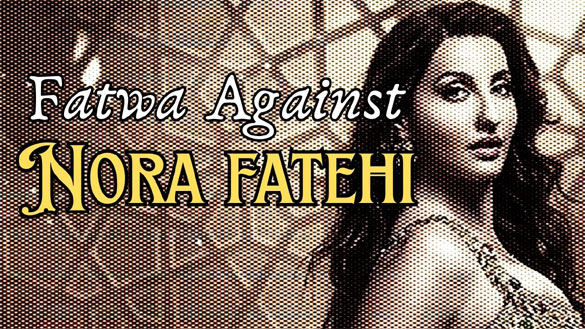
Fatwa against Nora Fatehi: Bollywood is once again in the eye of a storm. The ‘Sarke Chunar Teri Sarke’ track from the upcoming film ‘KD: The Devil’, featuring Sanjay Dutt and Nora Fatehi, has become the center of a raging controversy. Now, the authorities and religious bodies have joined the debate in full force.
Chief Mufti Maulana Ebrahim Hussain of the Muslim Personal Darul Ifta in Aligarh didn’t hold back. In a strongly worded statement, he declared that the visuals and lyrics of the song are objectionable under Islamic teachings.
According to the cleric, the use of explicit “real” visuals makes the content haram, forbidden, and a gunah-e-kabira, or a grave sin. He warned that both participating in and promoting such material goes against religious principles.
The fatwa adds fuel to already heated discussion. The song’s allegedly obscene lyrics and provocative dance moves have drawn criticism from multiple quarters. There are worries about its influence on young viewers and societal norms.
Government steps in
The controversy escalated quickly. Reports confirm that Central Government has already banned the song following public backlash.
According to ANI, the Muslim Personal Darul Ifta described the track as containing “obscene dance moves and vulgar content.” In a statement, Maulana Chaudhary Ifraheem Hussain from Uttar Pradesh expressed disappointment over the track, emphasising that such songs violate moral values. The fatwa also urged audiences to boycott the song and appealed to filmmakers and performers to present entertainment responsibly.
NCW summons the stars
The National Commission for Women (NCW) has now entered the fray. The NCW issued summons to both Nora Fatehi and Sanjay Dutt regarding the allegedly obscene content. The Commission took suo motu cognisance of the song by pointing out that it may promote obscenity and vulgarity, potentially violating the Bharatiya Nyaya Sanhita, the Information Technology Act, 2000, and the Protection of Children from Sexual Offences Act, 2012.
But it’s not just the actors. The NCW has also summoned lyricist Raqueeb Alam, producer Venkat K Narayana, and director Kiran Kumar. All parties are expected to appear before the Commission on March 24 at 12:30 pm with strict warnings about consequences if they fail to comply.
Source: thestatesman.com
https://www.thestatesman.com/entertainment/bollywood/obscene-vulgar-and-haram-nora-fatehi-faces-fatwa-over-sarke-chunar-teri-music-video-1503572104.html
------
CAIR Announces Settlement, Policy Changes with Oregon County Sheriff’s Office Over Removal of Muslim Women’s Hijabs for Booking Photos
March 19, 2026
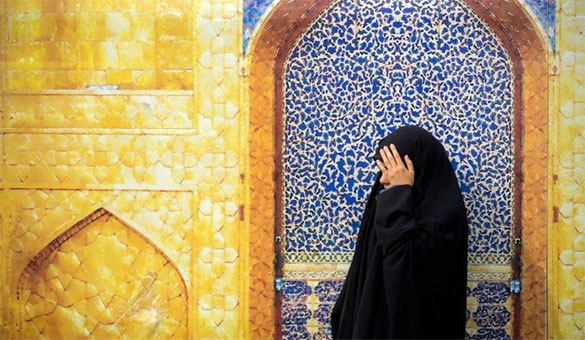
The Council on American-Islamic Relations (CAIR), the nation’s largest Muslim civil rights and advocacy organization, today announced the resolution of its lawsuit against the Multnomah County Sheriff’s Office (MCSO) and Multnomah County Detention Center (MCDC) in Portland, Oregon, for depriving two Muslim women of their religious rights by forcibly removing their hijabs, taking booking photographs of them without it, and allowing their photographs and the security footage to remain available on its statewide database.
CAIR, which sued the sheriff’s office and detention center last year, secured a settlement for $30,000, including substantive policy changes, on behalf of its clients Serine Abuelhawa and Marjannah Hassan.
“This settlement represents a great outcome for both our clients and the Muslim women of this community,” said CAIR National Litigation Director Lena Masri, Esq. “Muslim women in Multnomah County will no longer be forced to choose between their religious beliefs and complying with law enforcement officers. We welcome the policy change, and hope it sends the message that CAIR Legal Defense Fund will continue to fight for detained and incarcerated Muslims across the U.S.”
“I’m so grateful for my legal team at CAIR who are the embodiment of strength, justice and unmatched advocacy,” said Serine Abuelhawa. “I want to thank them for all of their hard work and efforts, and the long months they’ve dedicated towards seeking justice for me and my sister, and in ensuring the religiously-protected rights and liberties for all Muslim women in the future navigating the criminal justice system. I also hold incredible hope that our story and this settlement will inspire other agencies across neighboring counties to consider the implementation of religiously-inclusive policies.”
Earlier this month, CAIR’s Georgia chapter announced the filing of a federal lawsuit against Bartow County Sheriff Clark Millsap and detention officer “Jane Doe.” The suit challenges the forced removal of Plaintiff Ivana Elliott’s hijab, or Islamic headscarf, and the severe violation of her religious and civil rights.
Washington, D.C., based CAIR offers a booklet, “A Law Enforcement Official’s Guide to The Muslim Community,” designed to assist law enforcement officials in forming and implementing policies to create a culturally aware environment and cooperative relationship between American Muslims and law enforcement agencies.
BACKGROUNDER:
CAIR filed the lawsuit with the goal of having Abuelhawa and Hassan’s photographs destroyed, as well as having the MCSO implement policy changes to prevent officers and staff from taking booking photographs of women without their hijabs on in the future.
After the filing of the lawsuit, MCSO and MCDC took steps to destroy the photographs in question from their database and participated in discussions with CAIR to reach agreed-upon policy changes and a monetary settlement.
MCSO consented to multiple policy changes in the settlement for female arrestees who arrive at Booking wearing a religious hijab, including, but not limited to, the removal of their hijab by a female deputy in a separation cell outside the view of any male staff or arrestees, the provision of a new hijab from MCSO, the taking of one booking photo with hijab on, the taking of one booking photo without hijab on that cannot be viewed by male staff without legitimate reason.
Source: cair.com/
https://www.cair.com/press_releases/cair-announces-settlement-policy-changes-with-oregon-county-sheriffs-office-over-removal-of-muslim-womens-hijabs-for-booking-photos/
------
New study: Gender-based violence online in Syria
March 19, 2026
Available in English language (Arabic language version coming soon) – download study below
DW Akademie has published a new study on gender‑based violence online (GBVO) in Syria, showing how harassment, threats and blackmail on digital platforms are silencing women’s voices and pushing them out of public life. The study “Safer platforms, stronger participation – Mapping gender-based violence online in Syria,”, was conducted by the research organisation Ektimisi as part of DW Akademie’s project “Strong Female Voices for a United Syria”.
Using an exploratory mixed‑methods approach – desk review, interviews, focus groups and an exploratory scan of platforms such as Facebook and Telegram - the study finds that GBVO in Syria is not just isolated incidents but rather a systemic pattern of control.
Systemic gender‑based violence online in Syria
Women who speak out, work visibly or take on public roles online are targeted with harassment, defamation campaigns, doxxing and blackmail. Abusers exploit platform features to coordinate attacks in semi‑closed spaces and amplify them in public ones. Victim‑blaming narratives and fear of stigma often leave women with a stark choice: endure ongoing abuse or withdraw from digital and public spaces entirely.
Despite these risks, survivors struggle to access trusted, survivor‑centred support, and many media outlets lack clear guidelines for dealing with online abuse of women journalists and sources. Platform reporting tools and moderation practices often fail to reflect local languages and contexts.
Concrete steps for media, civil society and policymakers to make digital spaces safer
The report offers concrete, practical recommendations aimed at media organizations, civil society and policymakers. These include establishing clear internal protocols for handling online attacks against staff and sources, strengthening digital safety and psychosocial support for women journalists and activists, building coalitions to document and challenge online abuse and advocating for more accountable platform policies.
With “Safer platforms, stronger participation,” DW Akademie aims to provide a resource for Syrian media and civil society partners, regional and international organizations and donors who are working to make digital spaces safer and more inclusive.
Source: akademie.dw.com
https://akademie.dw.com/en/safer-platforms-stronger-participation-mapping-impacts-drivers-and-responses-to-gender-based-violence-online-in-syria/a-76398807
-----
Iran women’s soccer team greeted with a welcome ceremony in Tehran
March 20, 2026
Members of Iran’s national women’s soccer team were greeted with a welcome ceremony upon their return to the Islamic Republic after several of the players sought asylum in Australia.
“First of all we are so happy to be in Iran, because Iran is our homeland,” midfielder Fatemeh Shaban said.
People in the crowd waved flags while some of the players held bouquets of flowers and signed what appeared to be mini-soccer balls. Iranian media had reported that the team returned on Wednesday (March 18, 2026).
“I wasn’t expecting this many people to come to welcome us, and I am happy to be the daughter of Iran,” Ms. Shaban said in translated comments.
Iran ‘negotiating’ with FIFA over moving World Cup games to Mexico: embassy
Two Iranian female players, Fatemeh Pasandideh and Atefeh Ramezanisadeh, chose to remain in Australia and have been training with the Brisbane Roar club.
Others who initially sought asylum after the team was knocked out of the Women’s Asian Cup later changed their minds and said they would return to Iran.
Iran’s squad arrived in Australia for the tournament shortly before the Iran war began on February 28. The team initially gained global attention after some players stayed silent during Iran’s national anthem before their first game in the Asian Cup. The silence was cast as an act of resistance or protest by some commentators and a show of mourning by others.
The players didn’t publicly disclose their views or explain their actions and sang the anthem before their next two matches.
Iranian first Vice President Mohammad Reza Aref last week dismissed suggestions that women would be unsafe if they returned home, saying the country “welcomes its children with open arms and the government guarantees their security.”
Source: thehindu.com
https://www.thehindu.com/news/international/iran-womens-soccer-team-greeted-with-a-welcome-ceremony-in-tehran/article70764120.ece
-------
Exiled Iranian writer Shahrnush Parsipur on her International Booker Prize-nominated novella
March 20, 2026
Kanika Sharma
In writing Women Without Men (Zanan bedun-e Mardan), Shahrnush Parsipur gave her female characters a freedom that cost her her own. Set against the CIA-backed 1953 coup in Iran, the novella follows five women — a sex worker, a schoolteacher, a menopausal housewife, and two unmarried women — all seeking escape from the religious diktats governing their lives. In the book, virginity is divorced from honour, and shame is cast aside to create identity.
The vision was radical for its time. Published in 1989, the book appeared just as Iran was consolidating itself as an Islamic Republic. As the state moved to institutionalise hijab and Sharia-based law, Parsipur’s fantastical tale was seen as an act of insurrection. She was jailed and the book was banned.
Yet, the novella has outlasted its censors. Circulating underground for decades, it went on to become one of the most discussed works of modern Persian literature, even fuelling the ‘Woman, Life, Freedom (Jin, Jiyan, Azadi)’ movement that shook Iran in 2022. This defining book, newly translated by Faridoun Farrokh and published by Penguin International Writers, appears on the 2026 longlist of the International Booker Prize — 37 years after its publication.
On a video call from her home in California, 80-year-old Parsipur leans closer to the screen when I mention the nomination. “It hasn’t won yet,” she says in broken English, her eyes lighting up, belying the decades of exile that have led to this moment.
“From the time I was a little girl, I wanted to be a writer,” she later writes in Persian over email. “Back then, I did not have a concept of myself as man or woman writing books for men or women. Even today, I don’t necessarily write for women. I write for both men and women.”
A political act
Parsipur turned to literature seeking answers to questions typical of adolescence. What is right? What is the meaning of life? How should one live? At 28, her definition of right and wrong collided with politics. Working as a producer at National Iranian Radio and Television, she resigned in protest against the execution of two Tehran poets. Consequently, she was put behind bars for almost two months.
“It was the first time I had committed a political act,” says Parsipur. “Human beings are a political species as well as capable of laughter. Like everyone else, I exist in a political society. I have always opposed political hegemony in Iran and in the U.S. as well, but in America, I am comfortable with its democratic ambience.”
After her release, Parsipur moved to Paris where she studied Chinese, Indian and Iranian mythology. Her fascination with myth and symbolism later shaped Women Without Men, which she initially wanted to write as 12 short stories of women from the 12 signs of astrology.
At 34, Parsipur returned to Iran to witness the Iranian Revolution. But the upheaval that followed proved even more dangerous for dissident writers. She was arrested again because political documents were reportedly found in the possession of her brother and mother. She spent nearly five years in prison without formal charges.
As she witnessed thousands of executions around her, Parsipur’s longing for freedom seeped into Women Without Men.
“Magic realism gave me the freedom to do everything that I liked. For example, I could let my character become a bird or an animal and even an angel,” she says. And as she wrote, her imagination was seized by the construct of virginity, an idea she had grown up with, internalising patriarchy. “When I was still a child, my grandmother had told me that if a girl lost her virginity, God would never forgive her,” she recalls.
In Iranian schools at the time, there was no such thing as sex education. “Throughout my adolescence and early youth, I thought of virginity and considered it as specific to the female body as breasts.”
After much mulling over, Parsipur considered the duality of the construct and felt compelled to dismantle it. “When I realised that virginity is also a state of mind, I wrote the two stories of Faezeh and Munis that end up in Women Without Men,” she says. “At the time, I never thought of the cultural significance of this issue until I was arrested and imprisoned by the Islamic Republic.”
The idea of paradise
Eventually, Women Without Men gained stronger resonance as it came to be translated into several languages. “Following the so-called Islamic Revolution of the mid-70s, there was a massive migration of mostly upper- and middle-class Iranians, who comprised most of the civic population. Many significant works of Iranian literature, including Women without Men, found their way into the culture of these and surrounding minority communities in European and American population centres,” says academic Faridoun Farrokh, translator of Women without Men.
Parsipur believes that the novella’s brevity has helped it travel across cultures while the women’s movement in Iran has continued to intensify. In 2022, the death of 22-year-old Mahsa Amini due to alleged police brutality rekindled the debate on state control over women’s bodies.
Says Farrokh, “The significant role played by such luminaries as Parsipur cannot be underrated. Parsipur’s literary genius, and her penetrating insight into the intricacies of the man-woman relationship and its social background provides a roadmap. I haven’t been in Iran, but certainly the recent uprising of women there can be partially attributed to the writings of Parsipur and women of her ilk.”
Parsipur is cautious commenting on the current political state of Iran, though she agrees the role of women writers has expanded manifold. “The false notion about Iranian women is that they have no liberties at all. Of course, at this time they have been severely curtailed. But, intellectually, Iranian women have many liberties. That is why there are so many female writers in Iran. They have discovered writing as the most effective way of attracting attention to their ideals.”
In that act of imagination, Parsipur’s garden of Karadj in the novella also carries echoes of a paradise or a new dawn where women will suffer no shame or tether their sense of worth to men. As fiction often stems from memory, so did the mythical place.
“The idea of paradise entered world literature through Iran,” she explains. In a land shaped by arid landscapes, gardens represent a rare oasis of beauty and abundance. “As a child, I slept in one of these gardens. The experience proved unforgettable and became the inspiration for the creation of this story.”
Years later, that mythical garden has become a symbol of hope and resilience. “With the death of Ayatollah Ali Khamenei and an on-going war there will be major changes,” she says, emphasising that she is completely against this war. Yet she hopes this time of churn may open a new chapter for Iranian women.
“We could hope women will wear mini jupes, remove their headscarves or engage in more dating and drinking. If the Islamic Republic collapses, there will be further freedom for women. Many paths may open to them, even in politics.”
(Shahrnush Parsipur’s quotes have been translated here from the Persian by Faridoun Farrokh.)
The writer is a freelance journalist with bylines in leading international and Indian publications.
Source: thehindu.com
https://www.thehindu.com/books/iran-writer-shahrnush-parsipur-women-without-men-international-booker-prize/article70752442.ece
-------
Jail issues new mugshot rules for Muslim women arrested in Portland area
Mar. 19, 2026
The Multnomah County Sheriff’s Office will allow women lodged in the downtown Portland jail to keep wearing a religious headcovering for their primary booking photo.
Jailers previously ordered women to remove their burkas and hijabs prior to being photographed in the basement intake center. Those expected to linger in the jail longer than a few hours were provided a towel for use during their stay.
The policy violated some versions of the Muslim faith that instruct women to always cover their head with a shawl while in public or in the presence of men and prompted a 2025 lawsuit in U.S. District Court in Oregon from the Council on American-Islamic Relations.
Under the new directive, a primary mugshot will be taken while wearing a hijab or burka and used for dormitory ID cards. A second booking photo will be taken minus the religious head covering. Only women employees will take these photos, and male jailers will not be allowed to view the second photo without a “legitimate reason.”
Male jailers are now required to leave the photography area entirely while the photos are being taken, according to a memo issued Jan. 26 by Chief Corrections Deputy Steve Reardon.
“Through everything we do, we are guided by the principle that every person we encounter deserves to be treated with dignity and respect,” a sheriff’s spokesperson said Thursday while announcing the new policy. “That remains the foundation of our work as we move forward.”
Women will still be subject to a search by a female corrections deputy upon entry to the jail, and must remove the headcovering during the procedure, though the new rules clarify that the search should happen in a private cell.
Additionally, a woman who enters custody wearing a hijab or burka will have the item seized and stored alongside the rest of her clothing, according to the policy. She will receive a jail-issued hijab while still inside the private search cell.
Those transitioning to the jail dorms will be searched by a female deputy and must remove the hijab at that time.
The Council on American-Islamic Relations filed the lawsuit on behalf of two pro-Palestinian protesters — sisters who were 30 and 19 at the time — who were arrested in Portland on allegations they disrupted the 2024 Grand Floral Parade. The lawsuit said jail deputies required that the two women, Serine Abuelhawa and Marjannah Hassan, remove their hijabs at the Multnomah County Detention Center and be in the presence of men while they were processed.
The policy changes — and a $30,000 payment — resolved the federal suit, and a council representative applauded the settlement.
”Muslim women in Multnomah County will no longer be forced to choose between their religious beliefs and complying with law enforcement officers,” said Lena Masri, the council’s national litigation director.
Source: oregonlive.com
https://www.oregonlive.com/crime/2026/03/jail-issues-new-mugshot-rules-for-muslim-women-arrested-in-portland-area.html
-----
Women gather to break fasts and taboos
Mar. 19, 2026
Naj Modak
A group of woman including a chief constable, a Methodist minister and a former prisoner are coming together at a football stadium to share stories of strength at home, in their communities and in society.
Resilient Women, an event combining the Muslim festival of Eid and International Women's Day, will take place at Middlesbrough's Riverside Stadium on Monday.
Guest speakers aim to provide inspiration and tackle some subjects which can be taboo among some communities.
Subjects covered at the event, organised by Sahida Ditta, will include disability, mental health and combining careers with motherhood.
Ditta said creating a safe and welcoming space, where woman from different backgrounds could "support one another and feel a real sense of belonging", was important.
"By bringing together women who might not normally meet, we hope to build understanding, strengthen relationships and celebrate the richness of our community," she said.
Combining Eid and International Women's Day could, according to the organiser, provide a space where Muslim women felt culturally recognised while also celebrating women from all backgrounds "who may feel overlooked or unheard".
The event is part of the Amal Project Teesside, a community organisation focused on improving access to essential services for people from ethnically diverse backgrounds.
Menopause and weight-loss coach Samina Zaman, from Middlesbrough, will be among the guest speakers.
The 45-year-old said she was celebrating her first Eid after being given the all clear from breast cancer in January and would talk about the importance of early detection and breaking cultural stigma.
The mother of three also said she had experienced premenopausal symptoms and wanted to use the event to speak openly about it.
She said menopause and breast cancer were "taboo subjects" and some women felt they should not talk about them through embarrassment, but added: "We need to just be able to openly speak about these things."
Attendee Maureen Rigg, 80 and from Eaglescliffe, said: "We need women to be leaders in our community, and the event would encourage women to lead and to develop their self-confidence.
As a Christian, the retired English teacher said she had fasted for Lent but also abstained from food and water for one day in Ramadan.
"It gave me a much better appreciation of the women that I'd known for years," she said.
Rigg said the event would allow her to share her experiences as well as to learn from others.
Other speakers include Sahida Ditta herself, who will talk about learning to walk again after an injury.
The Reverend Charity Hamilton is also among those discussing health issues, while another speaker will detail barriers to mental health support across different ethnic communities.
A former prisoner will recount turning her life around and Chief Constable Victoria Fuller, from Cleveland Police, will talk about her career and being a mum.
Source: bbc.com
https://www.bbc.com/news/articles/cwywxld6dzeo
-------