
World's First Women-Only Mosque Opens In Doha and Everyone Enters Through The Front Door
New Age Islam News Bureau
13 March 2026
· World’s First Women-Only Mosque Opens in Doha—And Everyone Enters Through the Front Door
· CAIR-Philadelphia Welcomes Dept. of Prisons Allowing Correctional Officers to Wear Hijab
· Women’s events held in Hamdan district marking Imam Ali’s Martyrdom, Intel al-Quds Day
· 'Corrupt, dangerous administration': Sole Muslim woman on Trump's religious committee resigns in protest
· Mehendi artists in Jharkhand denied entry to wedding venue, asked to remove hijabs
· One woman’s fight for the children of Korail slum
· Queen attends tahlil for late Royal Professor Syed Muhammad Naquib Al-Attas
· Yanar Mohammed, 65, Iraqi Women’s Rights Advocate, Is Killed by Gunmen
Compiled by New Age Islam News Bureau
---
World’s First Women-Only Mosque Opens in Doha—And Everyone Enters Through the Front Door
Mar 12, 2026
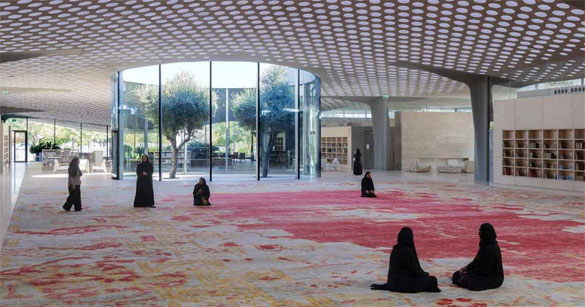
In the fall of 2025, the Al-Mujadilah Center and Mosque for Women opened its doors in Doha, Qatar.
It is the first known mosque specifically designed for women anywhere in the world and was inspired by a figure in the Quran, Surat Al-Mujadilah, which means “She Who Discourses.”
The space will offer a women-focused worship space, and host a variety of programs centered around dialogue, prayer, and study, even including an annual summit for international Muslim voices to come together and discuss the role of Muslim women in public life.
“In these challenging times, communities of faith are essential to fostering cohesion between societies and helping individuals navigate increasingly complex social questions. To do so, however, requires the creation of new frameworks and brave spaces where these conversations can unfold in a meaningful and religiously informed way,” the center’s executive director, Dr. Sohaira Siddiqui, a scholar of Islamic Studies at Georgetown University, said in a statement.
“Through our research, programming and outreach initiatives, we seek to foster a Muslim society where all women are engaged, their participation and contributions acknowledged and recognized, and their concerns and perspectives shape contemporary Muslim thought and open public discourse.”
The design of the mosque itself is a fresh re-envisioning of “what a woman experiences when she walks into a mosque,” Siddiqui said in a video.
Designed by New York-based firm DS+R, a large flowing roof covers the building, perforated with 5,500 small openings to diffuse natural light throughout the prayer hall and education space.
Inside the open and sprawling building, visitors can see two olive trees intentionally planted to symbolize a connection to knowledge and nature.
The design team behind the building conducted extensive surveys among Muslim women to best confront the challenges and needs they have in a space like this. The women wanted it to build community and be welcoming.
For instance, in most mosques, women enter through a separate entrance or side door, but at Al-Mujadilah, Siddiqui said, “you come in, and you’re in the space.”
And in the Al-Mujadilah worship space, instead of having separate prayer mats that Siddiqui said “felt divisive,” there is one giant, traditional red prayer mat, for everyone to join in together.
“It’s powerful to be in a space that was designed for you,” Siddiqui said.
Source: goodgoodgood.co
https://www.goodgoodgood.co/articles/women-only-mosque-qatar
---
CAIR-Philadelphia Welcomes Dept. of Prisons Allowing Correctional Officers to Wear Hijab
March 12, 2026
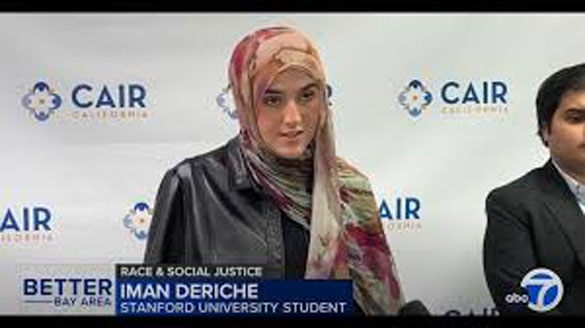
The Philadelphia chapter of the Council on American-Islamic Relations (CAIR-Philadelphia), a chapter of the nation’s largest Muslim civil rights and advocacy organization, today welcomed a decision by the Philadelphia Department of Prisons to allow female Muslim correctional officers to wear the Islamic headscarf, or hijab.
The policy allows Muslim correctional officers to wear hijabs as part of their uniform while working inside Philadelphia’s jails, according to prison officials.
“We welcome this decision that affirms the religious rights of state employees,” said CAIR-Philadelphia Executive Director Ahmet Selim Tekelioglu. “The First Amendment guarantees every American the right to practice their faith, including both the incarcerated and correctional officers.”
He noted that CAIR offers a booklet, called “An Employer’s Guide to Islamic Religious Practices,” to help employers gain a better understanding of Islam and Muslims in the workplace.
CAIR also offers an educational toolkit, called “A Correctional Institution’s Guide to Islamic Religious Practices,” to help correctional officers and administrators gain a better understanding of Islam and Muslims.
Source: cair.com
https://www.cair.com/press_releases/cair-philadelphia-welcomes-dept-of-prisons-allowing-correctional-officers-to-wear-hijab/
---
Women’s events held in Hamdan district marking Imam Ali’s Martyrdom, Intel al-Quds Day
12 Mar 2026
The Women’s Authority in Hamdan district of Sana’a governorate organized on Thursday a series of awareness and speech events to mark International al-Quds Day and the anniversary of the martyrdom of Imam Ali (peace be upon him).
The events were held in the villages of Wast Dalal, Beit al-Hamzi, Shahara, Shaab al-Muzain, Alaw Dalaa, Beit Al-Shuwai’, Al-Mahjar, Al-Mahjar Al-Dakhili, and Al-Khamsin. Participants highlighted aspects of the life of Imam Ali—known as the “Son of the Kaaba” and the “Martyr of the Pulpit”—focusing on his struggle, bravery, and sacrifices in defense of the Islamic message of Prophet Muhammad.
Speakers also recalled his heroic stance on the night of the Prophet’s migration (Hijra), when he slept in the bed of Prophet Muhammad (peace be upon him and his family), risking his life to protect him from the plot of the polytheists, despite his young age at the time.
The speeches emphasized that the personality of Imam Ali represents a comprehensive model of moral values, courage, justice, fairness, and wisdom, noting that commemorating such occasions helps strengthen awareness among members of the nation and encourages following his exemplary life in different aspects of society.
Participants also stressed the importance of observing International Quds Day to renew the principled and steadfast position toward the Palestinian cause, reaffirm the central importance of Jerusalem in the conscience of the Arab and Islamic nations, and reject attempts to erase its identity or undermine its cause.
They pointed out that the commemoration comes at a time when the Islamic nation faces severe challenges and hostility, which requires unity and reflection, as well as strengthening solidarity in confronting adversaries in line with the approach of Imam Ali.
Speakers called for raising awareness, unifying efforts, and strengthening unity among the nation’s people as they face what they described as a decisive struggle.
Following the events, which included chanting, poetry, and theatrical performances, participants held solidarity vigils in support of the Islamic Republic of Iran and the Palestinian and Lebanese peoples.
Source: saba.ye
https://www.saba.ye/en/news3664463.htm
-------
'Corrupt, dangerous administration': Sole Muslim woman on Trump's religious committee resigns in protest
Mar 13, 2026
Sameerah Munshi, the sole Muslim woman serving on US President Donald Trump’s religious freedom committee, has announced her resignation, saying she is stepping down “in protest.”
Munshi shared the announcement on X, where the post quickly gained traction. In the message, she explained that she had been serving as a Presidential appointee and advisor to the White House Religious Liberty Commission.
She stated that her resignation was driven by what she described as the “injustice and atrocities of this administration at home and abroad.” The post also included a Substack essay where she elaborated on the reasons behind her resignation.
My name is Sameerah Munshi. I am a Presidential appointee serving as advisor to the White House Religious Liberty Commission.
Today, I am resigning over the injustice and atrocities of this administration at home and abroad.
In her essay, Munshi said she was stepping down “in protest” of two developments she described as deeply troubling.
The first was the removal of commissioner Carrie Prejean-Boller, which she said was due to the latter’s beliefs about Palestine.
The second was what she called the government’s illegal war against Iran, which she argued had been “undertaken without clear constitutional or congressional authorisation.”
Munshi also alleged that some members of the commission “mocked my faith and treated my community with hostility.”
Despite this, she said she had initially accepted the appointment in 2025 in hopes of remaining a “voice of reason.”
Munshi claimed that the rights of the American Muslims were being 'sidelined' and their existence was met with a hateful rhetoric intended to 'advancing particular political agendas'.
She also revealed that her family, both Christian and Muslim, came to America 'fleeing religious discrimination and persecution' which shaped her commitment to religious liberty, and her belief in America as a safe haven for 'people of all religions'. However, she found the commission to be driven by ulterior motives.
She claimed people of faith were having their free expression stripped away and lives put at risk, due to their deeply held beliefs about Palestine, all for the 'sake' of a Zionist political agenda. Here, she cited the example of the removal of Prejean Boller, saying the commissioner's faith-based stance had been treated as an affront to free expression and religious liberty.
She also condemned the Trump administration's unlawful killing of children and civilians in Iran, at the 'urging of a genocidal state'. "Not only is the American public against this aggression, but our tax dollars are funding the very violence that we oppose, both against innocent Palestinians and now Iranians," she added.
Lastly, she boldly added that she was not resigning out of 'fear or intimidation' from anyone affiliated with the Commission, the government or any interest group. However, she blamed what she saw as injustice of the members of the commission as the cause. "I support America over Israel, and unfortunately that means I cannot support Trump or this government."
Munshi supported Prejean-Boller, who revealed on X on Thursday that the president, who appoints all the commissioners, had fired her for what she believes is her stand against the genocide committed by Israel in Gaza and her pushback against those who call her antisemitic for her anti-Zionist views.
Her firing followed a viral clip of her heated exchange at a February meeting of the commission where she insisted that Catholicism and Zionism are not compatible.
Moreover, Munshi, who was the director of the Religious Freedom Institute, shared with the Middle East Eye that she started feeling isolated from the programme ever since September 2025, when she provided testimony to the commission on what she said was a constitutionally-protected right in schools to protect Israel's killing of Palestinians.
"After I testified about Palestine, I stopped receiving the witness lists before each hearing, so I don't know if that was a coincidence, if it was organisational, just a miscommunication on their end, or if they literally held it against me about what I testified on," she described.
Israel's war on Gaza killed 72,136 Palestinians. As per Reuters, by March 9, the Iranian state media reported the death toll of the Iran vs US-Israel war to be 1,270 people.
While Americans have been protesting against the Israel-Hamas war since 2023, they are absolutely against the war with Iran. As per a CNN poll conducted by SRSS, nearly 6 in 10 Americans disapprove of the US decision to take military action in Iran.
Source: indiatimes.com
https://timesofindia.indiatimes.com/world/us/corrupt-dangerous-administration-sole-muslim-woman-on-trumps-religious-committee-resigns-in-protest/articleshowprint/129540414.cms
---
Mehendi artists in Jharkhand denied entry to wedding venue, asked to remove hijabs
12-03-2026
Hazaribagh: A mehendi artist and her team were allegedly denied entry to a wedding venue and asked to remove their hijabs before applying mehendi at a hotel in Jharkhand’s Hazaribagh. Following the altercation, the artists refused and left the venue.
According to Siasat Daily, Alia Ahmed and her team had arrived at Hotel Aranya Vihar to apply mehendi for a client. However, they were reportedly stopped at the entrance and asked to remove their hijabs before entering.
In a video circulating online, a man at the venue can be heard saying, “Bohot dikkat hai. Jaise tumko dikkat hai hijab me nai rehne ki waise hume dikkat hai isme lagane me. (We have a major problem. Just like you have an issue with not wearing a hijab, we also have a problem with you putting mehendi while wearing it).”
According to Alia, a client from Delhi had booked her services to apply mehendi on 40 to 50 people for a wedding. She said that an elderly relative of the family asked them to remove their religious coverings.
Refusing the demand, Alia said, “Yeh toh aisa galat hai na. Nai utar sakte hai hum. Nai toh phir chod dijiye. Hum wapas chale jayinge,” after which she and her team left the hotel premises.
In the video, Alia alleged that they were insulted over their attire. “They disrespected our hijab and niqab and said that only if we removed it would we be allowed to put mehendi,” she said.
“We waited long hours in this heat while we were fasting. No one even told us to sit,” she said.
Alia further said that she had previously worked with people from different communities and questioned why her religious attire had become an issue.
“Hamara kaam se matlab hona chahiye. Na ki hamara niqab se (Our work should matter, not our niqab),” she said, adding that one of her students, Pooja, belonged to another caste.
She also said, “Jab humko koi dikkat nahi hai caste me, toh yeh log ko kyun dikkat hai hamare hijab aur niqab se (If we have no problem with caste, why do they have a problem with our hijab and niqab).”
Alia also expressed concern that if such discrimination continued, other artists wearing hijab or niqab could face similar situations in the future.
Source: varthabharati.in
https://english.varthabharati.in/india/mehendi-artists-in-jharkhand-denied-entry-to-wedding-venue-asked-to-remove-hijabs
---
One woman’s fight for the children of Korail slum
Mar 13, 2026
On most evenings in Korail slum, as the narrow lanes grew quiet and day labourers returned home, a small room would fill with nearly 30 children.
There, Farzana Akter gathered students who could not attend school regularly and taught them free of charge.
“I just wanted to make sure they did not have to stop learning,” says Farzana, 33, now a coordinator at the Mamatamoyee Korail Project under the Palliative Care Society of Bangladesh.
Her connection to Korail is deeply personal. She moved there around 1994-95, when the area was far less crowded, and spent most of her childhood and adolescence in the settlement. After completing her schooling, she later graduated from Government Titumir College.
Farzana began tutoring children in the slum around 2009. Over time, she became involved in several development initiatives, teaching at Surabhi School and other non-formal institutions, including BRAC-run programmes.
When a UNDP project began operating in Korail, she joined as a senior secretary -- her first formal step into NGO work.
Then in 2016, through Shaheed Rumi Smriti Library, her activism and advocacy for the children she taught took a more determined direction.
In Korail, many schools operate under project-based funding. When those projects end, the schools often shut down.
Farzana recalls one BRAC school that closed abruptly in the middle of an academic year. Many students had already enrolled, but admissions elsewhere had closed.
“There was nowhere for them to go,” she says.
Through the library, she and other committee members tried to support the displaced students.
But the broader pattern remained unchanged: once projects end, many children are left without structured learning opportunities. Some drift into child labour -- cleaning jobs, domestic work, or other informal employment.
“Up to SSC, parents somehow try,” Farzana explains. “But once a child passes SSC, many families feel their children have been educated enough. Even if a child wants to continue studying, he or she is expected to work and support the family financially instead.”
For girls, the dropout rate is even higher. Financial hardship and early marriage often end their education long before they can complete it.
Beyond economic barriers, there are quieter humiliations that push students away from school.
“When students cannot pay fees on time, some are made to stand in class as punishment,” Farzana says. “That embarrassment drives many of them away.”
Alongside conventional education, Farzana believes awareness about “good touch” and “bad touch” must begin early -- both at home and in schools.
“When I first introduced the topic in class, many parents objected. Some even scolded their children for talking about sexual harassment.”
The children themselves were initially uncomfortable discussing the issue.
“But slowly they began sharing what was happening in their own schools and surroundings.”
Among the many students she has taught, one story remains particularly close to her heart.
Sumaiya Islam was in second grade when Farzana taught her at Surabhi School.
“She was very attached to me,” Farzana recalls.
When Farzana later moved to another school, Sumaiya followed her there. Even after her parents relocated to Savar, the girl refused to change schools and travelled to Korail every day so she could continue studying with Farzana.
“This year she will sit for her SSC exam,” Farzana says with a quiet smile. “She is one of the most remarkable chapters of my life.”
But not every story ends with hope.
Around 2012, Farzana learned that another student, Tamannah, was being raped by her father. After the girl’s mother died, she had nowhere safe to turn.
Tamannah was eventually married off, but when her husband learned of the abuse, the marriage collapsed. She was later forced into sex work.
“It still causes me deep pain,” Farzana says softly. “I wanted all my girl students to have a good life.”
Experiences like this pushed her work beyond teaching. She began accompanying families to police stations and courtyards, helping them seek justice and protection.
In another case in 2018, two sisters aged four and six were raped by a 60-year-old man. After learning of the incident, Farzana and others filed a case, despite pressure to withdraw it.
They refused.
The case is still ongoing.
Recently, the accused side reportedly tried to settle the matter by offering Tk 3 lakh. The victims’ family eventually left the area after facing harassment.
“We have evidence against the accused,” Farzana says. “And we will continue fighting.”
Another former student, Lima, was sent to work as a domestic helper. One night around 1:00am, Farzana received a call for help -- the girl’s employers had been physically abusing her.
Farzana and her husband went to the police station, but she alleges the authorities initially did not take the complaint seriously. Her persistence eventually led to a raid on the employer’s house and the girl’s rescue.
Incidents like these gradually strengthened Farzana’s standing in Korail.
Today, she is often invited to help mediate local disputes -- something she says would have been unimaginable for a woman in the community years ago.
Still, the journey has not been easy.
In 2018, Farzana helped organise a torch procession as part of the anti-rape movement.
“Afterwards, Banani Police Station warned us not to hold further programmes and recorded our names and addresses,” she says. “Political leaders also pressured us to stop.”
“Continuing this fight is not easy,” she adds. “But stopping has never crossed my mind.”
For Farzana, success is not measured by awards or recognition.
Calling for legal reforms, equal treatment under the law, and genuine political commitment to women’s rights, she says justice must become faster and more certain.
“I will be at peace when legal complexities no longer delay justice,” she says. “Even with evidence, rapists often go unpunished. That must change.”
She adds, “We celebrate Women’s Day like a festival. But it is meant to protest injustice. Women still do not enjoy full freedom.”
For Farzana, the real measure of success lies closer to home.
“The day I see hundreds more people in Korail standing up against injustice,” she says, “I will consider myself successful.”
Source: thedailystar.net
https://www.thedailystar.net/news/bangladesh/news/one-womans-fight-the-children-korail-slum-4127641
---
Queen attends tahlil for late Royal Professor Syed Muhammad Naquib Al-Attas
12 Mar 2026
Her Majesty Raja Zarith Sofiah attended a Yasin recital and tahlil for the late scholar, a prominent Islamic thinker, at Istana Negara.
KUALA LUMPUR: Her Majesty Raja Zarith Sofiah, Queen of Malaysia attended a Yasin recitation and tahlil ceremony for the late Royal Professor Tan Sri Dr Syed Muhammad Naquib Al-Attas at Istana Negara here today.
Also present were Minister in the Prime Minister’s Department (Religious Affairs) Dr Zulkifli Hasan and Federal Territories Mufti Ahmad Fauwaz Fadzil.
Her Majesty also performed the Zuhur prayers in congregation with invited guests, led by Ustaz Wan Noor Hilmy Wan Ismail from the Islamic Affairs Division of Istana Negara.
During the ceremony, Raja Zarith Sofiah also granted an audience to the late scholar’s daughter, Sharifah Shifa Al-Attas.
Syed Muhammad Naquib, widely regarded as a prominent scholar and contemporary Islamic civilisation thinker, died at the age of 94 at 6.47 pm last Sunday.
The founder and director of the International Institute of Islamic Thought and Civilisation (ISTAC) was laid to rest at the Bukit Kiara Muslim Cemetery here at 12.30 pm the following day.
The late scholar was conferred the title of Royal Professor by His Majesty Sultan Ibrahim, King of Malaysia on Oct 23, 2024, in recognition of his immense contributions to the development of knowledge and Islamic education.
Royal Professor is the highest and most prestigious academic title in Malaysia bestowed by the KIng on distinguished scholars in recognition of their invaluable ontributions to the nation.
Source: thesun.my
https://thesun.my/news/malaysia-news/people-issues/queen-attends-tahlil-for-late-royal-professor-syed-muhammad-naquib-al-attas/
---
Yanar Mohammed, 65, Iraqi Women’s Rights Advocate, Is Killed by Gunmen
By Adam Nossiter
March 12, 2026
Yanar Mohammed, an Iraqi feminist and women’s rights advocate who established a network of safe houses for abused women and Yazidi victims of Islamic State sexual violence, was killed on March 2 outside her home in Baghdad. She was 65.
The Organization of Women’s Freedom in Iraq, the group she co-founded, said in a statement that two gunmen on motorcycles opened fire on Ms. Mohammed, who died of her injuries at a hospital.
Human Rights Watch called her death “a profound loss.” Amnesty International’s Iraq researcher, Razaw Salihy, described her killing as a “calculated assault to stifle human rights defenders.”
Both organizations called on the Iraqi government to investigate the murder, which Amnesty said was part of a pattern of targeted killings of rights activists in the country, likely carried out by Iran-aligned units of the Popular Mobilization Forces. These armed, mostly Shiite paramilitary groups are nominally under the control of the government but answer mostly to Tehran.
Iraq’s interior minister, Abdul Amir al-Shammari, said an investigative team would conduct an inquiry into the killing.
Ms. Mohammed, the recipient of numerous international human rights prizes, dedicated herself to sheltering and caring for victims of rape, physical abuse and other forms of ill treatment in a society where the basic rights of women are under constant threat.
Her organization had established 10 safe houses in central and southern Iraq, according to the group, but there are now only six because of “ongoing persecution,” Ms. Mohamed’s colleague Jannat Al-Ghezi said by text message. Ms. Mohammed herself was also subjected to constant threats of violence.
The safe houses worked in secret, Ms. Mohammed told The Tribune de Genève newspaper in 2017, and are unlicensed, although now — unlike in the past — they sometimes receive official referrals from government institutions.
For more than 20 years, Ms. Mohammed was an outspoken voice at demonstrations, in the halls of the Iraqi Parliament and in the press. Her campaign to free women from the strictures of Islamic fundamentalists and the government made her popular with neither.
Trained as an architect, she returned from a self-imposed eight-year exile in Lebanon and Canada in 2003, following the U.S.-led invasion that overthrew Saddam Hussein. She started small, cofounding the Organization of Women’s Freedom in Iraq in downtown Baghdad and opening two safe rooms that sheltered three women. In those years, she carried a gun and sometimes traveled with a bodyguard. To promote her views, she started a feminist newspaper, Al-Mousawat, or Equality.
By 2012, her organization had two shelters. In the next three years, that number grew to five as she began focusing on helping Yazidi women, members of a persecuted ethnic minority who had been made sex slaves by the Islamic State and subjected to mass rape. In all, the organization has “saved the lives” of more than 700 women, girls and L.G.B.T.Q. individuals, its website said.
Establishing the shelters “put Yanar Mohammed in direct confrontation with families and tribal members, religious political parties and sections of the Iraqi government,” Mehiyar Kathem, a senior research fellow at University College London who participated in the founding of Ms. Mohammed’s organization, wrote in the online magazine Counterfire after her death.
But Ms. Mohammed insisted that she was not afraid of challenging Iraq’s traditional male power centers. “When I see the gradual change in a person, reconstructing herself, becoming healthy — this is an immense source of strength to continue fighting as a defender of women,” she told The Tribune de Genève.
Her organization’s shelters, she said, were “the only safe places where women can go to escape honor killing” — killings carried out with impunity by aggrieved family members for perceived sins on the part of the women.
She put no faith in the Iraqi government to protect women. The country’s institutions remained repressive, she said, and too often caved to the dictates of fundamentalist Islam.
Ms. Mohammed’s education, at the University of Baghdad, took place during Mr. Hussein’s secularist, if murderous, Baathist regime, arguably a time of more freedom for women. But the current Iraqi government “has allowed an agenda that is dismissive of women’s rights,” she told the activist group Nobel Women’s Initiative in an interview about five years ago.
In 2023, she again fled temporarily to Canada, where she had become a citizen, because the Iraqi government had issued a warrant for her arrest as a human trafficker. Ms. Mohammed said in an interview with Manara Magazine that she had been accused of the very practice from which she protected women.
She and others campaigned against Iraq’s so-called personal status law, obtaining some concessions — marriage at the age of 9 was ruled out — but when the law finally passed in 2025, it sanctioned marriage at 15 as well as polygamy.
“The government policies are based on religion and are extremely patriarchal and tribal, and they preach hatred of women,” she told the Nobel Women’s Initiative.
Yanar Mohammed was born on Nov. 25, 1960, in Baghdad, the third of five children of Hasan Mohammed, an engineer, and Najiba (Saber) Mohammed, a schoolteacher.
She wrote later of an early lesson in feminism, when she discovered as a girl that her grandmother had been her grandfather’s child bride, at 14.
In a letter to her mother broadcast on the BBC in 2003, Ms. Mohammed wrote: “Dearest mother … how could that ‘respectable’ man that you still call your father rape, horrify and torture the innocence of a girl, a kid in her early teenage life, and what gave him the right?”
Ms. Mohammed studied architecture at the University of Baghdad, where she received a bachelor’s degree in 1984 and a master’s degree in 1993.
With life increasingly difficult in Iraq under international sanctions after the Persian Gulf war of 1991, she fled in 1995, first to Lebanon and then to Canada two years later with her first husband and their son. In 1998, while living in Toronto, she founded the Defense of Iraqi Women’s Rights, a precursor to her later organization.
After returning to Baghdad in 2003, Ms. Mohammed was increasingly a target of threats, especially after she publicly burned a head scarf, Mr. Kathem, the research fellow at University College London, wrote. She took an active part in anti-government demonstrations in 2011 and 2019. As a critic of the U.S. presence in Iraq, she turned down an award from the State Department in 2017.
She received the Gruber Foundation Women’s Rights Prize in 2008 and the Professor Thorolf Rafto Memorial Prize for Human Rights from the nonprofit Rafto Foundation in 2016.
Ms. Mohammed, who divorced and remarried, is survived by her husband, her son, her four siblings and her father. (Citing safety concerns, her organization requested that their names be withheld.)
Recently, she has been “vilified” online in Iraq, Mr. Kathem wrote, for promoting L.G.B.T.Q. rights at the request of outside donors. But Ms. Mohammed was aware of the risks she was running.
“The government starts with smear campaigns, then court cases, to stop you from doing your human rights work,” she told the Nobel Women’s Initiative. “And if that doesn’t work, then they kidnap and kill you.”
Source: nytimes.com
https://www.nytimes.com/2026/03/12/world/middleeast/yanar-mohammed-dead.html
---