
Women Push For Accessible Pilates In Saudi Arabia
New Age Islam News Bureau
10 August 2025
• Women Push For Accessible Pilates In Saudi Arabia
• Report: Conditions Of Female Detainees In Iran's Qarchak Prison Worsen
• Iran: New Compulsory Veiling Law Intensifies Oppression Of Women And Girls
• Preparing For The Next Flood: Protecting Women’s Health In Bangladesh
• False Late Zara Qairina Mahathir’s Case: Posts Land First Person In Cheras Police HQ
• Court Rules Malaysian Couples Married Abroad Can Register Divorce Locally
• UN Agency Seeks Urgent Aid For Afghan Women Returning From Pakistan, Iran
• Iranian Duo To Officiate At 2025 FIFA Futsal Women's World Cup
Compiled by New Age Islam News Bureau
URL: https://newageislam.com/islam-women-feminism/women-accessible-pilates-saudi-arabia/d/136454
-----
Women Push For Accessible Pilates In Saudi Arabia
Waad Hussain
August 09, 2025
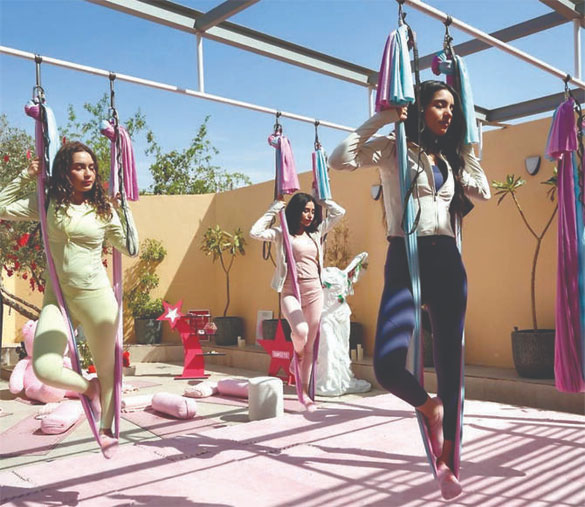
Outdoor aerial Pilates sessions combine traditional poses with hammock support to improve core strength and balance. (Supplied/Instagram/sunsets_yoga)
------------
ALKHOBAR: It starts with a stretch. Then a breath. And for many women in Saudi Arabia’s Eastern Province, what follows is far more than just physical movement. It’s calm, clarity and control. But not everyone gets to experience it.
While pilates and yoga classes have become increasingly popular in Alkhobar, Dhahran and beyond, the women who attend them — or hope to — say the trend isn’t just about fitness. It’s about access.
“I’ve felt a real difference in my body and mood since I started pilates,” said Noura Alzayani, 42, from Dhahran. “I feel more flexible, balanced, even my posture and breathing improved. I just feel better.”
Outdoor aerial Pilates sessions combine traditional poses with hammock support to improve core strength and balance. (Supplied/Instagram/sunsets_yoga)
She attends classes for free at the King Gym in Aramco camp and describes the sessions as “a complete reset.” Her favorited part? The style of the workouts.
But outside of private compounds such as Aramco’s, access to these benefits can be difficult. While some women are willing, even eager, to sign up, the reality of high prices, limited availability and rigid schedules has kept many away.
I’ve thought about trying Pilates so many times. But the prices don’t match the value. When six classes cost as much as a full year of gym membership, it just doesn’t feel worth it.
“I’ve thought about trying Pilates so many times,” said Lama Alrajeh, 21, also from Dhahran. “But the prices don’t match the value. When six classes cost as much as a full year of gym membership, it just doesn’t feel worth it.”
She once attended a free trial with her sister and loved the experience. “It was motivating. But then we ran into the same issue — too expensive. Plus, the closest good studio is only available to Aramco employees. I can’t even go with my friends.”
And for students like her, flexibility isn’t just something they’re seeking in their bodies, but in the schedules of the classes. “Sessions are often at times I can’t manage, like early mornings or late afternoons when I’m in class. It just doesn’t fit.”
Still, the desire is there. Many women interviewed for this story described pilates and yoga as aspirational; something they want to include in their lives, if only logistics would allow it.
SitahAlotaibi, 22, from Al-Ahsa, said she has never attended a class but watches the trend with interest. “It feels like it suddenly became a huge thing, like everyone is doing it,” she said. “That in itself is a positive shift. It means people are becoming more aware of their health and trying to find balance in their lives.”
Her main challenges? Transportation, cost and lack of availability. “I hope one day we’ll have branches in every neighborhood, with real services and inviting spaces.”
It feels like (Pilates) suddenly became a huge thing, like everyone is doing it. That in itself is a positive shift. It means people are becoming more aware of their health and trying to find balance in their lives.
Malak Khaled, 26, from Alkhobar, agrees. She describes pilates as “a luxury” that feels out of reach. “These places are usually located in the middle of the city and treated like elite experiences,” she said. “I don’t even have a way to get there. And I already pay for a gym — I can’t afford another membership.”
Even when her gym has pilates equipment, she doesn’t use it. “There are four machines, but I don’t know what I’m doing, and the sessions get full fast. They only offer one class a week, and it’s at a time I can’t attend.”
For Lama Khalid, 20, from Jubail, the story began differently; she actually did start. “I did pilates for almost a year in Alkhobar. It was amazing. My mood improved, my body felt lighter. But I had to stop — my friend and I were traveling from Jubail, and the routine just didn’t fit anymore.”
A serene Pilates studio featuring reformer machines, offering a calm and focused environment for strength and flexibility training. (Supplied)
Hajjar Alotaibi, 22, from Al-Ahsa, practices pilates once or twice a week at home using the YouTube channel Move With Nicole. “It helps my mood, relaxes my body and tones it at the same time,” she said. “I wish there were more local places that offered this at fair prices, but for now, this works.”
“I do yoga more than pilates,” she said. “It helps my stiff body from work and lifts my mood. I feel in control, and it suits me because it’s quiet and slow-paced.”
She tried multiple studios but finds the cost high. “Around SR180 ($48) per class. I wish we had more affordable centers. And more instructors who pay attention to everyone in the class — not just a few.”
“I feel like pilates has become an activity for the wealthy only,” said Khaled. “I can’t afford resistance training at one gym and pilates at another. How much do we have to pay just to stay healthy?”
Kawthar Abdulaziz, from Al-Ahsa, recently attended her first pilates class. “I wanted a gym without weights or harsh training,” she said. “I wanted to stretch, feel graceful and move like I’m dancing. That’s why pilates appealed to me.”
“I felt a huge release — mentally and physically. I moved my blood. I felt every muscle. It felt like I emptied all my emotional tension.”
But even she admits: “The price is too high. And the good places are far. I just want more spaces where we can move, where movement is the focus, not the luxury.”
Whether it is the lack of nearby studios, transportation issues, unaffordable prices or simply the feeling that Pilates is not “for them,” many women across the Eastern Province are still on the outside looking in.
“Even though I’ve only done one class,” Abdulaziz said, “it made me realize how important this is. This kind of movement — it’s not just fitness. It’s therapy.”
Source: www.arabnews.com
https://www.arabnews.com/node/2611268/saudi-arabia
-----
Report: Conditions of female detainees in Iran's Qarchak Prison worsen
9 August, 2025
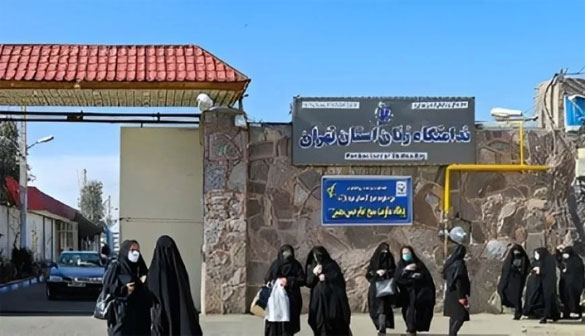
The Human Rights Organization in Iran stated that Qarchak Prison in Iran has become a center of torture, deprivation, and humanitarian crises for female political detainees. The organization asserted that this prison has acquired a notorious reputation due to systematic violence against women, becoming a symbol of silent torture.
In a report on the conditions of female prisoners, the organization noted that prolonged power outages, high temperatures, a lack of medical services, and a lack of adequate water have put the lives of dozens of female political detainees in danger. It explained that a number of detainees suffer from chronic diseases and have been denied necessary medical treatment.
It is noteworthy that human rights activists, independent lawyers, and international organizations defending the rights of women and prisoners have repeatedly warned about the conditions in Qarchak Prison, but reports indicate that the violations have not stopped, but are rather worsening.
Source: Hawarnews.com
https://hawarnews.com/en/report-conditions-of-female-detainees-in-irans-qarchak-prison-worsen
-----
Iran: New compulsory veiling law intensifies oppression of women and girls
10 December 2024
Iranian authorities have adopted a new draconian law that further erases the human rights of women and girls, imposing the death penalty, flogging, prison terms and other severe penalties to crush ongoing resistance to compulsory veiling, Amnesty International said today.
The “Law on Protecting the Family through the Promotion of the Culture of Chastity and Hijab” will come into force on 13 December 2024, according to Iran’s Speaker of Parliament. In a dangerous escalation, the law permits the imposition of the death penalty for peaceful activism against Iran’s discriminatory compulsory veiling laws.
The law, containing 74 articles, also imposes flogging, exorbitant fines, harsh prison sentences, travel bans, and restrictions on education and employment for women and girls who defy compulsory veiling laws. It also penalizes private entities that fail to enforce compulsory veiling, while providing impunity to officials and vigilantes who violently attack women and girls for defying it.
“This shameful law intensifies the persecution of women and girls for daring to stand up for their rights following the ‘Woman Life Freedom’ uprising. The authorities are seeking to entrench the already suffocating system of repression against women and girls while making their daily lives even more intolerable,” said Diana Eltahawy, Amnesty International’s Deputy Regional Director for the Middle East and North Africa Regional Office.
“The international community must not stand idly by as Iranian authorities further codify repression and even resort to the death penalty to suppress dissent against compulsory veiling. They must use their leverage to press the Iranian authorities to withdraw this law and abolish compulsory veiling in law and practice. They must also pursue legal pathways to hold Iranian officials accountable for committing widespread and systematic human rights violations against women and girls through the implementation of compulsory veiling.”
This shameful law intensifies the persecution of women and girls for daring to stand up for their rights following the ‘Woman Life Freedom’ uprising
The new law was drafted by the judiciary in May 2023 in response to widespread defiance of compulsory veiling by women and girls in protest at the death in custody of Jina Mahsa Amini, which sparked the “Woman Life Freedom” uprising in September 2022.
The Guardian Council approved the bill earlier this year. According to state media, while the president has yet to ratify the law, the Speaker of Parliament, Mohammad Ghalibaf, announced on 27 November 2024 that the law will take effect on 13 December 2024.
“Bad dressing” for women and girls is defined as exposing any body parts below the neck, other than the hands and feet, or wearing clothing that “contributes to or incites the commission of sin by others” (Article 48).
Article 37 of the law provides that “promoting or propagating nudity, indecency, unveiling, or bad dressing” in collaboration with foreign entities, including media and civil society organizations, may be punished by up to 10 years’ imprisonment and a fine of up to US$12,000. This article states that if the conduct amounts to “corruption on earth”, it can be punishable by death under Article 286 of the Islamic Penal Code. This legal provision effectively means that women and girls sending videos of themselves unveiled to media outside Iran or otherwise engaging in peaceful activism may be sentenced to death.
Under Article 48, women and girls caught “bad dressing” face fines starting at around US$160 for the first infraction and escalating to US$4,000 for the fourth infraction. Women and girls engaging in subsequent “offences” risk a fine of around US$8,000, up to five years’ imprisonment, a two-year travel ban, and a two-year ban on using social media platforms (Articles 48 and 38).
Under Article 49, “nudity” by women and girls in public or online leads to immediate detention, prosecution, and up to 10 years in prison or a fine of up to US$12,000. Repeat “offenders” can be imprisoned for up to 15 years or fined around US$22,000.
Women and girls who are unable to pay fines will be barred from recovering their impounded vehicles, registering vehicles, acquiring or renewing driving licenses, renewing passports and leaving the country. They could also have their assets seized or face imprisonment (Article 56).
Article 67 specifies that the punishments outlined in Article 638 of the Islamic Penal Code, including flogging, continue to apply to anyone who “publicly engages in forbidden acts” and/or “offends public decency”, a provision which has been used to flog women defying compulsory veiling.
Under Article 38, “insulting or ridiculing the hijab” or “promoting nudity, indecency, unveiling and bad dressing” is punishable by a prison sentence of up to five years, travel ban and/or fine.
The law also prohibits the import and sale of clothes, statues, dolls, mannequins, paintings, books and magazines that “promote nudity, indecency, unveiling and bad dressing”.
“The complex web of fines, prison sentences and other severe punishments going as far as the death penalty demonstrates the state policy to control women and girls through fear and economic hardship. This law has particularly devastating consequences for the most economically disadvantaged in society,” said Diana Eltahawy, Amnesty International’s Deputy Regional Director for the Middle East and North Africa Regional Office.
The law expands the powers of intelligence and security forces, including the police force, the Ministry of Intelligence, the Intelligence Organization of the Islamic Revolutionary Guard Corps (IRGC), and the Basiji agents of the IRGC, to enforce compulsory veiling.
It also provides blanket impunity for vigilantes carrying out their “religious obligation” to enforce compulsory veiling (Article 59). Anyone who tries to stop the arrest, harassment and violent attacks against women and girls defying compulsory veiling could themselves be imprisoned or fined (Article 60).
Business owners face fines, imprisonment, and advertising restrictions if they allow unveiled women and girls on their premises and/or are found “promoting” defiance of compulsory veiling (Article 40).
Compulsory veiling laws violate a whole host of rights, including the rights to equality, freedom of expression, religion and belief, privacy, equality and non-discrimination, personal and bodily autonomy, and inflict severe pain and suffering amounting to torture or other ill-treatment.
In its March 2024 report, the UN Fact-Finding Mission on Iran (FFMI) concluded that the Iranian authorities committed the crime against humanity of persecution on the grounds of gender. The FFMI found that the authorities have “committed a series of extensive, sustained and continuing acts that individually constitute human rights violations, directed against women [and] girls…and, cumulatively, constitute what the mission assesses to be persecution.”
Source: www.amnesty.org
-----
Preparing for the next flood: Protecting women’s health in Bangladesh
9 August 2025
Sunamganj is a district in the wetland ecosystem in northeast Bangladesh, which is particularly vulnerable to climate change. Floods arrive quickly and suddenly and can last for weeks. They disrupt life, displace families and cut off access to services.
For the over 670,000 women of reproductive age living in the area, increasingly extreme weather events are threatening their access to reproductive healthcare.
To help prepare for these crises, UNFPA is training reproductive-aged women to protect themselves and their children during the next flood.
“Thanks to the training I received, I knew what to carry, how to prepare and how to protect my family,” she recalled. She now uses family planning tools she didn’t know about before: “I want to choose when I’m ready for another child.”
She also underscored the link between climate change and these severe floods: “We understand that the climate has changed over the past 20 years. In Bangladesh, the flood season has become longer, sudden floods are more frequent, heatwaves have intensified, and winters are now shorter.
Shakila Begum, 26, began volunteering with just two days of training. She works with the Climate Resilience Health System and Community initiative – supported by the UNFPA and the Swedish International Development Cooperation Agency – which educates women on topics from menstruation to childbirth during floods.
“One woman had dangerously high blood pressure just before giving birth,” she recalled. “I advised her family to go to the local hospital, where she safely delivered – completely free of cost.”
In KurbanNagarn, an area in Sunamganj, volunteers have begun hosting “street dramas”. The volunteers act out scenes related to issues such as maternal health, disaster preparedness and child marriage prevention, with over 500 people attending each performance.
TaskiraHauqueTazin, a local student, is one of the moving theatre’s core members. She has attended many conferences in Bangladesh and abroad, where she shares her experiences and is recognised for her work.
“I feel proud to work for women’s empowerment and to support underprivileged communities. Through these plays, we raise awareness so that women don’t fall behind. We want to stop early marriage, promote girls’ education, and ensure that women get access to maternal health care,” she said. “Whether it’s in the sun, rain, or storm – we’ll keep doing this work for the people.”
Amina’s husband, Nurul, now accompanies her to community sessions and has become a role model in the community, receiving training from volunteers to teach his neighbours about women’s and girls’ health.
“Since my wife underwent training, I took it very seriously and felt inspired to help our neighbours, especially concerning women’s and girls’ health,” he said. “I regularly talk about these important messages with other men at the tea stall, encouraging them to be prepared for disasters and to take the same precautions.
“I urge them to seek help from service providers if they face any problems, especially concerning pregnant women’s deliveries and family planning methods.”
Anima Akhter, 24, with her husband Ruhul Amin, 30, a steelworker, and their two children outside their home in Bodipur village in Kurban Nagar Union.
© UNFPA Bangladesh Anima Akhter, 24, with her husband Ruhul Amin, 30, a steelworker, and their two children outside their home in Bodipur village in Kurban Nagar Union.
Many women and girls also still feel shame discussing topics like menstruation, and cultural norms often restrict women who attempt to generate their own income.
From 28 to 31 July, global experts convened at the Global Symposium on Climate Justice and Impacted Populations in Brasília, co-hosted by UNFPA and the Government of Brazil.
There, leaders worked to address the disproportionate impact of climate change on women and girls. The event called for gender-inclusive climate negotiations and a renewed commitment to understanding the impact climate change has on sexual and reproductive health and rights.
Diene Keita, Acting Executive Director of UNFPA, highlighted the gendered impact of climate change at the event: “The evidence tells us that climate change is increasing the risk of maternal mortality, disrupting access to contraceptives and increasing the risk of gender-based violence.”
“Our collective efforts need to strengthen the resilience of women, girls and health systems to withstand and adapt to climate shocks,” Ms. Keita stressed. “Being prepared, responding rapidly, and building forward better must be central pillars for our work.”
Source: News.un.org
https://news.un.org/en/story/2025/08/1165615
-----
False Late Zara Qairina Mahathir’s Case: Posts Land First Person In CherasPolice HQ
10 Aug 2025
KUALA LUMPUR, Aug 10 — The Malaysian Communications and Multimedia Commission (MCMC) has recorded a statement from an individual over false content circulated on social media in connection with the late Zara Qairina Mahathir’s case.
In a statement, MCMC said the person was summoned to the Cheras police headquarters yesterday, where a mobile phone and a SIM card were also seized to assist investigations.
“The content is believed to contain false information touching on 3R issues (race, religion and royalty), which could cause public confusion and disrupt the authorities’ investigation,” the statement read.
The case is being investigated under Section 233 of the Communications and Multimedia Act 1998 [Act 588], which carries a maximum fine of RM500,000, up to two years’ imprisonment, or both, upon conviction.
MCMC also urged the public to allow the investigation process to run its course and to be wary of speculative content that could mislead the public.
“The spread of unverified information not only risks hurting the feelings of the victim’s family but also breaches ethical values and may interfere with the course of justice,” the commission said.
Zara Qairina, 13, was pronounced dead at Queen Elizabeth I Hospital in Kota Kinabalu on July 17, a day after she was found unconscious in a drain near the dormitory of a religious school in Papar around 4 am.
Yesterday, the Form One student’s grave was exhumed on the orders of the Attorney-General’s Chambers, which called for further investigations to ensure every aspect of the case is thoroughly scrutinised.
Source: www.malaymail.com
-----
Court Rules Malaysian Couples Married Abroad Can Register Divorce Locally
10 Aug 2025
KUALA LUMPUR — The High Court in George Town has ruled that Malaysian courts have the authority to allow couples with at least one Malaysian spouse to register their divorce in the country, even if their marriage and its dissolution took place overseas, according to Free Malaysia Today (FMT).
Justice Azizan Arshad said Section 31 of the Law Reform (Marriage and Divorce) Act (LRA) 1976 gives such couples the same rights as those whose marriages were solemnised locally.
FMT reported that Azizan said in his judgment that the 47-year-old Indonesian woman and her Malaysian husband are currently in Malaysia, making the LRA applicable.
In allowing the woman’s application, Azizan said he was satisfied that the marriage had met all the conditions outlined in the legislation and was valid.
The couple were married and had their union registered in Pekalongan, Indonesia, on June 30, 2012. They later came to Malaysia and registered their marriage under the LRA on Aug 15, 2012.
Source: www.malaymail.com
-----
UN agency seeks urgent aid for Afghan women returning from Pakistan, Iran
Aug 10, 2025
UN officials and humanitarian groups are calling for greater international investment in support programmes tailored for returning women and girls. “Strengthening these programmes... is essential for helping vulnerable populations survive and adapt to the harsh realities on the ground,” the agency said.
The call comes as the United Nations High Commissioner for Refugees (UNHCR) has urged Pakistan to halt the deportation of vulnerable Afghan refugees.
Source: Www.Tribuneindia.com
-----
Iranian duo to officiate at 2025 FIFA Futsal Women's World Cup
August 10, 2025
Nazemi and Fathi are no strangers to the big occasion, with both appointed to officiate in the AFC Women’s Futsal Championship as well as the UEFA Women's Futsal Euro 2019 semi-final contest between Spain and Russia in Portugal.
Fathi was the first to carve her name in the history books after being appointed as the Second Referee of the FIFA Futsal World Cup Lithuania 2021 Asian Playoff tie between Vietnam and Lebanon, with Nazemi selected for the same position in the return leg, which saw the Southeast Asians clinch their spot for the global futsal showpiece.
The 2025 FIFA Futsal Women's World Cup is the planned inaugural edition of the FIFA Futsal Women's World Cup, an international futsal competition organized by FIFA.
Source: Www.Tehrantimes.Com
-----
URL: https://newageislam.com/islam-women-feminism/women-accessible-pilates-saudi-arabia/d/136454