
Viral Post Claims Iranian Women Don't Need Liberation; The Reality Is Far More Complex
New Age Islam News Bureau
06 March 2026
· Viral post claims Iranian women don’t need liberation; the reality is far more complex
· Afghan-Australian journalist Yalda Hakim wins UK ‘Presenter of the Year’ award
· Sex, spa and two Muslim women. The Bhopal crime drama that’s in every WhatsApp chat
· Unicharm Group Discloses Global Initiatives in Conjunction with International Women's Day on March 8
· Woman, Life, Freedom Against War and Against the Islamic Republic
· Women sidelined in national politics
· March 8th events continue amid calls to guarantee women's rights in new Syria
Compiled by New Age Islam News Bureau
----
Viral post claims Iranian women don’t need liberation; the reality is far more complex
Mar 5, 2026
The morning after February 28 did not begin with silence. It began with celebration. As confirmation spread that Iran’s Supreme Leader had been killed in coordinated US–Israeli strikes, videos surfaced of few people and especially women celebrating the attack.
The targeted killing of Supreme Leader Ali Khamenei and senior officials, including Defense Minister Aziz Nasirzadeh, drew widespread condemnation across the world. But reactions inside the country appeared far more complicated. For some citizens, the sense of relief circulating online was not about celebrating the deaths of officials.
Instead, it reflected a fragile hope that the upheaval might trigger long-awaited change. Many believe that a shift in the regime could open the door to reforms long demanded in Iran’s social, legal, and economic systems, particularly those affecting women.
Iranian-American journalist Masih Alinejad, who also participated in the 2022 protests in Iran, posted a video on X on March 1, visibly emotional. In the clip, she tears up and says, “ I want to run, I want to shout.”
British-Iranian actress Elika Ashoori took to Instagram and shared, “My stance has always been and always will be anti-war, but I refuse to be boxed into a moral code that asks me to mourn a firing squad or not rejoice at their destruction. For 46 years, the Islamic regime has not been a government; it has been an occupying force at war with its own people, relentlessly massacring, assaulting and abusing with no mercy. Killing thousands of children, women and men in the process.”
There were reactions from both sides of the spectrum. Thus, as footage of women celebrating circulated, critics of Western intervention argued that Iran’s women were not oppressed in the first place.
One widely shared post read:
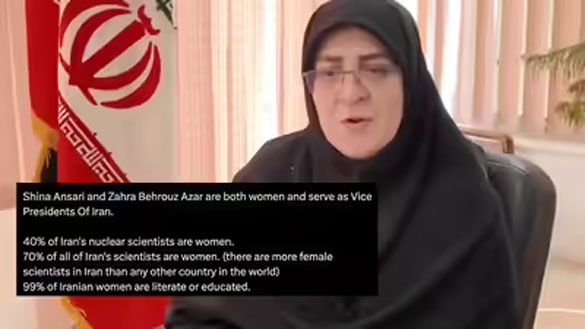
“Fatemeh Mohajerani is the official spokesperson of the Iranian government. She's been the official government spokesperson for over 2 years. Shina Ansari and Zahra Behrouz Azar are both women and serve as Vice Presidents Of Iran.
40% of Iran's nuclear scientists are women.
70% of all of Iran's scientists are women. (there are more female scientists in Iran than any other country in the world)
99% of Iranian women are literate or educated.
Do with this information whatever you want. So much for liberating Iranian women. The jokes really do write themselves”
The implication was clear: the idea of “liberating” Iranian women is nothing more than Western propaganda.
In the comment section, several users who resonated with the tweet lashed out at the western nations for their need to interfere.
One user wrote, “Everything they told you about Iran is false. Make your own research, find your own truth. All the West knows how to do is propaganda.”
Another said, “The only problem they have with Iranian women is the use of Hijab. When you ask them how Iranian women are being oppressed, their only defense is often the use of Hijab nothing more. Their definition of freedom is seen in only not using the Hijab.”
Third wrote, “The liberation the west is preaching is literally inappropriate dressing and onlyfans.”
A fourth commented, “Western liberalism and feminism making women to end up at Epstein massage rooms. That's western feminism.”
But whether that claim holds any truth is a debate for later. First, it is worth examining the romanticized picture the user painted of life for women in Iran.
Fact-checking the claims
Fatemeh Mohajerani is indeed the current spokesperson of the Iranian government, appointed on August 28, 2024. She is the first woman to hold the role.
However, women remain significantly underrepresented in Iran’s political system. In the 290-member parliament, women typically hold between 14 and 17 seats, under 6 percent. No woman has ever held the presidency, and none occupy the highest clerical offices.
Of the two other officials mentioned:
Shina Ansari serves as Vice President for Environment.
Zahra Behrouz Azar serves as Vice President for Women and Family Affairs, appointed in August 2024.
While these appointments are real, the second role oversees women and family policy, a portfolio traditionally aligned with gendered social governance. It does not signal parity in executive authority.
The claim that “40% of Iran’s nuclear scientists are women” appears to trace back to remarks reported by Press TV, a state-funded arm of the Islamic Republic of Iran Broadcasting (IRIB). During a 2024 joint press conference in Tehran, Mohammad Eslami, head of Iran’s Atomic Energy Organization, stated that IAEA Director General Rafael Grossi was “astonished” by the number of women managing Iran’s nuclear industry. No independent data confirms the 40 percent figure.
Similarly, the claim that “70% of all of Iran’s scientists are women” lacks verification from international databases.
On literacy, however, the trend is measurable.
According to data from the World Bank and UNESCO Institute for Statistics, female literacy in Iran has risen dramatically. In 1976, adult female literacy stood at roughly 35 percent. By 2023, it had reached approximately 85 percent. That places Iran above the Middle East and North Africa regional average of around 67 percent for adult female literacy.
This transformation is significant. Iranian women are highly educated. They dominate university classrooms in many fields. They are visible in medicine, engineering and academia.
So where does the contradiction lie?
Education without autonomy
Iran promotes women’s education. It appoints women to visible administrative roles. It showcases female scientists in state media.
Yet it operates within strict ideological boundaries.
Under Article 109 of Iran’s constitution, the Supreme Leader must be a male cleric. Under Article 115, presidential candidates must come from “rijal,” interpreted by the Guardian Council as religious men, female candidates have repeatedly been disqualified.
Mandatory hijab laws are enforced through morality policing, fines and surveillance. The 2024 “Chastity and Hijab” legislation expanded penalties, including vehicle seizures and social media restrictions. The 2022 death of Mahsa Amini while in morality police custody ignited the “Woman, Life, Freedom” protests, demonstrations met with violent suppression.
Family law remains unequal. Men may unilaterally divorce. Women must meet strict legal thresholds and often risk losing custody or financial support. Husbands can restrict their wives’ travel by withholding passport permission. Article 1117 allows a husband to ban his wife from employment deemed “incompatible” with family interests. Girls may legally marry from age nine with judicial approval.
Feminism — but defined by the State
The notion of an independent women’s movement in Iran is not merely debated, it is actively denied by the ruling establishment. Officials routinely frame demands for gender equality as foreign infiltration rather than domestic dissent.
This tension between state-defined roles for women and independent activism has repeatedly surfaced in public protest, and in the state’s response to it.
1979: International Women’s Day Protests
On March 8, 1979, thousands of women gathered in Tehran to protest statements by Ayatollah Ruhollah Khomeini indicating that Islamic dress should be observed in workplaces.
Contemporary reporting and later historical research estimate participation over several days at tens of thousands, with some estimates reaching 100,000.
The demonstrations were met with hostility from pro-revolutionary groups. By 1983, mandatory hijab was formally codified into law, making non-compliance punishable under the penal code.
2009: The Green Movement
After the disputed re-election of President Mahmoud Ahmadinejad, mass protests erupted across Iran between June and December 2009.
Women played a visible role in demonstrations.
Human rights organizations documented at least 72 deaths and more than 4,000 arrests. Allegations of torture and sexual abuse in detention centers, including Kahrizak prison, were later reported by detainees and investigated by Iranian authorities, resulting in limited prosecutions of some officials.
One of the most widely reported deaths was that of Neda Agha-Soltan, who was shot during a protest; video of the incident circulated globally.
2017–2019: Hijab Defiance and “Bloody November”
In late 2017, individual acts of protest against compulsory hijab began appearing publicly. Women stood on utility boxes in Tehran, removing headscarves in what became known as the “Girls of Revolution Street” movement.
In November 2019, nationwide protests broke out over fuel price increases. Demonstrations expanded into broader anti-government unrest.
Amnesty International reported that at least 304 people were killed during the crackdown. Reuters later cited Iranian officials estimating approximately 1,500 deaths. Iranian authorities have not publicly confirmed a final death toll.
Women participated in the protests. Video evidence showed security forces using live ammunition in multiple cities.
2022: Mahsa (Jina) Amini and “Woman, Life, Freedom”
On September 13, 2022, 22-year-old Mahsa (Jina) Amini was detained by Iran’s morality police for alleged improper hijab. She collapsed while in custody and died on September 16.
Iranian authorities attributed her death to underlying health conditions. Her family publicly rejected that explanation.
Her death sparked nationwide protests under the slogan “Woman, Life, Freedom.” Demonstrations spread to more than 100 cities.
According to HRANA (Human Rights Activists News Agency), 551 protesters were killed, including 68 children. Authorities have not confirmed those figures. Thousands were arrested; some estimates exceed 20,000 detentions.
Two realities can exist simultaneously.
It is factually correct that women in Iran hold senior government roles. Women serve as vice presidents, members of parliament, university professors, scientists, and doctors. Female literacy rates are high. Women comprise a significant share of university graduates and research professionals.
It is also factually correct that:
Compulsory hijab remains law.
Public opposition to that law has repeatedly led to arrests, imprisonment, and in multiple documented cases, lethal force.
Protest movements in 1999, 2009, 2017–2019, 2022, and beyond have resulted in mass detentions.
Activists such as Narges Mohammadi remain imprisoned for their advocacy.
Holding office in Iran does not automatically mean advocating for liberal feminist reform as understood in Western political discourse. Public officials operate within the ideological framework of the Islamic Republic. Advancement within the system generally requires alignment with its constitutional and religious foundations.
Source: indiatimes.com
https://timesofindia.indiatimes.com/etimes/trending/viral-post-claims-iranian-women-dont-need-liberation-the-reality-is-far-more-complex/articleshowprint/129091217.cms
------
Afghan-Australian journalist Yalda Hakim wins UK ‘Presenter of the Year’ award
By Fidel Rahmati
March 6, 2026
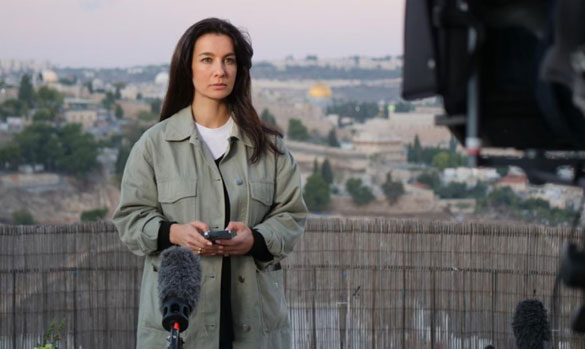
Afghan-Australian journalist Yalda Hakim has won the Royal Television Society’s Presenter of the Year award for her work with Sky News.
Afghan-Australian journalist Yalda Hakim has won the “Presenter of the Year” award from the Royal Television Society.
The Sky News network announced on Thursday that Hakim was unable to attend the award ceremony because she is currently reporting from the Middle East.
Over the past year, Hakim has conducted interviews with several prominent global leaders and senior officials as part of her international reporting.
One of her most widely discussed interviews was with Khawaja Asif, during which she questioned him about Pakistan’s alleged role in financing and training terrorist groups.
During that interview, Asif acknowledged that Pakistan had carried out “dirty work” for the United States for three decades, a remark that drew widespread attention.
Hakim, born in Afghanistan and raised in Australia, joined Sky News in 2013 and has since become one of the network’s leading international presenters.
The Royal Television Society awards are among the most prestigious honors in the British television industry, recognizing excellence in journalism and broadcasting.
Hakim’s award highlights the growing presence of Afghan journalists in international media and underscores her role as a prominent voice covering global affairs.
Source: khaama.com
https://www.khaama.com/afghan-australian-journalist-yalda-hakim-wins-uk-presenter-of-the-year-award/
------
Sex, spa and two Muslim women. The Bhopal crime drama that’s in every WhatsApp chat
SAKSHI MEHRA
05 March, 2026
Bhopal: Sleepy Bhopal is now abuzz with a crime drama that is straight out of a Manohar Kahaniyan series. People can’t stop dissecting how two Muslim women lured several young women from poor families with the promise of jobs, and then forced them into a sex racket with strange men. Flat 301 in Bhopal’s Sagar Royal Villas complex has become a sight of fear for residents of the housing society.
From rickshaw drivers to paan shop owners, almost everyone in the city is talking about the case. The promised jobs were made as seductive as possible — Rs 10,000 a month, free accommodation, and a glamorous life. But it soon turned out to be a trap for young women with little means and no steady income.
The fact that the two perpetrators in question were burqa-wearing Muslim women has added fuel to the fire, with many wild stories stoking Hindu anxieties about forced conversions, so-called ‘love jihad’, and Islamist politics. Bajrang Dal is amplifying the ‘forced conversion’ claims even as the Bhopal police haven’t corroborated it.
Inside the housing complex, women and their daughters now gather in a flat to share theories, rumours, and WhatsApp updates, while worrying about their children. They are unable to look away from the dark story surrounding Flat 301. They exchanges messages containing links to YouTube stories of uploaders with a few thousand followers who have jumped into the case as an opportunity to boost subscribers, running videos with inflammatory titles such as “Roommate got her brother to rape a beautician”. Others are drawing parallels with “The Kerala Story 2” film widely perceived as propaganda. Several more are running wild with narratives about what was going on inside the flat: “Hindu ladkiyon ko Muslim bana kar jihadi behnon ne kama liye crores”; “Reel ke peeche real crime, do behnon ki ghinauni kartoot.” Some are calling it a “perfect” plot line for Anurag Kashyap’s next film.
The case drew widespread attention in the beginning, but police and media interest has since waned. Local newspapers initially ran wild stories about “love jihad” and Muslim women running sex racket — “spa centre ke aad mein deh vyapar (sex trade under the guise of a spa centre)”, but have stopped the follow-up coverage. The police investigation too tracked the Bhopal to Ahmedabad connection, but is now stuck at “accused are absconding” status.
At the centre of it are two burqa-clad sisters, who reportedly were the only Muslim family in the housing complex.
“Amreen and Afreen never spoke to anyone, and there were people regularly visiting their house,” said Sangeeta, showing her guest the infamous Flat 301 from her balcony. “They all wore burqas, and sometimes we could hear loud arguments. Who would have thought all this was going on inside?”
Two victims, aged 21 and 32 Mungeli district in Chhattisgarh and Hoshangabad in Madhya Pradesh, filed an FIR under BNS Sections 64 (rape), 123 (administering drugs), 351 (criminal intimidation) and Madhya Pradesh’s anti-conversion law on 22 February. Amreen, Afreen, and their associate Chandan Yadav have been arrested. The victims alleged that they were trapped, threatened, drugged and repeatedly raped by several men, including absconding accused Bilal, Chanu, and Yasir.
“I wanted to just leave everything and run away with my daughter, but I feared what they might do to my mother,” said the 32-year-old, now back home in Hoshangabad (Narmadapuram).
Shifting narratives
The fight has now shifted to controlling the narrative. Multiple versions of the story have emerged, each with its own perspective, and yet, no single account seems complete.
The victims, who have the support of the Bajrang Dal, alleged that they were forced to wear burkhas, eat beef, and study Islamic texts — familiar claims to those seen in other love jihad cases and more recently in the film The Kerala Story 2 (2026).
The local police, however, see little evidence to back these allegations. Police officials said that they aren’t even confident in calling it a “sex racket”, as no other women have come forward in the investigation so far.
With Amreen, Afreen, and Chandan behind bars, and their families missing, the accused’s side of events has got accessorised with many unverifiable details. Many suggest that this could simply be the story of vulnerable women from troubled families trying to make a living, rather than part of a larger conspiracy.
“We haven’t found evidence suggesting the involvement of influential people, politicians, or white-collar workers. We are not ruling out the possibility of sexual abuse or forced conversions, but it’s possible that while the victims may have been initially exploited, over time, they began working together. This doesn’t fit the classic pattern of ‘love jihad’, though there are signs the victims may have been pressured to adopt certain practices, like wearing a burqa,” a senior police officer, speaking on condition of anonymity, told ThePrint.
What happened at Flat 301
Outside the Bag Sevania Police Station, the 32-year-old victim stood in tears. Her head was covered with a dupatta, a mask hid her face, leaving only her large, round eyes and a black bindi visible.
She said the FIR was filed after long hours of despair and hopelessness.
“But when I saw my daughter, I knew I couldn’t let this happen to her — or to any young girl. Seeing her face gave me the strength to fight,” she said.
She first arrived in Bhopal looking for work in 2023. Event management, stitching, and daily wage labour – she was ready for anything as long as she was able to send some money home.
In Hoshangabad, her mother worked as a labourer; her father had died years ago. Her brother drove a bus. She had three children from a previous marriage— two daughters and a son, all under the age of 10. She needed a steady income.
Within weeks of reaching Bhopal, she said she met Amreen at the Ashima Mall.
“I had come to the mall with my aunt’s daughter. She knew Amreen, who stopped and complimented my eyes. Later, she said that if I ever needed work, I could come to her,” she recalled.
A few days later, she began working at Amreen’s flat in Sagar Villas Complex as a domestic worker and nanny to her daughter, who was in Class 3 at the time. The salary was Rs 10,000 a month, and she eventually moved in.
For the first three months, she said her job was limited to cleaning the house and tending to the child. Amreen was living there with her boyfriend, Chandan. But she recalled sensing that something was unusual as Amreen would frequently attend late-night parties, carry small white packets and return home intoxicated.
“When I asked what they were, she said that I was too naive to understand,” the victim added, claiming they were drugs.
The police, however, did not find any narcotics in the house.
About two months after she started working there, Amreen took her to her third sister’s home. She was told there was a party and she would only have to help with the cooking and cleaning. At the party, she met Jamal, Amreen’s sister’s husband.
“I was made to drink orange juice again and again. After that, I lost consciousness. In that state, Jamaal and three or four of his friends raped me,” she alleged.
She said that Amreen and Chandan recorded videos and took photographs, which they later used to threaten her.
She also accused Chandan of harassing her. And when she confronted Amreen, she said there was a ‘fake’ fight between Amreen and Chandan, who then left the house in a fit of rage. Later, Amreen took her to Chandan’s sister’s home to persuade him to return.
She said Chadan told Amreen that if she didn’t listen to him, he would “kill myself and expose all her secrets.” She alleged that he then raped her later that day.
The second victim
For nearly a year, she claims, the abuse continued. She would sometimes return to her mother’s house for 15 to 20 days. At one point, she stayed home for two to three months. During that time, she said, Amreen lured in two younger girls who went through similar abuse. She claimed it was part of a larger network involving spa owners, where photos of women were shared, and clients chose from them.
When she finally returned to Bhopal, Amreen allegedly threatened her.
In December 2025, she decided to leave, regardless of the consequences.
A few days later, another victim and the second complainant in the case contacted her via Instagram. The two soon realised they had suffered similar fates at Flat 301.
She said that they first approached the Misrod Police Station but were discouraged. “We were told that if it turned out we had worked with them, we could be jailed,” she said.
With no immediate action from the authorities, they returned home feeling helpless.
Yet, she said, staying silent was not an option. In January 2026, they turned to the Bajrang Dal, the youth wing of the right-wing Vishva Hindu Parishad (VHP), and filed a written complaint at the Bag Sevania Police Station. She said that her statement was recorded multiple times before the FIR was finally registered.
Two sisters from slums
Amreen and Afreen once lived in the slums of Abbas Nagar before moving to the more upscale Sagar Villas Complex in Bhopal. Even days after the case came to light, little is clearly known about their lives.
Police said the sisters were likely educated only up to Class 12, but one of the victims said otherwise. “Their English was very good. It felt like both of them had gone to college. I would even tell them to teach me English,” she said.
The sisters grew up in a broken household. Their father died when they were still teenagers, and they were forced to shoulder the financial burden that came with it.
According to police sources and local accounts, they entered sex work soon after turning 18 and started working at one of the 21 spas in Ashima Mall.
Residents of Sagar Villas said they would occasionally see Amreen at the mall. “We would see her in the food court area many times. She would just say that she worked there,” said one resident of the complex.
Over the years, their personal lives also took complicated turns.
Amreen married a man named Deepak Gupta. According to the police, he later started practising Islam and changed his name to Ayaan Khan. The couple have a nine-year-old daughter together. Their marriage, however, did not last. One of the victims claimed that Deepak disapproved of Amreen’s work and sometimes assaulted her. Eventually, they separated.
Afreen, too had a troubled marriage. She was married in Ahmedabad and has a nine-year-old daughter from that relationship. She is also now divorced.
Around four years ago, when Amreen moved into Sagar Villas, she began living with Chandan Yadav. For nearly three years, the two were together before they eventually separated. Chandan, the police said, worked as a manager at the Holistic Spa Centre inside Ashima Mall.
In the building, neighbours remember her as stylish, often with straightened, bleached hair. Some assumed she worked at a salon or beauty parlour and would casually ask her about it. She always denied it.
“She would never even take the lift with us. She always avoided talking to people,” said Sangeeta, now sitting in her flat stunned at what might have been happening in that apartment.
Her teenage daughter recalled Amreen’s young child roaming around the building most days. She would move people’s things around, ring doorbells and run away, always seen roaming outside.
Sometimes, the girl would insist on going to neighbours’ homes.
“She would insist that we take her home with us. We would refuse, but many times she would still come along,” the daughter said.
Looking back, Sangeeta said the child’s behaviour now made more sense to her. “She was alone… maybe lonely. Or maybe scared of the shouting and fights the immediate neighbours often complained about,” she said. “No child deserves that.”
The victims have also alleged that Amreen’s mother was aware of what was happening. According to them, she sometimes spoke to men herself and sent photos of her daughters to lure clients and arrange meetings.
“Many girls come to big cities from small towns in search of work. Some leave deeply abusive homes hoping they can find a job and build a life of their own. Even Rs 50,000 of a big city isn’t worth it,” the 32-year-old victim said. “The glamour of big cities is a facade.”
Source: theprint.in
https://theprint.in/ground-reports/bhopal-sisters-sex-racket/2870468/
------
Unicharm Group Discloses Global Initiatives in Conjunction with International Women's Day on March 8
March 6, 2026
Empowering Women to Live Authentic Lives Through Next-Generation Education and Employment Support Worldwide
Tokyo--(ANTARA/Business Wire)--Unicharm Corporation (TOKYO: 8113) is accelerating its business operations to bridge the global gender gap while fostering sustainable economic growth under its corporate brand essence, "Love Your Possibilities." In conjunction with International Women's Day on March 8, the company is moving beyond simple awareness-raising to address physiological constraints, such as menstruation, as "structural social challenges." Unicharm is proud to announce its latest initiatives to support women’s education and employment through the provision of products and educational programs in Brazil, Indonesia, and Kenya—a market the company is now entering in earnest.
Regional Initiatives by Unicharm Group
1. [Brazil] Full-Scale Launch of ‘SOFY’ to Support Increasing Female Workforce Participation
Unicharm will launch its sanitary napkin brand ‘SOFY’ in the Brazilian market, where female employment rates are rising rapidly alongside economic development.
-Uniqueness and Market Adaptation: To reach Brazil's trend-conscious youth, Unicharm has opened an official TikTok Shop to communicate its brand value directly to consumers.
2. [Indonesia] Respecting Culture and Eliminating "Discomfort"
In Indonesia, home to the world’s largest Muslim population, Unicharm conducts educational activities that are deeply respectful of local culture and customs.
-Ramadan Connection: On March 4, 2026, as part of a series of events during the fasting month (Ramadan), Unicharm provided "First Menstruation Education" to approximately 60 students at an Islamic high school.
-Background: By respecting religious and cultural contexts while providing accurate knowledge about menstruation, Unicharm aims to realize a "cohesive society" where women can live as they wish in any environment.
3. [Kenya] Establishing a Strategic Hub for East Africa and Investing in the Next Generation
Based on a long-term growth scenario for the East African region, Unicharm plans to establish a new subsidiary, “Sofy East Africa Limited,” in the Republic of Kenya in April 2026.
-Social Context and Risk Mitigation: In areas such as Kibera, one of Africa’s largest slums, "period poverty" remains a critical issue that deprives girls of educational opportunities.
-Specific Action: On January 25, 2026, Unicharm co-hosted a girls' soccer tournament with over 150 participants. The event combined sports to boost self-esteem with essential menstrual health education.
Future Outlook
Gender disparities in education and employment opportunities persist in many parts of the world. Unicharm will continue to provide products, services, and educational activities to ensure that women can lead their lives without discomfort or limitations caused by menstruation. We remain committed to creating opportunities for women’s education and social participation, ultimately leading to the improvement of women's social status.
Source: antaranews.com
https://en.antaranews.com/news/407227/unicharm-group-discloses-global-initiatives-in-conjunction-with-international-womens-day-on-march-8
------
Woman, Life, Freedom Against War and Against the Islamic Republic
by Zamaneh Medi
March 5, 2026
On Sunday, March 1, 2026, at 2:00 p.m., a protest rally in solidarity with the people of Iran and against the war was held at Place de la République in Paris, voicing, at once, “No to war” and “No to the Islamic Republic.” The gathering was organized by the independent collective Roja. Its central slogan was: “Woman, Life, Freedom, against foreign intervention and against the Islamic Republic.” Iranian and French groups and activists participated in the rally, from trade unions to the network “Feminists for Jina.”
During the protest, participants observed a one-minute silence in memory of civilians killed in the bombings of the last two days, including children at a school in Minab, as well as those killed in the January uprising. A girls’ primary school in Minab, “Shajareh Tayyebeh,” was directly hit during the strikes on Saturday, February 28, 2026. The school reportedly had 170 students in its morning shift, and local officials said that at least 85 students had been killed as rescue and debris removal continued. Hossein Kermanpour, the Health Ministry’s spokesperson, also confirmed that dozens were wounded in the wider attacks, including at least 92 injured people elsewhere in Iran. State media additionally reported casualties among students in Abyek (Qazvin Province) and in Tehran’s Narmak area, underscoring the scale of civilian harm beyond the immediate strike zone.
Roja’s call stated: “No to Israeli and U.S. military intervention” and “No to the lie that Iran can be ‘freed’ by bombs.” The organizers emphasized that the people of Iran are being taken hostage “between the bombs of aggressors and the repression of the Islamic regime,” framing the rally as solidarity with those trapped between war and state violence. The call spelled this out in the following terms:
In support of people who have been taken hostage between the bombs of aggressors and the repression of the Islamic regime
• No to Israeli and U.S. military intervention
• No to the lie of “freeing Iran with bombs”
• No to a regime that, in the recent massacre, showed it has neither the capacity nor the will to defend the people, and has become the people’s enemy; a regime that today, with internet shutdowns and the absence of shelters, warning sirens, and any public alert system, has left people in danger and alone
• No to opportunists like Pahlavi who call the killing of dozens of schoolchildren and defenseless people “humanitarian war casualties” on the road to “overthrow.”
The call also pointed to conditions on the ground during the war, including internet shutdowns and the absence of shelters, warning sirens, and public alert systems. The organizers stated a clear critical position toward “opportunist pro-monarchy currents,” which, they said, seek to erase the plurality and diversity of Iranian society while supporting the bombing of civilians by Israel and the United States, attempting to appropriate people’s struggles for a “top-down regime change” project.
About Roja
Roja is an independent feminist collective based in Paris. It emerged after the femicide of Jina (Mahsa) Amini and the start of the “Jin, Jiyan, Azadi” uprising in September 2022. The collective includes political activists from different nationalities and political geographies within Iran, including Kurdish, Hazara, Persian, and others, and connects solidarity with Iran and the Middle East to local struggles in Paris in an internationalist spirit. The name “Roja” draws on resonances across languages: in Spanish, roja means “red”; in Kurdish, roja means “light” and “day”; in Mazandarani, roja refers to the “morning star” (Venus).
Source: radiozamaneh.com
https://en.radiozamaneh.com/37842/
-----
Women sidelined in national politics
March 7, 2026
Experts and politicians have raised alarm over the fact that women made up only around four percent of the candidates in the 13th national election.
Referring to the seven women who were elected as members of parliament, they said overcoming obstacles to participating and winning in the polls carries special significance for women in politics
To ensure women’s participation in politics and policymaking, coordinated initiatives must be taken, they added.
Speakers made these remarks at a dialogue and award ceremony titled “Ensuring Women’s Leadership and Protection in Politics”.
Ahead of International Women’s Day on March 8, ActionAid Bangladesh and Prothom Alo jointly organised the event at a city hotel yesterday.
At the programme, women who contested the February 12 election shared their experiences.
“If women are vital as voters, why is their leadership always questioned?” asked Rasheda K Chowdhury, executive director, Campaign for Popular Education (CAMPE).
“We are yet to accord women the dignity they deserve. Our nation was founded on equality, yet women are being sidelined,” she added.
Rumeen Farhana, who won as an independent candidate from Brahmanbaria‑2, delivered a scathing critique of societal double standards.
“We are ready to see strong women as daughters or sisters, but not as partners in change,” she said, calling for an end to the “good girl” stereotype that stifles political ambition.
Supporting this, Nayab Yusuf Ahmed, the BNP candidate who won from Faridpur‑3, highlighted how marginalised women are denied basic rights, with their vulnerabilities “exploited to confine them within the home”.
Tasnim Jara, who contested independently from Dhaka-9, exposed the political machinery that treats women as tokens, not decision-makers.
She noted that while women drive grassroots campaigning, “male-dominated structures” systematically block them during the nomination stage.
She also critiqued the reserved seat system, arguing it renders women “more accountable to party leadership than to voters.”
Leader of the Socialist Party of Bangladesh (Marxist) Sima Dutta said that women are often treated as third-class citizens across sectors, from agriculture to garments.
She called for equal pay, legal recognition of women in the informal sector and stronger government action against discriminatory attitudes.
The dialogue also highlighted a chilling rise in violence against women.
Morium Nessa, Lead for Women’s Rights at ActionAid, presented data showing a 52.3 percent increase in reported rape cases in 2025 compared to 2024.
In January 2026 alone, 272 cases of violence against women and girls were reported.
Furthermore, the dialogue revealed a massive institutional failure: 39 percent of the country’s universities still lack sexual harassment prevention committees.
ActionAid Country Director Farah Kabir hailed the candidates as the “bravest citizens” for navigating hostile conditions.
“We do not seek only an increase in numbers. We seek meaningful change. Ensuring women’s safety and dignity remains the greatest challenge,” she said.
Meanwhile, Prothom Alo Editor Matiur Rahman admitted that civil society and the media could have offered stronger support to independent women candidates.
Expressing optimism that women’s participation and visible presence in the next election will increase significantly, he said, “If we all work together in the days ahead, we can play a more effective role in strengthening women’s leadership.”
The session concluded with a call for stricter enforcement of laws against gender-based violence, robust cyber-safety measures, and a genuine shift in party cultures to move beyond “lip service” to equality.
A highlight of the event was an interactive forum theatre performance titled “Chena Porobash” presented by theatre group Palakar.
Through drama, the performance illustrated child marriage, workplace harassment and the challenges faced by women candidates during elections.
Among those present were the British High Commission’s Social Development Adviser Tahera Jabeen, Sharmin Islam, Gender Team Leader at the United Nations Development Programme Bangladesh, Korvi Rakshand, founder of JAAGO Foundation, and Sadaf Saaz of the National Political Rights Forum.
Women candidates present included Meghna Alam of Ganodhikar Parishad, Taslima Akter of Ganosamhati Andolon, independent candidate Anwara Islam Rani, Barrister Nasrin Sultana Mili of AB Party, and Arifa Akter Baby of the Jatiya Samajtantrik Dal.
Source: thedailystar.net
https://www.thedailystar.net/news/bangladesh/politics/news/women-sidelined-national-politics-4121991
------
March 8th events continue amid calls to guarantee women's rights in new Syria
5 March, 2026
The Kongra Star organized a series of diverse events in the cities of Tirbê Spiyê, Qamishlo, Girkê Legê, Hasaka, and Derbasiya on Thursday, in anticipation of the International Women's Day, March 8th. These events included visits to institutions and security checkpoints, as well as the issuance of official statements and the holding of women's meetings, reflecting the role and struggle of women in society.
HASAKA
In the city of Hasaka, members of the Kongta Star visited the Women's Internal Security Forces Center and the Women's Community Protection Forces Center.
The event was marked by a strong turnout of women carrying Kongra Star flags and chanting slogans expressing women's strength and resistance, including "Women, Life, Freedom," while singing songs symbolizing women's resistance.
During the visit, the participants presented a symbolic gift to the Women's Community Protection Forces and the Women's Internal Security Forces Center. The gift included a picture of the martyr Ziyad Halab and a message affirming that women's achievements today are a result of the martyrs' resistance and the philosophy of leader Abdullah Öcalan.
In the city of Derbasiya, the Kongra Star organized a visit to several civil institutions, with the participation of women from various organizations and councils.
During the visit, the participants emphasized the importance of this day as a global milestone in the women's struggle for freedom, rights, and equality, highlighting its historical significance in the women's struggle.
The speakers stressed the need to strengthen the role of women in various political, social and cultural fields, emphasizing the continuation of women's struggle until they achieve their full rights and build a democratic society governed by the values of equality and justice.
QAMISHLO
The Kongra Star in the Judi neighborhood of Qamishlo issued a statement during an event held at al-Shuhadaa (The Martyrs) Park, attended by a number of women and residents of the area.
The statement was read in Kurdish by Nesrin Abdullah; the director of the Ararat Kindergarten, and in Arabic by Jala Mala Haji; the member of the Kongra Star in the Judi neighborhood.
The statement included: "We, the Kongra Star in the Judi neighborhood, on the occasion of March 8th, congratulate women worldwide in general and Kurdish women in particular. This day represents the cry of the first women against exploitation and is a day to demand women's rights. In honor of women's achievements and their struggle for equality, justice, and empowerment in all fields, we celebrate this day under the slogan 'Women, Life, Freedom.' We affirm that the liberation of women is the foundation of the liberation of society."
The Kongra Star called on women to escalate struggle against the patriarchal mindsets and build a democratic ecological system. In its concluding statement, the Kongra emphasized that "March 8th represents a renaissance for Kurdish women, and leader Abdullah Öcalan affirms that freedom begins with women, and that their role is a driving force for change and development, a symbol of giving and the light that illuminates the paths of generations."
In a related context, the Kongra Star organized a meeting in Tirbê Spiyê, attended by dozens of women from the city and its surrounding towns, at the Democratic Union Party (PYD) hall.
The meeting began with holding a minute of silence, followed by a speech delivered by the Kongra administrator Shahnaz Sharif, who welcomed the participants, saying, "I congratulate the women who struggle and resist injustice and oppression. The women of Rojava are leading a historic march, organizing themselves in every way possible, and guiding the revolution."
Shahnaz stressed the importance of protecting women's achievements, noting that the Syrian constitution must guarantee these rights. She added, "To live in a free society, we must strengthen women's struggle to protect our achievements."
At the conclusion of the meeting, Shahnaz Sharif emphasized the need to intensify the struggle against the patriarchal system and defend women's rights, congratulating all women worldwide on International Women's Day.
In a related event, the Kongra Star in the city of Jel Agha organized a visit to security checkpoints belonging to the Internal Security Forces (Asayish).
The visit included a security checkpoint at the city's entrance, where the Kongra Star members presented flowers and gifts to the personnel stationed there. They also presented braided headbands to the female members of the Internal Security Forces – Women.
During the visit, the Kongra Star member Nuzha Saif al-Din delivered a speech, expressing appreciation for the efforts of the Internal Security Forces that work tirelessly day and night to enhance the safety and security of the residents and protect the region's stability.
For her part, Mina Ibo; the administrator of the Internal Security Forces in Jel Agha, thanked the Kongra members for this initiative, congratulated them on International Women's Day, and affirmed the Internal Security Forces' continued commitment to fulfilling their duty to promote security and stability and protect all communities in the region.
In the same context, the school administration in the city of Qamishlo issued a statement to the public opinion in front of the city's educational complex. The statement, read by teacher Jawza Ali, was attended by a number of teachers and administrators.
The statement explained that March 8th originated from the struggle and demands of free women, led by Clara Zetkin and her comrades, and has become a global voice for women demanding rights, equality, and dignity.
It noted that this call reached Kurdistan, where Kurdish women responded with strong will and a struggling spirit, emphasizing that they have become, even in the most difficult circumstances, a symbol of hope and freedom in various fields, whether in the arenas of struggle or in political and social life.
The statement also commemorated the names of several Kurdish women fighters, such as Zilan, Arin, and Deniz, stressing the importance of remembering the sacrifices of Kurdish women and extending congratulations on March 8th to women strugglers in all fields and to women worldwide.
At the conclusion of the event, the school administration prepared sweets and distributed them to members of the city's security forces in appreciation of their efforts in maintaining security and stability.
Source: hawarnews.com
https://hawarnews.com/en/march-8th-events-continue-amid-calls-to-guarantee-womens-rights-in-new-syria