
Understanding Blood Money In Islamic Law As Kerala Nurse Nimisha Priya’s Execution in Yemen Draws Near
New Age Islam News Bureau
12 July 2025
· Understanding Blood Money In Islamic Law As Kerala Nurse NimishaPriya’s Execution in Yemen Draws Near
· Ana Maria Gonçalves Becomes First Black Womanto be Elected In Brazilian Academy of Letters
· Amateur M’sian Golfer Barred Over Long Skirt Sparks Viral Debate On Dress Code
· Iran Threatens Nobel Laureate Narges Mohammadi With 'Physical Elimination'
· N.Y. County Settles With Woman Who Says the Police Removed Her Hijab
· Bangladesh Caretaker Government Overturns Use Of ‘Sir’ To Address Female Officials
· Kidnapped, Abused: Reports Of Missing Alawite Women In Syria
· Saudi Arabia’s MawhibaProgram Empowers Female Students In Yanbu
Compiled by New Age Islam News Bureau
URL: https://newageislam.com/islam-women-feminism/understanding-blood-islamic-law-yemen/d/136161
-----
Understanding Blood Money In Islamic Law As Kerala Nurse NimishaPriya’s Execution in Yemen Draws Near
by Nikita Mohta
July 11, 2025
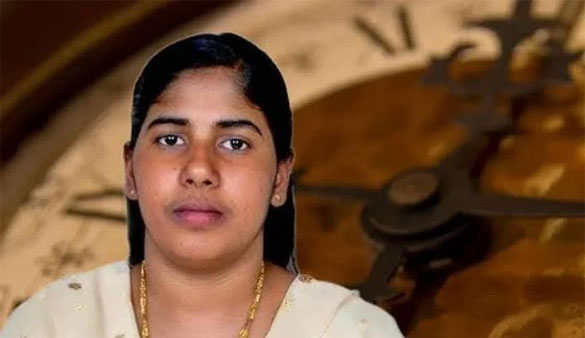
Indian citizen Nimisha Priya (File photo)
---------
Indian citizen Nimisha Priya was living a normal life in Yemen, working as a nurse, while her family returned to Kerala in 2014. But she had bigger dreams. Nimisha hoped to open a clinic in the capital city of Sanaa, aiming to make life easier. For this, she entered into a business arrangement with Yemeni national Talal Abdo Mahdi. However, the situation soon turned grim. Mahdi allegedly took all of the clinic’s revenue, physically and mentally assaulted Nimisha Priya, forged her documents, and even falsely showed her to be his wife.
In an attempt to regain her documents and escape his torture, Nimisha tried to sedate Mahdi with the help of a co-worker. However, he died of an overdose.
In 2020, a Yemeni trial court sentenced Nimisha to death for Mahdi’s murder. Last week, it was announced that she will be executed on July 16. With time running out, her last possible resort may be the payment of blood money. But what is blood money? What is the historical origin of this law and what does it mean in Islam?
An Arabic tradition
Punishments for crimes against life and bodily integrity have existed since the pre-Islamic period. The Arabs, for instance, would penalise a murder with killing. “The difference was that their retaliation had no limits depending on the strength or weakness of their tribe,” says researcher Tahir Wasti in The Application of Islamic Criminal Law in Pakistan: Sharia in Practice (2009).
According to legal professional Silvia Tellenbach in The Oxford Handbook of Criminal Law (2014) the family of the victim in pre-Islamic times could kill every member of the perpetrator’s family who was of equal value to his family as the victim had been to his. “In Islam, the family of the victim can only kill the perpetrator himself,” she notes. In pre-Islamic times it was of no importance whether the victim had been killed intentionally. In Islam, on the other hand, retaliation is only possible in cases of intentional homicide; “unintentional homicide can only be sanctioned with blood money.”
The principles of qisas (retaliation) and diyat (blood money) were thus formed to stop the endless human killing from tribal animosity. The aim of these punishments, Tellenbach argues, is retribution.
However, the principles are only accessible by victims who are ‘protected persons.’ By this, Tellenbach means a victim who is a member of a protected religion — namely, Islam, Christianity, Judaism, or in Iran, Zoroastrianism. “Atheists are not protected nor is a victim who is an apostate or an enemy soldier in war,” says Tellenbach.
Qisas and diyat
The Arabic term qisas, as used in the Quran, is translated as retaliation. It is derived from its root verb qassa, which means “he followed”. Wasti explains that in Islamic law, the expression of ‘retaliation’ is termed qisas because it follows the footsteps of the offender, perpetrating on him an injury, as a punishment, exactly equal to the injury which he inflicted upon his victim, “but no more.”
Qisas is divided into two categories: retaliation of life for a life, and retaliation of organs. The crimes against the life of a person falls in the first category, while others that do not affect life but may injure the organs of a person belong to the latter. Diyat, on the other hand, means compensation or blood money.
The law of Qisas and Diyat was ordained in the Quran, as cited by Wasti, in the following words:
O ye who believe! The law of equality is prescribed to you in cases of murder
The free for the free the slave for the slave, the woman for the woman.
But if any remission is made by the brother of the slain then grant any
reasonable demand and compensate him with handsome gratitude;
This is a concession and a Mercy from your Lord.
On diyat, or blood money, Wasti quotes the Quran:
We ordained therein for them: “Life for life, eye for eye, nose for nose, Ear for ear,
tooth for tooth and wounds equal for equal.”
But if anyone remits the retaliation by way of charity it is an act of atonement for himself.
Diyat (blood money) was also known among the Arab tribesmen as a peaceful substitute for revenge, but it varied according to the position of the murderer and his tribe. Traditionally, diyat was set at 100 camels for the death of a person and proportionally for lesser injuries. Today, monetary equivalents are calculated by courts. In Iran, for instance, it is adjusted every year to take account of inflation.
“We see in the Quran,” writes Wasti, “that only two kinds of homicide are mentioned.” He elaborates — deliberate and accidental. In the case of deliberate homicide, the punishment prescribed in the Quran is the killing of the offender or payment of blood money, if the legal heirs of the victim do not ask for qisas (retaliation).
In the case of accidental killing, however, the murderer should pay blood money unless the heirs of the victim remit it freely.
Loopholes
In cases where the crime was committed intentionally, the victim’s family can decide whether to execute the perpetrator, to take blood money, or to pardon them. “In modern times,” notes Tellenbach, “it has become widely accepted that the decision regarding punishment for such a severe crime cannot be left solely in the hands of private individuals. Therefore, modern Islamic criminal codes generally provide for punishment by the state if the blood-avenger waives the qisas punishment and the crime is a violation of public order and security, for example in Iran (art 612 IPC of 1996).”
Yet, loopholes exist. In Against White Feminism (2021), attorney and activist Rafia Zakaria gives the example of Pakistan’s 1990 Qisas and Diyat Ordinance, which allows family members of the deceased to pardon a murderer from their sentence after the payment of blood money. She remarks, “When spousal homicide occurs, for example, members of the perpetrator’s own family (since perpetrator and victim often belong to the same family) are usually able to step in and ‘forgive’ the killer.”
Zakaria suggests that ‘discretionary pardon’ would work in a situation where courts are able to consider the relevance of financial reparations for a crime on a case-by-case basis. “Such a system,” she asserts, “could also allow the rejection of it when it is clearly being misused, such as in cases which involve an honour killing or suspected honour killing.”
The legal repercussion of applying the law indiscriminately, according to Zakaria, is that it “opens up a loophole to be exploited by the perpetrators of honour killings.”
Source: indianexpress.com
https://indianexpress.com/article/research/understanding-blood-money-in-islamic-law-as-kerala-nurse-nimisha-priyas-execution-date-draws-near-10120392/
--------
Ana Maria Gonçalves Becomes First Black Womanto be Elected In Brazilian Academy of Letters
11 Jul 2025
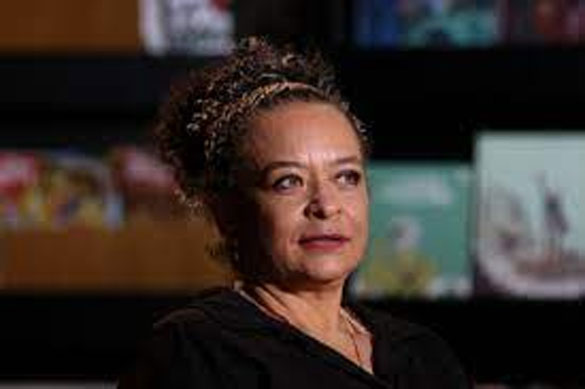
Ana Maria Gonçalves in Rio de Janeiro in 2023. Photograph: Tânia Rêgo/Agência Brasil
----------
Brazil has elected its first Black woman to the Brazilian Academy of Letters, founded in 1897 and modelled on the AcadémieFrançaise.
Ana Maria Gonçalves, 54, is one of Brazil’s most acclaimed contemporary authors, and her election on Thursday is being widely celebrated by writers, activists, literary scholars and President Luiz Inácio Lula da Silva.
Her most famous work, Um defeito de cor (A Colour Defect) is still untranslated into English. It is a 950-page historical novel that she describes as “the history of Brazil told from the point of view of a Black woman”.
Recently selected as the greatest work of Brazilian literature of the 21st century so far by the newspaper Folha de S Paulo, the book achieved the rare combination of both critical and popular success, with more than 180,000 copies sold since its release in 2006.
Celebrating Gonçalves’s victory, Lula wrote that the book was his “companion” during his 580 days in prison, “and I always make a point of recommending it to everyone.”
Now, the author hopes that her election to the 128-year-old academy – whose primary mission is the preservation of the Portuguese language and Brazilian literature – may help correct what she sees as a longstanding historical injustice.
“I’m the first Black woman, but I can’t be the only one,” said Gonçalves, who will be just the sixth woman among the 40 members, or “immortals”, as they refer to themselves. Apart from two Black men and the first and only Indigenous writer to join the institution, all the others are white men.
“I can’t carry the weight of representing an entire population that continues to be marginalised and that is itself incredibly diverse,” she said.
The academy had as its first president a Black man, Joaquim Maria Machado de Assis, widely considered the greatest Brazilian writer of all time. Despite still being known as the House of Machado de Assis, the academy has since had only a handful of other Black men as members – something many see as a stark illustration of how racism operates in a country where more than half the population is of African descent.
Poet and translator Stephanie Borges, 40, believes Gonçalves’s election will encourage more Black women to become readers and writers. “When it’s us telling our own stories, we invite those who look like us to come closer to literature,” she said.
Cidinha da Silva, 58, author of more than 20 books, is keen to stress that Gonçalves was not elected because she is Black, but “because she is one of the greatest living writers in Brazil”.
There were 13 candidates in the running, and of the 31 members who voted in Thursday’s election, 30 chose Gonçalves – the remaining vote went to ElianePotiguara, 74, who had hoped to become the first Indigenous woman to join the academy.
Gonçalves had to run a sort of “campaign” – though she emphasises she never asked for votes – in which she sent a copy of her book and a personal letter to each member, and phoned some of them to discuss her work.
In 2018, another celebrated Black writer, ConceiçãoEvaristo, 78, also stood for election, but received just one vote.
“The academy does need more women, more Black people, Indigenous people, and people from other parts of Brazil,” said Gonçalves. “And I hope that now, from the inside, I can help make that happen.”
Source: theguardian.com
https://www.theguardian.com/world/2025/jul/11/ana-maria-goncalves-first-black-woman-brazil-literary-academy
-------
Amateur M’sian golfer barred over long skirt sparks viral debate on dress code
theSun
2025-07-12
A video posted by Malaysian golf content creator Maryam Ishak (@maryamishakgolf) has gone viral after she claimed she was denied entry to play at the Royal Kampung Kuantan Club because she wore a long skirt.
Maryam, who has been active in golf since 2018, said she was supposed to tee off at 8.30am on July 11 but was stopped by the club secretary over her outfit.
“I’ve worn long skirts to many clubs with no problem. There’s nothing in the rulebook that says it’s not allowed,” she said, adding that her friends, who travelled all the way from Seremban, also decided not to play out of solidarity.
She explained that her skirt did not hinder movement, and she took care to dress modestly.
“I don’t understand what’s wrong with a long skirt. I can run and jump in it. It doesn’t hurt anyone.”
The video drew over 70,000 views after a day of its post and hundreds of reactions, with many questioning the club’s decision.
@ari7474 commented: “Never heard long skirt not allowed. This is a good way to get some explanation from them.”
@Tayapawau urged action: “File an official complaint to MGA... then raise it again during the AGM meeting at Kg Kuantan.”
@Mukhriz Zakaria added: “Most clubs use ‘conservative length’ – usually 1-2 inches above the knee. In Malaysia, maybe this has changed to suit Muslim women, I’m not sure.”
@AbdunHalick clarified: “Yes, long skirts are generally allowed if they meet the dress code. Some clubs may have specific requirements, so it’s best to check.”
@Ree Channel Golf urged a clarification from the club, commenting: “Waiting for the said club to provide an explanation for this. Need to know the justification. Hope they have a good explanation on this.”
The Royal Kampung Kuantan Club had since reportedly stated that each club has its own dress code which must be abided at all times but did not comment further.
Source: thesun.my
https://thesun.my/viral/going-viral/amateur-m-sian-golfer-barred-over-long-skirt-sparks-viral-debate-on-dress-code-ME14458455
-------
Iran Threatens Nobel Laureate Narges Mohammadi With 'Physical Elimination'
Jul 11, 2025
Iranian activist Narges Mohammadi, who won the 2023 Nobel Peace Prize for her fight for women's and human rights in Iran, has received death threats from Tehran, the Nobel Committee said Friday.
Mohammadi, who has spent much of the past decade behind bars, was released from Tehran's Evin prison in December for a limited period on medical leave, with her legal team repeatedly warning that she could be re-arrested at any time.
Norwegian Nobel Committee chair Jorgen WatneFrydnes said in a statement he had received an "urgent phone call" from Mohammadi, 53, who said her life was now in danger.
"The clear message, in her own words, is that 'I have been directly and indirectly threatened with 'physical elimination' by agents of the regime'," he said.
"The threats conveyed to Ms. Mohammadi make it clear that her security is at stake, unless she commits to end all public engagement within Iran, as well as any international advocacy or media appearances in support of democracy, human rights, and freedom of expression," the statement added.
The Committee said it was "deeply concerned" about the threats against Mohammadi and "all Iranian citizens with a critical voice, and call upon the authorities to safeguard not only their lives, but also their freedom of expression."
Mohammadi has been repeatedly tried and jailed for her vocal campaigning against Iran's widespread use of capital punishment and its mandatory dress code for women.
She won the Nobel primarily for her fight against the oppression of women in Iran. Her children collected the award on her behalf as she was in prison at the time.
Source: ndtv.com
https://www.ndtv.com/world-news/nobel-laureate-mohammadi-says-iran-issuing-death-threats-8860663
-------
N.Y. County Settles With Woman Who Says the Police Removed Her Hijab
July 11, 2025
Maia Coleman
Suffolk County, N.Y., on Friday reached a $225,000 settlement with a Muslim woman who said she had been forced by police officers to remove her hijab and then held in custody bareheaded for nine hours.
The woman, MarowaFahmy, filed a lawsuit in January 2024 claiming that the Police Department in the Long Island county had violated her First Amendment rights by forcing her to remove the religious head covering and refusing to return it. The suit also claimed that a department policy permitting officers to remove arrestees’ religious head coverings for booking photos was unlawful.
“It’s a sign of hope that there is still rule of law, that American citizens can rely on their Constitution to protect them and their religious practice and their civil rights,” said Andrew Wilson, one of Ms. Fahmy’s lawyers.
The settlement, filed on Friday morning in federal court in the Eastern District of New York, arrives at a critical moment on Long Island. The agreement, which has been celebrated by Ms. Fahmy, a native of Egypt, and her lawyers as a win for religious and cultural freedoms, provides a striking counterpoint to policies that have taken shape in recent months across the island.
Officials from Suffolk County, which includes eastern Long Island, and neighboring Nassau County, which covers the west, have adopted forceful anti-sanctuary stances, promising to work with federal authorities. In February, Republican leaders in Nassau County announced a partnership with the Trump administration to aid the president in his immigration crackdown.
Critics worry that the policies could lead to racial profiling and the arrests of immigrants with minor criminal histories. The Fahmy settlement cuts in the other direction.
Since the suit’s filing, the Suffolk County Police Department has updated its religious accommodation policy, a change Mr. Wilson said was a “direct response” to the litigation. Under the terms of the settlement, the department has also pledged to train officers on the new policy to ensure their cooperation.
The settlement does not contain any admission of wrongdoing from Suffolk County, which in court filings has denied most of Ms. Fahmy’s claims.
A spokesman for the county executive’s office declined to comment on the settlement on Friday.
The suit stemmed from an encounter between Ms. Fahmy and the police in October 2022 that she says left her feeling ashamed and exposed.
Ms. Fahmy was arrested by the police on a domestic complaint, which was later dismissed. She was taken to the Sixth Precinct in Selden where an officer searched her and then forced her to remove her hijab, a religious garment that she is required to wear by her Islamic faith and that constitutes a “core” part of her identity, according to the suit.
The officer ignored her pleas that she could not appear uncovered in the presence of men outside her immediate family, the suit said. Instead, the officer confiscated the hijab, exposing Ms. Fahmy’s hair and neck, and left her that way for several hours, the suit says.
Two male officers arrived later to escort Ms. Fahmy to a different police station. Again, she protested, explaining that her religion prohibited her from going outside uncovered. But officers ignored the request and moved her to the other station, where the police took her booking photos while her hair and neck were exposed.
Later, Ms. Fahmy was returned to the first jail, where she was forced to remove some of her clothing and was searched in front of a male officer, the suit says. She remained without her hijab until her release hours later.
The lawsuit accused Suffolk County of repeatedly violating Ms. Fahmy’s religious rights and causing her severe distress. But it also took aim at the Police Department’s policy allowing officers to temporarily remove religious head coverings for booking photos, a practice that Ms. Fahmy’s lawyers said was out of step with national norms and violated federal and state laws.
In June 2024, five months after the suit was filed, the Suffolk Police Department issued an updated policy stating that religious garments that did not substantially cover a detainee’s face could be worn for photos.
The change has brought the county closer in line with law enforcement agencies in nearby municipalities, including in New York City, which allow citizens to wear religious head coverings for official government photographs. The New York Police Department revised its own such policy after reaching a settlement in 2020 in a case similar to Ms. Fahmy’s, brought by the firm that represented her, Emery Celli Brinckerhoff Abady Ward & Maazel.
Since the suit’s filing, the Suffolk Police Department has also enhanced its policy language to ensure that when head coverings are searched, it is by an officer of the same gender in a private location.
In a brief interview this week, Ms. Fahmy expressed gratitude at the outcome of the settlement and said she hoped it would protect women faced with similar situations in the future.
“I didn’t sue to get material objects back,” Ms. Fahmy said by phone in Arabic, speaking with the aid of an interpreter.
“It protects the Muslim woman in America in that no one can tell her to remove her hijab,” she said, adding: “I learned that it’s my right to say, ‘No, I’m a Muslim woman, and this is my right: to respect my own religion.’”
Source: nytimes.com
https://www.nytimes.com/2025/07/11/nyregion/suffolk-county-head-scarf-settlement.html
-------
Bangladesh caretaker government overturns use of ‘sir’ to address female officials
11 Jul 2025
Bangladesh’s caretaker government has overturned a longstanding protocol requiring female officials to be addressed as “sir”, calling it an “odd” relic of the regime of the ousted leader, Sheikh Hasina.
The interim administration, headed by the Nobel peace prize winner Muhammad Yunus, took office last year after the former prime minister was overthrown by a student-led uprising, forcing her to flee to neighbouring India.
A statement issued by the press wing of the caretaker government late on Thursday said the directive mandating the use of “sir” for women in official roles had been “annulled”.
“During Sheikh Hasina’s nearly 16-year-long autocratic rule, a directive was reportedly issued requiring public officials to address her as ‘sir’,” it said. “This practice extended to other high-ranking women officials, who were – and still are – being called ‘sir’, which is clearly odd.”
A new committee has been formed to revise other protocol-related directives, the statement added.
A female official told AFP that the caretaker government took the call without consulting the women in public roles.
“The tradition began during Sheikh Hasina’s tenure, but many women officers supported it, finding the address gender-neutral,” said the official, speaking on condition of anonymity.
Hasina, 77, who has defied orders to return to Dhaka, faces several charges at Bangladesh’s international crimes tribunal for alleged crimes committed during a crackdown on the protests that led to her toppling. Responding to the charges, Hasina’s Awami League party condemned the trial process and said the tribunal was a “kangaroo” court.
Up to 1,400 people were killed between July and August 2024, according to the United Nations. Prosecutors claim that Hasina held overall command responsibility for the violence. She has denied all allegations against her.
Source: theguardian.com
https://www.theguardian.com/world/2025/jul/11/bangladesh-caretaker-government-sir-female-officials
--------
Kidnapped, abused: Reports of missing Alawite women in Syria
MaissunMelhem
Jul 11, 2025
Nora looks into the camera, her baby on her lap. She looks thin, her hair and eyebrows have been shaved off and she has scars on her face. The first pictures of the woman, taken after her release from captivity, were immediately spread on social media.
Nora — her real name has been withheld for security and privacy reasons — is one of dozens of women from the Syrian Alawite minority thought to have been kidnapped. She has since left the country.
Nora says she was held in a basement for around a month, where she was physically and psychologically brutalized. She was in the coastal city of Jableh, with her 11-month-old baby, on the way to an aid center when she was stopped by a car with Idlib license plates, filled with masked men. They asked her where she came from and when she said she was Alawite, she was dragged into the car and blindfolded.
"Every day I was abused and beaten, so much so that I lost consciousness," Nora told DW. While imprisoned, her baby was taken away from her and she was told she should sign a marriage contract. "I refused to do so, I'm already married," she explained. "After that they treated me with even more brutality."
Photos of her beatings were sent to her family as a way to blackmail them into sending ransom money. After her family paid a large ransom, Nora was set free. Today she lives outside of Syria and is being treated for serious gynecological problems.
Similar incidents reported
Nora's story has been repeated elsewhere. News agency Reuters has reported on other abductions of Alawite women and conducted detailed interviews with families of the missing women. "Detailed interviews with the families of 16 of the missing women and girls found that seven of them are believed to have been kidnapped, with their relatives receiving demands for ransoms ranging from $1,500 to $100,000," Reuters reported. "There has been no word on the fate of the other nine."
The United Nations' Independent International Commission of Inquiry on the Syrian Arab Republic has also documented several cases.
The commission "documented abductions by unknown individuals of at least six Alawi women this spring in several Syrian governorates," the chair of the commission Paulo Sergio Pinheiro told the UN Human Rights Council at the end of last month. "The whereabouts of at least two of these women remain unknown, while the commission has received credible reports of more abductions. Investigations into some of these incidents were opened by the interim authorities."
At the time of writing, Syria's Ministry of the Interior had not replied to enquires on the subject, nor did they reply to Reuters' enquiries.
Syrian activist BasselYounus, who lives in Sweden, told DW he's documented around 40 missing women. He monitors human rights abuses in Syria and notes that the majority of the women abducted were from the Alawite community.
The Alawite minority has come under attack since the ousting of Syrian dictator Bashar Assad, whose family — the long time authoritarian leaders of the country — come from the Alawite community themselves. Some Islamist extremists see Alawites as apostates. Other Syrians believe the Alawites to have been supporters of the country's former dictator.
In March, Syria saw a major outbreak of violence against the Alawite community after supporters of ousted President Bashar Assad launched attacks on the new Syrian security forces. Hundreds of the security forces were killed. In the ensuing violence, an estimated further 1,500 people were killed and it's thought that at least some of the perpetrators had links to the new Syrian government.
The country's interim president Ahmad al-Sharaa created a committee to investigate the violence but as yet, it has produced no results.
The incidents with Alawite women are not a coincidence, Younus said. "They are a symbol of the subjugation of an entire community," he explained. Nora also recalls being called names, like "pig" and "infidel," while she was in captivity.
DW attempted to speak with more than a dozen victims' families over the course of several weeks, although many of them didn't want to go on the record due to fear, shame or uncertainty.
Sami, a young man from a village near the west Syrian city of Tartus, was one of the few that would speak to media, albeit with his last name kept confidential.
His 28-year-old sister, Iman — her name has also been changed to protect her identity — disappeared without a trace after she drove into the city one day. Shortly afterwards the family got a call from an international phone number in which an anonymous voice told them: "forget Iman, she will never return."
Sami contacted the local police but they told him that in many of these cases, the women were having a secret love affair and had simply run away from their families. But a few days later, the kidnapper got in touch again and this time demanded a five-figure ransom.
The family managed to borrow the money and sent it to Turkey using the so-called "hawala" system, an informal network of money transfers that relies on private individuals passing cash onwards. That makes trying to trace where the ransom money ended up difficult, although documents sighted by DW show that the first recipients were Syrian refugees in Turkey. But for Sami and his family, paying the money didn't help. After they sent the cash, contact was broken off and there's been no further sign of Iman.
Sex slave rumors
Maya, 21, is another young woman who was kidnapped, together with her younger sister, near Tartus. Her name has also been changed to protect her privacy. In March the two girls were on the way to do some shopping when they were stopped by masked men with guns.
"They asked us if we were Alawite or Sunni," Maya says. "When we said 'Alawite,' they pulled us into a van without license plates."
They were blindfolded and driven for what seemed like hours. During the trip, they were insulted as "unbelievers" and as remnants of the Assad regime. The kidnappers told them they were responsible for the deaths of hundreds of their colleagues, anti-Assad fighters, Maya remembers.
The sisters were held in a basement and Maya says they were frightened they would be sold as slaves. Syrian social media is buzzing with suggestions that the kidnapped Alawite women are being sold at "slave markets," in the same way that female members of the Yazidi minority were "sold" by the extremist "Islamic State" group when they came to power in Iraq and Syria. However it is also clear that a lot of Assad regime supporters, both inside and outside the country, are pushing these kinds of rumors for their own political ends.
"So far we have no evidence that Alawite women have been systematically enslaved, as was the case with Yazidi women back then," Bassam Alahmad, executive director of Syrians for Truth and Justice, told DW. But he says religious affiliation is increasingly playing a role in kidnappings and murders. "Alawite women are now being targeted because of their religion and there's a parallel to the Yazidi women in this," he explained.
The heart of the problem though, he adds, is that the Alawite community is being targeted for real or assumed links to the Assad regime.
Maya and her sister were eventually released. It is unclear why they were let go but after two months, they were allowed to return to their family. They survived, although many other women are still missing.
Source: dw.com
https://www.dw.com/en/kidnapped-abused-reports-of-missing-alawite-women-in-syria/a-73217254
-------
Saudi Arabia’s Mawhiba program empowers female students in Yanbu
July 11, 2025
RIYADH: Mawhiba’s Academic Enrichment Program continues in Yanbu Industrial City on Saudi Arabia’s Red Sea coast, SPA reports.
The program, which is implemented by the King Abdulaziz and His Companions Foundation for Giftedness and Creativity, also known as Mawhiba, has targeted a select group of talented female students in various scientific and cognitive fields.
According to SPA, the program is part of Mawhiba’s efforts to support gifted men and women, and integrates specialized scientific content, practical application and personal and leadership skills development in a stimulating learning environment.
Some 95 female students participating in the program are receiving rich scientific content in tracks that include inventions, chemistry and engineering design, in addition to developing thinking, innovation and entrepreneurship skills, under the supervision of a select group of qualified female trainers.
The program’s activities include scientific visits, applied workshops and mini exhibitions, featuring active interaction from students and parents.
Scientific and creative outputs will conclude the event, showcasing the efforts of the students and education team, which contributes to the discovery, development and support of talents in the field of excellence and creativity, SPA reports.
Source: arabnews.com
https://www.arabnews.com/node/2607759/saudi-arabia
-------
URL: https://newageislam.com/islam-women-feminism/understanding-blood-islamic-law-yemen/d/136161