
Two Women, Banoo Moghadam and Mitra Yassini, Executed in Abhar and Shiraz on Murder Charges
New Age Islam News Bureau
30 August 2025
· Two Women, Banoo Moghadam and Mitra Yassini, Executed in Abhar and Shiraz on Murder Charges
· How Women In UAE Are Changing Gaming Industry, From Esports Athletes To Coders
· Journalist Mariam Dagga’s Final Images Show Where She Was Killed By An Israeli Strike In Gaza
· Nobel Laureate Shirin Ebadi Calls For Iranian Uprising
· Abu Dhabi Registers 5,930 Women-Led Businesses
· Despite Taliban Ban, Over 90 Per Cent Of Afghans Support Girls’ Right To Learn
· Press Briefing By UN Women On The New Afghanistan Gender Alert
Compiled by New Age Islam News Bureau
URL: https://newageislam.com/islam-women-feminism/women-banoo-moghadam-murder-charges-/d/136658
----
Two Women, Banoo Moghadam and Mitra Yassini, Executed in Abhar and Shiraz on Murder Charges
August 29, 2025
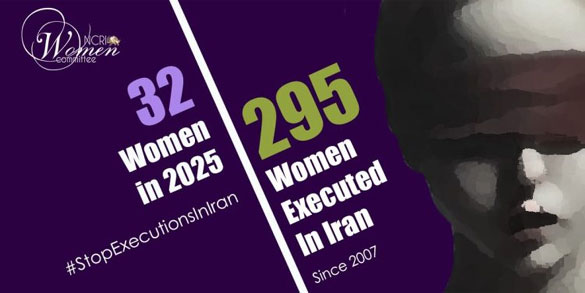
Banoo Moghadam had been arrested on charges of killing her son-in-law and later sentenced to death by a criminal court. At the time of her arrest, BanooMoghadam reportedly suffered from mental health issues.
MitraYassini had been convicted of complicity in a murder and sentenced to death by the criminal court.
Despite the execution, judicial and prison authorities have yet to issue any official confirmation.
The execution of BanooMoghadam and MitraYassini brings the total number of women executed in Iran in 2025 to 32.
In the one-month period from July 30 to August 29, the clerical regime has executed at least eight women in Iran.
Iran: The World’s Leading Executioner of Women
Iran holds the grim record for the highest number of women executed globally. According to data compiled by the Women’s Committee of the National Council of Resistance of Iran (NCRI), at least 295 women have been executed in Iran since 2007.
Many of the women executed by the Iranian regime are themselves victims of domestic violence and discriminatory family laws. A significant number have acted in self-defense.
The number of women executed in Iran saw a sharp rise in 2024. At least 34 women were hanged last year, with 23 of these executions occurring after Masoud Pezeshkian took office.
In the Iranian calendar Year 1403, at least 38 women were executed in Iran, marking a disturbing 90% increase compared to the previous year.
During one year since Pezeshkian took office in late July 2024, the number of execution victims in Iran has surpassed 1,650. While the total number of executions in the entire 2024 was just over 1,000.
These figures reinforce the reality that, regardless of who holds the presidency, the Iranian regime continues to trample on the rights of its people, especially women.
Source: wncri.org
https://wncri.org/2025/08/29/banoo-moghadam-mitra-yassini-executed/
--------
How women in UAE are changing gaming industry, from esports athletes to coders
29 Aug 2025
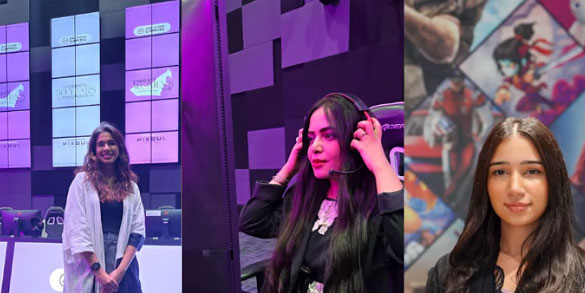
From left to right - Aditi, Esteqlal, Reem, Moki
------------
Amna Alameri still remembers the phone call that changed her gaming life. Known to fans as "Moki", the Emirati streamer and esports athlete had been playing competitively for years, mostly from her home setup with her sisters. Then came the invitation — a female-only tournament in Dubai in 2020. “They called me to join a women’s team,” she recalls. “That was my first step into team esports. After that, I progressed into the wider industry.”
Moki’s journey is a snapshot of a fast-growing scene in the UAE, where women are finding their place not as tokens in a male-dominated arena, but as athletes, coders, designers and community builders. She laughs when she talks about her household. “We’re all girls, and all gamers.”
These days, she splits her time between training, streaming, and running workshops to teach aspiring players how to create content. It’s a tough schedule, especially when competitive gaming in the region is still patchy. “Finding teams that pay a salary is difficult,” says the 28-year-old. “And female tournaments are fewer.” Still, her drive is palpable: “I ran workshops to teach people how to be content creators,” she adds, the same way others might casually mention cooking lessons.
Building the invisible infrastructure
While players like Moki capture attention in the spotlight, women like ReemFakhouri make sure the games run at all. An online programmer at Ubisoft Abu Dhabi, the 23-year-old spends her days building backend systems — the invisible plumbing of matchmaking, latency management and player accounts.
“I was always curious about how any software or website works behind the scenes, including games,” says Reem, who studied computer science at the University of Waterloo in Canada. “My role mainly involves backend development of systems that allow games to run smoothly. I find it interesting to come up with solutions that improve overall user experpHience.”
She describes her work less in terms of breaking barriers and more in terms of scalable systems, solutions that can handle millions of players at once. Ubisoft’s Abu Dhabi studio, which opened in 2011 and now employs over 100 people, is one of the company’s global hubs for live operations. The code Reem works on doesn’t just keep players happy in the UAE; it scales across Ubisoft’s global live games.
Designing stories that include everyone
Aditi Monga, 25, also at Ubisoft Abu Dhabi, approaches gaming from a different angle. A game designer with a background in multimedia, she found herself fascinated by the difference between watching and playing. “Games give agency to the player,” she says. “It’s not a passive story; you’re part of it.”
For her master’s thesis, she surveyed over 500 gamers on diversity and inclusion. “It’s a behaviour shift,” she explains. “I assumed some design changes would be simple. In reality, production is very difficult, and trying to change behaviour at every step is challenging.”
That’s why she takes an almost method-acting approach to design. When a feature revolves around a sport or activity, she learns it herself to make the in-game version more authentic. “If there’s swimming or diving in the game, I want to understand the movements properly,” she says. The commitment isn’t without risks: She recalls how she once injured her leg while practicing diving in real life, just so she could better design the mechanic in-game.
Seasonal content is another area she pushes to rethink. “Most games focus on Halloween or Christmas,” she says. “But why not a crescent-moon festival? Our real-life experiences shape fictional experiences.” For MENA gamers, women and men alike, that kind of recognition matters. According to Newzoo, nearly 37 per cent of MENA gamers are women .
Policy and pipelines
The goal is to make sure talent like Reem and Aditi aren’t exceptions, for Aziza Al Ahmadi, Adviser to the Undersecretary at Abu Dhabi’s Department of Culture and Tourism. During an event celebrating female gamers on Thursday night, she spoke of Abu Dhabi’s “clear strategy for women’s participation in the gaming industry,” with training and university programmes already rolling out.
Last year, Abu Dhabi University announced a partnership with the French school Rubika to launch a dual-certified bachelor’s degree in video game design. The programme is part of the emirate’s wider AD Gaming initiative, which aims to turn Abu Dhabi into a regional hub for game development.
Taste, community and the long game
Esteqlal Al Humaidi, Community and PR Manager at NVIDIA GeForce MENA, brings another perspective. She started as a gamer and content creator herself, producing reviews and voiceovers, before moving into industry roles across Kuwait and Dubai. “It’s all about taste,” she says. “A genre can win or lose depending on the audience. Community engagement is what keeps people loyal.”
Her career underscores a simple truth: Gaming in the region is not just about studios or tournaments, but the communities that keep games alive between launches. For Esteqlal, listening to players is as critical as the technology itself.
Source: khaleejtimes.com
https://www.khaleejtimes.com/uae/women-changing-gaming-industry-esports-athletes-coders-designers-marketers?_refresh=true
-------
Journalist Mariam Dagga’s Final Images Show Where She Was Killed By An Israeli Strike In Gaza
August 29, 2025
GAZA CITY: The last photos taken by Mariam Dagga show the damaged stairwell outside a hospital in the Gaza Strip where she would be killed by an Israeli strike moments later.
Dagga, a visual journalist who freelanced for The Associated Press, was among 22 people, including five reporters, killed Monday when Israeli forces struck Nasser Hospital twice in quick succession, according to health officials.
The photos, retrieved from her camera on Wednesday, show people walking up the staircase after it was damaged in the first strike while others look out the windows of the main health facility in southern Gaza.
The Israeli military said it targeted what it believed was a Hamas surveillance camera, without providing evidence. Witnesses and health officials said the first strike killed a cameraman from the Reuters news agency doing a live television shot and a second person who was not named. A senior Hamas official denied that Hamas was operating a camera at the hospital.
Dagga, 33, and other reporters regularly based themselves at Nasser Hospital in Khan Younis during the war. She documented the experiences of ordinary Palestinians who had been displaced from their homes, and doctors who treated wounded or malnourished children.
Algeria’s ambassador to the United Nations, his voice breaking and on the verge of tears, read a letter Wednesday to the UN Security Council that Dagga wrote days before she was killed.
It was addressed to her 13-year-old son, Ghaith, who left Gaza at the start of the war to live with his father in the United Arab Emirates.
Holding up a photo of Dagga, Amar Bendjama called her “a young and beautiful mother” whose only weapon was a camera.
“Ghaith. You are the heart and soul of your mother,” Bendjama quoted Dagga as writing. “When I die, I want you to pray for me, not to cry for me.”
“I want you never, never to forget me. I did everything to keep you happy and safe and when you grow, when you marry, and when you have a daughter, name her Mariam after me.”
Source: arabnews.com
Please click the following URL to read the text of the original Story
https://www.arabnews.com/node/2613440/middle-east
------
Nobel Laureate Shirin Ebadi Calls For Iranian Uprising
30 August 2025
Below is a transcript of Iranian lawyer, activist and Nobel laureate Shirin Ebadi's remarks in a wide-ranging conversation with Iran International's Eye for Iran podcast.
Political awakening
First of all, I would like to add that this is my first book, and my second book - in which I wrote about the reason why I left Iran and the fate of Iran today - I wrote in another book titled Until We Are Free.
But about Mr. Bani-Sadr, in the book (Iran Awakening) whom you asked about, I must say that it was not Bani-Sadr the president. It was the brother of the president - the first president, who at that time ran the justiciary. He headed the judiciary.
When he told me this, he said, put on your headscarf even if it's not in your belief, as a sign of respect, as someone who has come as a guest to our home - by which he meant Khomeini's.
I told him, why are you encouraging me to be hypocritical or pretend? I realized very quickly that all the things Khomeini was saying were lies and meant for deception, and for that reason from the very first months I separated my path.
In the articles that I wrote at the very beginning of the revolution, given that during the first year of the revolution there was more freedom, I was able to write articles and they were published.
But, that very moment was the reason that, after I left the judiciary and wanted to obtain my law license, they did not give me a license for seven years and kept me waiting because of the articles I had written.
Women as 'slaves'
In any case, unfortunately the Islamic Revolution sought to use women as slaves, although women resisted too, and because of their resistance the Islamic Republic was not able to shape the kind of woman it desired according to its own ideology.
Still, as much as it could, it tried to impose its culture on the women of Iran through unjust laws.
My first encounter with Khomeini being a liar, and the revolution not being what I wanted, was on March 8, 1979. I remember listening to the radio news. There was an interview with Mr. Eshraghi, the son-in-law of the Imam, and he quoted Khomeini as saying that women working in government offices and state-owned companies must wear hijab, and without hijab no one would be allowed in.
That was when I realized that Khomeini did not stand by the things he had said. He had lied. After that, one discriminatory law after another was passed against women, and the situation of women became much worse than before. It meant that we even lost the rights we had won.
Disillusionment
I am a defender of human rights and naturally sought peaceful change in Iran. That's why, when Khatami was elected, I felt that perhaps his words could be trusted and that maybe reforms could improve conditions without bloodshed or heavy costs. But
I grew more hopeless day by day, and my despair came after the events of July 9, [1999] — the day when the Tehran University student dormitory was attacked and a young man named EzzatEbrahimnejad was killed. I was EzzatEbrahimnejad's lawyer, and I saw and had information in this regard about what a tragedy had occurred.
We expected Khatami and the reformist government to take the students' side. But unfortunately, we saw that many students were arrested without any justice being carried out as to why that tragedy had been brought upon the students.
And that was when I thought nothing could be done any longer. Many more events afterwards only strengthened this belief. I hope you will read Until We Are Free to understand what events took place.
For this to happen, first of all the constitution must be changed. As a lawyer, I only look at the laws. And based on the constitution, there are principles that the constitution itself has stipulated are unchangeable forever.
All our problems stem entirely from these principles. One of these principles is that all laws must be based on Islamic criteria. Another principle is that the ones who determine this are the six jurists of the Guardian Council, who are directly appointed by the [Supreme] Leader, the Vali-e Faqih. The Vali-e Faqih's powers are among the principles that are unchangeable.
Overthrow 'must take place'
In my view, the current ruling body must be deposed. This means that in reality an overthrow must take place. I hope this overthrow will happen without a heavy price and in a short time.
To achieve that, there is no other way except for the people inside Iran to take to the streets and with one voice say, they do not want this government, stop working, and then this [ruling] system will become paralyzed and through people's resistance it collapses.
Then, the people who brought down this government can easily establish their desired [ruling] system through a referendum.
In such a situation — that is, when a government falls and is left without one, the United Nations can intervene, sending representatives to oversee the transitional period and help hold a fair and proper referendum.
Of course, US policies-and those of Western governments in general-will have an impact, but the final and ultimate impact lies with the people of Iran. That means, it is the people of Iran who in the end must change the destiny of their country in the way they wish.
From grumbling to action
You see, as long as people submit to oppression despite their dissatisfaction, and in other words remain in a so-called gray state...which now the gray stratum is gradually breaking away toward those who believe in overthrowing this regime. And only under these circumstances will something good happen.
I repeat: people are dissatisfied, and they have gradually realized that they must move beyond staying at home, grumbling, and complaining, and instead display their protest in the streets to the government and to the world. And now we are now seeing protests breaking out in the streets over electricity and water shortages.
Our streets must be occupied by the people again. I know this may come at a price, but living under the rule of this government is even more costly for the people.
Even ordinary life — water, electricity, and gas - has been withheld from the people. While we are sitting on a sea of oil, we are facing shortages — or as the government calls it, facing an imbalance — of electricity and gas. What kind of government is this? It has ruled for forty-six years and has destroyed Iran.
Human rights in international talks
I have always said, Western governments that claim they respect human rights must also talk about human rights violations in all dealings and meetings they have with the leaders of the Islamic Republic.
But over these forty-six years we have seen the opposite. That is, The Iranian government imprisons innocent people—indeed, takes them hostage-to extort the West. And how easily Western governments pay ransom.
You saw how Obama sent a plane of cash. You saw how Britain, in exchange for the release of several innocent people who had British nationality, gave ransom so that they would be freed. You saw how the Iranian terrorist diplomat who had been sentenced to twenty years in prison was released. You saw how Hamid Nouri was freed.
These are ransoms given to a terrorist and terror-filled government. This behavior has been wrong, we have always objected.
I hope that one day Western governments realize that they must respect the human rights situation in Iran, it must matter to them, and if they deal or negotiate with a criminal government like Iran, they must also talk about human rights issues, and it must be at the top of the matters they ask the government to improve.
Western governments must be put under pressure. How? Through their own people. That is why the main duty of human rights activists, especially those outside Iran, is to inform, to speak out, and to raise awareness in Western civil society. We know that, for example, France or Britain - after all, they have democracies and are elected by the people's vote.
So the voters must be made aware to elect those who care about humanity. In my view, the most important way [to do this] is raising awareness, and in this regard both human rights defenders and the media have a duty. The media must echo the voice of the defenseless people of Iran to the world and show what Iranians are enduring.
Iranian unity
I was not at the Munich conference. I only sent a message. And in that message I repeated what I have always said: I am not a monarchist, nor am I a republican. I am for Iran. My wish is to live in a homeland that is democratic and secular-that is, exactly what the people of Iran want. And this will not be possible unless Iranians unite.
The disputes that for many years they pointlessly had with each other over minor issues must be set aside, and they must form a coalition with each other and help so that an overthrow can happen.
Then, at the ballot box, during the referendum, it will be determined what Iran's political system will be in the future. My message to the people has always been unity, because I know that unity is the key to our victory.
I was invited [to Munich]. I did not go because I was somewhere else and did not have the possibility to attend. They asked me to send a message, and I did. And any other group that invites me and is willing to broadcast my message, I will gladly give them the same message.
Now is the time for us to unite and form a coalition. For forty-six years we have been fighting among ourselves. You see, in these forty-six years it has been proven that neither the monarchists alone, nor the republicans alone, nor the left alone, nor the right alone - no group on its own can succeed in overthrowing the government of Iran and freeing us from tyranny. We must all unite, hand in hand, and work together.
And my goal is not that we should all think the same. The unity I speak of is different from the "unity of word" that Khomeini talked about. What I mean by unity is that we become willing to work together while also maintaining our own political preferences and beliefs.
At the referendum it will then be determined what the future of Iran will be. But right now we all have one demand — overthrow.
Arrests and executions
So we must join hands to achieve it. I completely agree with you. Look, right now at least three people are executed every single day. The number of arrests is extremely high. For the smallest comment or even a short social media post, someone can be imprisoned.
When a cherished national treasure is sentenced to prison just for posting a dot - then you can imagine what the situation of freedom of expression in this country is. That's why I say this government must be overthrown-because there is no other solution.
The longer this government remains, the more crimes it commits.
These crimes bring us to this firm conviction that an end point must be put to these crimes. This end point is the downfall of the regime. For this reason, unfortunately, no path remains except overthrow.
It may come at a cost, but the people have been left with no alternative. No path of reconciliation remains.
Resource-rich, yet poor
Look, this is not just one sign - there are many signs. Iran has abundant oil, yet people live with at least three hours of power outages each day. The lakes have dried up. There is no water. This is not due to drought.
We look at our neighbors - Qatar, the Emirates, Kuwait - those who are in worse conditions than us. Yet none of them are suffering like we are, where people are forced to buy water.
The economy is on the brink of collapse. All of Iran's banks are bankrupt, surviving only by document fabrication and false accounting. The national currency loses value every single day. By the government's own statistics, about one-third of Iranians have fallen into poverty, though the real figure is higher.
Housing and rent prices are so high that it is beyond the means of many. Our top university graduates all dream of leaving the country not because they do not love Iran, but because there is no work in Iran.
When you get into a Snapp car or a taxi, you find that the drivers are engineers or doctors—because there is no work, they are forced to work [as drivers].
In such conditions, the government relies only on violence, repression, executions, and prisons to try to silence everyone.
'Demon of tyranny'
Well, no way forward remains. No hope remains. All the signs show clearly that this government cannot continue.
It thrashes about to delay its fall, but it can't hold on for much longer. Day by day, we are moving closer to the end of the Islamic Republic.
My message to the people of Iran, to all political groups, and to anyone dissatisfied with the current situation is this: if we unite, hand in hand, we can achieve victory over the demon of tyranny that has coiled itself around Iran.
What has allowed this regime to survive is the divisions among Iranians themselves. But those divisions are starting to fade. I now see that inside Iran, different groups are beginning to work together. Outside the country, there are signs of solidarity as well, even if small.
These must grow stronger. If we can become united, cohesive, and speak with one voice, then we can easily topple the Islamic Republic and bring to power the government of our choosing- under which we will finally be able to live a normal life. Because right now in Iran, nothing is normal.
Source: iranintl.com
https://www.iranintl.com/en/202508293296
------
Abu Dhabi registers 5,930 women-led businesses
August 29, 2025
São Paulo – A total of 5,930 new business licenses was issued to women entrepreneurs in Abu Dhabi, United Arab Emirates, over the past year, according to data from the licensing arm of a centralized business registry authority—the Abu Dhabi Registration Authority (ADRA)—which oversees the development and regulation of the emirate’s business sector. The licenses issued over the past 12 months led the total number of women entrepreneurs in the country to 21,115 by the end of June this year, the Emirati state news agency WAM reported on Friday (29). Analyzing the period from July last year to June, women accounted for 18% of the new business licenses in the UAE. Among them, 2,768 were under the Mobdea category, which allows more than 50 business activities without the need for a physical office. Licenses were also issued to traders, the second most requested category, as well as for agricultural and industrial businesses, among others. “Women are a fundamental pillar of our society’s growth,” said ADRA Director-General Mohamed Munif Al Mansoori.
Source: anba.com.br
https://anba.com.br/en/abu-dhabi-registers-5930-women-led-businesses/
-------
Despite Taliban ban, over 90 per cent of Afghans support girls’ right to learn
29 August 2025
Four years after the Taliban takeover in August 2021, the scale and severity of the women’s rights crisis continues to intensify. Afghanistan is the only country in the world where girls are prohibited to attend secondary school.
Yet, in a nationwide door-to-door survey of over 2,000 Afghans, more than nine in 10 supported girls’ right to learn.
A protracted humanitarian crisis continues in Afghanistan coupled with systemic and institutionalised restrictions on women and girls’ rights.
Ms. Calltorp insisted that it is more important than ever to continue investing in Afghan women’s community organizations, which offer healthcare, mental health support and a chance to connect.
“In a country where half the population lives in poverty, education is the difference between despair and possibility,” she said, voicing their yearning to be back in a school environment.
“This is almost always the first thing girls tell us – they are desperate to learn and just want the chance to gain an education,” said UN Women’s Special Representative in Afghanistan, Susan Ferguson.
A year after the introduction of a stricter so-called morality law codified a sweeping set of restrictions, the new alert highlights the deepening normalisation of the women’s rights crisis.
The Taliban’s ban on women working for NGOs – announced nearly three years ago – continues to have a devastating impact, said UN Women.
More than half of NGOs in Afghanistan report that it has affected their ability to reach women and girls with vital services.
A UN Women survey conducted in July and August found that 97 per cent of Afghan women said it had negatively impacted them.
Source: news.un.org
https://news.un.org/en/story/2025/08/1165744
-------
Press briefing by UN Women on the new Afghanistan Gender Alert
29 August 2025
Around the world, girls are preparing to go back to school this September.
In Afghanistan, girls are preparing to mark four years since the Taliban banned them from secondary education.
Today, UN Women is releasing new data which shows that, despite this ban, the vast majority of Afghans – women and men alike – support girls’ education.
In a nationwide, door-to-door survey of more than 2,000 Afghans, more than 9 out of 10 said it was important for girls to continue their schooling.
Support was overwhelming across the board: from men and women, in both urban and rural communities.
It is clear: Despite the existing bans, the Afghan people want their daughters to exercise their right to education.
In a country where half the population lives in poverty, education is the difference between despair and possibility.
These findings can be found in a new UN Women Gender Alert, spotlighting the normalization of the women’s rights crisis in Afghanistan, four years after the Taliban takeover. The Gender Alert comes one year after the so-called morality law’ codified a sweeping set of restrictions on women and girls.
The Gender Alert also looked at the Taliban’s ban on women working for NGOs – announced nearly three years ago. Its impact is devastating.
In a survey conducted this July and August, 97 per cent of Afghan women in areas where the ban is enforced said it has harmed their daily lives.
Three-quarters described their mental health as “bad” or “very bad”.
This is why investing in Afghan women’s organizations is at the core of UN Women’s work.
Because when other doors are closed, these community organizations remain one of the only lifelines left.
If you can’t leave your home without a man, or speak to men outside your family – where do you turn for healthcare, mental health support or simply the chance to connect with other women?
You turn to local women’s organizations.
Their work is especially critical for Afghan women and girls returning from Iran and Pakistan – among the 1.7 million Afghans who have returned this year alone – many forcibly.
Without women aid workers, many will simply miss out on life-saving support.
Source: unwomen.org
https://www.unwomen.org/en/news-stories/press-briefing/2025/08/press-briefing-by-un-women-on-the-new-afghanistan-gender-alert
------
URL: https://newageislam.com/islam-women-feminism/women-banoo-moghadam-murder-charges-/d/136658