
The Women Who Helped Defeat ISIS Are Fighting For Their Place In The New Syria
New Age Islam News Bureau
15 October 2025
· The Women Who Helped Defeat ISIS Are Fighting For Their Place In The New Syria
· Saudi Boxer Yara Al-Amri’s Life Changed After History-Making Asian Medal Win
· Cabinet Committee Questions Sale Of First Women Bank To UAE Entity
· Iranian University Summons Several Female Students Over ‘Dress Code Violations’
· Iran Says Hijab Laws Remain In Force Amid Debate Over Enforcement
· Baha'i Woman Arrested In Northern Iran
Compiled by New Age Islam News Bureau
URL: https://newageislam.com/islam-women-feminism/women-defeat-isis-fighting-new-syria/d/137261
------
The Women Who Helped Defeat ISIS Are Fighting for Their Place in the New Syria
15.10.2025
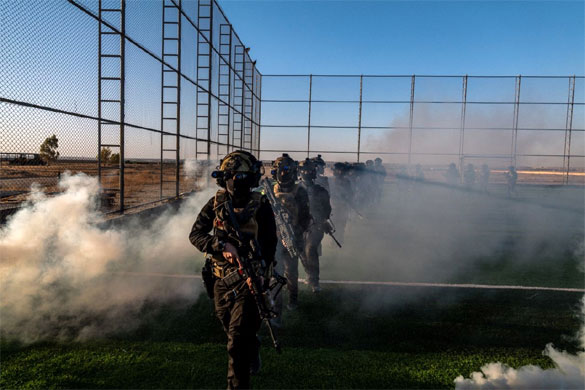
Women in a special-forces wing of the SDF took part in a training exercise in northeastern Syria
-----------
HASAKAH, Syria—Inside a sprawling facility in northern Syria this summer, a group of U.S.-backed Kurdish special forces trained a cadre of their next generation of fighters. All of them were women.
They are part of the Kurdish-led Syrian Democratic Forces, who with U.S. support helped defeat Islamic State six years ago and now control Syria’s northeast, about a third of the country. The women wore flak jackets and night-vision goggles, carried M4 rifles, and jumped out of American armored vehicles. A female commander issued orders to her male subordinates.
Their stature in the SDF is a sticking point in unifying the country under Syria’s new Islamist government.
“It’s very difficult for jihadists to accept a role for women as equals to men,” said Rohlat Afrin, who commands the female fighters of northeastern Syria’s Kurdish-led administration.
Afrin attended a meeting with Syria’s new governors early this year where the SDF signed an agreement to combine their administrations and armies . She was the senior woman, but President Ahmed al-Sharaa failed to shake her hand. It left her questioning whether the two sides could ever truly align.
“We have a completely different mentality,” she said.
Bridging the divide between their administration and the new government in Damascus is seen by the U.S. and European allies as vital to stabilizing the country as it emerges from a half-century of dictatorship under the Assad family’s regime . But the accord struck six months ago between Syria’s two most powerful political and military entities is already fraying amid clashes and mistrust.
Turkey is threatening to intervene if the SDF doesn’t dissolve itself into Syria’s new government and army. The U.S. is also applying pressure on both the SDF and Sharaa to mend fences.
“We value our allies, and we would like the United States to help convince these forces to reintegrate into the Syrian state,” Sharaa said last month at a talk in New York.
A major sticking point is the SDF’s demand that its forces be integrated into a national army as a bloc, not as individuals. That would preserve its current structures and keep women in positions of command.
The new government’s Sunni Muslim forces, once affiliated with al Qaeda, diminished women’s rights and freedoms in areas they controlled before they led a rebel alliance that ousted the Assad regime in December . Since then, some members of Sharaa’s government have declared women to be unfit for certain roles in the military and judiciary.
In contrast, women hold important positions in the areas controlled by the SDF. A social contract established in 2013 calls for women to account for at least 40% of the representatives in Kurdish-led government bodies and other institutions. Government and local municipal committees by law are jointly led by a man and a woman.
“This is one of the red lines that no one will accept to change,” said Siymend Ali, a spokesman for the YPG, or People’s Defense Units, the main group within the SDF alliance.
The Syrian Ministry of Information said every Syrian, regardless of previous militia affiliations, is welcome to join the new army—but with a caveat. “Women are able to apply to the police force, but military recruitment is strictly for men,” it said.
In the graveyards of Hasakah, a small city in northeastern Syria, well-kept tombstones are emblazoned with colorful images of female fighters killed in a decade of battles against Islamic State and other enemies.
The center of the city features a mural of a youthful, smiling fighter called Arin Mirkan. A decade ago, she found herself surrounded on a strategic hill as she fought against Islamic State in the town of Kobane, roughly 200 miles west of here. Instead of surrendering, she blew herself up, killing several militants in her last act.
A few months after Mirkan’s death, Arin Jonda joined the SDF’s Women’s Protection Units, known by its Kurdish abbreviation YPJ, renaming herself Arin after her hero. Renaming is a ritual for all the SDF’s female fighters, many of whom take the names of comrades who died or towns where significant battles took place.
“She inspired me,” said Jonda, 28, a fighter from Kobane. “I was very touched by her bravery.”
Like most female fighters, she never married or had children. Her life, she said, is the military. She received a few months of training, mostly learning how to shoot an AK-47. When Turkey and its allied militias invaded the Kurdish-majority town of Afrin in northwestern Syria in 2018, she was on the front lines. The following year, she fought the militias in Sari Kani in northeastern Syria. The rest of her battles were against Islamic State.
The Women’s Protection Units aim to liberate women from traditional roles. Their main slogan is “Jin, Jiyan, Azadi”—“Women, Life, Freedom.”
The SDF declined to provide current numbers of its female fighters, saying the information was classified. In June, the Middle East Institute estimated the SDF has 50,000 fighters. Afrin, the top commander, said 20% of those forces are women.
Kurdistan Kobane, 28, joined in 2015 after Islamic State massacred more than 150 people including many members of her tribe in Kobane. She adopted the name of her town and ethnic region and became adept at urban warfare.
Her unit fought the group house to house in the town of Tal Abyad. She and a few male comrades once got trapped on the first floor of a building by Islamic State fighters one floor up. The militants fired down at them, forcing Kobane and her unit to flee the building and return through a back entrance to kill their enemies.
“It was difficult,” she said. “They had a better position on us.”
Many of the female fighters see echoes of Islamic State’s ideology in Syria’s new leaders. Sharaa, the president, was affiliated with Islamic State before splitting and realigning with al Qaeda, later repudiating extremism altogether .
As women were becoming more empowered in northeastern Syria, Sharaa was severely restricting women’s rights in the northwestern city of Idlib, where his troops enforced a strict interpretation of Islamic sharia law.
Women had no role in government. They had to be accompanied by male guardians in public places and were required to wear head-to-toe garments, the U.N. Human Rights Council said in a 2022 report.
“We must find a mechanism to convince them to change their mentality,” said Zaryan Asmin, a 30-year-old female fighter who supervises training of the female special forces. “We don’t want a divided Syria.”
Sharaa has pledged to respect Syria’s minority groups and women. Three days after the March unification meeting with the SDF, his government announced an interim constitution that guaranteed women’s rights and freedom of expression during a five-year transitional period.
Critics said the document didn’t do enough. When the government announced its interim cabinet two weeks later, the 23 ministers included only one woman.
The Sharaa government did appoint a woman to head Syria’s central bank and a female governor of Sweida, a restive southern province. It also created a new Women’s Affairs Office, though its director, Aisha al-Dibs, sparked a storm of criticism in January for suggesting that women aren’t capable of leadership and needed training.
In May, the Sharaa government appointed Ahmad Ihsan Fayyad al-Hayes, also known as Abu Hatem Shaqra, as commander of the Syrian Army’s 86th division, which oversees Hasakah and other parts of the northeast, areas mostly under SDF control. The U.S. sanctioned Shaqra in 2021 for the assassination of a female Kurdish politician and his ties to Islamic State.
“These are all bad signs,” Afrin said. “Having this person in this position is a message that the SDF doesn’t exist, the female fighters don’t exist.”
Meanwhile, the SDF continues to train its female troops to fend off enemies, including a resurgent Islamic State. At the session this summer, one of the fighters, struggling to lift a heavy machine gun, wobbled and dropped the weapon. She raised the barrel up again only to teeter once more. She picked it up a third time and steadied herself.
Then she fired a burst of bullets, as her female comrades cheered.
“Women, Life, Freedom!” she yelled, clenching her fists.
Source: tovima.com
https://www.tovima.com/wsj/the-women-who-helped-defeat-isis-are-fighting-for-their-place-in-the-new-syria/
------
Saudi Boxer Yara Al-Amri’s Life Changed After History-Making Asian Medal Win
Waad Hussain Alkhobar
October 15, 2025
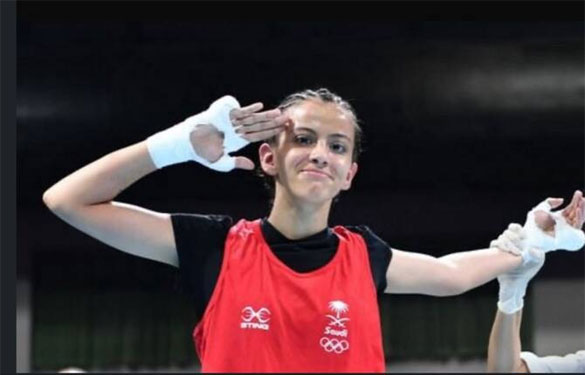
Yara Al-Amri salutes the crowd after her victory, becoming the first Saudi woman boxer to claim an Asian medal. (SUPPLIED)
-------------
RIYADH: The end of 2024 will always hold special memories for Yara Al-Amri. In December last year the young boxer made history by becoming the first Saudi woman to win an Asian medal in boxing — a new milestone for the Kingdom’s fast-growing women’s sports scene.
The 21-year-old fighter earned a bronze medal at the Asian Elite Championships in Bangkok, competing in the 52-kilogram category in her first international appearance.
She told Arab News: “It was my first international appearance, which was the toughest part — competing outside my country without my home crowd and coaches.”
The win was historic not only for Al-Amri, but for Saudi sport. “This changed my life, as I wrote history for Saudi Arabia by winning the first Asian medal in women’s boxing,” she said. “It doesn’t mean we don’t have champions, but the sport is still new in our country. Despite starting later than many nations, we quickly reached their level and proved we can compete and succeed.”
Based in Riyadh, Al-Amri trains under Ali Al-Ahmari at Al-Shabab Club. Standing 174 cm tall, the right-handed orthodox fighter has built a record of 27 fights, with 23 wins and four losses, and holds seven Saudi national titles.
Her path into boxing began unexpectedly. “I first started boxing as a fitness exercise, but soon felt I truly belonged in the sport,” she said. “I’ve always loved challenge and competition, and boxing gave me exactly that. In the ring, it’s just me, my mind, and my hands. Boxing completely changed my lifestyle, making me more disciplined and committed.”
Al-Amri describes the sport as a test of focus as much as strength. “You have to be patient, strategic, and intelligent. Every movement matters.”
Outside the ring, Al-Amri is pursuing a university degree, juggling training sessions and academic deadlines.
“As a university student, my days are always a challenge,” she said. “I train twice a day — morning and evening — while balancing my classes, studies, and daily tasks. My schedule is packed, but I make sure to manage both my academic and athletic commitments.”
Her discipline extends beyond boxing. Earlier this year, she completed the Riyadh Half Marathon, describing the 21-kilometer run as “pure challenge and joy.”
After nearly 30 fights, Al-Amri has learned to embrace both victory and loss. “The biggest lesson I learned from a loss is never leaving the result to the judges,” she said. “The fight must be clear — you have to showcase your skills so strongly that there’s no doubt.
“Injuries and defeats also taught me resilience,” she added. “I always say: ‘What doesn’t kill you makes you stronger.’ Before a fight, I’ve learned to control nerves and pressure. It’s natural to feel it, but once I step into the ring, everything switches off — I focus only on my opponent.”
Al-Amri credits her success to the support around her. “My family has been my first and strongest supporters, from the beginning until today. Their belief in me gave me strength,” she said.
She also praised the institutions enabling women’s boxing to grow. “I deeply value the support of the Kingdom of Saudi Arabia — from our wise leadership to the ministry of sports, the Olympic Committee, the Saudi Boxing Federation, clubs, coaches, and the people. This collective support has been a huge force behind my journey.”
That system, she said, has helped turn a once niche pursuit into a recognized sport for Saudi women.
“My goal is to achieve as many titles as possible — national, regional, continental, and international,” Al-Amri said. “With God’s will, these achievements will come.”
She believes the next generation of Saudi women boxers will go even further. “Women’s boxing in Saudi Arabia has developed tremendously,” she said. “Clubs and coaches are now available across the country, teams are formed, and the determination of Saudi women is stronger than ever. We are capable of competing, representing, and making the sport grow even bigger.”
In only two years, Al-Amri has collected nine gold medals, seven national titles and two bronzes, combining athletic performance with academic success and public recognition.
Her rapid rise mirrors Saudi Arabia’s broader transformation under Vision 2030, which continues to expand opportunities for women in professional sports, from football and judo to boxing and beyond.
Al-Amri said her journey shows what happens when opportunity meets belief. “Boxing gave me strength and purpose,” she said. “It made me realize that nothing is impossible when you work hard, stay disciplined, and believe in yourself.”
As she continues to train for upcoming championships and sets her sights on future world competitions, Al-Amri’s mission is simple: to raise Saudi Arabia’s flag on the global stage.
From her first punch in a Riyadh gym to her medal podium in Bangkok, Yara Al-Amri’s story is one of faith, perseverance, and proof that Saudi women are not just entering the ring, they are redefining it.
Source: arabnews.com
https://www.arabnews.com/node/2618951/sport
-----
Cabinet committee questions sale of First Women Bank to UAE entity
15/10/2025
The Cabinet Committee on Inter-Governmental Commercial Transactions (CCoIGCT) has raised concerns over the proposed sale of First Women Bank Limited (FWBL) to a UAE-based entity, with several questions raised regarding the transaction’s legal and financial framework.
According to a news report, the committee, during a briefing by the Ministry of Privatisation, inquired about the Inter-Governmental Framework Agreement, as required by the Inter-Governmental Commercial Transactions Act, 2022. The Ministry of Privatisation confirmed that the agreement had been signed and shared with the committee before the meeting.
The committee sought further details on a clause facilitating the buyer’s acquisition of remaining shares from private banks. The Ministry clarified that the clause indicated “only on a best-effort basis” and did not commit the seller to ensuring the sale of remaining shares.
Addressing questions regarding the purchaser’s commitment to meet capital adequacy and leverage ratio requirements, the Ministry presented relevant clauses from the commercial agreement, detailing the staggered payment schedule agreed with the State Bank of Pakistan (SBP).
Following extensive discussions, the CCoIGCT approved the commercial agreement’s terms but directed FWBL to follow up with the Federal Board of Revenue (FBR) to expedite the final tax assessment and submit revised income tax returns based on audited accounts.
The Ministry of Privatisation also briefed the committee on the steps leading up to the sale, including the placement of FWBL on the privatisation list in November 2018 and the appointment of a financial advisory consortium in December 2019. The consortium’s due diligence report was finalized in June 2020, and the Cabinet Committee on Privatisation approved the initial transaction structure in August 2020.
In recent developments, the UAE government, through the International Holding Company, expressed interest in finalizing the commercial agreement, which was subsequently agreed upon and presented to the cabinet committee.
The Ministry of Privatisation sought CCoIGCT approval for the commercial agreement’s terms, which were negotiated and finalized with the UAE’s EVE Holding RSC. The Ministry of Law and Justice had also vetted the agreement.
The CCoIGCT approved the proposal, clearing the way for the final steps in the privatisation process.
Source: pakistantoday.com.pk
https://profit.pakistantoday.com.pk/2025/10/15/cabinet-committee-questions-sale-of-first-women-bank-to-uae-entity/
------
Iranian University Summons Several Female Students Over ‘Dress Code Violations’
OCTOBER 14, 2025
Several female students at Yazd University received threatening text messages summoning them over alleged dress code violations.
The messages, sent from the university’s official number, ordered students to report to office 001 in the main building by Wednesday or face disciplinary proceedings in absentia, according to Amir Kabir Newsletter, a Telegram channel covering Iran’s student movement.
Zahra Rahimi, a student activist at Yazd University, criticized the action on the social media platform X, saying threats and violence against female students at the university never end.
“Every day they target students’ psyche with a new method,” Rahimi wrote. “Dress code standards at this university are not only arbitrary and discriminatory, but are enforced more strictly than at many other universities.”
Multiple reports in recent weeks have documented increased pressure on students at universities nationwide.
In a separate case, Yazd University’s disciplinary council suspended a chemistry graduate student for tearing down an “Al-Aqsa Storm” poster that the university’s Basij student organization had installed in support of Hamas’s October 7 attack.
These actions, which include summonses, reprimands, threats and humiliating treatment, have not decreased but instead intensified under President Masoud Pezeshkian, according to the report.
Enforcement of restrictions against students remains a primary tool of control and repression at universities.
Source: iranwire.com
https://iranwire.com/en/women/145551-iranian-university-summons-female-students-over-dress-code-violations/
------
Iran says hijab laws remain in force amid debate over enforcement
15 Oct 2025
Iran’s judiciary spokesman on Tuesday confirmed that hijab laws remain in force, amid renewed debate over the enforcement of the Islamic Republic's compulsory veiling as public flouting of the policy appears more widespread.
Ali-Asghar Jahangir's remarks come after conservative politician Mohammad Reza Bahonar suggested there was no binding hijab law, a comment that sparked controversy among hardline figures, which he later retracted.
Jahangir said Bahonar had since “corrected his statement,” adding that enforcement of hijab-related penalties continues under existing laws.
Earlier this month, Bahonar said the Hijab and Chastity Law, which Iran’s Supreme National Security Council (SNSC) quietly suspended in May, was “no longer legally enforceable.”
He also said that while some in Iran insist hijab must be compulsory, he has “never believed in the mandatory hijab — not from the beginning, and not now.”
Following backlash from Tehran’s ultra-hardliners, Bahonar on Saturday retracted his remarks opposing the mandatory hijab, calling it a “social necessity” and urging punishment for those who defy it.
The issue remains a flashpoint since the 2022 death of Mahsa Amini, which sparked nationwide protests, with more women refusing to comply with compulsory hijab rules in public despite warnings, fines and surveillance.
Across major cities, women are increasingly seen without headscarves in public spaces, often posting videos online in acts of civil disobedience.
According to a 2022 survey by independent Netherlands-based research group GAMAAN, over 70 percent of men and women in Iran opposed mandatory hijab laws.
Source: iranintl.com
https://www.iranintl.com/en/202510140652
------
Baha'i Woman Arrested in Northern Iran
OCTOBER 15, 2025
Iranian security forces have arrested a Baha'i woman in northern Iran and taken her to an undisclosed location.
Sonia Toudi’ei was detained on Sunday at her home in Babol in northern Mazandaran Province, according to the Hengaw Organization for Human Rights,
During the arrest, security forces searched her residence and confiscated several personal belongings.
The reasons for her arrest, any charges filed against her, and her current whereabouts remain unknown.
Hengaw reported that security forces had previously searched her home in May.
Baha’is in Iran face systematic persecution, including restrictions on education, employment, and the practice of their faith.
They are frequently accused of espionage or of acting against the government, though the Baha’i International Community says that no evidence has ever been presented to support such claims.
Over the past two years, Iranian authorities have intensified their crackdown on Baha’is - imprisoning dozens on baseless charges, denying them access to higher education and employment, and confiscating or demolishing their properties.
In its latest annual report, Human Rights Watch described the systematic suppression and denial of basic rights to Baha’is in Iran as a crime against humanity.
Source: iranwire.com
https://iranwire.com/en/bahais-of-iran/145570-bahai-woman-arrested-in-northern-iran/
-------
URL: https://newageislam.com/islam-women-feminism/women-defeat-isis-fighting-new-syria/d/137261