
The Supreme Court of India to examine Muslim women's right to unilateral divorce
New Age Islam News Bureau
11 February2026
· The Supreme Court of India to examine Muslim women’s right to unilateral divorce
· Who is Hind Al-Owais? UAE human rights diplomat named in 469 Jeffrey Epstein emails
· Turbulence: The tale of a young Muslim woman navigating faith and feminism after marriage
· EU says women’s role vital for ‘healthy and prosperous’ Afghanistan
· Most Female-Headed Households in Afghanistan Lack Basic Needs, Says UN
· UN Chief Calls for Equal Role of Women in Science
· Saudi Ladies International: Driving golf and women’s empowerment across the Gulf
· HGI at MU Welcomes Muslim Feminist Ani Zonneved
Compiled by New Age Islam News Bureau
-----
The Supreme Court of India to examine Muslim women’s right to unilateral divorce
Feb 11, 2026
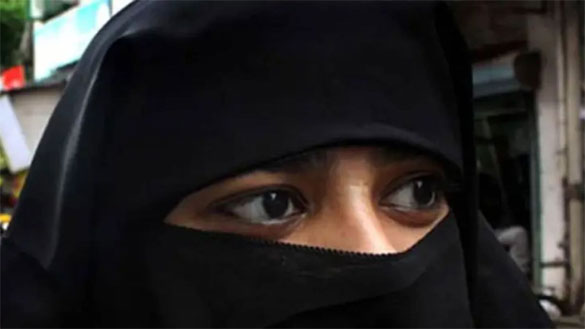
The SC will hear the matter next on April 22.
----------
The Supreme Court has decided to examine whether a Muslim woman can divorce her husband without his consent by pronouncing ‘khula’ unilaterally.
The SC will hear the matter next on April 22.
A bench of Justices Sanjay Kumar and K Vinod Chandran on February 2, granted leave to an appeal challenging the Kerala High Court’s October 28, 2022, judgement which had upheld the right.
The court also appointed Advocate ShoebAlam to assist in the matter saying “it involves a question of Muslim personal law.”
The October 2022 judgement came on petitions seeking review of the April 9, 2021 decision of the HC which upheld the right of a Muslim woman to divorce by resorting to the practise of ‘khula’.
Upholding the decision of the family courts, a bench of Justices A MuhamedMustaque and Justice CS Dias said the recognition of Khula as a form of divorce is “directly available” from the Quran and “the right to invoke khula conferred upon a married Muslim woman is an absolute right; akin to talaq conferred upon the married Muslim men.”
Source: indianexpress.com
https://indianexpress.com/article/legal-news/apex-court-to-examine-muslim-womens-right-to-unilateral-divorce-10525496/
-------
Who is Hind Al-Owais? UAE human rights diplomat named in 469 Jeffrey Epstein emails
Feb 11, 2026
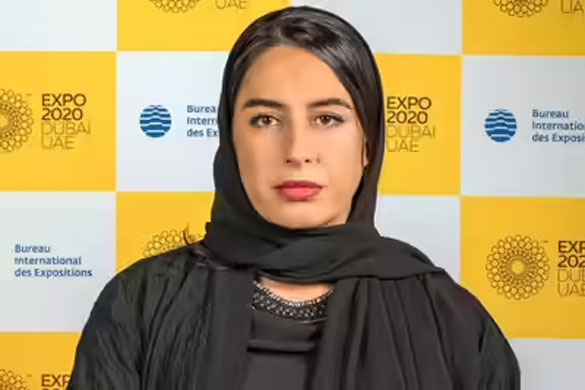
Newly released records from the US Department of Justice have placed Emirati diplomat Hind Al-Owais in the spotlight after her name appeared in 469 emails linked to Jeffrey Epstein. The emails, dating back to 2011 and 2012, were made public as part of a broader document release connected to the late financier’s case.
Al-Owais, who serves as director of the UAE’s Permanent Committee for Human Rights, has not been charged with any wrongdoing. The disclosure has sparked international attention, raising questions about her past correspondence and diplomatic role.
Hind Al-Owais: A UAE diplomat and advocate
Hind Al-Owais is a prominent Emirati diplomat widely known for her work on human rights and women’s empowerment. She has held high-profile roles including Director of the UAE Permanent Committee for Human Rights (PCHR) and has served in leadership positions representing the United Arab Emirates at the United Nations.
Al-Owais rose through diplomatic ranks over decades, gaining recognition in international circles. Her public speeches often focused on gender equality and global human development, promoting the UAE’s stance on women’s participation and rights.
She has also been described as one of the first Emirati women to serve in a senior advisory role at the UN headquarters in New York, where she worked on integrating gender perspectives into global policy agendas.
Emails with Jeffrey Epstein
In early 2026 the US Department of Justice released a massive set of previously sealed documents known as the “Epstein Files” under the Epstein Files Transparency Act. These files include millions of pages of emails, calendars, and other records connected to the late Jeffrey Epstein, a convicted sex offender and financier.
Among these newly public records, Hind Al-Owais’s name appears in approximately 469 email exchanges with Jeffrey Epstein between 2011 and 2012.
The content of these messages ranges from logistical coordination and scheduling meetings to references about arranging social encounters. In one January 2012 email, Al-Owais wrote to Epstein: “Getting one girl ready is difficult enough; two girls, you can certainly call a challenge.”
In other emails, she appeared to discuss introducing her younger sister to Epstein, once writing: “I am so excited to see you and introduce you to my sister, she is even prettier than me.”
These exchanges have drawn global attention because Epstein’s crimes included convictions related to minors and federal sex-trafficking charges before his death.
No criminal charges
It’s crucial to emphasise that the released documents do not accuse Al-Owais of criminal wrongdoing. United States authorities haven’t charged her based on these email records, and there’s no verified evidence showing that Epstein influenced her diplomatic career or that she was involved in his illegal activities.
Officials familiar with the release have noted that the files contain “raw and unverified” material, and naming in the documents does not equate to allegations of crimes. Civil liberties groups have also warned that caution is needed when interpreting large, unfiltered data dumps.
Nevertheless, the juxtaposition of Al-Owais’s advocacy for women’s rights with her appearance in these emails has sparked intense online debate and speculation. Some social media posts claimed that her messages referenced her sister, with some accounts even mentioning a “13-year-old sister”, though such age details have not been independently verified by mainstream reporting.
No official public statement has been issued by Al-Owais or UAE authorities addressing the matter, and she remains listed in her current role.
What happens next?
At this stage, Al-Owais has not been publicly charged or formally investigated in relation to the emails. The broader Epstein Files continue to be analysed by journalists, researchers, and human rights groups around the world. Some observers warn that raw government releases can fuel misleading interpretations, while others argue that open records help the public understand the reach of powerful networks.
As calls for transparency grow, the situation remains fluid, and it’s possible that more documents or official statements could emerge in the coming months.
Source: indiatimes.com
https://timesofindia.indiatimes.com/world/middle-east/who-is-hind-al-owais-uae-human-rights-diplomat-named-in-469-jeffrey-epstein-emails/articleshowprint/128193007.cms
-----
Turbulence: The tale of a young Muslim woman navigating faith and feminism after marriage
11 February, 2026
When Modesty: A Fashion Paradox author and journalist Hafsa Lodi came across a news report at the height of COVID-19 about a Nigerian woman who gave birth aboard an Emirates flight, she shuddered at the thought of going into labour mid-air.
That fear stayed with her, and a year later, she found herself contending with it again when she was due to board a flight to Canada in her third trimester.
However, that fear soon transformed into the plotline for a novel — what if her female protagonist gave birth on a flight to America? And what would it take to trigger her to go into labour?
Between changing nappies and milk feeds, Hafsa sowed the seeds for a novel about a young aspiring British Pakistani filmmaker who gives up her career before it has even started to marry the love of her life. They move from New York City to the Gulf, where cultural and societal expectations slowly erode her feminist ideals. DunyaDawood was born.
Aptly named Turbulence, Hafsa's first novel, published by The Dreamwork Collective, isn't just about the terror of giving birth while a plane jerks you about in the Earth's lower stratosphere; it is also about the ways in which women are shaken to their core when everything they believe to be true changes.
Our protagonist, Dunya, believes she is a feminist, but when those beliefs are challenged by her best friend, Sheefah, Dunya realises she may be guilty of being all talk and little action. She believes she has made the right decision by giving up her career and moving halfway across the world for love, but then those choices, too, are challenged.
Dunya picks up on the human rights abuses, classism and social injustices in Middle Eastern society and wants to film a documentary about them, but her husband Rahim quickly shuts her ideas down, pointing to censorship in the region. And then, when cracks begin to show in her marriage and in the façade of wealth and high society in the Gulf, Dunya chooses silence over standing up for justice. She becomes a woman she no longer recognises.
"I wanted to shed light on the idea of feminism in practice versus theory," Hafsa tells The New Arab.
"Dunya keeps saying she's a feminist and thinks she's an activist. She wants to make all these game-changing documentaries and bring real change to her community. She's saying this, and suddenly 10 years have passed, and she hasn't done anything except fulfil the cultural roles expected of her. So, I wanted her to be this contradictory, flawed and more passive than active character, because I think it's true of a lot of us."
Growing up in London, Dunya did not have a conventional Muslim-Pakistani upbringing. Her feminist mother Sherry divorces her abusive husband when Dunya is young, and they go to live with Sherry's brother Tariq, who has escaped family pressure to get married.
Sherry then retrained as a lawyer. She puts no pressure on Dunya to go to madrassah and, if anything, discourages Dunya from getting married.
"It was very intentional throughout the book for me to debunk a lot of these myths and disprove a lot of stereotypes," says Hafsa.
"A typical South Asian mum is going to be like, 'get married.' I wanted Dunya to be someone who wants to discover faith on her own terms. So, that's why her mother is not only non-religious, but almost anti-religious. I didn't want Dunya to be someone who's forced to study Islam. I wanted her to be passionate about learning this beautiful faith from the ground up, being something that she wasn't allowed, first of all, to do," the author adds.
"With uncle Tariq, I wanted him to be the exact opposite of the typical assertive patriarch who oppresses women. I wanted him to be a gentle, loving, nourishing, almost father figure in her life."
'I call it her ascension'
Turbulence opens with what appears to be Dunya in a garden; it is unclear whether this is the barzakh, the Islamic realm between death and the Day of Judgement, or Heaven. We don't know if our protagonist is dead or alive.
And then Hafsa has done something quite bold.
A woman dressed in white robes approaches Dunya in this otherworldly garden, rosary beads in hand. At first, she thinks it is her Creator. But the Creator would not be praying on rosary beads. So, who is this figure?
Inspired by the re-imaginings of female figures in Islam by N. S. Nuseibah in her book Namesake and Lamya H in Hijab Butch Blues, Hafsa took on the risk of reimagining one of the four greatest women in Islam. And it turns out, this was the very first chapter she wrote, before she even had a storyline.
"I call it her ascension," shares Hafsa. "The ascension chapter is so important to me, so important to the book. That spiritual element is an undercurrent throughout the story, and I wanted to just bring a hint of it to the start to grab readers' attention. It almost feels like that chapter is the jewel of the book."
If one thing is clear, it is that Islamic feminism is a central theme in the novel, from the Muslim feminism course Dunya attends at university in New York with Professor Kiara to the subtle ways she tries to instil the values of gender equality in her son, Rayyan.
In this Gulf society, she struggles to find her tribe between women who follow a patriarchal interpretation of the Islamic faith, encouraging each other to be subservient, obedient wives, and her South Asian friends who are part of the glitterati, only interested in the latest designer clothes and attending swanky soirees.
I wonder whether Dunya, had she found people like Professor Kiara or Sheefah in the Gulf, would have had more courage in both her marriage and her career.
"Dunya's always seeking that inner fulfilment and that spiritual foundation from her youth, from the loving and nurturing Islam lessons with Uncle Tariq to Professor Kiara's circle in university. She is always looking for another Sheefah in the Middle East and never finds her," says Hafsa.
"She can't find a deeper fulfilment on a friendship level, on a spirituality level, or in her partnership with Rahim."
Whether you are an Arab woman, Asian woman, Muslim woman, or woman of the Global Majority, we are susceptible to the trappings of the patriarchy and marriage, in the same way Dunya is. We all start out with feminist ideals about how we want our relationships to look, and at varying levels, that feminism gets quietened post-marriage.
"Often we can claim to embody or believe in certain principles such as gender equality, but then, actually, a lot of the time, we end up just following society's call into these preordained cultural roles," says Hafsa.
"Dunya gets swept up by the marriage, the role expected of her and into the wealth aspect of it. This could have happened in other places too, but it was fun to explore some of the realities of life in the Middle East."
Source: newarab.com
https://www.newarab.com/features/turbulence-faith-marriage-and-feminism-put-test
-----
EU says women’s role vital for ‘healthy and prosperous’ Afghanistan
By SiyarSirat
11 February, 2026
The EU delegation in Kabul says that the active participation of women is essential for a “healthy and prosperous” Afghanistan, marking International Day of Women and Girls in Science against the backdrop of ongoing restrictions on girls’ education under Taliban rule.
In a statement, the EU delegation said it was celebrating Afghan women and girls in science, technology, engineering and mathematics (STEM). “From nurses and midwives to researchers, their active role is vital for a healthy and prosperous Afghanistan,” it said. “Women must be at the heart of science. With partners, we continue to support Education for All.”
The comments come as the United Nations Assistance Mission in Afghanistan (UNAMA) has said it is marking the day “with deep sorrow,” noting that more than 1,600 days have passed since girls over 12 were barred from secondary school. The Taliban have also banned women from universities and restricted their participation in most areas of public life.
UNAMA has repeatedly called on the Taliban o lift the bans, warning of long-term social and economic consequences for the country.
The International Day of Women and Girls in Science was established by the U.N. General Assembly in 2015 to promote full and equal access to and participation in science for women and girls. The United Nations says the day highlights the achievements of women scientists and underscores the need to eliminate gender discrimination in scientific fields.
Source: amu.tv
https://amu.tv/225776/
------
Most Female-Headed Households in Afghanistan Lack Basic Needs, Says UN
11 February, 2026
The United Nations Development Programme (UNDP) says more than 75 precent of Afghanistan’s population is facing livelihood insecurity, with female-headed households among the most affected.
In a new report, the agency said only about 7 precent of women in Afghanistan are employed and that 88 precent of female-headed households lack access to basic needs.
Since returning to power, the Taliban have imposed policies restricting women’s access to education and employment. As poverty has spread across Afghanistan, the ban on women’s work has placed female-headed households under increasing economic strain.
Experts have repeatedly warned that Taliban restrictions on women’s education and employment threaten their future and undermine long-term economic stability.
In late 2025, the UN Security Council said Taliban policies affecting women cost Afghanistan’s economy more than $1 billion annually.
In its report, the council described the situation of women and girls in Afghanistan as “dire,” noting that eight out of ten Afghan women are deprived of education, employment and vocational training opportunities.
Source: afintl.com
https://www.afintl.com/en/202602101727
------
UN Chief Calls for Equal Role of Women in Science
By Fidel Rahmati
February 11, 2026
UN Secretary-General stresses scientific progress and global problem-solving require equal participation of women and men, urging stronger support for girls’ education worldwide.
UN Secretary-General Antonio Guterres on Wednesday, emphasized that global scientific progress and solutions to worldwide challenges depend on equal participation of both women and men in research and innovation.
Guterres noted that despite wider access to education, women still represent only one-third of researchers globally, limiting scientific advancement and broader human development opportunities.
In Afghanistan, girls are currently barred from attending school beyond sixth grade, a restriction widely criticized for severely limiting educational and future professional opportunities for young women.
Women in Afghanistan also face significant employment restrictions, with many barred from working in public institutions and organizations, further reducing economic participation and independence for women.
Guterres said governments must create conditions enabling women and girls to achieve their scientific ambitions, benefiting both gender equality and global social and economic progress.
He previously highlighted that expanding educational opportunities for girls and ensuring equal access to professional fields remain essential pillars for sustainable development and future global prosperity.
The UN chief urged countries to remove barriers preventing women and girls from education and employment, warning global development suffers when half of society remains excluded.
Source: khaama.com
https://www.khaama.com/un-chief-calls-for-equal-role-of-women-in-science/
------
Saudi Ladies International: Driving golf and women’s empowerment across the Gulf
10 FEB 2026
The world’s elite golfers converge at Riyadh Golf Club this week for the PIF Saudi Ladies International, a landmark event that is transforming the Kingdom into a regional hub for women’s golf and positioning the Middle East as a key player on the global sports stage.
Boasting a $5 million prize fund, equal to its male counterpart, the PIF Saudi International, the February 11-14 tournament is part of the PIF Global Series and highlights Saudi Arabia’s ambitions to blend sporting excellence with sustainable tourism, modern luxury, and heritage experiences.
With Riyadh serving as the high-performance hub of the Saudi National Team, the event provides a clear pathway for local talent, connecting grassroots programs to global competition. It is a showcase not only for athletic skill but also for regional growth in women’s sports, providing inspiration across the Gulf.
Alison Lee, Golf Saudi Ambassador, said: "We are very aware of the positive impact we make each time we return to Riyadh. Seeing families and children actively engaging with the golf experience, especially during our grassroots clinics, is incredibly rewarding.
“Witnessing the tournament’s direct influence on the local community is a powerful feeling, and our goal remains to inspire the next generation of young players throughout the region."
The tournament also hosts a high-profile WIMENA (Women in the Middle East and North Africa) panel, featuring Saudi Olympic stars and pioneers like KarimanAbuljadayel, DunyaAbutaleb, Lama Al Fozan, and Razan Al-Ajmi.
Patty Tavatanakit of Thailand plays a shot during the Mizuho Americas Open 2025 at Liberty National Golf Club on May 10, 2025 in Jersey City, New Jersey.. Photo: SARAH STIER
As part of the “Change with Conversation” initiative, the panel aims to develop leadership pathways for women across the sport and tourism sectors, reflecting the region’s commitment to empowerment and innovation.
Central to the event is the Sustained Futures initiative, welcoming up to 450 young adults to engage in workshops that increase participation among women and youth. Stars like World No. 5 Charley Hull and Major champion Patty Tavatanakit take to the fairways, demonstrating that discipline and support can open doors for aspiring athletes in the Gulf region.
The interactive GO GOLF program encourages attendees to be more than spectators, offering clinics and driving range sessions led by top Golf Saudi ambassadors. This experience fosters healthy, active lifestyles while breaking down barriers to entry for young players across the Middle East.
Under its slogan, “Made for the Future,” the tournament is more than a competition. It is a catalyst for long-term development, emphasising sustainability, professional equity, and the empowerment of local talent to grow golf across the Gulf and MENA region.
Source: khaleejtimes.com
https://www.khaleejtimes.com/sports/golf/saudi-ladies-international-driving-golf-and-womens-empowerment-across-the-gulf-region
-----
HGI at MU Welcomes Muslim Feminist Ani Zonneved
10 February, 2026
On Feb. 3, the Holocaust, Genocide, Interfaith and Education Center (HGI) at Manhattan University (MU), welcomed Ani Zonneveld, writer, singer, songwriter and founder of Muslims for Progressive Values (MPV) to lead a discussion on social justice, feminism and Islam.
Zonneveled identifies as a Muslim feminist and has openly spoken about her upbringing and advocacy work, particularly in relation to the freedom of expression and women’s rights in Islam. She explores these topics within her newly published memoir titled “An Unlikely Social Justice Warrior: Making My Life Count as a Muslim Feminist,” which she highlighted throughout the event.
The Quadrangle spoke with Zonneveld about common misconceptions seen within the Islamic community regarding women’s rights and feminism. She explained how the two are actually very compatible, and that stereotypes and false narratives are what claim otherwise.
“When it comes down to the basic qualities that feminism is supposed to stand for, we see equality and the social, economic well-being of everyone,” Zonneveld said. “And then if you look at Prophet Muhammad, he was the first feminist, because of what existed [at the time]. So it’s very easy for me to debunk this notion that feminism is not compatible with Islam.”
Through Zonnoveld’s work as founder and president of Muslims for Progressive Values, she hopes to help fight against harmful misunderstandings when it comes to Islam, and also give people a better understanding on the inclusivity of women’s rights within the religion.
According to MPV’s website, the organization supports “women’s agency and self-determination in every aspect of their lives … [and the belief] in women’s full participation in society at every level.” In addition, MPV advocates for women’s rights in regards to their bodily autonomy, economic independence, marriage and more – all in a way that is still backed up by Islamic values.
Zonneveld expressed her thoughts regarding the permissibility of women holding leadership positions in Islam, as well as how Islamic history reveals many examples of feminism.
“In [some] Sunni interpretations, ‘Sharia law’ supposedly states that only men can be imams [Islamic leader], which to me is utterly nonsense, because the first woman imam was appointed by Prophet Muhammad,” Zonneveld said. “There are all these gold nuggets found in Islam that show how Prophet Muhammad really practiced Islam at its inception … and now we see this patriarchal version of Islam, instead of the true, egalitarian version Islam.”
MehnazAfridi, Ph.D, professor of religious studies and director of the HGI Center at MU added onto this conversation, expressing how in both Christian and Jewish traditions, similar issues regarding the permissibility of women in positions of religious leadership are seen. She emphasized how this issue stems from problems within society, rather than with the religions themselves.
“We see similarities in Christianity and Judaism,” Afridi said. “Jewish women struggled at first to become rabbis, and eventually became rabbis in the 1970s. And then right now, the Catholic Church is being pressured to allow women to lead. And so I think the problem is not about faith, but rather with men, and the oppression of women.”
When it comes to the topic of patriarchy and male domination in Islam, both Zonnoveld and Afridi emphasized how it is a problem that emerged from culture, harmful stereotypes and human beings – not from the actual teachings of the religion. They expressed how Islam is both a just and egalitarian religion.
“God has said that every single human being here has been created by God,” Afridi said. “We have been created equally, and so to reconcile one’s identity is to add to the environment, to show with grace what the Qur’an [the Islamic holy text] truly stands for, which is justice and egalitarianism.”
Afridi also mentioned how there are several women, Muslim feminists, all throughout history, who have made a profound impact on the religion.
“The question about patriarchy is in every religion,” Afridi said. “I teach a course on women in Islam, and we do feminist readings of the Qur’an, which have been going on for quite some time. There are scholars like Leila Ahmed, FatemaMernissi and also contemporary scholars that have re-read the Qur’an from a feminist perspective…I think it’s us human beings that have weaknesses, and need for power or control that create this problem of patriarchy in all religions.”
Zonneved expressed how she hopes MVP can continue to serve as a resource to help erase false narratives around religion and educate people on the true values of Islam, all while creating a safe and inclusive space for all.
“I think that through the work of Muslims for Progressive Values, we can really help promote the progressive and true teachings of Islam,” Zonneveld said. If you are interested in learning more about MPV and their mission, check out: @mpvusa on Instagram, or go to: mpvusa.org.
Source: mcquad.org
https://mcquad.org/2026/02/10/hgi-at-mu-welcomes-muslim-feminist-ani-zonneved/