
Taliban Birth Control Ban: Women 'Broken' By Lethal Pregnancies And Untreated Miscarriages
New Age Islam News Bureau
29 January 2025
· Taliban birth control ban: women ‘broken’ by lethal pregnancies and untreated miscarriages
· Viral Video Claiming Taliban Banned Girls’ Education a Myth as Influencers Flock to Afghanistan
· Message To Iran’s Women And Girls Who Created The Uprising
· Western feminists must stand with Azerbaijani women in Iran
· The long, uneasy history of women, cigarettes, and freedom
· Anger in Syria’s Latakia after authorities ban women government employees from wearing make-up
· Lecture in Doha explores evolution of Qatari women's traditional dress
· Federal government commits RM4 million to support Sarawak women entrepreneurs
Compiled by New Age Islam News Bureau
------
Taliban birth control ban: women ‘broken’ by lethal pregnancies and untreated miscarriages
29 Jan 2026
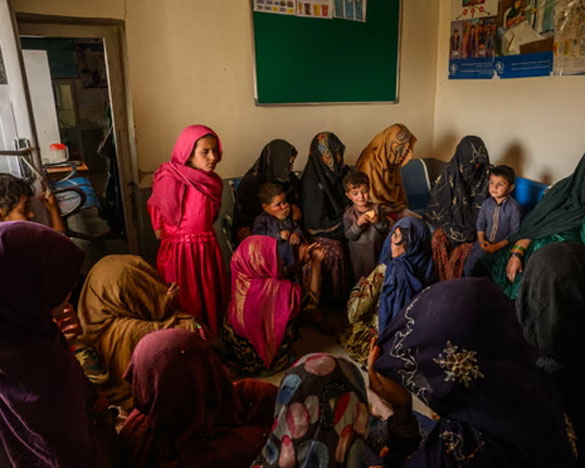
A clinic in Nawrozi, Afghanistan. Taliban fighters have been destroying stocks of contraceptives, claiming their use is a western conspiracy to control the Muslim population. Photograph: Getty
-----------
Parwana* no longer recognises her own children. Once known for her beauty in her village in Kandahar province, the 36-year-old sits on the floor of her mother’s home, rocking silently. After nine pregnancies and six miscarriages, many under pressure from her husband and in-laws, Parwana has slipped into a permanent state of confusion.
“She is lost,” says her mother, Sharifa. “They broke her with fear, pregnancies and violence.”
Since the Taliban’s informal birth-control ban began spreading across Afghanistan in 2023, the country’s reproductive health system has gone into freefall. Contraceptives have disappeared, clinics have closed and complications are going untreated.
The ban was never formally announced, but by early 2023, doctors and midwives in multiple provinces reported the same pattern: supplies arriving late, then in smaller quantities and then not at all.
In interviews with the Guardian and Zan Times, women from seven provinces have explained the same traumas: pregnancies they cannot prevent, miscarriages they cannot treat and violence they cannot escape.
Shakiba*, 42, a mother of 12 from the city of Kandahar, says she cannot rise without feeling faint. Her hair falls out in handfuls; her bones hurt constantly.
Now she is pregnant again. Her local clinic no longer offers contraceptives and her husband forbids her from seeking them elsewhere.
In rural Jawzjan, a province in northern Afghanistan, a doctor who has run a clinic for three decades says the disappearance was rapid. “After the Taliban came, the contraceptives started reducing. Within months, they were gone,” she says.
“Before, at least 30 out of 70 women who came to the clinic needed birth control. Now we tell them: we have nothing.”
In the northern province of Badghis, a doctor at a private clinic says Taliban fighters arrived and ordered staff to destroy all of the contraceptives. “‘If we see you give this to women again, we will close your clinic,’ they said. We stopped immediately.”
Two years ago, after an earthquake left Zarghona*, 29, and her family living in a tent, she went three days without access to a toilet and developed a life-threatening intestinal blockage. Surgeons operated and warned her husband plainly that another pregnancy could kill her.
A year after her surgery, with no contraception available and a husband insisting he “needed a daughter”, Zarghona became pregnant again. She spent nine months in fear, tried to end the pregnancy with herbs and saffron, and managed just one antenatal visit.
When her labour began, doctors in the city of Herat told her that both a caesarean and natural delivery carried a high chance of death. She survived, but weeks later is still bleeding and lives with constant pain.
Doctors say Zarghona must never be pregnant again, yet there are no injections or contraceptives in her area. “I’m still terrified. I have no way to protect myself,” she says.
According to the United Nations and the World Health Organization, more than 440 hospitals and clinics have closed or reduced their services since international funding was cut last year.
For women in rural provinces, the closure of clinics means hours of walking or giving birth at home, often alone. In villages isolated by mountains and mud roads, midwives say women can bleed for days before they reach a clinic.
The reproductive crisis has become inseparable from Afghanistan’s economic crisis. A doctor in the northern province of Jawzjan estimates that 80% of the pregnant and breastfeeding women she sees are malnourished.
“They have anaemia, vitamin deficiencies, low blood pressure. Their bodies are too weak to carry pregnancies safely,” she says.
Domestic violence also emerges again and again in women’s testimonies, as a cause of miscarriage and a method of control in households where women cannot escape, cannot seek shelter and cannot access contraception.
In Kandahar, Reyhana* recounts how her sister Sakina*, a young widow, was forced by her in-laws to marry her brother-in-law. When she objected, they beat her repeatedly. “Each time they hit her, she bled. She lost her baby.”
Hamida*, a midwife who works in an overcrowded maternity ward in Kandahar, says violence is one of the leading causes of the miscarriages she sees. “Every 24 hours, we see more than 100 deliveries. About six miscarriages happen each day; many are from beatings, many are from women carrying heavy loads.”
Humaira*, 38, says she took abortion pills when she discovered she was pregnant with a girl. “My husband wanted a son. If I gave birth to another daughter, he would beat me or divorce me. So I bought medicine secretly.”
Her story is echoed by other women in Kandahar and Jawzjan who described miscarriages that were either forced, self-induced or the result of abuse after ultrasounds showed the foetus was female.
In the central province of Ghor, a 15-year-old girl says she miscarried after carrying two full jerrycans of water up a steep hill. “I was ashamed to tell anyone,” she says. “By the time my mother saw me, it was too late.”
In a remote part of Herat province, Shamsia*, 38, says she worked in construction and brickmaking throughout her pregnancies. “My mother-in-law forced me to breastfeed her baby too. I became weaker every day.” When the doctor told her she needed a blood transfusion, she says her family refused, calling it “haram” (meaning that it was forbidden or sinful).
Before the informal ban on contraceptives, rural clinics held regular sessions on spacing out births. Now those programmes have all been stopped. “There is no purpose in giving awareness when there is no medicine. The Taliban have not given written orders, but the fear is real. If we speak openly, they may shut us down,” says one doctor.
Source: theguardian.com
https://www.theguardian.com/global-development/2026/jan/29/afghanistan-taliban-women-birth-control-contraceptive-ban-lethal-pregnancies-miscarriages-violence
------
Viral Video Claiming Taliban Banned Girls’ Education a Myth as Influencers Flock to Afghanistan
28 January 2026
Restrictions on women vary in Afghan cities, but don’t prevent influencers from visiting the controversial nation
As Afghanistan enters 2026, the following facts are no longer disputed: girls remain barred from secondary education, women are excluded from universities, and the country stands alone globally in enforcing such sweeping educational restrictions on women and girls.
According to UNICEF, 2.2 million girls are currently deprived of their right to secondary education, with hundreds of thousands added since 2024. UNESCO has warned that Afghanistan is the only country in the world where girls are systematically denied both secondary and higher education, a policy now entering its fifth year.
What is contested is language and narrative. In late January 2026, claims spread rapidly online that the Taliban had issued a “permanent ban” on girls’ education, allegedly confirmed by the Ministry of Interior. The framing circulated primarily through short clips and reels on Instagram, often stripped of context. Whether this wording reflects a new decision or the repackaging of older statements remains unclear.
Ali M. Latifi, the Kabul-based Asia editor at The New Humanitarian, says one of the most widely shared videos was not recent at all.
“It’s an interview from 2024. It’s the same line. It says, ‘We’re studying it, we’re trying to figure out through the Sharia if there is any religious objection.’ It’s a three-and-a-half-minute clip, and someone took about 20 seconds of it out of context. It doesn’t even say education is permanently banned,” he said to The Media Line.
“If you listen to the full clip, it’s very standard language: ‘If there are objections, we’ll deal with them. If there are no objections, we’ll see how to do it within Islamic and Afghan cultural guidelines.’ And then he says, ‘It’s an ongoing process. When we have something to tell you, we’ll tell you.’ That clip is from two and a half years ago,” he added.
For Nassir Ul Haq Wani, dean of research and development and professor at the School of Graduate Studies in Kabul, the key issue is not a single announcement but the uneven exercise of power.
“I think that statement could be partially true. The restrictions exist already, but the severity or the intensity of them varies throughout time. In any case, this will apply for common people mostly, not to the political elites affiliated with the current government,” he told The Media Line.
Muhammad Akram, a researcher focusing on Afghanistan, Pakistan, and extremist online rhetoric, places both the ban and the viral framing around it inside a tightly controlled information environment.
“What we see on social media doesn’t have to be correct on the ground. Many times, only a very small fraction of reality comes online, and there is a lot of confusion. Many of these issues don’t even come into the media anymore, because local media is very much controlled by the Taliban,” he told The Media Line.
All three interviews confirm that girls’ education effectively ends at the primary level, but the precise cutoff—and what follows—differs depending on location, enforcement, and social context.
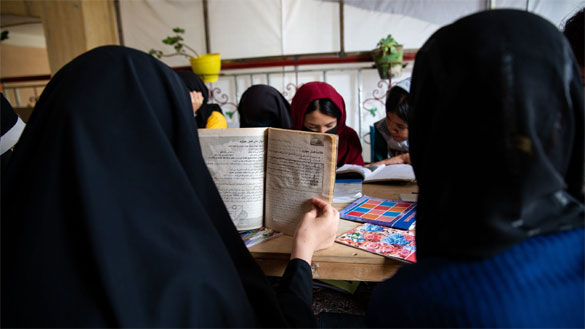
Akram describes a sharply restricted system: “Right now, schools for girls are only until the fifth grade. Even there, boys and girls are segregated. If a school doesn’t have enough rooms, they separate them by shifts—girls in the morning, boys in the evening. Teachers are also segregated,” he said.
“This has been happening for almost four years. At the beginning, there was hope that girls’ middle or high schools might reopen, but it hasn’t happened. Universities are already closed,” he added.
He characterizes informal education as fragile and risky: “There were cases where women in a neighborhood gathered unofficially in one house to read or study together. But it was very informal, without structure. In some cases, these gatherings were exposed to the Taliban and people were punished. Because of that risk, it never became a widespread or encouraged practice,” he said.
Latifi, speaking specifically about Kabul, describes a more visible reality: “Women’s universities are closed, yes. But people still go to houses to study. There are private language classes and other options for girls, and everybody knows they go. There’s no hiding it. You see women who are clearly above sixth grade holding books in the street, going somewhere. It’s very noticeable,” he said.
“Moreover, there are women working in malls, you see them in private job positions, women working in restaurants as well. There is not a total public disappearance of women,” he added.
Wani does not recognize this pattern from his own experience and attributes the difference to social norms: “As far as my observation goes, I haven’t seen these things. I’ve lived with Pashtun families, which is the dominant ethnic group here. I have never seen their daughters or wives going out for such activities. That’s not only policy—it’s also cultural restriction,” he said.
Taken together, the accounts suggest a fragmented landscape: Informal education exists, but unevenly, visible in some urban spaces, clandestine or absent in others, shaped by class, geography, and risk tolerance.
Latifi summarizes the higher education reality plainly: “Women’s universities have been shut for almost three years now, yes, but this didn’t stop women from continuing to educate themselves.”
Wani describes the institutional impact from inside academia: “In our university, we had women teachers. They are no more. We had female students. They are no more.”
At the same time, he outlines what he understands to be the Taliban’s internal logic: not a total rejection of women’s education, but a redesign of where women are considered necessary.
“The message is that women are needed in medical sciences, but not in other fields. Engineering, economics, business—these are considered male professions, so not a women’s university option,” he said.
“Women can study medicine, nutrition, and dietetics to treat other women. But the question they ask is: Why should a woman study engineering in the first place? They say it is a job of a man,” he added.
Wani offers one of the most telling examples of how education, gender, and digital visibility intersect. He recalls that after the Taliban takeover, female students were initially allowed to return to university.
“After August 2021, after three or four months, students were told to come back to university. We had classes for female and male students together,” he said.
That reopening did not last. According to Wani, authorities began to interpret women’s presence through their online activity.
“Then these girls started uploading their pictures and videos on Instagram and Snapchat. These things went directly to the Ministry of Communication and Information Technology. The perception became that they are not going to university for studying. They are going there to make reels,” he noted.
The response, he says, was decisive: “Then suddenly the decision came: Let’s put a ban on higher education for females in this sector.”
Whether representative or not, the account illustrates how digital visibility itself can become grounds for restriction, collapsing education, morality, and surveillance into a single logic.
Akram describes Taliban control not only as policy but as everyday enforcement, particularly in public services.
“In women’s health facilities, male doctors are not allowed to see female patients, even in critical conditions. There were cases where male doctors were arrested for trying to help. At hospitals, you often see Taliban standing at the entrance, watching. Because there is no formal complaint mechanism, they become the sole decision-makers, and they abuse that power,” he said.
Wani describes control through presence and ambiguity: “At checkpoints, you see people in uniform, sometimes in civilian clothes. Many people have guns, and it’s not always clear who is Taliban, who is militia, who is guard. That confusion itself creates pressure on people.”
Latifi, while acknowledging restrictions, emphasizes adaptation: “There are still small windows of opportunity. People adjust and find ways to continue daily life within constraints, and this is still an ongoing mechanism.”
Latifi describes women’s presence in Kabul as constrained but real: “Women walk around alone. They take taxis. They go to restaurants. Many do not wear burqa but can opt for niqab, COVID masks to cover their faces. There are limitations, absolutely. But it’s not like the 1990s. If women do not solo travel long distances, it is from a cultural standpoint,” he said.
Wani, who has lived in Afghanistan since 2016, offers a similar but qualified view: “Since the Taliban came to power, I have seen women shopping, even late in the evening in some areas. But yes, you must follow proper cultural norms. That is a condition, meaning that you must be accompanied by a relative,” he noted.
He then draws a sharp geographic line: “Kabul is not Afghanistan. If you go to the countryside, you will probably not even see women in public at all,” he added.
Akram focuses on mobility rather than visibility: “Women are not allowed to travel alone. Not to markets, not to doctors. Many women lost their jobs because they could not have a mahram with them,” he said.
Foreign influencers from Europe, North America, and South America traveling to Afghanistan are part of a recent trend that has raised many questions. Latifi explains the dynamics.
“People feel safer now, so they come. ‘I went to Afghanistan’ makes a great headline. Tourist visas are easy to get. There are tour companies offering packages saying, ‘We’ll make sure no one bothers you.’ It’s a real business. There are more guesthouses, more hotels,” he said.
“When I was in Dubai, I met a group from a Scandinavian country, and they were doing their tourist visas to travel around the country. It is an expanding phenomenon,” he added.
He rejects the idea that this automatically constitutes Taliban propaganda: “Hospitality is Afghan culture. If a family is Taliban, they are still Afghan. That doesn’t mean the minister of interior is personally guiding tours. People also make choices about who they talk to and what they show,” he noted.
He points to solo travelers—particularly from China—who move independently: “I’ve seen Chinese women travelers come alone. They were traveling alone all the time and they experienced no issues,” he said.
Akram, however, raises concerns about facilitated narrative management: “There are chances that Taliban might pay some of these influencers. There are meetings with small and medium-audience influencers that gather in different places of the world, like Dubai. They are approached with free accommodation, free movement, free transport to make some content,” he said.
“But their movement is organized. Someone is always with them. Someone tells them where to go and where not to go. They are taken to markets, historical places, friendly local families—but not to places where women cannot move or where girls cannot study to see the real reality. This is a dangerous façade,” he added.
He warns that repetition creates belief: “If you see one video, you doubt it. If you see ten videos saying the same thing on social media and your algorithm pushes you toward this, you start believing that this is the reality, and you want to travel there by trusting paid content,” he noted.
Wani takes a cautious position: “It could be propaganda. It could be a true story. We can’t rule out either. It can be both.”
Latifi says foreign reporting is possible with the right credentials in Afghanistan: “If you have a journalist visa, yes. But if the topic becomes too political, there is hesitation, of course,” he said.
Wani describes sharper boundaries, particularly around women and inquiry: “You cannot publicly interview women. And if you publish something sensitive, they will ask to see it, and you get questioned,” he said.
He recounts cases where curiosity had consequences: “Some Indian tourists came and started doing content asking many questions—about society, politics, economy. Their visas were canceled. When you ask too many questions, you are no longer seen as a tourist.”
He adds, “Once you move from observing to questioning, things change. There is always an eye on the people.”
Akram contextualizes this within a broader climate of deterrence: “You don’t need to arrest everyone. You just need a few examples. People learn very quickly what not to ask,” he noted.
Latifi argues that Afghanistan is often flattened into a single narrative abroad.
“There are millions of misconceptions about my country. People outside don’t bother to come and see. There are human rights issues, yes, but like in other countries, such as Gaza and other sides of the globe. But you shouldn’t deny Afghan people their agency or punish them because you don’t like the government,” he said.
Wani’s perspective is shaped by long residence and comparison: “I have been here since 2016. I have seen before and after. Kabul is not the countryside. You cannot generalize here, but for sure things are restricted,” he said.
Akram cautions against mistaking curated access for reality: “What visitors see is not everyday life. It is whitewashed as an attempt to present something far from the truth. This applies to other countries as well, such as Pakistan.”
Whether or not a new “permanent ban” was formally declared in 2026, the reality for Afghan women and girls has already hardened into long-term exclusion. Education pathways are narrowed, public roles reshaped, and representation increasingly filtered through controlled access, social media optics, and selective visibility.
As viral clips of travel influencers try to reshape realities on the ground, the central challenge for journalism remains unchanged: to document complexity without sanitizing it, and to ensure that Afghan women—whose lives are most directly affected—are neither erased nor reduced to symbols in someone else’s narrative.
Source: themedialine.org
https://themedialine.org/top-stories/viral-video-claiming-taliban-banned-girls-education-myth-at-the-moment-as-influencers-flock-to-afghanistan/
-----
Message To Iran’s Women And Girls Who Created The Uprising
29 JAN 2026
A thousand salutes to the courageous struggle of my dear sisters and daughters who rose up across Iran and, side by side with their brothers, set the flames of the uprising ablaze even brighter.
In the very first days of the uprising in Hormozgan Province, the people of Bandar Abbas launched their protests led by brave women at the forefront.
On January 4 in Mashhad, the people, again led by women, clashed with security forces while chanting “Death to the dictator.”
In Tehran-Sar, 200 young women marched through the streets chanting “Freedom, freedom.”
On January 7, women in Shiraz blocked the city’s streets.
On January 8, the girls of Saravan filled the streets with cries of protest.
And now, thousands of women who created the uprising are imprisoned by this brutal regime.
To this day, the People’s Mojahedin Organization of Iran has published the names and photos of 125 women slain during the January uprising.
This is the bloody price that the women of Iran are paying for freedom, for equality, and for the liberation of Iran from the grip of dictatorship.
My dear sisters and daughters,
Your courage during the uprising has earned the admiration of all.
The brave woman who, standing at the front of a protest, shattered the heavy silence of the street with the cry “Death to the dictator.”
The young woman, who refused to retreat and threw tear gas back at the forces of repression.
The fearless young woman, who stood before water cannons so others could move forward.
The injured young women fallen on the pavement, carried to safety by their brothers.
The courageous mother in Arak who shielded the youth with her own body against bullets.
And the mothers and daughters who transformed mourning into resistance, turning grief into protest.
Though the images are heartbreaking, from the search for the bodies of their slain children to the sight of torn and bloodied bodies, their message is clear: the struggle, the uprising, continues.
And hundreds of other acts of courage and sacrifice have once again proven that women are the vanguard of the uprising and the trailblazers of Iran’s democratic revolution.
From the prisons, execution grounds, and torture beds of the 1980s, to the massacre halls of 1988, and now to the streets of Iran’s cities in the January uprising— the pure blood of women has flown for freedom.
And this river of sacrifice and resistance will not be stopped.
It will carry away the clerical dictatorship once and for all.
Source: maryam-rajavi.com
https://www.maryam-rajavi.com/en/iran-uprising-message-for-women-and-girls/
------
Western feminists must stand with Azerbaijani women in Iran
ByRACHEL AVRAHAM
JANUARY 28, 2026
As I write, the Iranian people are risking their lives, protesting for the overthrow of the Iranian regime. The death toll keeps rising, as numerous protesters are getting massacred. Many other protesters have been arrested, tortured, and sexually assaulted. Protesters who are detained are at grave risk of being executed for “waging war against God” and other imaginary crimes. In the wake of these protests, ethnic Azerbaijani women in Iran want Western feminists to stand in solidarity with them.
Human rights activist Turkan Bozkurt stated, “Azerbaijani women are situated at the intersection of gender-based repression and long-standing ethnic discrimination, which can compound vulnerability during periods of state crackdowns. Human rights reporting shows that demonstrations and strikes have involved Azerbaijani-majority cities such as Tabriz, Urmia, Khoy, and Ardabil, alongside wider nationwide mobilization, while security forces have used lethal force and mass arrests amid communication restrictions that further obscure the full scale of abuses.”
Dissident journalist Ahmet Obali stressed, “Today in South AzerbaijanOpens link in new window., women are in the front lines of fighting this repressive theocratic regime. Nargis Mohammedi, who is a Nobel Peace laureate and serving a prison term in the notorious Evin Prison, is herself an Azerbaijani from Zanjan. Her ethnic identity has been omitted from international coverage of her.”
The persecution of Azerbaijani women
For decades, Azerbaijani women in Iran have been deprived of the right to study and work in their mother tongue. Whenever they protested against this, they faced arrest, torture, and even execution.
The repression against minority languages has led to a situation where Iran Human Rights reported that the illiteracy rate for women stands at 20% in South Azerbaijan. This high illiteracy rate has adversely affected these women in their dealings with the Iranian judiciary. According to IHR, “Ethnic regions such as South Azerbaijan are overrepresented in the women’s death penalty cases.”
However, Bozkurt noted that the Azerbaijani women in Iran who are joining the protests have a different list of priorities from their Persian feminist counterpartsFor example, she claims that while upper-class Persian women are passionate about fighting against mandatory hijab, an issue that affects all Iranian women, South Azerbaijani women have other, more pressing issues, such as “honor killings, child brides, access to education and even environmental issues like access to water and food that exacerbate existing inequalities.”
She stressed: “The crisis around Lake Urmia’s drying has been widely linked to mismanagement and policy-driven factors such as damming and agricultural water diversion, with significant social and health implications for surrounding communities. Pollution concerns in the Aras River basin have also been documented in scientific studies, including findings of heavy metals in parts of the river system. Since water scarcity and environmental decline often increase unpaid household and caregiving burdens, these shocks place disproportionate pressure on Azerbaijani women.”
Facing domestic and state violence
To illustrate this point, Farzaneh Mehdizadeh, the director-general of the Clinical Examination Office of the Forensic Medicine Organization, announced that in 2022, 75,000 women and children have referred to forensic medicine because of physical injuries caused by domestic violence.
“This harrowing figure serves as a reminder that the discourse surrounding discrimination against women in Iran must extend far beyond the singular and homogenic focus.”
This does not mean that protesting mandatory hijab is not important for South Azerbaijani women. Sociologist Sevil Suleymani proclaimed: “Azerbaijani women protested compulsory hijab, state violence, and gender apartheid just like other Iranian women. But they also protested something deeper: the erasure of their ethnic identity. Many Azerbaijani women were injured, arrested, or killed during the protests, but their Azerbaijani identityOpens link in new window. was often deliberately omitted in the media. They were framed only as 'Iranian women,' never as Azerbaijani women resisting both gender oppression and ethnic marginalization.”
She continued, “This is why global attention has focused so strongly on Mahsa Amini, whose death rightly sparked worldwide outrage, while Azerbaijani women’s resistance has remained largely invisible. The issue is not competition between victims, but selective recognition. Western media and even segments of global feminist discourse often universalize Iranian women’s struggles, overlooking the internal hierarchies of ethnicity, language, and race that structure inequality within Iran. Azerbaijani women fall through this gap.”
South Azerbaijanis make up about 40% of Iran’s population, yet they are treated as second class citizens. Ethnic Azerbaijani women in Iran face double discrimination, both as women and Azerbaijanis. In their daily lives, they are fighting against both gender and ethnic apartheid.
It would behoove Western feminists to stand in solidarity with South Azerbaijani women seeking freedom from the mullahs’ regime.
Source: jpost.com
https://www.jpost.com/opinion/article-884696
-----
The long, uneasy history of women, cigarettes, and freedom
by: Aishwarya Khosla
Jan 28, 2026
In the smoke and fury of Iran’s protests, images of young women lighting their cigarettes from burning photographs of Supreme Leader Ayatollah Ali Khamenei have circulated widely on social media.
Hailed globally as a “creative protest,” the act is seen in continuum of the “Woman, Life, Freedom” movement that surged after Mahsa (Jina) Amini’s death in 2022 after the morality police arrested her for wearing her hijab “improperly.”
Yet this form of defiance is not new. It is the latest flare in a long, uneasy history where the “death stick” has repeatedly been weaponised as a symbol of female autonomy.
While The Indian Express could not independently verify the provenance or authenticity of the photographs, their virality and the reactions they ignited reveal a decades-old feminist paradox: a deadly habit long stigmatised for women, re-emerging as a tool of defiance, a century after American advertisers first sold the cigarette as a “torch of freedom.”
From public menace to marketed freedom
Long before cigarettes meant freedom, women who smoked were treated as a public order problem. In early 20th-century America, a woman smoking in her own car could provoke official warning or social ruin. A 1914 Washington Post editorial claimed a man might date a smoking woman, but he would never marry her. In 1922, a New York alderman, Peter McGuinness, blamed women’s public smoking for making men “desert their homes… and even commit murder.”
The backlash reveals that the cigarette was seen as a moral accelerant, capable of dislodging women from prescribed roles.
In Women and Smoking Since 1890 (Routledge Series), social historian Rosemary Elliot writes, “The social meaning of smoking was gendered,” and that the act functioned as “a visible delineator of gendered social space.” In 1900, The Ladies Realm published a discussion titled ‘Should Women Smoke?’ — a question that itself signalled how unsettled the issue remained.
The First World War loosened norms. Women entered workplaces where men smoked openly, making the habit harder to confine to the home. The suffrage movement, culminating in the ratification of the 19th Amendment in 1920, sharpened attention on gender inequality. Smoking began, tentatively, to operate as a visible sign of defiance.
The backlash was swift. That same year, the US Surgeon General warned that women’s smoking caused nervousness, insomnia and “ruined the complexion” — a medical admonition framed through the lens of feminine vanity. American suffragist Mary Garrett Hay protested New York laws that prohibited women from smoking in public. “Women should not be discriminated against in any way,” she argued.
It was into this conflicted social scene that corporate advertising, eager to tap into a whole new market, stepped in. They had already mythologised cigarettes for men. The Marlboro Man remains one of the most enduring advertising icons of the 20th century. For women, the symbolism required careful recalibration. Smoking had to be detached from moral decay and recorded as elegance.
In 1929, Edward Bernays, referred to as “the father of public relations”, staged one of the most memorable PR stunts of the century. He hired debutantes to march in New York’s Easter Parade holding cigarettes aloft, branding them “Torches of Freedom”, a direct echo of suffragette imagery.
Cigarette ads targeting women. (Source: Public Domain; Note: smoking is injurious to health) Cigarette ads targeting women. (Source: Public Domain. Note: smoking is injurious to health)
Manufacturers slimmed down the cigarette, both literally and figuratively. Slogans like “Mild as May” and promises of weight control (“Reach for a Lucky instead of a sweet”) tied smoking to elegance and self-control.
The advertisements juxtaposed contemporary, fashionable women against caricatured images of traditional women. By 1968, Virginia Slims was launched with the iconic tagline: “You’ve come a long way, baby.”
Gradually, young women, Emilee Gilbert, Associate Professor and Associate Dean Research in the School of Psychology, Western Sydney University, writes in ‘Performing Femininity: Young Women’s Gendered Practice of Cigarette Smoking’ (Journal of Gender Studies, 2007), learned to perform femininity through the act of smoking: how the cigarette was held, how the wrist was twisted, smoking a cigarette in hand, how ash was tapped, and how smoke was exhaled. Liberation became a performance, closely policed by aesthetic norms.
The market responded. According to the US government estimates, the number of women aged 18 to 20 who began smoking tripled between 1911 and 1925, and more than tripled again by 1939. Yet, Elliot notes, uptake did not erase inequality. Even at its peak, smoking prevalence among women lagged far behind men’s: between 36 and 45 per cent of women smoked in the post-war decades, compared to over 80 per cent of men.
The paradox of ‘liberation’
This marketed liberation concealed a stark paradox. As feminist scholars Zoi Triandafilidis, Jane M Ussher, Janette Perz, and Kate Huppatz write in Doing and Undoing Femininities (Feminism & Psychology, 2017), smoking served “both positive and negative functions” for women. It felt transgressive and empowering, yet also invited stigma and anxiety about respectability, a burden rarely placed on male smokers.
When medical evidence mounted in the mid-20th century, a grim divergence emerged. Men quit earlier and in greater numbers. Smoking rates became highest among the most constrained women: lone mothers, the working class, and those facing structural precarity. Giving up smoking remained a predominantly white male privilege. Smoking became a way of diffusing the conflicts of women’s social roles, particularly in caregiving and service work.
The global data reflects enduring inequality. In India, NFHS-5 (2019-21) data shows that 9% of women and 38% of men aged 15 and older use tobacco, with higher rates in rural areas (10.5% for women and 42.7% for men). Logistic regression showed that rural residents were 1.6 times more likely to smoke than urban residents. Age and gender significantly impact smoking patterns as females were 13 times more likely to smoke compared to males, and the awareness of health risks related to smoking also influences smoking behaviour.
Similarly, in parts of Australia, lesbian and bisexual women are approximately twice as likely to smoke as the general population.
As sociologist Barbara Jacobson argued in The Ladykillers: Why Smoking is a Feminist Issue, cigarettes often functioned less as expressions of freedom than as mechanisms for managing anger, exhaustion, and constrained lives. She issued a powerful critique of societal priorities, writing that “women were only valued as ‘receptacles for future generations’; and anti-smoking advertising aimed at women during pregnancy, for the sake of the baby, ignored the motivations of individual women to smoke.” The Ladykillers was a clarion call to women to take the issue of smoking seriously. Inspired by Susie Orbach’s Fat is a Feminist Issue, Jacobson brought her own experience as a smoking cessation counsellor to bear in a strong attack on what she saw as the tobacco industry’s exploitation of women through advertising and marketing.
The cinematic cliché
Popular culture soon absorbed the shorthand, flattening feminism into a visual trope of the smoking woman. In Hollywood and Bollywood, a smoking woman became a lazy shortcut to signal modernity, rebellion, or moral decay.
In Hindi cinema, female characters who smoke or drink are often framed as chaotic or in need of correction. Films such as Cocktail and Veere Di Wedding present “progressive” lifestyles only to discipline them through plot-driven humiliation or apology, while men who smoked were portrayed as macho or intellectual. This shorthand has measurable consequences. A 2009 study published in the British Medical Journal found that Indian adolescents with high exposure to tobacco use in Bollywood films were significantly more likely to report having used tobacco themselves.
The flame reclaimed
It is against this cluttered history that the images from Iran crackle with new meaning. In a theocracy that polices women’s bodies and behaviours, public smoking by women is itself transgressive. Burning the Supreme Leader’s image is another serious crime. Combining these acts — lighting a cigarette from his burning portrait — fuses political sacrilege with personal autonomy into a single, defiant flame.
This visual grammar of protest has appeared elsewhere. In India, a 2023 video showed Dalit rights activist Priya Das lighting a cigarette from a burning Manusmriti, a text critiqued for upholding caste and gender hierarchies. She clarified she doesn’t smoke; the act was purely symbolic, meant to burn “ideas of hypocrisy.”
The “torch of freedom” has come full circle, from a corporate PR stunt to a literal flame snatched from the icons of oppression. In Iran, the cigarette is no longer a marketed prop or a cinematic cliché. It has been reclaimed, however fraught its history, as a tangible spark of rebellion.
References
Blakemore, E. (2018, October 3). When smoking was a feminist act. The Washington Post.
https://www.washingtonpost.com/outlook/2018/10/03/when-smoking-was-feminist-act/
Elliot, R. (2005). Women and smoking since 1890 (1st ed.). Routledge.
Euronews. (2026, January 10). Protest creativity: Iranian women light cigarettes on burning portrait of the ayatollah. Euronews.
https://www.euronews.com/2026/01/10/protest-creativity-iranian-women-light-cigarettes-on-burning-portrait-of-the-ayatollah
Gilbert, E. (2007). Performing femininity: Young women’s gendered practice of cigarette smoking. Journal of Gender Studies, 16(2).
Michna, N. A. (2016). “You’ve come a long way, baby”: The evolution of feminine identity models on the example of contemporary language of advertising. The Polish Journal of Aesthetics, 41(2).
https://doi.org/10.19205/41.16.5
Sarkar, R. (2024). Regional and socioeconomic dimensions of tobacco consumption in India: What do NFHS-5 and GATS-2 data reveal? International Journal of Health Sciences and Research, 14(12).
https://doi.org/10.52403/ijhsr.20241232
The smoking feminist. (2008, October 14). Sociological Images, The Society Pages.
“The Smoking Feminist”
Today in feminist history: Women deserve to smoke in public too (March 27, 1922). (2020, March 27). Ms. Magazine.
Today in Feminist History: Women Deserve to Smoke in Public Too! (March 27, 1922)
Triandafilidis, Z., Ussher, J. M., Perz, J., & Huppatz, K. (2017). Doing and undoing femininities: An intersectional analysis of young women’s smoking. Feminism & Psychology, 27(4).
https://doi.org/10.1177/0959353517693030
Source: indianexpress.com
https://indianexpress.com/article/research/women-cigarettes-smoking-feminism-protest-iran-khamenei-10469655/
-----
Anger in Syria’s Latakia after authorities ban women government employees from wearing make-up
JANUARY 28, 2026
A decision by authorities in the Syrian province of Latakia to ban female public sector employees from wearing makeup during official working hours has sparked widespread anger and controversy, prompting the province's media directorate to issue a clarification.
Activists criticised the decision as an infringement on personal freedoms and an attempt to restrict women's rights.
In response, the media directorate said the move "does not aim to restrict or infringe upon freedoms", but rather to "regulate professional appearance and avoid excess, in a way that achieves a balance between personal freedom and the requirements of a formal work environment and the public image of institutions".
The clarification, however, failed to quell criticism and instead triggered further backlash.
Syrian human rights activist Mais Fares told The New Arab's sister site Al-Araby Al-Jadeed that the decision reflected "an authoritarian mentality that seeks control rather than administration, and submission rather than reform".
"When the authorities fail to hold corruption accountable or provide economic solutions, they resort to the easiest targets: the woman’s body and appearance," Fares added.
Syria's current authorities came to power after rebels led by current President Ahmed Al-Sharaa toppled longtime dictator Bashar al-Assad in December 2024.
Many of the rebel groups had an Islamist orientation, with Sharaa previously leading the now-dissolved Hay’at Tahrir al-Sham (HTS), which had roots in Al-Qaeda’s Syrian branch.
HTS severed all links to Al-Qaeda in 2017, and Sharaa has tried to present a more moderate and inclusive face ever since coming to power, with no official restrictions on personal freedom.
However, several decisions and statements made by the new authorities have provoked controversy and anger.
Last summer, Latakia provincial authorities published instructions to visitors calling on them to wear "modest" clothing at beaches and swimming pools, in a move widely seen to be aimed at women.
After controversy, the provincial governorate said it wasn’t calling for the wearing of a specific garment and that its instructions were in line with those of other countries in the region.
In the city of Al-Tal near Damascus, local authorities have banned men from working in women’s clothing stores, according to AFP.
One government employee who gave her name as "Nadine" said the decision to ban make-up left her feeling humiliated.
"We commit to our work and serving citizens, and makeup has never been a measure of competence. It would have been more appropriate to address workplace problems instead of monitoring our appearance," she told Al-Araby Al-Jadeed.
Source: newarab.com
https://www.newarab.com/news/syria-women-govt-workers-banned-wearing-make-latakia
------
Lecture in Doha explores evolution of Qatari women's traditional dress
28 Jan 2026
Doha, Qatar: Qatar's Katara Cultural Village hosted a lecture on Wednesday examining the evolution of women's traditional dress in Qatari society and its connection to cultural identity.
The lecture was delivered by Dr Aisha Abdullah Al Misnad of Qatar Museums and moderated by writer and media figure Aisha Al Idrisi.
Dr Al Misnad traced the development of Qatari women's attire, highlighting how it has preserved its cultural essence while adapting to social and economic change.
Using historical images and artistic references, she outlined the deep Gulf, Arab and Islamic roots of women's dress and its interaction with wider civilisational influences.
Dr Al Misnad said cultural development in Qatar has not replaced traditional clothing but reshaped it, allowing women to balance modern professional life with deeply rooted cultural values.
She described traditional dress as a living and evolving heritage that remains central to national identity while offering contemporary women space for expression and individuality.
Source: thepeninsulaqatar.com
https://thepeninsulaqatar.com/article/28/01/2026/lecture-in-doha-explores-evolution-of-qatari-womens-traditional-dress
------
Federal government commits RM4 million to support Sarawak women entrepreneurs
28 Jan 2026
The federal government allocates nearly RM4 million to support women entrepreneurs in Sarawak through the Wanita Dinamik programme, aiding nearly 8,000 women.
KUCHING: The federal government has reaffirmed its commitment to empowering Sarawakian women with initiatives covering the economy, leadership, and health.
Minister of Women, Family and Community Development Datuk Seri Nancy Shukri announced a specific allocation of nearly RM4 million for women’s entrepreneurship in the state.
She highlighted the Wanita Dinamik programme, which helps women generate sustainable income and achieve financial autonomy.
“Since its launch in 2021, 21,274 women have been supported nationwide,” she said at the International Women’s Day 2026 Borneo Zone celebration.
“In Sarawak alone, nearly 8,000 women have received grants of RM500 each to develop their small businesses.”
She noted that almost RM4 million has been set aside for the state to create further entrepreneurial pathways.
Nancy, who is also the Santubong MP, described International Women’s Day as an important platform for celebrating women’s achievements.
She also highlighted the PERANTIS programme, which has selected 100 women nationwide, with 11 representatives from Sarawak.
The scheme provides each participant with a grant of RM50,000 to train fellow women in leadership, creativity, and entrepreneurship.
Regarding health initiatives, she noted the National Population and Family Development Board is targeting 32,000 women for cervical cancer screening in 2026.
Kampung Santubong will serve as Sarawak’s pilot site for the HPV DNA test programme.
Source: thesun.my
https://thesun.my/news/malaysia-news/people-issues/federal-government-commits-rm4-million-to-support-sarawak-women-entrepreneurs/#google_vignette
------