
Supreme Court Grants Stay On Deportation Of Four Assam Muslim Women Declared Foreigners
New Age Islam News Bureau
08 June 2026
· Supreme Court grants stay on deportation of four Assam Muslim women declared foreigners
· Syeda Saiyidin Hameed reached top positions despite her activism
· UN Mission Expresses Concern Over Reported Detention of Women in Herat
· UN concerned about detentions of women in western Afghanistan
· Tangail DC Sharifa Haque named best deputy commissioner in Dhaka division
· Saad Mohseni Faces Backlash Over Remarks on Women’s Situation in Afghanistan
· Yemen: Houthi Militia Raids Women’s Wedding in Amran, Arrests Bride’s Father
· Emirates promotes first Emirati female captains
Compiled by New Age Islam News Bureau
------
Supreme Court grants stay on deportation of four Assam Muslim women declared foreigners
June 8, 2026

The Supreme Court of India
-----------
In a significant interim relief, the Supreme Court has stayed the deportation of four women from Assam who were declared foreigners by Foreigners Tribunals and faced removal to Bangladesh.
A bench comprising Justices Vikram Nath and V. Mohana granted the stay on Monday and issued notices to the Assam government, the Union government, and the Election Commission of India, seeking their responses within four weeks.
The petitioners — Basiram Nessa, Musstt Nureza Begum, Saleha Khatun, and Sarbhanu Begum — have been challenging their classification as foreigners despite submitting multiple documents to prove their Indian citizenship, particularly linkage to pre-1971 residents of Assam.
Fifty-year-old Saleha Khatun, who describes herself as illiterate, has been detained in the Goalpara detention camp since March 2. A Foreigners Tribunal in Darrang declared her a foreigner, a decision upheld by the Gauhati High Court. In her petition, Khatun highlighted submitting pre-1971 electoral rolls listing her parents, Ahsan Ali and Korpuljan, from Nagabandha village in Nagaon district.
She also provided NRC legacy data, voter lists, Gaonbura certificates, family documents, and witness testimony. However, the tribunal rejected her claim citing discrepancies in age, family details, and refused to accept linkage certificates without examination of the issuing authority. The order was passed in December 2025.
Sarbhanu Begum faced rejection primarily due to minor spelling variations in her name (“Surbhanu,” “Sorbhanu,” “Saharbhanu”) and a mismatch in her husband’s name in one electoral record. Her petition argues that the tribunal overlooked substantial documentary evidence and oral testimony linking her to pre-1971 Assam residents.
Musstt Nureza Begum, an illiterate woman living below the poverty line, was declared a foreigner through an ex parte order despite appearing before the tribunal. She claimed she signed a register believing she had fulfilled the process. The Gauhati High Court upheld the order, noting she failed to pursue the case diligently.
Basiram Nessa submitted voter lists from 1965 and 1989 showing her grandfather and father, along with local certificates. She contended that the tribunal did not properly appreciate her documentary evidence establishing lineage.
The Supreme Court’s order provides temporary relief, halting deportation proceedings while the petitions are pending adjudication. The case highlights ongoing challenges in citizenship verification in Assam, particularly issues related to documentation, spelling discrepancies, and procedural fairness in tribunal proceedings.
Sourcce: muslimmirror.com
https://muslimmirror.com/supreme-court-grants-stay-on-deportation-of-four-assam-muslim-women-declared-foreigners/
-------
Syeda Saiyidin Hameed reached top positions despite her activism
Aasha Khosa
June 8, 2026
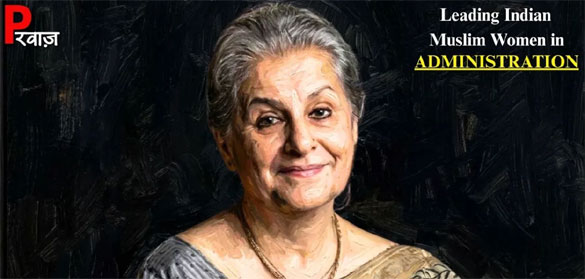
Syeda Saiyidin Hameed
-----------
Very few women, especially among Muslims, have pursued public causes and yet reached top positions in government. Syeda Saiyidin Hameed is one of them.
An acclaimed author, educationist, the first Muslim woman member of the Planning Commission (Since renamed as NITI -- National Institution for Transforming India – Ayog) and a member of the National Commission for Women, she is a woman of substance in a real sense.
Even today, at 82, Saiydin Hameed continues to speak against injustices. She has played a great role in defending human rights and participated in the civil society campaigns in India. She is also among the founders of the Muslim Women's Forum and Women's Initiative for Peace in South Asia (WIPSA) with Mohini Giri and Normal Deshpande.
She was a member of the WIPSA delegation who visited Pakistan in the wake of the Kargil War in 1999, to stand for the humanity and carry on track II diplomacy between the two South Asian nations in the wake of wars and conflicts.
Saiydin Hameed’s ancestors came from Herat (Afghanistan), 800 years ago, in the era of Turkish Sultan Ghiyasuddin Balban Sultan. Being a follower of the Sufi cult of Islam and a renowned educationist, the head of the family was invited to spread education in the Kingdom. The Sultan gifted him a huge chunk of fertile land to live on in what is today’s Panipat.
Interestingly, though Saiydin Hameed lives in south east Delhi’s Jamia Nagar, she still refers to Panipat as her ‘watan’.
Saiydin Hameed was born in Kashmir in the pre-partition era and attended school and college in Delhi. Later, she secured a master's degree (MA) from the University of Hawaii (USA), though her teaching career began at the University of Delhi.
Her career started as a lecturer at Delhi University, but she later joined the University of Alberta (Canada) to obtain a doctoral degree (PhD) in 1972 and also taught there. Later, she also joined as an executive assistant at the Minister of Advanced Education and Manpower, with the Alberta (provincial) government.
There she met and married S.M.A Hameed, Professor of the Faculty of Business Administration and Commerce.
However, the couple returned home in 1984, and she went back to the basics with her assignment with the Indian Council for Cultural Relations to work and research on Sufism, a cult that brought her ancestors to India. She continued her research on Muslim socio-political issues, Maulana Abul Kalam Azad
She was soon appointed as a member of the National Commission for Women by the Inder Gujral government in 1997. As a member of the NCW, Hameed prepared reports such as ‘Voice of the Voiceless’ and ‘My voice Shall Be Heard’ In 2000 that were incorporated in the future legislation.
However, with growing polarisation in society, Hameed was seen getting involved with several social activities, which led to the establishment of a number of organisations. She was one of two women who founded the Muslim Women's Forum.
In 2000, as a member of the National Commission for Women, Hameed toured all over India listening to the voices of Muslim women at her public hearings. Its recommendations were presented to the Government, religious bodies, and civil society for policy formulation. She followed it up with another round of reality check and presented another report. Her persistence led the UPA government to set up the Justice Rajinder Sachar committee to study the socio-economic status of Muslims in India.
She has authored Islamic Seal on India’s Independence: Abul Kalam Azad—A Fresh Look (1998) and Dr Zakir Husain: Teacher Who Became President (2000), several books in Urdu and has translated and compiled several other books in English and Urdu. In 2007.
She is a recipient of the Padma Shri for her contribution to social service.
Living in Delhi, her obsession with the civil rights of common citizens grew, and she founded the South Asians for Human Rights (SAHR), and the Centre for Dialogue and Reconciliation (CDR)
During her tenure in the NCW, Hameed was passionately involved in reversing the trend of female feticide in Punjab and Haryana. Panipat being her ‘Watan’, Hameed was shocked to see the district where her family comes from and once women ruled over vast farmland and estates while men went to far-off places as educationists, among the lowest sex ratios due to the killing of female foetuses.
She once told me that during her visit to the district as an NCW member, she was shocked to see the state of affairs, “I could not believe that it was the same place where my great-grandfather, Altaf Husain Halli, had recited his famous poem espousing women’s emancipation way back in 1857.”
Her Halli clan was forcibly shifted to Pakistan during the partition on the assurance that once the chaos settled, they would be brought back.
Today, Hameed’s family is spread across all continents while she is trying to unify people of South Asia on cultural and social levels.
Though she was recently trolled for speaking in favour of the illegal Bangladeshis, those who know her say she has a desire to see the unity of South Asia. She advocates the idea of involving Sri Lanka, Bangladesh and other nations in making South Asia a cultural fraternity, even as Pakistan takes its time to join.
In July 2004, Hameed was appointed as a member of the Planning Commission of India when Manmohan Singh became the Prime Minister of India. As a Member of the Planning Commission, she had responsibility for Health, Women and Children, Voluntary Sector, Minorities, Micro Small and Medium Enterprises.
She was Chancellor of Maulana Azad National Urdu University (MANUU), Hyderabad, a post she held till January 2015. She spends her time writing and doing advocacy for Muslims of India.
Sourcce: awazthevoice.in
https://www.awazthevoice.in/-news/syeda-saiyidin-hameed-reached-top-positions-despite-her-activism-60887.html
--------
UN Mission Expresses Concern Over Reported Detention of Women in Herat
By Fidel Rahmati
June 7, 2026
UNAMA says reported detention of women in Herat raises serious concerns over human rights and freedoms.
The United Nations Assistance Mission in Afghanistan (UNAMA) has expressed concern over the reported detention of women by Taliban authorities in the western city of Herat, saying the incident raises serious human rights concerns.
In a statement, UNAMA said the developments in Herat have triggered “serious questions” regarding respect for fundamental rights and freedoms, urging the authorities to ensure the protection of basic civil liberties.
The mission called on the Taliban to respect the rights of all citizens, stressing that freedom of movement is a basic human right and that men and women must be treated equally under the law. UNAMA said it reminded the de facto authorities that all individuals are entitled to freedom of movement and equal protection before the law.
Local sources said at least 20 women were detained in Herat over the past two days, while public transport drivers, including taxi and rickshaw operators, were reportedly instructed not to transport women without a male guardian or without adhering to the dress requirements imposed by local authorities.
Sources further reported that Taliban officials in Herat’s Department for the Promotion of Virtue and Prevention of Vice had previously warned that women not complying with prescribed dress codes could be removed from public spaces and detained.
The Taliban authorities have not issued any official comment on the reported detentions. The situation comes amid ongoing concerns from international organizations about restrictions on women’s rights and freedom of movement in Afghanistan since the group returned to power in 2021.
Sourcce: khaama.com
https://www.khaama.com/un-mission-expresses-concern-over-reported-detention-of-women-in-herat/
-------
UN concerned about detentions of women in western Afghanistan
08/06/2026
The United Nations Assistance Mission in Afghanistan (UNAMA) said on Sunday that it was concerned about reports of multiple arrests and detentions of women in the country’s western province of Herat for alleged non-compliance with dress requirements.
In a statement, UNAMA said the reported incidents raise serious human rights concerns.
“We remind the de facto authorities that all people have the right to freedom of movement and that all persons, both women and men, are entitled to equality before the law,” the statement said.
Residents of Herat reported that the Taliban authorities’ religious police had used mosque announcements in recent days to warn that women must comply with the country’s hijab law and that legal action could be taken in cases of non-compliance.
The Taliban authorities require women in Afghanistan to wear an all-covering hijab in public. In previous reports on hijab enforcement operations, UNAMA said that some women and girls were released after a few hours or overnight after male relatives signed written guarantees of future compliance.
Since returning to power in 2021, the Taliban authorities have introduced a series of measures affecting women in public life, including barring girls and women from education beyond primary school.
Sourcce: qatar-tribune.com
https://www.qatar-tribune.com/article/238017/world/un-concerned-about-detentions-of-women-in-western-afghanistan
------
Tangail DC Sharifa Haque named best deputy commissioner in Dhaka division
June 8, 2026
Tangail Deputy Commissioner Sharifa Haque has been named the best deputy commissioner in Dhaka Division.
The announcement was made through an official letter signed by the Dhaka divisional commissioner on June 3 and made public yesterday.
Sharifa Haque is the second female deputy commissioner in Tangail's history. An officer of the 25th Bangladesh Civil Service (BCS) batch, she has been serving in Tangail with honesty, efficiency and a people-centred approach since assuming office.
According to the citation, she played a key role in organising a successful and widely accepted national parliamentary election. She has also made significant contributions to the development of primary education in the district.
Her commitment to children's welfare and initiatives aimed at improving the quality of education have been widely appreciated.
Following the recognition, Sharifa told media through a message that government services should be delivered in a way that makes people feel the state stands by them.
She also believes that improving the quality of primary education must be given the highest priority to build a prosperous Bangladesh.
Sourcce: thedailystar.net
https://www.thedailystar.net/news/bangladesh/news/tangail-dc-sharifa-haque-named-best-deputy-commissioner-dhaka-division-4193391
------
Saad Mohseni Faces Backlash Over Remarks on Women’s Situation in Afghanistan
By Fidel Rahmati
June 7, 2026
Saad Mohseni, chairman of Moby Group and founder of TOLO TV, has come under intense criticism from Afghan activists, journalists, and members of the diaspora following remarks made at a public discussion during the Jaipur Literature Festival in London.
Video clips widely circulated on social media show Mohseni discussing life under Taliban rule and referencing his family’s personal experience. Critics say his comments gave an overly normalized picture of conditions in Afghanistan, particularly for women and girls.
Women’s rights advocates and media observers argue that his remarks fail to reflect the reality faced by millions of Afghan women who remain barred from secondary and higher education, excluded from most forms of employment, and heavily restricted in public life since the Taliban’s return to power in 2021.
The reaction quickly escalated into a broader debate across Afghan media and social platforms, with critics accusing Mohseni of minimizing structural restrictions and unintentionally echoing Taliban narratives. Some media figures described the comments as misleading in a context where independent journalism inside Afghanistan faces growing pressure.
Others defended the importance of engagement and continued media presence in Afghanistan, a position Mohseni has previously supported, arguing that limited access and dialogue help preserve shrinking space for reporting under Taliban rule.
However, opponents say such engagement risks blurring the line between reporting and normalization of restrictions, especially at a time when women’s rights remain severely curtailed across the country.
The controversy has further deepened an already polarized debate within Afghanistan’s media and activist community over how the country’s human rights situation should be described internationally, with many insisting that conditions for women remain among the most restrictive in the world.
Sourcce: khaama.com
https://www.khaama.com/saad-mohseni-faces-backlash-over-remarks-on-womens-situation-in-afghanistan/
-------
Yemen : Houthi Militia Raids Women’s Wedding In Amran, Arrests Bride’s Father
2026-06-08
Amran -- Local sources reported that Houthi militants stormed a women’s wedding celebration in Rida district, Amran province, on Saturday evening, detaining the bride’s father.
According to witnesses, an armed unit led by Abu Abdul Hamid al‑Sarari, appointed by the group as deputy security chief of Rida district, raided the home of Abdullah bin Hussein al‑Fatar in the village of al‑Fatar during his daughter’s wedding.
Gunmen fired shots into the air as they forced their way into the venue, claiming the presence of a female performer at the celebration violated restrictions imposed by the militia on social events.
The armed men entered the women’s section, expelled the artist, and halted the ceremony, sparking panic among attendees and ruining the festive atmosphere.
Sources added that the militants assaulted the bride’s father and several of his daughters before arresting him and transferring him to Rida’s security headquarters.
Sourcce: yemenonline.info
https://yemenonline.info/special-reports/12726
------
Emirates promotes first Emirati female captains
By Asian Aviation Staff
Jun 8, 2026
Emirates has promoted two Emirati female pilots to captains, marking a pivotal step forward in its commitment to empowering Emirati women in aviation. Hanan Mohammed Jawad and Bakhita Al Mheiri both rose through the Emirates Group’s National Cadet Pilot Programme, an initiative that has graduated numerous Emirati pilots.
Hanan Mohammed Jawad joined Emirates in 2008 through the cadet pilot programme, driven by ambition, passion, and a lifelong dream of taking to the skies. With strong mentorship and continued support from the airline’s fleet management, she steadily progressed through the ranks, building her career from the ground up.
Bakhita Al Mheiri began her journey with Emirates as a cadet pilot in 2011. Inspired by successful Emirati female pilots and driven by her passion for flying, Bakhita continued to achieve one milestone after another, building a strong and successful career with Emirates.
Hanan and Bakhita have both officially received their fourth stripe this year, becoming the first Emirati female captains at Emirates, both operating the Boeing 777 fleet. With many years of experience in their respective careers, they both reflect a determination as strong as ever, and their ambitions continue to reach new heights.
Hanan has accumulated a total of 9,253 flying hours throughout her journey as a pilot. Speaking about her promotion, Hanan said: “When I was 14, I saw the UAE’s first female pilot on TV and was struck by her confidence and presence. From that point on, all I wanted was to become a pilot. Receiving my fourth stripe is a proud milestone, but I don’t see it as the destination. This is just the beginning, I don’t believe the sky is the limit. The path to command is built over time, and my years as a First Officer prepared me for this moment.”
Hanan also reflected on how she’s grown, both professionally and personally, throughout her journey “You change as you grow, and that’s a strength. When I was younger, I loved drawing and reading. Today, I challenge myself in new ways. I’ve recently started skiing and I’m still a beginner, I enjoy being in that learning space. Balance matters to me now. I’ve moved from intense gym training to practices that build focus and calm yoga – aerial yoga, Pilates, and reformer. They support the clarity, discipline, and presence my role demands.”
On her personal and professional growth shaped by the mentorship at Emirates, Bakhita said: “My journey at Emirates has been deeply influenced by the mentorship and guidance I received from exceptional training captains and leaders throughout my flying and command journey. Their experience, professionalism, and willingness to share knowledge and experience not only strengthened my technical and leadership skills but also shaped me personally by teaching me the value of responsibility, discipline, and continuous learning. One of the most meaningful lessons I gained throughout this journey was the importance of passing knowledge and experience forward. With the opportunity and responsibility I have been given as a captain, I hope to carry forward the same values and mentorship that were invested in me, and to support and guide the younger generations beginning their own flying journey, so they too can continue contributing to the future and success of the UAE.”
Sourcce: asianaviation.com
https://asianaviation.com/posts/emirates-promotes-first-emirati-female-captains
------