
Sharp Rise In Violence Against Women In Iraq Amid Calls For New Anti-Domestic Violence Law
New Age Islam News Bureau
24 February 2026
· Sharp rise in violence against women in Iraq amid calls for new anti-domestic violence law
· UN General Assembly President Highlights ‘Gender Apartheid’ In Afghanistan
· Row over former BJP MP turning away Muslim women from charity event
· Woman allegedly attempts to snatch hijab from teenage girl in Brisbane
· Sara Boroumand: An Artist and Mother - Shot at Close Range
· ‘Mahram’ policy and the cost to women’s education
· CCP clears UAE’s eve holdings to fully acquire First Women Bank
Compiled by New Age Islam News Bureau
------
Sharp rise in violence against women in Iraq amid calls for new anti-domestic violence law
23 February, 2026
“Iraqi society has become violent not only toward humans but also toward animals...heading toward a social catastrophe," an activist said.
-------------
Domestic violence rates in Iraq are rising despite social and judicial awareness campaigns aimed at curbing the phenomenon inside homes.
New figures released by the Iraqi Observatory for Human Rights, a local organisation, report 36,289 officially recorded cases of domestic violence recorded by the relevant authorities in 2025.
The observatory noted that “the announced numbers do not reflect the real scale of violations", indicating that the real figures may be higher, especially as many incidents go unreported or occur without anyone's knowledge.
In a report published on Wednesday, the observatory said, “These numbers represent only cases in which victims dared to break their silence and approach police stations and judicial authorities to file official complaints, while field data indicate larger numbers of victims subjected to unrecorded violations.”
According to the report, "Assaults by husbands dominated, with 19,587 cases of husbands attacking wives, followed by 5,918 cases of wives assaulting husbands.”
The report also stated that “violence against parents included 3,112 cases of children assaulting fathers and mothers, 531 cases of daughters assaulting parents, 1,583 cases of siblings assaulting sisters, and 725 cases of sisters assaulting brothers.”
As for violence against children, “it recorded 1,282 cases of fathers assaulting children and 559 cases of mothers assaulting children, alongside 2,992 cases of various family-related assaults.”
The observatory compared figures between 2025 and 2024, noting that “last year recorded only 14,000 cases, while in 2025 the number jumped to more than 36,000, an increase exceeding 150% in a single year.”
It added that “the greater concern lies with silent victims who do not report violations due to fear of displacement or social stigma.”
The figures reflect unstable political, economic and security conditions in the country, which have affected the general situation of Iraqis and contributed to psychological distress.
The previous Iraqi government approved a draft anti-domestic violence law in 2020 and sent it to parliament. Lawmakers were unable to pass it amid disputes among political blocs and concerns from conservative circles that the legislation mirrored Western laws and granted women government-provided care.
Esraa Mahmoud Salman, an activist with the Struggle for Human Rights Association, told Al Araby al-Jadeed, the Arabic-language sister publication of The New Arab, that “the sharp rise in domestic violence rates indicates that Iraqi society is moving toward further disintegration, particularly affecting women and children, who are the most exposed and impacted by domestic violence, as well as the elderly and people with disabilities.”
She said, “The statistics do not reflect actual rates because documented cases are limited to what is reported on social media, in hospitals and at police stations.”
“Iraqi society has become violent not only toward humans but also toward animals, and without intervention, we are heading toward a social catastrophe," she added.
The activist continued, “There is an urgent and real need to enact a domestic violence law. Unfortunately, some deputies interpret it as focused solely on women, but in reality, it aims to protect all family members.”
“A law that provides clear penalties for causing psychological, physical or material harm within the family and home would deter many cases and help reduce these alarming domestic violence figures. Without such a law, we will not resolve this problem,” Salman recommended.
Lawyer Hassan Mohammed Al-Janabi said, “Most documented cases of domestic violence involve spousal abuse, often justified under Article 41 of the Iraqi Penal Code, which is interpreted as permitting 'disciplining', making it a loophole for perpetrators.”
He told Al Araby al-Jadeed that “the only solution in Iraq to end or reduce violence against women is to legislate an anti-domestic violence law, amend the Penal Code by repealing Article 41, and launch national awareness programmes to protect families.”
Source: newarab.com
https://www.newarab.com/news/rise-violence-against-women-iraq-amid-calls-new-laws
------
UN General Assembly President Highlights ‘Gender Apartheid’ In Afghanistan
23 February, 2026
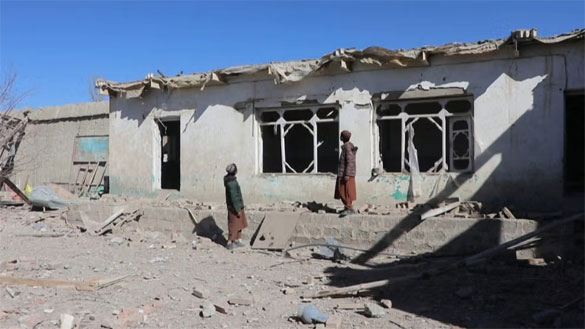
Annalena Baerbock, president of the 80th session of the United Nations General Assembly, opened her address to the United Nations Human Rights Council by focusing on the situation of women in Afghanistan, describing it as what some call gender apartheid.
Speaking at the council’s 61st session, the former German foreign minister described the condition of women under Taliban rule as the worst form of structural human rights violation. She said the term “gender apartheid” is increasingly used to characterise the treatment of Afghan women and girls.
Baerbock said she could not stop thinking about discussions within the UN and the wider international community over how to deliver humanitarian aid to Afghanistan while women and girls are barred from work and education.
She criticised efforts to distinguish between different factions of the Taliban, noting that some have suggested figures based in Kabul may be more moderate than those in Kandahar. She said that in some discussions in world capitals and even within UN circles, the fundamental principle of protecting human rights particularly the rights of Afghan women had been sidelined.
Baerbock warned that appeasement in the face of grave human rights violations would not produce results.
Elected in June 2025 to lead the 80th General Assembly session, she said the world must recognise that women’s rights are a benchmark of the condition of societies, noting that women make up half of the global population. If four billion people are not safe, she said, no one can be safe.
She also pointed to what she described as a broader rollback of women’s rights worldwide, saying norms once considered firmly established are now openly challenged or disregarded.
Baerbock called for decisive international action to safeguard human rights. She has previously urged the European Union to impose sanctions on the Taliban over what she described as systematic gender persecution in Afghanistan.
Source: afintl.com
https://www.afintl.com/en/202602237985
-----
Row over former BJP MP turning away Muslim women from charity event
February 24, 2026
A controversy erupted here on Monday (February 23, 2026) over former Bharatiya Janata Party MP Sukhbir Singh Jaunpuria turning away Muslim women from a charity event in Tonk district, where he distributed blankets to poor families. Mr. Jaunpuria allegedly took back a blanket from a woman after asking her name.
The programme was organised on the premises of a temple at Kareda Buzurg village in Niwai tehsil on Sunday (February 22). Mr. Jaunpuria, who went to the village to invite people for Prime Minister Narendra Modi’s proposed visit to Ajmer on February 28, gave away blankets to women who had gathered to received aid.
In a video footage of the event circulated on social media, Mr. Jaunpuria was seen enquiring about the recipients’ names. When a woman identified herself as Shakuran Bano, the former MP reacted sharply, asking her to step aside and leave the blanket behind.
“Hat ek taraf, kambal yahin chhod de” (Pull aside, leave the blanket here), Mr. Jaunpuria was heard saying in the video. He also reportedly said, “Jo Modi ko gaali deta hai, use kambal lene ka haq nahin hai” (Those who abuse Mr. Modi do not deserve to get a blanket).
Some other Muslim women who initially received blankets had them taken back after their religious identity was revealed. When some people attending the programme took exception to Mr. Jaunpuria’s behaviour and confronted him, he reportedly told them that the blanket distribution was his “personal initiative”, funded privately, and was not a government scheme.
The Opposition Congress strongly criticised Mr. Jaunpuria’s act, and some Youth Congress workers went back to Kareda Buzurg on Monday (February 23) to give blankets to the women turned away from the programme. A group of villagers and Congress party workers also staged a protest and torched an effigy of Mr. Jaunpuria.
Former Niwai Block Congress president Rajesh Chaudhary, who led the demonstration, said Mr. Jaunpuria had insulted the women and tried to disturb communal harmony in the region. Senior Congress leaders Govind Singh Dotasra, Tika Ram Jully and Sachin Pilot also condemned Mr. Jaunpuria’s act, saying it reflected the BJP’s ideology based on “hatred, polarisation and division”.
Mr. Jaunapuria was the MP from Tonk-Sawai Madhopur for two consecutive terms, having won the Lok Sabha elections in 2014 and 2019. He lost the seat to Congress’s Harish Chandra Meena in the 2024 Parliamentary elections.
Source: thehindu.com
https://www.thehindu.com/news/national/rajasthan/row-over-former-bjp-mp-turning-away-muslim-women-from-charity-event/article70667864.ece#google_vignette
------
Woman allegedly attempts to snatch hijab from teenage girl in Brisbane
By Ellen Fanning
February 24, 2026
Queensland Police have launched an investigation after a woman allegedly attempted to snatch a hijab from a teenage girl on the Manly foreshore in Brisbane's bayside.
A video shows a woman in a heated exchange with a group of teenage girls wearing hijabs.
The video, which was filmed by one of the teenagers, does not show the alleged attempt to snatch the hijab, but shows the girls accusing the woman of having attacked their 14-year-old friend.
The video appears to show the woman attempting to snatch a phone from one of the girls and then accusing the group of trying to "take over the country".
A police spokesperson said they were asking members of the public with more information to come forward.
"Police have received a report of an incident at a park on the Esplanade, Manly, about 9pm on Saturday, 21 February," the spokesperson said.
"Anyone with relevant information, CCTV or dash cam vision is urged to contact police."
Ayesha, the 16-year-old whose voice can be heard in the video, told 612 ABC Radio Brisbane the confrontation happened during their Iftar dinner.
Ayesha said the group had done nothing to antagonise the woman before she allegedly tried to snatch the hijab from her friend.
"We had done nothing wrong that day. We were all just playing card games as normal kids do," Ayesha said.
"Her actions were just wrong, and I can't really do anything about it."
Islamic College of Brisbane chief executive Ali Kadri said Ayesha had acted admirably to diffuse the confrontation.
"She showed an immense amount of courage and calmness in a very confronting situation," Mr Kadri said.
"For those who are talking about values, these are the values we want in our country."
Mr Kadri said he had noticed an increase in people yelling abuse at the school's Muslim students in recent months.
Mr Kadri said he believed this was due to the current political climate in Australia.
"When hatred gets normalised in words, it reflects itself in actions," Mr Kadri said.
"Quite often, grown men will drive past our front gate and hurl abuse at young children, and that doesn't get reported."
Source: abc.net.au
https://www.abc.net.au/news/2026-02-24/police-investigate-alleged-hijab-snatching-brisbane/106377108
------
Sara Boroumand: An Artist and Mother - Shot at Close Range
FEBRUARY 23, 2026
AIDA GHAJAR
On her tombstone, they have carved: "Do not be sorrowful, my land; in the cracks of your wounds, I have planted the seeds of flowers, and you shall one day become a garden." Above the stone is a picture of Sara with open wings.
Sara Boroumand, born in 1997, was on her way home from a clinic with her mother on Friday, January 9, when a Special Unit officer on a motorcycle began chasing her. From just a few meters away, he fired a pellet gun at her head and neck. Sara, a 26-year-old mother of a three-and-a-half-year-old boy, was fatally shot. She died in her mother’s arms.
A young woman who was only two years away from finishing her Law degree, she was also an artist. On the evening of Thursday, February 19 (30 Bahman), her loved ones and friends gathered at the spot where she was killed to light candles, scatter flowers, and honor her memory.
The Special Unit is the Iranian police’s elite riot control force. Officers are usually recognizable by their black or dark green uniforms and heavy protective gear. They are known for using motorcycles to pursue protesters through narrow streets and alleys, often firing shotguns at close range. Although the pellets they use are officially described as non-lethal, shots to the head have frequently resulted in blindness or death.
Sara was a mother. She leaves behind a three-and-a-half-year-old son who, although in his father's custody, now misses his mother more than ever. She originally studied Genetics but later switched to Law at Zarghan University, inspired by her father’s profession as a lawyer. She had only two semesters left. She studied in the mornings and, at night, sewed upholstery for furniture makers. She was also trained in hair braiding and worked at a beauty salon.
On Friday evening, she had a doctor’s appointment and went with her mother to the Oil Company Clinic in Shiraz. She was examined at 7:01 PM and was given her prescriptions. When they learned that the pharmacy did not have one of her medications, they drove across the city to look for it.
They arrived at the start of Nasr Boulevard, near Kolbeh, where a protest gathering was already underway. Sara and her mother paused there.
Ten plainclothes and anti-riot vehicles arrived, along with ten Special Unit motorcycles. The riders got off their bikes. The motorcyclists advanced slowly, backed by officers on foot. Security forces looked under parked cars to check that no protesters were hiding. Then the shooting started.
Sara ran toward a bus stop at the Kolbeh intersection. One of the green-clad Special Unit riders chased her. When he got within five meters, he drew his pellet gun and fired at her from the right side. The pellets tore into Sara’s forehead, neck, and chest.
Shiraz is one of Iran’s largest cities and has a history of intense, widespread protests. The Kolbeh intersection is a major urban landmark. The "green-clad" officers mentioned are a specific division of the Law Enforcement Forces often deployed to suppress civil unrest with high mobility.
Sara’s mother was right there; her daughter lay bleeding on the ground. She pleaded with the shooter to at least take her daughter to the nearby Mehr Clinic. The shooter replied: "If I wanted to take her to a clinic, I wouldn't have shot her."
Sara died in her mother’s arms.
Six minutes passed between the moment Sara was shot and the moment bystanders stepped in to help. She was taken first to the nearby Mehr Clinic and then transferred to a hospital. Her mother carried her in herself, still hoping there was a chance she could be saved. But Sara had already died.
The hospital staff took her body to the morgue. When Sara’s brother learned of her death, his condition worsened, and he was later hospitalized and placed on oxygen.
Five Days of Running for the Body and Burial Permits
Sara was handed over to the hospital from her mother’s arms, but retrieving her body took days of constant running. They would not release the body or issue a burial permit. The family went to every possible authority: the Prosecutor's Office, the police station, the Security Council, the morgue, and the hospital. From being forced to sign "commitments" to hold a small funeral without slogans to being offered the option to register Sara as a "Martyr," the family only wanted their daughter's body so they could lay her to rest.
As seen in many cases during the uprising, the state uses the "Martyr" label to co-opt victims of its own violence. By accepting this title, the family effectively agrees to the official narrative that "rioters" or "foreign agents" killed their loved one, rather than government forces.
There wasn’t even an ambulance available. The only instruction they were given was to call the “1530” system, which told them a permit was required. Security agencies had to approve a permit even to transfer Sara’s body from the morgue to the medical examiner.
Her body remained in the hospital morgue for five days. For five days, her family grieved without being able to bury her.
Finally, on Tuesday, January 13, the permit was granted. In the Security Council meeting, agents told them the burial must not take place on a Thursday or Friday. They wanted to delay it again. It was midnight when the permit was finally issued, and Sara Boroumand was buried on Wednesday, January 14.
Security forces did not allow her to be buried in Shiraz or in Marvdasht (her father's birthplace). Her body was buried 45 kilometers away from Shiraz in the village of Dudej, near the Imamzadeh Ibrahim shrine. They played the daf (a traditional drum) and clapped at her gravesite as Sara finally found rest in the earth.
Lawsuits, Unresponsive Authorities, and the IRGC Presence at the Grave
According to IranWire, the person who shot Sara Boroumand is a Special Unit motorcyclist. He wore green and a helmet, but his face was visible and identifiable. However, no authority has responded to the existing evidence. Sara was not even participating in the protests as a demonstrator; her medical records confirm that her doctor's visit and pharmacy trip took place.
Sara Boroumand’s name does not appear on the first list of protest victims released by Masoud Pezeshkian’s government. Her case was initially assigned to the Security Crimes branch of the Prosecutor's Office, but they declared a "lack of jurisdiction." The case was then sent to the Military Court. Last week, a notice was sent, and the investigator explicitly told the family that summoning, questioning, or holding a trial was impossible: "After all, that night was a war zone. In war, anything can happen."
The Military Court (Dad-saray-e Nezami) in Iran typically handles crimes committed by members of the armed forces and police. However, it is rare for these courts to prosecute officers for killing protesters, often citing "emergency conditions" or "state of necessity" to grant immunity to suppressive forces.
Forty days after Sara’s death, security forces are still visibly present - even at her grave. On Thursdays, when friends come to visit, agents are there too. According to IranWire, members of the IRGC have been assigned to monitor and film the gravesite. During her memorial service at the mosque, security forces on foot and on motorcycles surrounded the building from beginning to end.
For Sara Boroumand, an artist and a hardworking woman, her professors, classmates, and relatives have gone above and beyond to honor her. They were present from the first day to the 40th-day memorial at her home, her grave, and her funeral. They say Sara was hardworking; she always maintained a perfect GPA. She had an Instagram page for her hair-braiding models. She was a polite, dignified, and kind girl, a "flower that God brought," as her relatives said.
On that night, the Special Unit officer came with orders to shoot. He shot Sara. In doing so, he left a child without a mother, a brother without a sister, and parents without their daughter.
Her absence is now a constant, aching presence - in her university classrooms, in her family’s home, and most of all, in her mother’s empty arms.
Source: iranwire.com
https://iranwire.com/en/features/149426-sara-boroumand-a-law-student-an-artist-a-mother-shot-at-close-range/
------
‘Mahram’ policy and the cost to women’s education
By Jahanzeb Wesa
FEBRUARY 24, 2026
Recent statements by Taliban officials requiring male doctors to act as “mahram” (male guardian) for female patients have triggered renewed legal, humanitarian and public health concerns. While the policy appears to offer a religiously framed solution to the shortage of female doctors, it in fact reflects a much deeper crisis — one created by restrictive policies that have systematically excluded women from education and professional life.
This analysis demonstrates how policies limiting women’s access to education and employment have created the very conditions used to justify mandatory guardianship. The result is a direct threat to the health, dignity and rights of Afghan women.
When girls are barred from studying medicine and women are pushed out of the healthcare system, a shortage of female professionals becomes inevitable. In such circumstances, turning male doctors into “mandatory mahrams” for female patients is not a solution; it is evidence of structural failure.
In Islamic jurisprudence, the concept of mahram is traditionally limited to specific familial or Sharia-defined relationships. Expanding this concept to designate male doctors as guardians for female patients departs significantly from established definitions. Rather than addressing a genuine religious necessity, this measure is a consequence of educational restrictions.
A fundamental question arises: Can a crisis created by policy itself be labeled an “emergency”? When universities are closed to women and the training of female doctors is disrupted, the resulting shortage is predictable. In Islamic legal principles, one who creates an emergency cannot later invoke it to justify changing established rules. Therefore, “mandatory mahram” policies lack both legal and logical legitimacy.
A healthcare system under strain
Banning women from studying medicine has directly harmed public health. Even before recent developments, Afghanistan faced a severe shortage of female doctors, midwives and nurses, particularly in rural areas. Continued restrictions have now pushed the system closer to crisis.
Universities and higher education institutions that could train a new generation of female professionals have effectively been removed from the pipeline of knowledge production. The consequences include reduced healthcare capacity, pressure on treatment centers and growing mistrust among female patients toward the system.
In rural communities, the absence of female doctors discourages many women from seeking even basic medical examinations. This is not merely an individual hardship; it reflects the gradual erosion of healthcare infrastructure.
Contradictory policies and social consequences
Current policies place women in a double bind:
Girls are prohibited from pursuing specialized education. Yet, due to the absence of female professionals, women are expected to accept treatment by male doctors in private examinations.
Women’s privacy has thus become a casualty of political decisions. The logical path to preserving women’s dignity and health lies in strengthening the presence of female professionals, not redefining guardianship.
Moreover, restrictions extend beyond healthcare. Women’s employment in government and nongovernmental organizations, media participation, travel without a mahram (male guardian), civic activity and access to public spaces have all been limited.
Humanitarian consequences
Afghanistan previously recorded one of the highest maternal mortality rates in the region. Reduced access to quality healthcare and female specialists now raises serious concerns that these rates could rise again.
In many areas, women avoid visiting male doctors because of cultural sensitivities or fear of social judgment. Without alternatives, delays in diagnosis, pregnancy complications and preventable deaths increase.
According to data from the World Food Programme (WFP) and the World Health Organization, the shortage of female doctors in Afghanistan has exceeded 40 percent. In some provinces, maternal mortality surpasses 800 deaths per 100,000 live births.
International response and the need for action
Thus far, the international response has largely been limited to statements of concern. Silence or fragmented action risks normalizing these restrictions. The longer such policies continue without political cost, the more permanent they may become.
Attempts to justify these policies through religious framing may also erode public trust in religious institutions. Many Islamic scholars across the world emphasize the importance of women’s education, particularly in medicine and healthcare.
To prevent further deterioration, urgent measures are required:
Lift educational bans and reopen schools and universities to girls.
Establish short-term alternatives such as online and remote medical training.
Strengthen the presence of women in healthcare facilities and professional development programs.
Ensure meaningful international support and monitoring of internal policies to prevent illegal restrictions.
Raise community awareness about the importance of women’s health and rights.
Excluding women from education and professional participation does not only violate their rights; it weakens knowledge production, economic development and social stability. Afghanistan needs female doctors, teachers and specialists — not new interpretations to justify mandatory male guardianship.
History will judge whether these restrictions were addressed or met with silence. But the health, education and dignity of Afghan women must not be sacrificed to political decisions.
Jahanzeb Wesa is a human rights activist and freelance journalist.This article reflects the author’s views and not those of Amu TV.
Source: amu.tv
https://amu.tv/227793/
------
CCP clears UAE’s eve holdings to fully acquire First Women Bank
23/02/2026
The Competition Commission of Pakistan (CCP) on Monday approved the acquisition of First Women Bank Limited (FWBL) by Abu Dhabi-based Eve Holdings RSC Limited, following a Phase-I review under the Competition Act, 2010.
Under the deal, Eve Holdings will acquire the entire stake of FWBL from the Government of Pakistan and institutional shareholders, including Habib Bank Limited, MCB Bank Limited, Allied Bank Limited, National Bank of Pakistan, and United Bank Limited, taking full ownership and control of the commercial bank.
CCP’s assessment found that FWBL has a limited presence in Pakistan’s commercial banking sector, while Eve Holdings has no existing operations in the relevant or related markets. The commission concluded that the transaction is a conglomerate merger and is unlikely to create or strengthen a dominant position, reduce competition, or disrupt market structure.
The regulator confirmed that the transaction complies with the Competition Act, 2010, and poses no competition concerns.
CCP noted that the acquisition reflects ongoing foreign investor interest in Pakistan’s financial sector, and demonstrates the role of transparent privatisation and effective competition regulation in promoting investment, strengthening financial institutions, and supporting economic growth.
Source: pakistantoday.com.pk
https://profit.pakistantoday.com.pk/2026/02/23/ccp-clears-uaes-eve-holdings-to-fully-acquire-first-women-bank/
------