
Rashida Al-Rashidi’s Journey From Needle And Thread To Global Recognition
New Age Islam News Bureau
20 September 2025
· Rashida Al-Rashidi’s Journey From Needle And Thread To Global Recognition
· UAE Opens Applications For Women’s Military Training Program Shabat Fakhr
· Women Break Taboos In Iran Viral Concerts: Propaganda Or Progress?
· Security Guards Clash With Visitors In Northern Iran Over Compulsory Hijab
· Saudi Women’s Travel Rights 2025: What The Latest Rules Mean For Passports And Trips Abroad
Compiled by New Age Islam News Bureau
URL: https://newageislam.com/islam-women-feminism/rashida-al-rashidi-global-recognition/d/136916
-----
Rashida Al-Rashidi’s Journey From Needle And Thread To Global Recognition
Tareq Al-Thaqafi
September 19, 2025
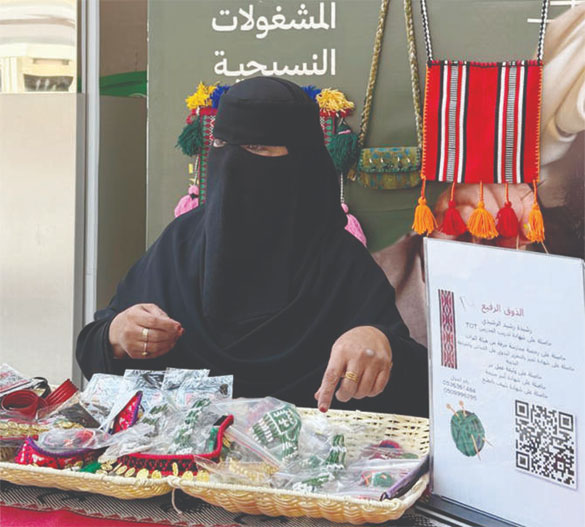
Rashida Al-Rashidi has launched her work under the name ‘Al-Thawq Al-Rafeea’ (The Sophisticated Taste), a brand offering handmade products inspired by Sadu embroidery. (Supplied)
------------
MAKKAH: Rashida Rashid Ali Al-Rashidi has turned a passion for needle and thread into a unique and authentic identity that has resulted in global recognition.
Al-Rashidi, or Umm Nasser, told Arab News recently: “The story began with a simple love for embroidery, which to me was a hobby that kept me occupied and comforted me.
“As the years passed, I realized that this hobby carries a greater value, much more significant than a thread and needle. It is an identity and a form of creativity that can make a difference in people’s lives.”
She said that she looked for ways to improve her skills.
“I received a professional practitioner license, a train-the-trainer certificate, and a freelancer permit. These steps were very important to me because they boosted my self-esteem and made me feel as though I was standing on solid ground.”
Al-Rashidi has participated in numerous events and collaborated with many entities, including the Comprehensive Rehabilitation Center, the Saudi Electricity Regulatory Authority, and the Harakia Association for Adults with Physical Disabilities.
She has also worked with the Dates Festival, Ministry of Environment, Water and Agriculture, the Lamma and Fallah Festival, Ayamna El-Helwa Festival, as well as national celebrations and a graduation project at the Imam Mohammad bin Saud Islamic University.
“With every participation, I felt part of a big picture, and that my simple work left an impact on people, while adding a touch of beauty and a sense of pride in our heritage,” she said.
She recently received global recognition for her work. “Partnering with Adidas was one of my most beautiful milestones, where I designed a special shoelace that carries my unique touch.
“It was a turning point for me, and I felt that the thread which began in a small home was able to cross the borders and reach international platforms.”
Al-Rashidi said she has launched her work under the name Al-Thawq Al-Rafeea (The Sophisticated Taste), a brand offering handmade products inspired by Sadu embroidery.
She explained: “I wanted to combine the authenticity of heritage with the spirit of modernity. That’s why I designed abayas with a touch of Sadu, so this timeless art remains present in people’s everyday lives, but with a modern twist that appeals to all tastes.”
Al-Rashidi added: “My message to anyone with a dream is to hold onto it. When a dream is accompanied by perseverance, it can turn into a success story and might become a source of inspiration for someone else without you realizing it.”
She said her achievements are a result of the support from her family and community, and wants to honor them.
“Every thread I wove carried a dream, and every embroidery I crafted carried a message. Today, I feel like I am still at the beginning of this journey, and I still have a lot to offer.”
Source: arabnews.com
Please click the following URL to read the text of the original Story
https://www.arabnews.com/node/2615994/saudi-arabia
----
UAE opens applications for women’s military training program Shabat Fakhr
LEANA BERNARDO
Sept. 20, 2025
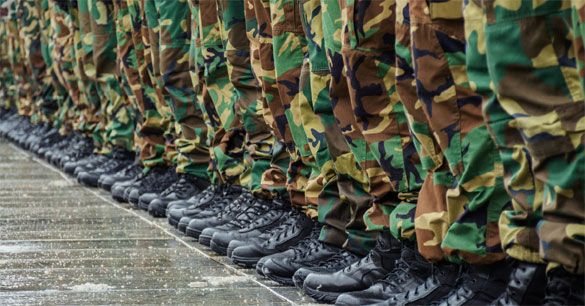
Emirati women can now register for the seventh cycle of Shabat Fakhr (“Women of Pride”), a one-day military training program that focuses on national identity, leadership, and teamwork.
The session will be held in November 2025, with applications closing on October 1.
Organised by the Federal Youth Authority in partnership with the National Service & Reserve Authority and the Khawla bint Al Azwar Military Schoo, the Gulf region’s first women’s military academy, the program is open to Emirati women aged 18 to 35.
Since its launch in 2022, Shabat Fakhr has trained more than 490 women across six cycles, offering them exposure to military life through drills, decision-making exercises, and leadership challenges. Officials said the initiative strengthens national awareness while developing practical skills.
“This is the seventh cycle, and we are proud to see Emirati women stepping forward to embrace this opportunity,” a National Service & Reserve Authority official told Khaleej Times.
“Their participation reflects pride, responsibility, and commitment to serving their nation.”
Inspired by Federal Law No. 6 of 2014, which mandates national service for Emirati men but leaves women’s participation voluntary, the program gives women structured access to military training and civic engagement.
Organisers said the initiative also supports the UAE’s National Youth Agenda 2031 by promoting discipline, resilience, and active citizenship. Training will be conducted at Khawla bint Al Azwar Military School, established in 1990 to advance women’s participation in defence and security.
Applications for the November cycle are open through the Emirates Youth Authority’s official platform until October 1, 2025.
Source: filipinotimes.net
https://filipinotimes.net/latest-news/2025/09/20/uae-opens-applications-for-womens-military-training-program-shabat-fakhr/
------
Women break taboos in Iran viral concerts: propaganda or progress?
Negar Mojtahedi
Sept. 19, 2025
Viral videos of women dancing unveiled in Iranian concerts have reignited debate over whether the apparent social opening is genuine or contrived by a ruling system facing external military pressure and domestic discontent.
For musician Arash Sobhani—a solo artist in exile in the United States and frontman of the acclaimed Iranian band Kiosk—the answer is complicated but clear: there is no real reform afoot, only a choreographed spectacle.
“Reform happens if we see a woman singer, if you see a female singer on stage, that would have been a reform,” said Sobhani, who left Iran in 2005 after performing underground in Tehran for two years.
A recent Sirvan Khosravi concert on the grounds of the former Shah’s palace in Tehran has become a touchstone for the debate.
A concert by famed Iranian artist Sirvan Khosravi held on the grounds of what were once the Shah’s palace in Tehran has become an emblem of the 2022 Woman, Life, Freedom movement's legacy.https://t.co/Y13sqI8kYR pic.twitter.com/m0qf0bMlbJ
Videos flooding social media show women in the audience discarding the compulsory hijab and dancing openly—acts that were harshly punished until recently.
The imagery from a site tied to Iran’s ousted monarchy struck some observers as a sign Tehran may have relaxed old taboos.
Sobhani urged caution. “We want people to be happy. Everybody should be happy all the time,” he told the Eye for Iran podcast. “But let’s not just close our eyes and ignore the elephant in the room. Female singers, your colleagues are not allowed to sing, yet, still, and nothing has changed.”
He argues that venue choice and access matter. Staging concerts in controlled, ticketed spaces—often priced beyond the reach of many—differs fundamentally from allowing free, mass gatherings in iconic public squares.
“They (the Islamic Republic) want (events) in closed spaces, not more than 2,000 to 3,000 people … because they can control that,” he said, contrasting it with a hypothetical crowd of “100,000 people” in a central square.
The push and pull were visible beyond Tehran. In Shiraz, the popular band Bomrani performed to jubilant scenes that some hailed as a cultural opening—only for authorities to ban the group from playing in the city and the wider Fars province days later, accusing it of “norm-breaking behavior.”
The reversal underscored how precarious such moments remain.
Joy is not structural change
Sobhani acknowledges that public joy can itself be opposition—but warns against mistaking it for structural change.
“Joy in the way we live is an opposition, is a form of rebellion, is a form of protest ... but ... as long as these guys are in power, no change is permanent. It’s just going to be temporary, makeshift, just cosmetic ... that’s going to be gone in two days.”
The concerts arrive amid the enduring legacy of Mahsa Jina Amini, whose September 2022 death in morality police custody sparked the Woman, Life, Freedom protest movement.
While the demonstrations were crushed, visible social shifts—like widespread noncompliance with hijab rules at public events—have persisted.
A proposed new hijab and chastity law was put on hold earlier this year amid concerns it could inflame tensions, even as authorities continue arrests and executions.
For Sobhani, the real test isn’t a few exuberant nights but who gets to stand on stage and who gets to attend without fear. Until women can sing freely and artists can speak without reprisal, he says, viral concerts are—at best—nuanced snapshots of resilience, not proof of reform.
Source: iranintl.com
https://www.iranintl.com/en/202509194944
-------
Security guards clash with visitors in northern Iran over compulsory hijab
Sept. 19, 2025
A video circulating on social media shows security guards clashing with visitors at the Marble Palace in Ramsar, after a hijab warning escalated into physical confrontation and police intervention.
The palace is a historic Pahlavi-era building built in 1937 by Reza Shah Pahlavi as a royal summer residence.
Iranian outlets reported the incident took place about a week ago. In the footage, a man with blood on his face lies on the ground while a guard holds a pepper spray canister. Eyewitnesses said guards used pepper spray against young women, creating panic among visitors.
The visitors were from the religious city of Mashhad, according to Entekhab News, citing a local journalist. A guard confronted one of the women at the entrance, and when her headscarf slipped inside the museum, he pushed her, sparking a fight that drew in police, the report said.
Social media users noted the recording date as September 11, days before the third anniversary of the death in custody of Mahsa Amini, detained in 2022 for alleged hijab violations.
Journalist and activist Masih Alinejad reacted on Instagram, writing: “This is the same government that stages concerts at night, executes by day, and assaults women over a few strands of hair.”
Wider crackdown
The video has renewed focus on violent enforcement of compulsory hijab, with calls for accountability and protection of women in public spaces. Confrontations have been documented before, with security forces, plainclothes agents, and civilians policing women’s dress. Rights advocates warn such practices intrude on privacy and fuel social violence.
Recent weeks have seen a wave of closures targeting businesses, cafés, hotels, and bookstores over alleged defiance of hijab rules. Rights group HRANA previously reported more than 30,000 women were stopped last year for non-compliance, and at least 536 commercial units were sealed.
Despite intensified state pressure, women’s acts of defiance persist. A video obtained by Iran International on September 16 showed a woman in Karaj standing unveiled atop a garbage container and shouting, “You have turned Iran into a prison.”
Source: iranintl.com
https://www.iranintl.com/en/202509190952
------
Saudi Women’s Travel Rights 2025: What the latest rules mean for passports and trips abroad
Sep 19, 2025
In recent years, Saudi Arabia has introduced a series of legal reforms expanding women’s freedom to travel and handle personal documents, part of the kingdom’s Vision 2030 plan to modernise society and diversify its economy. As of 2025, women above a certain age enjoy greater autonomy in getting passports and leaving the country, though some limits and procedural hurdles still remain.
Key change: Women 21+ can travel without male guardian consent
A royal decree first issued in 2019 and still valid today allows all Saudi citizens aged 21 or above, including women, to apply for passports and travel internationally without requiring a male guardian’s approval.
This shift ended a long-standing restriction that obliged adult women to secure permission from fathers, husbands, or other guardians before leaving the country. Officials have confirmed that the policy remains part of the broader reform agenda supporting Vision 2030.
Wider Civil Rights: Passports, registration and guardianship
Beyond travel, the amendments also give Saudi women new authority in daily legal matters:
They may register births, marriages and divorces directly with the Civil Status Department.
Women can obtain family documents such as national identity cards for children.
Mothers can act as legal guardians for their minor children in several administrative contexts.
These rights have made it easier for women to manage paperwork related to education, healthcare and family travel.
Remaining rules: Under-21 travellers and special cases
While women 21+ can move freely, those under 21 still require guardian permission to obtain passports or depart the country, except in specific cases:
Married women below 21
Students on government scholarships abroad
Employees travelling on official assignments with employer consent
Other situations such as release from detention centres, leaving protection shelters or resolving custody disputes may also involve guardian input or separate court orders.
Applying for Passports and smooth travel
Women aged 21+ can submit passport applications directly through the Jawazat (Passports Department) or via the Absher e-portal.
Carry valid ID, recent photographs and proof of address; fees are payable online or at authorised centres.
For travellers under 21, written consent or supporting documents from a guardian, employer or scholarship authority may still be required.
Always check airline and immigration requirements for destination countries, as local exit laws and foreign visa rules can differ.
Looking ahead: Part of Vision 2030 reforms
These measures are among a broader package of social and economic reforms aimed at encouraging women’s participation in public life and the workforce. Officials describe them as “irreversible steps” toward greater equality, though campaigners note that consistent enforcement remains essential so rules are applied uniformly across regions.
Source: indiatimes.com
https://timesofindia.indiatimes.com/world/middle-east/saudi-womens-travel-rights-2025-what-the-latest-rules-mean-for-passports-and-trips-abroad/articleshow/123999798.cms
------
URL: https://newageislam.com/islam-women-feminism/rashida-al-rashidi-global-recognition/d/136916