
Qatar Launches Al-Mujadilah, The First Women-Only Mosques In The Middle East
New Age Islam News Bureau
20 January 2025
· Qatar Launches Al-Mujadilah, The First Women-Only Mosques In The Middle East
· Syrian Women demand protection for civilians and end to massacres
· Women against Iran’s regime: ‘Freedom is fragile… do not take it for granted’
· Afghan Activist Wins UAE Award for Supporting Girls’ Education
· Hijab row: JU panel records statements
· The Unseen Drought: How Widespread Female Illiteracy Threatens Water Conservation
· Knowledge is resistance: Afghan women and STEM
· More all-female SWAT teams to debut at UAE SWAT Challenge 2026
· Saudi women’s empowerment celebrated at Riyadh British embassy
Compiled by New Age Islam News Bureau
-------
Qatar Launches Al-Mujadilah, The First Women-Only Mosques In The Middle East
by Deeplata Garde
January 19, 2026
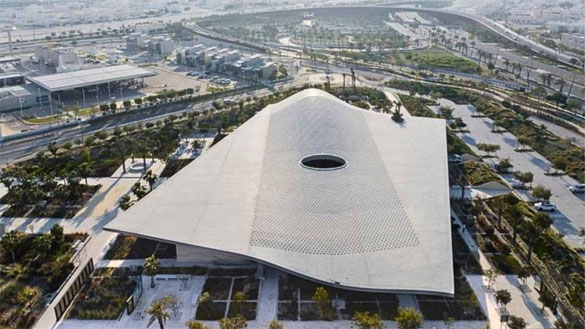
Qatar, in the heart of Doha, has launched a miracle structure. Say hello to Al-Mujadilah Centre & Mosque for Women, the first women-only mosque in the Middle East. The doors have opened, offering a purpose-built space dedicated entirely to women’s spiritual, intellectual, and social lives.
Qatar Opens Al-Mujadilah Centre & Mosque For Women In Doha’s Education City
This is not just a traditional mosque. It’s a place where ladies can play, have conversations, actively learn, and socialise with other women. The opening was first highlighted via the Middle East Explores, where images and videos revealed both the scale of the project and the intention behind it.
A New Chapter For Women’s Spaces In Qatar
Al-Mujadilah is designed as a calm, welcoming environment. The centre blends modern architectural lines with Islamic heritage that feels purposeful. Inside, women can attend workshops, lectures, and cultural sessions that focus on faith, leadership, and personal growth. Outside, landscaped gardens and quiet seating areas offer space for reflection and rest. The centre sits within Education City, a location known for learning.
Under The Vision Of Sheikha Moza bint Nasser
The initiative received support from Sheikha Moza bint Nasser, whose long-standing work in education and social development continues to shape Qatar’s public spaces. By investing in a women-only mosque and centre, Qatar reinforces the idea that empowerment means creating rooms where women feel fully addressed, not accommodated.
Why Al-Mujadilah Matters Regionally
Al-Mujadilah is widely regarded as one of the first purpose-built women’s mosques in the Muslim world. That distinction carries weight, not because it’s a “first,” but because it sets a reference point.
Across the region, conversations around women’s participation in religious and civic life often stay conceptual. This centre makes the idea a reality.
A Space That Invites, Not Instructs
Women can come to pray, to learn, to listen, or simply to exist quietly in a space designed with them in mind. This centre proves how a centre can simply open its doors and let women exist peacefully in harmony and in community.
Source: curlytales.com
https://curlytales.com/middle-east/ct-scoop/qatar-launches-al-mujadilah-the-first-women-only-mosques-in-the-middle-east/
------
Syrian Women demand protection for civilians and end to massacres
20 January, 2026
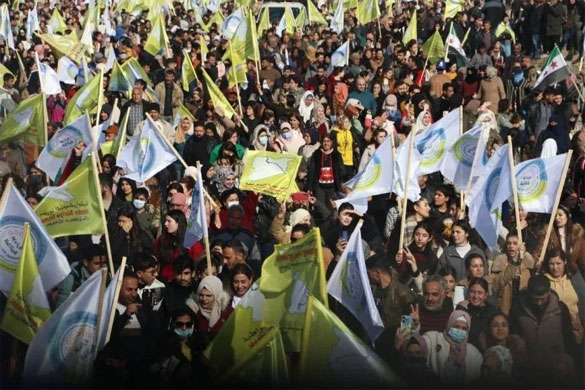
Voices condemning the crimes of the interim government’s mercenaries against Syrian communities are growing, especially among women, amid ongoing attacks and escalations targeting the Sheikh Maqsoud and Ashrafiyah neighborhoods, with urgent calls to restore security, safety, and end all forms of violence and forced displacement.
Adhab Mustafa, co-chair of the General Youth Council of the Syria Future Party, stated that women in Syria, particularly within the country, face enormous challenges on all levels. She emphasized that what happened in Sheikh Maqsoud and Ashrafiyah is not merely random shelling, but a systematic attack targeting societal will and consciousness before harming people and property.
Mustafa clarified that the attacks did not target one community alone but affected all coexisting communities in the neighborhoods, including Arabs, Kurds, Yazidis, Circassians, and Armenians. She described the attacks as multi-dimensional—beginning with military shelling, continuing with ideological targeting, and aimed at breaking the will of civilians, especially women and youth.
She added that today, the responsibility falls on all administrations and actors in Syria without exception, stressing that the main goal from the beginning has been and remains to protect the people, maintain security, guarantee the rights of all communities and religions, and work toward a public peace that ensures coexistence and social justice.
Rosheen Hussein Alu, displaced from Kafr Dali – Jindires city in occupied Afrin, stated: “The people continue to demand justice and the rights of the martyrs.” She emphasized that what they endured of suffering, displacement, and siege is unbearable. “We want reconciliation among all Syrian parties. Enough of what we have suffered until today; what did innocent civilians, children, and women do wrong?”
She stressed the need to honor the martyrs who sacrificed their lives defending Sheikh Maqsoud and Ashrafiyah and called on the concerned authorities to intervene quickly to restore security and protect the population.
In a moving testimony, the child Dorshin Aynak Rashu from occupied Afrin described the suffering of children who have endured repeated displacement, noting that this is the fourth forced relocation in her life.
She asked: “When will we live like other children? We are no longer afraid of Turkey or its mercenaries, but what we are living through is very painful. Enough injustice against our people, we want to live our childhood.”
Dorshin added, “How long will we keep moving from place to place? You left us nothing in Afrin, and even in Sheikh Maqsoud and Ashrafiyah, you fought to forcibly displace us.” She concluded her statement saying: “We fear only God, and we will resist until we prevail.”
Source: hawarnews.com
https://hawarnews.com/en/syrian-women-demand-protection-for-civilians-and-end-to-massacres
-------
Women against Iran’s regime: ‘Freedom is fragile… do not take it for granted’
Jan 19 2026
Galway-based Iranian academic Mahya Ostovar, hasn’t been able to sleep properly since anti-regime protests began in her home country more than three weeks ago.
Speaking on the latest episode of The Irish Times Women’s Podcast, the 36-year-old explains, “I can’t sleep right now because I’m so afraid to be asleep the moment that Iran gets free”.
The lecturer in Business Information Systems at the University of Galway has been watching the violent unrest taking place in Iran with a mixture of feelings. She feels guilty that she “isn’t doing enough” and is not there to support her fellow Iranians on the ground.
She’s also cautiously hopeful that change to the country’s leadership might finally be possible. “I try to keep my hope really low because I feel that if it doesn’t happen this time, I can’t continue anymore,” she tells podcast presenter Róisín Ingle.
The protests calling for an end to the Islamic regime - in power since 1979 - have been met by authorities with gunfire, tear gas and thousands of arrests. According to human rights agencies, more than 4500 people have been killed so far in the uprising, with some reports suggesting the death toll could be as high as 12,000.
Yasaman Ranjbaran, an Iranian researcher living in Italy, who also features on this episode of The Women’s Podcast, says that Iran’s revolution and recent history should serve as a warning to western countries.
“I just want to point out that freedom is very fragile. The freedom that you have here, do not take it for granted. It can be swept from under your feet sooner than you can imagine. It needs to be kept, it needs to be fought for, it needs to be cherished and acknowledged,” she says.
Agreeing with Ranjbaran’s point, Ostovar adds “I sometimes see people thinking that this is never going to happen in the west - that this is not our problem, but the truth is, Iranians also thought the same thing 50 years ago.”
Ostovar is referencing the Iranian revolution of 1979, before which the lives of the Iranian people were remarkably different. The country was undergoing rapid modernisation, with women especially enjoying more freedoms and opportunities. The overturning of the monarchy and the subsequent takeover by the Islamic regime saw an end to the progress.
In this conversation, the pair also share their thoughts on US President Donald Trump’s response to the protests and they discuss whether he could be useful in securing Iran’s freedom.
“I know Donald Trump is not the best person in the world, but we don’t have the luxury of choice,” says Ranjbaran.
To listen back to this discussion with Ostovar and Ranjbaran in full, click on the player above or search The Women’s Podcast in your usual podcast app.
Source: irishtimes.com
https://www.irishtimes.com/podcasts/the-womens-podcast/women-against-irans-regime-freedom-is-fragile-do-not-take-it-for-granted/
------
Afghan Activist Wins UAE Award for Supporting Girls’ Education
By Fidel Rahmati
January 20, 2026
Over two million girls in Afghanistan are out of school, while activist Zarqa Yaftali is recognized for innovative efforts supporting girls’ education nationwide.
An Emirati foundation awarded its Zayed Humanitarian Solidarity Prize to Afghan activist Zarqa Yaftali for her work supporting girls’ education in Afghanistan.
The foundation praised Yaftali for providing educational resources, founding dozens of schools, and advocating for laws protecting women, children, and families.
Since the Taliban’s return to power, Afghanistan girls have been barred from attending secondary schools, leaving over 2.2 million girls without formal education this year.
UNICEF and UNESCO report that four million children in Afghanistan are out of school, with poor-quality teaching and economic hardships forcing many into child labor.
Despite international pressure, schools for girls remain closed, prompting activists like Yaftali to offer alternative learning solutions, including online education programs.
Yaftali said receiving the award sends a hopeful message to Afghanistan girls, particularly those accessing education through online platforms.
The Zayed Humanitarian Solidarity Prize has recognized 19 individuals since 2019 for promoting peace, coexistence, and humanitarian work, including leaders in international conflict resolution.
Yaftali’s recognition highlights the critical role of civil society in sustaining education for girls despite restrictive policies and systemic challenges in Afghanistan.
Source: khaama.com
https://www.khaama.com/afghan-activist-wins-uae-award-for-supporting-girls-education/
-------
Hijab row: JU panel records statements
Jan 20, 2026
Kolkata: The five-member fact-finding committee set up by Jadavpur University to probe the hijab controversy recorded statements of three teachers, two research scholars and two students on Monday. One of the two UG-3 students who skipped the first meeting also appeared.
Another UG-3 student had recorded her statement at the committee's first meeting on Jan 5. The committee is expected to submit its final report on Jan 29.
A member said the panel has recommended that one professor (the state govt nominee to the EC) not be allowed to participate in EC discussions on the matter as the professor was "also party to the incident" and "misbehaved before the committee". EC member Kazi Masum Akhtar dissented on the bar. He said the UG-3 student told the committee she was not pressured to remove her hijab and got extra time.
Committee chairperson Syed Tanveer Nasreen said, "The teachers, scholars and students were called at the request of the English HoD. We now have an almost clear picture of what unfolded and will review the depositions before submitting recommendations to the VC."
Source: indiatimes.com
https://timesofindia.indiatimes.com/city/kolkata/hijab-row-ju-panel-records-statements/articleshowprint/126707596.cms
------
The Unseen Drought: How Widespread Female Illiteracy Threatens Water Conservation
By Khaama Press
January 20, 2026
Female illiteracy in Afghanistan undermines water conservation, leaving millions at risk as households struggle with scarcity, poor hygiene, and inefficient water use practices.
While global water crises are often framed around infrastructure, climate, and technology, one of the most overlooked drivers is female illiteracy. Millions of Afghan women and girls are unable to read, write, or access formal education, limiting their understanding of water management, hygiene practices, and conservation methods. As primary household managers, women’s exclusion from education directly affects water usage efficiency and community resilience.
Afghanistan faces worsening water scarcity. NGO reports show that in 2024, 23% of households lacked sufficient water for hygiene, up from 15% in 2023, and 44% lacked soap, compared to 24% previously. Female-headed households are disproportionately affected, particularly in rural areas where collecting water often exposes women to economic and safety risks.
Rural women bear the brunt of both household and agricultural water use, managing chores, child care, and farming while facing low literacy, limited resources, and restricted decision-making power. Without proper education, they are less able to adopt modern irrigation techniques or water-saving practices.
Urban women in Kabul also face crises. Depleting wells in areas like Khairkhana and Dasht-e-Barchi force girls and women to spend hours fetching water. Surveys show only 4% of women participate in water-related decision-making forums, highlighting the gap caused by illiteracy and social restrictions.
Training programs show positive results. UN initiatives in Logar province teaching women to use climate-smart greenhouses and drip irrigation improved household incomes and promoted sustainable water use. Literate women are more likely to implement conservation practices, participate in governance, and educate their families about hygiene and water efficiency.
Illiteracy also indirectly increases water demand. Mothers who lack education are less aware of water-borne diseases or efficient hygiene, placing additional strain on already scarce water resources. Girls pulled from school to fetch water have little time to learn skills that could improve household and community water management, perpetuating cycles of scarcity and poverty.
Female illiteracy does not just coexist with water scarcity; it amplifies it, reducing innovation, weakening governance, and trapping communities in reactive crisis management.
Investing in girls’ education is essential for sustainable water security. Educated women become active agents of change, driving conservation, improving health, and safeguarding Afghanistan’s water future.
Source: khaama.com
https://www.khaama.com/the-unseen-drought-how-widespread-female-illiteracy-threatens-water-conservation/
------
Knowledge is resistance: Afghan women and STEM
by Dr. Amna Mehmood
January 19, 2026
Prolonged crises always pose a threat to education but the current situation in Afghanistan is perhaps the most extreme case in decades. Afghanistan is now the only country in the world where secondary and higher education are formally forbidden to girls and women, with around 2.2 million girls barred from learning beyond primary school, states UNESCO. The Taliban’s restrictions on girls’ secondary schooling and the December 2022 ban on women’s access to universities have pushed Afghan women out of the education pipeline that sustains science, medicine, engineering, and public health.
The damage does not stop at classroom doors. A ban on education is also a ban on belonging to the future. It erodes scientific identity, which is the sense that one has the right to learn, question, and contribute. It dismantles procedural knowledge: how to apply, qualify, publish, and collaborate within global systems of science. Over time, mentorship networks collapse, research trajectories are cut short, and laboratories are emptied of talent. This damage is occurring while Afghanistan faces overlapping health, economic, and humanitarian crises that demand scientific capacity rather than its destruction.
International responses have focused largely on humanitarian relief and individual opportunities such as scholarships. These efforts matter but are not enough. Scholarships help individuals leave Afghanistan but do not preserve a knowledge system when an entire generation is excluded at scale. The World Bank has warned that bans on women’s education and employment will produce long-term economic losses, including reduced lifetime earnings and national income growth. UNESCO has similarly highlighted the educational, economic, and psychosocial costs of suspending women’s access to higher education and work.
Still, knowledge does not simply disappear when institutions collapse. Recently, UNICEF marked more than 1,000 days since the secondary school ban began, representing billions of learning hours lost. Alongside this staggering loss exists another reality: women refusing to let scientific thinking die, even when formal pathways are blocked. Across Afghanistan and within the diaspora, women in life sciences and STEM (science, technology, engineering, and mathematics) are sustaining learning under repression through quiet acts of continuity: sharing notes and problem sets, organizing peer study circles, mentoring younger students, and maintaining study routines under severe constraints.
Afghan scientists and engineers in the diaspora are supporting alternative ways for learning as temporary schooling bridges until education can be restored. These efforts often focus on helping students understand international education systems, sustain foundational scientific knowledge through online learning, and preserve the confidence required to continue identifying as scientists in environments that deny their legitimacy.
Such learning takes place under constant constraint in Afghanistan. Internet access is limited, personal safety is a concern, and credentials are often out of reach. What matters, then, is not accumulation of certificates, but continuity: staying mentally engaged with science, remaining prepared for future opportunities, and maintaining peer connections that counter isolation.
Afghan women’s exclusion from STEM is often described as “lost potential.” That phrase understates what is happening. This is not passive loss; it is the deliberate dismantling of a national knowledge base. When women are barred from science, society loses its capacity to diagnose disease, train health professionals, innovate, and respond to crises. Education bans do not only restrict women’s lives, they weaken a country’s ability to recover.
Afghan women in STEM are not waiting to be rescued. Many are already sustaining knowledge through discipline, persistence, and mutual support. The question is whether the international community will recognize these efforts as more than survival strategies, and invest in keeping scientific identity and learning alive so that, when political conditions change, there is still a generation ready to rebuild Afghanistan.
Source: zantimes.com
https://zantimes.com/2026/01/19/knowledge-is-resistance-afghan-women-and-stem/
-------
More all-female SWAT teams to debut at UAE SWAT Challenge 2026
January 19, 2026
Women tactical teams are set to play a larger role at the UAE SWAT Challenge 2026, following a significant increase in female participation announced by the organising committee.
This year records the highest number of women’s teams since the championship launched in 2019, with registrations doubling from five teams last year to 10 confirmed so far. Organisers said registration remains open, with additional international teams expected to join.
Event to showcase elite tactical units worldwide
The championship will take place at Ruwayyah Training City from February 7 to 11, bringing together elite tactical units from across the globe. Participating women’s teams represent countries including the UAE, Thailand, Paraguay, Kazakhstan, the Dominican Republic, Colombia, China, Brazil, and Argentina — highlighting the event’s growing international reach.
Women’s role reflects global confidence
The increased participation reflects rising international confidence in the championship and underscores the expanding role of women in specialised law enforcement operations. Officials noted that female involvement adds value to tactical competitions by providing a professional platform for skills development, operational exchange, and exposure to global best practices in rapid-response and tactical policing.
World-class competition format
Recognised as one of the world’s largest tactical police competitions, the UAE SWAT Challenge continues to strengthen its global standing. The previous edition set a Guinness World Record for attracting the highest number of participating countries in a specialised tactical teams championship, with 46 nations taking part.
The competition features five demanding stages designed to test tactical expertise, physical endurance, accuracy, and teamwork. Teams accumulate points daily, with final rankings determined by overall performance.
Open to the public
The event is open to spectators, allowing the public to witness elite tactical operations and support teams representing countries from across the world.
Source: gulfnews.com
https://gulfnews.com/uae/more-all-female-swat-teams-to-debut-at-uae-swat-challenge-2026-1.500413738
------
Saudi women’s empowerment celebrated at Riyadh British embassy
BASMAH ALBASRAWI
January 19, 2026
RIYADH: Dr Alice Burt, UK deputy Ambassador to Saudi Arabia, hosted a networking event on Sunday at the British Embassy in Riyadh to discuss the transformative progress of gender empowerment in the Kingdom.
She was joined by special guest Baroness Harriet Harman KC on stage with former member of Shoura Council Hoda Al-Helaissi and Arab News journalist Lama AlHamawi
The event, Empower Together: Why Gender Equality is Everyone’s Problem, attracted an audience of mainly women from various industries and backgrounds.
Topics discussed included the Kingdom’s history and Vision 2030, and debunking false narratives around Saudi women’s experiences.
One of the most important pillars under Vision 2030 and women’s empowerment comes from policies that encourage economic autonomy.
AlHamawi told the audience: “The government put these reforms in place to encourage women to get back to the workplace.
“So when you look at it, there’s obviously legislation reforms lifting a certain fence that limited women.”
On those legislations, she referred to childcare support, transport and subsidization efforts.
Al-Helaissi shared AlHamawi’s perspective while also shedding light on the history of the Kingdom, saying: “First of all we need to put Saudi Arabia in context, it’s very easy for us to talk about reforms and changes without looking at Saudi Arabia’s past, because it is through that past that we have come to where we are today, here.”
The transformation happening on the ground in the Kingdom has been noted by international media and onlookers, some of which are critical and others who are inspired.
On that international perspective, the panelists shared in-depth insight on the nitty-gritty of responding to international commentary regarding women’s empowerment in the Kingdom.
AlHamawi said: “Our presence abroad is changing these narratives … The next generation, we have influencers, content creators that are showcasing what’s actually happening in Saudi Arabia, but I think it will take time, just like everything else.”
Al-Helaissi added another angle to the topic of international stereotypes by bringing up the tendency for international media to be driven by sensationalized headlines rather than truth, particularly on the topic of women in the Kingdom.
“The woman in her abaya without a voice, the woman who has no job, the woman who needs a man … these are cliches … I know where we are in our evolution,” she told the audience as she emphasized that change is constant, and that a lack of research from international biased angles does not take away from that.
On the intersection of religion and culture as elements that have been weaponized by international media against women’s empowerment in the Kingdom, the panelists described their experience managing and responding to that backlash as Arab Muslim women.
Al-Helaissi said: “We need to learn to co-exist, we need to be tolerant enough to learn to say, this is my way and that is your way … it doesn’t stop us from being similar … we all have the same ambitions, we all want the same things — not just for ourselves, (but) for our children, for our societies.”
Baroness Harman spoke about her visit to the Kingdom as symbolic of her eagerness to understand women’s empowerment in all fields, including in education and the economy.
“I think that there is a real opportunity for the longstanding relationship that there has been between the UK and Saudi Arabia to be enhanced by an understanding of the situation of women and close relationships between women in those two countries,” she said.
On the importance of bringing both genders together to encourage women’s empowerment, Baroness Harman said: “There are a new generation of men, who I call the sons of the women’s movement.
“They have been brought up by women who believe in equal rights and who have led a more equal life.”
Adding to the discussion on the push for equal rights, Baroness Harman emphasized this unity not only between the genders, but also between women from diverse backgrounds to unite and “tackle the misconceptions about each other, and we can work together for what we want to do in our own journey … no woman in the world or the UK has got the right to know what it is that a Saudi woman wants, that is for Saudi women.”
Speaking to Arab News after her speech, Baroness Harman elaborated on the importance of amplifying Saudi women’s voices as the journey for empowerment progresses: “I’m interested to hear from Saudi women themselves the amazing progress that has been made, but also what the further aspirations are; and also to have more interaction so that we have a better understanding and close relations between women in Saudi and women in the UK.”
Source: arabnews.com
https://www.arabnews.com/node/2629869/saudi-arabia
-------