
Nobel Laureates Blast Death Of Iranian Woman, Somayeh Rashidi, In Prison As 'State Murder'
New Age Islam News Bureau
26 September 2025
· Nobel Laureates Blast Death Of Iranian Woman, Somayeh Rashidi, In Prison As 'State Murder'
· Muslim Rights Concern Lauds Ruling As Oyo State Upholds Rights To Wear Hijab
· Muslim Groups In Finland Reject Talk Of Niqab Ban
· Despite Running A Business, Women Entrepreneurs Struggle to Own Homes Kampuchea Krom to Phnom Penh
· Woman On Interpol’s Red Corner Notice Arrested In UAE
· Cooperation Between Azerbaijan And UAE On Family And Women's Issues Discussed In New York
Compiled by New Age Islam News Bureau
URL: https://newageislam.com/islam-women-feminism/blast-death-iranian-woman-state-murder/d/136993
----
Nobel Laureates Blast Death Of Iranian Woman, Somayeh Rashidi, In Prison As 'State Murder'
September 26, 2025
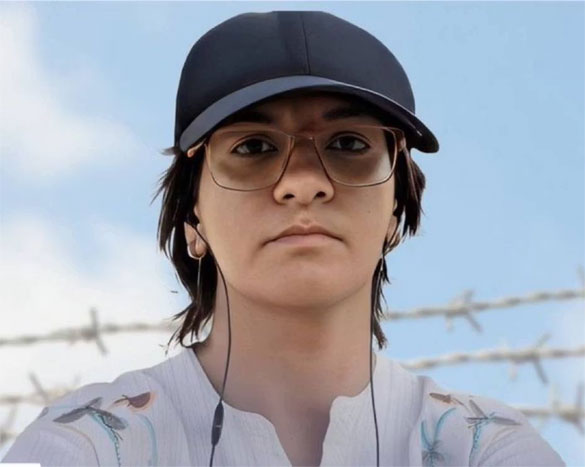
The death of a female Iranian political prisoner in hospital following a series of seizures has sparked outrage from Iran's two Nobel laureates and right groups who have labelled her death a state-sponsored murder.
Somayeh Rashidi died after several days in hospital following her transfer from Qarchak Prison near Tehran, Iran’s judiciary-affiliated Mizan news agency reported on Thursday.
Rashidi, born in 1983, was detained in April for allegedly writing anti-government graffiti slogans in Tehran’s Javadieh district. Initially held in Evin Prison, she was transferred to Qarchak after an Israeli strike on the facility in June.
Nobel Peace laureates Narges Mohammadi condemned her death in custody, describing it as part of a pattern of abuse in detention.
“This devastating loss of Somayeh Rashidi is not an accident but the result of a systematic policy of neglect and cruelty inside Iranian prisons,” Mohammadi said in a post on X.
'Evident torture'
Rights groups and activists including Nobel laureate Shirin Ebadi had previously raised alarm about Rashidi’s deteriorating condition, highlighting her urgent need for medical attention.
“Neglecting her health, ignoring her repeated seizures in prison, is clear evidence of torture and deliberate negligence,” Ebadi posted on Instagram.
“Somayeh Rashidi’s state-sponsored murder must be a wake-up call—a slap in the face to human rights defenders, freedom fighters, and equality advocates who still choose silence or compromise, and to an opposition caught in internal disputes.”
Iran International reported earlier this month that Rashidi’s condition had severely declined, with doctors holding little hope for her recovery.
An informed source, speaking anonymously to Iran International for safety, said that under Iran’s criminal laws Rashidi’s death constitutes intentional murder.
“The prison’s health deputy, warden, Qarchak court, Tehran prison director, case investigator and prison supervisor all played a role. They could have ordered an immediate transfer or declared the prison unfit to hold her,” the source said.
“When a prisoner is evaluated and has a known condition, authorities can refuse detention due to lack of capacity. Admitting they knew and still detained her means deliberate neglect leading to intentional murder.”
Death for graffiti
Iranian rapper Toomaj Salehi, who faced a death sentence and torture in prison but was ultimately released, called Rashidi’s death a deliberate act to suppress dissent.
“Such deliberate disregard for political prisoners is an example of silent, systematic suppression and elimination of dissenters. Why should anyone be arrested for graffiti?” Salehi posted on X.
Former political prisoner and women’s rights defender Hasti Amiri said Rashidi’s case showed deliberate neglect.
“She had a medical history and her family could not afford bail, yet authorities denied release and delayed her transfer. This is intentional murder under Article 290 of the Penal Code meaning intentional murder,” she wrote on X.
Motahereh Gooneyi, another former political prisoner, recalled collapsing half-conscious during a hunger strike after being transferred to Qarchak following Israeli strikes on Evin and said the life of political prisoners in Iran is “worthless,” adding the hashtag #SomayehRashidi in Persian on X.
Solidarity protest in prison
Sources speaking anonymously to Iran International alleged that security officials pressured Rashidi’s family to describe her hospitalization as a suicide attempt, intensifying accusations of a cover-up.
According to information received by Iran International, a group of female political prisoners in Qarchak Prison, staged a sit-in in the prison yard to protest Rashidi's death, chanting anti-government slogans.
The sources said the prisoners chanted that her death was a “silent state murder” and accused the judiciary, prison authorities and other government officials of complicity in her death.
Qarchak deaths mount
Human rights groups including the Norway-based Iran Human Rights (IHR) have publicly called for the closure of Qarchak, describing it as “one of the darkest symbols of systematic human rights violations in the Islamic Republic.”
Rashidi death comes less than a week after another prisoner, Maryam Shahraki, died in Qarchak last Friday.
According to Norway-based rights group Hengaw Organization, three women have already died in this facility this year due to lack of adequate medical care — Jamileh Azizi on September 19, Shahraki on September 13, and Farzaneh Bijanipour on January 11.
Source: iranintl.com
https://www.iranintl.com/en/202509253807
------
Muslim Rights Concern Lauds Ruling As Oyo State Upholds Rights To Wear Hijab
September 26, 2025

A group, Muslim Rights Concern (MURIC), Oyo State Chapter, has commended ruling and a landmark achievement in the protection of the rights of Muslim female students across the state against denial and harassment to wear Hijab.
Ambassador Mallam Ibrahim Agunbiade, the Secretary, Muslim Rights Concern (MURIC), Oyo State, in a statement, stated the group took steps following reports from concerned parents led by Mallam Ayanrinde Daud to their office, regarding the refusal of some missionary public schools to admit female students wearing Hijab, and their prompt intervention.
“The State Secretary, Ambassador Mallam Ibrahim Agunbiade, personally led the affected parents and students to the office of the Chairman of the State Universal Basic Education Board (SUBEB), Dr. Nurain Adeniran, who gave assurances that the matter would be addressed and requested one week to provide feedback.
“Within two days, Dr. Adeniran called to inform us that all students in public schools across Oyo State are now permitted to wear the hijab as part of their official school uniform.
According to Amb Agunbiade, the directive was jointly issued by the Chairman of the State Universal Basic Education Board (SUBEB) and the Chairman of the Teaching Service Commission (TESCOM) and was duly endorsed by the Honourable Commissioner for Education.
“The State Government has reaffirmed that no public school should discriminate against any student based on religious appearance or personal rights.
“Therefore, all students who were previously denied entry into schools on account of wearing the hijab are advised to return to their respective schools without delay to resume normal academic activities.”
Agunbiade described the development as a historic victory for justice, equality, and the protection of fundamental human rights.
MURIC, Oyo State Chapter, commended the Oyo State Government, the State Universal Basic Education Board (SUBEB), the Teaching Service Commission (TESCOM), and the Ministry of Education for their prompt response and unwavering commitment to upholding the rights of every student.
He urged Muslim students in the state to promptly report any case of continued denial or harassment to MURIC, Oyo State Chapter, for necessary action.
Source: independent.ng
https://independent.ng/muric-lauds-ruling-as-oyo-state-upholds-rights-to-wear-hijab/
-------
Muslim Groups In Finland Reject Talk Of Niqab Ban
25 SEPTEMBER 2025
“This is a classic example of populism, targeting a marginal issue that barely exists in Finnish society,” the signatories wrote.
They criticised politicians for focusing on “symbolic restrictions” while schools face what they described as serious and ongoing problems, including shortages of staff and resources, bullying, and rising mental health issues among pupils.
According to the statement, the use of the Niqab in Finland is rare and the burqa is virtually non-existent. Most Muslim women who wear religious clothing use the hijab, which covers the hair but leaves the face visible. The groups said that conflating these different garments, burqa, niqab, and hijab, reveals a lack of understanding and misleads public discussion.
The statement dismissed the idea that banning the niqab would solve any genuine problem. It also raised concerns that such legislation would only target Muslims and deepen the marginalisation of Muslim women.
“Any ban would shrink the space Muslims have in Finnish society and undermine the sense of safety and belonging,” it read.
The statement also addressed the legal framework already in place to protect individuals from coercion. It said that the current laws are sufficient to address rare cases where someone might be forced to wear religious clothing against their will.
“Muslim girls grow up in multicultural environments and make choices amid various pressures. Their ability to act independently should be respected like that of any other young person,” it stated.
The groups emphasised that most women wearing the niqab are adults who make the decision voluntarily. They argued that banning clothing on the grounds of protecting minors is disproportionate and unnecessary.
Quoting the Finnish Constitution’s Section 6.3, the statement reminded policymakers that all children must be treated as individuals and be allowed to influence matters concerning themselves in line with their development.
The signatories described religious clothing as a personal expression linked to identity, spirituality, and community. They rejected the argument that banning face-covering garments promotes gender equality.
“True equality means respecting all women’s choices, not just those that align with dominant cultural norms,” the statement said.
They also pointed to perceived inconsistencies in the debate, accusing some political actors of simultaneously speaking about equality while using dismissive language toward Muslim women.
Calls to ban the niqab, the groups argued, serve to label Muslims as outsiders and undermine their status as equal members of Finnish society.
They warned that such rhetoric may fuel Islamophobia and further exclude Muslim women from public life.
The statement cited the UN Human Rights Committee’s view that France’s blanket ban on the niqab in public spaces violates the International Covenant on Civil and Political Rights. The organisations argued that proposed bans in Finland would similarly violate rights guaranteed under both the Constitution and international agreements ratified by Finland.
They noted that during the COVID-19 pandemic, face coverings became common in public, and no legal issues emerged over identity checks. They argued that similar practical solutions could be applied in the case of religious garments.
The organisations urged politicians to address what they described as more pressing issues in education and youth welfare rather than pursuing symbolic bans.
“Freedom of religion and equality are not negotiable values. They apply to everyone in Finland, regardless of religious or cultural background,” the statement said.
The groups called for greater dialogue and understanding, warning that restrictive laws would set a precedent that risks undermining the rights of all minorities in Finland.
Source: helsinkitimes.fi
https://www.helsinkitimes.fi/finland/finland-news/domestic/28003-muslim-groups-in-finland-reject-talk-of-niqab-ban.html
----
Despite Running A Business, Women Entrepreneurs Struggle to Own Homes Kampuchea Krom to Phnom Penh
September 26, 2025
Mork Khorn, a street vendor, sells soup noodles and porridge from a mobile cart with her husband. They rent a house in Phnom Penh where they live with their daughter.
Working 20 hours a day in two shifts, she earns just enough to survive, though her family still struggles with poverty and lacks financial stability.
Khorn first moved from her hometown in Kampuchea Krom to Phnom Penh in the early 2000s to make a living selling food. Over the years, she has sold various items, including balut and porridge, which she carries by balancing them on a wooden pole across her shoulders.
She admitted that she earns just enough to survive daily, but not enough to fund an expansion or improvement, and “certainly not enough to afford a proper home”.
“The remorque and soup pots were given by my mother, who is old,” Khorn said, adding that if anyone offered her a loan right now, she would “gladly accept it”. She urgently needs money to repair her remorque, which is old and has a broken mirror.
Although her livelihood is unstable, Khorn said she cannot take a loan from a bank or microfinance institution as she does not own a house or land to use as collateral, borrowing from her relatives instead.
“Thinking about taking a house loan is out of the question. I can't even get a loan for a new motorcycle,” she added.
Even though women entrepreneurs run various businesses, they often face similar challenges, plus the lack of financial literacy means they are unsure how to manage their finances.
Am Nash, a 44-year-old Muslim woman, works with her husband as a fisherfolk on Tonle Sap, where their boat also doubles up as their home.
Nash has been fishing on the Tonle Sap for almost 30 years, continuing the work of her late parents, who also spent their entire lives as fisherfolk, leaving no property for them.
Her family’s finances are not very much different from Khorn’s. Some days she earns more, but during the rainy season, the income drops drastically—to zero sometimes. “When the water level rises, my husband and I fish the whole night without sleep,” she said.
October to June are the most profitable months, while July to September—when the water rises and fish disappear—her family must cut expenses and rely on their two daughters who work in a factory to survive.
On good days, Nash earns 80,000 to 100,000 riel (approximately $20 to $25), but during low season her income drops to about 10,000 riel ($2.50), hardly able to cover her family’s daily expenses for four people, which amounts to around 50,000 riels.
Having been born into a fisherman family, Nash had always dreamed of having a job that would allow her to live without fear of storms and big waves. But without capital, she has no way to start. “I don’t even have a motorcycle. If I did, I would drive to the market and sell something or sell the fish my husband and I catch,” she said.
But owning a home is a dream Nash knows she could never fulfil. Whatever money she earns is saved for the low season or used to repair their boat and engine.
As she worked on her fishing net, she asked sadly, “How can any microfinance institution give me a loan when I have nothing? Living along the river in front of Sokha Hotel, I’ve never had a bank approach me or other families here to offer a loan to expand our business.”
New Financial Tools for a Changing Cambodia
Since late 2022, as Cambodia has been rebuilding its economy after the pandemic, financial institutions have introduced new tools to help small entrepreneurs like Khorn and Nash access credit and savings options.
Wing Bank Digital Loan was designed for individuals and small businesses who need quick financial support but lack collateral or traditional banking access.
“We understand the challenges facing small business owners and families,” said Bunthe Hor, Deputy CEO of Wing Bank. “Our goal is to help them expand their businesses, improve their livelihood, and avoid informal lenders who charge extremely high interest rates.”
The loan process is entirely digital customers apply via the Wing Bank App, receive instant credit decisions powered by AI and machine learning, and get funds disbursed immediately upon approval. No collateral, no paperwork, and no long waits—loan requests can be made anytime, anywhere.
Wing Digital Loan amounts start at just $3 and can go up to $50,000, with repayment terms of up to three years. Loan limits increase as customers build a financial history through payments, transfers, and savings on the app.
Customers who frequently use Wing Bank’s products and services—such as phone top-ups, scan-to-pay, bill payments, and more—gradually build their credit score. The more they engage with Wing Bank’s ecosystem, the higher their eligibility for a digital loan. Through consistent usage, customers establish a reliable payment history and strengthen their credit profile, increasing their chances of loan approval.
In just the first eight months of 2025, approximately 230,000 Cambodians turned to Wing Digital Loan to meet urgent financial needs, improve their livelihoods, and pursue their business goals.
Saving for a Better Future
For those looking to set aside their hard-earned money for emergencies or future goals, Wing Bank offers a smart solution through Save for Goal. This flexible savings feature allows customers to open accounts individually or as a group of up to 10 people, helping them reach their financial goals faster.
Customers can choose to deposit daily, weekly, or monthly—whichever suits their lifestyle. Interest rates range from 1.50% to 5.00% annually, with no fees and no restrictions on withdrawals.
“Save for Goal helps people set aside money for their dreams, whether it’s a home, education, or business expansion,” said Bunthe. “We aim to foster a stronger saving culture within the community, enabling individuals to invest in their future with greater confidence.”
Both financial tools—Digital Loan and Save for Goal—aim to give families like Khorn’s and Nash’s a chance to break the cycle of living hand-to-mouth and build a more secure future.
Source: kiripost.com
https://kiripost.com/stories/despite-running-a-business-women-entrepreneurs-struggle-to-own-homes
--------
Woman on Interpol’s red corner notice arrested in UAE
September 26, 2025
KATHMANDU, Sept 26: Police have arrested a woman against whom Interpol had issued a red corner notice in a fraud case and brought her to Nepal from the UAE on Thursday.
The arrested woman has been identified as Aishwarya Dahal, a resident of Kamalamai Municipality-14, Sindhuli, currently living in Janakpurdham Sub-Metropolitan City-16, Dhanusha, according to Central Police Spokesperson and Deputy Inspector General of Police Binod Ghimire.
He stated, “The woman had been absconding after Interpol issued a red notice against her in connection with a fraud case. Police arrested her in the UAE and brought her back to Nepal for legal proceedings in the relevant case.”
Police added that, following a request from NCB Kathmandu for an international search and arrest, Interpol Headquarters had issued a red notice against her on April 3, as she had been at large.
Dahal has been sent to the District Police Office in Sunsari for further investigation and legal proceedings, the Police Headquarters Interpol Branch said.
Source: nagariknetwork.com
https://myrepublica.nagariknetwork.com/news/woman-on-interpols-red-corner-notice-arrested-in-uae-27-92.html#google_vignette
------
Cooperation between Azerbaijan and UAE on family and women's issues discussed in New York
25.09.2025
While on a visit to New York, Bahar Muradova, Chair of the State Committee for Family, Women, and Children Affairs of Azerbaijan, met with the United Arab Emirates’ Minister of Family Sana bint Mohammed Suhail.
During the meeting, Bahar Muradova stated that Azerbaijan is strengthening its relations with friendly countries, including the United Arab Emirates. She underscored that the mutual exchange of experience and joint projects would contribute to further enhancing cooperation.
Muradova also noted that achieving peace creates conditions for Azerbaijan to pursue broader strategic goals.
She provided information about the Child and Family Support Centers currently operating across the regions.
UAE Minister Sana Suhail highlighted that both countries share common values and cultural ties. "We see Azerbaijan as our natural partner and are interested in learning from its experience," she said.
The meeting continued with discussions on ways to further deepen bilateral cooperation in the field of family and women's issues.
Source: azertag.az
https://azertag.az/en/xeber/cooperation_between_azerbaijan_and_uae_on_family_and_women_039s_issues_discussed_in_new_york-3766747
------
URL: https://newageislam.com/islam-women-feminism/blast-death-iranian-woman-state-murder/d/136993