
Nine-Judge SC Bench Reserves Order On Pleas Over Religious Discrimination Against Women
New Age Islam News Bureau
15 May 2026
· Nine-judge SC bench reserves order on pleas over religious discrimination against women
· 'UGC rules not followed': DU asks St Stephen’s College to halt appointment of first female principal
· Female Workers Among First to Lose Jobs During Iran’s Economic Crisis
· FBI offers $200,000 reward for Monica Witt, an ex-US agent accused of spying for Iran
· Meet the four girls who led fight for right to wear hijab
· Why Siddaramaiah government’s reversal of school hijab ban touches off a storm
· Johor royal family attends Berandam Surai ceremony for youngest princess
· CAIR Welcomes Indian Court Ruling Allowing Hijab in Schools
· Women’s presence plummets in new Iraqi cabinet
Compiled by New Age Islam News Bureau
------
Nine-judge SC bench reserves order on pleas over religious discrimination against women
14.05.26
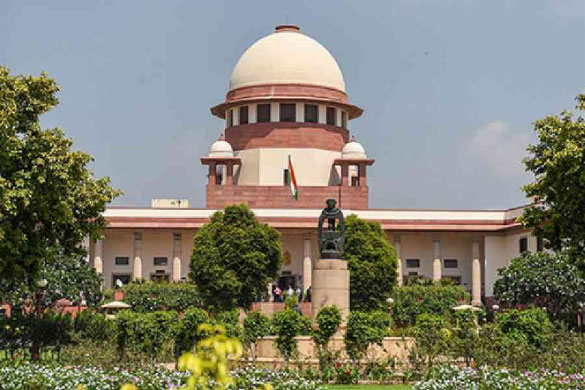
Supreme Court of India.
PTI picture
------------
A nine-judge Supreme Court bench on Thursday reserved its order on petitions related to discrimination against women at religious places, including Sabarimala temple of Kerala, and on the ambit and scope of religious freedom practised by multiple faiths.
A constitution bench headed by Chief Justice Surya Kant heard the matter for 16 days and took note of arguments made by Solicitor General Tushar Mehta, senior advocates C S Vaidyanathan, Abhishek Singhvi, Mukul Rohatgi, Indira Jaising, Neeraj Kishan Kaul and Gopal Sankaranarayanan among others.
The bench also comprised justices B V Nagarathna, M M Sundresh, Ahsanuddin Amanullah, Aravind Kumar, Augustine George Masih, Prasanna B Varale, R Mahadevan and Joymalya Bagchi.
Ahead of the hearing, the Centre had filed written submissions and requested the top court to uphold restriction on the entry of women of menstruating age into the Sabarimala temple.
The Union of India said the issue falls squarely within the domain of religious faith and denominational autonomy, and lies beyond the scope of judicial review.
In September 2018, a five-judge constitution bench, by a 4:1 majority verdict, had lifted the ban that prevented women between the age of 10 and 50 from entering the Ayyappa shrine at Sabarimala and held that the centuries-old Hindu religious practice was illegal and unconstitutional.
Later, on November 14, 2019, another five-judge bench headed by the then CJI Ranjan Gogoi, by a majority of 3:2, referred the issue of discrimination against women at various places of worship to a larger bench.
The bench had then framed broad issues on freedom across religions, saying they cannot be decided without any facts of the particular case.
Besides the Sabarimala case, the verdict also referred to the larger bench the issues of Muslim women's entry into mosques and dargahs, and the entry of Parsi women, married to non-Parsi men, to the holy fire place of an Agiary.
On May 11, 2020, another bench held that its five-judge bench had the power to refer the questions of law to a larger bench for adjudication while exercising its limited power under review jurisdiction in the Sabarimala temple entry case.
On February 16, the top court had said it would commence final hearing in the matter on April 7, which was expected to conclude on April 22.
Solicitor General Mehta, appearing for the Centre, had said that he supported the pleas for review of the Sabarimala verdict, which allowed entry of women of all age groups to the hill-top shrine in Kerala.
Earlier, the top court read out seven questions it had framed on the scope of religious freedom.
Asserting that it was open to addition and deletion of issues framed, the bench had said it would consider "what is the scope and ambit of right to freedom of religion under Article 25 of the Constitution of India?" About the second issue, it said, "What is the inter-play between the rights of persons under Article 25 of the Constitution of India and rights of religious denomination under Article 26?" The third question is whether the rights of a religious denomination under Article 26 are subject to other fundamental rights apart from public order, morality and health.
"What is the scope and extent of the word 'morality' under Articles 25 and 26 of the Constitution, and whether it is meant to include Constitutional morality?" read the fourth question.
The bench had said it would also examine the "scope and extent of judicial review," concerning a religious practice as referred under Article 25.
"What is the meaning of the expression "sections of Hindus" occurring in Article 25 (2) (b) of the Constitution of India?" read the sixth issue.
The top court had said it would examine, as the seventh question, whether a person not belonging to a religious denomination or religious group can question a practice of that "religious denomination or religious group" by filing a public interest litigation.
It had said the larger bench would have to evolve a judicial policy to do "substantial and complete justice" in matters of freedom of religion, such as restrictions on the entry of Muslim and Parsi women into their places of worship.
Source: telegraphindia.com
https://www.telegraphindia.com/india/nine-judge-sc-bench-reserves-order-on-pleas-over-religious-discrimination-against-women/cid/2160572
------
'UGC rules not followed': DU asks St Stephen’s College to halt appointment of first female principal
14.05.26
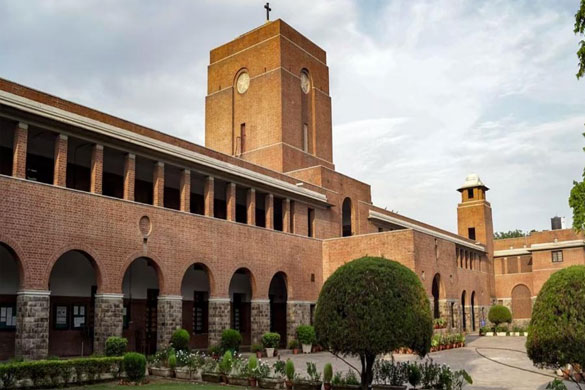
St Stephen's College
File photo
-------------
The Delhi University (DU) has asked St Stephen's College not to proceed with the appointment of the new principal, saying the selection committee was not constituted in accordance with the University Grants Commission (UGC) Regulations, 2018.
In a letter dated May 14, signed by the DU registrar and addressed to the chairman of the college's governing body, the university referred to recent media reports regarding the appointment of a new principal at the college.
According to a notification released by St. Stephen's on Tuesday, the Supreme Council of the college had announced that Susan Elias would be taking charge as the 14th and the first woman principal of the college from June 1.
DU Registrar Vikas Gupta told PTI, "The college is 100 per cent funded by the central government and has to come under the UGC Rules. The regulations cannot be violated." In Thursday's letter to the chairman, the university cited provisions under the UGC Regulations, 2018, on minimum qualifications for the appointment of teachers and academic staff in universities and colleges and measures for maintenance of standards in higher education.
"The Clause of 5.0 of the UGC Regulations, 2018, provides the constitution of selection committees and guidelines on selection procedure. The Sub-clause VIII-A of the Clause 5 provides for the selection committee for appointment of College Principal and Professor," the letter noted, and further detailed the prescribed composition of the selection committee for the appointment of a college principal, including two nominees of the vice-chancellor, higher education experts and subject experts.
It further said that in the case of minority educational institutions, certain members are required to be selected from panels recommended by the vice chancellor and approved statutory bodies.
"In case of Colleges notified/declared as minority educational institutions, one nominee of the Chairperson of the College from out of a panel of five names, preferably from minority communities, recommended by the Vice-Chancellor of the affiliating university of whom one should be a subject expert," it said.
The letter added that the university has not been requested for the nomination of experts according to the provisions of UGC Regulations 2018.
"In view of the above, it appears that the Selection Committee for the appointment of a new principal in the college has not been constituted in accordance with the provisions of UGC Regulations 2018," it added.
The university also said that recommendations made by such a committee "cannot be implemented upon".
Accordingly, the registrar directed the college not to proceed with the appointment process and asked it to convene a meeting of a selection committee constituted according to the UGC norms.
Source: telegraphindia.com
------
Female Workers Among First to Lose Jobs During Iran’s Economic Crisis
MAY 14, 2026
The ILNA News Agency, quoting the Vice President of the Official Union of Iranian Female Workers, wrote: “Female workers in many production and service units are the first group to be pushed out of work during economic slowdowns or workforce reductions.”
In an interview on Thursday, May 14, Fatemeh Vahdat pointed to the economic consequences of the current crisis and war, stating: “In crisis conditions, female workers are more exposed to dismissal than others, especially women who are heads of households and bear the primary burden of providing for their families.”
According to this member of the Official Union of Iranian Female Workers, reports emerging from various regions of Iran show that this issue is not specific to a particular city or province, nor is it limited to just one or a few industries. Fatemeh Vahdat noted: “Female workers are usually the first group eliminated from the workplace at the slightest hint of economic crisis or wartime conditions.”
She emphasized during the conversation that the removal of female workers from the economic sphere does not only impact family livelihoods: “When the breadwinner of a family loses their job, the entire family suffers; it makes no difference whether that person is a man or a woman.”
Another part of the interview addressed the lack of effective support for female workers. Emphasizing that “no practical or immediate action is being taken to prevent these layoffs,” Vahdat said: “Everyone is aware of the conditions, but there is no serious oversight.”
The board member of the Female Workers’ Union also alluded to instances of poverty within society, stating: “These days, we see people who struggle even to buy bread. These are not small signs; if they are not taken seriously, they will transform into major social crises later on.”
Layoffs in production units and job insecurity have intensified in the days following the war. Zahra Behrouz-Azar, Masoud Pezeshkian’s Vice President for Women and Family Affairs, says that about one-third of the unemployment insurance claims registered in the last 50 days belong to women. Given the lower share of women in formal employment, this statistic highlights their greater vulnerability during economic crises.
Official statistics in Iran show that 22.5% of the country’s households are headed by women, who primarily fall into the vulnerable and marginalized segments of society.
Source: iranwire.com
https://iranwire.com/en/news/152404-female-workers-among-first-to-lose-jobs-during-irans-economic-crisis/
-----
FBI offers $200,000 reward for Monica Witt, an ex-US agent accused of spying for Iran
May 15, 2026
The Federal Bureau of Investigation (FBI) has announced a reward of $200,000 for information leading to the arrest and prosecution of Monica Witt, a former US service member and counterintelligence agent accused of espionage for Iran.
Witt was indicted by a federal grand jury in the District of Columbia in February 2019 on charges including transmitting national defence information to the Iranian government. Despite the indictment, she remains at large, and the FBI said efforts to locate and apprehend her are ongoing.
“Monica Witt allegedly betrayed her oath to the Constitution more than a decade ago by defecting to Iran and providing the Iranian regime National Defense Information and likely continues to support their nefarious activities,” said Daniel Wierzbicki, special agent in charge of the FBI Washington Field Office’s Counterintelligence and Cyber Division.
“The FBI has not forgotten and believes that during this critical moment in Iran’s history, there is someone who knows something about her whereabouts. The FBI wants to hear from you so you can help us apprehend Witt and bring her to justice,” he added.
According to the FBI statement, Witt served as an active-duty US Air Force intelligence specialist and later as a special agent for the Air Force Office of Special Investigations between 1997 and 2008. She then worked as a US government contractor until 2010.
Her military and contracting roles gave her access to secret and top secret information related to foreign intelligence and counterintelligence operations, including the identities of undercover US Intelligence Community personnel.
The FBI alleged that Witt defected to Iran in 2013 and that her actions benefited the Islamic Revolutionary Guard Corps (IRGC), which is involved in intelligence collection, unconventional warfare and support for militant groups targeting US interests.
According to the indictment, Witt provided sensitive and classified US national defence information to the Iranian government, allegedly putting American personnel and their families stationed abroad at risk. She also allegedly conducted research on behalf of Iran to help target her former US government colleagues.
The FBI has urged anyone with information about Witt’s whereabouts to contact the agency at 1-800-CALL-FBI, their nearest FBI office, an American Embassy or Consulate, or submit a tip through the FBI’s website.
Source: indianexpress.com
https://indianexpress.com/article/world/fbi-offers-200000-reward-for-monica-witt-an-ex-us-agent-accused-of-spying-for-iran-10690825/
------
Meet the four girls who led fight for right to wear hijab
Atiya Firdos, Nikhila Henry, Kiran Parashar
May 15, 2026
Once they were schoolgirls. Then, they became the face of a fight they would rather not have fought. Four long years and several promises later, the Karnataka government’s withdrawal of the order that in 2022 effectively barred wearing of hijab in pre-university colleges (Classes 11 and 12) is a victory that holds little meaning for them.
However, they hope, it will mean more — that other girls who want to wear the hijab won’t have to make the choice between it and an education.
Aliya Assadi, one of the six students of Government Pre-University College in Udupi who stood her ground over “the right to wear hijab”, says the government’s reversal of the February 22 order is an “acknowledgement” of this, even if “delayed”. “Hijab requires neither politics, nor permission nor public approval. But I am happy that those who come after me will be free to wear hijab in classrooms.”
The hijab row had erupted in late 2021-early 2022 after the six protested over not being allowed to attend classes wearing the head scarf. The protests spread to other districts, and as right-wing Hindu bodies launched a counter-agitation, there was communal tension at several places. In February 2022, the then BJP government in the state passed an order asking students to stick to prescribed uniforms in pre-university and degree colleges. Since hijab is not a part of the uniform, it effectively ruled the head scarf out.
On Wednesday, the Karnataka government withdrew that order, allowing students to wear limited religious- or faith-based symbols along with the prescribed uniform.
The fact that private pre-university colleges allowed the hijab as part of their uniform meant that in the one year after the Karnataka government’s 2022 order, Udupi district saw a significant shift of Muslim students from government to private colleges, admissions data accessed by The Indian Express showed.
For Aliya, A H Almas, Resham Farooq, all of Udupi, and Muskan Khan of Mandya, too, life was not the same after February 2022.
A H Almas
She was among the six students who protested against the Udupi government pre-university college restricting them from wearing hijab. In Class 12 at the time, she didn’t return to class after the 2022 government order, skipping the annual exams and losing a year.
“Finally I wrote an all-India open school examination to pass my Class 12 because no school would let me write the exam in hijab,” Almas says. Now she is in the third year of a B.Sc degree, travelling 65 km to Dakshina Kannada district to college, and wants to become a physiotherapist.
Almas says because of her involvement in the hijab fight, getting admission in Udupi was difficult. “Every day that I go to college now, I thank God for giving me a chance to get an education. Several of my friends dropped out of school. Most of them did a diploma and ended their education. Some got married.”
One overlooked aspect, the 22-year-old adds, is that the hijab restriction also affected Muslim teachers. “It’s not just friends that I lost to the hijab ban. I lost teachers too,” Almas says.
Looking back, she says: “I was too young, I am too young, to fight these battles.” And yes, she is still apprehensive; she doesn’t want to give the name of the college where she is enrolled.
Resham Farooq
Among the students of the Udupi Government Pre-University College who protested against the institute’s hijab order, Resham was at the time in Class 12. While she was also among the petitioners in the Supreme Court against the government order, Resham never pursued studies after the face-off.
Her mother says: “Resham began working at a clothing shop, where she was employed for nearly two years.” Soon after, she got engaged, and a month ago, got married.
While the parents refuse to share Resham’s number, they hope that other girls don’t have to discontinue their education under similar circumstances.
Aliya Assadi
Aliya, who was also in Class 12 at the Udupi pre-university college at the time and joined the Supreme Court petition against the Karnataka government order, says the row only made her more determined to fight for her rights. So, she decided to pursue law, and is now in her third year.
Talking about the days after the hijab restriction, Aliya, 21, says: “We had to take transfer certificates and finish our Class 12 via open schooling… But, we fought, so that no one could deny us the right to education because of hijab.”
While the government withdrawing the 2022 order makes her happy, she wants it to do more. Many of her friends dropped out of school because of the order, Aliya says. “The government should compensate them for those lost years. Those sisters who could not give their exams should be encouraged to appear now, and those who did not complete their studies should be encouraged to finish their schooling.”
Muskan Khan
In Mandya, a town 600 km away from Udupi and its communal politics, Muskan’s defiance in the face of a crowd of young men heckling her for wearing a hijab and raising communal slogans, had become a stark symbol of the fight.
However, soon after, Muskan, who was in the second-year of her B.Com course at the noted PES College of Engineering, dropped out.
Her father Mohammad Hussain says it was a traumatic time for the family. “Muskan wanted to study and later she approached two more colleges for admission, but they also told her that hijab would not be allowed in class.”
According to Hussain, Muskan also explored the option of open university, but a friend said there too she would not be allowed for exams in hijab. So she stayed at home and pored over law books, having developed an interest in the subject, he says.
While Muskan could not be contacted, Hussain, a father of three who runs a gym and an electronics shop, says his other daughter is doing engineering while his son helps him in business. Muskan wants to rejoin college too now, Hussain says.
Abdul Azeez Udyavar, who is associated with the Udupi District Muslim Okkutta that supported the girl students at the time, says the Karnataka government’s reversal of the 2022 order is welcome. “But it should also be made clear that religious practices must never prevent anyone from getting an education. A uniform must not be a bar,” Udyavar says.
CPI (M) Dakshina Kannada secretary Abdul Muneer Katipalla asks why the Congress government in the state took so long to reverse the order. “The Congress had promised to do it in its 2023 poll manifesto, but waited three years. The 2022 order hit the education of so many as well as the secular fabric of society,” he says.
Katipalla adds that people from both sides fanned the row, with the BJP seeking to polarise votes based on religion ahead of the 2023 elections, and the Muslim fundamentalists using it to gain ground. The new order too may be used by the BJP against the Congress in the 2028 elections, the CPI(M) leader warns.
The Jamaat-e-Islami Hind, Karnataka, says the government’s changed stand will help ensure that Muslim girl students can continue their education. Its president Mohammad Saad Belgami says: “Educational institutions must remain spaces where students feel secure, respected and confident about pursuing their studies.”
Source: indianexpress.com
https://indianexpress.com/article/india/karnataka-school-hijab-ban-hijab-doesnt-need-politics-or-permission-we-are-happy-for-those-after-us-10690183/
------
Why Siddaramaiah government’s reversal of school hijab ban touches off a storm
Akram M
May 15, 2026
The recent decision of the Congress-led Karnataka government to withdraw the previous BJP government’s 2022 order banning hijab in schools and pre-university colleges (classes 11 and 12) has triggered sharp reactions from the Opposition BJP-led NDA in the state.
While the BJP has attacked the Congress government, calling the decision “appeasement and vote bank politics”, the JD(S) has questioned its timing.
The Congress government led by Chief Minister Siddaramaiah has however strongly defended the move, saying it is meant to protect the “tradition and culture-based symbols” of all communities, not only Muslims.
In February 2022, the then Basavaraj Bommai-led BJP government had issued the order stipulating that students must stick to the uniform prescribed by schools and PU (pre-university) colleges, triggering protests across the state and stoking communal tensions, especially in coastal Karnataka, where the issue had first erupted in December 2021.
Following the BJP government’s order, issued weeks ahead of then annual exams, several Muslim girls wearing hijab were stopped from attending their classes. Subsequently, many Muslim girls had reportedly discontinued their schooling or were forced to enrol themselves in educational institutions that permitted hijab.
Hearing the matter, the Karnataka High Court had upheld the state government’s order, ruling that wearing hijab was not part of essential religious practice in Islam. This was challenged in the Supreme Court. In October 2022, the apex court delivered a split verdict and referred the case to a larger bench.
The Siddaramaiah government’s order, issued Wednesday, allows students to “wear tradition and culture based symbols commonly worn by students, such as peta/turban, janivara/holy thread, Shivadara, Rudraksha, headscarf/hijab” or any such similar symbols associated with culture and tradition. “These should not be a deterrent for the discipline, safety and identity of the student,” the order states.
Political slugfest
Union Minister for Consumer Affairs, Food and Public Distribution, Prahlad Joshi, the Dharwad MP, slammed the Congress government’s decision, saying it was “unfortunate” that it has taken the call when the issue has been pending before the Constitution Bench of the Supreme Court.
“When Uniform Civil Code (UCC) is being implemented across the country, Karnataka has adopted the policy of divide and rule… To appease one particular group, the education system is being spoiled,” he charged.
Karnataka BJP president B Y Vijayendra asked the Siddaramaiah government to immediately withdraw the order, warning that it will be responsible for consequences. School uniform, he said, was a symbol of equality. “Rather than instilling the feeling of ‘we are all one’ among students, to appease its vote bank, the corrupt Congress government is trying its hands at communal division at school premises,” he alleged.
JD(S) leader and Union Minister for Steel and Heavy Industries, H D Kumaraswamy, linked the government’s order to the results of the recent Davangere South by-election, claiming that the Congress feared that Muslim voters were turning away from it.
Referring to an incident reported in April, when a PU student in Bengaluru belonging to the Brahmin community was asked to remove his janivara (sacred thread) before attending an entrance exam, Kumaraswamy said the government has used it to issue revised guidelines for school uniforms. “I don’t know whether the Supreme Court has vacated the case. I am surprised that the government has announced it… What were they doing for three years? Post Davanagere results, they have done this,” he said.
Bypoll row
In the April by-election to the Davanagere South seat, while the Congress retained its seat
by winning it by about 5,700 votes, its margin was a sharp plunge from about 27,900 votes in 2023. A section of Muslims, who account for over a third of the constituency’s voters, were apparently upset that a member of the community was not fielded in the bypoll. A rebellion ensued among some Muslim leaders, resulting in the suspension of MLC Abdul Jabbar from the party and removal of another MLC Naseer Ahmed from his cabinet rank as the CM’s political secretary.
The Federation of Karnataka Muslim Organisations is also going to hold a rally in Bengaluru on May 16, where it would release a report on the state of Muslims during the Congress’s three-year rule. Among the key issues being raised by the Federation was one pertaining to the “delay” in lifting the hijab ban in schools.
Speaking to The Indian Express, a Muslim leader from the Congress claimed that School, Education and Literacy Minister Madhu Bangarappa being flanked by Health and Family Welfare minister Dinesh Gundu Rao and MLA Rizwan Arshad at the press conference to announce the new uniform order indicated that the decision was aimed at assuaging the concerns of the Muslim community.
“There were some concerns over the fallout of the Davanagere South bypoll, as SDPI (a Muslim outfit) gained the votes and reduced our margin. The decision will send a message that the government is not ignoring the community,” he said.
Arshad, however, dismissed claims that the order was linked to the bypoll or stemmed from any fears of the Federation’s rally.
Noting that revoking the decision was part of the Congress’s manifesto pledges for the 2023 elections, Arshad told The Indian Express that it was delayed as “Hijab was a decision which was a little complicated and had to be taken delicately.” After multiple consultations, the CM reviewed the entire issue and solved it, he said.
The lower margin of the Congress’s victory in Davanagere South was not new, Arshad said, noting that Muslim candidates from other parties had polled well in previous elections too. “Even during this bypoll, 70% of Muslims voted for Congress,” he claimed.
The CM has strongly defended the decision, saying “This is not a dress code intended to appease or hurt anyone; it is a dress code that respects the practices and traditions of all castes and religions.”
The dress code implemented in state educational institutions is in line with the dress code followed in Kendriya Vidyalayas under the Central government, he said, asking “If allowing the hijab is considered appeasement of Muslims, then is allowing the wearing of the sacred thread or turban also appeasement of those respective religions?”
Siddaramaiah alleged that when sacred threads were removed in some places, or when Muslim girl students wore hijabs in a few schools in Udupi, the BJP leaders attempted to ignite communal hatred across the state. “Do they not see the tears of students crying due to the cancellation of the recent NEET examination (following alleged paper leak)?” he added.
Source: indianexpress.com
https://indianexpress.com/article/political-pulse/why-siddaramaiah-governments-reversal-of-school-hijab-ban-touches-off-a-storm-10690976/
----
Johor royal family attends Berandam Surai ceremony for youngest princess
15 May 2026
JOHOR BAHRU, May 15 — A Berandam Surai ceremony for the youngest daughter of Johor Regent, Tunku Mahkota Ismail Sultan Ibrahim, and his consort, Che’ Puan Mahkota Khaleeda Bustamam, was held at Istana Bukit Serene here today.
The ceremony was graced by Their Majesties Sultan Ibrahim and Raja Zarith Sofiah, King and Queen of Malaysia.
Also present was the Raja Muda of Johor, Tunku Iskandar Tunku Ismail, and the other royal children.
Tunku Khadeeja Khayra Iskandariah Tunku Ismail was born on April 5. She is the fifth child and third daughter of Tunku Ismail and Che’ Puan Khaleeda.
Earlier, pictures and a description of the traditional royal event were uploaded to Sultan Ibrahim’s and Tunku Ismail’s official Facebook pages.
The Berandam Surai ceremony is a royal Malay custom held within the first seven days after the birth of a prince or princess.
The ceremony is carried out to express gratitude for the birth of the child.
Source: malaymail.com
https://www.malaymail.com/news/malaysia/2026/05/15/johor-royal-family-attends-berandam-surai-ceremony-for-youngest-princess/220054
------
CAIR Welcomes Indian Court Ruling Allowing Hijab in Schools
May 14, 2026
The Council on American-Islamic Relations (CAIR), the nation’s largest Muslim civil rights and advocacy organization, today welcomed a decision by the Karnataka state government in India to revoke a 2022 order effectively banning the wearing of hijabs in government-run schools and colleges.
The move follows years of controversy and legal challenges surrounding the ban, which had been upheld by an Indian court in 2022 and widely criticized by human rights advocates and religious freedom organizations.
In 2022, CAIR condemned the Indian court ruling that upheld the ban on wearing the Islamic headscarf, or hijab, in educational institutions in Karnataka, calling the decision discriminatory and a violation of religious freedom.
In a statement, Washington, D.C., based CAIR said:
“CAIR welcomes this important step toward restoring religious freedom and equal access to education for Muslim students in India. No student should be forced to choose between their faith and their education. Policies targeting the hijab stigmatize Muslim women and girls and undermine the fundamental right to practice one’s religion freely.
“While this ruling is a positive development, the far-right Hindutva government of India continues to persecute and enable violence against Muslims and other religious minorities. We urge the State Department to designate India a country of particular concern.”
CAIR has repeatedly expressed concern over rising anti-Muslim discrimination and Hindu nationalist policies in India, including restrictions targeting Muslim religious practices and attire.
Earlier this year, CAIR welcomed a call by the U.S. Commission on International Religious Freedom (USCIRF) for the U.S. government to place sanctions on India’s anti-Muslim, fascist, Nazi-inspired RSS militia and designate India a country of particular concern over its oppression of religious minorities.
Source: cair.com
https://www.cair.com/press_releases/cair-welcomes-indian-court-ruling-allowing-hijab-in-schools/
------
Women’s presence plummets in new Iraqi cabinet
2026-05-14
Iraq's new cabinet proposed by Prime Minister-designate Ali al-Zaidi included just one woman among its confirmed ministers, down from three in the caretaker government of Mohammed Shia al-Sudani.
In the new cabinet, Sarwa Abulwahid remains the sole female minister, taking over the Environment portfolio. She also leads the New Generation Movement (Al-Jeel Al-Jadeed) parliamentary bloc, a Kurdish party currently holding six parliamentary seats.
Under al-Sudani’s government, formed in October 2022, three women held ministerial posts: Taif Sami Mohammed as Finance Minister, Hiyam Aboud al-Yasiri as Communications Minister, and Evan Faeq Gabro as Minister of Migration and Displacement, representing the Christian quota.
While the Iraqi constitution guarantees women 25% of seats in the 329-member parliament, there is no comparable requirement for cabinet positions, leaving female representation in government dependent on political bargaining and party choices.
Earlier today, Iraq’s Council of Representatives approved 14 ministerial nominees by absolute majority vote, filling key portfolios across economic, social, and diplomatic sectors. Lawmakers rejected nominees for the ministries of Planning, Culture, Reconstruction, Higher Education, and Interior.
Source: shafaq.com
https://shafaq.com/en/society/Women-s-presence-plummets-in-new-Iraqi-cabinet
------