
Nine-Judge SC Bench To Hear Pleas On Discrimination Against Women At Religious Places From April 7
New Age Islam News Bureau
16 February 2026
· Nine-judge SC bench to hear pleas on discrimination against women at religious places from April 7
· Empowering Arab women key to sustainable development and social stability: Al Nuaimi
· ‘Women may be wearing burqas, but are getting educated’ in Bangladesh
· Global Feminisms, Local Realities: Women’s Rights in India’s International Context
· Russian 'pick-up artist' accused of secretly filming women in Ghana
· African First Ladies Recognise Oluremi Tinubu for Advancing Girl-Child Education, Hygiene
· Princess Noor Pahlavi stuns at LA Iran protests: ‘A nation reclaiming itself’
Compiled by New Age Islam News Bureau
------
Nine-judge SC bench to hear pleas on discrimination against women at religious places from April 7
16 Feb 2026
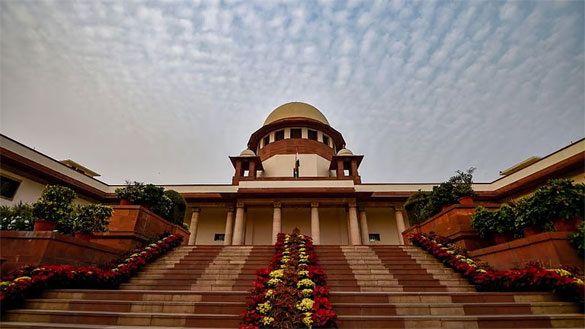
Supreme Court of India in New Delhi. (File photo | PTI)
---------
NEW DELHI: The Supreme Court on Monday said that a nine-judge bench will commence final hearing on a batch of petitions relating to discrimination against women in religions and at religious places, including Kerala's Sabarimala Temple.
A bench comprising Chief Justice Surya Kant and Justices Joymalya Bagchi and Vipul M Pancholi said the bench, which will be constituted by the CJI, will commence the crucial hearing on the petitions on April 7.
It said that the hearing is likely to conclude on April 22.
The bench asked the parties to file their written submissions on or before March 14.
Solicitor General Tushar Mehta for the Centre said he supported the pleas for review of the Sabarimala verdict that allowed entry of women of all age groups in the sacred hill-top shrine in Kerala.
The bench-appointed lawyer Krishna Kumar Singh is the nodal counsel for parties supporting the review of the Sabarimala verdict.
It also appointed Shashwati Pari as the nodal counsel for those opposing the review of the verdict.
"We also deem it appropriate that senior advocate K Parameshwar along with Shivam Singh are appointed as the amicus.
Singh shall submit the stand taken by all parties before this court," the CJI said."
The nine judge bench will begin hearing the Sabarimala review case on April 7, 2026 at 10:30 am.
The review petitioners or the party supporting them shall be heard from April 7 to April 9.
The ones opposing the review shall be heard on April 14 to April 16.
The rejoinder submissions, if any will be heard on April 21, 2026 followed by the final and concluding submissions by the learned amicus curiae which is expected to be over by April 22," the order said.
The bench asked the lawyer for the parties to adhere to the time schedule.
On May 11, 2020, the top court had said that its five-judge bench had powers to refer the questions of law to a larger bench for adjudication while exercising its limited power under review jurisdiction in the Sabarimala temple entry case.
Two months prior to that, the SC had rejected the objections that a five-judge bench on November 14, 2019, was wrong in making a reference to a larger bench without deciding the review petitions challenging the 2018 Sabarimala verdict, which had allowed women of all age groups to enter the hill-top shrine in Kerala.
It had framed seven questions on the scope of religious freedom in various religions and made it clear that it was open to the addition and deletion of issues framed.
The bench had framed questions which include, "What is the scope and ambit of right to freedom of religion under Article 25 of the Constitution of India?" and "What is the inter-play between the rights of persons under Article 25 of the Constitution of India and rights of religious denomination under Article 26?" Besides other questions, the top court said it would also examine whether a person not belonging to a religious denomination or religious group can question a practice of that "religious denomination or religious group" by filing a public interest litigation (PIL).
Besides the Sabarimala case, the verdict had also referred issues of entry of Muslim women into mosques and dargahs and of Parsi women, married to non-Parsi men, being barred from the holy fire place of an Agiary, to the larger bench.
Source: newindianexpress.com
Please click the following URL to read the text of the original Story
https://www.newindianexpress.com/nation/2026/Feb/16/sc-issues-notice-to-centre-on-plea-challenging-2023-data-protection-law
------
Empowering Arab women key to sustainable development and social stability: Al Nuaimi
16/02/2026
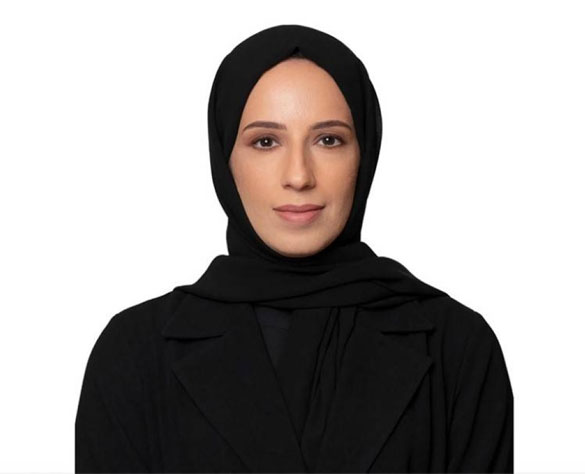
Minister of Social Development and Family HE Buthaina bint Ali Al Jabr Al Nuaimi has stressed that empowering Arab women, safeguarding their rights, and enhancing their full participation constitute fundamental pillars for achieving sustainable development and strengthening societal stability.The minister underscored the importance of moving from political commitment to practical implementation through integrated, evidence-based, measurable, and sustainable policies.
She was addressing the 45th session of the Arab women committee, chaired by Qatar.The session was held on February 10 and 11 virtually, with the participation of ministers from Arab countries, as well as representatives of the General Secretariat of the League of Arab States and relevant organizations.
Al Nuaimi expressed her appreciation to the State of Palestine for chairing the 44th session, commending its efforts to support Arab women’s issues and advance joint Arab action in this field.
She reviewed key national indicators related to women’s empowerment in Qatar, noting that women’s labour force participation reached 63.3 percent in 2024, ranking among the highest globally.
She also highlighted the decline in the maternal mortality rate to four cases per 100,000 live births in 2023, reflecting the strength of the healthcare system and the quality of maternal care services. She further noted the rise in female education completion rates, enhancing women’s readiness to participate effectively in the knowledge economy and future pathways.
She explained that Qatar, within the framework of its National Vision, adopts a comprehensive approach centered on investing in people, promoting equal opportunities, and protecting the most vulnerable groups, particularly women and girls. She emphasized that while figures and indicators are important, they must translate into sustainable institutional policies that positively impact women’s daily lives and contribute to family and societal stability.
The session discussed several organizational and substantive agenda items, including the adoption of the agenda and review of proposed topics and related explanatory memoranda, culminating in decisions and recommendations reflecting Arab countries’ priorities for the coming phase and strengthening joint Arab action in the field of women’s empowerment.
At the conclusion of the meeting, the minister reaffirmed Qatar’s commitment to continued cooperation with sisterly Arab states in a spirit of partnership and shared responsibility, aiming to achieve practical outcomes that enhance Arab women’s empowerment, support family stability, and contribute to community development based on justice, equity, and sustainability.
Source: qatar-tribune.com
https://www.qatar-tribune.com/article/219686/nation/empowering-arab-women-key-to-sustainable-development-and-social-stability-al-nuaimi
------
‘Women may be wearing burqas, but are getting educated’ in Bangladesh
Aparna Nair
16 Feb 2026
Just a day after flying in from New York, Bangladeshi author Taslima Nasrin sits through her session at the Kerala Legislature International Book Festival and then settles down for a nearly two-hour interview. She says she likes collecting photographs from places where people value her. Raised as an atheist by her father, Nasrin recalls reading the Quran in Arabic without understanding it. When she read it in Bengali, she found its tenets oppressive to women. A doctor by profession, she chose to speak up — a decision that turned her life into a whirlwind after she was exiled from Bangladesh. As Bangladesh is set for a new era after the general elections, we present excerpts from an interaction:
Will elections in Bangladesh change the situation there?
There is some hope, though I don’t know how much. One day, people in Bangladesh will tire of Islamic laws and revolt, like in Iran, where people now say: ‘We are not a Muslim nation, we are Persians. And we don’t want Islamic laws.’
How do you view Muhammad Yunus, once seen as a Nobel Peace Prize icon?
He is a fundamentalist. I think he is like Aung San Suu Kyi or Henry Kissinger — peace prize winners who later proved harmful. Mob violence has been going on for a year, and he does not care.
You have donned many roles: doctor, author, activist… which one do you identify with most?
None. I just want to be called an honest person. Just a human being. But I am not accepted — neither in Bengal nor in Bangladesh. The Left government of West Bengal banned me in 2003. But now the Left Front government honours me in Kerala. Why? I am the same person.
What do you think explains this paradox?
I believe in the Left ideology of equal rights for all. But I don’t know why they opposed ‘Dwikhandito’, the third part of my autobiography. The West Bengal government had banned it because I wrote against the idea of Islam as a state religion. Ganashakti, the Left newspaper, wrote extensively against ‘Lajja’. Only one person — E M S Namboodiripad — wrote in my support, in ‘People’s Democracy’.
How are you received in West Bengal today?
[Chief Minister] Mamata Banerjee banned my TV series. I want to be in Kolkata as I am Bengali and belong to that culture. But she won’t allow it.
Bangladesh was once a hub of Bengali intellect. What changed?
After Partition, many Hindus left the land. It became a Muslim-majority state. Initially, Hindus made up about 30 per cent of the population. Now it is only around 8 per cent.
Are you implying that a Muslim majority changes the character of the land?
Of course. The kind of education the Muslim majority receives also plays a role. Governments used religion for their own interests, allowing mosques and madrasas to come up everywhere, where sectarianism was taught. Sermons containing anti-Hindu and anti–non-Muslim hate were allowed. As a result, Hindus and Buddhists were attacked. Every leader did this — (Hussain Muhammad) Ershad, Khaleda Zia, even (Sheikh) Hasina. She built 560 model mosques. Why do you need so many?
Bangladesh was culturally rich. Fundamentalists occupied the country with the help of successive governments. Muhammad Yunus did not destroy the country one day; the destruction was already in process.
Bangladesh has had women leaders….
That is dynastic politics. Nothing more. Women have no real rights. Dynasties put Sheikh Hasina, Khaleda Zia, and Roshan Ershad in power. Dynastic politics must end.
You had backed the CAA…
I want it extended to free thinkers and writers banned in countries like Bangladesh and Pakistan. Many of us carry Muslim names but are atheists. We were forced out for opposing Islamic laws. From abroad, we speak against violence — against fanatics burning Hindu homes to seize land.
You have been called a Hindutva supporter…
That is propaganda by jihadis. Whenever I criticise Islam, they brand me a R&AW agent or a BJP–RSS supporter. This is common, especially when I speak about Muslim women’s rights.
Many women now speak up for women’s rights. Will things change?
Change is happening. Women may be wearing burqas, but they are getting educated and working. It is slow, but it is happening. At the same time, fundamentalism is growing. Free thinkers must challenge the idea that Islam is exempt from criticism. It must reform.
Has writing been a liberating experience for you?
Writers cannot bring about revolution overnight. But some people have changed their ideas because of my work. Some extremists have become liberal. Writing can influence governments too, but it takes time. Good books can influence. Religious fanatics, however, read only one book.
Source: newindianexpress.com
https://www.newindianexpress.com/cities/delhi/2026/Feb/16/women-may-be-wearing-burqas-but-are-getting-educated
-----
Global Feminisms, Local Realities: Women’s Rights in India’s International Context
February 15, 2026
Global Context of Women’s Rights
India’s struggle for women’s rights exists not in isolation but within a global context of feminist movements, international human rights frameworks, transnational advocacy networks, and cross-border solidarity.
Global Movements and Milestones
From the UN Decade for Women to #MeToo going viral across continents
From CEDAW treaty obligations to debates about cultural relativism versus universal rights
Influence on Indian Feminism
Indian feminism has been shaped by and has contributed to global women’s movements.
Key Analytical Dimensions
How global feminisms influence local struggles
How Indian activists engage with international frameworks
How cultural contexts shape interpretations of rights
How power dynamics within global feminism reproduce colonialism’s legacies
Conclusion: Understanding the International Dimension
Understanding this international dimension—how global feminisms influence local struggles, how Indian activists engage with international frameworks, how cultural contexts shape interpretations of rights, and how power dynamics within global feminism reproduce colonialism’s legacies—is essential for comprehending contemporary women’s rights advocacy and charting inclusive, effective pathways forward.
Historical Connections: Colonialism, Nationalism, And Early International Feminisms
The relationship between Indian and global feminisms has deep historical roots intertwined with colonialism, nationalism, and transnational reform movements.
Colonial Encounters And The “Woman Question”
British colonialism positioned Indian women as proof of Indian society’s backwardness requiring colonial “civilizing missions.” Colonial discourse focused obsessively on practices like sati, purdah, and child marriage, deploying them to justify colonial rule as liberating Indian women from Indian men.
This colonial feminism was profoundly paternalistic and racist, viewing Indian women as passive victims needing British rescue. It served imperial interests more than women’s liberation, and when Indian practices threatened colonial power—such as women’s participation in anti-colonial resistance—colonial authorities abandoned liberatory rhetoric.
Indian Reformers Engagement
Raja Ram Mohan Roy
Ishwar Chandra Vidyasagar
Indian reformers like Raja Ram Mohan Roy and Ishwar Chandra Vidyasagar engaged with colonial discourse while attempting to reclaim reform as indigenous project. However, their efforts were complicated by colonial power dynamics—reforms they championed were sometimes implemented by colonial authorities in ways that reinforced foreign domination.
Double Binds Faced By Indian Women
Indian women navigating this terrain faced double binds. Embracing reform risked appearing to validate colonial critiques of Indian society and betray nationalist solidarity. Defending traditions against colonial attack meant accepting practices that harmed women. Finding third paths—reforms articulated in indigenous terms, challenging both colonial power and patriarchal traditions—required sophisticated navigation.
Nationalist Period And International Women’s Movements
Late 19th century women’s movements
Early 20th century suffrage activism
International women’s conferences
During the independence struggle, Indian women activists engaged with international women’s movements emerging in the late 19th and early 20th centuries. Sarojini Naidu represented India at international women’s conferences, connecting Indian nationalism with global women’s suffrage movements.
All-India Women’s Conference (AIWC)
The All-India Women’s Conference (AIWC), founded in 1927, maintained international connections while focusing on India-specific issues. These connections provided inspiration, resources, and solidarity while requiring negotiation between international feminist agendas and local priorities.
However, international women’s movements of this era were predominantly Western, white, and middle-class, with limited understanding of colonialism’s impacts or inclusion of colonized women’s perspectives. Indian feminists selectively engaged—adopting useful frameworks while resisting agendas that ignored imperialism or imposed Western models uncritically.
Post-Independence: Non-Aligned Movement And Third World Feminisms
Solidarity among newly independent nations
Shared experiences of colonialism
Development challenges
Negotiating tradition and modernity
Post-independence, India’s international engagement on women’s issues occurred partly through the Non-Aligned Movement and solidarity among newly independent nations. Women from Global South countries connected around shared experiences of colonialism, development challenges, and negotiating tradition and modernity.
Third World feminisms emerged, critiquing Western feminism’s racial blindness, class privilege, and cultural imperialism while articulating context-specific analyses of gender oppression intersecting with colonialism, racism, and economic exploitation. Indian feminists contributed to these conversations, emphasizing that women’s liberation in postcolonial contexts required addressing imperialism and economic dependency alongside patriarchy.
International Legal Frameworks And Their Implementation
International human rights law provides frameworks that Indian activists have strategically deployed while navigating tensions between universal standards and cultural contexts.Cyber Law Resources
CEDAW And International Commitments
India ratified the Convention on the Elimination of All Forms of Discrimination Against Women (CEDAW) in 1993, committing to eliminate discrimination in law and practice, ensure substantive equality, and report progress to the CEDAW Committee.
CEDAW provides comprehensive framework addressing civil, political, economic, social, and cultural rights. It requires states to modify social and cultural patterns eliminating stereotypes and practices based on inferiority or subordination of women. This broad mandate supports advocacy across multiple domains—education, employment, health, political participation, violence prevention, and legal reform.
CEDAW Advocacy And Accountability
Indian activists cite CEDAW in advocacy, litigation, and policy campaigns. The treaty’s provisions bolster demands for legal reforms, provide benchmarks for measuring progress, and create accountability through periodic reporting to CEDAW Committee. Shadow reports by civil society organizations supplement government reports, documenting gaps and violations.
CEDAW Reservations And Tensions
However, India filed reservations on certain CEDAW provisions—particularly Article 16(1) regarding equality in marriage and family relations—citing conflicts with personal laws. These reservations, while partially withdrawn, reflect tensions between international standards and domestic legal pluralism, religious autonomy, and political sensitivities.
Beijing Platform And Subsequent Conferences
The Fourth World Conference on Women in Beijing (1995) produced the Beijing Platform for Action, comprehensive agenda addressing twelve critical areas including poverty, education, health, violence, armed conflict, economy, power, institutional mechanisms, human rights, media, environment, and girl children.
Participation And Transnational Cooperation
Indian government and civil society delegations participated actively in Beijing and subsequent review conferences (Beijing +5, +10, +15, +20, +25). These conferences provide spaces for networking, learning from other countries’ experiences, building transnational coalitions, and pressuring governments for commitments.
Policy Impact In India
The Beijing Platform influenced Indian policy—National Policy for Empowerment of Women (2001) explicitly references Beijing commitments. However, implementation remains uneven, with progress on some areas alongside stagnation or regression on others. The distance between conference commitments and ground realities reflects challenges translating international agreements into domestic change.
Networking and coalition building
Learning from other countries’ experiences
Government accountability pressure
Sustainable Development Goals
The Sustainable Development Goals (SDGs), adopted in 2015, include Goal 5 on achieving gender equality and empowering all women and girls. SDG 5 addresses discrimination, violence, harmful practices like child marriage and FGM, unpaid care work, political participation, and access to sexual and reproductive health.
Gender is also integrated across other SDGs—education, health, economic growth, decent work—reflecting understanding that gender equality is essential for all development goals. India’s SDG implementation framework includes gender indicators, though progress varies across states and indicators.
Advocacy And Global Governance
International frameworks like SDGs provide advocacy tools—benchmarks for measuring progress, visibility for neglected issues, and global solidarity around shared goals. However, they also reflect power imbalances—developed countries and international institutions shaping agendas that Global South countries then implement, sometimes with limited ownership or contextual adaptation.
International Criminal Justice
International criminal law’s evolution addressing gender-based violence—particularly conflict-related sexual violence—has influenced domestic advocacy. The Rome Statute establishing the International Criminal Court recognizes rape, sexual slavery, forced pregnancy, and other sexual violence as crimes against humanity and war crimes.Cyber Law Resources
While India hasn’t ratified the Rome Statute, international criminal justice developments inform domestic debates about accountability for mass sexual violence—such as during Partition, communal riots, or conflict situations. International precedents strengthen arguments for comprehensive domestic frameworks addressing systematic gender-based violence.
Transnational Networks and Solidarity
Beyond formal frameworks, transnational feminist networks create spaces for exchange, solidarity, and collective action.
Knowledge Exchange and Movement Building
International conferences, workshops, exchanges, and networks facilitate knowledge sharing across borders. Indian activists learn from other countries’ strategies, legal innovations, and organizing models. Reciprocally, Indian movements contribute analyses and practices to global feminism—Self-Help Group models, grassroots organizing strategies, or intersectional approaches addressing caste alongside gender.Supreme Court Updates
Strategies from other countries
Legal innovations
Organizing models
Self-Help Group models
Grassroots organizing strategies
Intersectional approaches addressing caste alongside gender
Organizations like DAWN (Development Alternatives with Women for a New Era), with Indian members, create South-South dialogue among feminist activists and scholars from Global South, centering perspectives often marginalized in Western-dominated international spaces.
Digital connectivity has intensified transnational exchange. Activists share resources, coordinate campaigns, and build solidarity across borders through social media, video conferences, and online platforms. #MeToo spreading globally, with country-specific manifestations, demonstrated digital-era transnational feminism’s possibilities and limitations.
Funding and Resource Flows
International funding—from UN agencies, bilateral aid programs, private foundations—supports Indian women’s organizations, particularly grassroots groups with limited domestic funding access. This funding enables programs, advocacy, research, and capacity building that might not otherwise occur.
However, donor funding creates dependencies and potential distortions. Donor priorities may not align with local needs. Reporting requirements consume organizational resources. Funding tied to specific issues or approaches may skew agendas. The precarity of project-based funding undermines sustainability.Cyber Law Resources
Debates exist about whether international funding empowers or co-opts Indian feminism—whether it provides essential resources or compromises autonomy, whether it builds capacity or creates dependency, whether it amplifies local voices or imposes external agendas. These tensions require constant navigation.
Solidarity Campaigns
Transnational solidarity campaigns connect local struggles to global audiences. International attention on specific cases—Bhanwari Devi rape case, Delhi gang rape, or individual women facing honor violence—brings pressure that sometimes influences outcomes.
Bhanwari Devi rape case
Delhi gang rape
Honor violence cases
However, such campaigns can be double-edged. International attention may sensationalize, exoticize, or instrumentalize women’s suffering. Western media’s selective focus on certain “shocking” practices while ignoring others, or framing issues through Orientalist lenses positioning the West as civilized and India as backward, can reinforce colonial stereotypes.
Effective solidarity requires centering affected communities’ voices and priorities rather than imposing external interpretations or solutions. Solidarity means amplifying local movements’ demands, not speaking for them or pursuing agendas they haven’t prioritized.
Debates: Universal Rights Versus Cultural Relativism
A central debate in international feminism concerns balancing universal human rights with respect for cultural diversity—a tension particularly acute around women’s rights.
The Universalist Position
Universalists argue that certain rights—bodily autonomy, freedom from violence, political participation, education, health—are fundamental to human dignity regardless of cultural context. Gender-based violence, denial of education, or political exclusion violate women’s rights whether practices are culturally traditional or not.
From this perspective, cultural relativism becomes excuse for tolerating oppression. Appeals to culture, tradition, or religion shouldn’t override women’s fundamental rights. Universal human rights frameworks provide standards for evaluating practices across societies, preventing rights violations from being protected as cultural prerogatives.
Universalists note that appeals to culture often come from powerful voices within communities—male religious leaders, political elites—rather than from women experiencing oppression. Romanticizing tradition ignores how patriarchal power operates through culture to maintain male dominance.
The Cultural Relativist Critique
Cultural relativists counter that universal rights frameworks are Western constructs reflecting particular cultural, historical, and philosophical traditions, not truly universal truths. Imposing these frameworks on non-Western societies constitutes cultural imperialism, continuing colonialism through human rights discourse.
Different cultures have different values, priorities, and understandings of human flourishing. What Western feminism considers oppression may be experienced differently in other contexts. Practices must be understood within their cultural meanings rather than judged by external standards.
Relativists argue that Western feminism’s focus on individual autonomy, choice, and equality reflects particular cultural values not necessarily shared globally. Emphasis on individual rights over community obligations, personal fulfillment over family harmony, or gender equality over complementary gender roles represents specific cultural positioning, not universal truth.
They note historical patterns where Western “women’s rights” rhetoric has justified imperialism—from colonial “civilizing missions” to contemporary military interventions claimed to liberate women. Suspicion of Western feminist universalism thus reflects justified wariness based on historical experience.
Beyond Binary: Contextual Universalism
Many contemporary thinkers reject simple binary between universalism and relativism, seeking third paths recognizing both legitimate core rights claims and cultural specificity’s importance.
Contextual universalism acknowledges universal human rights—particularly bodily integrity, freedom from violence, basic capabilities—while recognizing that rights are interpreted and implemented in culturally specific ways. Universal commitments to gender equality can manifest through diverse cultural forms rather than requiring uniform Western models.
This approach emphasizes dialogue—between international frameworks and local contexts, between external human rights norms and internal reform movements, between universal principles and culturally resonant implementations. It recognizes that meaningful change comes through internal movements articulating rights in culturally compelling ways rather than external imposition.
Intersectional and decolonial approaches critique both unreflective universalism ignoring power imbalances in defining “universal” norms and relativism that protects oppression through culture. They emphasize centering marginalized voices—women from Global South, indigenous women, women of color—in defining rights agendas rather than either Western universalism or male community leaders claiming cultural authority.
Power Dynamics in Global Feminism
Global feminism is not a level playing field but shaped by historical and contemporary power imbalances requiring critical examination.
Western Hegemony
Global feminist discourse, institutions, and agendas have been disproportionately shaped by Western, particularly Anglo-American, feminism. Major feminist texts, theories, and movements originate predominantly in West. International conferences, UN agencies, and funding organizations are headquartered in and controlled by Western countries.
This hegemony means Western feminist priorities—choice, individual autonomy, professional advancement—dominate global agendas even when these don’t reflect most urgent concerns for women facing poverty, displacement, or conflict. Issues Western feminism prioritizes receive disproportionate attention and resources.
Western feminist theory has often universalized from white, middle-class Western women’s experiences, treating them as representative of all women. Early Western feminist works analyzing “women’s oppression” often ignored how race, colonialism, and imperialism shaped women’s experiences, effectively speaking only about privileged Western women while claiming universal applicability.
Choice
Individual autonomy
Professional advancement
Postcolonial and Decolonial Critiques
Postcolonial feminists challenge Western feminism’s colonialism—its tendency to position Western women as liberated and non-Western women as oppressed victims needing rescue, its failure to acknowledge complicity in imperialism, and its appropriation of non-Western women’s experiences for Western consumption.
Chandra Talpade Mohanty’s influential essay “Under Western Eyes” critiqued how Western feminist scholarship produced “Third World Woman” as singular, monolithic figure—ignorant, poor, uneducated, tradition-bound, victimized—contrasting with implicit Western feminist subject positioned as educated, modern, and in control of her life.
This construction served multiple problematic functions—justifying Western feminist interventions as saving Third World women, obscuring diversity among non-Western women, ignoring Third World women’s agency and resistance, and reinforcing Western superiority through feminist rhetoric.
Justifying Western feminist interventions as saving Third World women
Obscuring diversity among non-Western women
Ignoring Third World women’s agency and resistance
Reinforcing Western superiority through feminist rhetoric
Decolonial feminists demand centering Global South women’s knowledge production, leadership, and agenda-setting. They critique not just Western feminism’s blind spots but fundamental assumptions—emphasis on individual over collective, formal equality over substantive transformation, gender isolated from race/colonialism/capitalism.
North-South Resource Inequalities
Resource disparities between Global North and South shape global feminism’s power dynamics. Northern organizations control most funding, set priorities through grant-making, and can afford extensive international engagement. Southern organizations often operate on shoestring budgets, depend on Northern funding, and have limited capacity for international advocacy.
These inequalities affect whose voices are heard internationally, what issues gain prominence, and which strategies are pursued. Well-funded Northern NGOs dominate international conferences and advocacy spaces. Southern activists’ participation depends on Northern funding for travel and conference fees. Knowledge production occurs disproportionately in Northern universities with research resources Southern scholars lack.
Representation and Voice
Who represents “women’s issues” globally often reflects power rather than substantive representation. Elite women—educated, English-speaking, internationally mobile—participate in global forums while poor, rural, or marginalized women remain voiceless in international spaces.
Even within Indian delegations to international conferences, urban, upper-caste, English-fluent women predominate. Their perspectives, while valid, don’t represent diverse Indian women’s experiences. Class and caste privileges enabling international participation shape which Indian women’s voices reach global audiences.
Indian Feminism’s Global Contributions
Despite power imbalances, Indian feminism has contributed significantly to global feminist thought and practice.
Intersectionality and Caste
Indian Dalit feminists’ analyses of caste-gender intersections predated and parallel Black feminist intersectionality theory, providing crucial examples of how different oppression systems interact. The concept that caste and gender cannot be separated—that Dalit women experience unique oppression qualitatively different from either caste or gender alone—has influenced global intersectional thinking.
Different oppression systems interact
Caste and gender cannot be separated
Dalit women experience unique oppression
Indian analyses of how caste operates—as both economic exploitation and cultural-spiritual dehumanization, as system maintained through violence including sexual violence against lower-caste women—inform broader understandings of how hierarchies function beyond individual prejudice.
Religious Personal Laws and Legal Pluralism
Indian debates about personal laws, uniform civil codes, and balancing religious freedom with women’s rights provide case studies for other postcolonial, multicultural contexts grappling with similar tensions. The complexities navigated—between secular state principles and religious autonomy, between women’s equality and minority rights, between internal reform and external intervention—resonate globally.Cyber Law Resources
Secular state principles and religious autonomy
Women’s equality and minority rights
Internal reform and external intervention
Muslim feminists in India developing women’s rights arguments grounded in Islamic traditions, challenging regressive interpretations while resisting Hindu nationalist instrumentalization, offer models for feminism within religious frameworks relevant beyond India.
Grassroots Organizing Models
Indian grassroots organizing—particularly Self-Help Groups bringing millions of poor rural women into collective action—has been studied and adapted internationally. The SHG model combining microcredit with consciousness-raising, leadership development, and political mobilization demonstrates possibilities for economically empowering and politically mobilizing marginalized women.
Microcredit
Consciousness-raising
Leadership development
Political mobilization
Similarly, organizing models from movements like Chipko (environmental movement led by rural women) or anti-arrack campaigns (against alcohol abuse) show how women’s movements can address material survival issues while challenging gender relations.
Development Critiques
Indian feminist analyses of development—how structural adjustment, privatization, and globalization affect women, how growth-centered development paradigms ignore care work and environmental sustainability—have enriched global feminist economics and development studies.
Structural adjustment impact on women
Privatization effects
Globalization consequences
Ignoring care work
Environmental sustainability concerns
Critique of population control programs’ coercive targeting of poor women, analysis of how development projects displace communities while ignoring gendered impacts, and insistence that development must center women’s empowerment rather than using women instrumentally for growth have influenced international development discourse.
Contemporary Challenges: Globalization and Backlash
Contemporary globalization creates new contexts for women’s rights while provoking backlashes requiring feminist responses.
Economic Globalization’s Gendered Impacts
Trade liberalization, export-oriented manufacturing, global supply chains, and financial globalization affect women distinctly.
Women workers in export industries face exploitation—low wages, insecure employment, unsafe conditions—while being essential to “global competitiveness.”
Privatization of public services shifts care work burdens onto women when state provisions decline.
Structural adjustment programs’ cuts to health, education, and social services disproportionately harm women.
International economic frameworks prioritize capital mobility and corporate profits over workers’ rights or gender equity.
Indian feminists have engaged with alter-globalization movements, demanding that international economic governance incorporate gender justice, that trade agreements include labor and environmental standards, and that neoliberal development models be challenged. These struggles connect to global resistance against unfettered capitalism.
Fundamentalisms and Conservative Backlash
Across religions and cultures, conservative and fundamentalist movements mobilize against women’s rights, framing gender equality as Western cultural imperialism threatening authentic traditions.
These movements, often transnational themselves, create coalitions across countries resisting “gender ideology.”
The irony is that these purportedly traditional movements often deploy modern technologies, organizational forms, and transnational networks.
They’re as much products of globalization as feminism, representing particular responses to rapid social change.
Indian feminists navigate complex terrain where genuine cultural autonomy concerns, legitimate resistance to Western imposition, and reactionary patriarchal politics intermingle. Defending women’s rights without playing into Orientalist or communal narratives requires careful positioning.
Technology and Transnational Organizing
Digital technologies enable new forms of transnational feminist organizing—rapid campaign coordination, instant information sharing, global solidarity demonstrations.
However, digital organizing faces limitations—digital divides excluding poor and rural women, platform corporations controlling communication infrastructures, surveillance states monitoring digital activism, and online harassment targeting feminist voices. Moreover, digital activism’s sustainability and depth compared to sustained grassroots organizing remain debated.
The Path Forward: Toward Decolonized, Inclusive Global Feminism
Building global feminism that genuinely serves all women requires confronting power imbalances and centering marginalized voices.
Decolonizing Feminist Knowledge Production
Centering Global South women’s knowledge, theories, and analyses rather than treating them as secondary to Western feminist thought requires structural changes in academia, publishing, and international platforms. This means supporting Global South scholars, translating and circulating non-English feminist works, and questioning whose knowledge counts as theory versus merely experience or data.
Supporting Global South scholars
Translating and circulating non-English feminist works
Questioning whose knowledge counts as theory versus experience or data
It requires acknowledging that women from different contexts theorize their experiences differently, that Western feminism doesn’t have monopoly on sophisticated analysis, and that non-Western feminisms aren’t simply applying Western theories to different contexts but generating distinct conceptual frameworks.
Restructuring International Institutions
International institutions governing women’s issues need restructuring to share power more equitably—Southern representation in leadership, decision-making processes reflecting diverse regions’ priorities, and funding flows that support Southern-led initiatives rather than Northern organizations implementing Southern projects.
This includes rethinking how “expertise” is defined—valuing grassroots activists’ knowledge equally with academic credentials, centering affected communities in policy-making, and ensuring those most impacted by issues have voice in defining problems and solutions.
Solidarity, Not Saviorism
Transnational feminist solidarity means supporting others’ struggles on their terms rather than imposing external solutions or claiming to save them. It means recognizing that women in every context are already resisting oppression—solidarity amplifies their existing struggles rather than initiating liberation from outside.
Listening more than speaking
Following local leadership
Providing requested support without conditions
Recognizing outsiders’ understanding is always partial
Acknowledging privilege and creating space for others
Contextual Strategies
Rather than seeking one universal feminist strategy, effective approaches recognize that strategies must be contextually appropriate. Legal reform may be crucial in some contexts while bypassing dysfunctional legal systems better serves women elsewhere. Individual empowerment may work in some settings while collective organizing is more appropriate in others.Cyber Law Resources
This contextual approach doesn’t mean abandoning core commitments to ending violence, ensuring bodily autonomy, or enabling participation in decisions affecting one’s life. It means recognizing these goals can be pursued through diverse pathways reflecting different cultural, political, and economic contexts.
Building From the Margins
Centering most marginalized women—poor women, Dalit women, indigenous women, disabled women, LGBTQ+ women—in defining agendas ensures feminism addresses all women’s needs rather than only elites’. Building from margins means that solutions adequate for most marginalized will work for others, while approaches serving only privileged women leave most behind.
Ongoing self-reflection about whose voices dominate movements
Prioritizing marginalized concerns
Ensuring marginalized women lead rather than merely participate
This requires ongoing self-reflection about whose voices dominate movements, whose concerns get prioritized, and who benefits from victories achieved. It demands creating structures ensuring marginalized women lead rather than merely participate.
Conclusion: Toward Global Justice
India’s women’s rights struggle is inextricably linked to global feminisms—shaped by international frameworks, connected through transnational networks, influenced by cross-border exchange, and contributing to global feminist thought and practice. Understanding this international dimension enriches analysis of local struggles while revealing how power operates globally to shape women’s lives.
The Complex Relationship Between Indian and Global Feminisms
The relationship between Indian and global feminisms has been complex—simultaneously empowering and constraining, providing resources and imposing agendas, creating solidarity and reproducing inequalities.
International frameworks like CEDAW provide advocacy tools while sometimes reflecting Western priorities.
Transnational networks enable exchange while remaining shaped by North-South power imbalances.
Global solidarity offers support while sometimes slipping into saviorism.
Moving Forward: Building Genuine Global Feminism
Moving forward requires confronting these contradictions rather than denying them. It requires building global feminism that genuinely centers Global South women’s voices, respects cultural contexts while maintaining commitments to fundamental rights, redistributes resources and power rather than perpetuating inequalities, and practices solidarity based on mutual respect rather than patronizing rescue.
Contributions of Indian Feminism
Indian feminism has much to contribute to this project—theoretical insights on intersectionality, organizing models for mobilizing marginalized women, analyses of development’s gendered impacts, and navigation of complex terrains balancing universal rights with cultural contexts. Ensuring these contributions are recognized requires challenging Western hegemony in global feminism.
Interconnected Liberation
Ultimately, women’s liberation anywhere depends on women’s liberation everywhere. Global capitalism, patriarchy, and other oppression systems are interconnected across borders. Women’s movements must be similarly transnational—not through domination of some over others but through genuine solidarity, mutual learning, and collective struggle against all forms of oppression wherever they occur.
The Vision of Truly Global Feminism
The vision is of global feminism that is truly global—not Western feminism exported worldwide but multiple feminisms in dialogue, each rooted in particular contexts while connected through solidarity. A feminism that centers those most marginalized, challenges all oppressions simultaneously, and builds worlds where all women can flourish in their full humanity. This vision remains distant but essential to pursue.
Source: legalserviceindia.com
https://www.legalserviceindia.com/Legal-Articles/global-feminisms-local-realities-womens-rights-in-indias-international-context/
------
Russian 'pick-up artist' accused of secretly filming women in Ghana
Makuochi Okafor
February 16, 2026
Ghana intends to request the extradition of a Russian man accused of illegally recording his sexual encounters with several women and sharing footage online without their consent.
African and Russian media identified him as a self-styled "pick-up artist" and online blogger in his 30s who had travelled to Ghana to secretly film his interactions with women.
Outlets in both countries claimed the man used a pair of sunglasses fitted with a camera to film some encounters and circulated them on social media, though officials did not confirm this.
Speaking to journalists on Saturday, Sam George, Ghana's technology minister, said he had invited the Russian ambassador to discuss the alleged incident.
Earlier, Ghana's Ministry of Gender, Children and Social Protection said an initial investigation had established the suspect had likely left the country.
It added that did "not reduce the seriousness of the alleged conduct or the state's responsibility to pursue accountability".
George said he had asked the Russian ambassador in the capital city Accra for Moscow's cooperation in getting justice for the victims.
However, Russia does not extradite its citizens, except in extreme circumstances.
The minister told BBC News: "I have invited the Russian ambassador in Ghana for a meeting.
"The actions of the Russian citizen flout our cyber-security laws. I will officially indicate to the ambassador our official position."
Earlier, he told reporters: "That gentleman will be looked for, we will activate every resource in our disposal working with Interpol.
"We will request the Russian authorities – and that is why I have invited the Russian ambassador – to work with our law enforcement.
"We want the gentleman to be brought back to Ghana, extradited to Ghana for him to face the rigours of our law."
George said they would try the suspect in absentia if he failed to return to Ghana.
Local media report the same man had been involved in similar illegal acts in Kenya.
Under Ghana's Cybersecurity Act 2020, anyone who publishes explicit images of children or adults without full consent can face up to 25 years in prison.
Authorities in Ghana have been paying increasing attention to online abuse, including sexual extortion and romance scams.
There has been an increase in arrests in recent years for these offences.
In 2022, a court sentenced a 22-year-old phone repairer, Solomon Doga, to 14 years in prison for sharing nude images of a Lebanese woman.
He pleaded guilty to sexual extortion and non-consensual sharing of intimate images.
Ghana also introduced new laws under the Cybersecurity Act 2020 to punish those who share nude photos or videos online, especially of women and children, often for revenge or blackmail.
Source: bbc.com
https://www.bbc.com/news/articles/c9wn5p299eko
-------
African First Ladies Recognise Oluremi Tinubu For Advancing Girl-Child Education, Hygiene
16 Feb, 2026
Wife of the President, Senator Oluremi Tinubu, has been recognised by partners of the Organisation of African First Ladies for Development (OAFLAD) for her contributions to girl-child education and hygiene in Nigeria.
The recognition was conferred during the 29th and 30th Ordinary General Assemblies of OAFLAD held in Addis Ababa, Ethiopia. Mrs Tinubu, who was represented by the Wife of the Vice President, Hajiya Nana Shettima, received the honour on behalf of Nigeria.
Partners of OAFLAD, including Auda-NEPAD and the Susan Thompson Buffett Foundation, also acknowledged Mrs Tinubu’s interventions aimed at reducing maternal and child mortality, as well as her efforts in providing welfare support for mothers and children.
OAFLAD, under its “We Are Equal” campaign, has championed gender equality, women’s economic empowerment and access to education across Africa.
The Assembly emphasised the need for greater collaboration among African nations to tackle challenges confronting women and children, particularly in conflict-affected regions.
First Ladies at the event, including the Chairperson of OAFLAD and First Lady of Sierra Leone, Dr. Fatima Maada Bio, as well as Ghana’s First Lady, Lordina Mahama, commended Mrs Tinubu’s advocacy for women-focused initiatives.
Dr. Fatima Bio highlighted the link between sustainable development and peace, noting that women’s rights cannot thrive in unstable environments.
The First Lady of Ghana underscored the importance of investing in girl-child education and supporting women artisans to build sustainable livelihoods across the continent.
Source: arise.tv
https://www.arise.tv/african-first-ladies-recognise-oluremi-tinubu-for-advancing-girl-child-education-hygiene/
------
Princess Noor Pahlavi stuns at LA Iran protests: ‘A nation reclaiming itself’
By Barclay Crawford
Feb. 15, 2026
Iranians have praised the exiled crown princess’s role in uniting the community in Los Angeles for an inspirational day of action.
Los Angeles has the largest Iranian community in the US, and the city is often affectionately referred to as “Tehrangeles”.
The city was selected with Munich and Toronto to be at the center of a global day of action against the regime.
Iranians have praised the exiled crown princess’s role in uniting the community in Los Angeles for an inspirational day of action.
Princess Noor Pahlavi spoke at the massive rally as attendees waved flags and unfurled massive banners reading “Help Is On Its Way.”
“This is not just a protest — this is a declaration of a nation reclaiming itself,” said Pahlavi, the daughter of Crown Prince Reza Pahlavi, said.
“Fear, the chief weapon in the Islamic Republic’s arsenal, is no longer effective against the lions and lionesses of Iran. Under gunfire, they rise. Knowing the cost, they rise.”
One of the key organizers, Aida Monfared, who has been living in California since 2017, said the princess’s appearance helped draw thousands from across the US.
Monfared has also helped organize and lead multiple demonstrations supporting action against the authoritarian theocracy.
She was involved in the major rally in Washington, D.C. as well as a human chain across San Francisco ‘s Golden Gate Bridge.
She said downtown hotels quickly booked out, so many local families opened their homes to strangers for the weekend.
”The urgency was real,” she said. ”Inside Iran, we have witnessed brutal crackdowns, massacres of protesters, arrests, and repeated internet blackouts designed to silence the population and hide the truth from the world.
”When the regime shuts down the internet, it is not just blocking communication — it is attempting to erase evidence and isolate the people.”
Source: nypost.com
https://nypost.com/2026/02/15/us-news/princess-noor-pahlavi-stuns-at-la-iran-protests-a-nation-reclaiming-itself/
------