
Muslim Women's Day: The Next Decade For Muslim Women, Media And Power
New Age Islam News Bureau
28 March 2026
· Muslim Women’s Day: The Next Decade For Muslim Women, Media and Power
· How Quebec’s secularism law is forcing young women to rethink their futures
· Hijab-clad woman tricks family, escapes with three-year-old in Delta
· UA Scholar Co-Authors Study On Women’s Education Rights In Afghanistan
· The role of Syrian women in the country’s economic recovery and social stability
· CAIR-NY Expresses Outrage Over Attempted Rape of Muslim Woman in Central Park
Compiled by New Age Islam News Bureau
URL: https://newageislam.com/islam-women-feminism/next-decade-for-muslim-women-media-and-power/d/139445
-----
Muslim Women’s Day: The Next Decade For Muslim Women, Media and Power
Mar 28, 2026
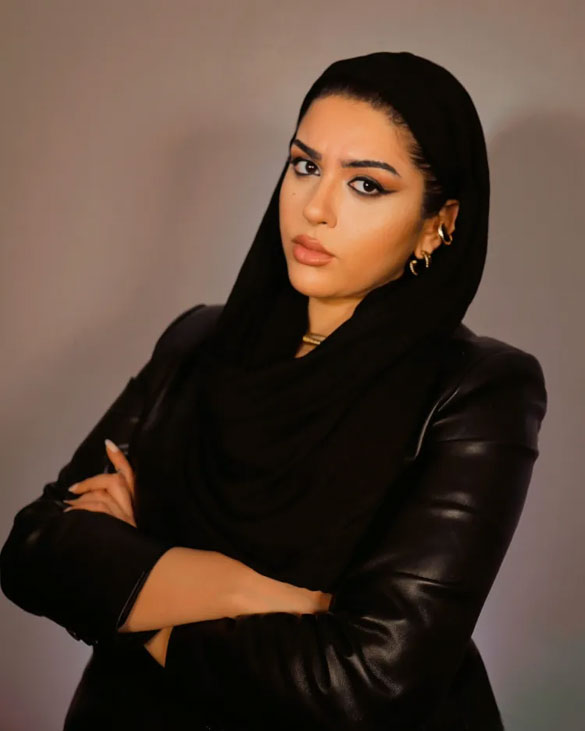
A decade ago, Muslim Women’s Day was created in response to the Muslim Ban. It turned invisible frustration into a visible moment vocalizing what had long been true: Muslim women are spoken about, legislated against, and represented, often without ever being heard.
Ten years later, the landscape looks different: Muslim women are visible across media, fashion, and culture in ways that were once unimaginable. But, if there’s one thing the past decade has demonstrated to us, it’s that visibility is not the same as power; and progress is not protection.
If the past decade was about being seen, the next decade must be about who controls the narrative.
Here are my ten points for what comes next.
1. representation is not the end goal. power is.
It’s wrong to believe that visibility alone can change everything. Just because Muslim women are seen doesn’t mean the system will follow.
Representation without control only reshapes the image, not the outcome. True power lies in authorship: who frames the story, who edits it, and who decides what is worth telling at all.
2. progress does not guarantee protection.
Even at the height of “inclusion,” Muslim women remain among the most surveilled, targeted, and politically instrumentalized groups.
The lesson is clear: cultural acceptance doesn’t cancel out structural exclusion.
3. muslim women have built parallel media systems.
In the absence of institutional access, Muslim women did not wait. We built.
Platforms, publications, communities, and networks have emerged not as alternatives, but as necessary infrastructures for survival and expression. What was once seen as niche is now a blueprint. While these spaces shouldn’t replace mainstream exclusion, they must be institutionally preserved and strengthened.
4. the digital public square is not neutral.
Social media promised us democratization, but with its evolution it has also delivered visibility governed by opaque systems: algorithms, moderation policies, and enforcement that disproportionately impact marginalized voices.
Muslim women have learned to navigate, resist, and rebuild within systems that were never designed with us in mind. That’s why we have to ensure that our voices are protected and dignified within online systems just as much as offline.
5. storytelling is a form of political power.
The one who holds the pen (or keyboard) and tells the story determines how communities are understood and how they are treated.
For Muslim women, storytelling is not an aesthetic or trending hashtag. It has to be strategic. It’s become a powerful, accessible and human tool for how we counter policy, reshape perception, and assert presence in spaces that have historically excluded us.
6. cultural influence is not the same as institutional power.
Muslim women are shaping trends, conversations, and aesthetics across industries, but cultural presence does not automatically translate into decision-making authority.
The next decade must close that gap.
7. there is no singular muslim woman narrative.
The flattening of Muslim women into a single identity has always been a tool of erasure.
Our strength, beauty and power lies in respecting our multiplicity across race, geography, class, and experience. Any future that centers Muslim women must preserve that complexity, not simplify it.
8. visibility without safety is a fragile gain.
Increased presence has come with increased scrutiny.
To be visible as a Muslim woman today often means to be exposed to harassment, misrepresentation, and political targeting. The future must prioritize not just presence, but protection.
9. solidarity must be structural, not symbolic.
Partnerships, campaigns, and statements have defined much of the past decade. But, real alignment requires more than visibility: it requires redistribution of resources, access, and decision-making power.
Anything less is temporary.
10. the record must remain in our hands.
For generations, Muslim women have been documented by others. We’re used to being interpreted, analyzed, and defined from the outside.
Muslim Women’s Day was never just about being included in the record. It was about becoming the record. Ten years in, the work is unfinished, but it is no longer unformed. Muslim women are not waiting to be recognized. We’re building, defining, and documenting in real time.
Today, we are no longer asking to be included. Muslim women are not a category to be represented; we’ve become a social, cultural, and political force reshaping the systems that once excluded us, and often will continue to do so unless change happens. If the past decade proved anything, it’s that we can’t afford to wait for permission, nor do we intend to. What comes next will be written by us, or it won’t be written at all.
We’ve come a long way. Here’s to the decade to come.
Source: muslimgirl.com
https://muslimgirl.com/muslim-womens-day-anniversary-10-the-next-decade/
-------
How Quebec’s secularism law is forcing young women to rethink their futures
by Ruby Pratka
Mar. 27, 2026
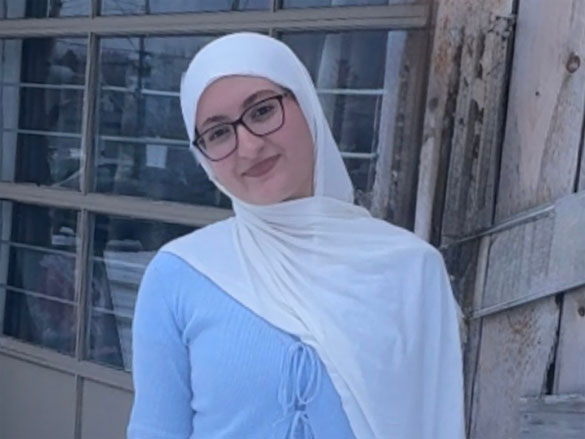
Young women like Zeinab Kabeel must rethink careers in teaching, law, and public service because of Bill 21. (Photo submitted by Zeinab Kabeel)
------------
Both their dreams are on hold as the Supreme Court of Canada debates the constitutionality of Bill 21, a Quebec law first passed in 2019 that restricts public sector workers “in positions of authority” – such as prosecutors, police officers and public school teachers – from wearing religious symbols such as the hijab, the kippa or the Sikh turban while performing their duties.
The Quebec government pre-emptively invoked the notwithstanding clause in a failed attempt to shield the bill from court challenges; the pre-emptive use of the clause is now itself being challenged in court.
The tension at the heart of Bill 21 is not confined to Quebec. Just hours before the Supreme Court of Canada heard arguments on the law, Prime Minister Mark Carney spoke at a national prayer breakfast, suggesting that religious values can and should shape how politicians act. The juxtaposition is striking: as Quebec defends a model of state neutrality that restricts visible expressions of faith, Canada’s political leadership continues to affirm a role for religion in public life.
While the case brought by the National Council of Canadian Muslims, the World Sikh Organization, the Canadian Civil Liberties Union, the English Montreal School Board and the Fédération autonome de l’enseignement teachers’ union has made its way through the courts, the Coalition Avenir Québec government has gone further. Bill 94 extends the restrictions to volunteers, school board members and support staff, while Bill 9 would add private school and daycare employees.
Waly, 44, and Kabeel, 18, both hijab-wearing Muslim women who have lived their entire lives on Montreal’s South Shore, say the law makes them feel they don’t belong in the only province they’ve ever called home.
Waly stepped away from a job in finance several years ago to raise a family and retrain as a teacher. She completed a certificate in special education and hoped to get a teaching certificate through a fast-track program created by the Quebec government to solve a drastic pandemic-era teacher shortage.
At the time, she was already a committed volunteer at her children’s school, where no one looked twice at a hijabi mom staffing the bake sale. Earlier this year, she got an email from the school. “They said, ‘We respect you, and we respect diversity, and we love your support … but there’s this law, and we have to respect the law,’” she recalls. Rattled and upset, she asked for clarification and was told she could no longer volunteer with students.
Waly began wearing the hijab in her 40s to feel more connected to her faith and more comfortable in her own skin. “It’s like a person who decides to get tattoos — because they feel good about it, because it’s part of their identity. This is how I feel comfortable. I don’t even consider it a religious sign.”
Waly says she believes in freedom of expression and has no intention of removing her hijab. “Even if you were to take this off, what’s next? Am I going to sit at the back of the bus? Are you going to tell me I’m not allowed to speak a different language in the street anymore? We’re losing our freedoms as a society, and as women, we are losing our rights as human beings and being treated as second-class citizens.”
She says she finds the law divisive and discriminatory, and a distraction from other problems affecting the province, such as homelessness and the fraying health-care system. “We have a lot of issues to concentrate on instead of ‘What are you wearing?’”
Kabeel, the 18-year-old, started wearing the hijab at 13 to feel more connected to her faith and community. She once planned to become a police officer but the lack of women role models in law enforcement discouraged her. “And then this law appeared, and I thought, Okay, if I were to study to be a police officer, nothing would come of it. So I gave up on that.”
She then considered law school, only to realize that Bill 21 also affected prosecutors. She’s now considering psychology or international development instead.
“My goal has always been to go to McGill University law school, but now I know that even if I were to get a law degree, I would either have to leave Quebec or do something else completely,” she says. “If I leave Quebec for university, there’s no point in coming back because if Bill 21 [stays in force], I won’t be able to do anything here.” She says she and several of her Muslim classmates — even those not directly affected — are considering leaving the province. “Once the law is in place, it’s easier to expand it, so I think it’s going to impact other careers.”
Giving up her hijab, she says, would be like turning her back on her faith and her identity. “It’s not just a piece of cloth like people say it is; you can’t just take it off. When you’re walking down the street and you see another hijabi, you immediately make a connection. It’s like a big community that I’m not ready to let go of, and I don’t think I ever will be.”
Source: broadview.org
https://broadview.org/effects-of-bill21/
------
Hijab-clad woman tricks family, escapes with three-year-old in Delta
March 28, 2026
A 33-year-old suya seller, Abubakar Isiaka, has appealed to security agencies to help rescue his three-year-old daughter who was abducted in Ogwashi-Uku area of the Delta State.
The child, identified as Sheripha, aged three years and eight months, was reportedly abducted on March 7, 2026, during a burial ceremony in the Hausa quarters of the community.
Narrating the incident, Isiaka said a woman dressed in a hijab arrived at their compound in broad daylight and, speaking Hausa, asked his wife for directions to the residence of a known woman in the area.
His wife then asked their older daughter to guide the visitor, while the younger child followed them.
According to him, the suspect later gave the older sibling N200 to buy biscuits. By the time the girl returned, the woman had disappeared with Sheripha.
The family immediately raised the alarm and reported the case to community leaders, vigilante groups, and the police.
Despite a search effort by residents and attendees of the burial ceremony, the child has not been found.
“We have not slept since this happened. We are pleading with the police and the government to help us bring our child back,” the distraught father said.
Confirming the incident, the Delta State Police Public Relations Officer, Bright Edafe, said the command was currently tracking the suspect and possible syndicate members involved in the abduction.
He also urged parents and guardians to remain vigilant and closely monitor their children to prevent similar incidents.
Source: thenationonlineng.net
https://thenationonlineng.net/hijab-clad-woman-tricks-family-escapes-with-three-year-old-in-delta/
------
UA SCHOLAR CO-AUTHORS STUDY ON WOMEN’S EDUCATION RIGHTS IN AFGHANISTAN
by AMP Staff
March 27, 2026
University of Arkansas professor Harry Anthony Patrinos has co-authored a new study published in the Journal of Population Economics on women’s education rights in Afghanistan.
The study, available here, finds that education delivers strong economic returns in Afghanistan and that limiting women’s access to schooling and work carries substantial economic costs.
Patrinos is the head of the U of A’s Department of Education Reform and serves as 21st Century Endowed Chair in Education Policy. The study, titled “The Mis-education of Women in Afghanistan: From Wage Premiums to Economic Losses,” analyzed nationally representative household surveys and administrative data using multiple estimation methods.
The results show that each additional year of schooling increases monthly earnings by 3 percent to 7 percent, with higher returns for women. It also found that restrictions on women’s education and employment translate into significant income losses at both the individual and national levels and highlights the economic importance of sustained investment in education — particularly for girls — even in conflict-affected settings.
Patrinos collaborated on the project with co-authors Rafiuddin Najam of the University of North Carolina and Raja Bentaouet Kattan of the World Bank Group.
Source: armoneyandpolitics.com
https://armoneyandpolitics.com/womens-education-rights-afghanistan/
-----
The role of Syrian women in the country’s economic recovery and social stability
2026/03/27
Damascus, March 27 (SANA) Women are emerging as a key pillar in Syria’s economic recovery, supporting production and strengthening social stability amid growing efforts to expand their participation across various sectors.
In a statement to SANA, Maysa Dahman, member of the Businesswomen Committee at the Damascus and Rural Damascus Chamber of Industry, said Syrian women today play a pivotal role that goes beyond the social sphere to include the local economy, particularly as the country moves toward economic openness. She stressed that women’s participation has become a strategic necessity rather than merely a rights-based demand.
Dahman noted that the recovery phase has highlighted women as a resilient workforce in small and micro-enterprises, where they have excelled in managing household economies and craft-based workshops, often becoming primary breadwinners and key economic decision-makers within their families.
She added that women’s role continues to expand with market liberalization and investment inflows, as chambers of commerce and industry help build investor confidence by leveraging women’s strengths in flexible management and negotiation, alongside their contributions to tourism, services, and the organization of exhibitions and conferences.
Partner in economic decision-making
Dahman explained that women are no longer mere participants in the economy but are increasingly involved in shaping economic policies and advocating for legislation that balances work and family life, contributing to broader economic and social stability.
Empowerment and support
She emphasized the importance of empowering women through education and training, including literacy programs, vocational skills, agriculture, and e-commerce, enabling them to become more productive and active contributors, as well as supporting their participation in local and international exhibitions.
Investing in women
For her part, Rima al-Omari, member of the Businesswomen Committee at the Damascus Chamber of Commerce, said Syrian women have proven their ability to shoulder responsibilities during years of war, noting that investing in women is an effective way to combat poverty and support the national economy.
She added that women’s participation in the labor market expands production capacity and enhances economic efficiency, particularly as more women become primary providers, forming a cornerstone of family and community stability.
Leadership role in reconstruction
Al-Omari highlighted that empowering women and increasing their presence in decision-making positions contributes to more balanced development and supports their role in reconstruction projects, alongside promoting a culture of volunteerism among young women.
Women’s empowerment continues to receive growing attention as a key driver of recovery, with their active role in production and social stability contributing to a more balanced and sustainable national economy.
Source: sana.sy
https://sana.sy/en/economic/2305746/
-----
CAIR-NY Expresses Outrage Over Attempted Rape of Muslim Woman in Central Park
March 27, 2026
The New York chapter of the Council on American-Islamic Relations (CAIR-NY), a chapter of the nation’s largest Muslim civil rights and advocacy organization, today expressed outrage over the attempted sexual assault of a Muslim woman in Central Park.
A 45-year-old Muslim woman was attacked in broad daylight while sitting on a bench in Central Park near East 109th Street. Lateef Caldwell, 30, allegedly pinned the victim down, attempted to forcibly remove her clothing, including her full body hijab, before bystanders intervened and stopped the assault.
The suspect, who was later arrested and charged with attempted rape and related offenses, was reportedly on parole following a prior sexual assault conviction.
In a statement, CAIR-NY Executive Director Afaf Nasher, Esq., said:
“This horrific attack is deeply alarming, not only because of its brutality, but because it targeted a woman in a public space in broad daylight. We thank the bystanders who intervened and the NYPD for the swift arrest. We also pray for healing from the frightening trauma our Muslim sister experienced.”
CAIR-NY’s mission is to protect civil rights, enhance understanding of Islam, promote justice, and empower American Muslims.
La misión de CAIR-NY es proteger las libertades civiles, mejorar la comprensión del Islam, promover la justicia, y empoderar a los musulmanes en los Estados Unidos.
You can help contribute to CAIR’s work of defending civil rights and empowering American Muslims across the country by making a one-time contribution or becoming a monthly donor. Supporters like you make CAIR’s advocacy work possible and defeating Islamophobia an achievable goal. Click here to donate to CAIR.
Source: cair.com
https://www.cair.com/press_releases/cair-ny-expresses-outrage-over-attempted-rape-of-muslim-woman-in-central-park/
------
URL: https://newageislam.com/islam-women-feminism/next-decade-for-muslim-women-media-and-power/d/139445