
Muslim Women Removing Headscarves As London Transport Fear Grows
New Age Islam News Bureau
06 November 2025
· Muslim Women Removing Headscarves As London Transport Fear Grows
· In War-Torn Syria, Muslim Women Unite To Ease Tensions
· Riyadh Forum Spotlights Women’s Leadership In Saudi Energy Transition
· UN Mission In Afghanistan Suspends Border Services Citing Denial Of Work Permits To Women Staff
· Long-Term, Targeted Investment Needed In Muslim Women’s Sport, Say Industry Professionals
Compiled by New Age Islam News Bureau
URL: https://newageislam.com/islam-women-feminism/muslim-women-headscarves-london-transport/d/137544
-----
Muslim women removing headscarves as London transport fear grows
Tariq Tahir
November 05, 2025
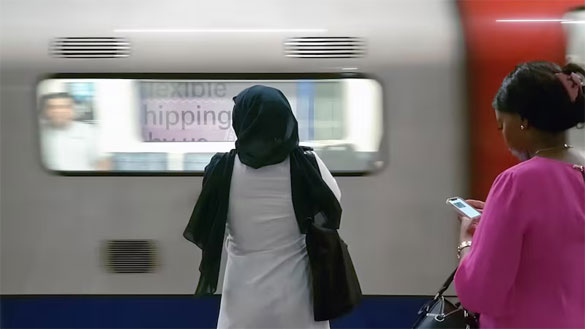
Experts say many Muslims are now avoiding public transport in London. Getty Images
-------------
Hate crime against Muslims is forcing them to avoid London’s transport network, with women taking off their headscarves for fear of attracting attention, the city’s politicians have been told.
Iman Atta, the director of Tell Mama, which monitors anti-Muslim hate crime, said the situation was the worst she had encountered and believes that those incidents reported are “the tip of the iceberg”.
She gave evidence to the London Assembly’s Police and Crime Committee, which is investigating hate crime on the capital’s public transport network.
Ms Atta told the committee that last year, Tell Mama recorded its highest ever figures of more than 6,500 cases, a 175 per cent increase on 2022 levels. Of those, about 300 were on public transport.
The experiences of Muslims, particularly the “hotspots” in the capital that she says Tell Mama has identified, mean that many are now changing their behaviour.
“Many are actually looking into not using public transport. We get reports of families saying ‘oh we would actually rather book a taxi or an Uber for our sister, our mother’ to go to their destination and not use public transport,” she said.
Ms Atta added that Muslim women now “decide to take off their headscarves so they’re not seen to be Muslim when they use public transport, so there’s a change of behaviour”.
She said the cases reported to Tell Mama have an “element of hate allied to them but also sexual harassment attached to them as well”.
The “increased level of safety anxiety about using public transport” has led to “people taking different routes to get to their destinations, which is impacting on people’s daily lives".
“You use public transport to get to the workplace, you’re already carrying that impact of what happened to you into the workplace or when you’re going back home,” she told the committee.
Ms Atta, a Palestinian who moved to the UK in 2008, said she believes there is significant under-reporting of anti-Muslim hate crime on the public transport.
“There is a belief that nothing will be done if it’s reported, there’s the normalisation of abuse - people live with it - and are happy to go about their day-to-day business if they’re verbally abused or assaulted,” she said.
“I myself am more and more cautious when using public transport and it was not the case when I came in to the UK a few years ago. So it’s quite a turbulent time.”
The most recent hate crime statistics show that anti-Muslim hate crimes rose by 19 per cent in the year ending March this year, and that 44 per cent of all religious hate crimes were against Muslims.
The Home Office, which released the data, said there was a “clear spike” in these offences in August last year, which coincided with the Southport murders on July 29 and the subsequent rioting in several English towns and cities.
In response, Prime Minister Keir Starmer announced that mosques and Islamic centres in the UK had been granted £10 million in extra security funding.
Source: thenationalnews.com
https://www.thenationalnews.com/news/uk/2025/11/05/muslim-women-removing-headscarves-as-london-transport-fear-grows/
-------
In War-Torn Syria, Muslim Women Unite To Ease Tensions
Areej Ali
November 6, 2025
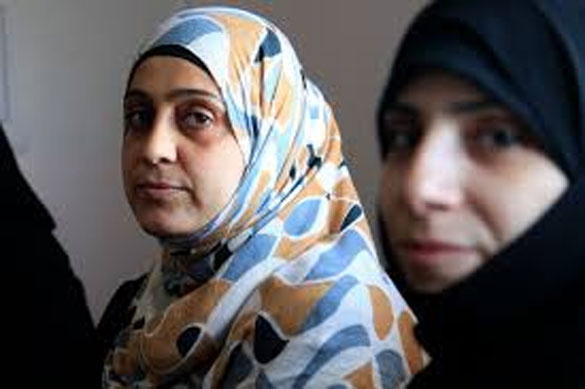
Short gasps interrupt Wafaa Al-Khudari’s words, a reminder of the thyroid surgery she underwent many years ago. Remarkably, talking is her mission, she says, her purpose, a duty, a necessity, the core of why she exists in this world.
Al-Khudari, 53, is an Alawite preacher from the Muslim Ja’fari sect and a nurse in Homs, a major city in western Syria.
The country, which recently ousted a regime, regularly experiences violent conflicts among the political and religious sects, but Al-Khudari and other Syrian women are now meeting together to discuss religious issues and, hopefully, create lasting peace in their communities.
When she began wearing the hijab, a practice uncommon among Alawite women, critics accused Al-Khudari of abandoning her sect. She denied the claims, even as she mourned her husband, a civil servant killed by an extremist Sunni militia in 2012.
Her husband had supported her decision to cover her hair shortly before his death, she says.
“I often asked him about the differences between our sect and the Sunnis and why there was so much secrecy around religious issues,” Al-Khudari said. “He answered some questions, but admitted he too was confused about many others.”
Wafaa recalled that when she was accused of changing her sect, she felt isolated, neglected and excluded even in family gatherings. “But soon, whenever any social, political, or religious topic came up, everyone would listen to me and admire what I said. My commitment to Hijab led me to educate in the Quran and its interpretations.”
Before the fall of Syria’s Assad regime in December last year, Al-Khudari had applied for a license to teach Quran memorization at a mosque in Al-Zahraa, her neighborhood in the city of Homs. To receive the license, she was required to recite five chapters of the Quran at the Directorate of Religious Endowments, but she had memorized only two at the time.
“They made an exception for me because the directorate wanted to introduce Quran memorization classes for girls in the neighborhood,” she said.
Al-Khudari said she visited Assad’s Presidential Palace three times to discuss the possibility of setting up a women’s religious group to discuss sect-related issues, but the very idea was off-limits.
“The group would have included Muslim and Christian women of all denominations, but the project never materialized due to conflicting visions and the difficulty of uniting under one roof,” she said.
For many Syrians enraged and depleted by the 13-year civil war, the fall of the Assad dynasty, which ruled the country for over 50 years, meant “liberation” from their “infidel” Alawite sect, seen as both oppressive and anti-religion. On the other hand, the Sunnis see themselves as more aligned with orthodox religious teachings and closer to the example of the Prophet Muhammad, the messenger of Islam.
“It was important to form the New Syrian Women Group,” said Al-Khudari, describing her recently-licensed pioneering initiative that brings Alawite women together to learn about their religious and social rights, while promoting tolerance and inter-sect understanding. The group’s core founding members are 17 women, including doctors, lawyers, university professors who study religion and discuss the sect’s jurisprudence, and present it accurately in a bid to dissociate it from the fallen regime.
“We pray, fast, worship God and honor His Messenger, we read and recite the Quran,” said Al-Khudari. “We were only accused of being infidels because we did not flaunt or exaggerate our religious rituals.”
One member, a lawyer named Shiraz Al-Mohammad, offers up her office for meetings.
“Hiding knowledge about different sects from women and limiting them to men is a historical phenomenon,” said Al-Mohammad.
She explains that when sectarian rifts began to form among the Muslims following the death of Prophet Muhammad, groups showing loyalty to Imam Ali, the Prophet’s cousin and the first child to embrace Islam, were persecuted.
“Believing that women could not bear the pressure, men hid these religious rivalries from their wives and children to protect them,” continued Al-Mohammad, “a practice perpetuated under the Ottomans and continues till today.” However, she says, the responsibility to learn and ask questions lies primarily on women, who must strive to know their faith and spread its teachings.
The group, says Al-Khudari, preferred not to name themselves after their sect, as one of their main goals is to integrate Alawites into the new mosaic of post-Assad civil society. With the official license in hand, the group operates fully, participating in local peace and reconciliation dialogues to calm sectarian tensions and resolve other societal issues.
Meanwhile, a coalition of Sunni female scholars and preachers also emerged publicly after five years of limited, hidden activity on social media. A psychiatrist who fled to Turkey five years ago has returned to bridge divides. She founded the Coalition of Sunni Female Scholars and Preachers, a network of women aged 25 to 55 who meet online and in person to revisit fatwas, challenge outdated interpretations, and advocate for women’s rights within Islamic law.
A trained psychiatrist, Al-Ahdab, also runs Mustashara (The Consultant) online therapy platform.
“When I left Syria, it was because I felt I had no personal or religious freedom and lost hope for reform,” said Al-Ahdab, noting that this was why she established her online practice and the scholars’ coalition.
The founding members include ten women who study and analyze fatwas (non-binding religious edicts) and share their knowledge with other religious activists.
Al-Ahdab compares the coalition to an on-demand research center.
“We receive religious and jurisprudential inquiries from women, our team of scholars analyze and study the relevant literature about the issue, and provide advisory opinions,” said Al-Ahdab, noting that the coalition’s primary goal is to help shape a balanced generation of spiritually upright women through deep understanding of religious principles and implementation.
“Before the fall of the regime, women’s religious activity was restricted and women who dared to publicly speak about religious issues were accused of extremism,” she explains.
Together, these women are dismantling decades of enforced silence. Their work signals a profound cultural shift: From sectarian mistrust to open dialogue, from state-controlled religion to grassroots pluralism.
Al-Ahdab said Syrian women face many social challenges. Despite being legally empowered, educated women have access to fewer job opportunities. According to the World Bank’s 2024 gender data, the labor force participation rate among females is 13.3% compared to 62.8% among males.
Because the civil war had severely disrupted data collection, making official statistics unreliable or unavailable for many years, and much of the local data is outdated.
So other reports conflict with the prevailing narrative with some showing women’s economic roles are now dramatically changed as many women became sole breadwinners due to male family members being killed, displaced, or conscripted. A recent U.N. report noted that women and girls continue to suffer from the impact of the ongoing hostilities and open front-lines in the north-east, and the Israeli occupation of the Syrian Golan and presence in parts of southern Syria. Women have continuously called for sanctions relief to allow them to better access employment opportunities.
“Women have the intellectual ability to understand and delve into religious jurisprudence,” Al-Ahdab said, “so in our meetings we focus on women’s social rights, emphasizing their huge influence on society.”
Al-Ahdab’s coalition openly discusses sectarian issues while rejecting sectarianism. Al-Ahdab says the ousted regime’s repression had nothing to do with sectarian differences.
“After the fall, we were on a mission to promote peace, coexistence, and humanity. Who better than women to do this? They carry it into their homes with full integrity,” said Al-Ahdab.
Hamza Qabalan, a religious figure and the Homs official supervising the New Syrian Women’s Group, said that when Al-Khudari discussed the idea with him.
“I encouraged it,” said Qabalan, “and helped them with licensing because they sought unity and rejected division. This is an opportunity to change the very notion of sectarian discrimination.”
“Even though Syrians generally coexist in workplaces, universities, and schools, hosting members of one sect in the home of another was rare and was done with extreme caution,” says Qabalan. He notes that negative preconceptions were always an obstacle to knowledge of the other.
“But once they study and learn, they realize that their foundational values are the same,” he added.
Source: religionunplugged.com
https://religionunplugged.com/news/syrian-women-lead-post-war-religious-revival-across-sectarian-lines
-----
Riyadh forum spotlights women’s leadership in Saudi energy transition
GHADI JOUDAH
November 05, 2025
RIYADH: Financing and talent pipelines are putting women “at the forefront” of the clean energy shift, Lisa Kurbiel, head of secretariat, Joint SDG Fund at the UN, told Arab News at the second Creative Women Forum in Riyadh this week.
The forum runs from Nov. 4-6, with an expanded three-day program featuring keynotes, workshops, panels, solo talks and interactive sessions.
Kurbiel said that fund programs were boosting women’s participation in the energy transition in developing countries.
“The fund that I help manage, which is a financing mechanism for the UN development system, is trying to de-risk investments across renewable energy.”
She cited Zimbabwe, where a partnership with Old Mutual launched a renewable energy investment fund backed by government policy.
Old Mutual is a pan-African financial services group serving retail and corporate clients in 12 countries, with multiple stock exchange listings and a workforce operating across markets such as Zimbabwe. “Over 50 percent of those are run by women,” she said.
According to the Joint SDG Fund, Zimbabwe’s Renewable Energy Fund is being scaled into a roughly $100 million second phase to mobilize larger clean-energy investment in Zimbabwe and the wider region.
Building on an initial $30 million fund managed with Old Mutual, the platform targets hundreds of enterprises — including women-led and youth-led firms — across solar, hydro, biomass and mini-grids to close energy access gaps and crowd in additional capital.
“So what we’re trying to do as we go through the clean energy transition — transitioning from fossil fuels to solar, to wind, to hydro, eventually hydrogen — we want to really make sure women are at the forefront,” Kurbiel said.
“I think it’s critical that we have women in engineering, that we have women in the STEM fields,” she said. “The future of so much of that science … really does require us to be in the laboratories as well as in the boardrooms.”
SDG 7 refers to affordable and clean energy, expanding access to reliable, modern, sustainable power, while SDG 5 refers to gender equality, ensuring women’s full participation and leadership.
Source: arabnews.com
https://www.arabnews.com/node/2621520/saudi-arabia
-------
UN mission in Afghanistan suspends border services citing denial of work permits to women staff
Nov 06, 2025
Kabul [Afghanistan], November 6 (ANI): The United Nations Assistance Mission in Afghanistan (UNAMA) has announced that it has suspended all its services for migrants at the Islam Qala border in Herat province due to the restriction on the work of its female staff at this crossing, Tolo News reported.
UNAMA further stated that the majority of returnees from Iran are women and children, and without female staff, it is not possible to deliver necessary services.
In a UN statement, it was noted: "Over 60% of returnees arriving in Islam Qala are women and children and three in ten families returning are headed by women. Without female staff, we cannot collectively serve returning women and children under conditions of dignity and respect."
Meanwhile, several deportees from Iran have voiced concern over dire economic conditions and called for humanitarian aid not to be used as a political tool, as per Tolo News.
Abdul Rasul, a deportee from Iran, said, "So far, there has been no attention paid to the migrants, and no assistance has been provided. Winter is approaching, and no one has come to our aid."
Another deportee, Mohammad Reza, said, "Some people say it's been five to six months since our names were registered, yet no assistance has reached us."
A number of citizens and civil society activists emphasise that humanitarian aid must not be politicised.
According to them, Afghan deportees from Iran are in urgent need of assistance, and aid from the United Nations and other humanitarian organisations should immediately resume at the Islam Qala border, as per Tolo News.
Seyed Ashraf Sadat, a civil society activist, said, "Relief agencies play a crucial role in facilitating the return process at the Islam Qala border. They can help address primary needs such as transport and food in the initial phase. Suspending their assistance only increases the vulnerability of returnees."
In recent months, the Islam Qala border has seen the return of approximately 1.2 million Afghan migrants from Iran. (ANI)
Source: tribuneindia.com
https://www.tribuneindia.com/news/world/un-mission-in-afghanistan-suspends-border-services-citing-denial-of-work-permits-to-women-staff/
-------
Long-term, targeted investment needed in Muslim women’s sport, say industry professionals
5 November 2025
Muslim women working in sport have called for long-term investment to close the gap between grassroots participation and elite-level opportunities.
Speaking at the inaugural Hyphen Festival on 4 November, panellists discussed how systemic barriers, funding gaps and sports governing bodies’ outdated rulebooks continue to limit Muslim women’s involvement and progression within professional sport.
Sahiba Majeed, data and insights manager at the Muslim Sports Foundation, said that while short-term initiatives can spark initial participation, they rarely produce lasting change.
“We get funding for six-week programmes,” she said. “We need to make sure these projects are long-term investments and developed by people representative of that community.”
She added that the lack of sustained funding means that projects often fail to move beyond the initial phase of engagement.
“You see people coming forward when a space feels safe, inclusive and familiar,” Majeed said. “But when the funding ends, so does their access. The value lies in long-term investment, not one-off projects,” she added.
Nalette Tucker, a Bradford-based sports coach and founder of Sunnah Sports Academy Trust, said Muslim athletes are thriving in grassroots sport but are “non-existent” in elite pathways.
“Girls from Muslim backgrounds often miss the key scouting years — between 11 and 13 — when national teams identify talent,” she said. “If they’re not supported or can’t attend trials, that pathway closes. By 14 or 15, it’s too late. A lot of girls are now applying for dual nationality so they can play for other teams because they’re not going to be up for selection.”
While governing bodies still have a way to effect change, it’s not just up to them, according to Majeed.
“If every Muslim donated £1 into local community causes, whether that’s developing youth clubs via the mosques, or community centres, that would make a massive impact,” she said. “If we as British Muslim communities start investing in our own little pots, we’ll go a lot further and be a lot more sustainable.”
Jawahir Roble, the UK’s first female Muslim football referee and former coach, said access to trials and scouting remains a major barrier for working-class and minority communities.
“All the trials and the training are so far away,” she said. “If you’re from an ethnic background and you can’t afford to travel across the country for a trial, you miss your chance. They need to bring them into our communities so everyone can have equal opportunity.”
Other barriers discussed included the social culture surrounding some sports, often linked to alcohol, and clothing regulations that fail to accommodate Muslim standards of modesty. Rugby player Zainab Alema said that despite recent progress, many sports still enforce dress codes that effectively exclude Muslim women.
“In 2025, there should be alternative options for clothing in sports,” she said.
“There are girls who do not want to wear shorts, who want to wear tracksuit bottoms, and they should be able to. It doesn’t take away from their ability to perform.”
Alema recalled the discomfort of being the only Muslim player on her university team, often feeling isolated from team culture. Roble echoed these concerns, noting that while progress has been made through initiatives such as the Nike Pro hijab, representation still lags.
“I love football, I did belong — but other people thought I didn’t,” she said. “Even now, people still ask why a woman in hijab is out there officiating. When people see me refereeing, they’re surprised, but we need to normalise that so the next generation sees it as possible.”
The panellists also highlighted the need for national governing bodies to reassess how they define diversity in sport. Tucker said that data collection still groups Muslims into broad “South Asian” categories, omitting the specific needs of British Muslim communities.
“When it comes to funding or participation, people are still looking to engage the South Asian community,” she said. “The Muslim community gets collected into that category, so when you’ve got marketing and data focused on South Asians, other Muslims get missed. Until that data reflects who we actually are, the funding won’t reach us.”
Source: hyphenonline.com
https://hyphenonline.com/2025/11/05/muslim-women-sport-funding-investment-access-elite-pathways/
------
URL: https://newageislam.com/islam-women-feminism/muslim-women-headscarves-london-transport/d/137544