
Mumbai: Muslim Woman Allegedly Harassed, Threatened Over Hijab At Virar D-Mart; Video Viral
New Age Islam News Bureau
05 January 2026
· Mumbai: Muslim Woman Allegedly Harassed, Threatened Over Hijab AtVirar D-Mart; Video Viral
· Guaranteeing women’s rights is fundamental condition for building new Syria: Zenobia Women’s Gathering Council in al-Raqqa Canton
· Kashmir Team Players to Play Wearing Hijab in Kashi, Say – “It Is a Symbol of Our Freedom”
· Woman denies charges of insulting Islam, assaulting officer and obscene gesture in Mergong
· UN DSG voices concern over women’s rights in Afghanistan
· December 2025 Report: A Year in Review: Iranian Women’s Resistance Against Religious Dictatorship
· Young Women at the Forefront as Iran Protests Expand Across All Provinces
· IUML's Fatima Muzaffar Ahmed is the epitome of Muslim woman leadership
· Iran Warns Activists, Online Businesses Against Posting Protest Content
Compiled by New Age Islam News Bureau
-----
Mumbai: Muslim Woman Allegedly Harassed, Threatened Over Hijab AtVirar D-Mart; Video Viral
January 05, 2026
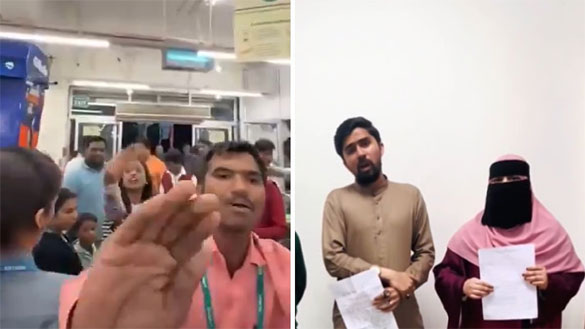
Mumbai: Muslim Woman Allegedly Harassed, Threatened Over Hijab At Virar D-Mart; Video Viral |
--------
Mumbai: A disturbing incident of communal harassment and criminal intimidation has come to light at a D-Mart outlet in the Yashwant Nagar area of Virar, which is an hour's drive away from Mumbai. A local Muslim woman, a resident of Nalasopara West, has alleged that she was barred from entry and threatened with rape because she was wearing a hijab.
Details On The Incident
According to the victim’s testimony in a viral video, the confrontation began when she was shopping at the retail chain. She alleges that individuals at the store made derogatory remarks about her attire, telling her to 'stay back' because she is a Muslim.
The situation escalated when a group of men reportedly threatened her with sexual assault, stating, "You are Muslims, get out, we will rape you". The victim expressed deep distress over the encounter, noting that the verbal abuse was specifically tied to her religious identity and her choice to wear the hijab.
The victim reported major issues when she first attempted to seek justice. She stated that she remained at the police station until 12:30 am on the night of the incident, but no First Information Report (FIR) was registered at that time.
Following the delay, the victim released a video documenting her ordeal, which quickly went viral on social media platforms like 'Galli News.' The video caught the attention of social activist Ahmed Memon, who accompanied the victim back to the police station to ensure legal action was taken.
Memon confirmed that after discussions with the Assistant Commissioner of Police (ACP) and the Senior Police Inspector (PI), the authorities have now formally accepted the complaint and an application for further legal action has been filed.
Aftermath & Apology By D-Mart
In the wake of the public outcry and the intervention by local activists, the management of the Virar D-Mart has reportedly tendered an apology to the victim for the incident. Ahmed Memon has called for communal harmony and urged the community to stand together against such discrimination, while the police have assured a thorough inquiry into the conduct of the store's staff and the individuals involved.
Source: freepressjournal.in
https://www.freepressjournal.in/mumbai/mumbai-muslim-woman-allegedly-harassed-threatened-over-hijab-at-virar-d-mart-video-viral
------
Guaranteeing women’s rights is fundamental condition for building new Syria: Zenobia Women’s Gathering Council in al-Raqqa Canton
5 January, 2026
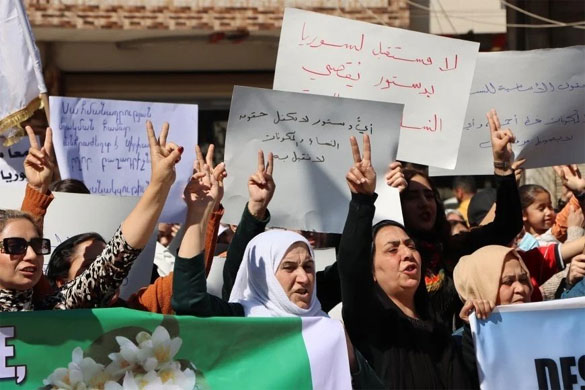
Members of the Zenobia Women’s Gathering Council in al-Raqqa Canton, within the Autonomous Administration of North and East Syria AANES, spoke to ANHA agency about Syria’s future and the necessity of guaranteeing the rights of women and all components in the new Syrian constitution.
In this context, Nadima Mohammed, a member of the Zenobia Women’s Gathering Council in al-Raqqa Canton, stated that guaranteeing women’s rights “is not a secondary demand, but rather a fundamental condition for the success of any national project aimed at building a new Syria.”
She explained that empowering women and protecting them legally and socially has a positive impact on the development process and reinforces the values of justice and citizenship, contributing to the establishment of a balanced society capable of recovery and renewal.
Nadima Mohammed added that “protecting the rights of all Syrian components represents a crucial step toward achieving stability, as it puts an end to policies of marginalization that have been a major cause of deepening crises.” She stressed that recognizing diversity and guaranteeing equal rights strengthen trust among the components of society.
For her part, Duaa Mohammed, also a council member, emphasized that “guaranteeing women’s rights is the cornerstone of building a new Syria, as women are genuine partners in society, not marginal actors.” She stated: “Safeguarding women’s rights in law, employment, and political participation contributes to building a state based on justice and equality rather than exclusion and discrimination.”
She pointed out that guaranteeing the rights of all Syrian components enhances the sense of national belonging and prevents the recurrence of the causes of conflict that the country has suffered from for years. She explained that “when every component feels that its rights are protected and that it is represented in political and social life, civil peace will be firmly established.”
She further affirmed that a new Syria cannot be built with a mentality of exclusivity, but rather through genuine partnership between women and men, and among all components without exception.
In her turn, Rahab al-Awad, another member of the council, stated that “respecting and guaranteeing women’s rights constitutes a true measure of the seriousness of building Syria’s future, because any society that excludes half of its population cannot achieve progress or stability.”
She emphasized that guaranteeing the rights of all components creates a state of mutual trust and strengthens national unity, which directly reflects on security and stability.
She added that justice and equality among all citizens form a solid foundation for civil peace and prevent the return of conflicts and divisions. She stressed that future Syria must be based on the principle of partnership rather than exclusion, and that involving women and all components in decision-making is not an option, but a national necessity to ensure a just and democratic state that reflects the aspirations of all its sons and daughters.
Source: hawarnews.com
https://hawarnews.com/en/guaranteeing-womens-rights-is-fundamental-condition-for-building-new-syria
-----
Kashmir Team Players to Play Wearing Hijab in Kashi, Say – “It Is a Symbol of Our Freedom”
January 04, 2026
Six players from the Jammu & Kashmir women’s team will compete in hijab at the 72nd Senior National Volleyball Championship, expressing confidence and determination
The 72nd Senior National Volleyball Championship, which began on January 4 in the holy city of Kashi (Varanasi), is drawing attention not only for high-level competition but also for a powerful social message. The Jammu & Kashmir women’s volleyball team has arrived in Varanasi with six players who will take the court wearing hijab, confidently asserting that their attire represents freedom, not restriction.
SadafManzoor, a player from the Jammu & Kashmir team, said, “Hijab is our freedom. Wearing it while playing helps us perform even better. No one has ever stopped us, and we have complete support from our families. That is why we have been able to travel all the way from Kashmir to Varanasi.” She emphasized that people should not judge athletes based on what they wear, adding that hijab is a personal choice and a symbol of independence, not a barrier.
The Jammu & Kashmir women’s squad consists of 14 players in total. Among them, six players will compete wearing hijab on the volleyball court. Some of these athletes have been playing volleyball for nearly six years, while others have taken up the sport over the last two years. This combination of experience and youthful enthusiasm has strengthened the team’s confidence ahead of the national tournament.
Speaking about their journey, the players said their primary focus is on the game and giving their best performance for the team and their state. They believe that dedication, discipline, and hard work matter far more than appearance when it comes to sports. The team members also expressed pride in representing Jammu & Kashmir on a national platform.
The national championship in Varanasi features teams from across the country, making it a highly competitive event. In this setting, the presence of hijab-wearing players from Kashmir is being widely appreciated as a positive and empowering example. Their participation sends a clear message that sports and personal identity can coexist harmoniously.
As the matches progress, all eyes will be on the court where these players aim to prove their talent and determination. The Kashmir women’s team is not just playing for medals, but also delivering a strong message—that confidence, choice, and freedom can go hand in hand with sporting excellence.
Source: punjabnewsline.com
https://www.punjabnewsline.com/news/kashmir-team-players-to-play-wearing-hijab-in-kashi-say-%E2%80%93-%E2%80%9Cit-is-a-symbol-of-our-freedom%E2%80%9D-99556
-------
Woman denies charges of insulting Islam, assaulting officer and obscene gesture in Mergong
04 Jan 2026
ALOR SETAR, Jan 4 — A company director pleaded not guilty at the Magistrate’s Court here today to three charges of uttering words alleged to have hurt the religious feelings of Muslims, using criminal force and making an obscene gesture at a police officer.
Teoh Siew Li, 35, entered the plea after the charges were read out before Magistrate NurSyifaMohdHamzah.
For the first charge, Teoh was accused of using criminal force by spitting at a police officer with the intent to prevent the officer from carrying out his duties at Jalan Perusahaan 2, Taman Bandar BaruMergong, at noon on December 31 last year.
She was charged under Section 353 of the Penal Code, which provides for imprisonment of up to two years or a fine or both, upon conviction.
For the second charge, Teoh was accused of uttering insulting words and making an obscene gesture at the same police officer at the same location and time, under Section 509 of the Penal Code, which carries a sentence of up to five years’ imprisonment or a fine or both, upon conviction.
She was also charged with deliberately hurting the religious feelings of Muslims by uttering words that are insulting to Islam at the same location and time, under Section 298 of the Penal Code, which provides for imprisonment of up to one year or a fine or both, upon conviction.
The court allowed bail of RM12,000 with one surety and fixed January 20 for mention.
The prosecution was conducted by State Director of Prosecutions Datuk KhairulAnuar Abdul Halim, while the accused was not represented. — Bernama
Source: malaymail.com
https://www.malaymail.com/news/malaysia/2026/01/04/woman-denies-charges-of-insulting-islam-assaulting-officer-and-obscene-gesture-in-mergong/204283
------
UN DSG voices concern over women’s rights in Afghanistan
Ahmad SohaibHasrat
5 Jan 2026
KABUL (Pajhwok): United Nations Deputy Secretary-General Amina J. Mohammed has expressed serious concern about the state of women’s human rights in Afghanistan—an issue consistently rejected by officials of the Islamic Emirate of Afghanistan (IEA), who maintain that Afghan women enjoy their rights under Islamic Sharia.
In a post on her X account, Mohammed said that millions of women and girls in Afghanistan are facing severe restrictions on their fundamental rights, including access to education, employment, personal security and freedom of movement.
She warned that the international community must not turn a blind eye to these violations, underscoring that women’s rights are human rights everywhere.
IEA officials, however, have repeatedly insisted that women’s rights in Afghanistan are safeguarded within the framework of Islamic law and that women live with dignity and honour.
They point to a six-point decree issued by the IEA’s supreme leader, which they say guarantees women’s Islamic rights and obliges officials, tribal elders, religious scholars and community leaders to protect and enforce them.
The authorities have also reiterated that girls’ education will be permitted once what they describe as a suitable and Islamic environment has been established.
Source: pajhwok.com
https://pajhwok.com/2026/01/05/un-dsg-voices-concern-over-womens-rights-in-afghanistan/
------
December 2025 Report: A Year in Review: Iranian Women’s Resistance Against Religious Dictatorship
January 5, 2026
December 2025 Report: A Year in Review: Iranian Women’s Resistance Against Religious Dictatorship
In 2025, Iranian women faced escalating challenges and deepening injustices. Yet, they never surrendered in their struggle against the ruling religious dictatorship. Once again, they stood firm, carrying the banner of resistance.
January 2025: Nationwide Protests Intensify with Women at the Forefront
The year 2025 began with a dramatic surge in near-daily protests across Iran, with women playing a leading role. From Tehran to Sanandaj and Ilam, women of all ages and social backgrounds took to the streets demanding social justice, improved living conditions, and an end to discrimination. Their widespread presence across multiple provinces reflected growing public anger toward the policies of the Iranian regime.
Women teachers, nurses, retirees, and female university students were particularly prominent. Protests by retired educators evolved into a cohesive and sustained movement, continuing almost weekly in Tehran and several major cities. These demonstrations met with repression by security forces, including the use of pepper spray on January 20, 2025. Despite the crackdown, women consistently remained on the front lines, chanting, “Our rights are won only in the streets.”
February 2025: Resistance by Women Political Prisoners and Families of Political Prisoners
A group of women political prisoners in the women’s ward of Evin Prison were denied visitation rights after staging a sit-in and chanting anti-government slogans to protest the transfer of two political prisoners sentenced to death, Behrouz Ehsani and Mehdi Hassani. The warden of Evin Prison formally communicated the punitive order, which remained in effect for three weeks.
At the same time, families of political prisoners sentenced to death held protest gatherings outside Evin Prison for the second consecutive week. Chanting slogans such as “No to executions” and “Abolish the death penalty,” they voiced their opposition to the implementation of death sentences.
March 2025: Deepening Economic Crisis and Crushing Inflation on Women’s Lives
Iran’s economy has faced severe inflation in recent years. In March, coinciding with the ancient New Year of Nowruz, runaway inflation made it nearly impossible for families to afford basic necessities such as food, clothing, housing, education, and healthcare.
Women, particularly female heads of household and those responsible for managing household expenses, bore the heaviest burden. According to domestic media, soaring prices and pre-New Year inflation placed the greatest strain on lower-income and middle-class families. (Rokna, March 11, 2025)
Corruption and mismanagement of national resources fueled liquidity growth and inflation. As national wealth is plundered, the government resorts to printing money to cover budget deficits, further driving up prices. Women, often employed in low-income or informal self-employment such as street vending, have suffered disproportionately from this vicious cycle.
Mohammad Bahrinian, a government-affiliated researcher, reported that 42.5 percent of employment in Iran consists of self-employment, with many women surviving on meager incomes eroded daily by inflation. (Khabar Online, March 19, 2025)
April 2025: Rising Executions of Women and New Revelations of the 1988 Massacre
In April, the clerical regime set a new record for executions of women. At least five women were executed in Isfahan, Qazvin, and Mashhad during the month.
April also witnessed shocking new revelations from within the regime itself. The BBC released a newly uncovered audio file exposing further details of the 1988 prison massacre. In the recording, Hossein Ali Montazeri, then Khomeini’s designated successor, explicitly condemns the mass execution of women members of the People’s Mojahedin Organization of Iran (PMOI/MEK) during the summer of 1988.
The tape documents Montazeri’s meeting with members of the so-called “Death Commission” in Evin Prison, revealing crimes in which the primary victims were young women executed solely for adhering to their political beliefs.
Montazeri specifically refers to the execution of approximately 300 women PMOI members, including two French nationals, whose potential diplomatic value was deliberately ignored.
He recounts the case of a young female PMOI supporter sentenced to death merely for holding dissenting views. Montazeri challenges the religious legitimacy of executing women, citing Shiite jurisprudence to argue that such executions are unjustifiable even under Islamic law. He emphasizes that many of these women were imprisoned merely for reading or distributing leaflets.
May 2025: Denial of Medical Care to Women Political Prisoners
Silencing dissent under the regime of Velayat-e Faqih is not a policy choice but an institutionalized mechanism for maintaining power. Arrests, torture, and prolonged imprisonment of human rights defenders are only part of the repression apparatus. One of the most brutal tools of abuse is the systematic denial of medical care to political prisoners, placing women on a path toward slow death.
Among the women prisoners whose voices remain unbroken despite severe illness are:
• Maryam Akbari Monfared, 50, imprisoned for 15 years, presently in Qarchak Prison
• Marzieh Farsi, 60, suffering from cancer, imprisoned in Evin Prison
• ZeynabJalalian, 44, serving a life sentence, exiled to Yazd Prison
• HodaMehrganfar, 38, imprisoned in Adelabad Prison, Shiraz
• ArghavanFallahi, 25, from Parand, detained despite suffering from a chronic illness
These cases represent only a fraction of the critical situation facing women political prisoners in Iran and underscore the ongoing, systematic violation of their fundamental rights.
June 2025: Institutionalized Violence Against Women and a 14-Year Legislative Failure
In June, it was announced that the long-delayed bill to prevent violence against women had still not been passed after 14 years. The regime’s Vice President for Women and Family Affairs also revealed that official statistics on violence against women remain classified.
Zahra Behrouz-Azar stated: “We are still in a situation where the rate of violence and spousal abuse against women is 30 times higher than against men. Unfortunately, these data remain classified. When we raise the bill on violence against women in parliament, we are told: ‘Where is the violence? Does violence against women even exist? If it does, it’s equal.’”
She added that honor killings and domestic violence are not limited to marginalized regions or specific ethnic groups but are prevalent even in urban, modern, and educated communities. (ISNA, June 7, 2025)
July 2025: Organized Repression of Women Political Prisoners and Their Continued Resistance
Psychological pressure, denial of medical care, “white torture,” and inhumane prison conditions remained core components of the regime’s strategy to crush resistance and physically eliminate dissidents, policies openly supported by state-controlled media.
Women political prisoners, particularly in Qarchak, Evin, and Fardis (Karaj) prisons, endured deplorable conditions: unsanitary wards, severe restrictions on family contact, denial of medication and medical care, and constant physical and psychological pressure. Their deteriorating health constitutes a form of slow torture and a grave violation of international human rights standards.
On July 4, 2025, UN Special Rapporteurs issued a statement expressing grave concern over the “critical and inhuman” conditions of prisoners transferred from Evin Prison to Qarchak and Greater Tehran Prison.
Repression also extended to prisoners’ families. Reports from Greater Tehran Prison (Fashafuyeh) indicate that female relatives—mothers, wives, sisters, and teenage daughters—were subjected to “abusive, degrading, and unlawful” body searches before visits, clearly intended to intimidate and humiliate.
August 2025: Dual Repression of Prisoners and Their Families
In August, the regime intensified its crackdown on political prisoners, particularly PMOI supporters, and their families. Qarchak, Greater Tehran, Evin, and GhezelHesar prisons saw escalating use of white torture and severe legal and medical deprivations.
Families were also targeted through arrests and intimidation. Dozens were detained under the pretext of protesting water and electricity outages.
During this period, eight women prisoners were executed, bringing the total number of women executed in 2025 by August to 32.
Widespread Arrests of Former Political Prisoners and Their Families
FatemehZiaei Azad, 68, was rearrested. The targeting of Leila Saremi and her son, FarzadMoazami, along with attempts to arrest her daughter Rozita, exemplified the regime’s systematic pressure on prisoners’ families. The families of imprisoned PMOI members MassoudJamei and ShahrokhDaneshvarkar were also subjected to severe intimidation and constant anxiety.
Qarchak Prison: Inhuman Conditions Endangering Prisoners’ Lives
Conditions in Qarchak Prison were life-threatening. Prolonged power outages lasting up to five hours, lack of adequate cooling systems and safe drinking water, poor ventilation, severe sanitation deficiencies, and the infestation of insects and rats created an environment of extreme danger. Many women sufferings from chronic illnesses, advanced age, or severe physical weakness were denied access to medical care.
MassoumehAsgari and MassoumehNassaji were transferred to solitary confinement for protesting these inhuman conditions. ArghavanFallahi, after a prolonged period of uncertainty and torture, was transferred to Qarchak Prison. Maryam Akbari Monfared and ElahehFouladi were also held under extremely harsh conditions and deprived of necessary medical treatment.
Dowlatabad Prison (Isfahan): Severe Threats to Women Political Prisoners
In Dowlatabad Prison in Isfahan, women political prisoners were held alongside inmates convicted of serious violent crimes. Authorities deliberately subjected political prisoners to pressure and provocation by criminal inmates, creating a grave threat to their physical safety and psychological well-being. Basic living conditions and hygiene facilities in the prison were severely inadequate and fundamentally inhuman.
September 2025: Record-Breaking Repression Against Women
In September, repression against women reached unprecedented levels. Qarchak Prison emerged as a symbol of systematic white torture and a killing ground for women prisoners.
• Within just ten days, between September 16 and 25, at least three women, SomayehRashidi, JamilehAzizi, and SoudabehAsadi, lost their lives due to medical neglect and inhumane detention conditions.
• Maryam Shahraki died on September 12 in Fardis Prison (Karaj) after being denied urgent medical treatment.
• Dozens of elderly or seriously ill women prisoners, including Shiva Esmaili, FatemehZiaei, Marzieh Farsi, ParvinMirassan, and Zahra Safaei, were systematically denied access to specialized medical care.
These deaths and life-threatening conditions constitute clear cases of slow torture and gross violations of international human rights norms.
October 2025: Death Sentence Issued Against a Woman Political Prisoner
On October 25 (Aban 3), Zahra ShahbazTabari, a 67-year-old woman political prisoner, was sentenced to death by Branch One of the Revolutionary Court in Rasht. The charge against her was “supporting the People’s Mojahedin Organization of Iran (PMOI/MEK).”
Her trial lasted less than ten minutes. The court-appointed lawyer offered no meaningful defense. The so-called evidence consisted solely of a piece of cloth bearing the slogan “Woman, Resistance, Freedom” and an “unpublished audio message,” which her family has categorically rejected as baseless.
Resistance Against Executions and Protests Over Prisoner Deaths
Between October 13 and 19, approximately 1,500 prisoners sentenced to death in Unit Two of GhezelHesar Prison (Karaj) launched an unprecedented hunger strike to protest the sharp rise in executions. This marked the largest collective hunger strike in the history of prisons under the clerical regime.
Families of prisoners held repeated protests outside GhezelHesar Prison and in front of Iran’s parliament in Tehran, publicly supporting their loved ones.
Earlier, on September 29 and 30, women political prisoners launched a hunger strike to protest the death of their fellow inmate SomayehRashidi, who had died due to denial of medical care.
Horrific Transfer of Women Political Prisoners to Evin Prison
In the early hours of Thursday, October 9, 2025, more than 60 women political prisoners, along with four women imprisoned on financial charges, were transferred under heavy security to Ward 6 of Evin Prison. The transfer involved multiple layers of invasive inspections and was carried out with a long convoy of security vehicles.
At the onset of autumn cold, the women were denied beds, blankets, and heating equipment. Many were forced to sleep on cold concrete floors. Lighting was inadequate, access to hot water was severely limited, and families were barred from visits or from delivering warm clothing. Prisoners’ phone calls were restricted to only a few minutes per week.
This transfer applied only to women who had been moved to Qarchak Prison after the July attack on Evin. Other women political prisoners—including Maryam Akbari Monfared—remained in Qarchak Prison under inhuman conditions.
November 2025: Femicide with Total Impunity
According to the Women’s Committee of the National Council of Resistance of Iran, from the beginning of 2025 through the end of November, at least 176 women were killed by male family members. By the end of December, this figure reached 192.
This represents a sharp increase compared to 160 femicides in 2024 and 105 in 2023.
A report by the UN Independent International Fact-Finding Mission on Iran, released on October 30, 2025, underscored the existence of “systemic impunity” for perpetrators of violence against women. It concluded that the legal framework of the Velayat-e Faqih regime effectively shields killers from prosecution and punishment.
Most killings occurred in the context of forced marriage, child marriage, domestic violence, or women’s resistance to discriminatory laws.
The clerical regime’s Civil Code, including Articles 1105, 1108, and 1114, legally subordinates women to men, restricting their freedom of movement, autonomy, and financial independence.
Women subjected to violence are often forced by law to return to their abusers. Through its laws, media, and judiciary, the regime systematically reproduces and legitimizes violence.
Inverted justice prevails: women receive harsh prison sentences for protesting or “removing their headscarves,” while male killers often face only a few years in prison or buy their freedom. Fathers, as “guardians,” are typically exempt from punishment.
Notorious examples include the murderers of Romina Ashrafi and Mona Heydari, who received sentences of only two to eight years, while women protesting compulsory hijab face up to ten years in prison.
December 2025: One Hundred Weeks of the “No to Executions” Campaign
By the end of December 2025, more than 2,200 prisoners had been executed in Iran, including 19 political prisoners and 13 public executions. Over 1,000 executions occurred in just three months: October, November, and December.
Executions of women, one of the most extreme forms of organized state violence, rose dramatically. At least 64 women were executed in 2025, an 88 percent increase compared to the previous year. Between July 30 and December 30 alone, 40 women were hanged.
The nationwide “No to Executions Tuesdays” campaign entered its 100th consecutive week in late December, becoming one of the most enduring and widespread protest movements against capital punishment in Iran. Prisoner hunger strikes continued across 55 prisons, and the women’s ward of Yazd Prison officially joined the campaign.
Families of political prisoners sentenced to death played a pivotal role. Through weekly public presence, holding photos of their loved ones and recounting stories of repression, they became a driving force behind the campaign’s persistence and expansion.
Further Deterioration of Conditions for Women Prisoners in Evin
In December, women political prisoners in Evin Prison were transferred to a damp underground facility located 40 steps below ground level, with conditions far worse than those they had previously endured in Qarchak Prison.
Prisoners reported that corridors and rooms were heavily contaminated. Large numbers of rats and insects infested the ward, with the rat population reportedly reaching nearly 100. The risk of infectious disease outbreaks and serious physical harm increased sharply.
International Alarm Over the Death Sentence of Zahra ShahbazTabari
Eight UN Special Rapporteurs issued an urgent appeal to the regime, demanding the immediate halt of the execution of Zahra ShahbazTabari, the 67-year-old political prisoner held in Lakan Prison in Rasht.
At the same time, more than 400 prominent women worldwide, including Nobel laureates, former presidents and prime ministers, members of parliament, UN Special Rapporteurs, leading journalists, renowned athletes, and prominent human rights defenders, endorsed an urgent public statement calling for the immediate release of a women’s rights defender facing execution in Iran.
Zahra Tabari, a 67-year-old Iranian engineer and mother, faces imminent execution solely for displaying a banner reading “Woman, Resistance, Freedom.”
Women’s Voices in Tabriz Stadium: A Clear Political Message
On December 18, 2025, during a football match in Tabriz, the presence and voices of young Azerbaijani women turned the stadium into a powerful scene of political and social protest. They chanted: “Azerbaijan has honor; Pahlavi has no honor.”
The bold action of these young women at Sahand Stadium once again demonstrated that women stand at the forefront of Iran’s social and political transformation. They are not merely victims of repression but conscious agents of change.
By entering spaces long denied to them, and transforming those spaces into platforms of protest, they shattered imposed boundaries.
The message was unmistakable: there is no return to the past. Iranian society, especially its women and youth, has chosen its path. A future in which neither the clerical regime nor the reproduction of monarchical dictatorship has any place. A future defined by freedom, equality, and democracy—already approaching with the voices of today’s daughters.
Source: wncri.org
https://wncri.org/2026/01/05/december-2025-report-a-year-in-review-women/
------
Young Women at the Forefront as Iran Protests Expand Across All Provinces
January 4, 2026
On Sunday, January 4, 2026, the Iranian people’s uprising entered its second week and spread to all provinces across Iran. As Iran protests sweep across the country, young women are loud and outspoken in these demonstrations, often leading chants and slogans.
Despite shutting down cities and universities and forcibly expelling students from some dormitories, the clerical regime failed to extinguish the flames of the uprising. Instead, more cities joined the protests, and a growing number of shopkeepers turned to strikes and open resistance.
After a full week, Ali Khamenei, the regime’s Supreme Leader, was compelled to appear publicly and issue threats of further bloodshed. Nevertheless, the Iranian people’s uprising continues with even greater intensity and momentum.
On Sunday, protest demonstrations chanting “Death to the Dictator” and “Death to Khamenei” have been reported in dozens of cities, including Tehran, Mashhad, Kermanshah, Shiraz, Ahvaz, Birjand, Qorveh, Hafshejan, Malekshahi, Kuhdasht, Fooladshahr (Isfahan), Karaj (Fardis), Isfahan, Yazd, Rasht, Sari, Amol, Bushehr, Yasuj, Hamedan, Zanjan, Qazvin, Arak, Gachsaran, Rudsar, Lahijan, Eqlid, Neyriz, Firuzabad, Zarqan, Koshan and Ma’ali Abad (Shiraz), Azna, Bushehr, Jowayin, Abdanan, Mehran, Arak, and Sari.
Young Women and Students at the Forefront of Escalating Protests
In Mashhad, clashes between protesters and police began with chants of “Death to the Dictator,” with young women and girls forming the majority of demonstrators.
In South Tehran’s Naziabad District, a large crowd demonstrated, chanting ‘Death to the dictator,’ and a brave woman carried a placard that read, ‘I am not a rioter,’ in response to Khamenei’s baseless remarks.
According to the regime-affiliated Tasnim News Agency, a young woman named SagharEtemadi, 22, was seriously injured during protests in Farsan, in Chaharmahal and Bakhtiari Province, after being struck in the head by multiple pellet gun shots. She is currently hospitalized.
Meanwhile, SariraKarimi, Secretary of (the Student Union) Council of the Faculty of Law and Political Science and a member of the Central Student Union Council of the University of Tehran, who was arrested during protests on Wednesday, December 31, 2025, reportedly released a video message following her release. In the video, she called on all students to unite and expel Basij forces from universities.
“I am SariraKarimi, a student at the University of Tehran. Basij forces raided our home and arrested me. Today (Thursday, January 1), I was released. We must no longer allow them to arrest us one by one. The time has come to unite… Protest without unity among all students will go nowhere. Now is the moment. The freedom of this country is our responsibility as students. We are not afraid, because we are together.”
Numerous Young Women and Girls Arrested During Iran Protests
Alongside their fellow demonstrators, Iran’s young women and girls are paying a heavy price for freedom.
According to reports circulating on social media, numerous young women and girls were arrested across various cities during last week’s protests. Some were covered in earlier reports. This report provides the names of additional detainees whose identities have now been confirmed:
Mashhad:
DonyaSabouri (20) and YektaDorzadeh (20), a clothing vendor, were arrested during protests on Friday, January 2.
ElhamGharakhani (33) was arrested the same day during protests on Rahnamayi and Esteghlal streets. Two days later, there was still no official information about her whereabouts or physical condition.
HastiKarimi (16), a school student, was abducted by plainclothes agents on Saturday afternoon, January 3, near Palestine Square.
RahalehZardkouhi, the mother of a seven-year-old girl, was arrested on January 1.
Sabzevar:
SabaMahroomi (17) and Zahra Mahdavi (17) were arrested during protests on December 30 and transferred to the Mashhad Juvenile Detention Center.
SohaDavoudifar (17) was arrested on the evening of Friday, January 2, and likewise transferred to the same facility.
Nazanin Zahra Mousavi (17) was also arrested during the Sabzevar protests.
Kermanshah:
MahsaZarei, a Kurdish cultural activist, was arrested by regime agents on Friday, January 2, and taken to an undisclosed location.
Shiraz:
Fariba Hosseini, a dentist, has been arrested, and no information is available regarding her whereabouts.
Lalik-e Bahmaei, Chaharmahal and Bakhtiari Province:
Nahid Sahabi was arrested by security forces on Friday, January 2.
Yasuj:
Zahra Izadinia (26), a public health graduate from Yasuj University of Medical Sciences, was arrested along with 15 others during protests on Friday, January 2.
Shahriar (Karaj):
ElahehKhazaei (39), SetayeshKhazaei (19), and NazaninKhazaei (18) were arrested. They are cousins of ErfanKhazaei, a martyr of the 2022 uprising.
Sarbandar, Khuzestan:
MehrsaMaleki (20) was violently arrested during protests in the city.
Ilam:
Fa’ezehRashidi, from Badreh, was arrested on Saturday, January 3, after being wounded by pellet gun fire from regime forces.
Source: wncri.org
https://wncri.org/2026/01/04/young-women-at-the-forefront-of-iran-protests/
-------
IUML's Fatima Muzaffar Ahmed is the epitome of Muslim woman leadership
Sreelatha Menon
5 January, 2026
Fatima Muzaffar Ahmed represents the changing face of the Indian Union Muslim League as she became the first woman office bearer of the party at the national level last year. She is one of the two women national assistant secretaries of the IUML.
A native of Chennai, she is the national president of the women's wing of the League.
Last year, she was the sole IUML winner in the Chennai corporation and was among a handful of six or so Muslim women councillors who won in the entire Tamil Nadu council elections in 2022.
It was not surprising as she comes from a political lineage, and contesting elections is something she has grown up watching.
Her father, AK Abdul Samad, a former national general secretary of IUML, represented Velur twice in the Lok Sabha and twice in the Rajya Sabha, his proud daughter recalls.
He was initially a councillor from the Harbour constituency. He was always a progressive personality, and we at home looked up to him and were inspired by him, she says.
Her grandfather was a Maulana who was part of the freedom movement. He was in the Khilafat movement in Tamil Nadu, and he translated the Quran into Tamil for the first time, she says.
That created resentment and criticism in those days, but my grandfather was keen that scripture should be accessible to the common Muslim, she says.
It was the mother of all Tamil-translated Qurans, she says, adding that people still read that version.
Maulanas were against translating the Quran as they felt that it should remain in its original language, but my grandfather was concerned about the ordinary citizen. How will the ordinary citizen read his Koran if it is not in Tamil, he felt. He worked for 26 years to complete the translation, she says.
Even though her father was a politician, of her four other siblings (three of them are male), only she (the youngest of all) got into politics.
There was no discrimination between us as we grew up, says Fatima. Our parents treated us as equals and did not give more importance to sons. I was good at public speaking in school, and I was always a social activist. From a student union leader in college to leadership in the women’s wing of IUML was a smooth transition, she says, describing her entry into politics.
In 2022, I was the only IUML councillor in the Chennai corporation winning with a thumping majority, she says.
Fatima is a member of the standing committee for education in the Chennai corporation.
She has been nominated for the third term to the Wakf board and the hajj committee; she is part of the executive committee of the All India Muslim Personal Law Board.
The committee has 40 members, of which only six are women. Two of them are from Tamil Nadu, including Fatima.
"I can speak for women of my state on various personal law issues in the AIMPLB," Fatima says.
Fatima expresses concern about the increasing divide being created between communities. Fear and hatred are being created, she says, referring to the hate-filled comments all over the internet. Islamophobia is being whipped up by showing the narrative of only one side, she says.
IUML tries to be secular, but the new generation of youth is growing up in fear, she says.
She takes inspiration from the writer and IUML supremo of Kerala, Sadiq Ali Thangal, who she regards as an image of secularism. His book Bridging Communities Building Democracies inspired me a lot, says Fatima.
She says Muslims are at present safest in Tamil Nadu as the ruling DMK is pro minority. They have a Dravida model, which sees all citizens as children of Tamil and not as Hindus or Muslims.
This unity is helping Tamil Nadu outshine all other states in all fields, she says.
Our per capita income is the highest in the country, and the state is moving to a trillion-dollar economy.
Her profile lists out lofty goals of social development of the state. It is to empower the downtrodden, backward, illiterate and economically deprived sections of society. She says she wants to establish equality and unity in diversity and promote communal harmony and world peace. Towards this end, her job asa councillor as well as a member of various organisations helps her in reaching out to marginalised sections of society from all communities. She says poverty knows no religion.
Her work among the socially weaker sections has won her awards and even an honorary doctorate in social work from the Mother Teresa University and a lifetime achievement award from the University of Madras. She is well-travelled, having visited 25 countries as an international delegate on social and political issues.
The most recent one was her visit to Abu Dhabi to attend the Global Summit of Women there. Earlier, she visited the United States for a conference sponsored by the US Consulate Chennai to speak on terrorism and security.
Asked about her dreams as a politician, she says she wants to be part of the development story of her state.
Source: awazthevoice.in
https://www.awazthevoice.in/changemaker-news/iuml-s-fatima-muzaffar-ahmed-is-the-epitome-of-muslim-woman-leadership-47413.html
-------
Iran Warns Activists, Online Businesses Against Posting Protest Content
JANUARY 5, 2026
SOLMAZ EIKDAR
IranWire has learned that in recent days, coinciding with the start of a new wave of protests across Iran, security and intelligence agencies have contacted civil society activists and social media users with threats and warnings.
According to information received by IranWire, the threatening calls and text messages have targeted women's rights activists, former political prisoners, and owners of online businesses who publicly declared strikes or expressed support for the protests.
Earlier, the "United Students" (DaneshjooyaneMotahed) Telegram channel reported that security guards affiliated with the Ministry of Intelligence and other security bodies connected to universities had reached out to some students from Tehran, Beheshti, and Khajeh Nasir universities, as well as their families, warning them of arrest and expulsion.
The calls were made from anonymous (private) numbers and were reportedly placed primarily by university security offices and the Ministry of Intelligence. In several cases, students were threatened with being summoned to disciplinary committees, expelled from their universities, or detained.
These threats were issued before a post by Donald Trump, the President of the United States, in which he addressed officials of the Islamic Republic, urging them not to resort to repression and the killing of protesters, and warning that otherwise the United States would be prepared to support protesting citizens.
"Woman, Life, Freedom" Is Forbidden
At the same time, several users on X (formerly Twitter) reported being threatened by security agencies for posting content that included the slogan "Woman, Life, Freedom," which has become closely associated with protest movements in Iran.
MotahareGoonei, a former political prisoner and a student barred from higher education, shared a screenshot of a threatening text message she received. In the message, she was warned against posting calls for gatherings or joining what were described as "hostile or counter-revolutionary groups."
Zeinab Zaman, a civil activist, also wrote on her X account that security bodies warned her not to post any content containing the "Woman, Life, Freedom" slogan.
ShirinJahani, a participant in the 2022 protests, told IranWire, "On the third day of the protests, they called my father from a private number and threatened him: if I continued posting protest-related content or using the 'Woman, Life, Freedom' slogan on my account, not only I but also my younger brother would be arrested."
She said her father urged her to deactivate her Instagram and X accounts, but she nonetheless received two additional threatening messages afterward.
Threats to Social Media Influencers
Three Instagram users told IranWire that security agencies threatened them after they posted content inspired by lyrics from Iranian singer Mehdi Yarrahi that referenced protests and women's participation in demonstrations.
One influencer said that after resharing a post about women's presence in recent protests, she received a call from a private number and was summoned. She said she was ultimately released with a warning not to publish similar content again.
She, who also shared a screenshot of the call on her Instagram account, added, “I know that some other influencers were summoned, but I was only threatened and told that I must not post this kind of content again.”
Other users also reported receiving threatening messages aimed at shutting down or blocking accounts allegedly linked to the "Restart" group on social media.
Threats Against Online Businesses
As merchants in several Iranian cities launched widespread strikes beginning on January 7, 2026, several online businesses publicly announced their support for the strikes and the broader protest movement. Hundreds of online businesses, most of them operating on Instagram, posted stories or messages expressing solidarity with protesters.
Some wrote, "While people are out in the streets, we are not standing at our registers." "The economic conditions imposed on the people are unjust."
According to business owners who spoke to IranWire, these posts were quickly followed by threats from security agencies. One Instagram shop owner said last week he received two threatening text messages on consecutive days, warning him not to participate in protest gatherings.
Another recipient of similar messages told IranWire, "They told me to immediately 'fix myself,' but what we see is that all officials say protesting economic hardship is a right of citizens. Yet they threaten us in text messages. Not even in the threats do they explain why it's not a right to protest economic conditions or how protesting a 150,000-toman dollar price is less peaceful than posting a story online."
Defiance and Public Exposure
Despite the threats, several Instagram users said they continued posting protest-related content and did not deactivate their accounts. Instead, many publicly shared screenshots of threatening calls and messages, in some cases mocking the security agencies.
The variation in message language and different sender identifiers suggests that multiple security bodies are involved in the intimidation campaign. According to information obtained by IranWire, these include provincial information departments, the IRGC Intelligence Organization, and prosecutors' offices.
Source: iranwire.com
https://iranwire.com/en/features/147306-iran-warns-activists-online-businesses-against-posting-protest-content/