
Mumbai College Dress Code Controversy: Burqa, Hijab And Students’ Right To Education
New Age Islam News Bureau
15 December2025
· Mumbai College Dress Code Controversy: Burqa, Hijab And Students’ Right To Education
· Female genital mutilation driven by local customs in southern Iran - study
· UN: International Solidarity with Women of Afghanistan is Essential
· Riding Against Tradition: How Iranian Women Bikers Are Rewriting Rules of the Road
· Fatemeh Sharif takes charge of Pakistan women’s futsal team
· Iran Arrests Mourners at Lawyer's Memorial, Including Nobel Laureate
· Aqsa School in Bridgeview, first all-girls Muslim school in the U.S., celebrates 40 years
Compiled by New Age Islam News Bureau
URL: https://newageislam.com/islam-women-feminism/mumbai-college-burqa-hijab-education/d/138017
-------
Mumbai College Dress Code Controversy: Burqa, Hijab And Students’ Right To Education
December 14, 2025
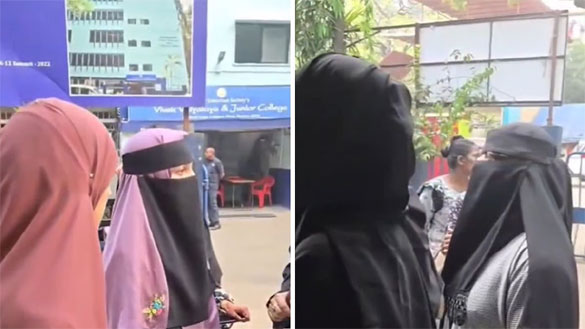
Students protest outside Vivek Vidyalaya Junior College in Goregaon West after restrictions on burqas and niqabs sparked controversy | File Photo
-----------
Mumbai, Dec 13: The debate over burqas, hijabs and niqabs in educational institutions resurfaced in early December 2025 at VivekVidyalaya Junior College in Goregaon West, where a temporary ban on burqas and niqabs triggered student protests and hunger strikes.
Following sustained demonstrations, the college withdrew the ban on burqas but continued to restrict face-covering niqabs, citing security and identification concerns.
Echoes of the Karnataka Hijab Controversy
The issue first drew national attention in February 2022, when a government college in Udupi, Karnataka, banned hijabs (head covering) in classrooms, triggering widespread protests and a legal battle that reached the Supreme Court. While the Karnataka High Court upheld the ban in state-run schools and colleges, the Supreme Court later delivered a split verdict in October 2022.
Divergent College Policies Amid Legal Uncertainty
In the absence of a final ruling, colleges have adopted differing approaches. In mid-2024, N.G. Acharya & D.K. Marathe College in Chembur introduced a dress code banning attire such as burqas, hijabs, niqabs and caps, leading to protests and criticism from particular groups.
Supreme Court Stay Offers Interim Relief
Meanwhile, the Supreme Court in August 2024 stayed the Mumbai college’s ban on hijabs and burqas, emphasising student choice and autonomy, particularly in private institutions. Many see this interim relief as a reaffirmation of individual rights, even though the larger legal debate is still unresolved.
Women’s Rights Activists Flag Impact on Education
Women’s rights activist ZakiaSoman, founder of the Bharatiya Muslim MahilaAndolan, argues that the issue has been politicised at the cost of girls’ education. “Burqa and hijab are not related to religion. This is a patriarchal and political issue,” she said.
“Dress codes are applied only to girls and women, while men have complete freedom. Whether a girl comes to school with a hijab and books or without a hijab should not matter. But instead, girls are being pulled in opposite directions; some say don’t come without a hijab, others say don’t come with one. Eventually, girls suffer educationally.”
Political Voices Join Student Protests
AIMIM Women’s Wing Vice President Advocate Jahnara Sheikh joined the agitation at VivekVidyalaya, stating that the restrictions disproportionately affect Muslim girls. “Colleges do not have a specific uniform,” she said.
“We do not oppose the niqab ban; we oppose the ban on burqas and hijabs. Some colleges claim cheating cannot be traced due to burqas. But if a student wants to cheat, they will do so by any means.”
Allegations of Selective Enforcement
She further pointed out what she described as selective enforcement. “Sikh male students wear turbans, women from other communities wear sarees, and men wear kurta-pyjamas; no one bans their attire. In schools, dress codes are acceptable because uniforms exist. But in colleges, there is no such rule. Girls need a comfort zone. If a girl feels comfortable, she can focus better on her studies.”
Students Question Transparency During Admissions
A student pointed out that colleges did not inform students about the policy in advance. “Colleges do not tell us about the burqa and hijab ban during admissions,” said a female student. “If they had informed us earlier, many girls would have chosen another college. Colleges can make policies, but they must be transparent. We wear burqas and hijabs by choice. No one forces us.”
Identity, Not Just Attire, Say Students
For many, the issue goes beyond clothing. Law student ShanzaFakkih described the restrictions as an attack on identity. “We are not representing religion; this is our attire by default. If burqas create hatred, then sarees and suits should also be questioned,” she said. “This is political propaganda. These colleges have existed for years, and girls have always worn burqas. Why is it suddenly a problem now?”
She added that solutions already exist. “If cheating is a concern, female supervisors can examine female students. We have no objection. Not every student cheats, and that should also be considered.”
Administrators Cite Security and Accountability
A few college administrators, however, defend the restrictions, citing security and accountability. “Educational institutions have a responsibility to ensure that everyone on campus is identifiable,” said an administrator.
“Face-covering makes it difficult during examinations, admissions and movement in restricted areas.” Some also raise concerns about impersonation and misuse of facilities.
Supporters of the ban argue that institutions have the right to enforce uniform norms. “Once you enter an institution, certain rules apply equally to all students. It’s not about targeting any community,” the administrator added.
Fears of Exclusion From Education
Women’s rights activists caution that blanket restrictions on attire, especially face-covering, can unintentionally push young women from conservative backgrounds out of education altogether, undermining the very goal of empowerment.
Muslim Satyashodhak Mandal President On Hijab Controversy
Dr. ShamsuddinTamboli, President, Muslim Satyashodhak Mandal, stated, “Burkha, hijab or niqab aren’t an essential part of Islam. It is a pre-Islamic culture and has continued due to a male-dominated socio-religious mentality. We consider that a burkha-free society would be healthier and a symbol of the modernisation of an age-old society. It is part of social reform, which we encourage. We have to understand that in our democratic society, we must respect individual choice and, at the same time, encourage a free social atmosphere.”
Further, Dr. Tamboli added, “Yes, if the dress code in educational institutions is mandatory, one has to accept it and follow the norms of the educational institutions. But if the motive of such educational institutions is ill-intentioned—to dominate the minority and discourage Muslim girls’ education—then it must be condemned. These days, right-wing organisations have become very active in raising such issues. Their intentions are not reform, but the creation of hatred and enmity in society. The Muslim community should also introspect on the issue and change its attitude. There is no need to exhibit a separate identity by using the burkha in educational institutions. However, social reform or change has to be brought through mass education and a free atmosphere, not through compulsion.”
Scholars Come In Support Of Education Rules
A few scholars have come forward in support of the education rules, emphasising discipline and uniformity in educational institutions. Dr ZeenatShaukat Ali, a prominent Indian Islamic scholar, former Professor of Islamic Studies, and Director-General of the Wisdom Foundation, stated, “Our country is secular and democratic, and everyone has the right to wear clothes of their own choice. In India, all kinds of attire, including religious symbols, are permitted. However, schools and educational institutions have uniforms, which promote equality, and students are required to follow these rules. Every religion has essential practices, while some forms of attire have evolved as cultural practices over centuries. If a student has an issue with institutional rules, they may choose to seek admission elsewhere. The matter is currently sub judice. Nowadays, every social issue tends to become political.”
As the debate continues, the burqa and hijab controversy has become more than a question of dress. It reflects deeper tensions around women’s autonomy, fundamental freedom, institutional authority and the future of inclusive education in India. One reality remains constant: it is the students, especially young women, who bear the highest cost in their education.
Source: freepressjournal.in
https://www.freepressjournal.in/mumbai/college-dress-code-controversy-burqa-hijab-and-students-right-to-education
-------
Female genital mutilation driven by local customs in southern Iran - study
Dec 15 2025
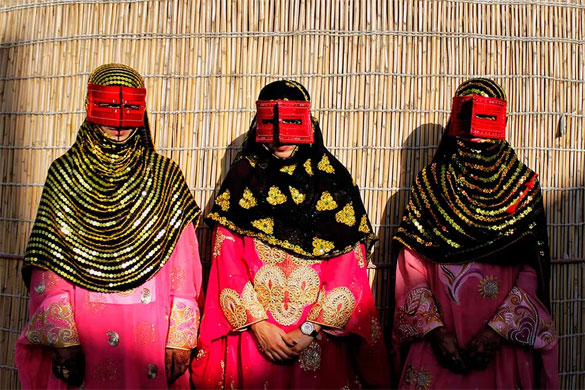
File photo of women in Iran’s southern Hormozgan province
-----------
A study on female genital mutilation (FGM) in Iran’s southern Hormozgan province finds the practice is sustained chiefly by family dynamics, gender stereotypes and local customs that often outweigh religious mandates.
Published by researchers at Islamic Azad University, the peer-reviewed paper appears in Social Problems of Iran (Autumn 2025) and uses grounded-theory interviews with 15 women (2022–23) to map causal drivers, intervening factors, strategies, and outcomes.
The authors report that cutting persists within kinship networks that link family honor to control over female sexuality, while misinformation and limited access to alternative medical or religious views reinforce continuity.
“The central category indicates the impact of religious and family institutions in the continuation and reproduction of the traditional pattern,” the paper said, adding that “local customs outweigh religious mandates, with religion serving more as a legitimizing discourse.”
They say women’s responses evolve from silence and avoidance in childhood to negotiation, alliance-building and seeking medical advice in adulthood, with education, urbanization and social-media advocacy widening pathways to change.
Reported outcomes include physical pain, reduced sexual satisfaction, traumatic recall and social withdrawal. “FGM causes physical, sexual or psychological harm or suffering to women.”
According to the paper, common misconceptions about the practice include beliefs that FGM preserves a girl’s “purity,” prevents immoral behavior or is a religious obligation.
“I had no idea what circumcision was until they did this to us,” said one 42-year-old participant.
Another woman described the experience as sudden and violent. “I was confused and completely unprepared. Like a chicken you grab to slaughter. Two female relatives held me down, tightly gripping my arms and legs, and then they took out the blade.”
FGM is practiced in several regions of Iran, particularly in western and southern provinces including Hormozgan, Kordestan, Kermanshah, West Azarbaijan, Ilam and Lorestan.
There is no comprehensive national data on its prevalence, but small-scale studies have reported varying rates across these areas.
The most common form documented in Iran is Type I FGM, involving partial or total removal of the clitoris or prepuce. Procedures are typically carried out by traditional midwives or elderly women using basic tools such as razor blades, often without anesthesia.
Iranian law does not explicitly criminalize FGM. There have been no known prosecutions, and official responses have largely been muted.
Source: iranintl.com
https://www.iranintl.com/en/202512146587
--------
UN: International Solidarity with Women of Afghanistan is Essential
15 Dec 2025
The UN Women has announced that in the context of severe restrictions and increasing threats, international solidarity with Afghan women is of paramount importance.
The organization said on Sunday evening, December 14, in a message posted on X that supporting Afghan women and girls against restrictions, reduction of services, and violations of their human rights is essential.
Meanwhile, AnnalenaBaerbock, President of the 80th session of the United Nations General Assembly, had previously stated: “The strength of Afghan women and girls in facing restrictions and violations of their rights is extraordinary, but no one should be left alone.”
UN Women in Afghanistan, while emphasizing the importance of global solidarity, has appreciated the efforts of the international community to stand alongside Afghan women.
The organization added that it will continue to strive to support women’s rights and expand their opportunities in various sectors.
It is worth noting that the Taliban, by restricting girls’ education and prohibiting women’s economic activities, have violated a major part of their fundamental rights and have deprived millions of Afghan women and girls of educational and work opportunities.
Source: 8am.media
https://8am.media/eng/un-international-solidarity-with-women-of-afghanistan-is-essential/
-------
Riding Against Tradition: How Iranian Women Bikers Are Rewriting Rules of the Road
Dec 15 2025
When she first started learning to ride a motorbike, Iranian Maryam Ghelich, now an instructor, would drive through Tehran's empty streets at night to avoid scrutiny over her clothing or lack of a licence.
Fifteen years on, Ghelich has trained hundreds of women, helping them navigate not only the capital's gridlocked streets but the barriers facing women motorcyclists in the conservative Islamic republic, with a marked surge in demand for lessons in recent months.
"This sport was one of my passions, and in Iran it had long been taken for granted that motorcycling was only for men," she told AFP at a training centre in northern Tehran.
On streets and at intersections across Iran, women on mopeds and motorbikes wearing colourful helmets have become an increasingly common sight, signalling a subtle but noticeable shift in social attitudes over a matter of months.
"I tried to prove that women can also have successful participation in this field," said 49-year-old Ghelich, a long-time member of Iran's Motorcycling and Automobile Federation.
Ghelich, who is a certified instructor with the federation, explained how she had watched the change unfold in real time after spending more than a decade as one of only a handful of women riders.
"People's perspectives in our society have really changed. It wasn't accepted at all before," she said, explaining there has been a sharp rise in women enrolling in her courses in recent months, whether for city riding or for racing.
"When I see the women we trained out riding on the streets, I really enjoy seeing that families are now accepting it," she added.
Licensing issue
Despite the progress, motorbike and scooter licensing for women remains a major hurdle in Iran and a legally grey area.
While traffic laws do not explicitly ban women from riding, authorities have never issued motorcycle licences to them in practice, with the issue gaining urgency with the noticeable rise in women riding.
Niloufar, a 43-year-old fashion designer who asked only to be identified by her first name and who recently joined Ghelich's city-riding course, said the lack of licences is of serious concern.
"Even if a woman rides very professionally, without a licence she will legally be blamed if she has an accident, even if she's the victim," she said.
Publicly, authorities have maintained that women can ride motorcycles. Government spokeswoman FatemehMohajerani said there is "no legal prohibition".
And in September, the head of Iran's traffic police, Teymour Hosseini, said his officers did not have authorisation to give their own interpretation to the law on religious or any other grounds.
"The police enforce the law... whatever is issued, we are obliged to implement," he added.
But others have continued to refer to the Islamic republic's strict dress code, in place since shortly after the 1979 revolution and requiring women to wear loose clothing and cover their head and neck, as a block to women riding motorcycles.
"Some ride motorcycles with no hijab, improper hijab, or poor covering... such behaviour is against Sharia law," said AbdolhosseinKhosropanah of the Supreme Council of the Cultural Revolution, a state body overseeing Islamic cultural and educational policy.
Ultraconservative lawmaker Mohammed Seraj has argued: "Women riding motorcycles is improper and not compatible with the society's culture."
‘No reason to object’
Ghelich said clothing restrictions have long posed challenges for women riders.
She recalled races years ago when women participants were required to wear "long overalls" over their leather suits -- a rule that she said "really restricted" riding.
But conditions for riding have eased over time, she said, and that even when police "seize motorcycles now, they let people go more easily, they give it back faster".
Women in Iran have more broadly pushed against social boundaries in recent years, increasingly defying the Islamic republic's strict rules, including the mandatory dress code.
The trend has accelerated after the September 2022 death in custody of MahsaAmini, arrested for allegedly violating hijab rules.
Mona Nasehi, a 33-year-old beauty salon owner who began riding this year, said police once attempted to stop her -- possibly because she was riding alone -- but she was too afraid to pull over.
"I had heard from friends that police usually don't mistreat women riders, but we all still have that fear that they might insult us or take our bike," she said.
NayerehChitsazian, 53, who bought her motorbike last week, said that while her licence is the missing piece, all her other documentation is in place.
"The police have no reason to object," she said.
“The motorcycles are registered, insured, so there's no reason for them to stop us.”
Source: asianetnews.com
https://newsable.asianetnews.com/world/iran-women-motorbike-riders-breaking-gender-barriers-licence-hijab-debate-articleshow-vygg753
-----
Fatemeh Sharif takes charge of Pakistan women’s futsal team
December 15, 2025
Hailing from Iran, Fatemeh is an AFC-certified coach and has extensive coaching experience, which spans across national teams, elite futsal clubs, youth development programs, and international competitions. She has also held key roles in Iran’s National Women’s Futsal setup.
“The Pakistan Football Federation is pleased to announce the appointment of Ms. Fatemeh Sharif Noghabi as Head Coach of the Pakistan Women’s Futsal Team,” the PFF said in a statement.
“Ms. Fatemeh Sharif Noghabi brings extensive international experience in women’s futsal, backed by strong technical knowledge and professional coaching credentials. She is an AFC-certified coach with a proven track record across national teams, elite futsal clubs, youth development programs, and international competitions.
“Her coaching career includes key roles within Iran’s National Women’s Futsal setup, where she worked in high-performance environments and contributed to team preparation for national and international tournaments.
“At club level, she has successfully coached multiple women’s futsal teams, guiding them in national leagues, championships, and regional competitions, while consistently prioritizing tactical discipline, player development, and modern futsal methodology,” the statement reads.
Source: tehrantimes.com
https://www.tehrantimes.com/news/521661/Fatemeh-Sharif-takes-charge-of-Pakistan-women-s-futsal-team
------
Iran Arrests Mourners at Lawyer's Memorial, Including Nobel Laureate
DECEMBER 15, 2025
ROGHAYEH REZAEI
Nearly 10 days after human rights lawyer KhosrowAlikurdi collapsed and died in his office under mysterious circumstances, Iranian security forces have launched a sweeping crackdown on those mourning him, arresting dozens of people, including Nobel Peace Prize laureate NargesMohammadi and the lawyer's own brother.
The escalating response to what should have been a simple memorial service has transformed Alikurdi's death into a flashpoint, drawing comparisons to the 2022 killing of MahsaAmini, which sparked nationwide protests.
Alikurdi represented some of Iran's most prominent dissidents, political prisoners, and families seeking justice for loved ones killed in government crackdowns.
His body was found on December 5 in his Mashhad office, slumped on the floor with facial injuries, apparently having fallen from his chair.
Last Thursday, state-affiliated Mehr News Agency released a 54-second clip from security cameras showing Alikurdi checking his phone before suddenly falling from his chair, without any visible signs of distress. His body shakes as it hits the ground.
The footage - released exactly one day before his seventh-day memorial ceremony - has done little to quell suspicions about his death.
Instead, it has intensified questions about what happened to a lawyer who had dedicated his career to challenging the Islamic Republic's judicial system.
"Someone having a heart attack has symptoms - severe chest pain, dizziness, or breathing problems. No one just has a stroke like that," a civil activist and friend of Alikurdi told IranWire.
The activist said security agencies had made "countless" phone calls to Alikurdi's friends and family, pushing the narrative that he suffered a stroke or cardiac arrest.
The family was told their loved one's funeral would proceed "more easily and quickly" if they accepted this explanation, according to IranWire sources.
Friends insist Alikurdi had no known health problems and was in good condition.
The true scale of official concern about Alikurdi's death became apparent last Friday at his seventh-day memorial ceremony, a traditional mourning ritual in Iran.
Security forces prevented many attendees from entering the Ghadir Baba Ali mosque in Mashhad, forcing the ceremony into the streets.
Plainclothes officers wielding batons confronted mourners, and videos show at least two men rushing toward crowds gathered at the mosque's green iron gate.
The Islamic Revolutionary Guard Corps' intelligence unit arrested at least 40 civil activists, former political prisoners, and justice-seeking family members who attended the ceremony.
While some were later released, several prominent activists remained in detention as of early Saturday.
Among those still held are NargesMohammadi, the 2023 Nobel Peace Prize winner who has spent much of the past two decades in and out of Iranian prisons for her human rights work, civil activists PouranNazemi, SepidehGholian, AliyehMotallebzadeh, HastiAmiri, and Ali Adinehzadeh, whose teenage son Abolfazl was killed during the 2022 protests; and others.
IranWire sources said Mohammadi was arrested "with extreme violence."
Videos circulating on social media show women chanting, "We swear by our comrades' blood; we stand until the end," moments before their arrests.
In one clip, Mohammadi refers to the coincidence of Alikurdi's memorial falling on the anniversary of MajidrezaRahnavard's execution, a protester hanged in Mashhad in December 2022.
"We are all Iranian," Mohammadi says in the video, also referring to attacks by baton-wielding agents.
Inside the mosque, other videos show women chanting "Long live the Shah," referring to the Pahlavi monarchy overthrown in Iran's 1979 revolution.
Slogans supporting Prince Reza Pahlavi and commemorating executed protester Rahnavard were also heard.
One woman's voice rings out with "Death to Khamenei" - referring to Supreme Leader Ali Khamenei - though a man nearby quickly urges her to be silent.
The crackdown extended beyond the memorial itself. JavadAlikurdi, Khosrow's brother and a fellow lawyer, was arrested on Friday evening while having dinner at a restaurant with close associates.
IRGC intelligence agents confiscated the mobile phones of everyone present before taking JavadAlikurdi into custody. His whereabouts and any charges against him remain unknown.
The arrest came despite Javad already living under restrictions - he had been outside prison with an electronic ankle monitor.
Just a day before his arrest, he had been summoned to Mashhad's Revolutionary Court.
In a message ahead of his court appearance, JavadAlikurdi wrote that he considered the summons "in any condition" a source of pride and evidence of his commitment to "justice, truth and human responsibility."
He urged the public not to forget his and his brother's fate if "silence" were imposed on him, calling on people to pursue "the revelation of the truth."
Hours after the memorial - before his own arrest - JavadAlikurdi said in an Instagram live broadcast that the agents who attacked mourners "were foreigners, from neighboring countries."
An eyewitness to the memorial told IranWire that security forces appeared unprepared for the turnout.
"It was clear they didn't expect such a crowd to show up. The slogans were very progressive," the witness said. "Some plainclothes officers took batons and attacked people in front of the mosque door. In another place, people shouted at a police van so much that it had to flee."
IranWire sources confirmed that the crowd at the seventh-day ceremony far exceeded previous gatherings, with people traveling from across Iran to pay respects and console Alikurdi's family.
The witness added, "If they killed the late Alikurdi, which is really not far-fetched, it's clear they miscalculated and were unaware of his and his family's popularity."
At a ceremony the previous day at Alikurdi's grave in the village of Abdolabad near Sabzevar, mourners chanted slogans against Khamenei.
Critics see parallels between how authorities have handled Alikurdi's death and their response to Amini's September 2022 death in morality police custody.
In both cases, officials released edited surveillance footage purportedly showing the victims collapsing without an external cause.
In Amini's case, a brief clip showed her approaching a female morality police officer before falling. Authorities claimed she had a pre-existing condition, but her family denied this, and her death sparked months of nationwide protests.
"When the government feels threatened, it releases edited and cherry-picked videos to control public opinion, but no one believes them," the civil activist friend of Alikurdi told IranWire. "KhosrowAlikurdi was an honorable and beloved lawyer of the Iranian people. People are mourning him, and these lies upon lies won't change anything."
The video released by Mehr shows only the moment of Alikurdi's collapse, not what happened before or after.
Security forces seized all 16 cameras from his office on December 5, taking them away for hours without providing receipts or allowing backups.
The footage shows Alikurdi, barely visible from behind, as a camera above his workspace captures him using his phone. He suddenly falls without touching his chest or showing obvious discomfort - behavior the activist friend says is inconsistent with cardiac arrest or stroke.
Alikurdi's client list read like a roster of the Islamic Republic's most prominent critics and political prisoners.
He represented Kamal JafariYazdi, a political prisoner and signatory of a letter calling for Khamenei's resignation, known as the "14-person statement."
In a letter to a United Nations fact-finding mission - provided to fellow human rights lawyer MarziehMohebi, now in exile - Alikurdi wrote that authorities had fabricated a case against him for representing JafariYazdi and activists FatemehSepehri and Mohammad Hossein Sepehri.
The pressure on those connected to Alikurdi has been unrelenting. Friends and clients have received threatening phone calls from security agencies. Several have been summoned, detained, or arrested in the days since his death.
MarziehAdinehzadeh, sister of the slain teenage protester Abolfazl, wrote that there is also no news of their uncle, Reza Adinehzadeh.
Source: iranwire.com
https://iranwire.com/en/features/146947-iran-arrests-mourners-at-lawyers-memorial-including-nobel-laureate/
-------
Aqsa School in Bridgeview, first all-girls Muslim school in the U.S., celebrates 40 years
December 14, 2025
By Samah Assad
A celebration in the southwest suburbs as 2026 will mark 40 years since a muslim family made history.
The first all-girls Muslim school in the United States was formed in Bridgeview, Illinois. Decades later, the graduates of the Asqa School are living proof of a family's promise kept.
In the heart of Little Palestine, in Bridgeview, is a building built for the betterment of women. Born from the mind of a man.
"Everybody thought that we are dreamers, me and the other people," said Aqsa School co-founder Mahomoud Ismail.
For Ismail, the school is a dream with roots in his native land.
"Well, I am one of those Palestinians who are very proud to be a Palestinian," he said.
And there he grew into a doting son, who listened.
"And my mother, God bless her soul, was very kind and she always said, 'Look,' to me and to my brother and stuff like that, 'the only thing that will save you in this life is if you hit the books," he said.
So, he did, using his mother's words and her battle with ovarian cancer to motivate his career in medicine in the United States. Then, when he and his wife, Widad, had their own children, that sentiment stuck.
"We want them all to get educated. We don't want the boys to go to colleges and the girls to stay home," he said.
They wanted them to learn at an all-girls private Islamic school. So, he and like-minded families helped found the very first one in the United States, right here in Bridgeview. That was 40 years ago.
Mahmoud's daughters, Tammie and Nadia, were in some of those first classes.
"My father would often say, you know, as a Palestinian refugee, 'You can lose your home, you can lose your land, but no one can take your education from you," Tammie said.
Still, reminders of home are everywhere.
Aqsa School shares its name with the third-holiest site in the Muslim world, which includes this famous gold-domed mosque in Jerusalem. It depicts a student-painted mural, as is the literal translation of Aqsa, meaning "farther," somewhere Mahmoud's mother always wanted him to go.
He said he's sharing his mother's message as he wanted to please her, and in doing so, using the pillars of education and faith to inspire its roughly 350 students.
In its four decades, the school has grown to serve girls and boys in elementary school, then only girls from 6th grade to 12th grade.
That single sex separation has worked for junior LayannNazer.
"So I feel like at public school, I always felt like maybe I had to run with the crowd a little bit more," she said.
In this learning environment, she's gone farther than she'd ever dreamed.
"I felt like I'd been pushed to the best of my abilities. Like I've been not doubting myself. I've been getting confirmation that I wanted and needed all this time, and I've grown so much more," Nazer said.
She's involved in AP classes, student council, Model UN, and off-campus leadership opportunities that expose the girls to more of the world and reflect well on this tight-knit community.
"These students compete not only with other Islamic schools, but statewide," said board member RouhiShalabi.
So much so, Shalabi said other communities take notice.
"I think too, once they know who we are, they're like, they're like everybody else. They want, you know, good jobs, good schools, uh, safe environment, all of these things, like everybody else, as Americans," he said.
Another group paying close attention? College recruiters.
Aqsa has decades worth of graduates who've gone on to esteemed universities like Michigan and Northwestern, even Ivy League institutions like Yale.
These women are lawyers, authors, politicians, and much more. An Aqsa grad even sits on the board of Doctors Without Borders.
But there's another special group of alumna who left to change the world and then returned to do it here.
"I said I'd like to come back for a year, I can teach part-time, and after that, I just was like, 'this is
where I need to be.' I knew I wanted to serve, and I knew I wanted to serve community, and I felt that this was how I could do it best," Tammie said.
She is now Aqsa's principal, and Nadia is the college counselor.
"This school gave me so much, I felt like I had to come back," Nadia said. "It was because, you know, we've got dreams to dream for kids. We've got kids to believe in. We've got kids who we've got to motivate to believe in themselves."
By turning a personal calling into their professional work, both women are demonstrating another pillar of Aqsa School service. They expect every student who passes through these halls to give back when and where they can.
"It's the actual embodiment of your faith. And we always say, 'if someone graduates here with straight As but doesn't have good character, we haven't done our job," Tammie said.
With those guiding principles, these two continue the family business, inspired by their father and generations of Palestinians before them.
"You have to think of the future, and these girls and these children, our children, they are the future of this country now," Mahomoud said.
Students who now push the next generation of Muslim women farther.
"Inshallah. God blessing. God willing," Mahomoud said.
So what's next for the school? Its founder said his next big dream would be to start a college.
Source: cbsnews.com
https://www.cbsnews.com/chicago/news/aqsa-school-celebrates-40-years/
-------
URL: https://newageislam.com/islam-women-feminism/mumbai-college-burqa-hijab-education/d/138017