
Mariam Mahmood: Wrexham Women’s First Muslim Player Speaks Of Inspiring A New Generation Of Footballers
New Age Islam News Bureau
17 October2025
· Mariam Mahmood: Wrexham Women’s First Muslim Player Speaks Of Inspiring A New Generation Of Footballers
· Iran To Mobilize 80,000 Volunteers For Hijab Campaign, Official Says
· Hijab Row: Kochi Girl To Move Schools As Stress Mounts, Parents Say ‘No Going Back’
· When The Taliban Shut Down The Internet And Phone Networks, Millions Of Women And Girls Were Silenced
· Mine Action: Advancing Women, Peace and Security Agenda in Iraq
· Ganga-Jamuni Tehzeeb: Muslim Women Craft Cow Dung Lamps For Dev Deepawali In Varanasi
Compiled by New Age Islam News Bureau
URL: https://newageislam.com/islam-women-feminism/women-muslim-player-inspiring-footballers/d/137287
-----
Mariam Mahmood: Wrexham Women’s First Muslim Player Speaks Of Inspiring A New Generation Of Footballers
Zahra Onsori
17 October 2025

Mariam Mahmood. Photograph courtesy of Wrexham AFC Women
-----------
Wrexham AFC Women’s first Muslim player has spoken of her joy at inspiring a new generation of footballers.
Speaking to Hyphen two months on from signing with the team, which competes in the Adran Premier — the highest level in the Welsh women’s sport — Mariam Mahmood also praised her family and community for helping her get to where she is.
The 21-year-old attacker scored twice for the team upon her September debut against Pontypridd, aiding a 6-1 win, and will hope to be on the scoresheet again in Wrexham’s next fixture against Aberystwyth Town on 26 October.
Mahmood is the only British Pakistani player at Wrexham AFC Women, but said of the team: “The people are great and they don’t make me feel excluded or different. I’ve been very lucky to experience that.”
Earlier this year, Mahmood represented Pakistan in the AFC Women’s Asian Cup qualifiers, where she scored her first international goals, securing a 2-1 victory against Kyrgyzstan. She hadn’t visited Pakistan since she was a child, so it was a big moment for her. “Being around people who are just like you, playing for your country and making them proud — I was on top of the world,” she said.
Having grown up in a football-mad house in Birmingham, she joined a local team aged 12 and quickly progressed to West Bromwich Albion’s women’s squad, where she played for four years. At first, a career in women’s football seemed unimaginable, she said.
“You never hear that it can be a job for women,” she said. “You only hear about it for men.” It was at West Brom that her career aspirations solidified.
Mahmood trains three or four times a week, driving more than an hour from her home in Dudley to Wrexham’s training ground. Despite the long journey and vigorous training schedule, Mariam says it’s worth it.
“It’s hard,” she said. “It takes a lot of social hours. Everyone’s busy during the day and has their evenings free, whereas I’m free during the day and don’t have evenings free. But if you have the right people around you, they will understand.” Her goal for the future is to go fully professional.
She credits her success to the sacrifices her family made during the early days of her sporting career, with her dad waking up at 5am to take her to football practice. “I probably would have given up a million times if it weren’t for them,” she said. “Having that kind of external support helps massively.” She acknowledges that such support is not universal for Muslim women, but stresses the importance of having someone to fight her corner: “Whether it’s a friend or anyone else close to you, having someone who can be a shoulder when you have days when you feel like quitting helps a lot.”
All the same, early in her career, some family and community members believed football wasn’t a suitable career path for a Muslim woman. Others wanted her to go down a more academic route.
Mahmood’s experience sheds light on the broader challenges faced by women who want to get into football. A 2025 Women in Football survey revealed that only 29% from “underrepresented ethnic origins” feel they can excel in the sport. A 2022 report by the non-profit Muslimah Sports Association found that 97% of British Muslim women who responded to a survey by Muslim Census wanted to increase their current participation in sports, suggesting the problem is one of access.
Mahmood’s inboxes on social media are flooded with messages from young women seeking guidance on how to enter the sport. “There is a lack of direction,” she said. “If you don’t know something is possible, you can’t get into it.”
But dedicated organisations are actively working to bridge the gap. Last month, Mahmood attended the Midlands Women’s Football Conference, an initiative led by the Muslim Sports Foundation, in partnership with the Birmingham FA and Aston Villa Foundation. The event aimed to open up access for Muslim women who are interested in football and refereeing.
Mahmood, who spoke at the event, expressed her joy upon seeing the room packed with Muslim women eager to participate in sports. “It was really nice to see,” she said. “When I started telling my story, you could see how happy and inspired they were. It makes it worth it to go to these events and share my story.”
Source:
https://hyphenonline.com/2025/10/17/mariam-mahmood-wrexham-afc-womens-interview-family-muslim-joy/
--------
Iran to mobilize 80,000 volunteers for hijab campaign, official says
16 October 2025
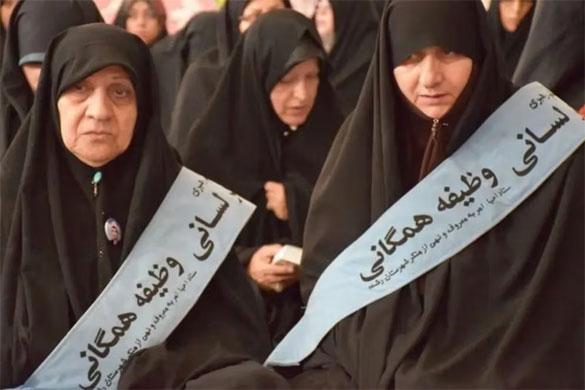
Iran plans to activate about 80,000 trained volunteers in Tehran province to support social and religious outreach programs, including new coordination on hijab and public behavior, a senior official said on Thursday.
“The country’s greatest asset is its faithful and revolutionary people,” Rouhollah Momen-Nasab, head of Tehran’s headquarters for the Promotion of Virtue and Prevention of Vice, told reporters. “By activating 80,000 trained personnel, we can bring about major transformation in the province even before relying on large state budgets,” he said.
He announced the formation of a “chastity and hijab situation room” involving cultural and executive bodies, inviting citizens to join a network of local observers to help promote what he described as social discipline and religious values.
Momen-Nasab described the group’s response to what he called a “cognitive and cultural war” as data-driven and multi-layered, with monitoring and policy recommendations sent to relevant authorities. The organization, he said, will also push institutions through legal and audit channels to fulfill their “statutory duties.”
Momen-Nasab said the headquarters was coordinating with the prosecutor’s office and cyber police to monitor online and streaming platforms, warning that “virtual spaces and VODs must not be safe havens for lawbreakers.”
The renewed push comes as most Iranians continue to oppose mandatory hijab rules. A 2022 survey by Netherlands-based GAMAAN found more than 70 percent of Iranian men and women opposed compulsory veiling.
For Iran’s leadership, however, enforcement of hijab laws remains a pillar of political legitimacy. Since Mahsa Amini’s death in 2022, women appearing unveiled in public have turned defiance into a sustained act of civil protest.
In recent weeks, authorities have sealed cafés and restaurants across cities for noncompliance after outcry by hardliners. Police warned that all businesses “must observe current laws.”
Source:
https://www.iranintl.com/en/202510179762
--------
Hijab row: Kochi girl to move schools as stress mounts, parents say ‘no going back’
17.10.25
The parents of a student caught in the Hijab row in a Church-run school in Palluruthy, have decided to transfer her elsewhere citing 'stress', while the institution welcomed her to continue pursuing education there, subject to adherence to its rules.
The father of the Class VIII student at St Rita's Public School told PTI that she would not be sent back there.
"My daughter has been under severe stress after the hijab incident. She clearly said she doesn't want to return, so we decided to respect her wishes," he said.
The family has approached other schools for admission. "We are in talks with one school that has agreed to admit her, but we are exploring all available options," he added.
According to him, neither the teachers nor the management of the school have contacted the family since the controversy erupted.
"My daughter has not attended classes for the last two days, and we have received no communication from the school," he claimed.
The dispute started after the school objected to the girl wearing a hijab, citing its dress code policy. The issue later snowballed into a major controversy, even as Kerala General Education Minister V Sivankutty backed the girl.
On October 10, the student's parents, along with others, visited the school and questioned the management's stance, following which the institution declared a two-day holiday.
The Kerala High Court later directed that police protection be provided to the school.
Sivankutty, who had initially criticised the school, later said the issue was resolved amicably.
He recently asked the management to refrain from any remarks against the government and the education department.
Meanwhile, Sister Heleena Alby, Principal of St Rita's Public School said the institution is willing to accept the student if she is ready to follow its rules.
Speaking to reporters on Friday, she said, "If our student returns adhering to the rules and conditions of the school, we are ready to provide her education and help her complete her studies as promised on the first day. We are wholeheartedly ready for that and hope the best will happen".
She declined to take further questions, saying the matter was sub-judice.
"We respect both the court and the government. It will continue so. Please spread cultural harmony, peace and love," she said.
She thanked the Kerala High Court, the school's lawyer, minister Sivankutty, his secretary, the education department, MP Hibi Eden, MLA K Babu, BJP leader Shaun George, various Christian organisations, and the Kochi Diocese leadership for their support.
"It will be difficult for any educational institution to function without the support of the education department," she said.
Sr Heleena said the school provides an "Indian way" of education, blending cultural and traditional values.
"Beyond the curriculum, we teach our students the traditions of India and Kerala, the importance of humanity, and the need to protect the environment. We teach them to make India 'Sare Jahan Se Acha' (Better than rest of the world ),” she added.
Source:
https://www.telegraphindia.com/india/hijab-row-kochi-girl-to-move-schools-as-stress-mounts-parents-say-no-going-back/cid/2128245
------
When The Taliban Shut Down The Internet And Phone Networks, Millions Of Women And Girls Were Silenced
16 October 2025
When the Taliban recently cut off the Internet and phone networks across Afghanistan, millions of women and girls were silenced. For those with connectivity, the blackout severed their last link to the outside world – a fragile connection that had kept education, work, and hope alive.
Many women in Afghanistan still lack access to the Internet, a basic phone, or the literacy to use digital tools. For those that do, that connection is a rare lifeline to life-saving services and the outside world.
For now, access has largely been restored. But the message was clear: in Afghanistan, this valuable gateway to learning, expression, and services for women and girls can be shut down at any moment.
Afghan women are already banned from secondary and higher education, from most forms of work, and public spaces such as parks, gyms, and sports clubs.
Many women are also receiving humanitarian aid, including in earthquake-affected eastern Afghanistan, and among those returning – many forcibly – from Iran and Pakistan.
The digital and phone blackout intensified feelings of stress, isolation and anxiety among women and girls.
What happens when Afghan women and girls go offline?
In Afghanistan, the impact of Internet and phone blackouts falls more heavily on women and girls.
It eliminates what is, for many, a final means of learning, earning, and connecting.
When women and girls lose Internet access, they lose the ability to:
Access aid: Those who are connected can use the Internet or phones to find out about support available, and aid agencies rely on connectivity to continue operations.
Learn about disasters: Recent data shows 9 per cent of women use the Internet to access information on climate disasters.
Seek services and reporting mechanisms for survivors of gender-based violence or those at risk.
Learn: Online classes and study groups were a lifeline for girls banned from secondary schools, and women banned from universities.
Work: Online businesses are a vital source of income for many women to sustain their families after being pushed out of many formal roles.
Connect: Social apps and social media provided safe spaces to support one another and exchange information.
Be visible: For women already excluded from public life, the digital world is one the last places to exist and resist.
For more on what life looks like for women in Afghanistan today, see our FAQs.
Going dark in the middle of humanitarian crises
The national internet blackout started a month after a 6.0 earthquake struck eastern Afghanistan on 31 August, with major aftershocks continuing throughout September and the emergency response and early recovery continuing.
Despite facing many challenges, women-led organizations have played a crucial role delivering life-saving aid and services to women and girls affected by the earthquake, and Afghan women and girl returnees from neighbouring Iran and Pakistan.
During the blackout, NGOs were forced to halt humanitarian operations and cease field missions to emergency sites. Staff could not process payments or place orders for essential goods destined for women and their families.
When banks went offline, women affected by humanitarian crises were unable to access emergency cash assistance to buy essentials such as food.
The shutdown also made it much harder for survivors of gender-based violence to access help at a time when household tensions were rising across the country, and the risk of violence was escalating.
Online livelihoods switched off
In Afghanistan, waves of directives banning women from most jobs and restricting their movement without a male guardian have systematically pushed them out of public life.
For many women entrepreneurs, the Internet offers a rare space to work, build small businesses, and sell their products – such as nuts, spices, handicrafts, clothes and artworks – to customers within Afghanistan and overseas.
“There is no space for us to work outside our homes,” explained business owner Sama*, from Parwan in eastern Afghanistan. “There’s also no local market where we can display and sell our products.”
With the support of UN Women, Sama built an online shop selling knitted bags, purses and jewelry.
“Through my online shop, I became well known,” she says. “I’m earning money, solving my financial problems, and becoming self-sufficient.”
When the blackout struck, women like Sama lost their only source of income overnight – a warning that for many Afghan women, connectivity is not a luxury, but a lifeline.
From blackout to global action
The Internet blackout in Afghanistan was a stark reminder that the digital world is not neutral. It can be space of empowerment. It can also be a tool of exclusion and isolation.
The stories of Afghan women remind us what is at stake: education, mental health, livelihoods, and hope. When women are silenced online, they are cut off further from opportunity and from the world.
Stand with Afghan women and join the 16 Days campaign.
How UN Women is supporting women and girls in Afghanistan
Through its flagship programme, Rebuilding the Women’s Movement, UN Women in Afghanistan partnered with 140 women-led organizations across 24 provinces and supported 743 women staff with salaries and training – amplifying resilience even as public life is restricted.
Source:
https://www.unwomen.org/en/news-stories/news/2025/10/when-the-taliban-shut-down-the-internet-women-lost-their-lifeline-to-aid-education-and-each-other
------
Mine Action: Advancing Women, Peace and Security Agenda in Iraq
16 October 2025
“Working in the mine action sector showed me that traditional constraints are created to be broken!” says Dina Khuder.
She, Mahrosa Abdulmuneer, and Maha Jamal are Iraqi women working for the Shareteah Humanitarian Organization, an implementing partner with the UN Mine Action Service (UNMAS) in Sinjar.
Women are valuable players in mine action
Mahrosa Abdulmuneer is a searcher, who works to rid areas of explosive ordnance. To sharpen her skills, she has participated in every training course and capacity-building opportunity.
“As a mother of two kids, I believe that my work is contributing to providing safe areas for children to play around and live their childhood and make nice memories,” she says.
“I’m saving another life on my land”
Maha Jamal, a member of the Explosive Hazard Management Team, has enrolled in capacity enhancement initiatives throughout the last three years to advance her knowledge and skills.
She joined the mine action sector because of seeing the direct effect of mine action on people’s lives.
“I feel proud and happy when I discover and remove an explosive item knowing that I’m saving another life on my land,” says Ms. Jamal.
Supporting communities in restoring their lands
Dina Khuder is a deminer.
She eagerly awaits scoring new records in explosive ordnance disposal training courses and advancing her career by taking a leadership position.
She focuses on breaking the traditional image of a male-dominated field of work and supporting communities in restoring their lands which were previously contaminated with explosive ordnance.
“The community rejected us as women in mine action, then gradually they changed their minds when they saw the results of our work to the extent of cheering and supporting us,” says Ms. Khuder.
Including women in mine action is a priority across the sector; however, we still have far to go.
Source:
https://www.un.org/en/delegate/mine-action-advancing-women-peace-and-security-agenda-iraq
-------
Ganga-Jamuni Tehzeeb: Muslim Women Craft Cow Dung Lamps For Dev Deepawali In Varanasi
by OMMCOM NEWS
October 16, 2025
Varanasi: Preparations are in full swing for the world-famous Dev Deepawali in Uttar Pradesh’s Varanasi. This year, the banks of the Ganges will be illuminated with approximately one million lamps on the ghats of Varanasi. In a beautiful example of Ganga-Jamuni Tehzeeb, Muslim women of Varanasi are playing an important role in this sacred festival.
These women are preparing one lakh lamps from cow dung, which will be lit on the ghats during Dev Deepawali. For the past 15 days, around 300 women have been working in different groups to make these lamps. They say they feel proud to contribute to the illumination of Varanasi with their handmade creations. This initiative stands as a unique symbol of Varanasi’s culture of unity and harmony.
Huma Bano, BJP leader, said, “We will also make one lakh diyas and distribute them among the people.”
Khursheeda Bano, a social worker, added, “We have been making these diyas for the past 15 days using cow dung. Through this, I want to send a message of unity between Hindus and Muslims.”
Keeping up its tradition of organising magnificent Dev Deepawali in Varanasi, the Uttar Pradesh administration is gearing up to celebrate the occasion in a more grandiose manner.
One of the key highlights of this year would be 1 lakh eco-friendly diyas that will light up Kashi’s crescent-shaped ghats on November 5. The state government is looking at another record-setting number of 10 lakh diyas, which will set the river Ganga aglow in Kashi on the occasion and dazzle the world with divine illumination.
Among them, 1 lakh eco-friendly lamps crafted from cow dung will add both a traditional and sustainable touch to the divine spectacle.
This year’s celebration promises to be historic—an enchanting union of faith, festivity, and environmental consciousness.
Lakhs of devotees and tourists from across India and abroad are expected to converge in Varanasi to witness this once-in-a-lifetime sight.
With over 10.10 lakh lamps—designer diyas, eco-friendly creations, and glowing rows across ponds and pools—the city will shine brighter than ever.
To heighten the splendour, the ghats are being adorned with facade lighting, decorative illuminations, and special cleanliness drives, ensuring that Kashi offers an unforgettable blend of divinity and grandeur.
Ahead of Dev Deepawali, a four-day cultural extravaganza – Ganga Mahotsav will be organised at Rajghat from November 1 to 4, showcasing the talent of local artists. To further enrich the experience, a laser show at Chet Singh Ghat will narrate mythological tales of Kashi.
At the same time, pollution-free green fireworks across the Ganga sands will spread the message of environmental conservation.
Every year, the Dev Deepawali transforms Kashi into a radiant canvas of faith, culture, and tradition. With hotels, guest houses, boats, cruises, and barges booked to capacity, the city gears up to welcome devotees and tourists eager to witness this divine spectacle in all its grandeur.
Source:
https://ommcomnews.com/india-news/ganga-jamuni-tehzeeb-muslim-women-craft-cow-dung-lamps-for-dev-deepawali-in-varanasi/
--------
URL: https://newageislam.com/islam-women-feminism/women-muslim-player-inspiring-footballers/d/137287