
Kazakhstan’s Mazhilis Moves to Ban Face-Coverings, Niqab, in Public
New Age Islam News Bureau
28 June 2025
· Kazakhstan’s Mazhilis Moves to Ban Face-Coverings,Niqab, in Public
· Iranian Blogger, Donya Hosseini, Held Incommunicado Following Arrest in Tehran
· Fatimah Al Zahra of Milton Keynes Feels 'Safe' Wearing A Burqa
· Reinstate Muslim Teen Lifeguard ‘Dismissed from Her Shift Over Modest Swimwear’: CAIR-Philadelphia
· Abeer Suleiman Not Coming Back': Alawite Women Snatched From Streets Of Syria
· UN Women Continues To Stand With Afghan Women And Girls Under Taliban Rule
Compiled by New Age Islam News Bureau
URL: https://newageislam.com/islam-women-feminism/kazakhstan-mazhilis-face-coverings-niqab/d/136016
------
Kazakhstan’s Mazhilis Moves to Ban Face-Coverings,Niqab, in Public
June 27, 2025
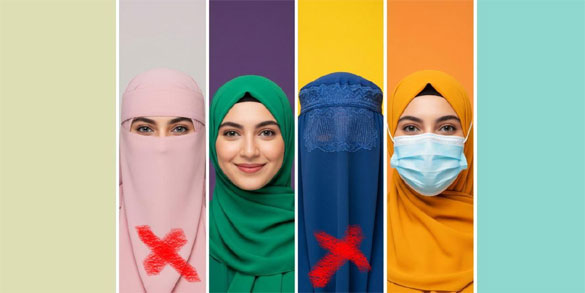
Image: TCA, Aleksandr Potolitsyn
--------
On June 25, Kazakhstan’s Mazhilis, the lower house of parliament, approved amendments to the law “On the Prevention of Offenses,” introducing a new provision that prohibits wearing clothing that obscures the face in public places. While the regulation applies broadly, the most contentious element is its effective ban on the Niqab, a religious garment that leaves only the eyes visible.
This legislative move echoes ongoing debates in Kazakhstan and across Central Asia, where secular norms are enshrined in law but tensions persist over religious expression.
Medical Masks Exempt
Earlier, on June 19, Senator NauryzbayBaikadamov clarified that the amendments would exempt face coverings worn for medical reasons, weather protection, or professional duties. According to Baikadamov, the law aims to enhance public safety and assist in crime prevention.
While accessories such as balaclavas are included in the ban, the central controversy surrounds the prohibition of the niqab.
The Scarf of Discord
Understanding the distinctions among various forms of religious dress is critical to the current debate. The niqab is a face veil that leaves only the eyes uncovered, while the burqa (or paranji), typically worn in Afghanistan, covers the entire face with a mesh screen over the eyes. Burqas are rarely seen in Kazakhstan.
Niqabs and black, floor-length dresses have become more visible on Kazakhstan’s streets in recent years, reflecting broader religious shifts. By contrast, the hijab, a headscarf that leaves the face exposed, has become commonplace and enjoys broader acceptance.
While niqabs are widely seen as foreign to Kazakh culture, hijabs hold a more complex status. Historically, Kazakh women did not cover their faces, a fact supported by pre-revolutionary photographs. The niqab is viewed by many as an imported practice, largely linked to Islamic teachings from Arab countries.
The hijab, however, is often seen as consistent with Kazakh traditions. As such, attempts to ban it have repeatedly stirred controversy.
Religious Tensions in Schools
In the fall of 2023, more than 150 schoolgirls in the Atyrau region refused to attend classes in protest against a hijab ban. Similar incidents were reported in other southern regions. Authorities reported that the situation was resolved after consultations with parents, but ambiguity remained regarding the scope of the restrictions, particularly whether the hijab was included.
President Kassym-JomartTokayev ultimately addressed the issue, reaffirming Kazakhstan’s secular identity.
“This principle must be strictly observed in all spheres, including education. School is, first and foremost, an educational institution where children come to gain knowledge. Religious beliefs, on the other hand, are a choice and a private matter for each citizen,” Tokayev stated.
Still, the legal and cultural status of the hijab remains unresolved. While school uniform policies emphasize secular dress, enforcement is inconsistent, and experts warn of renewed conflict. Religious scholar AsylbekIzbaev noted, “It is not so important what a girl wears on her head as what she thinks.”
A Regional Trend
Kazakhstan’s move is part of a broader trend across Central Asia. In January 2025, Kyrgyz President SadyrJaparov signed a law banning face-covering clothing. In 2023, Uzbekistan introduced fines for similar attire, and in 2024, Tajikistan banned clothing deemed “foreign to traditional culture,” a measure that has led to restrictions on religious garments.
Across Europe, comparable laws have long existed. Countries such as France, the Netherlands, Denmark, and Austria prohibit face coverings in public, citing security and cultural cohesion. Switzerland imposes substantial fines, while debates continue in the United Kingdom.
Kazakhstan now joins a growing list of nations grappling with how to balance religious expression with public security and secular governance.
Source: timesca.com
https://timesca.com/kazakhstan-moves-to-ban-face-coverings-in-public/
-------
Iranian Blogger, Donya Hosseini, Held Incommunicado Following Arrest in Tehran
JUNE 28, 2025

Iranian blogger Donya Hosseini has been held without contact for 12 days following her arrest in Tehran, according to a human rights organization.
Hosseini, 37, who uses the online name "Donya Azad" and is originally from southern Khuzestan province, was arrested June 16 at her Tehran residence by security forces.
She made one brief phone call to her family after her arrest, confirming her transfer to Evin Prison.
A source close to the Hosseini family said she has had no contact with relatives since an Israeli missile strike on Evin Prison on Monday.
Hosseini was previously arrested on August 12, 2023, when security forces confiscated her electronic devices and handwritten materials, Hengaw Organization for Human Rights reported.
No information is available about the charges against her, the reasons for her arrest or her current condition and location.
Source: iranwire.com
https://iranwire.com/en/women/142773-iranian-blogger-held-incommunicado-following-arrest-in-tehran/
--------
Fatimah Al Zahra of Milton Keynes Feels 'Safe' Wearing A Burqa
27TH JUNE
By James Richings
A Muslim convert who lives in Buckinghamshire has said she feels ‘comfortable’ and ‘safe’ wearing a Burqa, despite plans to potentially ban the garment in the UK.
Fatimah Al Zahra, 20, of Milton Keynes, was born a Christian but moved to Islam at the age of 13, following her mother’s conversion five years earlier.
She began wearing the clothing at 16, leaving everything but her eyes covered, before wearing the burka at age 18.
The Buckinghamshire resident claims that wearing the Islamic clothing makes her feel "happy", "comfortable" and "safe" - but suggests many assume she is "under oppression".
Her comments come after Conservative leader Kemi Badenoch said bosses should be able to stop women from wearing face coverings in the workplace - and she won't allow them in her constituency surgeries.
Faitmah said: “Some of my friends found it weird.
"I tell them to accept it. It's my choice.
"It's not obligatory to wear it.
"When I wear the burka, I feel happy. I feel myself.
"I feel comfortable and more safe.
"I'm doing this for me, not for others.
"People think I'm under oppression, but it's what makes me happy."
Despite living in Buckinghamshire with her family, she was born and raised in Greece and was initially raised as a Christian before changing her religion in the 2010s.
Following this, she believes many “assume” her heritage and that the clothing makes her feel “stronger” when out in public.
She continued: “When I first started wearing a niqab, it made me feel nice.
"It's nice covering your beauty for your husband."
"People assume I'm from the Middle East, and I don't like it when they assume everything.
“When we had COVID, we'd wear a mask.
"Why do you need to see a face?
"They are ridiculous with what they say.
"It makes me stronger. You give me bad comments, but the mind is strong."
In 2010, France became one of the first European countries to ban face-covering veils in public spaces, with other nations such as Belgium, Austria, and Denmark quickly following.
Similar restrictions exist in some Muslim-majority countries such as Algeria, Azerbaijan, and Bosnia, and also in countries like Kyrgyzstan, Tajikistan, and Tunisia.
Switzerland also has a ban on face coverings in public spaces, with fines for violations.
However, whilst wearing headscarves, burkas, and niqabs are not mandatory in Islam, Islamic countries such as Iran and Afghanistan do not allow such an option, with the women in those nations being forced to don the garments.
Source: bucksfreepress.co.uk
https://www.bucksfreepress.co.uk/news/25271026.milton-keynes-woman-20-feels-safe-wearing-burka/
------
Reinstate Muslim Teen Lifeguard ‘Dismissed from Her Shift Over Modest Swimwear’: CAIR-Philadelphia
June 27, 2025
The Philadelphia chapter of the Council on American-Islamic Relations (CAIR-Philadelphia) today condemned the City of Philadelphia for reportedly sending home a 16-year-old Muslim from her job as a lifeguard because of her modest religious swimwear.
CAIR-Philadelphia commended the young woman for standing firm in her beliefs and refusing to compromise her faith and is calling on the City of Philadelphia to take the following immediate actions:
Launch a full investigation into this incident.
Issue a formal apology to the lifeguard and her family.
Reinstate her position if she wishes to return.
Implement citywide training for supervisors and staff on religious accommodations and anti-discrimination policies.
“This young woman was prepared, professional and fully qualified,” said Adam AlaaAttia, Legal Director of CAIR-Philadelphia. “She was forced to choose between her faith and her employment—a choice no worker should ever have to make—especially in Philadelphia, where the Muslim community is foundational to the city’s identity.”
Attia said this incident is part of a broader pattern of exclusion that Muslim women face in the workplace and public spaces. We stand with this lifeguard and all others who are denied opportunities because of how they choose to live their faith.
He cited a tradition (hadith) of Islam’s Prophet Muhammad (peace be upon him) in which he said: “Every religion has an innate character. The (innate) character of Islam is modesty.” (Al-Muwatta)
CAIR offers a booklet, called “An Employer’s Guide to Islamic Religious Practices,” to help employers gain a better understanding of Islam and Muslims in the workplace.
On her first day of work, after completing several hours on duty, she was allegedly told to leave—despite wearing swimwear that complied with safety requirements and was specifically designed for aquatic use. The young woman was further instructed not to return to her position the following day.
The young woman’s attire was made of the same material required for lifeguard swimsuits, provided full coverage in accordance with her religious beliefs, and posed no risk to her or others. In fact, it offered greater safety and water accessibility than other permitted clothing such as hoodies.
Yet instead of allowing her to continue working, the City reportedly offered her a 3XL men’s cotton t-shirt and XL men’s swim trunks as an alternative—despite the fact that she is a 16-year-old girl who wears a women’s small.
This alternative not only disregarded her religious beliefs and bodily autonomy but also undermined any claim that the issue was about fabric or safety—cotton is not approved swim material, and loose, oversized clothing is a well-known drowning hazard.
CAIR’s mission is to protect civil rights, enhance understanding of Islam, promote justice, and empower American Muslims.
Source: cair.com
https://www.cair.com/press_releases/cair-philadelphia-calls-on-city-to-reinstate-muslim-teen-lifeguard-dismissed-from-her-shift-over-modest-swimwear/
--------
Abeer Suleiman Not Coming Back': Alawite Women Snatched From Streets Of Syria
By Maggie Michael
June 27, 2025
DAMASCUS, June 27 (Reuters) - "Don't wait for her," the WhatsApp caller told the family of Abeer Suleiman on May 21, hours after she vanished from the streets of the Syrian town of Safita. "She's not coming back."
Suleiman's kidnapper and another man who identified himself as an intermediary said in subsequent calls and messages that the 29-year-old woman would be killed or trafficked into slavery unless her relatives paid them a ransom of $15,000.
"I am not in Syria," Suleiman herself told her family in a call on May 29 from the same phone number used by her captor, which had an Iraqi country code. "All the accents around me are strange."
Reuters reviewed the call, which the family recorded, along with about a dozen calls and messages sent by the abductor and intermediary, who had a Syrian phone number.
Suleiman is among at least 33 women and girls from Syria's Alawite sect - aged between 16 and 39 - who have been abducted or gone missing this year in the turmoil following the fall of Bashar al-Assad, according to the families of all them.
The overthrow of the widely feared president in December after 14 years of civil war unleashed a furious backlash against the Muslim minority community to which he belongs, with armed factions affiliated to the current government turning on Alawite civilians in their coastal heartlands in March, killing hundreds of people.
Since March, social media has seen a steady stream of messages and video clips posted by families of missing Alawite women appealing for information about them, with new cases cropping up almost daily, according to a Reuters review which found no online accounts of women from other sects vanishing.
The U.N. Commission of Inquiry on Syria, created in 2011 to probe rights violations after the civil war broke out, told Reuters it is investigating the disappearances and alleged abductions of Alawite women following a spike in reports this year.
On Friday, the commission's chair, Paulo SérgioPinheiro, said in a presentation to the U.N. Human Rights Council that it has documented the abductions of at least six Alawite women this spring by unknown individuals in several Syrian governorates.
The whereabouts of at least two of these women remains unknown, he said, adding that the commission has received credible reports of more kidnappings.
Suleiman's family borrowed from friends and neighbours to scrape together her $15,000 ransom, which they transferred to three money-transfer accounts in the Turkish city of Izmir on May 27 and 28 in 30 transfers ranging from $300 to $700, a close relative told Reuters, sharing the transaction receipts.
Once all money was delivered as instructed, the abductor and intermediary ceased all contact, with their phones turned off, the relative said. Suleiman's family still have no idea what's become of her.
Detailed interviews with the families of 16 of the missing women and girls found that seven of them are believed to have been kidnapped, with their relatives receiving demands for ransoms ranging from $1,500 to $100,000. Three of the abductees - including Suleiman - sent their families text or voice messages saying they'd been taken out of the country.
There has been no word on the fate of the other nine. Eight of the 16 missing Alawites are under the age of 18, their families said.
Reuters reviewed about 20 text messages, calls and videos from the abductees and their alleged captors, as well as receipts of some ransom transfers, though it was unable to verify all parts of the families' accounts or determine who might have targeted the women or their motives.
All 33 women disappeared in the governorates of Tartous, Latakia and Hama, which have large Alawite populations. Nearly half have since returned home, though all of the women and their families declined to comment about the circumstances, with most citing security fears.
Most of the families interviewed by Reuters said they felt police didn't take their cases seriously when they reported their loved ones missing or abducted, and that authorities failed to investigate thoroughly.
Pinheiro, the chair of the U.N. Commission of Inquiry on Syria, said Syria's interim authorities had opened investigations into some of the incidents, without providing further details.
The Syrian government didn’t respond to a request for comment for this article.
Ahmed Mohammed Khair, a media officer for the governor of Tartous, dismissed any suggestion that Alawites were being targeted and said most cases of missing women were down to family disputes or personal reasons rather than abductions, without presenting evidence to support this.
"Women are either forced into marrying someone they won’t want to marry so they run away or sometimes they want to draw attention by disappearing," he added and warned that "unverified allegations" could create panic and discord and destabilize security.
A media officer for Latakia governorate echoed Khair’s comments, saying that in many cases, women elope with their lovers and families fabricate abduction stories to avoid the social stigma.
The media officer of Hama governorate declined to comment.
A member of a fact-finding committee set up by new Syrian President Ahmed al-Sharaa to investigate the mass killings of Alawites in coastal areas in March, declined to comment on the cases of missing women.
Al-Sharaa denounced the sectarian bloodshed as a threat to his mission to unite the ravaged nation and has promised to punish those responsible, including those affiliated to the government if necessary.
GRABBED ON HER WAY TO SCHOOL
Syrian rights advocate Yamen Hussein, who has been tracking the disappearances of women this year, said most had taken place in the wake of the March violence. As far as he knew, only Alawites had been targeted and the perpetrators' identities and motives remain unknown, he said.
He described a widespread feeling of fear among Alawites, who adhere to an offshoot of Shi'ite Islam and account for about a tenth of Syria’s predominantly Sunni population.
Some women and girls in Tartous, Latakia and Hama are staying away from school or college because they fear being targeted, Hussein said.
"For sure, we have a real issue here where Alawite women are being targeted with abductions," he added. "Targeting women of the defeated party is a humiliation tactic that was used in the past by the Assad regime."
Thousands of Alawites have been forced from their homes in Damascus, while many have been dismissed from their jobs and faced harassment at checkpoints from Sunni fighters affiliated to the government.
The interviews with families of missing women showed that most of them vanished in broad daylight, while running errands or travelling on public transport.
Zeinab Ghadir is among the youngest.
The 17-year-old was abducted on her way to school in the Latakia town of al-Hanadi on February 27, according to a family member who said her suspected kidnapper contacted them by text message to warn them not to post images of the girl online.
"I don't want to see a single picture or, I swear to God, I will send you her blood," the man said in a text message sent from the girl's phone on the same day she disappeared.
The teenage girl made a brief phone call home, saying she didn't know where she had been taken and that she had stomach pain, before the line cut out, her relative said. The family has no idea what has happened to her.
KhozamaNayef was snatched on March 18 in rural Hama by a group of five men who drugged her to knock her out for a few hours while they spirited her away, a close relative told Reuters, citing the mother-of-five’s own testimony when she was returned.
The 35-year-old spent 15 days in captivity while her abductors negotiated with the family who eventually paid $1,500 dollars to secure her release, according to the family member who said when she returned home she had a mental breakdown.
Days after Nayef was taken, 29-year-old Doaa Abbas was seized on her doorstep by a group of attackers who dragged her into a car waiting outside and sped off, according to a family member who witnessed the abduction in the Hama town of Salhab.
The relative, who didn't see how many men took Abbas or whether they were armed, said he tried to follow on his motorbike but lost sight of the car.
Three Alawites reported missing by their families on social media this year, who are not included in the 33 cases identified by Reuters, have since resurfaced and publicly denied they were abducted.
One of them, a 16-year-old girl from Latakia, released a video online saying she ran away of her own accord to marry a Sunni man. Her family contradicted her story though, telling Reuters that she had been abducted and forced to marry the man, and that security authorities had ordered her to say she had gone willingly to protect her kidnappers.
Reuters was unable to verify either account. A Syrian government spokesperson and Latakian authorities didn’t respond to queries about it.
The two other Alawites who resurfaced, a 23-year-old woman and a girl of 12, told Arabic TV channels that they had travelled of their own volition to the cities of Aleppo and Damascus, respectively, though the former said she ended up being beaten up by a man in an apartment before escaping.
DARK MEMORIES OF ISLAMIC STATE
Syria’s Alawites dominated the country's political and military elite for decades under the Assad dynasty. Bashar al-Assad's sudden exit in December saw the ascendancy of a new government led by HTS, a Sunni group that emerged from an organization once affiliated to al Qaeda. The new government is striving to integrate dozens of former rebel factions, including some foreign fighters, into its security forces to fill a vacuum left after the collapse of Assad's defence apparatus.
Several of the families of missing women said they and many others in their community dreaded a nightmare scenario where Alawites suffered similar fates to those inflicted on the Yazidi religious minority by Islamic State about a decade ago.
IS, a jihadist Sunni group, forced thousands of Yazidi women into sexual slavery during a reign of terror that saw its commanders claim a caliphate encompassing large parts of Iraq and Syria, according to the U.N.
A host of dire scenarios are torturing the minds of the family of NaghamShadi, an Alawite woman who vanished this month, her father told Reuters.
The 23-year-old left their house in the village of al Bayadiyah in Hama on June 2 to buy milk and never came back, Shadi Aisha said, describing an agonising wait for any word about the fate of his daughter.
Aisha said his family had been forced from their previous home in a nearby village on March 7 during the anti-Alawite violence.
"What do we do? We leave it to God."
Source: reuters.com
https://www.reuters.com/world/middle-east/shes-not-coming-back-alawite-women-snatched-streets-syria-2025-06-27/
-------
UN Women Continues To Stand With Afghan Women And Girls Under Taliban Rule
27 June 2025
Yet the fierce determination and resistance of Afghan women continues to burn – and inspire. Despite near-total restrictions on their lives, they still find ways to run businesses and work on the front lines as humanitarian workers, journalists and community leaders.
“Sometimes, I wonder how to remain hopeful in these dark circumstances,” says Fariba (name changed), who had just started a degree when universities were closed to women. “Nonetheless, I remain hopeful for the future and reassure myself that darkness will end soon, and women and girls in our society will once again access opportunities for work, education and their basic rights.”
Athar (name changed) dreamed of working as a civil engineer. After the Taliban takeover, she instead set up an online store selling hygiene and cosmetic products. She is not ready to give up, and determined that women should leverage all remaining opportunities. "There is always a way out of difficulties,” she says.
Afghan women’s rights under the Taliban
UN Women’s 2024 Afghanistan Gender Index, developed with European Union support, confirmed that the country is falling ‘catastrophically’ far behind on gender equality and women’s empowerment. Nearly 80 per cent of young Afghan women are not in education, employment or training. Not a single woman has a position in the de facto Cabinet or local offices.
A complex patchwork of more than 80 edicts, directives and decrees introduced by the Taliban has directly and systematically targeted women’s rights and autonomy. They ban women from education after Grade Six; most professions; and from public spaces, including parks, gyms, and sports clubs.
Amid pushback, UN Women doubles down
Since UN Women was created 15 years ago, we have stood in unbroken solidarity with Afghan women.
The history of women’s movements in Afghanistan is long and proud. It includes women gaining the right to vote in 1919, a year before women in the United States and decades before women in many other parts of the world.
In the 2000s, following the collapse of the previous Taliban regime, Afghanistan enshrined women’s rights in its Constitution. UN Women supported a flourishing women’s ministry and an influx of new women into civil service positions, parliament and the judiciary. Following the Taliban takeover in 2021, however, draconian legislation codified unprecedented restrictions on women’s rights and freedoms.
Today, UN Women stands as both a steadfast presence in the country and one of the most trusted, effective sources of international support for women and girls.
“This is not only about the rights – and futures – of Afghan women and girls,” says Susan Ferguson. “It’s about what we stand for as a global community. If we allow Afghan women and girls to be silenced, we send a message that the rights of women and girls everywhere are disposable. And that’s an immensely dangerous precedent.”
“UN Women is investing in the strength, leadership and resilience of Afghan women, holding the line on women’s rights and creating space for Afghan women to be heard from directly. Our work is an indisputable act of solidarity,” she adds.
How UN Women works with women in Afghanistan today
UN Women works across Afghanistan to stand with women and girls – so they can stay safe, build their skills, earn a living, access vital services, receive support in emergencies and have a voice in shaping humanitarian responses.
Strengthening Afghan women’s leadership and influence by partnering with women’s organizations, providing them with financial support, training and mentorship is a big priority. UN Women collaborated with many before the Taliban takeover and has since scaled up support, partnering with more than 200 women’s organizations in 2024.
This includes our flagship initiative, Rebuilding the Women’s Movement, funded by the Swiss Development Corporation and the Governments of Austria, Belgium, Canada, Denmark, Norway, Spain and Sweden.
The programme embodies our commitment to work by women, for women. Across all 34 provinces, it has sustained 140 women’s organizations, helping to preserve their hope and vision for a better future . Rebuilding the Women’s Movement invests in small, grassroots organizations in remote areas, enabling them to keep their doors open, retain staff, create safe spaces for organizations and women leaders to connect, share experiences and support one another. To date, the programme has helped more than 16,000 women through awareness-raising, skills training, business starter kits and childcare.
In Kunduz Province, Mehrgan (name changed) leads a women’s organization that promotes women’s leadership. In 2022, despite years of impact – including training hundreds of women and supporting a network of non-governmental groups – the group lost most of its funding and staff. With support from UN Women, it has resumed its work and improved its organizational capacity. It is now helping other local women’s organizations to do the same.
“I will continue to stand strong, as a woman, supporting other Afghan women.” says Mehrgan. “I go to remote areas and collect [women’s] stories, listen to their problems, and this gives them hope. I try my best and that also gives me hope.”
Afghan women return from Pakistan to an uncertain future
Women-only help desks offer safe support at the border
More than one million Afghans have returned from Pakistan since September 2023, including many women and girls who arrive exhausted, fearful, and unsure of what lies ahead. At the border, women often hesitate to speak openly about their needs in the presence of male officials or other strangers.
To address this, UN Women has set up women-only information desks, led by local women organizations and women humanitarians to offer safe and confidential support. These desks not only calm fears but also connect returnees to essential services and information which women often struggle to access.
“Many share heartbreaking experiences of how they were forced to leave,” says one women humanitarian worker. “We offer reassurance, telling them we are women just like you, and explaining what kinds of support might be available.”
UN Women supports local women-led humanitarian response efforts
UN Women’s longstanding presence in Afghanistan and deep ties with local communities enable rapid and responsive action in times of crisis.
From surveys to the Security Council: Listening to women across Afghanistan
Since 2022, women from all 34 provinces of Afghanistan have come together four times a year to talk about the serious challenges they face in daily life. These meetings are a vital way to hear from women at a time when their voices are largely missing from public life.
Thousands of Afghan women — including many in remote areas — have been consulted through UN Women’s network of trained interviewers. Their insights help shape UN Women’s work on the ground and inform international policymaking, including discussions at the United Nations Security Council and in global media.
Afghanistan can be changed – Women share their hopes
Every service, training and job UN Women supports helps Afghan women survive today and prepare to take back their place in society when the time comes.
“The colours of the rainbow have dimmed in my life, and I no longer see any colours to paint,” said Anita (name changed). “My fellow women: never lose hope in the ups and downs of life, in the lows and highs. We should never be stopped by obstacles.”
Lina (name changed), a former journalist, adds: “Women want the right to make decisions, not just in their homes but in government and other spaces. They want an education. They want their rights.”
UN Women stands with the women of Afghanistan in putting history back on the course they want.
Note: Names of women quoted have been changed to protect their identity, as indicated. Photographs of Afghan women featured with quotes do not correspond to the stories or names mentioned, to protect their identities.
This is our moment to act
For 15 years, UN Women has worked with all women and girls, for women’s rights and gender equality. We will never give up. Now is the time to stand with us. You have the power to protect progress, sustain local women leaders, and deliver true change.
We are experienced enough to deliver. We are bold enough to transform.
Source: unwomen.org
https://www.unwomen.org/en/news-stories/feature-story/2025/06/afghanistans-women-are-still-fighting-inside-the-fight-for-rights-under-taliban
-------
URL: https://newageislam.com/islam-women-feminism/kazakhstan-mazhilis-face-coverings-niqab/d/136016