
Iraq Closer To Amending Law That Allows Men to Marry 9-Year-Old Girls: Report
New Age Islam News Bureau
11 nov2024
· Iraq Closer To Amending Law That Allows Men to Marry 9-Year-Old Girls: Report
· Princess Basma calls for unified efforts to enhance protection for abused women, girls
· 'Afghanistan is a pot with no cover; anything can fall in it, anything can be taken'
· Iran Sentences Kurdish Women's Rights Activist VarishehMoradi to Death
· ‘Change the Game’: Saudi Arabia Takes a Stride into Women’s Tennis
· 'Silent trauma' of infertility for women and partners
· US Women Launch Bizarre 'MATGA' Movement Glorifying Poisoning Men after Trump Win | Video
Compiled by New Age Islam News Bureau
URL: https://newageislam.com/islam-women-feminism/iraq-marry-amending-law-allows-men/d/133680
-----
Iraq Closer To Amending Law That Allows Men To Marry 9-Year-Old Girls: Report
Nov 11, 2024
by: Abhinav Singh
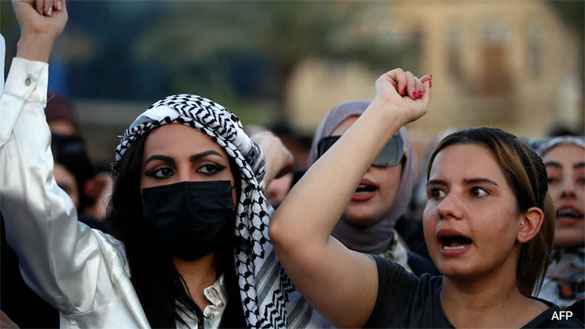 Iraq is closer to amending its marriage laws which would lower the legal age of consent from 18 to nine, allowing old men to marry young girls, according to a report in The Telegraph. Dominant Shia Muslim parties in the Iraqi Parliament have proposed an amendment to the country's "personal status law" that could see a Taliban-style rollback of all women's rights. If passed, the legal changes will deprive the Iraqi women of rights to divorce, child custody and inheritance as well.
"It's the closest it's ever been. It has more momentum than it's ever had, primarily because of the Shia parties," DrRenad Mansour, a senior research fellow at Chatham House was quoted as saying by the publication.
"It's not all Shia parties, it's just the specific ones that are empowered and are really pushing it. Stressing the religious side is a way for them to try and regain some of the ideological legitimacy that has been waning over the last few years."
The proposed changes would mark a shift from the 1959 legislation, also known as Law 188, which was introduced after the fall of the Iraqi monarchy. The law transferred family law authority from religious figures to the state judiciary. The coalition of Shia Muslim parties claims that the proposed move aligns with a strict interpretation of Islamic law and protects young girls from 'immoral relationships'.
While attempts have been made in the past to amend the law, this is the first time it seems that the Iraqi lawmakers might be able to see it through. A second reading of the amendment to the law was passed in September earlier this year.
Opponents of the move have slammed the government and MPs for attempting to diminish women's rights. Meanwhile, human rights groups stated that the new law effectively puts young girls at risk of sexual and physical violence.
According to the United Nations children's agency, UNICEF, despite outlawing child marriages in the 1950s, 28 per cent of girls in Iraq are already married before the age of 18. A loophole in the law where religious leaders officiate these marriages, instead of the courts, allows underage girls to be married to older men with permission from the father.
Source:ndtv.com
https://www.ndtv.com/world-news/9-year-old-girls-could-be-married-off-as-iraq-plans-to-amend-law-report-6990948
---------
Princess Basma calls for unified efforts to enhance protection for abused women, girls
By Rana Husseini -
Nov 10,2024
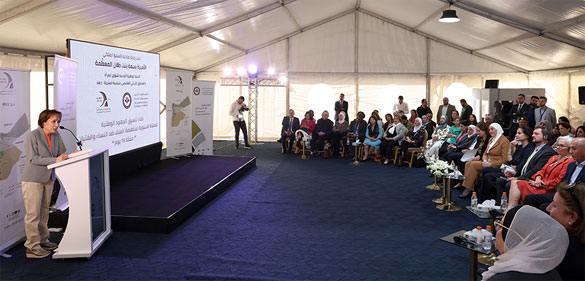 HRH Princess Basma, chairperson of the Jordanian National Commission for Women (JNCW), stresses the critical need for coordinated national efforts at the official and civil levels to enhance and strengthen protection services for abused women and girls (Petra photo)
--------------
AMMAN — HRH Princess Basma, chairperson of the Jordanian National Commission for Women (JNCW), stressed the critical need for coordinated national efforts at the official and civil levels to enhance and strengthen protection services for abused women and girls.
Speaking at a coordination meeting for the annual 16 Days of Activism against Gender-Based Violence (GBV) campaign, Princess Basma underscored the importance of addressing GBV-related challenges through national policies and mechanisms that align with Jordan’s broader goals of empowering women, improving their roles, and advancing protection measures.
The Princess also expressed pride in Jordan’s progress in empowering women across various sectors and highlighted the vital role of the Ministry of Social Development, in partnership with the JNCW, the National Team for Domestic Violence Protection, the Jordanian Women’s Union, and international organisations like UN Women, in the fight against GBV.
Social Development Minister WafaBani Mustafa reiterated Jordan’s commitment to the comprehensive empowerment of women and the protection of their rights.
“We were able to amend many laws related to GBV and discrimination against women as well as introducing laws that contributed to increasing women’s economic participation,” Bani Mustafa said.
These achievements, Bani Mustafa maintained, “reflect the government’s political will in protecting women’s rights and encouraging their political and economic participation”.
The new 2024 Social Development Law included a “clear article related to protection services, including services provided to GBV survivors”.
Bani Mustafa also said that the ministry and its partners are in the “process of revising and developing the Social Protection National Strategy”.
“The ministry is open to all its partners to enhance the social protection system because Jordanian women deserve all the support and empowerment in various areas,” Bani Mustafa stressed.
The minister also pointed out the assistance provided by the Kingdom to support the steadfastness of Palestinian women in the West Bank and Gaza Strip, “who are being subjected to unprecedented genocide”.
JNCW Secretary General Maha Ali announced during the event the launching of an awareness platform on the JNCW’s website entitled “Learn more about prevention and protection from violence”, which is directed at women and specialists in the protection and prevention services.
The platform provides a comprehensive guide and a list, translated into sign language, of the entities providing GBV protection services at the national level, according to Ali.
The platform, Ali added, also addresses the definition of the concept of violence in all its forms and includes a set of frequently asked questions regarding reporting and filing a complaint, the right to child custody, protection of the person reporting violence, shelters and economic violence.
Turning to the 16 Days campaign, Ali highlighted the activities that will be conducted during that period in cooperation with various local partners and international donors.
The meeting was held as part of the JNCW’s preparations for the 16 Days Campaign with this year’s slogan: “Towards Beijing +30: UNiTE to End Violence Against Women and Girls”.
International activists chose the dates November 25 — the International Day for the Elimination of Violence against Women — and December 10 — International Human Rights Day — to symbolically link violence against women and human rights and to emphasise that such violence is a violation of human rights.
This 16-day period also highlights other significant dates, including International Women Human Rights Defenders Day on November 29, World AIDS Day on December 1, and the anniversary of the Montreal Massacre on December 6.
Source:jordantimes.com
https://jordantimes.com/news/local/princess-basma-calls-unified-efforts-enhance-protection-abused-women-girls
----------
'Afghanistan is a pot with no cover; anything can fall in it, anything can be taken'
November 11, 2024,
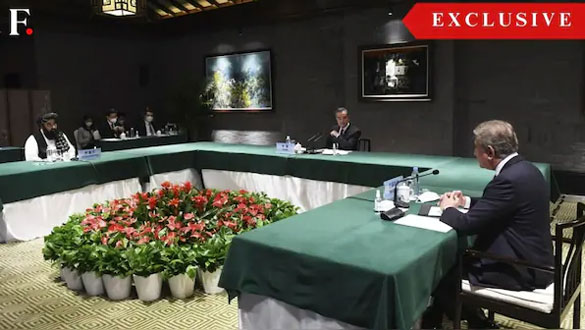 Chinese Foreign Minister Wang Yi center hosts a meeting with Pakistan Foreign Minister Shah Mahmood Qureshi at right and Taliban-appointed Afghanistan Foreign Minister Amir Khan Muttaqi at left held in Tunxi district in eastern China’s Anhui province on Wednesday, March 30, 2022. Chinese leader Xi Jinping on Thursday issued strong backing for Afghanistan at a regional conference, while making no mention of human rights abuses by the country’s Taliban leaders. File Image / AP
----------------
The rights of Afghan women in their own country have hit rock bottom ever since the Taliban took over the country in 2021. On October 26, the Taliban’s Minister of Vice and Virtue, Khalid Hanafi, issued a new ban on women’s rights forbidding adult women to allow their voices to be heard while praying by other adult women. While this left the Afghan women dismayed, the bizarre ban stirred headlines all around the world.
Days after the ban, the draconian regime’s spokesperson Saiful Islam Khyber denied the allegations that women are barred from speaking to each other calling such reports “brainless and illogical”. However, he did not deny the fact that in an audio statement, Hanafi emphasised that adult women must refrain from performing “Takbir,” which means Islamic prayer or reciting the Quran aloud in the presence of other women.
What made the whole ordeal shocking was the fact that the latest ban came while the Taliban regime sought to gain international recognition. With the Taliban ruling Afghanistan for three years, the political winds for the group started to shift in the international arena. In the span of just a few months, dozens of countries have welcomed Talibani diplomats. But amid all this, the question of women’s rights in Afghanistan remained unanswered not only on the global stage but also within the country.
Hence, the whole ordeal begs the question of whether diplomatic conversations with the regime have somehow eased the pressure on it to roll back restrictions imposed on women in the country.
In an exclusive conversation with Firstpost, Afghan women’s rights activist MahboubaSeraj shared her take on the latest ban and questioned the international actors forging ties with the Taliban. In the first part of the interview. Seraj walked us through the day-to-day struggles of women in Afghanistan. The second part will deal with the ramifications of international actors forging ties with the Taliban.
Taliban and the world
In January, China became the first country to formally welcome a Talibani diplomat and referred to him as Afghanistan’s ambassador. In August, the UAE followed suit. In the same month, Uzbekistan sent its prime minister to Kabul. This was the first highest-level foreign visit by any leader in the country since the Taliban took over in 2021.
Many believed that these initiatives were paving the way for the regime to earn international recognition. While all this was happening, the Russian Foreign Ministry announced this spring that the Kremlin was considering removing the Taliban from its list of designated terrorist organisations, which would make it the first country to do so. Meanwhile, activists started to wonder whether the Taliban would be called out for the violation of several human rights, especially making things harder for the women in the country.
In June this year, the Afghan group attended a rare United Nations-led conference of global envoys to Afghanistan. That was the first such meeting between the Taliban and other international actors held in Doha. While the gathering actively spoke about women’s rights in Afghanistan, not a single woman was allowed to attend the meeting. When asked about the lack of women representation in this regard, Seraj explained where the international community is going wrong.
The world does not have a united voice on women’s rights
Seraj insisted that at the heart of the problem is the lack of unity within the international community concerning raising voices for women in Afghanistan or any other issue in the world. “Why these things are happening is because the world does not have a unique, united voice in any one of these issues,” she remarked.
“Every country looks at things according to their benefits,” she said.
However, Serajemphasised that if something bad is happening in one part of the world, it will affect the other side as well. “We are responsible. Human beings living on the earth have equal rights on this planet and they should be treated properly by other neighbours, and by the people that they are sharing this planet with. Nobody really cares,” she said.
When asked if the diplomatic conversation with the Taliban has eased the pressure on the regime to roll back restrictions, Seraj gave an affirmative response. “Yeah, I mean, of course, because as I said, you know, the world, especially the Western world, they’re not talking from the same tongue,” she said.
“They’re not talking about having the same kind of help in mind or the same kind of criticism in mind. Hence, it is very much easier for the Taliban to believe that they can do anything they want the way they want,” she furthered.
‘China is not interested in the people of Afghanistan’
While commenting on how China became the first country to formally welcome a Taliban diplomat and refer to him as Afghanistan’s ambassador, Seraj said that Beijing has its own vested interest in the country. “China has its own plans for Afghanistan. China is not interested in the people of Afghanistan. China is not interested in human rights. China is not interested in the rights of women,” Seraj asserted.
“What China is interested in, is really what is underneath the ground in Afghanistan. They want it and they will get it,” she said.
In February, reports started to emerge that China and the Taliban are involved in top-level meetings between officials, new mineral deals, and the upgrading of transport routes between the two countries. The prize in all these diplomatic efforts is access to Afghanistan’s wealth of untapped mineral resources — as well as a market for Chinese goods. The Central-South Asian country is home to several high-value natural reserves of copper, lithium and other rare minerals. These reserves remained untapped for decades due to the persistence of turbulence in the country.
“They really need to have some kind of a rapport with the Taliban because they are the ones signing these deals. A country like Afghanistan has no cover, we call ourselves a pot with no cover. So anything can fall in it and anything can be taken away from it without anybody knowing,” Seraj lamented.
Catch-22 situation with International tribunals
It is a known fact that the bans introduced by the Taliban against Afghan women are gross violations of human rights. When asked if anyone had taken the issue to international tribunals like the International Criminal Court, Seraj laid out, what she called a “catch-22” situation. While speaking on the condition of women in the country, Seraj went on to compare the Taliban regime to that of South Africa’s Apartheid regime. The only difference between the two is the fact that while South Africa witnessed racial apartheid, Afghanistan is witnessing a gender-based apartheid.
“There’s no doubt that what is happening in Afghanistan is a crime against humanity and many have called it apartheid. This is a gender-based apartheid. The whole world has to sit down, believe in this, all of them, in a unified way and then decide what they want to do,” she said.
The 76-year-old activist went on to ask what kind of punishment can one give to the regime. “The ones that are responsible for this right now, they’re governing Afghanistan and they are governing who? The people. And the people of Afghanistan are going to be the ones that will pay for it,” Seraj said, referring to any decision to impose economic sanctions. Another aspect of the story Seraj pointed out is the fact that to pursue a case against the Taliban in an international tribunal one has to recognise its regime.
“The international court cannot be implemented on any country if the country is not recognised officially. And if the government is not recognised officially, this doesn’t mean anything. Who are they doing this to?” she asked. “If the international court gets involved Taliban will get recognition. So it’s a catch-22 situation,” she concluded.
While the Taliban rubs shoulders with foreign dignitaries, women in Afghanistan are still looking for people around the world who raise voices for the voiceless.
Source:firstpost.com
https://www.firstpost.com/world/afghanistan-is-a-pot-with-no-cover-anything-can-fall-in-it-anything-can-be-taken-13833854.html
---------
Iran Sentences Kurdish Women's Rights Activist VarishehMoradi to Death
NOVEMBER 11, 2024
A Revolutionary Court in Iran has sentenced VarishehMoradi, a Kurdish women's rights activist, to death on charges of "armed rebellion."
Branch 15 of the Revolutionary Court of Tehran handed down the death sentence, which was officially communicated to Moradi's lawyers on Sunday.
The court cited Moradi's alleged affiliation with the Free Life Party of Kurdistan (PJAK) as grounds for the sentence.
Throughout the proceedings, Moradi’s legal team faced extensive restrictions. Her lawyers were denied access to her case file during the final hearing on October 6 and in previous sessions.
Moradi herself was not allowed to present a defense in court.
In protest of the death sentence, Moradi initiated a 20-day hunger strike beginning October 10, coinciding with the World Day Against the Death Penalty.
Moradi’s legal troubles began on August 1, 2023, when intelligence security forces abducted her while she was traveling from Marivan to Sanandaj.
According to the Hengaw human rights organization, Moradi endured severe torture at the Sanandaj Intelligence Department's detention center, including an incident where she reportedly vomited blood and lost consciousness.
After spending five months in solitary confinement in Evin Prison’s Ward 209, controlled by the Ministry of Intelligence, Moradi was transferred to the women’s ward in December 2023.
Source:iranwire.com
https://iranwire.com/en/women/135959-iran-sentences-kurdish-womens-rights-activist-varisheh-moradi-to-death/
----------
‘Change the Game’: Saudi Arabia Takes a Stride Into Women’s Tennis
Nov. 10, 2024
The sellout crowd was bathed in purple light and the screens ringing the stadium flashed a countdown to a clubby beat. The latest conquest in Saudi Arabia’s unstoppable advance into the world of sports — soccer, golf, boxing, car racing, now tennis — was about to begin. The Women’s Tennis Association Finals had come to Riyadh.
For one night, the capital of an authoritarian, conservative kingdom where progress on women’s rights is still stop-and-go was about to be home to one of the most prestigious events in women’s tennis.
“Change the game,” an announcer intoned just before the players in the singles final, Coco Gauff of the United States and Zheng Qinwen of China, emerged onto the court to huge cheers from the crowd, which included many Saudi women. “Redefine power.”
In another place, those words might have come off as little more than a girl-power slogan for women’s sports. But in Saudi Arabia on Saturday night, it was the host country redefining who held power in women’s tennis and beyond.
For years now, Crown Prince Mohammed bin Salman, the country’s de facto ruler, has used Saudi oil riches to remake his staid kingdom into a global player with glitz to match, pairing tectonic social changes with intensifying repression.
Sports are a major part of the crown prince’s transformational push. Saudi Arabia muscled into professional golf by pouring $2 billion into an upstart competitor to the PGA Tour, which disdained the Saudi league before eventually deciding to partner with it. The country burst onto the international soccer scene by purchasing the English Premier League team Newcastle United, luring some of the biggest names in soccer to the Saudi Pro League and winning a bid to host the 2034 World Cup.
Moving into tennis, Saudi Arabia recently hosted the Six Kings Slam, an exhibition showcasing the top men’s players. And it struck a three-year deal with the financially struggling WTA to bring its finals to Riyadh in part with the promise of awarding some $15 million in prize money this year. Those are the highest winnings in the history of women’s tennis, satisfying players’ demands for prize parity with men.
More professional tennis events are likely to follow.
With every move has come controversy over the kingdom’s human rights record. But on Saturday night, the power of what Saudi Arabia has bought itself — and the excitement the changes are generating at home — was there for all to see.
As the players began warming up, the D.J. played the Bob Marley song “No Woman No Cry” as people in the audience sang along. Ms. Gauff and Ms. Zheng went on to battle it out for three hours. The Chinese fans whooped for Ms. Zheng, but hijab-wearing young Saudi women would not be drowned out, chanting, “Let’s go, Coco, you can do this!”
Ms. Gauff had publicly weighed the pros and cons of playing in Saudi Arabia in remarks before arriving there, saying that she looked forward to promoting the sport in a new place while expressing reservations about the country’s record on L.G.B.T.Q. and women’s rights. But she stuck to the positive in a news conference after winning the final, declaring the event a success that would inspire young Saudis.
“Just to show young girls that, you know, their dreams are possible, I’m literally no different than they are. We just maybe come from different places,” Ms. Gauff said.
Saudi girls had not had the chance to watch professional tennis events in their own country, the way she had done when she was young, she added. But now that had changed.
By the time she retired, she said, she hoped there would be a Saudi Grand Slam champion.
Some women’s tennis players and officials have embraced the chance to boost the sport in a new country (and bring in revenue aplenty from a host with means). Others, including a few of the sport’s biggest stars, have criticized the WTA’s decision on human rights grounds.
“We lost our moral high ground when the women decided to go there,” the tennis legend Martina Navratilova told The New York Times in October. “You have to show me some progress first. Women have to be equal citizens under the law. Otherwise, we might as well play in North Korea.”
Saudi women are driving, entering the work force and moving out on their own in record numbers after changes put in place by Prince Mohammed. But they still need the permission of a male guardian to marry.
Homosexuality remains criminalized, something that has come under particular fire in a sport with a groundbreaking history of openly L.G.B.T.Q. champions. (Even so, Billie Jean King, an icon in tennis not only for her on-court accomplishments but also for her gay rights advocacy, has endorsed the WTA’s choice of location, arguing that engaging is the only way to effect change.)
And the kingdom’s image still bears the taint of the gruesome killing in 2018 of Jamal Khashoggi, a Washington Post columnist who occasionally criticized the Saudi government, which American intelligence agencies later concluded had been ordered by Prince Mohammed. That was only the best-known instance of the prince’s sweeping crackdown against critics and political opponents, which has sent hundreds of Saudis, including prominent women’s rights activists, to prison in recent years.
The dark side of Saudi Arabia’s transformation has led many critics to accuse the kingdom of “sportswashing,” paying to associate itself with high-profile athletes and popular events to distract from its rights record. The Saudi government has rejected such allegations.
But many Saudis, especially young ones, are thrilled that new options for work, for fun, for mingling with the opposite sex, for wearing what they want and so much more are opening up at a pace that would have been impossible just a decade ago.
First came movie theaters and concerts, shattering the once-sleepy kingdom’s decades-old religiously motivated bans on most forms of entertainment. Then came raves in the desert, marquee boxing matches and, now, tennis matches.
“The Western world can keep reporting that our country is sportswashing, or whatever, but what matters is that my sisters and I can watch our favorite sports stars right here at home,” said Maryam al-Shammeri, who was in the crowd for the WTA final on Saturday night with her brother and two sisters.
Unlike many women in liberalizing Riyadh, where the morality police used to scold any woman who was not covered head to foot but where many now go unveiled or wear loose abayas over T-shirts and jeans, the sisters had stuck to wearing conservative black niqabs to the match.
To Ms. al-Shammeri, there was no contradiction between their decision not to show skin and their embrace of women’s tennis.
“What we define as feminist is not determined by what we wear in public,” she said.
Sports figures, artists, celebrities and other Westerners who have come to Saudi Arabia in recent years have cast events such as the WTA Finals as an opportunity to bring Western-style liberal values to the kingdom.
Yet while Saudi society continues to open up, any changes have come on Prince Mohammed’s terms.
In an interview, ArijMutabagani, the president of the Saudi Tennis Federation, dismissed accusations of “sportswashing” by Saudi Arabia.
“I’ve heard that a million and one times,” she said. “For me, it’s just, please come and see what we’re doing and please be part of our transformation that we’re having. Help us transform.”
But, in a flash of confidence, she added: “We’re going to do it whether you help us or not, by the way.”
Source:nytimes.com
https://www.nytimes.com/2024/11/10/world/middleeast/saudi-arabia-womens-tennis-association.html
---------
'Silent trauma' of infertility for women and partners
Nov. 11, 2024
A woman who has had five miscarriages in three years says the psychological impact is "not to be underestimated" and she thinks she is suffering from trauma.
It has been a very difficult journey, Rachel Carlson says, for her and her husband Jonathan, who are both 34 and from County Down.
At times she says, she feels she is "falling apart".
While it is painful for her to talk about her experience she is doing so to help others.
Researchers have found infertility-related trauma may be more prevalent than previously thought, with 60% of women saying aspects of the care they received caused or amplified trauma.
Rachel has not been officially diagnosed with miscarriage-related post-traumatic stress disorder (PTSD) but it is estimated to affect thousands of women across the UK.
She believes changes in the health system are overdue to prevent others experiencing what she did, including having to walk through a maternity ward to access one of her appointments.
"I was furious to be made to wait in a room full of pregnant women and watch them come out of their appointments, all happy," she says.
The South Eastern Health Trust, where Rachel was treated, says it will be moving gynaecology outpatient services to a different location that will be "more sensitive to the needs of women".
The trust says it is "very mindful" that gynaecology and maternity services being situated next to each other could be distressing for people who have experienced pregnancy loss.
Research carried out by Fertility Network UK, Queen's University Belfast, Cardiff University and Cardiff Metropolitan University found fertility patients' experiences of trauma are compounded by poor care, and providers should be trained in trauma-informed healthcare.
According to the NHS, about one in seven couples experience difficulties conceiving a child.
Not all will experience trauma, but in the research of 590 people across the UK and Ireland, 41% met the criteria for PTSD.
It is a limited survey in terms of numbers and because the people involved have self-reported, but behind it are many other couples of stories like Rachel and Jonathan's.
Hilary Knight, NI coordinator for the charity Fertility Network UK, says the research confirms what people working in the fertility sector have long suspected - that infertility-related trauma is "very common" and is a "silent trauma within our society".
She says couples navigating infertility can find their situation is made worse by a lack of understanding of trauma or acknowledgement of their experiences as traumatic.
What is PTSD?
People naturally feel afraid when in danger, but the legacy of some traumatic events is a change in perception of fear.
They may feel stressed or frightened in day-to-day life.
Rachel's husband Jonathan says while the couple want to have children, they don't know how much more they can take.
"I am definitely experiencing second-hand trauma, if not my own," he says.
He remembers the scan where the couple found out about the third of their five miscarriages as "probably the most difficult".
When they saw there was no heartbeat, they "ended up just crying in the car afterwards for an hour".
The couple have not yet decided where their journey goes next but Rachel said she was not "quite ready to give up".
How Rachel deals with pregnancy loss grief
Rachel has tried various things to try and "connect with her grief". Nothing worked, she said, until she saw some stuffed bunnies in a shop.
She "teared up" thinking she would never have a baby to buy one for so she bought one for herself.
The five bunnies sit side by side on the mantelpiece over the open fire in her living room, representing each of the five babies she lost.
They're sensory objects which mean so much and are "very comforting," she says.
She recently got a tattoo of the word "courage" on her right arm.
The tattoo "reminds me of who I am," she says determinedly - "courageous, strong and brave".
Source:bbc.com
https://www.bbc.com/news/articles/czd5yzvr24yo
----------
US Women Launch Bizarre 'MATGA' Movement Glorifying Poisoning Men After Trump Win | Video
November 11, 2024
Things are getting more bizarre in the United States by the minute after Donald Trump’s emphatic presidential election victory, as some women have now launched the ‘MATGA Movement’ – short for ‘Make Aqua Tofana Great Again’ – which glorifies poisoning men in fears about abortion rights.
Many videos have gone viral on X and TikTok showing women filming murder-fantasy videos where they adulterate a cup of tea or other drink with an unknown substance or promote poison rings. This comes after several liberal women began the South Korea-inspired ‘4B’ movement, abstaining from sex with men as a sign of protest against Trump’s victory.
The MATGA movement is inspired by Trump’s MAGA (Make America Great Again) movement and ancient killer Giulia Tofana, who has emerged as the heroine in this unusual form of protest, according to the New York Post.
What Is Aqua Tofana?
Tofana was a 17th-century Italian woman who sold poison to wives who wished to kill their abusive husbands, resulting in the deaths of more than 600 men. Her signature poison was known as the “Aqua Tofana", which was so potent that it earned her notoriety as one of the most prolific serial killers of all time.
The poison is believed to be flavourless and completely undetectable after death. It was generally stored in cosmetic bottles, as part of a strategy to ensure that no husband would be aware of his impending doom. Many women opted for this method to escape bad marriages due to a lack of alternative options.
It is a matter of debate whether Giulia Tofana was actually found and tried after one of her customers got cold feet at the last minute. Some accounts say she died of an old age, while others say she was tried, tortured and executed for the act.
Why Is Aqua Tofana Becoming Popular?
One of the viral clips on social media shows a young lady with a seemingly poisonous ring saying “Aqua Tofana isn’t that hard to make" and making a throat-slitting gesture with her thumb. Some of the women don’t mention Aqua Tofana specifically but instead show off their “poison rings".
“I know you will understand this. They asked for it," read the text of a woman posing for a selfie and giving the camera a menacing smile. On the other hand, a woman on TikTok urged people against the MATGA movement and appealed for common sense.
“You do know those videos can be used against you, right? It’s giving off premeditated vibes. The internet is FOREVER. Also..the 1600s were A LOT different than 2024 advancements in detecting POISON," she wrote in a video.
Since Trump’s victory, several Liberal women have participated in bizarre protests like shaving their heads or engaging in sex strikes in fear of what they see as future draconian actions that will threaten reproductive rights and other freedoms of women. Source:news18.com
https://www.news18.com/world/us-women-launch-bizarre-matga-movement-glorifying-poisoning-men-after-trump-win-video-9116142.html
---------
URL: https://newageislam.com/islam-women-feminism/iraq-marry-amending-law-allows-men/d/133680