
Iranian Woman, Zahra Shahbaz Tabari, Sentenced to Death After 10-Minute Trial
New Age Islam News Bureau
03 November2025
· Iranian Woman, Zahra Shahbaz Tabari, Sentenced to Death After 10-Minute Trial
· UAE Women Win Three Medals At Jiu- Jitsu (Martial Art) World Championship in Japan
· Salma Khatum Becomes First Woman In Bangladesh Cricket Board Selection Panel
· Female Artists Decorate Mosques With Heritage Art Across Türkiye
· Refugee, Social Activist Nahid Hamidi, Thanks UK For Giving Family Sanctuary
· The Taliban Shut Down Women’s Sports, Now They’ve Reunited as ‘Afghan Women United’ to Play the FIFA Women Series
· Will Iranian Women's Defiance Of Hijab Sustain Under Pezeshkian
· Syrian Inquiry Finds Most Allegations Of Kidnapped Alawite Women False
Compiled by New Age Islam News Bureau
URL: https://newageislam.com/islam-women-feminism/iranian-woman-tabari-sentenced/d/137501
---
Iranian Woman, Zahra Shahbaz Tabari, Sentenced to Death After 10-Minute Trial
NOVEMBER 3, 2025
ROGHAYEH REZAEI
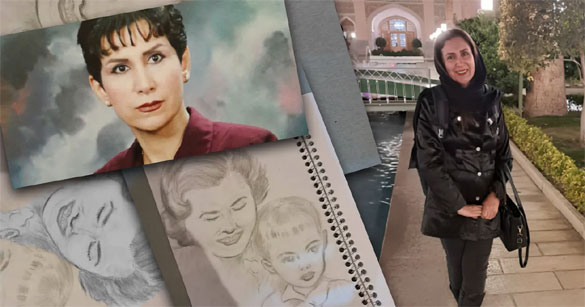
Tabari was arrested on April 17 when five security agents forced their way into her home in northern Rasht without a warrant
-----------
The evidence against Zahra Shahbaz Tabari consisted of a piece of fabric bearing the slogan “Women, Resistance, Freedom” and an audio recording stored on her phone that was never sent to anyone.
For that, according to documents obtained by IranWire, the 67-year-old retired electrical engineer has been sentenced to death.
Tabari was arrested on April 17 when five security agents forced their way into her home in northern Rasht without a warrant.
They ordered her and her daughter to sit with their hands on their knees while they confiscated phones, computers, tablets, and other electronic devices.
Then they took Tabari away.
Seven months later, after a 10-minute video conference trial plagued by audio problems, she was sentenced to death in Lakan Prison on charges of “armed rebellion through membership in the terrorist group Monafeqin” - the Islamic Republic’s term for the People’s Mojahedin Organization (MEK), an opposition group.
Her case is the latest example of Iran’s increasingly broad application of capital punishment against dissidents, particularly in the aftermath of the nationwide Woman, Life, Freedom protests that erupted in 2022 following the death of Mahsa Amini in police custody.
Tabari spent more than three decades working as an electrical engineer and sustainable energy specialist for the Gilan Electricity Administration.
She earned her degree in electrical engineering from Isfahan University of Technology and a master’s in sustainable energy from Borås University in Sweden.
She retired two or three years ago. Tabari has two children: a daughter in her late 20s who lives in Iran and a 35-year-old son, Soroush Samak, who lives in Sweden.
This was not her first encounter with Iranian authorities. In May 2022, she was arrested and held in temporary detention for three months on charges of “propaganda against the Islamic Republic.”
She was released with an electronic ankle monitor, which she wore for a year while paying a fine.
The second arrest was far more severe.
“They knocked on the door and forced their way in, telling my sister and mother to sit in a corner with their hands on their knees,” Samak told IranWire.
“They searched the house, took mobile phones, computers, iPads, and all electronic devices, and arrested my mother.”
That night, Tabari managed a brief phone call to tell her family she was being held in Lakan Prison.
She spent a month in solitary confinement under interrogation before the 12-day war in June delayed her case proceedings.
The trial itself, held via video conference at Branch 2 of the Revolutionary Court of Rasht, lasted only 10 minutes.
The presiding judge, Mohammad Ali Darvish Goftar, is the son of Ahmad Darvish Goftar, known as Gilan’s “death judge.”
In handwritten notes her son provided to IranWire, Tabari described severe technical problems during the hearing.
“In court, I faced sound disruption,” she wrote. “When I objected, I was connected to the court by a desk phone. The judge asked only one question: ‘What is your final defense?’
I answered, but it wasn’t recorded correctly in the case. The whole thing took less than ten minutes before he issued a death sentence.”
According to her account, the death sentence was issued on October 4, three days before she even received the court documents to review.
When she finally got the case file on October 7, she wrote objections throughout, but the sentence had already been finalized at 9:20 that morning.
Samak said his mother had no appointed lawyer at the time of sentencing.
“They just casually held a ten-minute video conference trial,” he said. “They were laughing with each other in court and issued her a death sentence. This is the value of life under the Islamic Republic.”
The charges against Tabari rest on two pieces of evidence that her family and legal experts say fall far short of justifying capital punishment.
The first is the fabric bearing the slogan “Women, Resistance, Freedom” - a rallying cry from the 2022 protests.
Interrogators claimed she displayed it somewhere, though Tabari questioned whether the slogan itself was even anti-government and demanded evidence of when and where this allegedly occurred.
The second piece of evidence is an audio file on her phone.
“A voice message that was on my phone,” Tabari wrote. “It was recorded in a corner of the house and wasn’t sent anywhere. How can that be evidence of baghi and grounds for a death sentence?”
Baghi translates to “transgression,” “assault,” or “rebellion.” In Islamic jurisprudence, it refers to armed uprising against what the government deems a just authority.
Article 287 of Iran’s Islamic Penal Code defines baghi as occurring when “a group conducts an armed uprising against the foundation of the Islamic Republic of Iran system” and uses weapons, punishable by execution.
Legal experts note that baghi charges are subject to strict conditions under Iranian law.
The action must aim to overthrow the Islamic Republic system, must be carried out by a group in an organized manner, and requires the possession and intent to use weapons.
Mousa Barzin, a jurist and legal advisor to IranWire, called the charges against Tabari “baseless” and her death sentence “unjust and illegal.”
“Baghi means a group with weapons pours into the streets, takes over offices, and tries to overthrow the government through armed action,” Barzin said.
He added, "It must be asked that regardless of what level her cooperation with the Mojahedin organization was, in which armed operation was she arrested, or in which armed operation did she play a role, or was she behind the scenes?”
Tabari’s case fits a broader pattern of baghi charges leading to death sentences, especially since the 2022 protests.
Varisheh Moradi and Pakhshan Azizi, two Kurdish political prisoners in Evin Prison, were previously sentenced to death on the same charge by Branch 15 of the Tehran Revolutionary Court under Judge Abolghasem Salavati.
In Rasht, death sentences on baghi charges were also issued for Sharifeh Mohammadi, a labor activist, and Peyman Farahavar, a poet and street vendor.
Mohammadi’s sentence was issued by Ahmad Darvish Goftar, the father of Tabari’s judge, while Farahavar’s came from Mohammad Ali Darvish Goftar himself.
Last week, lawyer Amir Raisiyan announced that Mohammadi’s sentence had been overturned and reduced to 30 years in prison.
Samak said his mother endured psychological torture during interrogations, including threats against her children.
“There was a lot of threat and intimidation,” he said. “They threatened us indirectly. They accused a 67-year-old retired woman of having weapons."
They told her they’d cause problems for her children if she didn’t confess. My sister still goes everywhere with my father.”
Although Tabari has no chronic illnesses or heart disease, her son said she has visibly deteriorated.
“My sister said she’s lost weight, her strength has decreased, and her face has become thinner,” Samak said.
The psychological toll has been even greater. After seven months, Samak finally spoke with his mother by phone last Friday.
“As soon as she heard my voice, she burst into tears,” he said.
Samak compared his mother’s plight to that of Aleksandr Solzhenitsyn, the Soviet-era dissident arrested for criticizing Joseph Stalin in a personal letter.
“When they came for me, I finally realized how bad things were,” Samak said, paraphrasing Solzhenitsyn.
“Now it’s the same with my mother. When they come for a 67-year-old woman who isn’t a political activist or member of any organization, you realize that all Iranians are in the execution queue and one day the noose will fall around all our necks.”
He added that his mother is not a member of the People’s Mojahedin Organization and condemned any attempt by political groups to exploit her case.
“If the Mojahedin wants to take advantage of this case and use my mother’s name, we condemn it,” he said. “My mother is a victim of political collusion.”
“She is a 67-year-old retired woman. The evidence, charges, and documents presented against her are insufficient and inadequate to make such charges and issue such a sentence.”
Barzin, the legal expert, agreed.
“From experience, we know that individuals in these cases are often victims of scenario-making and case fabrication by security agencies,” he said.
As Tabari awaits her fate in Lakan Prison, her son’s words underscore the human cost of Iran’s judicial system.
“My mother is one drop in this sea of blood that the Islamic Republic has created,” Samak said.
Source: iranwire.com
https://iranwire.com/en/women/146016-iranian-woman-sentenced-to-death-after-10-minute-trial/
------
UAE Women Win Three Medals At Jiu- Jitsu (Martial Art) World Championship in Japan
November 03, 2025
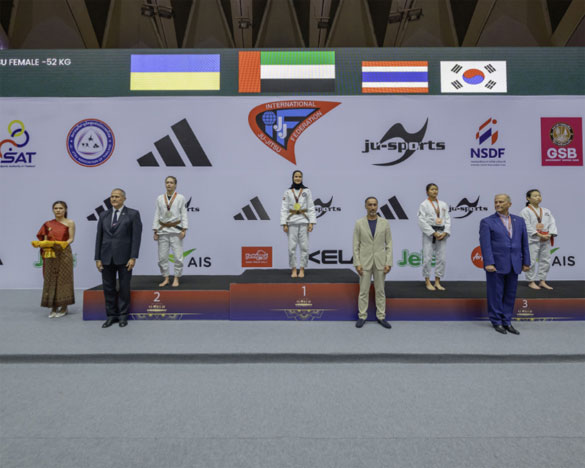
The UAE Jiu-Jitsu National Team made a superb start at the Jiu-Jitsu World Championship in Bangkok, as the country’s women athletes claimed three medals on the opening day against some of the sport’s top international competitors.
Asma Al Hosani captured gold in the -52kg division after a composed and confident performance, dedicating her victory to the UAE. Aysha Al Shamsi secured silver in the -45kg category, while Balqees Abdulkareem earned bronze in the same division, further cementing the UAE’s growing presence on the global jiu-jitsu stage.
The championship is taking place at the Huamark Indoor Stadium in Bangkok, featuring a strong international lineup across men’s and women’s divisions, as well as Under-21, Under-18, Under-16, and Under-14 categories. The UAE delegation includes 110 athletes competing across multiple divisions.
Among those attending the opening day and medal ceremony were Panagiotis Theodoropoulos, President of the Jiu-Jitsu International Federation; Mohamed Salem Al Dhaheri, Vice Chairman of the UAE Jiu-Jitsu Federation; Joachim Thumfart, Director General of the Jiu-Jitsu International Federation; Mubarak Saleh Al Menhali, Technical Director at the UAEJJF; Abdullah Al Zaabi, Director of Communications and Marketing; and world champion Faisal Al Ketbi, Head of National Teams at the UAEJJF.
Mohamed Salem Al Dhaheri praised the team’s strong start, saying, “These three medals are just the beginning and will give our athletes great motivation for the rest of the championship. The ongoing success of jiu-jitsu in the UAE is a reflection of the limitless support of our wise leadership, the guidance of Abdulmunem Alsayed Mohammed Alhashmi, Chairman of the UAE Jiu-Jitsu Federation, President of the Jiu-Jitsu Asian Union, and Senior Vice President of the Jiu-Jitsu International Federation, along with the encouragement of families and our trusted partners.”
Mubarak Saleh Al Menhali commended the athletes for their performances, noting the level of competition at the event. “The championship features some of the best athletes in the world, and while we were close to even stronger results, a little more focus in key moments could have made the difference. Overall, we are very pleased with how our athletes performed and confident that the coming days will bring more medals. The World Championship provides a true measure of our athletes’ development across every category,” he said.
Gold medallist Asma Al Hosani expressed her pride in representing the UAE. “This medal means a lot to me,” she said. “The final against the Ukrainian champion was my toughest match, which went into the golden point round after a draw. It took nearly four minutes of complete focus and determination to secure the win.”
Silver medallist Aysha Al Shamsi said, “I’m really happy with this result and gained valuable experience from competing at this level. It’s an important milestone in my career and motivates me to keep pushing harder in the coming days.”
Bronze medallist Balqees Abdulkareem added, “I was aiming for gold, but jiu-jitsu is a sport where every second matters. I’ve learned a lot from this championship and will keep working to raise my game.”
The UAE women’s team continues its campaign tomorrow in the -63kg and -70kg divisions, while the men’s competition begins in the -56kg category, featuring Emirati athlete Omar Al Suwaidi, as anticipation builds among UAE sports fans.
The UAE women’s strong start in Bangkok highlights the steady progress of the nation’s jiu-jitsu programme, driven by a clear vision, investment in homegrown talent, and world-class facilities that continue to produce champions on the international stage.
Source: emirates247.com
https://www.emirates247.com/sports/other/uae-women-win-three-medals-at-jiu-jitsu-world-championship-2025-11-03-1.742308
-------
Salma Khatum Becomes First Woman In Bangladesh Cricket Board Selection Panel
Nov 3, 2025
Bangladesh Cricket Board announced on Saturday that they have included former national team captain Salma Khatun in the women's selection panel.
Salma is the first-ever woman cricketer from the country to be appointed to the selection panel that currently comprises Sazzad Ahmed (Chief of Women's Selection panel) and Sojol Chowdhury, who works mainly with the age-group teams.
"We had a short meeting where we made four to five key decisions. One of them was the appointment of Salma Khatun as the first-ever woman selector for our women's national team. She will be working alongside Shipon, who currently serves as the chief selector for the women's side," said Iftekhar Rahman Mithu, chairman of BCB's media committee, on Saturday.
"You all know Salma was named ICC's best bowler and top all-rounder back in 2014-15. She captained Bangladesh from 2008 to 2015 and has been a pillar of women's cricket in the country. I think this is a revolutionary decision by our president, as having someone like Salma involved will provide great support for women's cricket. This is the first time such an appointment has been made in Bangladesh," he added
Meanwhile, Iftekhar announced that they have also included former national pacer Hasibul Hossain Shanto in the men's national selection panel.
A post in the three-member national selection that is headed by Gazi Ashraf Hossain went vacant after Hannan Sarkar decided to step down to concentrate on his coaching career. Former left-arm spinner Abdur Razzak is the other member of the men's selection panel.
"You know there was a vacant spot in the men's selection panel. Hasibul Hossain Shanto has been selected to fill that position. From now on, he will work alongside Abdur Razzak and Gazi Ashraf Hossain Lipu," said Iftekhar.
"His experience, involvement with the Bangladesh team, and the interview process were all taken into consideration. As you know, there are one or two others working as selectors elsewhere, but Shanto was brought in because he is more experienced. Having played at the top level for Bangladesh for a long time, he was the natural choice for the role," he added.
Source: cricbuzz.com/
https://www.cricbuzz.com/cricket-news/135670/salma-khatum-becomes-first-woman-in-bangladesh-womens-selection-panel-cricbuzzcom
------
Female artists decorate mosques with heritage art across Türkiye
NOV 02, 202
Female artisans in Samsun, on the northern coast of Türkiye, are advancing a traditionally male-dominated craft by decorating mosque walls and ceilings several meters above the ground with intricate motifs.
Aynur Şeker, Nazlı Cezan and Işık Kahrıman set up scaffolding at each mosque where they work, carefully preparing their paints and materials before ascending wooden ladders to reach high ceilings and walls. Their most recent project involved ornamenting the walls of the Soyuk Mosque, currently under construction in the Karacaören neighborhood of the Salıpazarı district in Samsun.
Şeker began mastering the craft in 2014 alongside her husband, Emin Şeker. Over 11 years, she has contributed to the decoration of more than 100 mosques across Türkiye’s key cities, including Ankara, Istanbul, Izmir and Manisa in western Türkiye, Balıkesir in northwestern Türkiye, Isparta in southwestern Türkiye and Antalya along the southern Mediterranean coast of Türkiye.
“Every job has challenges, but ours requires exceptional care and patience,” Şeker said. “Setting up and dismantling scaffolding, painting floors and working at heights is not easy, but women can do this work just as well as men. I always aim to perform my job with the highest quality.”
Microcredit support has been instrumental in expanding her business. “My friend Nazlı introduced me to microcredit. After applying and being approved, I was able to acquire paint, brushes and other materials, making our work easier and increasing our income. Microcredit offers tremendous opportunities for women seeking financial independence. I recommend it to anyone wanting to stand on their own feet,” Şeker added.
Cezan, who moved from Istanbul in northwestern Türkiye to Samsun’s Çarşamba district on the northern coast of Türkiye after separating from her husband, credited microcredit with helping her rebuild her life while supporting her two children.
“At first, it was very difficult, but today, thanks to this work, we manage to support our household and educate our children,” Cezan said.
These women see their craft as both a livelihood and a source of pride, preserving cultural heritage and challenging traditional gender roles in the field by proving that determination and opportunity enable women to succeed in any profession.
Source: dailysabah.com
https://www.dailysabah.com/turkiye/female-artists-decorate-mosques-with-heritage-art-across-turkiye/news
-------
Refugee, Social Activist Nahid Hamidi, Thanks UK For Giving Family Sanctuary
November 2, 2025
An Afghan refugee who is rebuilding her life after fleeing the Taliban has thanked the UK for giving her family sanctuary.
Nahid Hamidi and her husband Ahmad were being targeted by the Taliban over Ahmad's work as a British Army interpreter and fled the country in 2021.
Since settling in Harrogate, Nahid has set up The Afghan kitchen, which has fed thousands of people and offers other refugees help with their English - and a route into work.
She said: "I am really happy. We want to say thank you so much to the government for this opportunity to come to the UK. I can work, my children can go to school.
"We feel safe here. But in Afghanistan, people are in a really bad situation."
The first Afghan kitchen pop-up restaurant was held in 2023.
Since then, there have been another 24, including a spot at this year's FEVA festival, in Knaresborough.
Nahid, who has helped other Afghan women in Northallerton and Ripon to set up their own businesses, employs women refugees directly to work with her.
She said a big part of the idea behind the kitchen was helping them make their own money so they can feel more independent.
She explained: "When you have a salary you feel independent. You are free, you don't need all the time to ask 'can I do this? 'can I buy this?'
"In Afghanistan, the woman is not allowed to go out, to work, to educate - they can't even go to the park.
"I really feel for them. Most of the ladies in Afghanistan are highly educated but now they are always inside their houses."
Marwar Faqiri, who ran her own business as a beautician until she was shut down by the Taliban, now works for The Afghan Kitchen.
She said working with Nahid had helped her meet new people, build her confidence and improve her English.
She said: "It is really helpful for me to work with Nahid. In the future I would like to open a small restaurant of my own."
For Ahmad, The Afghan Kitchen is about sending a message to the wider community.
He said: "We want to share our culture with people, say thank you for the support and show people refugees aren't waiting for benefits from the government.
"We try to work and contribute. The country and the government are helping us and now we have to pay back.
"We are starting our new lives with the support of the British community - and British friends - where we live."
Source: bbc.com
https://www.bbc.com/news/articles/c04grzr364lo
-------
The Taliban Shut Down Women’s Sports, Now They’ve Reunited as ‘Afghan Women United’ to Play the FIFA Women Series
November 2, 2025
Corinne Lestch
Even after they fled their homeland four years ago, these soccer players still proudly represented their country in a FIFA tournament.
Some of the Afghan women’s national soccer team reunited — this time as refugees — to play in the FIFA Unites: Women’s Series 2025 friendly tournament that kicked off Oct. 26, the Associated Press reported. The teammates fled Afghanistan after the Taliban returned to power in 2021 and shut down women’s sports.
“With all the challenges that we have been through, all the barriers that we faced, finally, after four years and some months, the girls are playing football as the Afghan team,” said former team captain and activist Khalida Popal.
The Afghan national women’s team last played its official competitive game in 2018 and then fled to Australia, the UK and parts of Europe, fearing persecution. They’ve been stripped of their official team name, but they’ve given themselves an apropos title: Afghan Women United.
“It’s really exciting to see each other, hug each other and finally share and play together,” captain Fatima Haidari, who currently lives in Italy, told the AP. “As an athlete I say, you will face challenges and difficulties in your life, but you always can overcome and never give up. Never give up.”
Gianni Infantino, the president of FIFA, the international soccer governing body, presented the players with an Afghan Women United shirt signed by the whole team after their final game against Libya.
“This is the beginning of a beautiful, beautiful story that you are writing for yourselves, for your families, for so many girls and women all over the world,” he told them.
Teams from Chad, Libya and Tunisia also participated in the tournament, which ran through Saturday. The Afghan team sees participation in the tournament as a first step toward recognition, but according to FIFA rules, the team still cannot represent its country in Women’s World Cup qualifying championships.
“I’m glad the girls are playing,” Popal acknowledged. But, “Is it enough?” she continued. “No. But it’s a good start.”
Source: thestoryexchange.org
https://thestoryexchange.org/soccer-team-shut-down-under-taliban-reunites-afghan-women-united-fifa-tournament/
-------
Will Iranian women's defiance of Hijab sustain under Pezeshkian
Aasha Khosa
03-11-2025
Two years after the turmoil caused by the death of Masha Amini at the hands of the Gasht-e Ershad (morality police, authorised to enforce hijab in public places in Iran), the issue is nowhere close to being resolved. Despite an intermittent but brutal crackdown, a growing number of Iranian women are being noticed moving in public either altogether without their hair covered, or with only a perfunctory cover, not merely in the largest cities, but increasingly also in smaller towns.
Apart from the persisting mood of defiance among Iranian women, old and young, urban or suburban, enduring concerns of regime security are being successfully weaponised by segments of Iranian reformists to stem the force of social conservatism that has characterised the Islamic Republic.
The requirement that women in Iran, Muslim or otherwise, be ‘properly attired’ and keep their heads covered has been a contentious issue right from the time it was made mandatory after the Islamic Revolution of 1979. As the politically triumphant Twelver Shi‘i clergy swept into power, they and their socially conservative provincial constituencies had successfully imposed their traditionalist approach to the question of hijab (which, literally, means both ‘modesty’ and ‘veil’) as ‘veiling’ in public.
Urban, secularised women of metropolitan Iran – especially Tehran – had resented and opposed this imposition right from the beginning, resulting in an eventual minimalist compromise that women would dress ‘modestly’ (wearing the manteaux coat and maghneh and covering the head with a scarf) instead of wearing the traditional Persian loose cover-all, the Chador. By and large, this consensus held through the 1980s and 1990s, with reformist forces in Iranian politics, like President Khatami, arguing for greater social and cultural freedom.
However, the growing political clout of socially conservative and traditionalist forces in the Iranian body-politic opposed to the reformists resulted in a clamour for a maximalist reading of hijab right from the 1990s, culminating during the presidential tenure of the hard-line President Mahmoud Ahmadinejad. One of the main props of the social conservatives in the Islamic Republic, the Basij paramilitary group (to which Ahmadinejad himself belonged) was deployed from the mid-1990s to enforce public morality, before he institutionalised it in 2006 as the Gasht-e Ershad, giving that particular function a statutory validity.
The Gasht-e Ershad, which is answerable directly to the judiciary, has been implementing the morality laws particularly harshly since then, independent of the official police, pulling up women for being bad-hijabi (bad veiling, where the slightest hair can be seen) – the harshest display of which came with the death of Mahsa Amini in 2022.
The turmoil that gripped Iran in the backlash to Mahsa Amini’s death (known as the Zan, Zindagi, Azaadi movement) was the strongest domestic challenge that the Islamic Republic has witnessed since it came into being. As demonstration after demonstration were taken out all across Iran (from Tehran down to not only provincial capitals but also small towns), the regime appeared far more vulnerable than it was at any other point. Hence, while the regime fought back with ruthless repression against its own unarmed citizens, it also subsequently showed tactical flexibility in dialling down the activities of the Gasht-e Ershad.
The death of President Raisi in a helicopter accident in 2024 suddenly reopened the question of hijab in public space once again. Amidst a crowd of conservative and hardline candidates, the sole reformist – Masoud Pezeshkian – spoke of the need to rethink the hijab issue, and criticised the harsh treatment of people who infringed the legally mandated position on this matter. Under President Pezeshkian, the Ministry of the Interior seems to have instructed the police to look away from minor infringements as far as possible and prosecute only a few of the more sensitive cases.
This has actually made it possible for many women to continue to publicly defy the hijab mandate without being punished harshly, although the scale and intensity of enforcement varies from region to region. This has served to embolden Iranian women to stay the course in defying the regime.
In response to the tacit dialling down of the statutory requirement on hijab, the conservative-dominated Iranian parliament (Majlis) pushed back against the laxity by passing a “Law to Support the Family by Promoting the Culture of Chastity and Hijab” (aka, the Hijab and Chastity Bill) in November 2024.) Initially drafted by the Gasht-e Ershad affiliates during the unrest of 2022-23, the law made it possible for agencies other than the police to be involved in the enforcement of the morality laws, and proposed stricter mechanical surveillance to identify the violations.
Clandestine reporting of infringement of such laws by ordinary civilians has also been proposed in the law. Further, disproportionately hefty fines have been proposed to curb such propensity for violence.
Once cleared by the Guardian Council in December 2024, the Bill was awaiting only the final nod from the Supreme Leader, ‘Ali Khamene‘i, before it could become law. The government, though, has gone on to thwart the bill through the mediation of the Supreme National Security Council, which has recommended a pause on the implementation of the law till further notification. Pezeshkian’s success in thwarting this bill seems to indicate that, despite his personal support for the conservatives on the general issue of hijab, the Supreme Leader Khamenei seems to share the reservations of reformists about this bill.
The landscape of morality laws in Iran, especially those about hijab, is such that the ultimate jurisdiction on this matter rests with the conservative-dominated judiciary, which is independent of the elected executive branch. However, enforcement of the laws rests primarily with the police, with the Gasht-e Ershad discharging independent but auxiliary functions. Hence, in parts of Iran where the provincial or municipal functions are discharged by conservative elements, morality laws continue to be enforced.
However, the toxic milieu of constant fear of authorities has taken a knock, and the continued popularity of Zan, Zindagi, Azaadi movement seems to have pushed back the horizon of fear in the Islamic Republic appreciably, with tacit support from the reformist elements in the incumbent administration. It remains to be seen if the horizon of fear continues to recede in the medium to long term.
Source: awazthevoice.in
https://www.awazthevoice.in/opinion-news/will-iranian-women-s-defiance-against-hijab-sustain-under-pezeshkian-43328.html
------
Syrian inquiry finds most allegations of kidnapped Alawite women false
November 02, 2025
A Syrian government-led committee has found that most allegations of kidnapping of women from the Alawite religious minority were false, the findings of the monthslong probe released on Sunday (November 2, 2025) show.
Syria’s Interior Ministry spokesperson Noureddine al-Baba announced the outcome of the inquiry into 42 allegations of women and girls during widespread violence in March along Syria’s coastal provinces.
Mr. Al-Baba said the committee, which was set up in July, spoke to affected women and girls and concluded that only one case was a kidnapping.
“In the one confirmed kidnapping case, the girl was safely returned after security agencies investigated the matter,” Mr. Al-Baba told a news conference. “The search continues to identify the perpetrators.”
Amnesty International said in July it had received credible reports of several dozen Alawite women and girls being kidnapped across the provinces of Latakia, Tartus, Homs, and Hama.
The Syrian inquiry concluded that of the remaining 41 cases it examined, 12 involved women fleeing with romantic partners, nine were “temporary absences” with relatives or friends, six were instances of fleeing domestic violence, six were false allegations on social media, four were victims of extortion or prostitution, and four were perpetrators of criminal offenses who were apprehended by security agencies.
The violence began after armed groups aligned with former Syrian President Bashar Assad attacked government security forces. The counter-insurgency spiralled into sectarian revenge attacks and massacres that killed hundreds of civilians from the Alawite religious minority to which Assad belongs.
The violence became one of many hurdles Damascus under interim President Ahmad al-Sharaa’s Islamist-led rule has faced since coming to power and trying to bring back calm and economic recovery to the war-torn country.
“We urge citizens, civil society, and human rights organizations to first report any such incidents or suspicions to the Interior Ministry,” Mr. Al-Baba said.
Source: thehindu.com
https://www.thehindu.com/news/international/syrian-inquiry-finds-most-allegations-of-kidnapped-alawite-women-false/article70233426.ece
------
URL: https://newageislam.com/islam-women-feminism/iranian-woman-tabari-sentenced/d/137501