
Iran Tightens Pension Rules, Limits Women's Early Retirement
New Age Islam News Bureau
21 July 2025
· Iran Tightens Pension Rules, Limits Women's Early Retirement
· Jamaat-e-Islami Hind Conference Highlights Muslim Women’s Role in Nation-Building
· Meet The Black Mambas, South Africa’s All-Women Force To Prevent Rhino Poaching
· ICC: Afghanistan Women Cricketers To Play In World Cups
· 17-Year-Old Afghan Girl Found Dead In Western Turkey
· Odisha Government Launches 'Shaktishree' To Ensure Safety, Empowerment Of Girls In Campus
Compiled by New Age Islam News Bureau
URL: https://newageislam.com/islam-women-feminism/iran-tightens-women-early-retirement/d/136242
-----
Iran tightens pension rules, limits women's early retirement
20 July, 2025
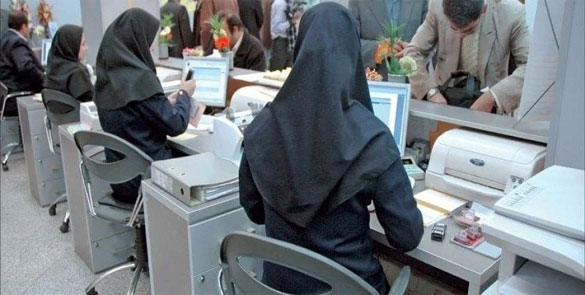
The new pension law, passed under the administration of Masoud Pezeshkian, has tightened restrictions on women in Iran and Eastern Kurdistan, depriving them of the early retirement rights they had long struggled to secure.
Following what has been termed "recent reforms" in the social system, the conditions for early retirement for working women in Iran and Eastern Kurdistan have become stricter and clearer.
According to the new law, which took effect on July 25, 2024, the retirement process has become more complex due to changes in age, experience, and service duration requirements.
According to Article 76 of the Social Welfare Law and the new regulations, early retirement for women is now limited to the ages of 45, 42, and 55, with each option accompanied by stringent conditions and additional procedures that delay retirement and increase pressure on working women.
First Condition: Retirement at Age 45
Under the previous law, female government employees could retire at age 45 after 24 years of service. However, under the new law, a woman who reaches this age but has not completed 30 years and 10 months of service is no longer eligible for retirement.
Second Condition: Retirement at Age 42
According to the new law, women can retire at age 42 only if they have completed 20 years and 8 months of service, whereas previously, the minimum requirement was 18 years.
Third Condition: Retirement at Age 55
Despite increasing restrictions on women in recent years, women were previously able to retire at age 55 after 20 years of service, as per Article 111 of the Social Welfare Law. However, the new law has increased the required years of service and reduced the minimum pension wages.
Attack on the Gender Basis of Economic Security
These policy changes, implemented under the guise of "reform," are part of a broader strategy of systematic discrimination against women in the labor market and social system in East Kurdistan and Iran. Instead of alleviating the economic burdens on female employees and workers, the Iranian government has intensified restrictions, depriving many women of the early retirement rights they fought for over the years.
Source: hawarnews.com
https://hawarnews.com/en/iran-tightens-pension-rules-limits-womens-early-retirement
-------
Jamaat-e-Islami Hind Conference Highlights Muslim Women’s Role in Nation-Building
July 20, 2025
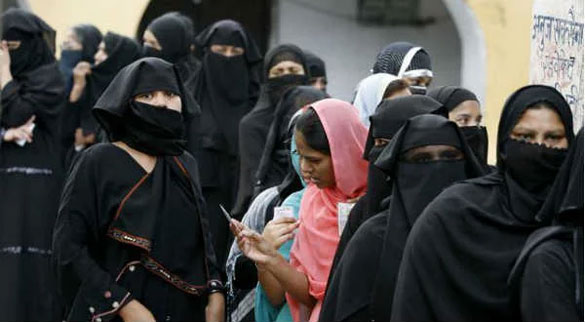
NEW DELHI — Amid ongoing debates over historical representation and exclusion, the Women’s Department of Jamaat-e-Islami Hind (JIH) organised a National History Conference titled “Contribution of Muslim Women to Indian Society.” Held virtually on Saturday, the event brought together prominent academics and educators to spotlight the often-neglected role of Muslim women in shaping India’s social, cultural, and political landscape.
The webinar was presided over by Mrs. Rahmathunnissa A, National Secretary of JIH, known for her long standing work on women’s empowerment and social reform. In her closing address, she made an impassioned plea to scholars and educators to “not allow history to remain only his-story,” emphasising the urgent need for a gender-inclusive historiography that acknowledges the contributions of Muslim women sidelined by mainstream narratives.
Forgotten Voices
Dr. Sangeeta Saxena, India Faculty Supervisor at Southern New Hampshire University and Saint Leo University, delivered the keynote address. She drew from historical records of Bihar and Bengal to resurrect the legacies of pioneering Muslim women who contributed to India’s freedom movement, trade, and education.
From Begum Hazrat Mahal, who led a valiant rebellion against the British during the 1857 uprising, to Zahara Kaleem, a little-known reformist from Bengal, Dr. Saxena described these women as “unsung heroines in the annals of our country,” whose stories have been systematically excluded from textbooks and public memory.
Complementing this, Dr. Tuhina Islam, Assistant Professor at Aliah University, Kolkata, presented a detailed profile of Wahid Jahan Begum, founder of the Women’s College at Aligarh. She chronicled how Begum’s visionary leadership established safe and dignified educational spaces for Muslim girls in the face of deep-seated societal resistance.
Both speakers highlighted how Muslim women have been doubly marginalized—first by entrenched patriarchy, and second by historical amnesia. They urged today’s scholars and students to delve into oral histories and domestic narratives, where the silent sacrifices and stories of countless women remain undocumented.
“The real research must begin at home,” said Dr. Saxena. “Our mothers and grandmothers hold within them centuries of resilience, struggle, and strength—unwritten but invaluable.”
‘Her-story’ in a Time of Narrative Battles
In her address, Mrs. Rahmathunnissa linked the theme of the conference to broader political efforts to rewrite India’s historical narrative. She raised concern over recent NCERT textbook revisions that emphasize the so-called brutality of Mughal rulers and destruction of temples, while ignoring their contributions to India’s art, administration, and pluralism.
“There’s an institutional push to rewrite history with a divisive lens,” she said. “We must ensure that the role of Muslim women as builders of this nation is documented with honesty and pride.”
Calling for rigorous academic engagement, she added, “Whether known or unknown, directly or indirectly, Muslim women have always contributed to the progress of this country.”
Jamaat’s Commitment to Women’s Narratives
The conference opened with an inaugural address by Mrs. Rabia Basri, Assistant Secretary of the JIH Women’s Department. She underlined Jamaat’s ongoing commitment to amplifying women’s voices—especially those excluded from dominant discourse.
Mrs. Sumaiyya Maryam, the event coordinator, ensured wide participation from across India, drawing in educators, students, and activists. Mrs. MeenazBhanu, member of JIH’s Women’s National Executive Committee, moderated the session, reinforcing the need to view Muslim women not merely as victims of history but as agents of change.
More than just an academic exercise, the conference served as a moral call—to remember, document, and honor the legacy of Muslim women in India’s nation-building journey. It also posed a challenge to prevailing historiographies that often mirror political agendas.
As India confronts contentious versions of its past, Jamaat-e-Islami Hind’s conference offered an alternative lens—one that not only recovers erased histories but also empowers future generations to construct a more inclusive, plural, and truthful narrative.
Source: clarionindia.net
https://clarionindia.net/jamaat-conference-highlights-muslim-womens-role-in-nation-building/
---------
Meet The Black Mambas, South Africa’s All-Women Force To Prevent Rhino Poaching
21 Jul 2025
The Greater Kruger National Park in South Africa faces considerable threat in protection and conservation of the rhinoceros, just like Kaziranga and Jaldapara national parks in eastern India.
In recent years, Kruger has been in news for a significant number of rhino poaching cases as well as the inception of anti-poaching measures. The animals are mostly poached for their horns that fetch handsome prices in the international market
In 2013, South African non-profit Transfrontier Africa set up an all-female anti-poaching unit, known as the Black Mambas. As part of this initiative, an African women’s patrol team keeps an eye on 20,000 hectares inside Kruger.
The unit was seen as the right response to escalation of rhino poaching in South Africa. “The new model implied recruitment and training of young rural women who traditionally have been primary care givers and the source of values, morals and ethics in their families,” according to the website of the non-profit that focuses on wildlife conservation.
Background: How Masingi&Mzimba joined the team
One of the female guards who works in the Black Mamba unit, 32-year-old BonganiMasingi, told Down To Earth that she grew up watching National Geographic with her siblings. “I always found it an interesting and fascinating exercise. I tried my best to understand animal behaviour from the shows.”
Masingi joined the conservation force after she received a phone call from a woman who worked at a shop that sells electricity utility bills. In South Africa, people can still buy the amount of power they want to use within the household.
“She asked me if I knew candidates willing to appear for interviews for the Transfrontier Africa team which wanted to test and hire potential candidates for ranger positions for the Black Mambas. A few CVs were submitted at that time. She enquired if I knew some women in need of jobs. That is how I joined the group. Later, she remembered me and called up,” Masingi said.
Masingi’s family of nine stays at Makushane village of South Africa. Before working as a ranger for the Black Mambas, the woman in her 30s had attended college and worked as an assistant English teacher for Grades 1, 2 and 3 for six months at a private school, the Bethsaida Christian Academy.
“When I started working for the Black Mambas, my father did not approve as I was to work unarmed. He told me that I cannot be part of job which he considered unsafe.” But that didn't stop her from becoming a part of the team in 2019. “I have learnt that one’s only limitation is oneself.”
The members of the force walk at least 20 kilometres every day. Getting to see wild animals up close during patrols makes her experience worthwhile, she said. “Women like me act as their eyes and ears because these animals cannot vouch for themselves. It is a mutual relationship, as animals help us too. When we work as a team, all of us feel safe.”
Masingi’s colleague NkatekoMzimba is 33 years old and lives in Hluvukani, which is a rural area. From early on, she was in love with nature and wanted to work as a field guide. “My younger sister was also a Black Mambas’ staff and it inspired me to join.”
Mzimba had a tough life. She is the second born in a family with four children and no father. “My mother raised all of us. For many years, I survived with the help of social grant.” Social grant is a sort of financial help which unemployed people receive from the government every month. “But the paltry amount is not enough for an adult. I was doing matriculation (final year of high school) before I got this job.”
Today, like Masingi, Mzimba is happy to be part of the rhino conversation group. “There are challenges in conservation and the biggest of them is poaching,” she said.
Context: Rhino population threatened by poaching
The State of the Rhino 2023 report by the International Rhino Foundation, an American non-profit, showed that poaching threatens all the five rhino species in the world and has increased in areas not previously targeted.
The five rhino species are the Indian (one-horned) rhinoceros, Sumatran rhinoceros, Javan rhinoceros, White rhinoceros and the Black rhinoceros. Kruger has both white and black rhinos.
The report added that though South Africa continues to tackle poaching, there has been a decline in rhino population in Kruger, mainly due to increased security measures.
According to the rhino poaching statistics in 2024 shared on the website of Kruger National Park, there are at present 17,464 White rhinos (near threatened) and 6,421 Black rhinos (critically endangered) left in the world.
Altogether, 229 rhinos have been poached in South Africa from January to June 2024. Of this, 191 animals were killed on state-owned reserves and 38 on private reserves. According to news reports, over 100 rhinos were killed in the first quarter of 2025.
Conclusion: Anti-poaching success stories
In India’s Jaldapara, the number of rhinos currently stands at 292. It was only 14 in the 1980s. This has been possible due to anti-poaching towers and camps inside the park, which lies in a vulnerable position for being close to the international border.
In Kaziranga, armed guards are authorised to shoot poachers at sight, though the exercise has given rise to ethical questions surrounding the concept of fortress conservation.
In South Africa, the unarmed Black Mambas has achieved a 63 per cent reduction in poaching incidents in their area of operation since being formed, according to Helping Rhinos, a global organisation that works on rhino conservation.
Final summary: Since 2013, the Black Mambas, an all-women anti-poaching unit, have been instrumental in curbing rhino poaching in South Africa's Greater Kruger National Park. These local women patrol vast areas, acting as guardians for rhinos threatened by poaching for their valuable horns. Their success highlights the critical role of community-driven conservation efforts in safeguarding endangered species.
Source: downtoearth.org.in
https://www.downtoearth.org.in/wildlife-biodiversity/meet-the-black-mambas-south-africas-all-women-force-to-prevent-rhino-poaching
--------
ICC: Afghanistan Women Cricketers to Play in World Cups
By Fidel Rahmati
July 21, 2025
Afghanistan’s women in exile will gain opportunities to compete in ICC World Cups, highlighting support for displaced female athletes in cricket.
The International Cricket Council (ICC) has announced a groundbreaking initiative to support Afghanistan’s women cricketers who were forced to flee their country following the Taliban’s return to power. This decision was formalized during the ICC’s annual meeting held in Harare.
For the first time, the ICC will provide displaced Afghanistan’s women players the opportunity to participate in global cricket events, including the Women’s 50-over World Cup in India and Sri Lanka later this year, and the Women’s T20 World Cup in England in 2026. This initiative aims to reintegrate female athletes into the professional cricketing world.
In an official statement, the ICC said: “To support displaced Afghanistan’s women cricketers, opportunities will be provided for participation in global events, educational workshops, domestic competitions, and skill development programs.” The initiative is being led by ICC Deputy Chair Imran Khwaja, in partnership with cricket boards from India, England, and Australia.
Most of these Afghanistan’s women cricketers have resettled in Australia since the Taliban’s takeover. Though the exact structure of their involvement is yet to be finalized, they are expected to attend technical training sessions, international coaching programs, and potentially compete in select domestic tournaments.
This program represents a historic step by the ICC in officially recognizing and supporting Afghan women athletes, who have been severely restricted under Taliban rule. Through this effort, the ICC hopes to ensure their continued presence in international cricket despite political and social upheavals at home.
By collaborating with major cricketing nations, the ICC is not only preserving the careers of these athletes but also sending a powerful message about the importance of inclusion, resilience, and equal opportunity in sport.
This move is widely seen as a beacon of hope for Afghanistan women in exile, and a significant stand for global sports organizations in the face of systemic gender-based oppression.
Source: khaama.com
https://www.khaama.com/icc-afghanistan-women-cricketers-to-play-in-world-cups/
--------
17-Year-Old Afghan Girl Found Dead in Western Turkey
By Fidel Rahmati
July 21, 2025
The body of a 17-year-old Afghan girl was found in her home in Manisa, Turkey, sparking an ongoing investigation into her death.
Turkish media have reported the discovery of the body of a 17-year-old Afghan girl in the western city of Manisa. According to a report by the Turkish outlet Sözcü on Saturday, July 19, the girl, identified only by the initials H.A., was found in her home in the Cumhuriyetneighborhood of Manisa.
Family members and relatives of H.A. visited her home after losing contact with her for several hours. They found her motionless, covered with a blanket, and immediately alerted the authorities.
After an initial investigation by the prosecutor’s office, the body was transferred to the state hospital morgue. A forensic examination is expected to determine the exact cause of death.
According to Turkish police, neighbors stated that H.A. had an argument with her husband the night before her death. Her husband has been named the primary suspect, and police operations to apprehend him are currently underway.
This is the second case of an Afghan woman found dead in Turkey in just one week. Earlier, the body of a 29-year-old Afghan woman was discovered in the city of Eskişehir with multiple stab wounds. In that case, the victim’s ex-husband was arrested.
The rising cases of violence against migrant women, particularly Afghan women, in Turkey are raising serious concerns among refugee communities and human rights organizations. The lack of adequate legal and social protection for vulnerable women is believed to be a major factor contributing to such violence.
Authorities—both within Turkey and internationally—must take stronger measures to safeguard the lives and rights of migrant women and ensure that such tragic incidents are not repeated.
Source: khaama.com
https://www.khaama.com/17-year-old-afghan-girl-found-dead-in-western-turkey/
--------
Odisha government launches 'Shaktishree' to ensure safety, empowerment of girls in campus
Subhashish Mohanty
21.07.25
The Odisha government has launched a special initiative titled Shaktishree to ensure the safety and empowerment of girls in colleges and universities across the state. The move comes in the wake of severe criticism following the death by self-immolation of a 20-year-old student at Fakir Mohan (Autonomous) College in Balasore and amid rising crimes against women.
In the last month alone, Odisha has reported at least five rape cases, including three gang rapes — the most horrific being the assault of a college girl on Gopalpur beach in June. The Opposition Biju Janata Dal (BJD) has described Shaktishree as a “knee-jerk” reaction by the BJP-led government.
Launching the scheme on Saturday, chief minister Mohan CharanMajhi said: “We are not just responding to incidents—we are building a safer future. Our colleges must become safe havens of learning, not places of fear. The scheme focuses on both the physical and mental well-being of female students in higher education institutions.”
The Shaktishree scheme will be implemented across 16 universities and 730 government and aided colleges. A permanent Shaktishree Empowerment Cell will be established in each institution, to be managed by girl students. One student will be designated as ShaktishreeSathi, while a woman faculty member will serve as the Shaktishree Coordinator. Both will oversee the cell’s operations.
Additionally, the district collector will nominate five eminent working women as Shakti Apas to mentor girl students. The cell will work towards ensuring the safety and empowerment of female students and women faculty members on campus.
A mobile app under the Shaktishree banner will also be introduced to provide students with access to complaint redressal and mental health support. The app will display details of the institution’s Internal Complaint Committee (ICC), its members’ contact information, and allow students to lodge complaints through text, audio, or video. A built-in SOS button will offer immediate assistance. Campuses will also be covered under CCTV surveillance.
The scheme includes a special code of conduct for teaching and non-teaching staff, alongside self-defence training for students under the Shaktishree Actions for Female Empowerment (SAFE) campaign. Awareness programmes on gender equality will be conducted, and institutions will be required to submit annual safety reports to the government.
Reacting to the initiative, BJD spokesperson Santrupt Mishra wrote on X: “This is not only a knee-jerk reaction but also shows a lack of understanding of why the situation is so pathetic in Odisha when it comes to women’s safety. The slogan ‘Beti Bachao, BetiPadhaoaur Desh Badhao’ becomes ironic here. Our two girls went to study, and we failed to save them.”
He added, “The Shaktishree initiative is not backed by a well-thought-out plan. How long will it take to create and roll out the training? Where is the capacity to deliver it? And what will happen in the meantime? The BJP government believes that one more slogan, one more logo, will help people forget its failures. But this is Nero fiddling while the core burns. Wake up, Mr CM! Wake up, BJP government of Odisha!”
Source: telegraphindia.com
https://www.telegraphindia.com/india/odisha-government-launches-shaktishree-to-ensure-safety-empowerment-of-girls-in-campus-prnt/cid/2114254
---------
URL: https://newageislam.com/islam-women-feminism/iran-tightens-women-early-retirement/d/136242