
Indonesian Singer Mahalini Raharja Converts To Islam Ahead Of Her Wedding, Follows Guidelines of Conversion
New Age Islam News Bureau
08 May 2024
·
Indonesian Singer Mahalini Raharja Converts To
Islam Ahead Of Her Wedding, Follows Guidelines of Conversion
·
Women’s Attire Stokes Religious Tension in
Eastern Sri Lanka
·
Iranian Police Chief Claims 'Homeland and
Religion Would Vanish Without Hijab'
·
Iran: Women and Girls Facing Violent Crackdown
·
Iran’s Women’s Football Team To Play Belarus In
Tehran
Compiled by New Age Islam News Bureau
URL: https://www.newageislam.com/islam-women-feminism/indonesian-singer-mahalini-conversion/d/132282
------
Indonesian
Singer Mahalini Raharja Converts To Islam Ahead Of Her Wedding, Follows
Guidelines of Conversion
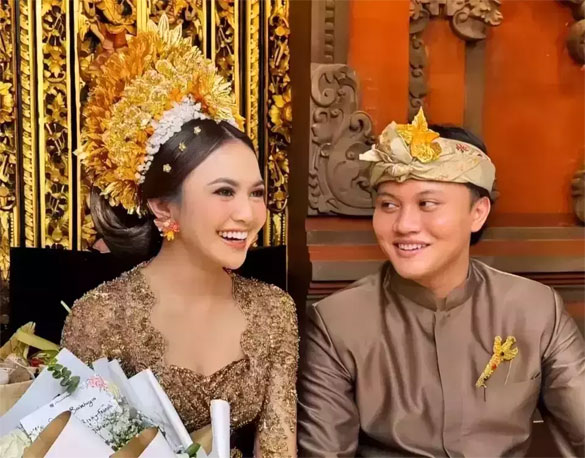
Indonesian singers Rizky Febian (right) and Mahalini Raharja (left)
captured during a mepamit ceremony in Bali on Sunday, May 5, 2024. The couple
is all set to tie the knot on Friday, May 10, 2024 (Instagram @rizkyfbian)
------
May 8,
2024
Jakarta.
Indonesian singers Rizky Febian and Mahalini Raharja will marry this Friday. In
compliance with Indonesia's law prohibiting interfaith marriages, Mahalini
chose to convert to Islam before marrying her sweetheart, Rizky Febian.
Formerly
a Hindu, Mahalini has now converted to Islam, a significant decision regarding
one's faith.
Before
converting to Islam (becoming a Muallaf), the individual must sincerely believe
in the principles and teachings of Islam and make the decision to convert of
their own volition. It is essential that they have a basic understanding of
Islamic beliefs and practices.
For
those considering conversion to Islam, here are the requirements and procedures
according to the Religious Affairs Ministry:
Procedures:
1.
Contact the Nearest Office of Religious Affairs (KUA) or Muallaf Center
To start
the conversion process, contact the nearest Office of Religious Affairs (KUA)
or visit the Muallaf Center at Istiqlal Mosque.
2. Administrative Requirements:
A
recommendation letter from the local neighbourhood office (kelurahan).
Three
copies of your ID card (KTP) or family card (KK).
Three
passport-sized (3x4 cm) photos.
Three
copies of your passport if you are a foreign national.
A
stamped statement declaring your conversion to Islam, affirming that the
decision is made willingly without any external pressure.
3. For
updating religious status on official documents (ID card), contact the district
office (kecamatan) and bring along:
A letter
of confirmation from the local community leader (RT and RW).
Original
ID card (KTP) and family card (KK) or passport.
A
conversion (muallaf) certificate.
4.
Religious Procedures:
Reciting
the Shahada (Testimony of Faith)
Reciting
the Shahada is mandatory for anyone wishing to convert to Islam. The Shahada
is: "Ashhadu an la ilahailla Allah, waashhaduanna Muhammadan rasoolu
Allah" (I bear witness that there is no god but Allah, and I bear witness
that Muhammad is the Messenger of Allah).
Undergoing
Circumcision
Undergoing
circumcision is a necessary practice for male converts to Islam, as instructed
in the hadith of the Prophet Muhammad.
Understanding
the Five Pillars of Islam
Before
converting, it is essential to understand the five obligations in Islam:
Reciting
the Shahada
Performing
prayers
Observing
fasting
Paying
alms
Performing
the Hajj pilgrimage if capable
Taking a
Ritual Bath (Ghusl)
After
reciting the Shahada, it's necessary to perform a ritual bath.
Source: jakartaglobe.id
https://jakartaglobe.id/lifestyle/mahalini-converts-to-islam-ahead-of-her-wedding-a-guide-to-the-conversion-process
----
Women’s
Attire Stokes Religious Tension in Eastern Sri Lanka
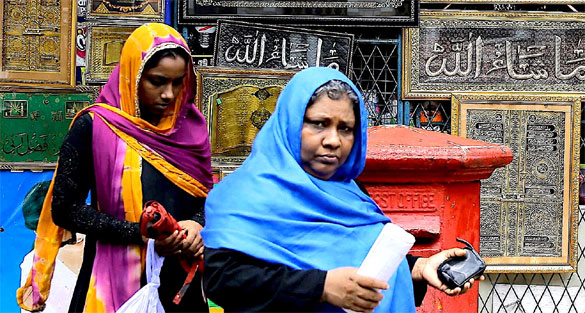
Women attire/ Sri Lanka
-----
ShreenSaroor
05/08/2024
In times
of calamity women are affected disproportionately, and Sri Lanka’s ethnic and
religious conflicts are no exception to the rule. In the post-war context,
Tamil women were left to look for many family members who were disappeared by
the state or militants. They were forced to do this while returning to mostly
demolished homes in a heavily militarised environment. They had to rebuild
entire communities with limited government support.
In a
similar vein, following the 2019 Easter Sunday attacks, which led to hatred
towards the entire Muslim community, Muslim women bore the brunt of mass
surveillance controls and had to fight for their right to wear culturally
appropriate attire, safety in public spaces, mobility and freedom of
association. They became targets of the draconian Prevention of Terrorism Act
(PTA) with many working tirelessly to secure the release of family members
arbitrarily detained under this law.
Piety
within religion is often visibly expressed through women’s gatherings and
rituals with their bodies, clothing and through control of women’s reproductive
abilities. All play a central role in shaping the politics of religious
identity, particularly in the post-war context and post-Easter attacks. In the
Eastern province, there have been allegations against Muslims of abducting young
Tamil girls to marry them, fuelling tensions between Tamil and Muslim minority
communities and leading to the ostracisation of couples who cross community
lines in relationships or marriages.
There
has been an increase in anti-Muslim rhetoric in society at large, especially
after a group of Muslim terrorists carried out suicide bomb attacks in churches
including the Zion church in Batticaloa in the East. As a result, some
religious institutions largely represented by male leaders have sought to exert
control over women’s bodies and minds in both Muslim and Hindu communities.
They use religion as a tool to force women to conform to traditional gender
roles including the emphasis on maintaining their “purity” and rules around
their reproductive rights. Women’s groups in the East are concerned that these
efforts not only to control women’s bodily autonomy but also to incite
religious hatred and division, pitting women against each other.
Hindu
and Muslim women in Batticaloa have observed increased religiosity within their
communities since the Easter attacks, particularly in religious practices
imposed on women. These practices are attributed to the influence of extremist
religious factions. Hindu women point to RSS influence and Muslim women accuse
their men and religious bodies more generally. Hindu women say that various
types of fasting requirements have been introduced, demanding significant
sacrifices without clear benefits[1]. They also talk about the reinforcement of
piety and heightened observation of various Hindu religious gendered rituals
such as the GowriViratham.
Increasing
intolerance for the other is also more and more being made and integral part of
one’s religious identity in this region. One prominent woman activist stated,
“Many Saiva people (commonly used term in Tamil to refer to Hindus) have become
more cautious and suspicious of their surroundings. Unfortunately, this has led
to some negative behaviours such as avoiding Muslim vendors due to rumours of
sterilisation drugs in food served at restaurants and talking behind their
backs. Even at a school in Batticaloa during a parent-teacher meeting, some
Saiva people responded negatively when a parent wearing an abaya arrived. These
responses were made without much thought or consideration.” This article
explores one such public case that was passionately fought by both Hindu and
Muslim men over Muslim women’s cultural attire.
The case
of Sri Shanmuga Hindu Ladies’ College
In April
2018, five female Muslim teachers who taught at a state run Sri Shanmuga Hindu
Ladies’ College in Trincomalee were harassed and threatened for wearing the
abaya, a long dress commonly worn by some Muslim women in many parts of the
world. They made complaints to the Human Rights Commission of Sri Lanka (HRCSL)
in May 2018 and the Commission found that preventing teachers from wearing the
abaya while performing their duties is a violation of Articles 10, 12 (1), 12
(2) and 14 (e) of the Constitution and
made recommendations accordingly. Even though the SLHRC verdict was positive, resistance to the right of Muslim women to
wear abayas continued. Four out of five Muslim teachers requested transfers and
moved away from Sri Shanmuga Hindu Ladies’ College.
The sole
remaining teacher, Fathima Fahmida Rameez, was continuously denied permission
to work at the Shanmuga school because she wore the abaya. For this reason,
Fahmida filed a Writ Application and the matter was taken up in the Court of
Appeal on February 13, 2022. Fahmida received a letter of reinstatement from
the Ministry of Education and, armed with the strength of the letter, returned
to Sri Shanmuga Hindu Ladies’ College to report back to work. However, protests
against her reinstatement were held, with some people claiming that wearing the
abaya destroyed Hindu culture. During her wait to assume duty, Fahmida was
assaulted by a group of protestors. In the ensuing melee, the media reported
that the school principal was also injured and a police case was filed alleging
that Fahmida had pushed the principal. In response, Fahmida made a counter
complaint, alleging that she was assaulted by the principal. Subsequently, a
private plaint was filed against the principal in the Magistrate court of
Trincomalee. By this point it was evident that certain elements with an
interest in fostering division among communities ensured that fissures and
tensions remained. They provoked and sustained the dispute around Shanmuga
School and the wearing of the abaya for over four years (2018 to 2022). This
issue was used as a focal point for stoking tension between communities.
Women’s
attire has become central to most nationalist and religious discourses. A
conversation on this topic with Hindu women in Trincomalee and Batticaloa shed
light on another dimension of the dress code argument within the Hindu
community. Many protests related to the Shanmuga School dispute over abaya
wearing teachers were organized by a pro-Hindu group called the Ravana Senai,
which alleges that abaya wearing Muslim teachers were trying to convert the
students to Islam. Simultaneously there were allegations against the school
principal, accusing her of instigating a dispute over the Muslim teachers’
dress code by prohibiting Fathima Fahmida from wearing an abaya and relegating
her to the staff room. This action prompted other Muslim teachers to wear
abayas in solidarity with her.
The
incident is an example of a clear violation of both gender equality and freedom
of religion and expression. The Muslim teachers were simply choosing to adhere
to norms within their culture by wearing a garment that holds religious
significance to them. Considering the recent history of Muslim women’s dress
code over the last two decades, the abaya, burka and face veil have been
regarded as an integral part of community identification and faith in the
context of immense Islamophobia. More recently, they have become important
symbols of identity for many young Muslim women as they see their attire as a
means to resist anti-Muslim rhetoric and combat the Islamophobia faced by their
community.
The
Hindu protesters were trying to force the Muslim teachers to conform to wearing
the saree, which is the female teachers’ dress code in the school and seen to
be a part of the Hindu religion and Tamil culture. This curtailed individual
women’s choices and the right to freedom of expression of Muslim teachers who
wished to wear the abaya. The protest, as reiterated by the HRCSL report, was
an attack on the freedom of religion, which is a fundamental human right
enshrined in the Constitution. Even the lawyers who might normally help diffuse
the situation initially refused to do so. Both sides stuck to their narrow
briefs and would not go beyond them to explore a negotiated settlement.
However, with the intervention of a courageous and competent senior lawyer
appearing for the Shanmuga school principal, risking his popularity and
advising objectively, his client agreed to do the right thing by all
communities. This approach aimed to overcome populist demands that enhanced
divisions, and instead emphasised the need to prioritise overall wellbeing,
peace and coexistence by proposing a balanced compromise. Although initially
reluctant, the lawyers appearing for Fahmida could not reasonably oppose this
approach. Furthermore both women involved, the Shanmuga school principal and
the teacher Fahmida, who were weaponised in these efforts to exacerbate
conflict, agreed to conclude the matter by respecting each other’s purview.
This ultimately led to the case being settled on amicable terms and Fahmida was
allowed wear the abaya. However, after the conclusion of the case, she too
opted to get a transfer and moved to another school.
This
settlement was not to the liking of forces that wanted the fires of hate to
continue burning between Tamil and Muslim communities. Forces within both
communities continued to decry the lawyers on both sides, accusing them of
compromising and betraying their values. In effect it was a victory for both
communities as it ended the dispute with peace and dignity. Handling such
emotionally charged cases with equanimity, sensitivity and judiciousness
contributed a great deal. The magistrate’s decision to have the proceedings
recorded in detail helped in calming competing extraneous interests and
avoiding misinformation. This greatly facilitated an amicable resolution.
Lingering
inter-religious tensions in the East
This
school incident contributed to existing tensions and discord between Tamils and
Muslims in the Eastern Province, especially among men, further highlighting the
need to understand the gendered aspects of religious violence. Many Muslim men
took to social media to wage a vituperative battle against Tamil women’s dress
code (saree) insulting the teachers at the school by labelling their dress as
obscene and their religions as vulgar. These men went to the extent of deeming
the Tamil teachers’ saree wearing bodies as cheap and Muslim women’s abaya
wearing bodies as dignified. The sexual objectification of one teacher who was
vocal and opposed to the abaya was so obscene that some women’s groups who
wanted to support Muslim women had to rethink their strategy to avoid getting
caught in the conflict initiated by men in the community. Unfortunately, the
teacher victimised by this vitriol on Facebook could not enact any counter
actions against them due to the insensitivity of police officers towards such
gendered verbal assaults.
This
incident reveals deep seated ethnic tensions in the Eastern Province, which
could lead to further violence and social unrest. It is crucial to address
these issues to promote understanding and respect for diversity, different
cultures and religions. Women’s rights activists from the Eastern Province are
expressing concern about communal behaviour, which they perceive as unwarranted
and counterproductive. In their view, such practices only contribute to further
division and mistrust between different communities, ultimately harming society
as a whole. They firmly believe that promoting greater understanding and
tolerance between different religious and ethnic groups, especially in times of
crisis, is crucial.
Tamil
and Muslim women have faced gendered challenges in post-war and post-Easter
attacks Sri Lanka. Their unity and association with one another are
increasingly viewed as problematic by certain political and religious groups
led primarily by men. The issue of wearing the abaya by Muslim teachers at
Shanmuga school is a case in point. Such incidents point to deep seated ethnic
tensions and expose the lack of gendered freedom of religion and faith. It
shows the underpinnings of violence in the Eastern province while underscoring
the importance of promoting understanding, respect and tolerance among
different communities to prevent further division and harm.
[1]
Focus group discussion in Batticaloa with community mobilisers in August 2023
Source: groundviews.org
https://groundviews.org/2024/05/08/womens-attire-stokes-religious-tension-in-eastern-sri-lanka/
--------
Iranian
Police Chief Claims 'Homeland and Religion Would Vanish Without Hijab'
MAY 7,
2024
The
police commander of the Islamic Republic has stated that the homeland would
cease to exist without the hijab.
During
the government's crackdown on women opposing the mandatory hijab, Ahmad Reza
Radan remarked, "If they remove the hijab, the homeland and religion will
automatically vanish."
"While
we acknowledge economic challenges, how many women who refuse to wear hijab do
so due to economic reasons, and what is the cost of their makeup and
hairstyling?" he added.
Since
April 13, Iran's law enforcement agencies have been intensifying the
enforcement of hijab regulations under the national action plan
"Noor."
There
have been numerous reports of women being arrested and subjected to force for
perceived violations of dress codes across Iran.
Users
across social networks are participating in a spontaneous campaign using the
hashtag "war against women" to document their experiences and
observations regarding the government's crackdown on the opponents of mandatory
hijab.
Reports
have also emerged detailing repressive tactics, especially targeting female
students in various universities.
Additionally,
there has been increasing pressure on civil activists, political dissenters,
women political prisoners, and cultural figures.
Source: iranwire.com
https://iranwire.com/en/news/128808-iranian-police-chief-claims-homeland-and-religion-would-vanish-without-hijab/
--------
Iran:
Women and Girls Facing Violent Crackdown
Iranian
authorities are waging a “War on Women” to punish defiance of forced veiling in
the wake of the “Woman Life Freedom” uprising. Since April, security forces
have intensified their enforcement of compulsory veiling in public spaces
through subjecting women and girls to constant surveillance, beatings, sexual
violence, electric shocks, arbitrary arrest and detention and other harassment.
Source: amnesty.org
https://www.amnesty.org/en/documents/mde13/8029/2024/en/
--------
Iran’s
women’s football team to play Belarus in Tehran
May 8,
2024
TEHRAN,
May 08 (MNA) – Iran’s women’s football team will play two friendly matches with
Belarus in Tehran.
The
women's football team of Iran is scheduled to play against a European team on
May 30 and June 2 in Tehran.
In
recent years, the performance of Iran's women's football team has significantly
improved.
Previously,
Team Melli has played matches against Belarus in both Tehran and Minsk.
Source:
en.mehrnews.com
https://en.mehrnews.com/news/214881/Iran-s-women-s-football-team-to-play-Belarus-in-Tehran
--------
URL: https://www.newageislam.com/islam-women-feminism/indonesian-singer-mahalini-conversion/d/132282