
How Women’s Tennis Is Selling Itself In Saudi Arabia
New Age Islam News Bureau
01November2025
· How Women’s Tennis Is Selling Itself In Saudi Arabia
· Fatemeh Mohajerani, Iranian Govt. Spokesperson Questions Halloween While Promoting Festival Banned Since 1979
· Sinhalese Gnanasara Thera, Secretary BBS, Supports Hijab But Opposes Niqab And Burqa
· Afghan Women’s Return to Football after Four Years a Human Rights Victory
· ‘Ittehad’: Interfaith Love And Coexistence In Sindh’s First Woman Writer, Guli Sadarangani’s Novel
· UN Rights Envoy Says Women Face “Severe Barriers” To Justice In Afghanistan
· Inside Evin Prison: Echoes Of Iran’s Struggle For Woman, Life, Freedom
Compiled by New Age Islam News Bureau
URL: https://newageislam.com/islam-women-feminism/women-tennis-selling-saudi-arabia/d/137484
-----
How Women’s Tennis Is Selling Itself In Saudi Arabia
Jessica Schiffer
31/10/2025
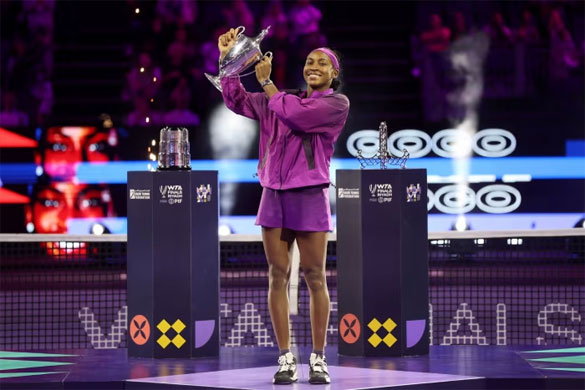
How do you sell the most important women’s tennis event of the year when it’s taking place in a country that just began letting women enter sports stadiums in 2018? Bring in the fashion.
Ahead of this week’s Women’s Tennis Association (WTA) Finals in Riyadh, Saudi Arabia, in which the top eight tennis players and top eight doubles teams compete against each other in a round robin format for the final trophies of the year, star athletes such as Aryna Sabalenka, Iga Świątek and Coco Gauff (ranked 1, 2 and 3 in the world respectively) were assembled for a luxury fashion photo shoot at the Bab AlSaad Resort, a private venue in Al-Diriyah on the north-western outskirts of the capital.
Shot by photographer Yumna Al Arashi in front of giant gilded doors in a courtyard, Gauff wore a custom Miu Miu dress (she is an official ambassador of the Italian luxury brand, which designs her court kits); Sabalenka wore a red Alberta Ferretti cape-back dress while Swiatek wore a custom Lurline gown by Saudi sisters Sarah and Siham Albinali, adding shoes from Polish designer Vanda Novak to represent her roots.
These new portraits, commissioned by the WTA, make for a striking visual contrast at a time when Saudi Arabia has been doubling down on its investments to import cornerstones of western culture such as sports, fashion and comedy into what remains one of the most conservative Muslim societies in the world, despite recent reforms. Here are some of the most powerful female athletes in the world, free to dress how they want on or off the court (subject to sponsorship deals), in a setting where that right is still being negotiated by many locals.
Saudi Arabia may want to host tennis tournaments for women. Do women want to see Saudi Arabia hosting tennis tournaments? “The best part about tennis is that it touches all parts of the globe,” says Caitlin Thompson, founder of the tennis media company Racquet. “Some of those parts are a harder sell than others, for tennis fans. The WTA is becoming savvier about how to sell this. They know Riyadh is a place that needs selling, and they’re doing it in the least controversial and most lifestyle-oriented way they can muster for a women’s sport — fashion.”
Sarah Swanson, the chief brand officer of WTA Ventures, said concerns about the tournament locale are fair, but that the organisation sees itself as paving the way for change. For the WTA, the goal is not to ignore reality; fashion shoots set a glamorous and empowering tone that can draw new eyeballs to the event, the setting and women’s tennis. The organisation is following a similar playbook to its male counterpart, the Association of Tennis Professionals (ATP), which launched a fashion marketing initiative with top players this summer in an effort to broaden its consumer appeal and allow the stars to send a message about who they are off the court.
Please use the sharing tools found via the share button at the top or side of articles. Copying articles to share with others is a breach of FT.com T&Cs and Copyright Policy. Email licensing@ft.com to buy additional rights. Subscribers may share up to 10 or 20 articles per month using the gift article service. More information can be found at
“We have a 50-year legacy of breaking barriers and being first when it comes to creating opportunity for women,” says Swanson. “We wouldn’t have come here if it didn’t reflect that.”
She believes the fashion shoot puts a visual to the progress they see happening locally (the WTA is also hosting tennis and coaching workshops for Saudi women and girls to encourage local interest). They might not love tennis as much as their western counterparts (yet); but many of them do love western fashion brands. Riyadh Fashion Week, which ended last week, included shows by the likes of Stella McCartney and Vivienne Westwood.
“What’s interesting about sport today is that the audiences grow significantly if you can find the intersection between a sport and other cultural passion point like fashion,” says Tash Walker, founder of marketing agency The Mix Global. “By aligning with fashion, tennis is really just creating more desire and aspiration, and opening itself up to a whole universe of new fans.”
This is the WTA’s second year hosting the finals in Riyadh, part of a three-year deal that was signed after the event jumped around yearly between less opulent locales, including Shenzhen, Fort Worth and Cancún. The deal was part of a $1bn investment by Saudi Arabia’s Public Investment Fund (PIF) into tennis, which includes a new men’s ATP Masters 1000 event (one tier below a Grand Slam) launching in 2028 and the Six Kings Slam annual exhibition that airs on Netflix. It’s the latest crown jewel in the kingdom’s ambitious and controversial athletic investments, which have transformed sports such as football and golf in recent years.
Although the organisation has held player photo shoots at the finals before, it upped the ante on production and brand pedigree this year. “When I joined two years ago I could see that the portrait was a real opportunity from a PR perspective to show our players’ personalities and create a sense of occasion,” says Swanson. They brought in Al Arashi, whose work explores stereotypes about Muslim women and has appeared in Vogue and Elle, plus a team of respected all-women creatives, including creative producer Shay Johnson and stylist Becky Akinyode.
Please use the sharing tools found via the share button at the top or side of articles. Copying articles to share with others is a breach of FT.com T&Cs and Copyright Policy. Email licensing@ft.com to buy additional rights. Subscribers may share up to 10 or 20 articles per month using the gift article service. More information can be found at
Experts agree that from a practical perspective, staging the finals in Riyadh, with significant funding from the PIF, has been an upgrade for the event, which experienced poor return on investment at past locations. But international fans were displeased with the location last year, noting the scarcely filled arena and lack of women in the stands. A revved-up fashion photo shoot may not be enough to smooth that over or convey the messages that the WTA intends. Some argue that by hosting the largest women’s sporting event in Saudi Arabia to date, the WTA is making the sport more accessible and inclusive. But to many, it still feels like sportswashing.
“The joy and benefit consumers often describe when they engage with women’s sports such as tennis is that they’re not just a carbon copy of the men’s game,” said Walker. She believes that men’s tennis and other professional leagues such as football and basketball are often described as being overly commercialised, while women’s sports often feel more accessible and more inclusive of fans from non-traditional backgrounds.
“I don’t think it’s necessarily progress if the values of the sport that have been foundational to its popularity are compromised,” she adds.
Source: ft.com
https://www.ft.com/content/a2137b9d-fc07-456b-a9a1-dcb5c094bf1e
-------
Fatemeh Mohajerani, Iranian Govt. Spokesperson Questions Halloween While Promoting Festival Banned Since 1979
OCTOBER 31, 2025
2 MIN READ
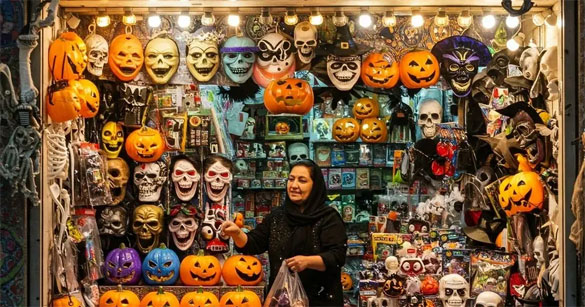
Fatemeh Mohajerani, spokesperson for the Iranian government, questioned the growing popularity of Halloween during a press conference
-------------
Iran’s government spokesperson criticized the celebration of Halloween and urged citizens to focus instead on traditional Iranian festivals, including an ancient holiday that the Islamic Republic has not officially celebrated since the 1979 revolution.
Fatemeh Mohajerani, spokesperson for the Iranian government, questioned the growing popularity of Halloween during a press conference.
She mentioned Mehregan, an ancient Persian autumn festival, as a cultural alternative.
“We have so many national celebrations - where was Halloween?” Mohajerani said. “We can focus on our own celebrations. What happened to our Mehregan festival?”
Mohajerani’s comments came in response to questions about recent government notices prohibiting Halloween celebrations and the sale of Halloween-related items.
Mehregan is one of the oldest Persian festivals, traditionally honoring the harvest season.
But it has not been officially observed in Iran since the 1979 Islamic Revolution, when the government policy moved to suppress national celebrations with pre-Islamic roots.
Mohajerani said the government does not rely only on prohibition to discourage non-traditional celebrations.
“Prevention is one way,” she said, “but another is through cultural development. Returning to our own national and religious celebrations can be much more effective.”
Iranian authorities have previously restricted or banned public observances such as Valentine’s Day, Western music and films, and other events seen as inconsistent with the government’s interpretation of Islamic values.
Despite these restrictions, Halloween has gained popularity in recent years, particularly among young people in urban areas who organize private parties.
Authorities regularly issue warnings to businesses against selling Halloween merchandise or using Halloween-themed decorations.
Since 1979, the Islamic Republic has prioritized religious festivals over national and pre-Islamic cultural observances.
Nowruz, the Persian New Year marking the spring equinox, remains widely celebrated, as its timing and cultural significance make it difficult to suppress.
Other pre-Islamic festivals, including Mehregan, Sadeh, and Chaharshanbe Suri, have faced official discouragement.
When asked about the current activities of Iran’s Morality Police, Mohajerani replied, “I don’t know.”
The Morality Police enforce Iran’s mandatory hijab laws and dress code regulations.
The force gained global attention in September 2022 after Mahsa Amini, 22, died in custody following her arrest for allegedly wearing her hijab “improperly.” Her death sparked nationwide protests across Iran.
Source: iranwire.com
https://iranwire.com/en/news/145968-iran-government-spokesperson-questions-halloween-while-promoting-festival-banned-since-1979/
------
Sinhalese Gnanasara Thera, Secretary BBS, Supports Hijab But Opposes Niqab And Burqa
1 November 2025
Galagoda Aththe Gnanasara Thera, General Secretary of the Bodu Bala Sena (BBS), stated that Muslim women should be allowed to access health services while wearing the hijab, but opposed the wearing of the Niqab and burqa.
Addressing the media, the Thera said that as Sinhalese nationals, it is wrong to oppose the hijab, which allows women to be identified, but garments covering the entire face, such as the niqab and burqa, should be discouraged.
He explained that while the hijab does not conceal identity, the burqa can make identification difficult, adding that some Muslim women wearing the burqa have obtained driving licenses and identity cards.
The Thera further argued that there is no need to adopt such foreign cultural practices in the country, and claimed that some criminals have used the burqa and niqab to carry out illegal activities.
He urged the Muslim community not to dispute this position, noting that wearing the hijab is permitted and should continue, while the burqa and niqab should be opposed.
Source: dailymirror.lk
https://www.dailymirror.lk/breaking-news/Gnanasara-Thera-supports-hijab-but-opposes-niqab-and-burqa/108-323886#
-----
Afghan Women’s Return to Football after Four Years a Human Rights Victory
October 31, 2025
When the former Afghan Women's National Football Team, now known as Afghan Women United, took the field this week in Morocco for their first games in four years, they didn't just play a match; they returned from exile, from dispossession, and from a system that sought to erase them.
Their return to compete after the Taliban banned all sports for women and girls is a true victory for human rights.
Even before the Taliban takeover of Afghanistan in August 2021, Afghan women athletes faced death threats for representing their country. But once back in power, the Taliban systematically shut all women and girls out of sports. They shuttered training centers and banned competitions. Women athletes had to destroy evidence of their athletic lives, burying uniforms and trophies. For many, sports had been their pathway to leadership, education, employment, dignity, and joy.
The players had to flee the country and make new lives for themselves abroad as refugees. They rebuilt their team, while shouldering the dreams of their former teammates in Afghanistan suffering under the Taliban’s repression.
The Sport & Rights Alliance and Human Rights Watch reported how FIFA’s nonrecognition of the Afghan women’s team effectively exported the Taliban’s repressive policies abroad and denied Afghan women athletes their right to compete, even outside Afghanistan.
But after four years of seeking official recognition, the players’ determination has forced FIFA to allow the team to compete.
“Playing for my country is one of the ways I can stand up for the girls back in Afghanistan,” said Fatima Foladi, who played on Afghanistan’s Under-15 and Under-19 national teams. “My dream is to be reunited with my teammates from all over the world, to play with them again and bring back the football dreams we had when we lived back home.”
FIFA has not yet formally recognized the Afghan players as the women’s national team, and they should do so. FIFA and other sport federations including the International Cricket Council need to stand with Afghan women athletes, rather than those who seek to exclude them from sports.
To see the team rebuilt and competing again gives hope for future generations of Afghan women and girls that they too can reclaim their rights, not only in sports but in all aspects of their lives.
Source: hrw.org
https://www.hrw.org/news/2025/10/31/afghan-womens-return-to-football-a-human-rights-victory
------
‘Ittehad’: Interfaith Love And Coexistence In Sindh’s First Woman Writer, Guli Sadarangani’s Novel
Soni Wadhwa
Nov 1, 2025
Sindhi literature, in India especially, if understood at all, is hardly associated with voices beyond the Sufi poets of Sindh. Its relationality with modernity, its presence in Partition literature, and its condition of being displaced in geography remain undiscovered. Translator and Translation Studies scholar Rita Kothari’s latest contribution towards the representation of Sindhi literature needs to be understood in this larger context of silence.
Scandalous beginnings
The work in question is a translation. Ittehad was the debut novel of the first woman Sindhi novelist, Guli Sadarangani. Published in 1941, Ittehad was a scandalous work: it dared to imagine a love story between a Hindu and a Muslim at a time when hatred between the two communities was intensifying. It would have caused even more outrage had the novel been published in its entirety: its last chapters offered a second resolution to the theme of inter-religious love, showing marriage between a Hindu man and a Muslim girl. These chapters were dropped in 1941 so that the novel ended on a “moderate” note of a marriage between a Muslim man and a Hindu woman. The “love jihad” angle makes it sensational even today.
In 1983, the novel was republished with its “original” ending in India, with a new Hindi-ised name, “Jeevan Milapu.” Now, more than 40 years later, Kothari has brought it back for conversation about women’s writing, themes of love and religious hatred, and translation concerns of those working in minor languages.
The genius of Kothari’s translation lies in the way she brings the two novels and titles – “Ittehad” and “Jeevan Milapu” – together as Ittehad: A Life Together, thus honouring the dual nature of its existence. The story opens with Asha, a girl born and brought up in Almora the Uttar Pradesh, of that time:
Even as a little girl, Asha demonstrated an artistic bent of mind. She drew alluring and beautiful pictures that left many accomplished artists astonished. She had not been tutored in the formal art of drawing and painting; it was an innate talent. In fact, she had never set foot in a school. Not only could she draw and paint, but she could also compose verses. She sang with such melody and heartrending sweetness her voice provided salve to a wounded heart. Nature had sown many kinds of seeds in Asha, but those seeds had not received the water they needed to blossom. Asha was suffused with many desires and aspirations, but the outlets of expression were few, rather closed. She had to rein in her desires.
A few pages into the story, she gets introduced to Hamid, “a handsome man,” her cousin’s Sindhi friend described thus:
We consider the country of Sindh arid and desolate, but the flower that has risen from such a deserted land is far more beautiful than those we find in our temperate climes.
It is love at first sight:
Hamid and Asha gazed into each other’s eyes. Asha’s eyes confirmed the truth of Vijay’s words, and Hamid’s eyes lit up behind his spectacles. Their eyes had managed to convey so much to each other. It was enough. Ruh ka rihaan, the souls had conversed.
Their love is opposed by the orthodox people around her: a couple of them are lost to death, while a couple of others come around, eventually rising beyond the pettiness of religion. In the end, the two are united – a life together is symbolic of not just marriage but of cohabitation between the two religions – along with another Hindu-Muslim couple, imagining a gentle closure to struggles of love and pain.
A multicultural discourse
If the plot sounds familiar or brings back the memories of the 18th and 19th centuries’ notion of fiction – where all is well that ends well – the comparison is not unfair or outlandish. The similarity is compounded by other strands: familiar issues about property rights and male inheritors are around; the love expressed is almost asexual, or rendered gentle rather than screamed aloud or expressed physically; and a lot of “action” is in the words, with the scenes unfolding in the form of conversation and dialogue rather than events.
But where the story stands out as different is that the context of the dialogue: an early discourse of multiculturalism in South Asia with topical concerns such as feminism, inter-regional love (Almora and Karachi), pan-Indian networks of influence of the Brahmo Samaj, and transnational networks of political philosophy and social mobility (Russia for communism, and London for education) locating the Sindhi novel in the zeitgeist. Sadarangani knew what she was talking about: these connections across geographies are not imaginary stuff made up by a naive novelist; these are reflections of how intertwined these geographies were.
Ittehad is very likely to generate more curiosity around Sindhi fiction: who were the writers? Why were/are they not understood in the larger notion of Indian literature? What is meant by literary “productivity”? What comparative lenses need to be designed to understand how and where Sindhi meets other Indian languages and their literary expressions? Is there a dialogue between Sindhi diaspora writers and writers writing from Sindh? Kothari’s translation will be of immense service as a nudge towards these questions.
Source: scroll.in
Please click the following URL to read the text of the original Story
https://scroll.in/article/1086656/ittehad-interfaith-love-and-coexistence-in-sindhs-first-woman-writer-guli-sadaranganis-novel
-------
UN Rights Envoy Says Women Face “Severe Barriers” to Justice in Afghanistan
By Fidel Rahmati
October 31, 2025
A UN report says Afghanistan women face severe barriers to justice, citing exclusion from courts, closed shelters, and rising gender-based violence across the country.
Afghan women and girls are facing “systemic and severe barriers” in accessing justice, according to a new United Nations Human Rights Council report released by Special Rapporteur Richard Bennett, reproted on Thursday. The findings, covering the period from January to August 2025, describe a worsening human rights situation for women.
Bennett said government policies have had “devastating consequences” for Afghan women, including their removal from the judiciary and the closure of all women’s shelters. The report noted that the elimination of female judges, prosecutors, and lawyers has effectively erased safe pathways for survivors of violence seeking legal redress.
According to the report, complaints by women about domestic abuse, sexual violence, or child custody are routinely ignored or redirected to informal mediation systems dominated by men. These mechanisms, Bennett wrote, “further entrench gender inequality” and often pressure women to withdraw their claims rather than pursue justice.
The report also documents cases of mistreatment and sexual violence against women in detention, describing prison conditions as “deeply degrading and unfit for human dignity.” Bennett said the absence of due process and continued detentions have created a climate of fear for Afghan women.
He warned that the combination of collapsing legal institutions, declining international aid, and the closure of shelters has inflicted both physical and psychological trauma on Afghan women while severely restricting the work of female human rights defenders.
Human rights groups stated that the systemic exclusion of women from the justice system represents one of the most profound rollbacks of rights in recent decades. They urged the international community to press for the restoration of legal representation and protection mechanisms for Afghan women.
Source: khaama.com
https://www.khaama.com/un-rights-envoy-says-afghan-women-face-severe-barriers-to-justice-in-afghanistan/
-------
Inside Evin Prison: Echoes of Iran’s Struggle for Woman, Life, Freedom
31/10/2025
The Flames of Evin: A Night That Shook Iran
On October 15th, 2022, Evin Prison—a name synonymous with repression in Iran—erupted in flames. The fire lit up the night sky over Tehran, casting a grim shadow that stretched far beyond the prison’s walls. For those who watched from afar, the blaze was not just a physical disaster; it was a symbol of a country already ablaze with unrest.
Just a month earlier, the tragic death of Jina Mahsa Amini, a young Kurdish woman detained and fatally beaten by Iran’s morality police for not wearing her hijab according to government standards, had sent shockwaves through the nation. Her death was the spark that ignited the Woman, Life, Freedom movement—a wave of protests led by women, demanding autonomy over their bodies, their lives, and their futures. The movement, inspired by Kurdish liberation leader Abdullah Öcalan’s slogan, quickly became one of the most significant challenges to the Islamic Republic in its 46-year history.
From Grief to Defiance: The Birth of a Movement
In the days after Amini’s death, grief transformed into anger. And anger, in turn, became bold defiance. Iranian women took to the streets, tearing off their headscarves, chanting slogans, and dancing around bonfires—a striking image of resistance that captured the world’s attention. The regime’s response was swift and brutal. Security forces met protesters with batons and bullets, determined to silence the chorus of dissent.
Yet, the movement persevered. It was not just about clothing or personal freedoms; it was a rebellion against decades of attempts to control every aspect of life—how people dressed, what they ate and drank, whether they could sing or dance. The protests were an assertion of dignity and self-determination in the face of relentless state repression.
Evin Prison: The Heart of Darkness
Inside Evin Prison, thousands of activists, artists, and ordinary citizens who had dared to challenge the regime were locked away. The chants of “Death to the Dictator” echoed within its walls, mirroring the cries of the protesters outside. Evin has long stood as a monument to Iran’s determination to crush dissent. The notorious 1988 massacres, when thousands of political prisoners were executed, still haunt the memories of those who survived.
When the fire broke out, panic and uncertainty swept through families whose loved ones were inside. No journalists were permitted to enter the prison or report on the origins of the fire or the casualties. The world could only watch through shaky videos captured from nearby windows and rooftops—images of smoke billowing over the prison, Molotov cocktails thrown from distant hills, and the echo of gunfire piercing the night.
Personal Histories Intertwined with National Tragedy
For many Iranians, the events at Evin were deeply personal. In one account, a woman describes watching the fire from her Brooklyn apartment, clutching her phone as she searched for news. Her family’s history was intertwined with the prison’s legacy: her uncle was executed there during the 1988 massacres; her parents, once political prisoners themselves, narrowly escaped a similar fate. She was born within Evin’s walls, her mother handcuffed and chained to a bed, giving birth under the watchful eyes of the regime.
That night, as news trickled in of injured prisoners being transferred not to hospitals but to other detention centers, and streets blocked to prevent families from reaching their loved ones, fear and anguish became overwhelming. The specter of another massacre loomed large.
The Limits of Witness and the Power of Memory
With the government controlling the narrative and restricting access, the true extent of the damage and loss inside Evin remains unknown. The lack of reliable information has left families and activists in a state of limbo, relying on fragmented videos and hearsay. The absence of answers is itself a form of cruelty, echoing the regime’s longstanding strategy of silence and obfuscation.
Yet, even in the face of uncertainty, memory persists. The stories of those lost to Evin—the executed, the disappeared, the survivors—continue to shape the struggle for justice in Iran. The Woman, Life, Freedom movement is not only a call for change but a tribute to those who have suffered and resisted in the shadows.
Iran’s Future: Unwritten and Uncertain
The fire at Evin Prison has become part of the larger narrative of Iran’s fight for freedom. It is a reminder that the battle for dignity and self-determination is ongoing, and that hope survives even in the darkest corners. As Iranians continue to demand change, the world watches—and remembers.
In the aftermath of Evin’s fire and the Woman, Life, Freedom movement, Iran stands at a crossroads. The courage of those inside and outside the prison, who risk everything for a better future, remains a powerful force against repression. Their voices, echoing through the walls of Evin and across the streets of Tehran, challenge the world to bear witness and to never forget.
Source: azat.tv
https://azat.tv/en/inside-evin-prison-echoes-of-irans-struggle-for-woman-life-freedom/
-------
URL: https://newageislam.com/islam-women-feminism/women-tennis-selling-saudi-arabia/d/137484