
Hanieh Safavi, Iranian Commander’s Daughter Lives Openly In The West: How a Viral Photo Exposed Iran’s Elite Hypocrisy
New Age Islam News Bureau
22 November 2025
· Hanieh Safavi, Iranian Commander’s Daughter Lives Openly In The West: How a Viral Photo Exposed Iran’s Elite Hypocrisy
· How MonaLesa Brackett Broke Pageant Barriers as a Black Muslim Woman
· 70-Year-Old Iranian-American Woman, Afarin Mohajer, Arrested at Tehran Airport, Held in Evin Prison
· New York Police Release Video Teaching Proper Hijab Etiquette, Prompting Mixed Reactions
· UAE Reaffirms Commitment to Women’s Empowerment at 46th Ministerial Conference of La Francophonie in Kigali
· Empowered And Equipped: Self-Defence Skills Every Muslim Mom Should Know
· Spain to Host Third Conference on Afghanistan’s Women’s Rights in December
Compiled by New Age Islam News Bureau
URL: https://newageislam.com/islam-women-feminism/iranian-commander-daughter-elite-hypocrisy/d/137740
----
Hanieh Safavi, Iranian Commander’s Daughter Lives Openly In The West: How a Viral Photo Exposed Iran’s Elite Hypocrisy
November 21, 2025
Ata Mohamed Tabriz
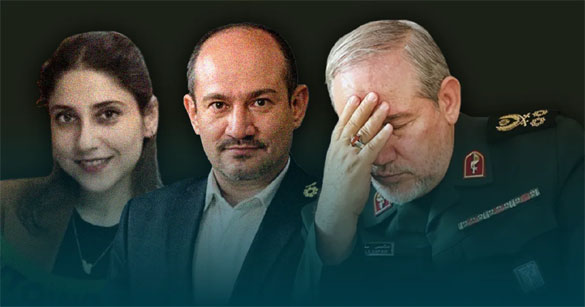
The photograph and accompanying details thrust the spotlight onto the family of Major General Yahya Rahim Safavi, former commander of the Islamic Revolutionary Guard Corps (IRGC) and senior advisor to Supreme Leader Ali Khamenei
-------------
The LinkedIn profile appeared unremarkable at first glance.
A psychologist in an Australian coastal town, smiling without a headscarf, described her counselling practice and posted feminist commentary about work–life balance.
But when social media users identified the woman as Hanieh Safavi, the youngest daughter of one of Iran’s most hardline military commanders, the image detonated across Persian-language networks.
Within hours, her profile vanished. The damage, however, was done.
The photograph and accompanying details thrust the spotlight onto the family of Major General Yahya Rahim Safavi, former commander of the Islamic Revolutionary Guard Corps (IRGC) and senior advisor to Supreme Leader Ali Khamenei.
For decades, Rahim Safavi has championed the Islamic Republic’s most repressive policies, including mandatory hijab laws that have seen thousands of Iranian women arrested, beaten, and imprisoned.
Now his own daughter lives openly in the West, her head uncovered, running a private psychology practice 12,847 kilometers from Tehran’s morality police.
The contradiction has crystallized long-simmering anger among Iranians, who see a ruling class that enforces strict Islamic law at home while their children enjoy Western freedoms abroad.
That resentment has only intensified as the regime cracks down on dissent following the 2022 protests sparked by Mahsa Amini’s death in custody for allegedly wearing her hijab improperly.
The Safavi family has remained silent. Both Hanieh’s LinkedIn profile and Instagram account have been deleted. But the damage to her father’s cultivated image as an ideological hardliner was already done.
Rahim Safavi, now 73, represents the IRGC’s old guard. Born in 1952, he earned a bachelor’s degree in geology in 1975 but found his calling in revolutionary politics during his student years in Tabriz.
When the 1979 revolution swept Iran, he was active in Isfahan, organizing revolutionary forces in the uprising’s first days.
He rose rapidly through the newly formed Revolutionary Guard’s ranks during the Iran-Iraq war, serving as deputy commander of ground forces from 1986 to 1988, then as commander in chief.
His ascent to real power came when he became the IRGC’s fifth overall commander - the first person directly appointed to the position by Supreme Leader Ali Khamenei.
The appointment marked him as one of the most important figures in shaping the Islamic Republic’s military and political structure.
Military training in Lebanon, participation in armed conflicts in Isfahan and Kurdistan, and absolute loyalty to the Supreme Leader transformed Rahim Safavi into a hardline, security-oriented figure.
His rhetoric has been characteristically brutal. He once called the press “poisonous snakes.”
He threatened opponents with the phrase, “We must behead some and cut out the tongues of others,” effectively promising death for those who crossed him.
During protests on July 9, 1999, Rahim Safavi personally ordered IRGC forces to intervene for suppression. He later recalled the crackdown with pride.
Under his command, the IRGC became more than ever a tool of social and political control.
After his 10-year tenure ended, he was appointed senior advisor to the Supreme Leader, taking on an increasingly ideological role in defending the Supreme Leader and the Islamic Republic’s security discourse.
Rahim Safavi remains one of the Islamic Republic’s most vocal theoretical and practical defenders.
His approach systematically redefines dissent. By labeling opponents as “power-hungry,” “hypocrites,” “subversive,” and even “irreligious,” he turns all civil protest into enmity against the system.
Operating under a logic of “friendship or enmity with the leadership,” he erases the boundary between criticism and treason.
Emphasizing unity around the Supreme Leader while warning about “future seditions,” Rahim Safavi reduces politics to a scene of obedience and security vigilance.
His framework takes for granted the legitimacy of forceful confrontation with protesters.
This is the ideological world that shaped his family, and the worldview his youngest daughter appears to have escaped.
Details about Hanieh Safavi remain scarce. According to her deleted LinkedIn profile, she lives in Townsville, Australia, where she established a counseling and psychology center in 2020.
The small coastal city, far from major Iranian diaspora communities, seems an unlikely home for an IRGC commander’s daughter.
Before the recent controversy, there was little information about Hanieh on the internet or in Iranian media.
The Safavi daughters have maintained notably low profiles compared to their brother.
Hanieh is not the first Safavi daughter to spark controversy. Her older sister, Hannaneh Sadat Safavi, became entangled in Iran’s “illegal scholarships” affair in the early 2010s.
In November 2014, Mohammad Ali Najafi, then head of the Ministry of Science, Research and Technology, announced that 2,000 people had used illegal scholarships.
Only 36 were expelled. Among those who received improper government funding was the commander’s daughter - someone for whom hundreds of thousands of dollars had been spent from the public budget.
Hannaneh continued her doctoral studies in cultural sociology at Allameh Tabatabai University in the late 2010s, focusing her research on gender issues.
In her published work, she argued that Islamic countries should not be measured by Western standards because doing so contradicts their values.
She described Islamic and Western development as fundamentally different. Western development, she wrote, means “providing life welfare and meeting material needs,” while Islamic development aims to “flourish human talents and comprehensive growth.”
In 2011, Hannaneh co-authored an article with Mohammad Aghasi, then a philosophy of social sciences student at Baqer al-Oloom University, examining factors that attracted students to the Man-o-To opposition TV channel.
Aghasi is now Hannaneh’s husband and the commander’s son-in-law. His name also appeared on the list of illegal scholarships.
Today, he is a faculty member in the sociology department at Kharazmi University and director general of the Office of Media Studies and Planning, playing an influential role in many official polling projects in Iran.
He describes hijab not just as a social norm but as something “sacred” with “religious and social necessity.”
He positions hijab as a sign of faith, chastity, and the moral health of society, adding that this value should be internalized and institutionalized through families, educational systems, and cultural institutions.
A scholar who writes academic papers defending mandatory hijab is married to a woman whose younger sister lives openly in Australia without a headscarf, while Rahim Safavi commands forces that have violently enforced hijab laws.
The book “Companion,” based on conversations and memoirs of Mehrshad Shababi, Rahim Safavi’s wife, offers an ideological picture of family life among the IRGC elite.
Shababi’s narrative shows the family operating not as a conventional household but as part of the Islamic Republic’s revolutionary and military project.
She repeatedly references her role in IRGC missions, women’s education, and cultural activities while describing the responsibility of raising three children during wartime - children under bombardment and insecurity, with a mother who traveled between home and the front.
The portrait is one of sacrifice for ideology. Yet the trajectory of the children suggests a more complicated reality.
The Rahim Safavi family has leveraged academic credentials and research institutions to advance the Islamic Republic’s ideology while securing privileged positions.
In their hands, the humanities have become tools not for critiquing power but platforms for reproducing political legitimacy.
The commander’s brother, Mohsen Safavi Hamami, founded and leads the Islamic Research and Information Center (IRIC) in Washington, D.C.
Although the center presents itself as a non-governmental and academic institution, it operates within the framework of promoting and representing the Islamic Republic’s official discourse in the West.
IRIC has held consultative status with the U.N. Economic and Social Council since 2015.
Another family member has recently drawn attention: Hamzeh Rahim Safavi, the commander’s son.
Like his uncle, he runs a research institute - the Institute of Future Studies of the Islamic World, which defines its mission as “strengthening the convergence and unity of Islamic countries.”
The institute uses academic language and concepts like “one ummah,” “global Islamic power bloc,” and “Islamic internationalism” to promote a form of religious internationalism that positions the Islamic Republic as the axis of the Islamic world.
Though its official statements emphasize “realism” and “pragmatism,” most content on its website is propaganda and ideology.
Yet Hamzeh has recently attempted to present himself as a critical voice within the system, offering a different perspective on foreign policy and Iran’s security strategy.
In a context where many independent critics face arrest and security pressure for far more cautious statements, he has openly criticized Tehran’s growing dependence on Moscow.
Following the 12-day war with Israel, he mocked Russian military support, “Russia had one S-300 that didn’t even make one successful shot. We don’t put our necks under Russia’s cleaver.”
The statement targeted both the failure of Russian technology and the Islamic Republic’s policy of over-reliance on its Eastern axis.
He has said Iran’s relations with Russia and China suffer from “structural distrust” and that these countries consider Iran an “unreliable partner” - an interpretation contradicting the official narrative of a “strategic Eastern-oriented alliance.”
Hamzeh’s most pointed criticism emerged from his account of a confidential meeting at the Ministry of Foreign Affairs during the Ebrahim Raisi administration.
He recalled the head of the advisory group to the foreign minister saying, “Global powers have disappeared and Iran is the only superpower in the world.”
“Interestingly, no one laughed,” Hamzeh said with sarcasm.
In media interviews, he has described the outcome of “the first half of the Iran–Israel war” as “three to one in favor of Israel,” and raised the possibility of the assassination of senior Islamic Republic officials in the next war.
Source: iranwire.com
https://iranwire.com/en/features/146452-the-commanders-daughter-how-a-viral-photo-exposed-irans-elite-hypocrisy/
--------
How MonaLesa Brackett Broke Pageant Barriers as a Black Muslim Woman
Zayna Allen
November 21, 2025
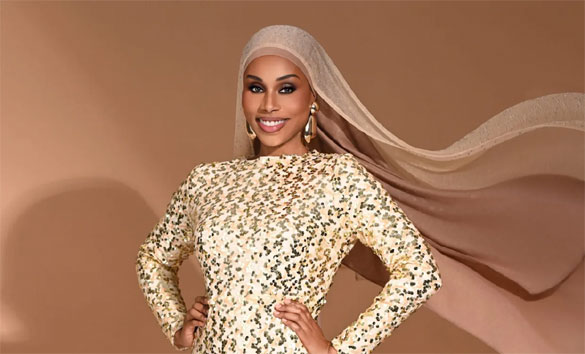
When MonaLesa Brackett stepped onto the Miss USA stage in her hijab and burkini, she was rewriting the assumptions placed on Black women, Muslim women, and women who dare to bloom later than the world expects. At 36, the Brooklyn native made history as Miss New Hampshire USA 2025. She became the first visibly hijabi contestant to compete at Miss USA in modest swimwear, and the first to reach the Top 16.
But Brackett’s rise wasn’t sudden. It was years in the making. She was fueled by faith and an unshakable belief that her dreams weren’t negotiable.
“What I have learned is God has never forgotten me,” she said, reflecting on the years she thought her pageant journey was over.
When Miss USA removed its age limit, Brackett saw it as a divine nudge. She returned to the circuit, placed second runner-up at Miss New York USA, and later seized an open opportunity to represent New Hampshire and ultimately won the crown.
“Life has really been like a whirlwind,” Brackett admitted.
MonaLesa Brackett and Changing the Pageant Landscape
Her return to the stage had many asking if she would compete without her hijab. For Brackett, that wasn’t an option. Competing modestly didn’t stem from wanting a moment or making a statement. The hijab is simply her lifestyle.
“For me to compete in the swimsuit competition, I had to wear the swimsuit that I wear, which is a burkini,” she explained.
Still, she knew the assumptions she would face. In a culture that often equates modesty with meekness, she pushed back.
“People just assume because I’m covered that I’m hiding a flaw,” Brackett explained. “Modesty is beauty, and modesty also hides beauty.”
For Black women, especially Black Muslim women, her visibility matters. Brackett understands this deeply.
“They may think that a Muslim woman is only an Arab or maybe an East African, but no, we exist too,” she said.
By standing in her identity as a Black, Muslim, American, she challenges monolithic narratives about who belongs in faith, in pageantry, and in public life.
Brackett is equally adamant about agency.
“Muslim women are not oppressed,” she stated. “A Muslim is not a costume. I was a Muslim before I started wearing a hijab.”
She knows that society tends to misunderstand both Blackness and Islam, and she wants to set the record straight.
Brackett’s journey also exposes how much potential the pageant industry has overlooked. Once she became visibly Muslim, she noticed just how many women in the system quietly shared her faith. Brackett explained how many Muslim women approached her after her hijab debut and praised her for her bravery.
“The pageant system is missing out on a lot of money, a lot of sponsorship, a lot of contestants by not being more inclusive,” she said.
Ultimately, Brackett hopes her visibility pushes the industry toward fairness.
“If someone is qualified, allow them to get what they are qualified to have,” she said.
MonaLesa Brackett walked onto a stage and opened a door. As she continues her journey, she’s proving that representation is about expanding the room so that more women, in all their identities, can walk through it too.
Source: yahoo.com
https://www.yahoo.com/news/articles/monalesa-brackett-broke-pageant-barriers-170000998.html
------
70-Year-Old Iranian-American Woman, Afarin Mohajer, Arrested at Tehran Airport, Held in Evin Prison
NOVEMBER 21, 2025
A 70-year-old Iranian-American woman was arrested by security forces at Tehran's Mehrabad Airport on September 29 and is currently being held in Evin Prison on five charges, her son has confirmed.
Reza Zarrabi said his mother, Afarin Mohajer, was detained by IRGC Intelligence. He said the agency “abducted” her from the airport.
According to Zarrabi, the family had no information about Mohajer for 43 days following her arrest.
“Some people accused us of playing victim and said Ms. Mohajer was not in prison,” he said.
Mohajer, a Los Angeles resident, suffers from cancer and a brain tumour located between her eyes.
“It is very dangerous, and the doctor told her before she was sent to prison that she would not live for a very long time,” Zarrabi told Radio Farda.
Mohajer is currently held in Ward 209 of Evin Prison and confirmed her situation in a brief phone call with her son.
Zarrabi said his mother’s medications are likely not available to her and warned that “if things continue this way, her life will be in serious danger.”
According to a lawyer who handles political prisoner cases, the charges against Mohajer include “forming opposition groups, membership in opposition groups, propaganda against the system, insulting the Supreme Leader, and insulting sanctities.”
Security agencies claim Mohajer traveled to Iran without signing a “safety guarantee” or “repentance letter,” according to her son.
Zarrabi described himself as a “political activist” and “manager of the Overthrow Council.”
He said that while his mother regularly attended his events, she was not a member of the council he manages.
“She had no political activity,” he said, adding that she attended his programs “out of motherly love.”
Zarrabi said his mother is being pressured to make him shut down the council, but he has refused. “I will not close this council,” he said.
He said he was able to speak with his mother by phone through a relative in Iran and recorded much of the conversation.
The U.S. government has repeatedly warned American citizens against traveling to Iran in recent months.
Source: iranwire.com
https://iranwire.com/en/women/146459-iranian-american-woman-arrested-at-tehran-airport-held-in-evin-prison-son-says/
-------
New York Police Release Video Teaching Proper Hijab Etiquette, Prompting Mixed Reactions
November 21, 2025
The New York Police Department has released a video demonstrating how to properly wear a hijab, a move that has sparked debate and widespread reactions on social media. CNN reported on the video’s circulation, describing the post as part of NYPD’s community outreach.
According to Shia Waves Agency, some commentators view the initiative as an effort to raise cultural awareness and prevent misunderstandings when interacting with women who wear the hijab. Others link the timing and messaging to the city’s first Muslim, Shia mayor, suggesting political undercurrents to the campaign.
The NYPD has defended the release of the educational video, saying it is aimed at protecting the rights and safety of all citizens — including religious minorities. According to police officials, the goal is not only to instruct but also to promote mutual understanding and reduce the risk of biased or ignorant encounters during law enforcement interactions.
Civil rights advocates have welcomed the intention, though some warn that genuine respect must be backed by concrete policy changes and training across the department to ensure the guidance has real impact.
Source: shiawaves.com
https://shiawaves.com/english/news/islam/137058-new-york-police-release-video-teaching-proper-hijab-etiquette-prompting-mixed-reactions/
-----
UAE Reaffirms Commitment to Women’s Empowerment at 46th Ministerial Conference of La Francophonie in Kigali
21/11/2025
The United Arab Emirates is participating in the 46th Ministerial Conference of La Francophonie, which commenced today in the Rwandan capital, Kigali, and will run over two days. This year’s session is being held under the theme: ‘Thirty Years After the Beijing Conference: The Role of Women in the Francophone Space’.
The UAE delegation was led by His Excellency Dr. Salem Al Neyadi, UAE Representative to the International Organization of La Francophonie. In his remarks during the opening session, His Excellency affirmed that the UAE’s participation reflects the country’s steadfast commitment to supporting women’s issues and empowerment, as well as enhancing their role as key partners in comprehensive development, at both local and international levels.
H.E. Dr. Al Neyadi highlighted the significant progress achieved by
the UAE in advancing women’s empowerment across various fields, which has been achieved through the vision and support of the country’s wise leadership. His Excellency noted that the UAE remains committed to strengthening cooperation with member states of the La Francophonie organization and across the world, to exchange best practices and expertise, and support efforts aimed at empowering women.
Furthermore, His Excellency added that the UAE is committed to actively engage in international initiatives dedicated to advancing women’s participation and empowerment, aligning with the country’s national policies, which place women’s empowerment at the center of its development agenda.
Notably, the UAE has been an active participant in the meetings of the International Organization of La Francophonie since joining in 2010. The Organization is recognized as the second-largest international body after the United Nations, comprising 90 member states and governments.
Source: mofa.gov.ae
https://www.mofa.gov.ae/en/MediaHub/News/2025/11/21/21-11-2025-UAE-Kigali
-------
Empowered And Equipped: Self-Defence Skills Every Muslim Mom Should Know
Nov 21, 2025
On November 4, 2025, Muslim democratic assemblyman Zohran Mamdani won the mayoral election for the city of New York. The high-profile race for the mayor’s office in the nation’s most populous city attracted significant media attention, much of it alarmingly negative. Former mayor Andrew Cuomo and Republican contender Curtis Sliwa repeatedly resorted to Islamophobic attacks against the young candidate, whose campaign focused on economic relief, affordable housing, transportation solutions, and improving healthcare for New Yorkers. Rather than attacking his political views, his opponents primarily targeted his faith. The wave of anti-Muslim rhetoric did not stop at Mamdani. It fuelled a broader narrative that affects Muslims across the country. Even after the election, hateful comments continue to circulate on news platforms and social media, further damaging an already misrepresented and misunderstood community. Unfortunately, those who bear the brunt of increasing Islamophobia are often those who are most visibly Muslim: Muslim women.
According to data from the Institute for Social Policy and Understanding (ISPU), Muslim women experience significantly higher rates of discrimination than women in the general public. ISPU reported that 69 percent of Muslim women have faced religious discrimination and 75 percent have faced racial discrimination, compared to 26 percent and 40 percent, respectively, among women overall. One major factor is visibility. Nearly half of the Muslim women surveyed in the 2020–21 American Muslim Poll (46 percent) wear a head covering or another symbol that clearly identifies them as Muslim. Despite the risks, an overwhelming 87 percent of those women expressed pride in being recognized as members of their faith community1. However, visibility can also make them more vulnerable to targeted aggression. In this climate, it has become increasingly important for Muslim women, especially mothers and caregivers, to learn how to protect themselves and their families from harassment and cowardly attacks.
Motherhood, Martial Arts, And Anti-Muslim Bigotry
Although I have not been the target of physical violence (Alhamdulillah), as a Muslim woman who wears hijab, I have endured verbal harassment in public spaces. I have been called “terrorist,” “fanatic,” cursed at, and told “go back to your country,” sometimes while my young children stood beside me, confused and frightened. When I wore a face veil, one angry man even threatened violence at a gas station, accusing me of staring at his wife. These experiences taught me to remain constantly alert whenever I leave home. My husband, who had practiced martial arts since childhood, encouraged me to begin training so I could gain valuable self-defense skills and build strength and confidence. I started taking Tang Soo Do lessons at Aqabah Karate in the Dar-us-Salaam community of College Park, Maryland, in 2009. Even at that time, Muslims were still navigating the intense wave of anti-Muslim sentiment that followed the events of September 11.
The Islamic environment at Aqabah Karate, located inside the Al-Huda Islamic School, made it easy for me to participate comfortably as a practicing Muslim woman. For over two years, I immersed myself in the forms and defensive techniques unique to this Korean martial art. I paused my training after my third child to focus on motherhood, but martial arts continued to be a constant presence in our home. My husband and children continued training and later added Brazilian Jiu-Jitsu, which emphasizes grappling and ground defense. A decade later, we opened our own Jiu-Jitsu school, Rollstar Jiu-Jitsu Academy, which now serves more than one hundred families in the Baltimore area, many of whom are Muslim.
Sadly, most of our students are men. Women, especially mothers, often place the needs of their families above their own well-being. Many do not view learning how to protect themselves as essential, instead prioritizing the safety of their loved ones. Others assume martial arts is a male pursuit, overlooking the legacy of women warriors in Islamic history who defended themselves, their families, and their communities. Although Jiu-Jitsu is a male-dominated sport, many women do train, and they are capable, disciplined, and strong.
Self-Defence Techniques For Muslim Women
About a year ago, our school hosted a women-only self-defences workshop led by two remarkable Muslim professionals and martial artists: Dr. Saira Khan, a Kung Fu black belt and researcher at the University of Maryland, and Staff Sergeant Lourdes Loyola, an active member of the U.S. armed forces and Jiu-Jitsu practitioner. Their teachings offered essential insights for women’s self-defences.
These are some of the key lessons that stayed with me:
1. Be confident.
Confidence is your first line of defense. Hold your head high, keep your shoulders back, and walk with purpose. Aggressors often target individuals who appear distracted or unsure of themselves.
2. Stay vigilant.
Be aware of your surroundings without appearing nervous or fearful. Look ahead and scan the environment casually. Know where you are going, stay alert to who is around you, and trust your intuition when something feels wrong.
3. Use your voice.
If someone approaches you aggressively, speak with firmness and volume. Be clear, assertive, and loud. Muslim women are often taught to be reserved and soft-spoken, which is admirable in many settings. However, in self-defense, using your voice with strength can deter a potential attacker and draw attention from others.
4. Learn basic self-defense techniques.
Two of the first skills taught in both Karate and Jiu-Jitsu are how to fall safely and how to stand up correctly. It may sound simple, yet these skills can prevent injuries and help you regain control quickly. In Jiu-Jitsu, “standing up in base” is a foundational technique that protects your body and creates space between you and a threat. Every person, especially women, should learn it.
5. Train and exercise consistently.
Strength and mobility matter. Start a fitness routine that you can maintain, such as walking, lifting weights, biking, jogging, or taking a class. Any form of movement improves your ability to react and protect yourself. Explore martial arts schools near you and try an introductory class. Select a style that feels comfortable and suits your needs. Regardless of the art you choose, consider also learning Jiu-Jitsu; understanding how to defend yourself on the ground is especially important for women.
6. Prioritize escape.
Self-defense is about self-preservation, not engaging in a fight. Your goal is to de-escalate and remove yourself from danger as quickly as possible. There is no shame in fleeing. Leaving a situation safely is a victory.
7. Protect your life, not your belongings.
A common concern among Muslim women is what to do if someone grabs their hijab or clothing. In a self-defense situation, your primary concern is your safety and the safety of your children. If an attacker removes your hijab, damages your belongings, or grabs your purse, let them. Possessions can be replaced. Your life cannot.
Dr. Khan also offered advice to Muslim mothers: “Be the person you advise your children to become.” If we want our children to be strong, confident, and capable of defending themselves, then we must model those same qualities. When we enroll them in martial arts or self-defense classes, we should also ask about opportunities for women. However, it was clear that this responsibility is not limited to women only. Staff Sergeant Loyola reminded us, “To the men, they really need to step it up with being active protectors of our community.” Allah states in Surah An-Nisa (4:34) that men are the protectors and caretakers of women. To fulfill this sacred responsibility, they must also be fit, present, and capable. At the same time, not every woman will have someone to rely on in a moment of danger. Every woman should be prepared to protect herself and her children if necessary. We can draw strength and motivation from the resilient women in Islamic history who defended their faith and their communities, sometimes with words, sometimes with leadership, and at times, even with arms.
Source: wisconsinmuslimjournal.org
https://wisconsinmuslimjournal.org/https-www-soundvision-com-article-empowered-and-equipped-self-defense-skills-every-muslim-mom-should-know/
------
Spain to Host Third Conference on Afghanistan’s Women’s Rights in December
By Khaama Press
November 21, 2025
Written By: Najeebullah Rahmati, Phd Scholar, EFL University
Spain will host the third “Hear Our Voice” conference on Afghanistan’s women’s rights in Madrid on December, focusing on justice and accountability.
The third conference on Afghan women, titled “Hear Our Voices,” will be held on December 12 in Madrid. Hosted by the Spanish Ministry of Foreign Affairs in collaboration with the European Union and the Afghanistan Women’s Organization, this significant event aims to address the ongoing crisis facing Afghan women and girls under the Taliban regime. The conference will bring together global leaders, human rights advocates, and experts to discuss ways to create an actionable roadmap for justice and accountability.
This year’s conference will focus on using “all tools for justice and accountability,” particularly through international legal mechanisms, to ensure that Afghanistan women and girls receive long-term protection of their human rights. The goal is to develop a practical framework that emphasizes gender equality and safeguards against the oppressive measures imposed by the Taliban. With the participation of the Spanish Foreign Minister, activists, international leaders, and ambassadors from various countries, the conference aims to create a united front to defend women’s rights in Afghanistan.
The “Hear Our Voices” conference is not the first of its kind. The first session, held in Albania last year, gathered Afghan women, human rights defenders, and international representatives to discuss the dire situation in Afghanistan. Following this, the second conference in Madrid in December last year, focused on condemning the Taliban’s restrictive policies, particularly those that ban girls from attending school and limit women’s participation in public life. During both meetings, attendees called for the immediate repeal of decrees that infringe upon basic rights, with a strong emphasis on accountability for the Taliban’s actions.
Building on the momentum of these previous conferences, this third event aims to produce a comprehensive roadmap for justice. The anticipated outcome is a detailed action plan that outlines concrete steps for the international community to take in response to the Taliban’s violations of women’s rights. This includes utilizing international legal frameworks and humanitarian channels to ensure Afghan women’s voices are not silenced in the face of continued oppression.
The series of conferences on Afghan women’s rights highlights the international community’s commitment to addressing the crisis in Afghanistan. The collaboration between governments, international organizations, and grassroots activists provides a powerful platform to advocate for change. As the world continues to focus on the plight of Afghan women, it is essential to push for the protection of their fundamental rights and ensure the accountability of those responsible for their suffering.
The “Hear Our Voices” conference represents hope and solidarity, offering a chance for Afghan women to have their stories heard on a global stage. By uniting in the fight for justice, we can work toward a future where Afghanistan women and girls are free from oppression and can fully participate in society.
In Afghanistan, women are denied access to education beyond sixth grade, with Taliban policies banning girls from secondary schools and universities, further restricting their opportunities for personal and professional growth.
Source: khaama.com
https://www.khaama.com/spain-to-host-third-conference-on-afghanistans-womens-rights-in-december/
-------
URL: https://newageislam.com/islam-women-feminism/iranian-commander-daughter-elite-hypocrisy/d/137740