
Gladiators, Ready! Using Her Hijab As Her Power, Aneila Afsar Is Smashing Women In Sports
New Age Islam News Bureau
12 April 2024
· Gladiators, Ready! Using Her Hijab As Her Power, Aneila Afsar Is Smashing Women In Sports
· Iranian Women Among Juries For BRICS ‘Green Future’ Contest
· Assessment of Self-Medication Awareness During Pregnancy Among Saudi Women in Madinah: A Cross-Sectional Study
· How Two Women From Marginalised Communities Joined Hands To Create ‘Muslim History Month’
· Moral Policing: Muslim Woman Harassed For Talking To Youth In B’luru; 4 Held
· Practice Plus Group Hospital, Ilford Offers Disposable Hijabs
Compiled by New Age Islam News Bureau
URL: https://newageislam.com/islam-women-feminism/gladiators-hijab-women-sports-aneila-afsar/d/135145
-------
Gladiators, ready! Using her hijab as her power, Aneila Afsar is smashing women in sports stereotypes as Britain's first Muslim finalist on hit show
11 April, 2025
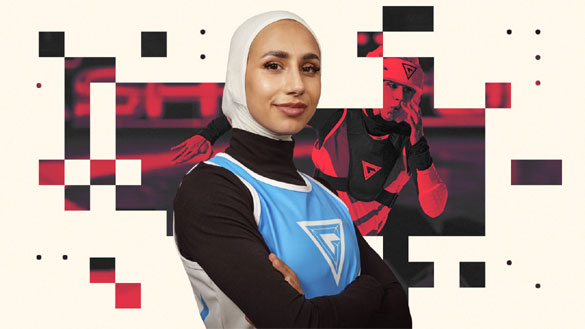
When Aneila Afsar applied to be a contestant on Season 2 of BBC One’s infamous sports entertainment show Gladiators last year, she had no expectations of actually being selected.
The reboot of the famous British ‘90s TV show pits everyday people against ‘gladiators,’ a team of ultra-fit men and women, in several adrenaline-packed physical challenges.
Months later, the Manchester-based sportsperson, online coach and single mother-of-two is not only Britain’s first Muslim Gladiators contestant, but she has made it to this Saturday’s finals.
“You never think it would be you,” 26-year-old Aneila tells The New Arab.
“As a competitive sportsperson, I love a challenge, so, I thought, what better way to test myself than to go up against these superhumans? But also, I recognised that if I was able to get onto this show with my hijab as a Muslim woman, it could have a massive positive impact on our community.”
Being a visibly Muslim fitness influencer and wanting to break down barriers for other Muslim women was part of the reason Aneila applied to be a contestant in the first place.
The former Team GB Taekwondoin and professional athlete says she started wearing the hijab three years ago and since then has become a huge advocate of representing and empowering Muslim women in fitness and sports, who are often underrepresented.
While she says she was too young when the original version of Gladiators aired in the ‘90s to recognise the barriers Muslim women faced in competing in such a TV show, in recent years she has witnessed the evolution of the sports and fitness industries into more inclusive spaces for women of different faith backgrounds.
“In the ‘90s there might have been women like me in the gym and women like me representing Muslims, but you might not necessarily have seen that, because we weren't in the age of social media," she adds.
"In this respect, social media is being used for something positive.”
Overall, Aneila says the reception from her Muslim followers and the Muslim community has been phenomenal. While she anticipated a little backlash being a visible Muslim woman on TV, she says this has been overshadowed by the huge amount of support she’s received.
“I've had really amazing messages from young girls, older women and even from men saying they've come across my account and shown it to their daughters.”
Season 2 of Gladiators began in January of this year and will see Aneila face fellow finalist Amanda Wah in what is set to be an exhilarating finale on Saturday.
Despite airing during Ramadan, the series was pre-recorded last August. “If it had been recorded during Ramadan, I wouldn’t have been able to compete!” laughs Aneila.
While Aneila did not have the challenge of fasting while competing, being a mum did pose its challenges. The demanding physical challenges in the show required her to amp up her training at the gym and as any mother knows, getting to the gym when you have small children is no easy feat. It is even more challenging as a single mother.
“Some weeks I get two sessions in the gym, other weeks there are six,” she explains. “I was fortunate that during this time of training for Gladiators, my family rallied around to help me train regularly.
"My eldest daughter is seven, so she understood everything that was going on, and she's so excited by the whole thing. My kids really got involved in the process.”
The show tests all elements of fitness, from upper and lower body strength to agility and speed. Aneila says having a martial arts background and varied training programme that includes lifting heavy weights, running and HYROX came in handy. For Gladiators, she increased the frequency of her upper body workouts.
“Anyone who has watched Gladiators and has seen Hang Tough will know you need upper body strength,” she says. “I was really surprised at how well I did on that. I honestly thought I wouldn't even be able to swing across.”
For Aneila, being a contestant in Gladiators wasn’t just about Muslim representation in TV or sports. It was also about reminding her own community about how important being fit is for their health.
With Muslim communities in Britain being at a statistically higher risk for heart disease, Type 2 diabetes and high blood pressure, she wanted Muslim viewers to see just how vital physical activity is for their overall wellness.
“We are more susceptible to things like Type 2 diabetes and part of that is genetic and part of that also is because of the lifestyle we lead, which tends to not be as active or involved in sports,” she highlights.
“A typical South Asian diet is not always a healthy one. So, if anything, it's more important for us to be taking these steps and taking action to be more active, eating better and living a healthier lifestyle. We already have a higher risk factor of having these diseases, which can really affect our quality of life in the future."
Perhaps one of the most astounding things to have come out of Aneila’s Gladiators journey has been the self-discovery that wearing the hijab has not stopped or limited the extent to which she competes in sports.
She says when she first made the decision to wear the hijab three years ago, she wondered if it would impact how much she could compete, but it’s been far from the case, and making it to the finals of Gladiators just cements that.
“I've had to find confidence in myself that goes beyond my exterior and it's made me appreciate my core values,” Aneila shares with The New Arab.
“And I really love that. I love my hijab. I'm not going to say it doesn't come without difficulties and I'm on my own journey, but I love who it's made me and what it represents," she adds.
“If anything, I think you should flip the script and use it to empower you. We're not all supposed to fit in. It's good to be different. It's good to have a core belief that's important to you and visibly represent that. And women should use that as their power.”
The season finale of Gladiators airs on Saturday 12 April 2025 at 5:50 PM BST on BBC One and iPlayer.
Source: newarab.com
https://www.newarab.com/features/aneila-afsar-being-gladiators-first-british-muslim-finalist
-------
Iranian women among juries for BRICS ‘Green Future’ contest
April 11, 2025
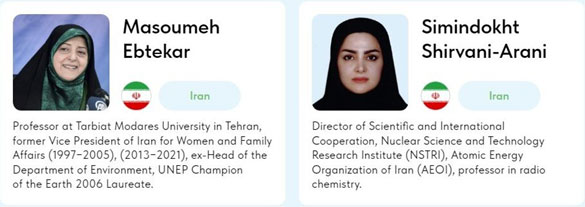
Masoumeh Ebtekar, a professor at TarbiatModares University in Tehran, and SimindokhtShirvani-Arani, the director of Scientific and International Cooperation, Nuclear Science and Technology Research Institute (NSTRI) of Atomic Energy Organization of Iran (AEOI), are the two female scholars from Iran to judge the event along with other juries.
Launched by the Council of the Eurasian Women’s Forum and Rosatom, the first international contest of women’s projects from BRICS countries is dedicated to sustainable development and environment protection.
Promoting environmental initiatives, encouraging peer exchange, and sharing benchmarks across BRICS countries are among the main objectives.
The competition was launched at the IV Eurasian Women’s Forum in Saint Petersburg on September 18.
The contest also aims to discover women-driven corporate practices in sustainability environment protection in BRICS countries, promote outstanding environment-oriented projects created by women, and build a global female network for cooperation in the field of environment protection.
Women from Brazil, Russia, India, China, South Africa, Iran, Egypt, Ethiopia, the United Arab Emirates, and Saudi Arabia, who lead environmental projects or initiatives matched with the following competition’s nominations were invited to attend the event.
‘Green Workforce’ nomination welcomes women leaders who are implementing educational initiatives and mentoring projects that address the current demand for young professionals in eco-oriented fields.
‘Ecological Culture’ invites women leaders to develop public initiatives that promote environmental awareness and eco-friendly behavior in society.
‘Environmental Protection’ is focused on projects contributing to the protection and preservation of specially protected natural areas (SPNAs).
‘Green Corporation’ focuses on women leaders who are successfully running environmental projects in large industrial companies and in eco-oriented businesses.
‘GreenTech’ is dedicated to innovative achievements that contribute to environmental protection through science and technology.
The award ceremony will be held in May 2025.
Women are closely connected with environmental protection: head of DOE
Highlighting the role of women in preserving the environment, Shina Ansari, the head of the Department of Environment (DOE), in December 2024 said boosting collaboration between different strata of society and developing green businesses are the key to protecting the environment.
“Today, we are facing many environmental challenges, such as climate change and air pollution, but these problems won’t be resolved unless we collectively tackle them,” IRNA quoted Ansari as saying.
“Women’s participation will play a key role in preserving the environment since women and the environment are intertwined. Women show high sensitivity and concern for the environment,” the official added.
By assigning responsibilities to women, they can help solve part of environmental problems. For example, women can play an effective role in waste management which has been failed to notice before. They can be trained to do so at home which will significantly reduce the amount of waste, Ansari highlighted.
Women can also play an essential role in improving sustainable agriculture, as well as protecting forests such as the Hyrcanian and Zagros forests, which are currently not in good condition.
Addressing environmental challenges should be a top priority of the government. It also requires joint efforts since no single organization can successfully deal with the problems, Ansari noted.
“Let’s work together to be able to take constructive steps at the governance level to reduce environmental problems,” the official further said.
Source: tehrantimes.com
https://www.tehrantimes.com/news/511661/Iranian-women-among-juries-for-BRICS-Green-Future-contest
-------
Assessment of Self-Medication Awareness During Pregnancy Among Saudi Women in Madinah: A Cross-Sectional Study
April 11, 2025
Abstract
Background
Self-medication during pregnancy constitutes a considerable public health issue, presenting potential hazards to both maternal and fetal health. Notwithstanding global awareness initiatives, there is a paucity of research on self-medication habits among Saudi women, especially in Madinah.
Objective
The study aims to assess awareness levels of self-medication during pregnancy and identify primary factors affecting knowledge among Saudi women in Madinah.
Methods
A cross-sectional study was performed at designated healthcare facilities in Madinah from October to December 2024. A validated questionnaire was conducted with 400 pregnant women via face-to-face interviews. We classified awareness scores as poor, moderate, or good and conducted statistical analysis using IBM SPSS Statistics for Windows, Version 26 (Released 2019; IBM Corp., Armonk, New York, United States).
Results
Among the 400 participants, 194 (48.5%) were aged between 31 and 40 years, and 182 (45.5%) held bachelor’s degrees. The most used over-the-counter (OTC) medications were analgesics/antipyretics (369, 92.4%) and folic acid (394, 98.5%). Only 50 (37.5%) demonstrated good awareness of self-medication risks. Higher education (p = 0.001), employment (p = 0.028), and higher income (p < 0.001) were significantly associated with increased awareness.
Conclusion
Although the majority of pregnant women had a moderate understanding of self-medication hazards, targeted educational initiatives are essential, especially for individuals with lower socioeconomic levels. Enhancing public health policies and awareness initiatives can mitigate the hazards associated with self-medication during pregnancy.
Introduction
The World Health Organization (WHO) defines self-medication as "the use of drugs to treat self-diagnosed disorders or symptoms, or the intermittent or continued use of a prescribed drug for chronic or recurrent disease or symptoms" [1].
During pregnancy, women commonly experience nausea, vomiting, headaches, and constipation, often leading them to self-medicate with over-the-counter (OTC) drugs or herbal remedies [2]. However, self-medication without professional guidance poses significant risks to both maternal and fetal health, including congenital disabilities, preterm birth, and developmental complications [3].
As the U.S. Food and Drug Administration (FDA) categorizes medications into five pregnancy risk groups (A, B, C, D, and X), with only a few OTC drugs classified as completely safe (Categories A and B) [4-5]. Despite these classifications, studies have shown that 40% of pregnant women in Saudi Arabia use OTC medications without medical consultation, highlighting a critical gap in awareness [6].
A previous study revealed that self-medication without a prescription is a significant and growing global public health issue in treating billions of health conditions annually [7]. Across different regions, the prevalence of self-medication varies widely, ranging from 38.5% to 92%, indicating that a significant portion of the global population uses drugs without proper medical consultation, with around 80% of drugs purchased without a prescription in developing countries [7]. Furthermore, estimates suggest that 7-55% of pregnant women in various Middle Eastern areas use herbal medicine [6].
Self-medication is a common practice in the Kingdom of Saudi Arabia (KSA), which has the highest rate of OTC medication use compared to other countries in the Arabian Peninsula region. A high number of pregnant females are using OTC medications, but there is still a lack of awareness regarding the appropriate use of these medications, which could lead to several major complications for both the mother and the fetus [6-8].
While several international studies have explored self-medication awareness during pregnancy, Saudi Arabia, particularly Madinah, has conducted limited research on this topic. This study seeks to address this gap by assessing awareness levels, identifying predictors of self-medication knowledge, and providing recommendations for targeted health interventions.
Materials & Methods
Study design and setting
A cross-sectional study was conducted from October to December 2024 across antenatal care centers at selected healthcare facilities in Madinah, including primary healthcare centers (PHCs) and maternity hospitals under the Ministry of Health (MOH). The study aimed to assess the awareness and practices related to self-medication and vitamin use among pregnant women.
Study population and sampling technique
A total of 400 Saudi pregnant women participated in the study. A cluster sampling technique was employed to select participants from healthcare facilities providing antenatal care. The required sample size was calculated using Epi Info Software (version 7.2.5.0) with a 95% confidence level and a 5% margin of error.
Data collection
Data was collected through face-to-face interviews using a structured, validated questionnaire. The questionnaire was divided into three main sections: demographic information, medical history, and awareness assessments. The demographic section included questions on age, marital status, education level, employment status, and monthly income. The medical history section gathered information on the presence of chronic diseases and pregnancy-related history. The awareness section consisted of a 14-item assessment on self-medication and a four-item assessment on folic acid knowledge. Responses to the awareness questions were coded as correct (1) or incorrect (0).
Inclusion and exclusion criteria
The study included pregnant women attending antenatal clinics who were of Saudi nationality and agreed to participate by signing the informed consent form. Women who refused to participate or did not meet the inclusion criteria, such as non-Saudi nationals, were excluded from the study.
Questionnaire criteria
Awareness toward self-medication during pregnancy has been assessed using a 14-item anonymous questionnaire (9-10), with the correct answer for each questionnaire identified and coded with 1, while the incorrect answer has been coded with 0. The total awareness score has been calculated by adding all 14 items. Scores ranging from 0 to 14 points have been generated. The higher the score, the higher the awareness about self-medication use during pregnancy. By using 50% and 75% as cutoff points to determine the level of awareness, women were considered to have poor awareness if the score was less than 50%, 50% to 75% as moderate, and above 75% as a good awareness level (11).
Statistical analysis
The data were analyzed using the IBM SPSS Statistics for Windows, Version 26 (Released 2019; IBM Corp., Armonk, New York, United States). Descriptive statistics were presented using numbers and percentages (%) for all categorical variables, while mean and standard deviation were used to elaborate continuous variables. The differences in awareness scores among the sociodemographic characteristics of the women have been conducted using the Mann-Whitney Z-test and Kruskal-Wallis H-test. The normality test was performed using the Kolmogorov-Smirnov test. Based on the plot, the awareness score follows a non-normal distribution. Therefore, the non-parametric tests were applied. Values were considered significant with a p-value of less than 0.05.
Ethical considerations
Ethical approval has been obtained from the academic, training, and research affairs administration in the Madinah health cluster in the MOH IRB log (24-104). Informed consent was obtained from all participants; their information will be kept confidential with no identifiers. The confidentiality of the research data will be maintained throughout the research process, and it will be saved for three years on a laptop with a password.
Results
This study included 400 Saudi women. Table 1 outlines the sociodemographic characteristics of the participants. The majority of the women, 194 (48.5%), were aged between 31 and 40 years. Nearly all participants, 394 (98.5%), were married, and 182 (45.5%) held a bachelor's degree. Most of the respondents, 306 (76.5%), identified as housewives. In terms of monthly income, 198 (49.5%) earned less than 5,000 SAR per month. The prevalence of chronic diseases among women was 62 (15.5%). Additionally, 90 (22.5%) were experiencing their first pregnancy, while 177 (44.3%) had three or more children. Only 11 (2.8%) reported having a child with special needs, and 170 (42.5%) had a history of miscarriage.
The assessment of awareness regarding self-medication during pregnancy revealed that 287 (71.8%) participants understood the meaning of OTC drugs, and 342 (85.5%) correctly believed that not all OTC drugs are safe during pregnancy. A majority of participants, 281 (70.3%), reported never using OTC medications without a prescription during pregnancy. Additionally, 350 (87.5%) recognized that the first trimester is the most critical period for fetal development and the most dangerous time to take medications. When it came to reading medication information, 267 (66.8%) stated they usually read the information leaflet provided with medications.
Regarding sources of information about OTC medications, including vitamins, 158 (39.5%) relied on physicians, 173 (43.3%) consulted pharmacists, and 58 (14.5%) used government organization websites. In contrast, 318 (79.5%) did not rely on relatives or friends, and 277 (69.3%) did not use social media or Google for such information. Furthermore, 336 (84.0%) participants did not believe that natural remedies are safe during pregnancy, and 298 (74.5%) expressed a need for more information about using OTC drugs, including vitamins and minerals, during pregnancy (Table 2).
The majority of participants, 360 (90.0%), reported not using any vitamins or minerals during pregnancy without consulting a doctor, and 327 (81.8%) correctly believed that not all vitamins and minerals are safe to take during pregnancy. The overall mean awareness score was 9.58 ± 2.01, with awareness levels categorized as poor (31, 7.8%), moderate (219, 54.8%), and good (150, 37.5%).
In terms of folic acid awareness, only 76 (19.0%) correctly identified folic acid as a vitamin, while 215 (53.8%) knew that folic acid helps prevent neural tube defects. Additionally, 175 (43.8%) were aware that folic acid should be taken three months before pregnancy, and 283 (70.8%) recognized that the first trimester is the most appropriate time to take folic acid.
Measuring the differences in awareness scores among the sociodemographic characteristics of the women found that higher awareness scores were associated with having higher education (Z = 3.317; p = 0.001), being employed/student (Z = 1.916; p = 0.028), increasing monthly income (Z = 3.489; p < 0.001), and no previous history of miscarriage (Z = 2.375; p = 0.018). No significant differences were observed between awareness scores in terms of age, associated chronic disease, first pregnancy, number of children, and having a child with special needs (p > 0.05) (Table 3).
Figure 1 depicts that the most common reason for using OTC medication during pregnancy was having a mild illness (211, 52.9%), followed by advice from the pharmacists (104, 26.1%), and emergencies (50, 12.6%).
Figure 2 illustrates that analgesics and antipyretics were dominantly used during pregnancy (369, 92.4%), followed by antacids (54, 13.4%) and antiemetics (47, 11.8%).
In Figure 3, multiple-response answers indicated that the most commonly used vitamins and minerals during pregnancy were folic acid (394, 98.5%), followed by iron (334, 83.5%) and calcium (311, 77.8%).
Discussion
This study explores pregnant women's awareness of self-medication practices during pregnancy. Research of its kind could be an essential contribution to the publication. Taking medication during pregnancy without a prescription is a critical public issue, as it can lead to maternal and fetal adverse outcomes. Hence, awareness of pregnant women is critical to prevent adverse events associated with self-medication.
A significant factor in awareness
The findings of this study indicate that education, employment, and income levels significantly impact self-medication awareness among pregnant women, further suggesting that pregnant women with higher education, those who are currently employed or students, those with higher monthly income, and those without a previous history of miscarriage were associated with better awareness levels than other pregnant women. Highly educated women may have better awareness levels than those with lower education because they have better access to health information, greater exposure to healthcare systems, and more cautious attitudes toward medication use. Women who are employed or students may possess better awareness levels due to more exposure to workplace health policies, more social and professional networks, and financial stability. Further, women with higher economic status tended to have regular prenatal care, access to safer alternatives, and better insurance coverage than women with lower economic status, leading to improved awareness among them. Additionally, women without a previous history of miscarriage could demonstrate better awareness of self-medication during pregnancy due to the fact that they experienced fewer emotional disorders, fewer complications, and more positive experiences during pregnancy. A study by Atmadani et al. found a direct link between self-medication and knowledge about OTC. On the other hand, pregnant women who knew the risks of self-medication tended not to do it [5]. In contrast, Pereira et al. found that pregnant women with a high school or university education were more likely to use self-medication than pregnant women with less education [3]. Alani et al. found that age was significantly linked to the level of knowledge about self-medication during pregnancy [9-10]. In our study, age, having a chronic disease, being pregnant for the first time, having a lot of children, or having a child with special needs were not found to be significant predictors of awareness (p > 0.05), which was different from what other studies had found. Sample size determination, population diversity, methodology, and educational intervention influenced these variations.
Level of awareness
This study finds favorable awareness among pregnant women. Based on the given criteria, the overall mean awareness score was 9.58 out of 14 points. Stratifying the score, we noted that 92.3% were considered to have moderate to good awareness levels, and only about 8% were considered poor. Consistent with our findings, several studies documented a favorable understanding of pregnant women regarding self-medication [11-13]. This, however, was contradicted by the study of Alani et al., who reported that more than half of pregnant women had poor knowledge about medication practices during pregnancy [14]. These differences may vary according to region, sample population, study methodology, and healthcare access. Awareness of self-medication practices during pregnancy is necessary among women. This could lead to better maternal and fetal health outcomes. Hence, regular prenatal care visits are necessary to obtain appropriate advice from the healthcare provider regarding self-medication use.
Specific details of awareness
Most women were aware of the basic facts related to OTC medications. For instance, women demonstrated a high level of knowledge about the correct meaning of OTC drugs. Most of them held the belief that taking OTC drugs during pregnancy is not safe. Approximately 90% were correct that during the first trimester, taking medications was dangerous for the fetus, and about two-thirds usually read information leaflets enclosed in the medication. Despite their harmless nature, women do not consider natural remedies safe for use during pregnancy. Likewise, women were of the opinion that not all vitamins and minerals are safe to be taken during pregnancy and should not be taken without a doctor's consent. Finally, approximately 70% of pregnant women were not using OTC medication without a prescription. This is in agreement with the previous reports of Abduelkarem and Mustafa [9]. Most women agreed that "not all OTC drugs are safe to be taken during pregnancy," despite 40% of them reporting taking OTC medication during pregnancy [14]. In contrast, a more recent study by Nirmani et al. revealed misconceptions about OTC medications [13]. A total of 93% of the respondents had a wrong perception that medicine can be used at any stage of pregnancy, and more than one quarter had no idea that the medication taken during pregnancy could be harmful to the fetus. Additionally, about 87% of the women incorrectly believed that they could purchase antibiotics without a prescription [13]. Banzal et al. reported the excessive use of OTC medications during pregnancy. Approximately three-quarters of pregnant women were taking some kind of medication at the time of the survey, with more than half (51%) taking them regularly [15]. These differences could be due to regional settings, population characteristics, cultural influences, and methodological approaches. Improper practices of taking medication during pregnancy can have serious implications for both the mother and the developing baby. Hence, awareness campaigns are critical to educating women about the risk of self-medication during pregnancy.
Sources of OTC medication information
Our study also highlights that social media and nonmedical sources remain prevalent sources of medication advice, raising concerns about misinformation. While 43.3% of participants cited pharmacists as a source of information, only 39.5% relied on physicians. These findings underscore the need for stronger engagement between healthcare providers and pregnant women to ensure accurate information dissemination. Potential reasons for this effect were the lack of accessibility and time constraints, the lack of engagement among physicians, the delay in updates on government websites, and concerns about misinformation. This agrees with the study of Al-Ghamdi et al., suggesting that friends and family were the primary sources of information related to OTC medications [7]. This is contrary to the study of Kumari et al., which suggested that Indian pregnant women preferred physicians' advice before taking OTC medication [16], while Egyptian women preferred pharmacists as a source for self-medication practices [17]. Different focus, population diversity, and methodologies were some of the reasons for these variations. Seeking advice about self-medication during pregnancy through proper channels could ensure the safety of the mother and the baby. Women with pregnancy-related complications are at higher risk due to a lack of knowledge of the medications. Hence, physicians' advice is vital to avoid such pregnancy-related adverse events.
The purpose of using OTC medication during pregnancy
Pregnant women's most common reason for taking OTC medication during pregnancy was mild illness. The most common reasons for using OTC medication during pregnancy vary depending on the region. For example, Alyami et al. [10] indicated mild illness as the main reason for using OTC drugs. However, among Egyptian pregnant women consisting of 1050 cohorts, lack of access to medication in governmental healthcare facilities and the health provider's lack of concern to complaints were the primary reasons for using self-medication, while among Saudi women living in Al-Kharj, the challenge of reaching hospitals and the lack of efficiencies of health centers in providing necessary care are the prominent reasons for self-medication. Awareness of the potential risks and benefits of OTC medications may lead to better decisions about using them. Ultimately, the use of OTC drugs during pregnancy should always be guided by healthcare professionals to avoid any adverse effects on the pregnancy.
Study limitations
This study is limited by its hospital-based sampling, potentially excluding pregnant women who do not seek antenatal care. Additionally, reliance on self-reported data introduces the risk of recall bias.
Conclusions
The study found that while many pregnant women exhibit moderate awareness of self-medication risks, significant knowledge gaps remain, particularly among those with lower education and income. Public health initiatives should focus on integrating self-medication education into routine antenatal visits and expanding pharmacist-led counseling programs. Future research should explore digital health tools as a means of improving awareness and accessibility to reliable medical guidance.
Source: cureus.com
https://www.cureus.com/articles/351764-assessment-of-self-medication-awareness-during-pregnancy-among-saudi-women-in-madinah-a-cross-sectional-study#!/
---------
How Two Women From Marginalised Communities Joined Hands To Create ‘Muslim History Month’
11 Apr 2025
Two women, frustrated by the repetitive and cliche-ridden coverage of Ramzan year after year, have created an innovative concept called ‘Muslim History Month.’ Their initiative aims to move beyond the standard media portrayals of the holy month to showcase the rich diversity and depth of Muslim heritage, contributions, and cultural significance.
Hosted on the website of a non-profit initiative called Zariya, the project celebrates people who have made a mark in history and little known personalities whose stories made a difference. Zariya brings to the fore issues of two of the most marginalised communities – Dalits and Muslims.
Founders Mariya Salim and Ashwini KP are both achievers in their own fields of work and had experienced various kinds of discrimination on account of their religion, caste and gender. While Mariya is an expert on sexual and gender-based violence, Ashwini, Special Rapporteur with the United Nations, works on racism and related intolerance, and is the first Indian or Dalit woman to hold that position. It was their time together at Amnesty International that brought them close. The caste discrimination that Ashwini faced and the Islamophobia that Mariya went through – an experience she has written about before – made them trust each other at a most difficult period in their lives.
Zariya was launched in 2020. They launched the first edition of Muslim History Month a year later, with writers from different countries and varied communities putting together stories of caste, culture, and cuisine in Islam. The second edition happened during the Ramzan of 2025, when the focus rested on the histories of Muslim women from across the globe.
“In the years in between we were struck by the effects of COVID-19,” Mariya said, explaining the gap.
When the campaign was relaunched this year, Mariya looked back at her own experience as a Muslim woman, who has been writing about community issues for a long time but continued to face discrimination on account of her gender. “Even on a subject like Triple Talaq [affecting Muslim women], a male writer with a Hindu name was chosen over me, a Muslim woman. Ashwini too has faced caste based discrimination on several occasions. The idea of launching Zariya came from the need to write our own stories. We should take back the microphone [that was taken away from us] because we are capable of speaking to the world through our voices. It was getting a bit too much, to hear words like ‘voice of the voiceless’. We are not voiceless, the microphone was taken from us,” says Mariya.
Seventeen stories of remarkable Muslim women who are no longer alive are now part of the second edition of Muslim History Month. Mariya and Ashwini did not limit the authorship to Muslims or women, but invited write-ups from around the globe, and played the role of curators. Coincidentally, many of the stories came from Muslim women, but there were also unlikely and yet deeply committed contributors. “MakariosLahzy for one, a Coptic Christian from Egypt – he goes in depth and gets a poet’s perspective on Egyptian women. He did days of research to write this piece for no money,” Mariya says.
"In both the East and the West, there are successful men and women from various races, genders, and religions. Indeed, success or brilliance is one of the most important tools for asserting the cultural presence of a particular group. But my main goal was to highlight the human beauty that cultural difference reveals. We deserve life—not necessarily because we are successful or dominant—but simply because we are children of life,” Makarios tells us his reasons for choosing to write about a character in a poem.
He says, “Fatma, in El-Abnoudy’s poem, is a woman with no education, no wealth, and no exceptional talents. Yet she is flesh and blood—deeply real, utterly unique, and profoundly human. This is the side of the Egyptian woman that I wanted to share. And the message carried by the article is the beauty of difference and the embrace of diversity."
Mariya and Ashwini did not insist that only members of the community write the stories, because they were both there as the first editors, to make sure they tell the stories the way they hoped. Even with her years of working with and writing about Muslim women, she was surprised to hear about one who became a chaplain (Dr Lila Fahlman), another who got the title of a nawab (FaizunnesaChoudhurani). “It was wonderful to hear that the researcher [Noorjahan Kannanjeri] who wrote about the first Muslim journalist and newspaper editor HaleemaBeevi has written a book about her,” says Mariya.
Noorjahan says that Haleema was little celebrated and that history was unjust to her. “The double marginalisation she faced from the mainstream world and the literary sphere is quite evident. Personally I am impressed by her interpretation of Muslim women according to the Quran and Hadith. I feel she is the forerunner of islamic feminism,” says Noorjahan.
Mariya asserts that the average Muslim woman who did her own share of work too needs to be celebrated. RupkathaBhowmick, a business journalist in West Asia, reached out to Zariya to write about Naseem Alauddin, a woman known for her shami kabab recipes, loved to teach little children and pass on values of love and generosity. It is one of the most heartening stories on Zariya.
Source: thenewsminute.com
https://www.thenewsminute.com/news/how-two-women-from-marginalised-communities-joined-hands-to-create-muslim-history-month
--------
Moral policing: Muslim woman harassed for talking to youth in B’luru; 4 held
Apr 11th, 2025
The Karnataka Police arrested four individuals, including a minor, on Friday in connection with a case of moral policing reported under the Chandra Layout police station limits in Bengaluru.
The accused allegedly confronted a Muslim woman for speaking with a youth from another community. They verbally abused her and attempted to assault her.
The arrested individuals have been identified as Mohammad Mohsin, Mohammad Mansoor, Mohammad Afridi Pasha, and Waseem Khan.
According to the police, Mohsin works as a scrap dealer, Mansoor is a tailor, while Afridi Pasha and Waseem Khan work as welders.
DCP (West) S Girish stated on Friday, “Within the limits of Chandra Layout police station, a boy and a girl were sitting on a bike in front of a park. Upon seeing them, a group of four to five men approached and began questioning them. The woman was wearing a burqa.”
“The accused questioned her about why she was at the location and whether she had informed her family. Based on the young woman’s complaint, we registered a case and arrested the four accused. We have also taken the minor involved into custody,” the DCP said.
When asked if the act was premeditated or if the accused had any particular intention, DCP Girish responded, “They saw the girl in a burqa sitting with a boy and questioned her. There does not appear to be any specific intention behind it. The investigation will reveal further details. No violence occurred during the incident, and additional information will emerge as the probe continues.”
According to police sources, the woman, who was wearing a burqa, was chatting with a youth from another community seated on his bike in the Chandra Layout area.
The group of accused individuals approached them and questioned the woman, asking why she was affectionately speaking to a Hindu boy while wearing a burqa.
The gang reportedly insulted her and demanded that she provide the phone numbers of her family members so they could speak to them directly.
However, the woman stood her ground and confronted the group, questioning their interference in her personal matters. She reportedly told them that the person she was speaking to was her classmate and asked why she should give out her family’s contact information.
Enraged by her response, the group allegedly attempted to assault both the woman and the youth. The accused later circulated a video of the two chatting on social media, which went viral.
Following the circulation of the video, some Hindu organisations and activists raised objections and questioned Chief Minister Siddaramaiah, asking whether this incident did not amount to moral policing.
They further criticised the state government, rhetorically asking whether Sharia law had been implemented in Karnataka.
The Chandra Layout police registered a case and took swift action by arresting the accused.
In a horrific incident reported from Hangal town on January 8, 2024, a woman was allegedly dragged out of a hotel after being seen with a person from another community and was beaten up.
The victim, who belonged to the minority community, said that when she was at the hotel, a group of five to six men barged inside, questioned her and took her on their motorcycles forcibly.
She claimed that they took her to an isolated place and assaulted her brutally and all of them raped her.
Later, they asked her to sit in a car and the driver also raped her. Her ordeal did not end there. She was also taken to other places and gang-raped.
The police arrested the accused persons after the victim released a video and appealed for action.
https://english.gujaratsamachar.com/news/national/moral-policing-muslim-woman-harassed-for-talking-to-youth-in-bluru-4-held
--------
Practice Plus Group Hospital, Ilford offers disposable hijabs
11TH APRIL
An Ilford hospital has introduced disposable hijabs.
The hijabs, brought in by Practice Plus Group Hospital, aim to help Muslim patients feel more at ease during surgery.
These one-use head coverings fit infection control rules, allowing patients to keep their identity while meeting hygiene standards.
Steven Palmer, operating department practitioner, came up with the idea after seeing several anxious Muslim patients wearing hijabs.
He said: "One day, I had three female Muslim patients, all wearing hijabs, and all visibly anxious before their procedures.
"While we provide theatre hats, I realised we didn’t have anything specifically designed to accommodate patients who wear hijabs.
"It struck me that inclusivity isn't just about policies—it’s about small, practical changes that make people feel comfortable and respected."
The initiative has been well received by patients who can wear a modified version of their hijab during surgery.
Hospital director Mark Gilmour said: "Inclusivity in healthcare is about making small, thoughtful changes that help individuals feel comfortable, valued, and respected in environments that can otherwise feel intimidating or isolating."
Source: ilfordrecorder.co.uk
https://www.ilfordrecorder.co.uk/news/25062351.practice-plus-group-hospital-ilford-offers-disposable-hijabs/
--------
URL: https://newageislam.com/islam-women-feminism/gladiators-hijab-women-sports-aneila-afsar/d/135145