
Ghazala Hashmi, First India-Born Muslim Woman To Win Lt Governor Election In US
New Age Islam News Bureau
05 November 2025
· Ghazala Hashmi, First India-Born Muslim Woman To Win Lt Governor Election In US
· Nigerian First Lady Oluremi Tinubu: Manipulating Religion For Violence Must Be Challenged
· Fact Check: Iran Has Not Abolished The Legal Mandate Of Hijab; Viral Video Is From 2022 Protests
· Iran’s Hijab Announcement Is A Decoy
· Taliban Restricts Women Workers, UN Suspends Work At Afghanistan-Iran Border In Protest
· Kabawat Highlights Support For Women And Vulnerable Groups At WSSD
· With Upcoming Film ‘Haq’, Recalling The Landmark Shah Bano Case And What It Held On Muslim Women’s Rights
Compiled by New Age Islam News Bureau
URL: https://newageislam.com/islam-women-feminism/india-born-muslim-woman-lt-governor-election/d/137530
-----
Ghazala Hashmi, First India-Born Muslim Woman To Win Lt Governor Election In US
November 5, 2025
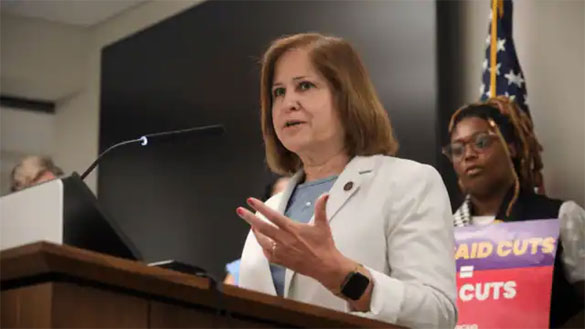
Virginia's new Lt Governor Ghazala Hashmi.
-----------
Democrat Ghazala Hashmi on Wednesday became the first Indian-origin Muslim woman to become a Lieutenant Governor in the United States. In fact, she became the first Muslim woman to be elected to the post when she won the Virginia lieutenant governor’s race.
Right from the start, she cruised to a comfortable win against opponent Republican John Reid, a radio show host.
Ghazala was also the first Muslim woman to be elected to the Senate from Virgina.
Her website states: “Ghazala Hashmi is the first Muslim and the first South Asian American to serve in the Virginia Senate.” She is among the American politicians who has openly spoken out against gun violence in the US and has sought stricter rules on such weapons, including a ban on assault rifles
Her other focus areas include working on public education, voting rights, reproductive freedom, pro-environment work, housing, and affordable healthcare access.
Ghazala Hashmi’s Indian connection
Ghazala was born on July 5, 1964, in Hyderabad. She moved to the US with her mother and older brother when she was four years old. Her father was already in Georgia just as he was completing his PhD in international relations and beginning his university teaching career.
Ghazala later went on to earn a BA degree with honours from Georgia Southern University and her PhD in American literature from Emory University in Atlanta.
Ghazala Hashmi: Husband and children
Ghazala Hashmi married Azhar Rafiq over thirty years ago and they have two daughters — Yasmin and Noor. Her maternal grandfather was an employee of the Government of Andhra Pradesh. She still has family in the city and says that she is very much attached to them.
Ghazala’s top priorities
Ghazala’s top priority as the Lt Governor of Virginia would be reproductive freedom. She advocates the right to abortion and access to contraception.
Another of her priorities is stricter gun laws. This includes safe storage laws, background checks, red flag laws, and ban on assault weapons.
Ghazala Hashmi was inspired to run for office due to US President Donald Trump’s travel ban that prohibited citizens from seven predominantly Muslim countries — Syria, Iran, Iraq, Libya, Somalia, Sudan, and Yemen — from entering the United.
Source: indianexpress.com
https://indianexpress.com/article/world/ghazala-hashmi-india-born-muslim-woman-to-win-virginia-lt-governor-election-10346631/
------
Nigerian First Lady Oluremi Tinubu: Manipulating Religion For Violence Must Be Challenged
November 5, 2025
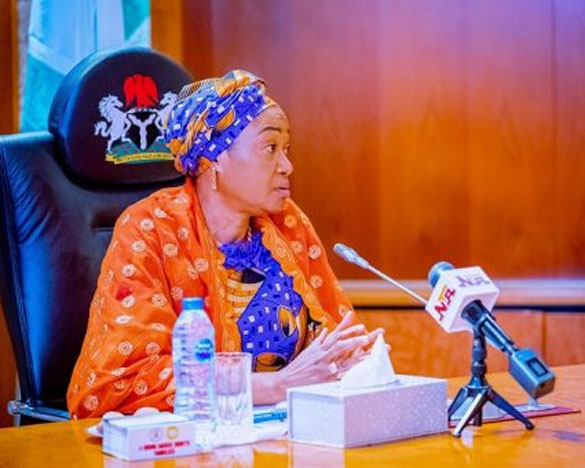
The First Lady, Senator Oluremi Tinubu, has said the manipulation of religion to justify violence and intolerance is a distortion that must be challenged through knowledge, engagement, and moral leadership.
Mrs. Tinubu said this yesterday at the maiden West Africa Islamic Conference on Security and Governance, with the theme: The Role of Islamic Organisation in Countering Terrorism and Violent Extremism in West Africa and the Sahel.
The conference was organised by the ECOWAS Commission in collaboration with an Islamic organisation in Nigeria, Jam’iyyatu Ansarideen.
Represented by the Minister of State for Education, Prof. Suwaiba Ahmad, the First Lady noted that the persistent threat of terrorism and violent extremism across Africa and the Sahel not only undermines peace and national security but also erodes the social and moral fabric of communities.
She said it also disrupts access to education, especially for children and youths in the affected areas.
Mrs. Tinubu noted that while the Federal Government was confronting the threats, it was crucial to recognise that Islam, like all great faiths, preaches peace, justice, compassion and knowledge.
“The manipulation of religion to justify violence and intolerance is a distortion that must be challenged through knowledge, engagement, and moral leadership,” the First Lady said.
“Here, Islamic organisations have a profound role to play by promoting authentic religious understanding, supporting inclusive education and empowering youths with values of tolerance and coexistence, and standing as vital partners in the prevention of violent extremism.”
Senator Tinubu said the five key thematic areas chosen for the conference resonate well with what Nigeria is doing on almajiri education.
She said the Federal Government has developed a policy on almajiri, which examines the challenges in almajari education, ways and solutions to eradicate those challenges.
Mrs. Tinubu said the conference provided a valuable opportunity to deepen collaboration between governments, third-party organisations, and educational institutions.
“Together we can advance a regional strategy that strengthens community resilience, rebuilds trust, and ensures that the voices of moderation and knowledge prevail over those of hatred and ignorance.
“Let us remember that the fight against violent extremism is not only a battle of arms, but also a battle of ideas and education. A battle of ideas and education remains our strongest weapon,” she added.
Source: thenationonlineng.net
https://thenationonlineng.net/manipulating-religion-for-violence-must-be-challenged-says-first-lady/
------
Fact Check: Iran Has Not Abolished The Legal Mandate Of Hijab; Viral Video Is From 2022 Protests
04 Nov 2025
By Talibuddin Khan
For the past several years, there have been demands in Iran to abolish the legal mandate of wearing the hijab. These demands intensified into protests in 2022 following the death of 22-year-old Mahsa Amini, who allegedly died after being detained by Iranian security forces for not wearing the hijab properly. After Amini's death, strong protests against the hijab took place in Iran, with participants not only from Iran but also from many other countries.
In this context, a video is going viral on social media. The viral video shows a woman dancing. The woman is also seen burning her hijab. A large crowd is seen standing around in the video. The video is being shared with the claim that Iran has ended the legal obligation of the hijab. Now, whether to wear the hijab or not will be the choice of the women there. There will be no legal compulsion.
Vishvas News found in its investigation that Iran has not abolished the legal mandate of the hijab. This law still exists. Furthermore, the video being shared with this claim is related to the protests against the hijab that took place in Iran in 2022. However, according to some reports, Iran's morality police have now been removed from public places, noting that the ‘morality police’ has not been completely disbanded and still legally exists.
What is in the Viral Post?
On October 27, an Instagram user named 'Hindu Narayan Jaat Panchered' shared the viral post, writing: "Big Breaking. Iran has ended the legal obligation of the Hijab. Now, whether to wear the hijab or not will depend on the will of the women there; no legal obligation. The people of Iran are on the roads celebrating collectively by burning hijabs. Here in our country, people want hijabs even in schools and colleges."
An archived version of the post can be seen here.
Investigation
We decided to investigate the viral post in three parts. In the first part, we investigated the viral video. In the second part, we verified the authenticity of the viral claim regarding Iran's hijab law. In the third part, we investigated the current status of Iran's morality police.
First Part (The Viral Video)
To begin our investigation, we first extracted keyframes from the viral video and searched them using Google Lens. Upon searching, we found this video uploaded on September 21, 2022, on a verified Instagram handle named 'mamamiaaus'. According to the provided information, after the death of 22-year-old Mahsa Amini in Iran, women are protesting and burning their hijabs.
Based on this lead, we continued our investigation and found a related news report dated September 21, 2022, on the website spectator.co.uk. The report stated that in protest against the death of a 22-year-old woman named Mahsa Amini after being held in custody, women in Iran are taking bold steps. They are publicly taking off their hijabs and burning them, dancing in the streets with their hair open.
We found this video on several other social media handles and news portals from September 2022. In all these places, the video was described as being from the protests against the hijab in Iran.
Second Part (Hijab Law in Iran)
The viral post claims that the Iranian government has ended the legal obligation of the hijab for women. It is worth noting that the 1979 Iranian Revolution is said to have brought major changes to the lives of women there. After the revolution, the new Islamic government established rules making the hijab mandatory for all women. (BBC Report).
According to information provided by the Iran Human Rights Documentation Centre, Article 638 of the Islamic Penal Code is considered the main legal basis for the mandatory hijab in Iran. This article states that if a woman does not wear a hijab in a public place, she can be given an administrative punishment.
According to a BBC report from December 17, 2024, Iran's National Security Council has temporarily suspended the controversial "Hijab and Chastity Law," which was set to take effect on Friday. It was reported that this new law included strict penalties for showing hair, hands, or feet, which human rights activists had objected to.
A March 24, 2025, report in The Guardian claimed that the Iranian government still maintains a strict stance on the mandatory hijab in the country. It was reported that the police are using digital technologies to identify women who violate these rules.
According to an October 14, 2025, report of the Iranian news website Iran International, the spokesman for Iran's judiciary, Ali Asghar Jahangir, confirmed that the hijab law is still in effect in the country. This statement came at a time when the debate over the mandatory hijab has intensified again in the country, and cases of its public violation appear to be increasing.
Third Part (Morality Police in Iran)
In this part, we tried to find out about Iran's morality police (Gasht-e-Ershad). It should be noted that Iran's morality police is a special unit that detains those who violate hijab or dress code laws or orders them to wear loose clothing or the hijab in public places. Generally, it monitors people's compliance with the law. The morality police was established during the tenure of former President Mahmoud Ahmadinejad. After the hijab became mandatory in 1983, this unit hit the streets in 2006 to enforce the Islamic dress code. (DW Report).
According to a BBC report from September 17, 2024, Iran's new President Masoud Pezeshkian said that the "morality police" will no longer bother women for not wearing the mandatory hijab. This statement came just days after the UN warned that women in the country still face violent punishments for breaking the strict dress code.
An opinion piece published on Iran International on October 23, 2025, claimed that Iran's "Gasht-e-Ershad" or "Morality Police" still formally exists. However, its presence on the streets has significantly decreased compared to before. Legally, wearing the hijab is still mandatory, but at the ground level, the situation is changing, especially in large cities. The report stated that the government has made changes to the functioning of this unit. Its activities are not as aggressive as before. It is believed that due to women's protest movements and international pressure, the government has shown some leniency in this matter. However, the "morality police" has not been completely disbanded and still legally exists.
On the same issue, a Washington Post report from October 27, 2025, stated that the law mandating the hijab in Iran is still in effect, but its enforcement is not as strict as before. In Tehran and other cities, many women are seen on the streets without a hijab or in loose clothing, and the police mostly say nothing. However, arrests still occur in some places, such as in the city of Rasht, where some cafes were recently temporarily closed for women not adhering to the dress code.
Speaking to Vishvas News about this, Iranian journalist Fatima Karim Khan said, "There has been no such order from the government regarding the abolition of the hijab law. This is completely false. However, the morality police are no longer in public places, which is why people can leave home without a hijab, but the hijab law is still in place, so the hijab is still mandatory."
We then proceeded to conduct a social scan of the Instagram user 'Hindu Narayan Jaat Panchered' who shared the fake post. We found that the user has 9,325 followers.
Conclusion: Vishvas News found in its investigation that the viral video is from the 2022 protests against the hijab in Iran. Furthermore, Iran has NOT abolished the legal compulsion of the hijab; this law still exists.
Source: thedailyjagran.com
https://www.thedailyjagran.com/india/fact-check-iran-has-not-abolished-the-legal-mandate-of-hijab-viral-video-is-from-2022-protests-10277799
-----
Iran’s hijab announcement is a decoy
November 4, 2025
Foreign coverage of Iran often collapses a national struggle for liberation into a single symbol: the mandatory hijab. A few clips from Tehran show unveiled women, and headlines rush to declare a thaw. Yet when Western audiences hear that the Islamic republic is “done” enforcing compulsory hijab, they hear a convenient narrative for diplomats and apologists eager to claim progress without costs.
They are hearing a lie planned by the regime in Tehran, executed by propagandists in the West and gobbled up by those who look for any excuse to cut this criminal regime a break.
Start with the law: The compulsory hijab remains on the books. Article 638 of the Islamic Penal Code still criminalizes appearing in public without a headscarf, carrying penalties of fines or jail. The parliament’s recent “chastity and hijab” initiative was designed to raise penalties and wire the bureaucracy for mass monitoring. Even as sections stalled, authorities moved ahead with “smart” enforcement via cameras, plate readers and administrative punishments.
The 2022 murder of 22-year-old Kurdish-Iranian woman Mahsa Amini, who was arrested and jailed for wearing the hijab “improperly,” made the morality police a global symbol of state violence. However, it didn’t lead to force reform. Rather, it dimmed the spectacle and expanded the system.
Over the past year, the Iranian regime has layered cameras, license plate readers, SMS warnings and undercover monitors onto the old toolbox of arrests and intimidation. Officials admit to deploying undercover agents in cafes and cultural venues, a form of low-visibility enforcement intended to reduce international blowback while heightening daily fear.
When that hasn’t worked, they have leaned on businesses, sealing cafes, boutiques and even office spaces to coerce compliance. In Tehran alone, authorities announced the activation of 80,000 trained personnel under a new “chastity and hijab situation room” to monitor workplaces, universities, transit and online platforms. This does not mean fewer enforcers but rather more unseen enforcers.
A video of street musicians in Tehran performing The White Stripes’ “Seven Nation Army,” surrounded by a crowd of unveiled women dancing, has recently gone viral. Many abroad hailed it as proof that “Iran has changed.” Yet days later, the Instagram pages of performers were wiped. A post on one performer’s page depicted the logo of the Police Command of the Islamic Republic, with a caption stating: “This page, equivalent to the order of the honorable judicial authority by Faraja, has been disconnected until further notice.” The regime and its cronies promote the self-serving video long enough to sell “openness” and then quietly jail the people in it.
For years, Western media amplified a convenient fiction that the regime had “moved on” from compulsory hijab. Now, some outlets are correcting the record. Agence France-Presse recently published a fact-check debunking posts circulating on Chinese social media that claimed the hijab law had been abolished, confirming that the legal requirement remains in force.
To grasp the magnitude of this control, we must widen the lens beyond the hijab. As the regime touts “tolerance” in select neighborhoods of the capital city, it is setting execution records nationwide. More than 1,300 people have been executed in Iran since January (190 in October alone), with many put to death after closed, grossly unfair trials. This is not a regime liberalizing its social policy but rather tightening every other screw.
The lie that the regime has reformed or relaxed hijab enforcement is not a mistake or misunderstanding. It originated in Tehran’s state media and is echoed in Washington by an established network of consultants, think tank fellows and lobbyists who have built careers on selling the illusion of moderation. Each time an Iranian woman walks unveiled in defiance of the law, these voices present it as proof of change rather than resistance. Their purpose is to turn the Iranian people’s defiance into a talking point for appeasement.
Treating hijab-easing as reform while ignoring a death penalty binge rewards the bait-and-switch that keeps the machinery in Tehran running. A system engineered for control will not become a guardian of rights.
Yes, in parts of the capital, you can sometimes film unveiled women without immediate confrontation. That reality reflects the Iranian people’s courage, not the regime’s mercy. It has been won by years of defiance from Iranian women and men, not granted by benevolent officials.
The struggle ends not with softer optics or selective enforcement, but when the free world treats the Iranian people’s demand for liberty as its own moral and strategic imperative.
Source: washingtontimes.com
https://www.washingtontimes.com/news/2025/nov/4/irans-hijab-announcement-decoy/
----
Taliban Restricts Women Workers, UN Suspends Work At Afghanistan-Iran Border In Protest
Nov 04, 2025
The United Nations suspended operations at a key border crossing between Afghanistan and Iran on Tuesday, a UN official told AFP, citing new Taliban government restrictions on Afghan women workers.
"The UN and humanitarian partners have today suspended operations at the Islam Qala border between Afghanistan and Iran, following the introduction of additional restrictions preventing female national UN and partner staff from operating at the border," said Indrika Ratwatte, the UN's humanitarian coordinator in Afghanistan.
He did not specify the nature of the new restrictions but warned they were creating "immediate operational challenges" and posed "additional risks for returning people, particularly women and girls".
Islam Qala is the main crossing point for Afghans expelled from Iran, more than 60 per cent of whom are women, according to the UN official.
"Without female staff, we cannot collectively serve returning women and children under conditions of dignity and respect," said Ratwatte.
The Taliban authorities did not immediately respond to AFP's request for comment.
In 2022, the Taliban banned NGOs from employing Afghan women, extending the measure to UN agencies in 2023.
While women are still allowed to work in certain sectors or remotely, all Afghan UN employees have been required to work from home for the past two months. NGOs, however, can still deploy Afghan women as staff in the field.
According to the UN, more than 1.2 million Afghans have crossed through the Islam Qala border from Iran so far this year.
They are among 2.2 million Afghans to return to the country this year, including 1.7 million from Iran.
Roza Otunbayeva, head of the UN mission in Afghanistan, in July described the situation at Islam Qala as a "test of our collective humanity".
The UNAMA chief warned that many returnees, especially women, face trauma, poverty and restricted access to basic services under Taliban rule.
She urged the international community to act swiftly, saying Afghanistan "cannot absorb this shock alone" and that the cost of inaction would be measured in lives lost and renewed instability.
Source: wionews.com
https://www.wionews.com/world/taliban-restricts-women-workers-un-suspends-work-at-afghanistan-iran-border-in-protest-1762266785565
------
Kabawat highlights support for women and vulnerable groups at WSSD
5/11/2025
Minister of Social Affairs and Labor Hind Kabawat represented Syria at the Second World Summit for Social Development which kicked off Tuesday in the Qatari capital.
In her address to the summit, Kabawat underscored the importance of strengthening international cooperation to confront social and economic challenges. She highlighted Syria’s efforts to advance social protection programs, empower women and youth, and expand support for the most vulnerable groups.
The summit features a series of panel discussions on social justice, empowerment of marginalized communities, and sustainable development policies. Participants are exchanging experiences and best practices to promote more inclusive and equitable growth that meets peoples’ aspirations for a stable and fair future.
Running through Nov. 6, the summit brings together more than 8,000 participants, including heads of state and government, ministers, representatives of the United Nations, civil society, academia, the private sector, and youth organizations. The event aims to renew global commitment to social justice and translate it into concrete actions that place people at the center of sustainable development.
Source: sana.sy
https://sana.sy/en/syria-and-the-world/2275865/
------
With upcoming film ‘Haq’, recalling the landmark Shah Bano case and what it held on Muslim women’s rights
by Vineet Bhalla
November 5, 2025
Supreme Court Shah Bano verdict: The Bollywood film Haq, set to be released this Friday (November 7) and starring Yami Gautam and Emraan Hashmi, is inspired by the 1985 Shah Bano case. Revisiting one of the most politically charged cases in India’s history, the film now faces a legal challenge from the daughter of the woman who inspired it, allegedly for not seeking permission to use her identity.
The case began with a 62-year-old Muslim woman’s plea for maintenance from her husband after their divorce, sparking a national debate on secularism, minority rights and the need for a Uniform Civil Code (UCC). We recall the background, the Supreme Court verdict, and its legacy.
What was the Shah Bano case?
In 1978, Shah Bano Begum, a mother of five from Indore, was divorced by her husband and advocate Mohammed Ahmad Khan, after 43 years of marriage. He divorced her by pronouncing an irrevocable ‘talaq’. For a few months, he paid her a small maintenance sum, but then stopped.
With no means to support herself, Shah Bano filed a petition in court under Section 125 of the Code of Criminal Procedure (CrPC), 1973. This is a secular provision that obligates a person with sufficient means to provide maintenance to those he is responsible for, including his wife, who is unable to maintain herself. The explanation in the section clarifies that “wife” includes a divorced woman who has not remarried.
Khan contested the petition, arguing that under Muslim personal law, his liability was limited to the period of iddat — the waiting period of about three months after divorce, during which a woman cannot remarry, under Muslim personal law. He stated that he had paid her maintenance for this period and also paid her the deferred mahr or dower, which is the sum paid as a right of the wife during the marriage. Thus, he claimed, he had no further obligation.
A local court directed Khan to pay a nominal Rs 25 per month. On appeal, the Madhya Pradesh High Court increased the amount to Rs 179.20 per month. Khan then appealed to the Supreme Court.
What did the Supreme Court rule?
On April 23, 1985, a five-judge Constitution Bench, headed by then Chief Justice YV Chandrachud, delivered a unanimous judgment. The court dismissed Khan’s appeal and upheld the High Court order.
The court held that Section 125 of the CrPC is a secular provision that applies to all citizens irrespective of their religion. It stated that the provision was enacted to prevent destitution, and there was no reason to exclude Muslim women from its ambit. It concluded that if a divorced Muslim woman is unable to maintain herself, she is entitled to claim maintenance from her former husband even after the iddat period.
The bench ruled that there was no conflict between Section 125 and Muslim personal law on the question of a husband’s obligation to his divorced wife. It referred to the Quran to hold that it imposes an obligation on a Muslim husband to provide for his divorced wife. The judgment also expressed regret that Article 44 of the Constitution, which suggests that the state institute a Uniform Civil Code, remained a “dead letter”.
Why did some oppose the Shah Bano judgment?
The verdict was met with fierce backlash from some Muslim groups, led by the All India Muslim Personal Law Board (AIMPLB), that saw the judgment as an attack on their religious identity and an encroachment on Muslim personal law. They organised large-scale protests against the verdict.
Facing political pressure, the Rajiv Gandhi-led Congress government, which had a substantial majority in Parliament, passed The Muslim Women (Protection of Rights on Divorce) Act, 1986, to nullify the judgment.
That same year, amid pressure from Hindu right-wing groups, who accused the government of bowing down to hardline Muslims, the gates of the Babri Masjid in Uttar Pradesh were unlocked under a Congress-led state government. Thus, the case also proved to be a pivotal moment in events that led up to the demolition of December 6, 1992, and resulted in fundamental shifts in Indian politics.
The new law stipulated that a divorced Muslim woman was entitled to a “reasonable and fair provision and maintenance” from her former husband only during the period of iddat. After this period, the responsibility of maintaining her would shift to her relatives, who would inherit her property and, if they were unable to do so, to the state Waqf Board.
And what followed the new law?
The constitutional validity of the 1986 Act was immediately challenged. The lead petitioner was Danial Latifi, the lawyer who had represented Shah Bano in the Supreme Court. The case came before a five-judge Constitution Bench of the Supreme Court in 2001.
The court upheld the Act but did so through a creative interpretation that protected the rights of divorced Muslim women. The court focused on Section 3(1)(a) of the Act, which requires the former husband to make “a reasonable and fair provision and maintenance to be made and paid to her within the iddat period.”
The court interpreted this to mean that the husband’s liability was not limited to just three months of iddat. Instead, he had to make a one-time payment during the iddat period that was large enough to provide for her maintenance for the rest of her life or until she remarried.
This interpretation effectively upheld the spirit of the Shah Bano verdict while keeping the 1986 Act on the statute books. However, a degree of ambiguity remained regarding the maintenance rights of Muslim women: Did the 1986 Act replace Section 125 of the CrPC for Muslim women, or could they still choose the secular remedy?
The Supreme Court definitively answered this question in 2024, in the case of Mohd. Abdul Samad v The State of Telangana. A bench of Justices BV Nagarathna and Augustine George Masih ruled that the 1986 Act doesn’t bar a divorced Muslim woman from seeking maintenance under Section 125 of the CrPC.
The court held that the 1986 Act provides a remedy that is “in addition to and not in derogation of” the remedy available under the CrPC. It clarified that a divorced Muslim woman has the option to seek a remedy under either of the two laws or both — the choice lies with her.
A train accident in Bilaspur resulted in 11 deaths and 20 injuries. The accident occurred when a passenger train collided with a stationary goods train, causing delays to other trains in the division. Passengers helped with rescue efforts, which involved over 100 personnel and a massive crane. The Commission of Railway Safety announced an inquiry and called for witnesses to come forward.
Source: indianexpress.com
https://indianexpress.com/article/explained/explained-law/haq-film-shah-bano-case-muslim-women-details-10345477/
--------
URL: https://newageislam.com/islam-women-feminism/india-born-muslim-woman-lt-governor-election/d/137530