
Forced Hijab: Taliban Resume Violent Detentions of Women on Kabul’s Streets
New Age Islam News Bureau
08 May 2026
· Forced Hijab: Taliban Resume Violent Detentions of Women on Kabul’s Streets
· Women’s conference in Muzaffarabad discusses role of Muslim women
· An enemy feminism: Hindu nationalist feminism and weaponization of women’s safety in West Bengal
· Peace Leaders Network: Marginalizing YPJ is threat to women's struggle in Syria
· Patman Amin, wife of former Afghanistan President Hafizullah Amin, dies in Germany
· Saudi entrepreneurs take centre stage at Jeddah Beauty Show
· Baha’i Woman Flora Samadani Arrested by Intelligence Agents in Yazd
· Women stand in Al Haima Al Dakhiliya on anniversary of Tanumah massacre
Compiled by New Age Islam News Bureau
URL: https://newageislam.com/islam-women-feminism/forced-hijab-taliban-violent-women-kabul/d/139953
-------
Forced Hijab: Taliban Resume Violent Detentions of Women on Kabul’s Streets
08 May 2026
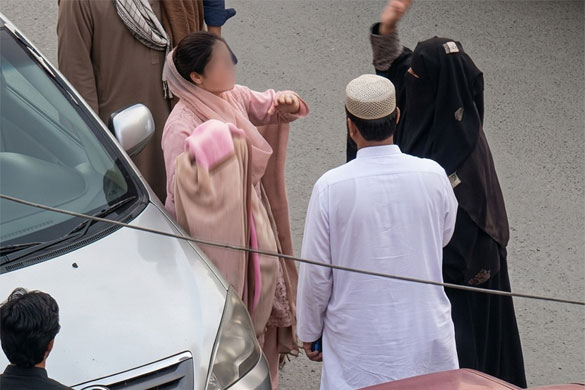
After a relatively brief pause, Taliban morality police have once again begun beating and detaining girls in Kabul’s streets under the pretext of not wearing the face veil or the form of hijab required by the group. The crackdown has once again driven many girls back into their homes in fear.
Several girls shared messages on their Facebook and Instagram pages, warning others: “Girls in Kabul, please take care of yourselves. These people have once again started detaining girls for not wearing masks and face veils. Please stay safe and always carry a mask with you.”
The warnings circulated online as a recent video spread widely on social media. The footage shows a woman, despite wearing what appeared to be a full hijab, being stopped, beaten, and detained in the middle of a street by male and female members of the Taliban’s Ministry for the Promotion of Virtue and Prevention of Vice, in front of her family members. In the video, a female Taliban officer violently punches the woman in the face and slams her head against a vehicle. She repeats the assault several times before the woman is eventually rescued through the intervention of a man whose relationship to her remains unclear.
Several girls who witnessed similar incidents in Kabul say Taliban morality police have recently intensified patrols in streets and alleys, searching for girls who do not wear face veils or who fail to comply with the group’s preferred dress code.
Saghar (pseudonym) says she has recently witnessed Taliban morality forces patrolling Kabul’s streets. She says the encounters left her terrified and unable to leave home for two days.
“I had gone to the market and was returning home when I noticed that vehicles belonging to the Ministry for the Promotion of Virtue and Prevention of Vice had increased and were patrolling everywhere,” she said. “I became very frightened and did not leave the house for two days afterward. When I saw the video published on Facebook today, I became even more terrified. What kind of people are they to beat a woman so mercilessly?”
Maryam, another young woman, says she had previously experienced humiliation, verbal abuse, and harassment by members of the same group. According to her, the trauma and fear that followed the incident led her family to forbid her from leaving home alone. She now spends her days confined indoors and is only allowed outside if accompanied by a male relative.
“Two years ago, the Taliban’s morality police chased me through several streets in a vehicle because part of my trousers was visible beneath my black hijab,” she said. “Fortunately, I managed to escape that day. Since then, I have not been allowed to go outside. My family has repeatedly warned me that if the Taliban arrest and imprison me, they will never come after me.”
The Taliban have once again imposed an atmosphere of fear across Kabul. Previously, the group detained and imprisoned dozens of girls and women from the city’s streets under the pretext of enforcing hijab rules. According to reports, some detainees were released only after their families paid large sums of money, handed over property documents as guarantees, or signed forced confessions.
The arrests and repression have also had severe social consequences. According to multiple published reports, several girls took their own lives after being released, unable to endure the pressure and stigma imposed by their families and society. Other families, following the detention of their daughters, were forced to leave the country and migrate elsewhere.
One witness, who requested anonymity, says his neighbor’s daughter was detained and imprisoned by Taliban morality police two years ago for allegedly failing to comply with the group’s hijab requirements. The family later left Afghanistan and migrated to Iran because of social pressure and public humiliation.
“A very respectable family lived in our neighborhood,” the witness said. “Two years ago, when the Taliban detained and imprisoned their daughter over hijab, people constantly talked behind their backs. I repeatedly heard people calling the girl’s father and brother dishonorable and referring to the girl as someone tainted by the Taliban. It was obvious they were under immense pressure. After the incident, we no longer saw the girl’s father, brother, or mother. About a month later, we learned that they had abandoned their home and lives and left for Iran.”
The continued arrests, along with the social pressure and stigma women and girls face after their release due to deeply rooted stereotypes, have further isolated them and discouraged them from participating in public life, attending educational centers, or even going to tailoring workshops. As a result, many women and girls lose what little hope and resilience they have left and become confined within the walls of their homes.
Source: 8am.media
https://8am.media/eng/forced-hijab-taliban-resume-violent-detentions-of-women-on-kabuls-streets/
-------
Women’s conference in Muzaffarabad discusses role of Muslim women
08 May 2026
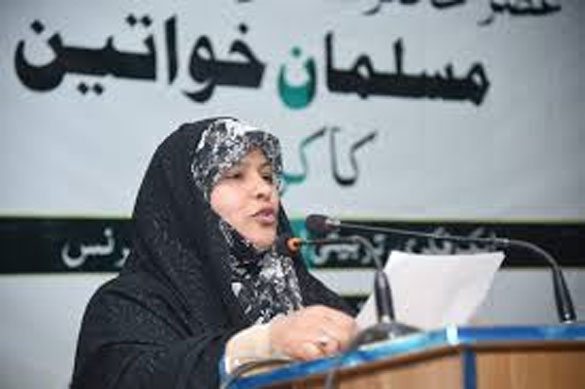
ISLAMABAD, May 08 (APP):A national conference organised by the women’s wing of Jammu and Kashmir Jafaria Supreme Council highlighted the role of Muslim women in contemporary society and the challenges facing the Muslim world. Held under the theme “The Role of Muslim Women from the Present Era to the Nearness of the Day of Judgment,” the conference brought together women from different schools of thought and walks of life, who …
Held under the theme “The Role of Muslim Women from the Present Era to the Nearness of the Day of Judgment,” the conference brought together women from different schools of thought and walks of life, who stressed the need for unity, social harmony and women’s participation in societal reform. A press release here on Friday.
The event began with recitation of the Holy Quran, Naat and welcome addresses presented by students of Fatimia School and College, Jamia Sani Zahra and Al-Darul Mawaddah Hifz School.
Addressing the participants, the president of the council, Syeda Rukhsanda Kazmi, said the conference aimed to promote intellectual awareness, moral reform and constructive engagement of women in society.
Speakers discussed issues including the role of women in the modern age, ideological and social challenges confronting Muslim societies, Islamic governance, patriotism and national unity.
The conference was addressed by Syeda Fiza Naqvi, Siddiqa Batool, Madam Sumaiya Siddiq, Syeda Arifa Naqvi, Anees Saifi, Khizra Qadri and Dr Saima Qudoos.
The speakers emphasised that women were playing an important role in social reform and guidance of the Muslim Ummah amid changing global circumstances. They also underlined the need for solidarity with oppressed nations and highlighted the effects of wars and conflicts on Muslim societies.
Participants also discussed the prevailing situation in the Muslim world and paid tribute to countries and forces supporting the dignity and interests of the Muslim Ummah, particularly acknowledging the sacrifices of the people of Iran.
The speakers also reaffirmed support for the security and sovereignty of Pakistan, stating that the nation and its armed forces had always defended the country against external threats.
In her concluding remarks, Ms Kazmi stressed the importance of inter-sect harmony, unity and women’s responsibilities in promoting a peaceful and progressive society free from hatred and sectarianism.
At the end of the conference, certificates of appreciation were distributed among organisers, while honorary shields were presented to speakers.
Source: app.com.pk
https://www.app.com.pk/national/womens-conference-in-muzaffarabad-discusses-role-of-muslim-women/
-------
An enemy feminism: Hindu nationalist feminism and weaponization of women’s safety in West Bengal
BY Pratiti Deb
08 May 2026
In August 2024, after the rape and murder of a doctor exactly my age in Kolkata’s state-run R.G. Kar hospital, I watched as people poured into the streets of my city in protest, women held candlelight vigils in slums and gated societies alike, and people posted on social media to express their outrage. A rape is jarring and unjust, an incident of rape and murder with institutional support, as this one undoubtedly was, even more so. Yet, as I jostled among hundreds, sometimes thousands of people in these marches and gatherings against rape, among whom were many in my upper middle class, dominant caste family who had never taken to the streets before for anything, I couldn’t help wondering: why this moment in a country, a world, steeped in rape culture? What were people protesting? Why were people protesting in certain ways? Who were protesting?
West Bengal is often called a party society, to describe the percolation of political parties’ influence in our day to day life in the state, working through a complex network of localized patron-client relationships. The R.G. Kar movement was decidedly against the party running the state government, the Trinamool Congress (TMC). The Communist Party of India (Marxist) took a leading role in bringing the case to the media’s attention. A section of students, women’s rights and other activists strove to keep the movement “apolitical”, by which I imagine they meant unaffiliated with any political party invested in the electoral process. The Bharatiya Janta Party (BJP), the Hindu supremacist and fascist party at the helm of the Indian state, was also vocal in its condemnation of the rape and murder and involved in the broader protests, as well as organizing separate protests in their own capacity.
It was the night of 14th August, 2024. I was at the 8B bus stand near Jadavpur University, Kolkata, at a rally to take back the night for women at the stroke of midnight, when India had become independent from British rule 77 years ago. Despite my confusion and my misgivings about the nature of the movement, I had shown up because after all, I was a feminist, and this was a movement for the rights of women. At the end of the night, my mother and I, both seasoned feminists, me a lifelong one, thanks to her, discussed the disconcerting presence of the Hindu right wing at the rally. This is not how a feminist movement should be, we decreed. Why was there so much imagery of Hindu goddesses? After all, our feminism, the feminism to which we belonged, had proclaimed long ago: “Not as goddesses, we want to live as equal humans.” Why were BJP workers there? The BJP is a party that violently enforces Brahminical patriarchy. Where were the Muslim women activists of our city, who had led the CAA-NRC (Citizenship Amendment Act, and National Register of Citizens) protests a few years ago? They were hardly visible in media coverage, ghettoized in this women’s movement just as their homes are in the geography of our city. Why were men shoving women in the very space meant to reclaim the night for women? This is not feminist!
It was not until the next year, 2025, that I read Sophie Lewis’ book “Enemy Feminisms” and changed my mind. Lewis argues that the origins and present of Western feminism are inextricably entangled with fascism and white supremacy, and that feminism isn’t inherently good. In fact, feminism contains a multiplicity of feminisms, some among which are the enemies of others. Lewis writes:
“What we need now is a bestiary of enemy feminisms, to jolt us into understanding that a woman’s cry for women’s power is sometimes part and parcel of the oppressor’s program.“
To this bestiary, I found myself adding as my personal, ultimate enemy feminism: Hindu nationalist feminism, which Lewis mentions in passing in the introduction of her book as “Hindu femonationalism.” Sociologist Sara Farris coined the term “femonationalism” to describe a European phenomenon that is eerily resonant in Hindutva-dominated India:
“Femonationalism refers both to the exploitation of feminist themes by nationalists and neoliberals in anti-Islam (but also anti-immigration) campaigns and to the participation of certain feminists and femocrats in the stigmatization of Muslim men under the banner of gender equality.”
In India today, Muslim men are criminalized for romantic relationships or even friendships with Hindu women, under the guise of “love jihad”, Muslim women who wear hijab are barred from their right to an education, rapists of Muslim women such as Bilkis Bano have their sentences shortened and are garlanded on release by the ruling Hindu nationalist party. Hindu nationalist feminism is the enemy feminism, I argue, whose undertones were present from the beginning of the movement for women’s safety after the rape and murder of the doctor at R.G. Kar hospital. This enemy feminism has today reached a deafening crescendo in Bengal with the BJP’s win in the 2026 Legislative Assembly elections. It is closely related, although not identical, to Savarna feminism, which many Dalit-Bahujan feminists, notably Sunaina Arya, Shailaja Paik and Christina Dhanaraj, have theorized. As I often explain to Savarna women friends and family members, Savarna feminism isn’t any feminism we Savarna women do, it is a feminism that has the logic of casteism embedded in it, that yes, often enough, due to our structural position in a caste society, we are the doers of.
In September 2024, about a month after the rape and murder of the young doctor, Durga Vahini, the women’s vigilante wing of the Sangh Parivar, the conglomerate of ideologically aligned organizations of which the BJP is the electoral wing, took out a march for the victim. The demand for women’s safety in TMC-governed Bengal grew into an unceasing refrain, leading right up to the recently concluded elections. According to the National Crime Record Bureau, West Bengal is indeed one of the more unsafe states in the country, squarely in the company of, it’s worth noting, BJP-run states such as Uttar Pradesh and Madhya Pradesh. However, West Bengal has higher reporting rates than other states with similarly high rates of crime against women. Kolkata, the city at the eye of the storm around women’s safety, is found to be safe compared to other Indian cities.
How does one measure safety? Growing up in the city, I was groped by a man while still a child in school uniform, I learned to use my school bag as a shield during autorickshaw rides against intrusions into my bodily autonomy and space. I would still call my life safe, or as safe as those of most young girls and women with my class, caste and religious identity, all of which afforded me more recourse than many others. I always knew many people were less safe than me. Rape is endemic in India, especially against oppressed caste and working class women. Marginalized men also live in incredible physical unsafety. Just weeks before the R.G. Kar movement in Kolkata began, multiple Muslim men were lynched to death in the city and its surroundings during the spike in violence after the 2024 general elections. I could not find a single march or vigil to attend for them. What violence shocks us, and what violence is normalized and invisibilized? Whose safety matters? In the wake of the R.G. Kar movement, I saw in action what my own feminism had taught me theoretically before this, that some people’s safety matters more than others’, and also, that the safety of some can be weaponized to make others unsafe.
Today, the BJP has won power in Bengal, through an extremely Islamophobic and violent campaign including the mass disenfranchisement exercise of the SIR (Special Intensive Revision), disproportionately targeting Muslims, and an unprecedented militarization of the electoral process. I might be tempted to call it an anti-feminist campaign, but they would surely call it pro-women. They have invoked the spectre of the “ghuspetiya” (infiltrator) Bangladeshi, the lungi-clad “other” Muslim man as a threat to national safety, to the safety of (implicitly Hindu) women, just as Sara Farris describes European femonationalism doing. This ideology was summed up in the most horrifying, Goebbelsian meme circulated before the elections, depicting Mamata Banerjee, TMC leader and the outgoing Chief Minister of West Bengal, lying back with her saree raised, with visibly Muslim men, likely representing the Bangladeshi, the infiltrator, passing through her legs. One of the BJP’s winning candidates in this election is the mother of the R.G. Kar rape victim, Ratna Debnath. She and Narendra Modi held hands in prayer at a BJP election rally, as throngs of people, many among them women in saffron headgear, cheered on. After winning, as during her election campaign, Ms. Debnath said she ran for women’s safety. “Jai Shri Ram”, people yelled behind her in the name of women’s safety, even as Muslim women were forced to chant the same words at the threat of physical and sexual violence across our city and state.
At this moment, I am thinking a lot about if the feminism to which I belong, arguably, the feminism from which I was born as a political being, can teach me to fight Hindutva. I am thinking about what Begum Rokeya’s feminist science fiction futures and Pritilata Waddedar’s fierce anti-colonial dreams can teach me. Hindutva is capacious in its evil: it eats up, subsumes and transforms cultures, ideologies and movements. Now, more than ever, we need a liberatory feminism that is in direct, fierce ideological opposition to Hindutva and its enemy feminism.
Source: maktoobmedia.com
https://maktoobmedia.com/post?id=115422&slug=an-enemy-feminism-hindu-nationalist-feminism-and-weaponization-of-womens-safety-in-west-bengal
-------
Peace Leaders Network: Marginalizing YPJ is threat to women's struggle in Syria
8 May, 2026
The head of the administrative body of the Peace Leaders Network and a member of the Women's Council Coordination in North and East Syria, Steer Qasim, spoke about the reality of women in Syria and the role of the Women's Protection Units in the current phase.
Steer Qasim confirmed that the Women's Protection Units and their establishment in Rojava and Syria in general were not a transient situation, but rather a belief in women being capable of participating in all fields and arenas, from the political, diplomatic, cultural, and economic spheres to the most important one: defending themselves, their fellow women, and their people.
Steer added: "The establishment of these units came from the conviction of these women who saw that their role and rights would not be complete unless forces were formed to defend themselves and the gains of their revolution."
Steer praised this experience as "new and remarkable" for women leading battles against oppression, assaults, and attacks on their regions, and having reached a state of self-confidence where they place victories before their eyes, sacrificing themselves to achieve their goals of liberating society and women. She affirmed that the experience of the Women's Protection Units is an "exceptional experience" for women and society in the Middle East.
Steer Qasim noted that the exclusion of the Women's Protection Units from the military, political, and public scene in Syria is an exclusion of multiple ethical values that have been established in the struggle of all Syrian women, including Kurdish, Arab, Syriac, and other sects and religions. She continued her speech, saying: "The exclusion of the Women's Protection Units will negatively affect and constitute a setback for the women's struggle, and it will have negative repercussions on all other fields."
Steer explained that the gains or achievements made by individuals cannot continue or develop unless there are protection and a military force to safeguard them. She pointed out that the Women's Protection Units were the forces that protected women and their accomplishments in Rojava, and that their exclusion from the scene is a regression of women's rights in all other areas.
She also pointed out that since the establishment of the units, "we have seen a significant and positive impact on Syrian women, as they drew strength and resilience from this experience, reaching the conviction that there is a wide space for them to play their role in the struggle with the presence of a women's defense force capable of protecting them, and this force can become the nucleus of the army that will protect the new Syria."
Regarding the attempts to exclude women from all leadership positions in Syria, Steer Qasim said: "After the transitional authority took over the reins of power, we saw significant attempts to exclude women, reaching the point of excluding the Women's Protection Units from the political and military scene. This will not only affect their presence in the military field but will also negatively impact women's movements, putting them in a state of frustration and despair and in a regression phase, erasing everything they achieved during the years of the revolution or before it." She clarified that women in Syria have a "long and rich history," and these efforts culminated in the formation of the Women's Protection Units.
Steer emphasized that the exclusion of the Women's Protection Units or marginalizing their role in Syria means the death and end of the women's struggle.
Regarding how to ensure women's rights in Syria, she emphasized the necessity of their participation in writing the new constitution and that this constitution guaranties their rights, prioritizing women's needs and requirements; as women are the most affected and the strongest participants in the struggle for Syria and the peaceful movement.
The head of the administrative body of the Peace Leaders Network and a member of the Women's Council Coordination in North and East Syria from civil society, Steer Qasim, concluded her speech by saying, "The constitution alone is the protector of women's rights, and the mechanism for achieving and implementing the constitution on the ground is thru effective laws and the protection of these constitutional provisions thru quota rights, and ensuring these rights thru constitutional principles."
Source: hawarnews.com
https://hawarnews.com/en/peace-leaders-network-marginalizing-ypj-is-threat-to-womens-struggle-in-syria
------
Patman Amin, wife of former Afghanistan President Hafizullah Amin, dies in Germany
By Fidel Rahmati
May 7, 2026
Patman Amin, the widow of former Afghanistan president Hafizullah Amin, has died in Germany, according to posts shared by the National Democratic Party of Afghanistan and relatives on social media.
Patman Amin, the wife of former Afghanistan president Hafizullah Amin, has died in Germany, according to the Facebook page of the National Democratic Party of Afghanistan.
Relatives also confirmed her death on social media, though no official details about the cause of death have been released.
Following the Soviet military operation in Kabul in 1979, in which Hafizullah Amin was killed, Patman Amin and members of her family were detained and reportedly spent years in Pul-e-Charkhi prison.
She later lived in Pakistan before eventually moving to Germany.
Hafizullah Amin served as Afghanistan’s second president under the People’s Democratic Party government after the killing of Nur Mohammad Taraki.
His brief rule was marked by political unrest and violence before he was killed during the Soviet operation known as “Storm-333” at Tajbeg Palace in December 1979.
Source: khaama.com
https://www.khaama.com/patman-amin-wife-of-former-afghanistan-president-hafizullah-amin-dies-in-germany/
-------
Saudi entrepreneurs take center stage at Jeddah Beauty Show
Afshan Aziz
May 07, 2026
JEDDAH: The ongoing Jeddah Beauty Show has transformed the Superdome into a showcase of makeup, skincare, fragrance and wellness innovations.
Opening at the weekend and running until May 10, the event has brought together local and international brands, industry specialists and emerging entrepreneurs.
The event is highlighting how the Kingdom’s beauty sector is no longer just a consumer market, but an increasingly active production and innovation hub.
For many Saudi entrepreneurs, the event is more than a trade exhibition but functions as a public-facing platform to test products, build customer relationships and position emerging brands in a competitive market.
Emerging makeup entrepreneur Abeer Al-Rashed, founder of Glamly Cosmetics, said: “I made a makeup product that suits the Saudi environment and looks natural and can be used every day.
“I have tailored the ingredients in each product and tried to keep it safe to use. Through this event, I want to send our message and build brand awareness as I am still new to the beauty industry.”
For other founders, the journey into beauty entrepreneurship has been shaped by personal challenges that later evolved into product innovation.
Hawazen Saadah, founder of Hellens Beauty Bar, said her journey into innovation began after a personal health challenge changed her approach to beauty products.
“In 2019, I started with lash extensions focused on enhancing natural beauty in a simple way and built strong trust with clients through my signature style.
“In 2023, I developed eczema around my eyes, which forced me to rethink my work. Instead of stopping, I created a solution,” she said.
The experience led her to develop weekly self-application lashes designed for sensitive eyes, offering a quicker and more natural alternative. “I call it ‘The Magic Box’ because it combines beauty and convenience in minutes.
“Jeddah Beauty Week allows me to meet women directly, understand their needs and grow my brand,” she added.
Clean beauty and ingredient transparency also emerged as a strong theme at the exhibition, reflecting shifting consumer expectations in the Kingdom.
Saudi entrepreneur May Shibah, owner of Ithmed Makeup, said her brand focuses on non-toxic formulations designed to be safe for a wide range of users.
“We offer a range of organic, clean beauty products that focus on safe ingredients and are free from carcinogens and toxins, making them suitable even for children and pregnant women.
“In fact, you can see the difference in products like nail polish, where many conventional formulas contain around 20 toxic ingredients, while ours contain zero toxic ingredients, making them much safer.
“This is our second time participating, and we aim to spread awareness about clean beauty and encourage people to move away from toxic products,” she said.
Innovation extended beyond cosmetics into fragrance and technology. A perfumer from Dubai and Kuwait introduced a data-driven approach to scent creation, linking artificial intelligence with consumer preferences.
Molham Sultan, manager and founder of Schozophrenia, said: “We are trying to build a customer base through our unique approach to perfume making.
“We ask people what they like to smell, collect that data, and then use AI to analyze it and generate reports. Part of our profit also goes towards supporting schizophrenia patients.
“This is our second time participating in the Beauty Week, last year was a success, and we are hoping to reach more customers this year.”
Across the exhibition floor, visitors moved between immersive spaces dedicated to makeup, nails, hairstyling and live demonstrations, alongside workshops and interactive zones designed for both professionals and beauty enthusiasts.
Beauty clinics and salons also used the platform to attract new clients, offering promotional packages on services ranging from skincare treatments and haircare to laser procedures and injectables, reflecting the sector’s expanding commercial ecosystem.
Nada Khalid, owner of Ruwa Salon, said the event allows businesses to reach a wider audience beyond their regular clientele.
“We do have many clients coming to our salon, but this platform helps us attract new customers and promote our offers and discounts.
“We offer a range of salon services, and here we are inviting visitors to try their luck by spinning a wheel that offers prizes such as a free haircut, scalp detox treatment, herbal manicure and pedicure, Korean head spa, or a gift voucher worth SR100 ($26).”
Source: arabnews.com
https://www.arabnews.com/node/2642729/saudi-arabia
------
Baha’i Woman Flora Samadani Arrested by Intelligence Agents in Yazd
May 8, 2026
According to information received by IranWire, authorities in Iran have arrested a Baha’i citizen named Flora Samadani (Naeimi) amid a growing crackdown on members of the Baha’i community across the country.
On Sunday, May 3, agents of the Ministry of Intelligence in Yazd detained the Baha’i woman and took her to an undisclosed location. So far, officials have not released any details about the reason behind her arrest or where she is currently being held.
Baha’i citizens in Iran have long faced systemic discrimination and repeated violations of their civil rights since the 1979 revolution. However, these measures have reportedly intensified since June 2024, following rising tensions between Iran, the United States, and Israel.
Source: iranwire.com
https://iranwire.com/en/news/152143-bahai-woman-flora-samadani-arrested-by-intelligence-agents-in-yazd/
-------
Women stand in Al Haima Al Dakhiliya on anniversary of Tanumah massacre
07 May 2026
The Women s Development Department in Al Haima Al Dakhiliya district Sana a governorate organized a women s stand in the center of Al Ar in the sub district of Al Hadab to commemorate the anniversary of the Tanumah massacre committed by the Saudi regime against Yemeni pilgrims.
The participants raised banners condemning the ongoing crimes of the Saudi regime against the Yemeni people and denouncing the aggression and siege imposed on Palestine Lebanon and Iran.
The participants affirmed the importance of commemorating the anniversary of the Tanumah massacre to remind of the heinous crime that claimed the lives of more than three thousand Yemeni pilgrims who were targeted and killed in cold blood pointing out that this crime will remain present in the conscience of the Yemeni people as a historical milestone revealing the criminal nature of the Al Saud regime.
A statement issued by the stand clarified that the crimes of the Saudi regime against the Yemeni people over the past years are an extension of the Tanumah massacre and reflect an ongoing aggressive approach.
The statement renewed the affirmation of the Yemeni women s steadfast position in supporting just causes foremost among them the Palestinian cause praising the resilience of the Palestinian and Lebanese peoples and the valiant resistance and the firm stance of the Islamic Republic of Iran in the face of American Israeli aggression and siege.
The statement called for continued resilience and strengthening national cohesion to confront challenges and protect the sovereignty of the homeland.
Source: saba.ye
https://www.saba.ye/en/news3700627.htm
-------
URL: https://newageislam.com/islam-women-feminism/forced-hijab-taliban-violent-women-kabul/d/139953