
First Hindu Woman, Saveera Parkash, Contesting in Pakistan Says Her Religion Not A Factor In Polls
New Age
Islam News Bureau
30 December 2023
·
First
Hindu Woman, Saveera Parkash, Contesting in Pakistan Says Her Religion Not A
Factor In Polls
·
Veiled
Rebellion: Female Medical Students Go Underground In Afghanistan
·
Muslim Man
Entitled To Polygamous Marriage Must Treat Wives Equally: Madras HC
·
Action
Sought Against RSS Leader For Remark On Muslim Women
·
Fatima Translates
And Publishes ‘Clever Girl’ Book To Inspire Hope Amid Taliban Rule
Compiled by New Age Islam News Bureau
URL: https://newageislam.com/islam-women-feminism/hindu-saveera-religion-pakistan-poll/d/131422
-----
First Hindu Woman, Saveera Parkash,
Contesting in PakistanSays Her Religion Not A Factor In Polls
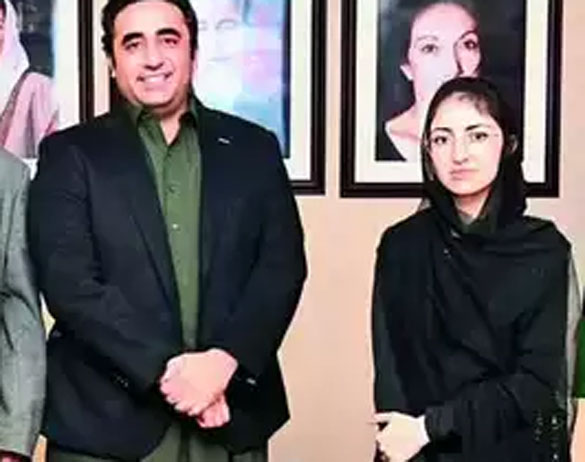
Saveera
Parkash
------
Divya Goyal
December 30, 2023
Saveera Parkash, a 25-year-old doctor
who is set to become the first Hindu woman to contest an election from Buner
district in Pakistan’s restive Khyber Pakhtunkhwa (KPK) province, believes her
religion will not be a factor in next year’s polls. Her party, the People’s
Party of Pakistan (PPP), seems to share her view and has fielded her from a
general seat, instead of one reserved for religious minorities.
“I am probably the first minority woman
candidate, not just from Buner, but the first to fight an election from a
general seat. I am very proud to say that since the day I have filed the
nomination, the response has been so amazing that people have given me the
title of ‘BunerkiBeti’. They are not recognising me as a Hindu woman, but as a
pukhtana (native) of the Pashtun community,” said Saveera, who graduated from
medical school just a few months ago.
“Divisions on religious lines are very
outdated, we need to move on,” she said, adding that she is contesting
elections to work on three crucial issues in her district – education, health,
and the condition of women. She also strongly advocates for people-to-people
ties between India and Pakistan.
She is the daughter of Dr Om Parkash, a
native of Buner and a member of the PPP, and Dr Yelena Parkash, who is
originally from Russia. Together, they run a clinic in Buner.
Pakistan will hold elections to its
National and Provincial Assemblies on February 8, 2024. Saveera is the PPP’s
candidate for Buner’s PK-25 seat in the Khyber Pakhtunkhwa Provincial Assembly.
Women from minority communities getting
into electoral politics have been a rarity in the restive province of Khyber
Pakhtunkhwa, which neighbours Afghanistan and has in recent years seen
skirmishes between the Taliban and the Pakistani security forces.
The Pashtun people make up the majority
of the population of the province, where Hindus account for less than 1 per
cent. According to the 2017 census, the number of Hindus in the whole of
Pakistan is around 4.4 million, or 2.15 per cent of the population. Another
report by the Centre of Peace and Justice in 2022 said Hindus made up only 1.18
per cent of Pakistan’s population.
Delivering her first election speech on
Wednesday, speaking in both Pashto and Urdu, she urged the youth to vote for
development.
“It is my party’s decision to give me a
ticket from the PK-25 seat. Seeing my father associated with the party for
decades, I always had that urge in me to do something for the people of Buner.
The crucial issues that convinced me to take a plunge into electoral politics
are the condition of women, education and health in my district. The key to
fixing all these issues is making education accessible for all. I feel the
saddest to say that Buner still has just one college for women,” she said.
Young boys in Buner still have the
opportunity to get some education from madrasas, Saveera said, lamenting that
even that is not an option for the girls there. “So, most girls here still
don’t have access to basic primary education. They don’t have many government
primary schools for girls, and not everyone can afford private schools,” she
said.
This means that most girls from
underprivileged families end up working as domestic helpers in the homes of the
elite and grow up without any education, Saveera explained, saying that the
situation is not much better when it comes to healthcare.
“It is only when a woman reaches the fag
end of her pregnancy that she is taken to a doctor, and if her condition
becomes serious, she is referred to far away Islamabad or Peshwar. There are no
facilities to handle emergencies in Buner. Women and newborns are still dying
due to lack of basic healthcare,” she said.
After studying up to class 10 in Buner,
Saveera went to Lahore and then to Abbottabad to study further.
She acknowledges that Buner, like most
other parts of KPK, has never been a PPP stronghold. In the 2018 elections, it
was Imran Khan’s Pakistan Tehreek-e-Insaaf (PTI) that won both the national and
provincial elections from KPK. Saveera’s candidature is being seen as an effort
by the PPP to infuse a breath of fresh air in the political scene of the
province, targeting both the youth and women.
However, she said she would not be
disappointed even if she did not win. “I had already enrolled in an academy in
Lahore to prepare for the civil services. I will be resuming my civil services
preparation if I don’t win,” she said.
Saveera maintains that she never faced
any discrimination in Buner due to her religion. She wears a hijab most of the
time, “but it is my choice, and many times when I don’t, there’s no issue,” she
said.
Her father and the late Benazir Bhutto
have been her main inspirations to get into politics. “My father has always
been giving free medical treatment to the underprivileged. He had his own blood
bank where the needy would come in emergencies. But other than him, it is the
late Benazir Bhutto whose ideology to serve the country always stayed with me,”
Saveera said.
She also expressed her happiness at
having been flooded by good luck messages from India ever since her candidacy
was announced.
“I am feeling so elated that I have
become a common point between people of both countries who are connecting to
me. I have never felt any difference between both countries. Our cultures and
history are the same. If I get some power after being elected, I would act as a
bridge between both counties,” she said.
Her father, 60-year-old Dr Om Parkash,
is a cardiologist who studied medicine in Russia. He is currently the president
of the PPP’s doctors’ wing for KPK. He said his family never moved to India
during Partition because Buner, which was earlier a part of the princely state
of Swat, had rulers who were kind to minorities.
“The Walis of Swat were very kind to us.
It was only in 1969 that Swat state was dissolved and merged with KPK,” Parkash
said.
Source: indianexpress.com
https://indianexpress.com/article/cities/chandigarh/saveera-parkash-pashtun-first-hindu-woman-pakistan-elections-9087816/
----
Veiled Rebellion: Female Medical
Students Go Underground In Afghanistan
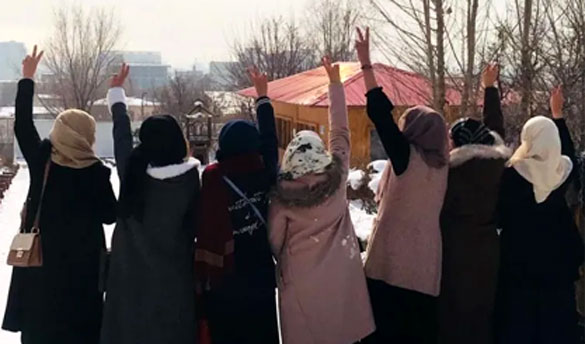
Lima and her
classmates from medical school before the ban on women's further education was
ordered in Afghanistan a year ago [Al Jazeera]
-----
30 Dec 2023
Anastasiia Carrier
Lima stayed home the last time the
Taliban inspected the hospital where she secretly trains as a nurse.
After five years of medical training,
Lima, 28, should be one year into her residency as a doctor, perfecting her
diagnostic skills. Instead, she takes temperatures and administers injections,
tasks she has been doing at an emergency room in Kabul for three months now.
While this is not the work she expected to be doing at this point in her
career, she’s happy to at least be doing this.
“Being at the hospital means I can stay
close to my field. It helps me to stay connected to it,” Lima told Al Jazeera
over the course of several telephone calls. She is identified by her first name
only for safety reasons.
Lima was just weeks away from graduating
from a medical school in Kabul when the Taliban banned higher education for
women last December, interrupting her studies and that of thousands of other
women. Women already qualified as doctors, nurses and other medical workers are
permitted to continue in their jobs, but no new women may enter the field or
undertake training.
More than 3,000 women who had already
graduated from medical schools before the ban were barred from taking the board
exams required to practise, depriving the country – already struggling from a
dire shortage of female medical workers – of a desperately needed infusion of
new doctors.
For Lima, medicine has been a lifelong
dream. She longs to become a surgeon, partially because she knows there is a
shortage of them.
“My biggest hope is to help people,” she
said.
Her family moved home to Afghanistan
from Pakistan so she could attend university in Kabul where she thrived – she
did well in her classes and was appointed her class’s “leader”, handling
administrative tasks.
On the day they heard about the new ban
on women completing medical studies, Lima and her classmates were having lunch
together. They cried together because of what this would mean for their future
and because they were worried they would not be able to see each other again.
The Taliban’s strict ban on women leaving their homes without a male chaperone
makes meeting friends near-impossible.
After the news broke, Lima called one of
her professors and persuaded him to let her and her classmates take one of the
exams they were scheduled to take that week. It was not for an official grade
but just for them to know they could do it. The professor agreed, but when Lima
and her classmates arrived at the university to take the test, the Taliban,
armed with guns, were already guarding the doors.
A secret internship
Almost a year later, many women have
refused to give up on their chosen path and have continued studying on their
own or online, hoping that they will one day be allowed to study officially at
university and medical school again. Some women have managed to work around the
restrictions, finding secret internships and residency opportunities.
“It’s like a refreshment for my studies,
for my knowledge. This is the best way for me to do something for my goals,”
says Noor*, whose name has been changed to ensure her anonymity. Like Lima, she
was just about to graduate from medical school when the Taliban’s ban brought
her studies to an abrupt halt. The order hit her hard.
She spent months studying solo, holding
on to medicine as “the only goal” she ever had in her life. She reviewed her
notes, read thick medical books in English and took online courses, focusing on
what she believed to be any gaps in her knowledge. But working alone for weeks
on end, she says she fell into a depression and had to listen to motivational
speakers for an hour per day just to muster the will to keep going.
In September, nine months after the ban,
Noor lost hope that the university would reopen and called the hospital that
had offered her a two-month internship back in 2020. They agreed to let her
come in to complete it. Everyone treats it as a secret.
When the two months were up, the
hospital allowed her to stay on to continue observing surgeries for as long as
she wished. Noor says she is too afraid to even think about what would happen if
the Taliban discovered her studying there. It is unclear what would happen if
she was discovered, but women found studying medicine or undertaking
internships would likely be removed from hospitals and banned from returning,
if not worse. There have already been arrests of activists who tried to defy
the ban on girls’ education.
Whatever the risks, however, women
refuse to stop trying to defy the ban on higher education completely.
“Never in the history of Afghanistan
have we had so many educated, well-aware-of-the-world and
well-aware-of-their-duties-and-rights women. It’s impossible to silence them,
it’s impossible to push them aside,” says Fatima Gailani, a London-based
women’s rights activist and former president of the Afghan Red Crescent
Society, in an interview over WhatsApp.
Women’s healthcare at stake
Despite the Taliban’s initial promise to
take a moderate approach towards women’s rights after it seized power in August
2021, the ban on higher education is just one of many steps that the armed group
has taken to further segregate the country and limit women’s role in society.
In the immediate aftermath of August
2021, the Taliban banned girls from going to school beyond the sixth grade and
imposed strict rules requiring women to wear hijabs and to travel only with a
male chaperone. They closed down beauty salons and blocked women from working
with domestic and international non-governmental aid groups, sparking
international outrage on the matter.
“Afghanistan under the Taliban remains
the most repressive country in the world for women’s rights,” said Roza
IsakovnaOtunbayeva, head of the United Nations Assistance Mission in
Afghanistan (UNAMA) in March, presented the latest report of the
secretary-general on the country to the Security Council.
Afghanistan has an urgent need for
female doctors as they are often the only healthcare providers available for
women and children. While there is no explicit law that forbids it, many
traditional Afghan families do not allow their female relatives to be seen by
male doctors. This is a particular issue in rural areas where women often have
to travel for hours to see a female doctor. Once the current generation of
female doctors and nurses retires, even this may not be an option.
“The women here in Kabul and in the
provinces are suffering from a lack of women doctors. They are suffering from
[lack of] access to health facilities. They are suffering from a lack of access
to the treatments that they want,” says AminulhaqMayel, deputy country director
at the Swedish Committee in Afghanistan, a foreign aid organisation.
In 2020, the World Health Organization
estimated that 24 women were dying each day in Afghanistan from pregnancy or
childbirth-related causes. While this ranked as one of the highest rates in the
world, it was significantly lower than 2001.
Now experts fear a sharp reverse in
those limited gains.
In the aftermath of the Taliban takeover
two years ago, Afghanistan lost billions in foreign aid and investment,
including for healthcare services. By September 2021, 80 percent of national
health facilities had reported operational difficulties due to insufficient
funding, staff shortages or medical supply scarcities. The Red Cross and the UN
were forced to step in and pay the salaries of tens of thousands of staff.
Some hospitals were shut down. Many
doctors fled the country, increasing the strain on those who stayed.
Pressured to marry – ‘an end to my
dreams’
“If the universities are not allowed to
teach women and women can’t be educated in medicine, that is absolutely
disastrous,” says Gailani. “The lack of women doctors will have a catastrophic
effect on women’s health. Maternal deaths will go up. It has already gone up.”
Lima says she has already witnessed the
strain on healthcare accessibility imposed by the shortage of female doctors.
The hospital does not have a gynaecologist and they have to reject women coming
in with maternity-related issues. They have midwives, but they need doctors to
deal with emergencies.
Lima does not know what has happened to
the women for whom they could not find places in other hospitals, but she fears
for their wellbeing.
“If it happens here in Kabul, what’s
happening in the villages? I cannot imagine,” she said.
Lima still wants to become a doctor, but
even if she stays on the path to becoming a nurse, she lacks the official
certificates that would have come after the two years of specialised education
in nursing. While her medical education was enough for the hospital to take her
in unofficially, it was not enough to formally work as a nurse.
Lima does not know how long she can
continue her covert training, even if the Taliban does not catch her. Without
the proper paperwork, there are no job opportunities awaiting her at the end of
her training. It is also quickly becoming unaffordable. She pays 10,000
afghanis per month ($142) for the residency – the same amount she would have
paid if it was official.
There is no official data for average
salaries in Afghanistan, although some private data sources put it at about
$180 per month, demonstrating the financial toll that Lima’s internship is
taking. Lima says doctors earn about $700 per month, and this is considered to
be a high salary. In 2021, gross domestic product (GDP) per capita was recorded
at just $356.
Without a clear path to becoming a
medical professional, she is also facing increasing pressure from her parents
to get married.
“I’m just thinking about how I can help
women and how to become a doctor,’” said Lima. “If I get married, everything
would be lost. My dreams would be shattered.”
Lima is worried that if she gets
married, her husband might forbid her to work – some men do not let their wives
have a career. Even knowing that her parents would allow her to choose between
proposals and demand she be allowed to work, it is still not a guarantee the
man would keep his promise. She does not think she will be able to resist the
pressure to get married for more than a few more months unless universities
reopen by then.
With only enough money left to afford a
few more months of her secret residency, Lima’s last hopes for a career in
medicine hinge on being allowed to resume her studies – officially – before she
runs out of time.
Source: aljazeera.com
https://www.aljazeera.com/features/2023/12/30/veiled-rebellion-female-medical-students-go-underground-in-afghanistan
--------
Muslim Man Entitled To Polygamous
Marriage Must Treat Wives Equally: Madras HC
30th December 2023
MADURAI: The Madurai Bench of Madras
High Court recently observed that though a husband is entitled to polygamous
marriage under Islamic Law, he is obligated to treat all his wives equally. A
bench of justices RMT Teekaa Raman and PB Balaji observed while dismissing an
appeal filed by a man against an order passed by a Family Court in Tirunelveli
dissolving the marriage between him and his first wife in March this year. The bench noted that the man had behaved
cruelly towards his first wife and had not treated her on par with his second
wife. He has also not paid maintenance amount to her for two years, it noted.
"As a husband, he is duty bound to
maintain the plaintiff (first wife) even while she was with her parents. If at
all he is aggrieved by her separation, then he should have taken measures for
reunion and if it fails then on reasonable ground, he can pronounce Talaq as
per the Personal Law. In this case, no such act was done by the defendant
(husband)," the judges observed. They also referred to the right of muslim
women to live separately when congenial atmosphere is not available in the
matrimonial home and refused to interfere with the Family Court's order.
The Family Court had passed the order on
a petition filed by the man's first wife for dissolution of marriage. The
marriage between her and her husband was solemnised on January 3, 2016. She
claimed that she suffered physical and mental cruelty at the hands of her
husband and in-laws and thus left to her parents' house. While her plea seeking
maintenance and her domestic violence complaint were pending, her husband had
moved a suit for restitution of conjugal rights, which was allowed in 2021. But
shortly after that, he married another woman, she added. Alleging cruelty and
unequal treatment, she filed the divorce plea. However, her husband denied the
allegations of cruelty. He contended that merely because he married another
woman, the first wife cannot seek the relief of divorce.
Source: newindianexpress.com
https://www.newindianexpress.com/states/tamil-nadu/2023/dec/30/muslim-man-entitled-to-polygamous-marriage-must-treat-wives-equally-madras-hc-2646069.html
-----
Action Sought Against RSS Leader For
Remark On Muslim Women
30th December 2023
BENGALURU: Members of various
organisations staged a protest demanding the immediate arrest of RSS leader
KalladkaPrabhakar Bhat for his remark on Muslim women. “Our foremost objective
is clear. We demand the arrest of RSS leader Prabhakar Bhat. The comments he
made, particularly targeting women of a marginalised community, are shameful
and derogatory. The absence of his arrest is not just a ailure but a
significant lapse on the part of the government” said one of the over 300
protesters at Freedom Park on Friday.
Rakshita Singh, an advocate, said,
“Without action, we will continue to see such situations in the future that
will lead to hateful comments against specific genders and marginalised
communities. Punishments should be devised to make people reconsider before
making such remarks.”
She added it goes beyond targeting a
specific gender or community and it involves the misuse of freedom of speech to
the point where it fosters a hateful environment, jeopardising the safety of a
community within their own country.
Sayeda Begum, state secretary, of Women
India Women, said they were staging the protest in Bengaluru and the protest
will continue statewide until the government and law enforcement take legal
action against Bhat. “His remark has emotionally disturbed our whole community.
We elected this government to stand up for our rights but they have miserably
failed,” Sayeda said.
Source: newindianexpress.com
https://www.newindianexpress.com/cities/bengaluru/2023/dec/30/action-sought-against-rss-leader-for-remark-on-muslim-women-2646088.html
------
Fatima translates and publishes ‘Clever
Girl’ book to inspire hope amid Taliban rule
Fidel Rahmati
December 29, 2023
Fatima Malikzai, a young woman deprived
of education by the resurgence of the Taliban administration, has translated
and published a book for children. Ms Malikzai aims to create hope for
thousands of girls deprived of education.
Fatima was a first-year student at Kabul
Medical University when the Taliban regime suspended the presence of girls in
universities until further notice. A year has passed since girls were denied
education, and there has been no progress in reopening the universities.
With a calm yet determined personality,
Fatima spent over two years of her life under the shadow of the Taliban
administration, engaging in media activities and handicrafts.
“Clever Girl” is an educational
children’s book Fatima has compiled and translated from various sources. In an
interview with Khaama Press, she explained, “In this book, I have tried to
define everyday guidance for children in the form of stories. How children
should interact with their parents and more.”
Fatima’s motivation for compiling this
book stemmed from her involvement in Pashto literature, especially children’s
literature, which Afghan children lack access to due to the current situation.
The lack of access to books is a
significant challenge for children in Afghanistan, with no responsive
institution or child rights advocate currently present in the country.
According to the author, it took four
months to translate this book. She added, “I am saddened by the situation of
returning children from Pakistan and those affected by the Herat earthquake,
who are deprived of education. I want to work more in the field of education
and children’s literature.”
In addition to her work in children’s
literature, Fatima is also involved in the online sale of handicrafts through
websites. According to UNAMA’s report, girls’ deprivation of education has led
to early and forced marriages, and some girls have turned to handicrafts during
this time.
Despite the harrowing limitations, some
girls continue to work in online education and handicrafts.
Fatima encourages girls deprived of
education not to surrender to unfavourable conditions and to continue their
education using the Internet.
Source: khaama.com
https://www.khaama.com/fatima-translates-and-publishes-clever-girl-book-to-inspire-hope-amid-taliban-rule/
-----
URL: https://newageislam.com/islam-women-feminism/hindu-saveera-religion-pakistan-poll/d/131422