
Cyberspace Is an Effective Tool to Overcome Islamophobia, Negative Stereotypes about Muslim Women
New
Age Islam News Bureau
03
February 2022
• Karnataka:
Muslim girls wearing hijab denied entry into college
• World
Hijab Day: JIH distributes headscarves to women in Telangana, AP
• Taliban
reopen universities for Afghan women in six provinces
• Afghanistan:
Female activist latest to be held by Taliban after protests
• Shura
Council attends workshop to prepare draft law to combat violence against women
• Austrian
Greens take flak over alleged coalition deal for headscarf ban
• Women
in France seek to end 'humiliation' against the hijab in sports
• PH
Coast Guard adds hijab in uniform of its female Muslim personnel
• How
Sheikh Abdullah Brought About A New Era Of Women's Education In Aligarh
• Syrian
women writers gain first positions in Sharjah Award for Arab Creativity
• Palestinian
women in east Jerusalem learn Hebrew to gain independence
Compiled
by New Age Islam News Bureau
URL:
--------
Cyberspace
is an effective tool to overcome Islamophobia, negative stereotypes about
Muslim women
February 3, 2022
 On
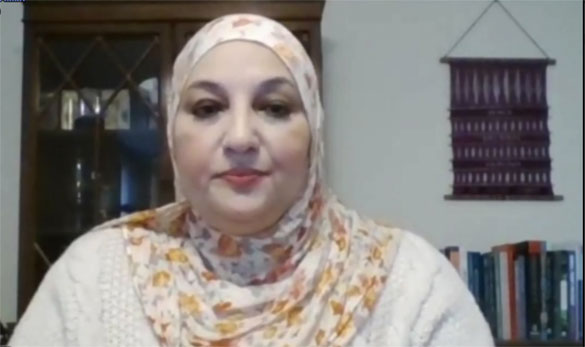
Tuesday, January 25, 2022, with the efforts of the Office of Islamic Studies on
Cyberspace (OISC) the ninth live webinar titled “Muslim Women’s Activism in
Cyberspace” was held.
On
Tuesday, January 25, 2022, with the efforts of the Office of Islamic Studies on
Cyberspace (OISC) the ninth live webinar titled “Muslim Women’s Activism in
Cyberspace” was held.
--------
On
Tuesday, January 25, 2022, with the efforts of the Office of Islamic Studies on
Cyberspace (OISC) the ninth live webinar titled “Muslim Women’s Activism in
Cyberspace” was held.
The
meeting was organized by the Office of Islamic Studies on Cyberspace (OISC), in
collaboration with Heyatonline, ABNA News Agency, and the Representation of the
Supreme Leader in Farabi Campus of the University of Tehran.
At
the beginning, Shaykh Mahmoud Rafian, the scientific secretary of the meeting,
said: Cyberspace has transformed almost every aspect of our lives. With the vast growth of new communication
technologies, many changes have taken place in societies. Therefore, knowing
and understanding this space is essential for women and mothers who make up
half of the population and are important members of family and society.
Referring
to the unique role of some women in historical periods, Mahmoud Rafian said:
According to chapter Tahrim the 66th Surah of the Quran, Asiya, the Great Royal
Wife of the ancient Egypt’s Firaun (Pharaoh) and Maryam the mother of Jesus
have made great changes in history and society. So much so that God has made
them role models for believing men and women. Therefore, Muslim women’s
activism in society and in cyberspace is essential.
Then
he referred to the Supreme Leader’s statements about women: Ayatollah Khamenei
said: “There is no difference between men and women on many issues. Islam looks
at men and women as human beings. There is no difference between men and women
on the issue of humanity, spiritual positions and the many intellectual and
scientific talents they have. But they have two different molds. Each of these
molds is shaped for a particular task. Of course, there are certain common
tasks among them as well.”
The
scientific secretary of the meeting then introduced the speaker in this
webinar. He said: Dr. Sahar Khamis is an Associate Professor in the Department
of Communication at the University of Maryland. Dr. Khamis is an expert on Arab
and Muslim media, and the former Head of the Mass Communication and Information
Science Department in Qatar University.
Dr.
Khamisis a former Mellon Islamic Studies Initiative Visiting Professor at the
University of Chicago. She is the co-author of the books: Islam Dot Com:
Contemporary Islamic Discourses in Cyberspace and the book: Egyptian Revolution
2.0: Political Blogging, Civic Engagement, and Citizen Journalism. She is the
co-editor of the book: Arab Women’s Activism and Socio-Political
Transformation: Unfinished Gendered Revolutions. Additionally, she authored and
co-authored numerous book chapters, journal articles and conference papers,
regionally and internationally, in both English and Arabic. She is the a member
of the editorial boards of several journals in the field of communication, in
general, and the field of Arab and Muslim media, in particular.
Islamophobia
and Negative Stereotypes of Muslim women
Dr.
Khamis noted the importance of the topic of this meeting and said: “There are,
unfortunately, a lot of stereotypes, misunderstandings, and negative images
about Islam and Muslims, in general, and Muslim women, in particular. Now we
have a very important tool to address some of these stereotypes, negative
misperceptions, and negative images. Nowadays, we can use cyberspace, social media,
and digital networks to correct some of these false images and stereotypes
about Islam and Muslims, and especially about Muslim women. A lot of my
research in this area has also been dealing with the notion of Islamophobia and
how to overcome it and fight it in cyberspace.”
Then
the professor at the University of Maryland referred to some of the influential
activities of American Muslim women in social media networks. She said: “There
have been some efforts on the part of Muslim women to use cyberspace in a very
effective way to counter and overcome some of the negative images and
stereotypes against them.” In 2016, in response to a question during a
presidential debate about growing Islamophobia, Donald Trump said that “we have
to be sure that Muslims come in and report when they see something going on.
When they see hatred going on, they have to report it.” His response showed
that he considered Muslims suspicious and dangerous and that he did not
actually take any action against Islamophobia. His comments inspired a new
hashtag, #MuslimsReportStuff, which quickly went viral online.
For
example, one person tweeted: ‘My mother cooks the same soup every day. I’m
going to report her to the FBI #MuslimsReportStuff,’ while another tweeted: ‘My
brother does not clean his room, I’m going to report him to the authorities
#MuslimsReportStuff.’ This online campaign was very hilarious, very funny, but
also very critical. With these tweets, they wanted to show how Muslims are just
ordinary people like everyone else, and, therefore, there is no reason for them
to be seen as suspicious, dangerous, scary, or different.
Dr.
Khamis then mentioned another example, which is the online campaign
#CanYouHearUsNow,” which triggered a wave of criticism against Trump. She said:
“When Donald Trump mocked the silence of a Muslim mother, Ms. Ghazala Khan, who
was mourning the death of her son, Muslim women activist groups brilliantly
launched a social media campaign asking women to speak out using the hashtag
#CanYouHearUsNow. Trump’s insensitive mockery showed that Islamophobia is
oftentimes associated with other types of discrimination, including gender
discrimination. However, by launching this successful campaign, which quickly
went viral on social media, American Muslim women have shown that they can
overcome negative stereotypes against them, and that they can always make their
voices heard.
As
a researcher in both the field of cyberspace and women’s studies, Dr. Khamis
added: “France has been priding itself for being the nation of liberty,
fraternity, egalitarianism, and brotherhood. But, unfortunately, the policies
of the French government have been very different. They have been very
discriminatory against Muslims, in general, and Muslim women, in particular, in
a very sad way. In response to the French government’s relentless efforts to
ban the hijab, Muslim women started the online campaign #HandsOffMyHijab.
This
hashtag sent a loud and clear message: ‘Don’t touch my hijab, and don’t ask me
to take it off. It is not your right to interfere in my right as a Muslim woman
to decide to wear the hijab. This right should be protected, and you should not
try to take this right away from me.’ This became another very successful
campaign. It went viral on social media and it became very widespread and very
popular in a short time. So that’s another example of Muslim women using social
media and new media for the purpose of raising their voices and defending their
identities and their just causes.”
Cyberspace
Opportunities for Muslim Women
The
co-author of the book Islam Dot Com said: “The Internet became an important
window. It’s a window through which Muslim women could see the rest of the
world, while also the rest of the world, at the same time. This is particularly
more important in the case of Muslim women who live in more traditional and
conservative societies.”
She
then raised the issue of women’s right to education. She said: “In some parts
of the Muslim world there are still rural communities that until this moment
fight women’s education. I know that this is not a problem in Iran, because I
visited Iran before, when I was attending a conference, and I know that Iranian
women are mostly highly educated. I’ve seen women in different positions and
different ranks. Many of them were working as university professors. However,
this is not the reality in every part of the Muslim world, unfortunately. Let’s
bear in mind that the Internet is an important tool, and it provides great
opportunities, to demand women’s rights. However, it’s not a magical tool, and
it cannot bring about change, democracy, freedom, transformation, human rights,
or women’s rights all by itself. We need to have collective and
well-coordinated efforts to make all of this happen.”
Islamic
feminism and cyberspace
Responding
to the question “Do you think a Muslim woman can be active in cyberspace, while
preserving Islamic values?” Dr. Sahar Khamis said: “I believe in Islamic
feminism. Some people think that feminism means that women are breaking away
from their values, and abandoning religion. However, this is wrong.
Islamic
feminism means that women could claim their own rights within an Islamic
framework. They can be very active and effective in their societies, in
everyday life, and even online in digital media social media, while still
adhering to their religious values and their beliefs.
A
good example is Muslim women who are using cyberspace to raise their voices and
to defend their own rights, by saying, for example: ‘It is my right to wear the
hijab. It is my right to wear the niqab, and you cannot just tell me that I
cannot do that because I’m living in France, or living in Switzerland, or
living in Denmark.’ So, I think that these women are sending a very strong
message, which is ‘I’m adhering to my identity, I’m adhering to my own beliefs,
and I’m using digital media and social media not to break away from my
religion, but, rather, to actually protect my own religious values and beliefs,
as a Muslim woman.”
Unity
and Cyberspace
At
the end, Dr. Sahar Khamis stressed the need for unity in the Muslim World. She
said: “Unfortunately, right now there are conflicts between some Sunnis and
Shiites, as well as between Muslims inside the same country, and Muslims in
different countries, and all of these conflicts weaken the Muslim World. We
need to have more unity. We need to have more coordination. If we had all of
these things, the concerns of Muslim women will be better articulated, their
voices will be loudly amplified, and their realities will be visible to the
rest of the world.
So,
I think that the “Office of Islamic Studies on Cyberspace” is doing a great job
in terms of starting important initiatives and dialogues, which bring together
scholars from across the Muslim World. I’ve been monitoring some of the work
that you’ve been doing in the realm of countering some of the negative aspects
of cyberspace, such as spreading negative stereotypes about Islam and Muslims
online, and your efforts to create more platforms on cyberspace which could
bring together different voices from the Muslim world, across different ethnic,
racial, national, and gender categories. I hope that you will continue this
important mission and this significant work for many years to come.
Source:
ABNA24
--------
Karnataka:
Muslim girls wearing hijab denied entry into college
3rd February 2022
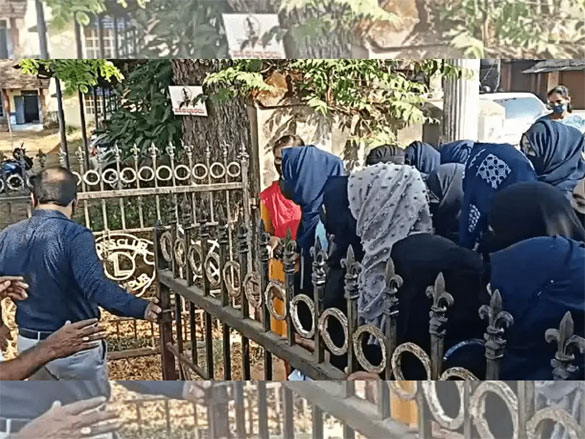 Girl
students wearing hijab stopped at entrance of one more college in K'taka
(Screengrab: Twitter)
Girl
students wearing hijab stopped at entrance of one more college in K'taka
(Screengrab: Twitter)
----------
Bengaluru:
Showing no signs of abating, hijab row in Karnataka has spread to more colleges
as girl students wearing hijab or burqa were stopped at the entrance of the
Bhandarkars’ College of Kundapur in Udupi district of the state on Thursday
morning.
The
girl students who came to the college wearing burqa or hijab were stopped at
the entrance by the Principal of Bhandrakars’ College. The Principal told
students that as per the government order and college guidelines they will have
to come in uniform to the classes. The girl students argued that they have been
coming to the college with hijab for a long time and they must be permitted.
But the entry was denied.
The
administration of Bhandrakars’ College on Wednesday had also denied permission
to students who came to classes in saffron shawls. These groups of students
were also stopped at the entrance. The students raised slogans of ‘Jai Shri
Ram’ after which a tense situation prevailed on the campus.
Meanwhile,
Araga Jnanendra, Karnataka Home Minister stated that the directions have
already been given to the police department to take up the investigation on
communal forces behind the hijab row in the state. “The investigation is underway.
We will not spare the elements which come in the way of unity of this country,”
he stated.
“Naqab,
burqa, hijab, saffron or green shawls are not allowed in the classrooms. The
Minister for Education has already stated that uniforms are compulsory. There
should not be any divisive factors in the academic environment. There are
mosques, churches and temples for religious practices,” the Home Minister
explained. “With these developments, the etiquette of integrity is being
challenged,” he said.
S.
Angara, the District In-Charge Minister of Udupi, reacting to Bhandarkar
college incident said that he has just taken charge of the district. “There
will be one rule for all schools and colleges. I will discuss the matter with
the District Commissioner. The matter will also be discussed with the Education
Minister and the Chief Minister. Once I get the details, I will take action,”
he stated.
Hijab
row which has been confined to one college in Udupi has now spread to more
colleges in Karnataka causing concern in the Department of Education as well as
parents and student community. The development is also taking a communal turn
threatening the academic atmosphere of the state.
The
state government has set up a high-level committee to decide whether to allow
hijab-wearing students in classrooms. Until the report is submitted, the
government has asked students to attend classes in uniform without wearing
hijab. However, Muslim students, defying the order, tried to attend classes
wearing hijab in the Government Girl’s Pre-University College of Udupi. They
were sent back.
Meanwhile,
Hindu organisations have said that if Muslim students come in hijab, Hindu
students will flaunt saffron shawls. Campus Front of India (CFI), the student
wing of Social Democratic Party of India (SDPI) is holding seminars on how the
ruling BJP is bulldozing constitutional rights of Muslim women by not allowing
them to wear hijab.
Source:
Siasat Daily
https://www.siasat.com/karnataka-muslim-girls-wearing-hijab-denied-entry-into-college-2268877/
--------
World
Hijab Day: JIH distributes headscarves to women in Telangana, AP
3rd
February 2022
Hyderabad:
Even as the controversy over the wearing of headscarves by students in the
classroom remains unresolved in Udupi district of Karnataka, a school in
Hyderabad has readily accepted ‘hijab’ for its teachers and students.
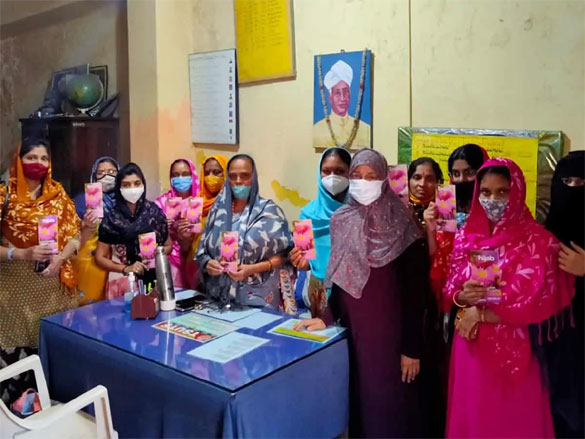
Management of the Venkatrao Memorial School at Laldarwaza in the Old City came
forward to accept hijabs presented by the Jamaat-e-Islami Hind (JIH) for
non-Muslim women and girls.
As
part of the World Hijab Day celebrations, the JIH presented headscarves and
hijabs to women in different parts of the city on Tuesday. The Hijab Day is
observed worldwide on February 1 to encourage women of all religions and
backgrounds to wear and experience hijab for a day. The idea is to burst the
myth surrounding ‘hijabphobia’ and to create awareness about why Muslims women
choose to wear the hijab.
The
JIH celebrated the day by distributing headscarves to women in Bengaluru,
Hyderabad, Vijayawada, Guntur, Rajahmundry and Kakinada. In Hyderabad the
women’s wing of JIH gave away colourful hijabs in a big way at Tolichowki,
Malakpet, Shaikpet and Secunderabad. Apart from schools, headscarves were also
presented to women doctors and nurses in hospitals besides police women in
different police stations. The campaign evoked good response and women happily
accepted the headscarves.
“Many
women who wore the scarves around their heads for the first time stared at
themselves in the mirror and expressed happiness,” said Tahura Siddiqui and
Humera of JIH women’s wing. They also distributed pamphlets containing
information about the need for wearing hijab.
The
JIH women took pains to explain that the traditional Muslim headscarf is not a
symbol of oppression or a sign of female inferiority. It doesn’t restrict
women’s freedom and is not an act of defiance, confrontation or protest against
non-Muslims. “Besides being a sign of modesty, hijab is a protection. It
minimises sensual excitement and moral degradation,” said Saleha of JIH
Charminar branch.
Seeing
the encouraging response, the JIH has decided to continue the hijab
distribution campaign in Hyderabad for a few more days.
Source:
Siasat Daily
https://www.siasat.com/world-hijab-day-jih-distribute-headscarves-to-women-in-telangana-ap-2268687/
--------
Taliban
reopen universities for Afghan women in six provinces
02
February ,2022
The
Taliban on Wednesday said they have reopened public universities for women
students in six of Afghanistan’s 34 provinces, a move marking a major
concession to international demands by the country’s new rulers.
Since
they swept into power in mid-August, the international community has watched to
see whether the Taliban will impose the same harsh measures as during their
1990s rule of Afghanistan, including banning girls from education and women
from the workplace and public life.
The
Taliban have imposed several restrictions, many of them on women, since their
takeover — women have been banned from many jobs outside the health and
teaching sector, and girls have not been able to go to school after grade six.
The Taliban demand women wear headscarves but have stopped short of imposing
the burqa, the head-to covering that was compulsory under their previous rule.
The
Taliban-run Culture and Information Ministry said Wednesday that public
universities in the provinces of Nangarhar and Kandahar were now open for women
in what it described as a staggered process expected to see all students — men
and women — eventually return to university.
Later
in the day, the Taliban spokesman for the Ministry of Higher Education, Ahmad
Taqqi, said public universities also reopened Wednesday for women in four more
provinces — Helmand, Farah, Nimroz, and Laghman.
The
six provinces have warmer climates than the rest of Afghanistan where the winters
are bitterly cold, which the Taliban say is the reason they are the first to
reopen. Men will attend classes in the morning and women in the afternoon,
aligning with a gender-segregated system under the Taliban.
Earlier
this week, Abdul Baqi Haqqani, the Taliban-appointed Education Minister, said
that public universities elsewhere in Afghanistan, including the University of
Kabul, would reopen for both men and women on February 26.
“All
instructors and officials are advised to concentrate on their responsibilities
and provide the required facilities for the students,” Haqqani said in a
recorded video clip on Sunday.
The
United Nations mission in Afghanistan welcomed his announcement, calling it
“important for Afghanistan” in a tweet Tuesday. “So crucial that every young
person has equal access to education.”
On
Wednesday, Taliban-appointed Culture and Information Minister, Khairullah
Khairkhwa, visited the Kandahar University and said that “modern and Islamic
education simultaneously can lead a country to prosperity.”
Since
their takeover, the Taliban have come under heavy fire for denying girls and
women education. Reopening of public universities would be their first
concession. The Taliban have also promised that all girls will be back in
school by the end of March at the start of the Afghan new year.
Source:
Al Arabiya
--------
Afghanistan:
Female activist latest to be held by Taliban after protests
February
03, 2022
An
Afghan female activist has been forcibly taken from her home, the latest in a
string of alleged arrests by the Taliban.
A
source told the BBC that authorities had arrested Mursal Ayar at her home in
the capital Kabul on Wednesday.
Ms
Ayar is the sixth woman to have been taken by the Taliban in the past weeks,
the BBC understands.
The
Taliban has denied detaining the women. A spokesman said they were looking into
Ms Ayar's case.
"This
is a case which has just happened. We are investigating it," Taliban
spokesman Bilal Karimi told the BBC.
There
are fears for Parwana Ibrahim, Tamana Paryani and Ms Paryani's three sisters
Zarmina, Shafiqa and Karima who went missing on 19 January.
For
weeks now, the reported detention of the women in Afghanistan has sparked huge
outcry online and concern from rights groups.
The
activists had in mid-January taken part in peaceful protests in the capital
calling for the women to be given work, study and political rights under the
new Taliban rule.
Days
later, Ms Paryani later posted a video on social media showing armed men
entering her apartment block.
"Help,
the Taliban have come to my house," she said before the video ended.
In
a previous interview with the BBC, Suhai Shaheen, who hopes to become the
Taliban's ambassador to the UN, accused Ms Paryani of "making fake scenes
and shooting films in order to seek asylum abroad".
Ms
Ibrahim's brother-in-law was also abducted while the pair were travelling in
Kabul, the UN has said.
The
UN's human rights office on Saturday said again that it was "very
alarmed" over the continued disappearance of people connected with the
recent women's rights protests.
"We
are gravely concerned for their well-being and safety", said Ravina
Shamdasani, spokesperson for the High Commissioner for Human Rights on Tuesday.
"The
lack of clear information on the location and well-being of these and other
individuals, perpetuates a climate of fear and uncertainty", she added.
The
UN noted that the Taliban had on Saturday announced an investigation into the
women's disappearance but said confirmed information was still lacking.
They
also said the reports of missing women highlighted "a pattern of arbitrary
arrests and detentions", as well as torture and mistreatment of civil
rights activists, journalists and former government officials in Afghanistan.
The
UN urged the Taliban authorities to "send clear messages to their
rank-and-file that there must be no reprisals against people who demonstrate
peacefully and exercise their rights to freedom of expression and peaceful
assembly".
Under
Taliban rule Afghanistan has become the only country in the world which publicly
limits education on the basis of gender, which is a major sticking point in the
Taliban's quest for legitimacy, and in the lifting of international sanctions
on the group.
The
regular protests by women highlighting the issue are being seen as a huge
source of embarrassment to the group.
Source:
BBC News
https://www.bbc.com/news/world-asia-60239525
--------
Shura
Council attends workshop to prepare draft law to combat violence against women
03
Feb 2022
Doha:
The Shura Council participated in the workshop for the preparation of the draft
Arab guiding law to combat violence against women, organised by the Arab
Parliament yesterday, via video conference technology.
The
Shura Council was represented in the event by
member of the Council H E Sheikha bint Yousuf Al Jufairi.
The
workshop sessions dealt with a host of issues related to the reality of
legislations pertaining to combating violence against women in Arab countries
(gains and challenges), problems and challenges facing the applying and
enforcement of legislations aimed to combat violence against women, ways to
address them, and elements that must be available in the aforementioned draft
law.
In
a speech, Sheikha bint Yousuf Al Jufairi, reviewed the efforts, plans and
strategies of the State of Qatar aimed to protect and care for women within the
family, preserve their dignity and prevent any discrimination against them or
any harm perpetrated against them.
Sheikha
Al Jufairi explained that Qatari women
have been given the capabilities and aids that provided them with many benefits
that contributed to their protection and empowerment, noting that the Qatari
family receives great attention from the state that enhances the status of
women in society.
She
referred to the importance of civil society organizations and research
institutions concerned with family care and women empowerment in spreading
awareness and contributing to finding solutions to prevent domestic violence,
and the importance of involving them in efforts to prevent its occurrence.
Skheikha
Al Jufairi underlined the need for the
Arab guiding law to combat violence against women to focus on means of
preventing domestic violence more than on punitive legislations. “Rather, we can
replace the penalties by rehabilitating the perpetrator of violence by applying
behavioral, religious and moral reforms and subjecting him to training in
resolving marital disputes and appropriate awareness to live in safety and
stability”.
Source:
The Peninsula Qatar
--------
Austrian
Greens take flak over alleged coalition deal for headscarf ban
Askin
Kiyagan
02.02.2022
VIENNA
Austria's
Greens party continued to take public criticism on Wednesday over an alleged
coalition agreement to ban headscarves for teachers in schools.
Recently
leaked documents suggested that the Greens had engaged in an undisclosed deal
with the Austrian People’s Party (OVP) as part of the negotiations for their
January 2020 coalition agreement.
The
Greens allegedly promised to support the headscarf ban in return for executive
board seats on the country's public broadcaster ORF.
Traditionally
an ally to Muslims, foreigners and refugees in the country, the Greens had
attracted the support of voters with migrant backgrounds by standing against
rising populist tendencies in Austria.
This
was part of the reason that the party performed well in the 2019 snap
elections, securing 26 parliamentary seats with 13.9% of the vote – an upswing
of 10.2% from the previous ballot in 2017.
However,
the coalition government they formed with the OVP is criticized for not only
undermining the position of the country's Muslim community, which has faced
increasing discrimination, but also alienating the party itself.
Though
the Greens have rejected the allegations in the leaked documents, they have
still met strong criticism from party members and other groups outside the
party.
Speaking
to Anadolu Agency, Heinz Gartner, a professor of political science at the
University of Vienna, stressed that the headscarf ban would never be acceptable
to the party's national convention.
The
party should have reacted to the OVP's offer the same way it does against
anti-Semitism, he said.
Faika
El-Nagashi, a Greens lawmaker, underlined the need to address racism in
politics.
El-Nagashi
said the inclusion of such a clause in the coalition deal, even in the form of
an side letter, was wrong and embarrassing.
She
noted that the leaked documents once again prove that the OVP pursues
anti-Muslim policies in the country, while other political parties, including
the Greens, remained silent quiet.
In
Austria, anti-Muslim racism has become part of the daily routine, El- Nagashi
added.
Simon
Potschko, the spokesman of senior Greens party member Sigrid Maurer, said the
reaction towards the leaked document was understandable.
Source:
Anadolu Agency
--------
Women
in France seek to end 'humiliation' against the hijab in sports
Feb
3, 2022
French
attempts to ban women from wearing the hijab in sports is met with outcry and
thousands campaigning to stop the decision from becoming law.
A
petition by French activists to stop a controversial law that would bar Muslim
women from wearing the veil while playing sports has garnered thousands of
signatures.
"I
am passionate about football," said the 22-year-old Foune, a native living
in the suburbs of Paris in a petition she started.
"I
have been fighting for more than a year to allow all women, including those who
wear the veil, to practice their favourite sport in official competitions,"
she added, fearing that the current legislation will institutionalise
anti-Muslim discrimination.
Widely
circulated on social media, the petition went on to add that thousands of women
in France who have made the "intimate choice to wear the veil" felt
"excluded."
"Being
excluded from a football field was personally one of the greatest humiliations
of my life," said Fortune, who is campaigning using the hashtag "Les
Hijabeuses", which was launched by social justice group called the Citizen
Alliance.
Many
Muslim women face hurdles in working and school environments where they could
be forced to take off their hijab due to anti-Muslim legislation in the
country.
"This
is the case for thousands of women today in France, who juggle between
abandonment, loss of self-confidence, fear, and apprehension," says the
petition.
Like
most national sports federations in the country, the French Football Federation
forbids the wearing of the veil, according to the petition, "using
arguments such as a supposed neutrality in sport or even invoking principles of
hygiene and safety."
Now
the French parliament is seeking to turn this informal ban into law.
Last
month the Senate voted to ban conspicuous religious symbols in sports, a move
primarily aimed at the country's Muslim women - some of whom may play sports
with a headscarf.
According
to right-wing politicians who voted for the decision, the move targeting the
country's Muslim women was taken in the interest of so-called religious
neutrality.
The
latest move by the French Senate follows a string of restrictions in recent
years that have systematically clamped down on Muslims.
Campaigners
have vowed that even if the latest legislation ends up becoming law, they will
continue to play football.
"Even
if the intolerant don't want us, we'll play!" said one social media user.
Following
the decision by the French Senate on hijabs, another social media user added
that "millions of Muslims are being asked to choose between their sport
and their religion. So many people work sooo hard to make sport inclusive for
everyone while this madness is still going on… in 2022."
"Sports
should be free of overt racism and misogyny. This law underlines the cruelty
and exclusion that Muslim women face every day in French society," said
another social media user in support of the campaign.
This
is not the first time that France has sought to clamp down on the activities of
Muslim women.
Last
year the French parliament moved to ban Muslim women from attending their
children's school trips while wearing the hijab, a symbol it sees as a threat
to all the things the Republic stands for.
Macron's
laser-like focus on the country's Muslim minority of 5.4 million, even as
France continues to grapple with the coronavirus pandemic, has also had the
unintended impact of amplifying French insecurities about its place in the
world and sense of identity.
These
intersecting issues have only amplified with the presidential elections only
months away and parties on the left and right of the political spectrum vie to
appear tough on Muslim practices.
Source:
Trt World
--------
PH
Coast Guard adds hijab in uniform of its female Muslim personnel
February
03, 2022
MANILA,
Philippines — The Philippine Coast Guard (PCG) has approved the inclusion of
“hijab” in the uniform of its female Muslim personnel.
The
PCG said in a statement that the new policy took effect starting January 25. It
also said that the wearing of hijab can be practiced during formation and other
outdoor activities but optional when indoor.
The
PCG directive requires that the hijab “shall be made of silk or cotton and navy
blue or black material.”
Hijab,
an Arabic word that means “being covered,” is a veil worn by certain Muslim
women to wrap their head as a sign of modesty primarily with respect to the
teachings of the Qur’an, Islam’s holy scriptures, which says, “And tell the
believing women to … guard their private parts and not expose their adornment
except that which [necessarily] appears thereof, and to wrap their head
coverings…”
According
to PCG, the latest addition to its uniform rules follows the Muslim culture and
that Islam demands Muslim women to cover themselves in public and in the
presence of people who are not “mahram,” which pertains to family members or
people who are authorized to see Muslim women without a hijab or covering.
Members
of the Muslim community said they anticipate that the addition of the hijab to
the official PCG uniform of its female Muslim personnel will motivate more
Muslim women to join the service. — Jericho Zafra, trainee
Source:
News Info
--------
How
Sheikh Abdullah Brought About A New Era Of Women's Education In Aligarh
Dr
Sadaf Fareed
02
FEB 2022
The
Women’s College at AMU celebrates Founder’s Day on February 2, which marks the
marriage anniversary of Sheikh Abdullah and his wife Waheed Jahan. The two
worked in tandem to promote women’s education in Aligarh
When
Sheikh Abdullah founded a school for girls in 1906 in Aligarh, the total number
of students who were enrolled was just 17. It was a time when the ‘ignorance’
of the people, their stubborn attitudes and prejudiced behaviours proved to be
obstacles in female education. The society was largely conservative and women
were kept within the four walls of the house. The school, which had a modest
beginning, was turned into an intermediate college in 1926. Over the years, it
came to be known as Women’s College, which is part of the Aligarh Muslim
University (AMU). There are educational institutions that celebrate their
Founder’s Day on the day of their inception or on the birth anniversary of
their founder. However, Women’s College of AMU has the unique distinction of
celebrating the Founder’s Day on February 2, the marriage anniversary of Sheikh
Abdullah and his wife, Waheed Jahan. It denotes the selfless, unflinching, and
untiring support that she rendered to her husband in establishing the
institution.
Born
into a Kashmiri Brahmin family on June 21, 1874, at Bhantani village of
Kashmir’s Poonch district, Sheikh Abdullah was named Thakur Das by his
parents. After completing his initial
education in Poonch, he reached Jammu at the persuasion of Maulvi Nooruddin.
Later, he went to Lahore in 1887 and got admitted to the Government High
School. While being in Lahore, he attended Mohammedan Educational Conference in
1888. In 1890, he accepted Islam and became Sheikh Muhammad Abdullah.
In
1891, he reached Aligarh and took admission in Mohammedan Anglo Oriental
College, founded by Sir Syed Ahmed Khan. He completed his law and served as a
librarian in the same college. Thereafter, he started his own law practice in
Aligarh Court in 1900. Though by profession he was a lawyer, his aim was to
improve the condition of women in the society. He knew it could only be
improved by education.
Two
incidents in the year 1902 had a substantial impact on Sheikh Abdullah’s future
endeavours. He married Waheed Jahan Begum in 1902, and in the same year he was
appointed the secretary of the Women’s Education Section at the All-India
Muhammadan Educational Conference. This gave him an opportunity to formally
work for the cause of women’s education.
In
1904, during the Lucknow session of the All-India Mohammedan Educational
Conference, he passed a resolution in favour of starting a girls’ school. This
was the beginning of a new era of female education in Aligarh.
Sheikh
Abdullah served in various capacities at his alma mater. Beginning from the
post of a librarian in the same college and then moving on to be an honorary
treasurer, he also got appointed as a court member at the university in 1920.
Sheikh Abdullah was awarded Padma Bhushan for his services to the society.
The
Women’s College
Sheikh
Abdullah devoted himself to the cause of education, but the task was not easy.
Women were kept within the four walls of the house. There were rarely any
people who wanted to send their daughters to school. They considered it a total
waste of time and money. Moreover, it would be difficult to find a suitable
match for an educated girl. The conservative attitude, parda system, orthodox
beliefs and various other practices needed to be changed before starting the
school for girls.
Sheikh
Abdullah started a small madrasa, called ‘Aligarh Zanana Madrasah’ (Aligarh
Girls’ School), in Aligarh, with seventeen girls. These girls studied Urdu,
Basic Arithmetic, and the Holy Qur’an. Within six months, the number of
students reached fifty-six and with the challenging work of the founder of the
madrasa, the number was more than a hundred girls in three years’ time.
Sheikh
Abdullah and his wife Waheed Jahan not just started the girl’s school but they
also worked towards motivating and convincing people to send their daughters to
that school. Their sympathy and compassion for women were the roots behind his
efforts for women’s education. The aim of their institution was to empower the
women of the society by cultivating their inherent abilities.
At
Aligarh Zanana Madrasah, Sheikh Abdullah and his wife managed the classes
initially. The entire family of Sheikh Abdullah supported him in his cause for
education. With the progress of the school, a female teacher named Akhtari was
appointed. She tutored the students, Holy Qur’an, but the classes for Urdu and
elementary Persian were taken care of by Waheed Jahan Begum and her sister
Sikandar Jahan. His efforts culminated in the
form
of a Middle School and then a Matric School. In 1917, the first batch of girl
students passed the Anglo Vernacular Middle School examination. Afterwards,
another batch cleared the Matric examination. Out of affection, the students
started calling him “Papa Miyan” and his wife as “Ala Bi.”
While
managing the school, one of the biggest issues was to bring the students to
school in palanquins. The relief came in the form of a donation from the Begum
of Bhopal, Nawab Sultan Jahan, who herself was a promoter and supporter of
women’s education. In 1914, a boarding house was established with the help of
Nawab Sultan Jahan Begum. Along with some other regal rulers, she came forward
to help Sheikh Abdullah. After some efforts, he succeeded in getting a
recurring grant of Rs 250 per month from the British government.
Papa
Miyan’s hard work reached fruition in 1923 when the intermediate classes
started. They were followed by the degree section in 1937.
Women’s
Education
Women’s
College, Aligarh, observes February 2 as the Founder’s Day because it marks the
marriage anniversary of Sheikh Abdullah and Waheed Jahan. They both struggled
for the cause of women’s education. The contributions of Waheed Jahan were no
less than that of Sheikh Abdullah. She always stood behind him to encourage,
support and strengthen him. Moreover, as a dedicated teacher, she devoted her
entire life to teaching the students of Aligarh Zanana Madrasah. Not just his
wife but his children also helped him in his mission. His daughter Mumtaz Jahan
served as the Principal of Women’s College.
Papa
Miyan’s weapon to break the shackles of orthodoxy was education, with which he
brought a change in society. He was aware of the progress of the world and knew
that the Indian women were lagging behind due to the lack of education. He knew
that the women of Muslim community could prosper only with education. He was a
staunch supporter of women’s Quranic rights. He believed in the uniqueness of
Islam because it gives women the right to inherit property. Since the advent of
Islam, women were given this right whereas even in the Western world, the
women’s property rights came much later.
However,
Sheikh Abdullah aka Papa Miyan wanted to inculcate Islamic values, along with
providing scientific and modern education to the girls. According to him, education
should endorse freedom, fairness, justice and equality, along with ethical
values. His image of ideal womanhood was different from those of others. He
used to say that a woman should be educated and empowered enough to create her
own position in society. His vision of ideal womanhood was not easily accepted
by the so-called leaders of society. They considered Sheikh Abdullah’s views
wrong and unacceptable. Nevertheless, Sheikh Abdullah did not leave his
mission. Today, the Women’s College is evidence of Papa Miyan’s exemplary
dedication, devotion, and efforts. The building is named after him as is known
as “Abdullah Hall.” At Women’s College, girls from all the communities and
social sections receive education and fulfil their dreams. His ideas have always
been a guiding light for the Women’s College which is committed to providing
quality education to its students, besides aiming to create an amicable
environment for them.
(Dr
Sadaf Fareed is an Assistant Professor at Women's College, AMU, Aligarh. Her
area of work is Diaspora Studies, Dalit Literature and Gender Studies. She can
be reached at fareed.sadaf@gmail.com. Views expressed in this article are
personal and may not necessarily reflect the views of Outlook Magazine.)
Source:
Outlook India
--------
Syrian
women writers gain first positions in Sharjah Award for Arab Creativity
03
FEBRUARY 2022
DAMASCUS,
3 February (BelTA - SANA Agensy). - The Syrian writers, Nour Ihsan Al-Mosili
and Wissam Abdel-Wahab al-Sayah, ranked first in the 25th Sharjah Award for
Arab Creativity for first edition-prepared manuscripts and had not been
previously published in a book.
Writer
al- Mosili won the first position of the award of Department of Culture in the
Government of Sharjah for her collection “The Women's Museum”, while a Yameni
and Saudi writers won the second and third places .
The
novelist al-Sayyah won the second place, while the first and third place went
to writers from Egypt and Sudan.
The
jury in the field of poetry also hailed two poetry works of Syrian poets,
Muhammad Ziyad Shudab and Moaz Jamal Rajab.
In
the field of theater, the jury praised the Syrian theatrical work of Hevin
Hanif Ahmed.
Source:
ENG
--------
Palestinian
women in east Jerusalem learn Hebrew to gain independence
02-02-2022
A
nonprofit organization based in Jerusalem teaches Hebrew to Arab women who are
constrained socially and professionally by language barriers.
Established
in 2015, "Women Speaking Hebrew" (Lissan) provides language tools to
population groups in Jerusalem to increase accessibility to the city's most
spoken languages - Hebrew and Arabic.
According
to WSH head Talia Vekshtein, men have more opportunities to learn Hebrew
through their jobs while women are left behind, unable to be self-reliant.
While
there is an increasing number of programs dedicated to teaching Hebrew to Arabs
from east Jerusalem, Vekshtein suggested the NGO has a critical social impact
on participating women.
"This
program was designed to provide a platform for women… to learn Hebrew that is
useful and necessary for daily life," Vekshtein said.
Abeer
Tawell, a Palestinian woman enrolled in the program, told Ynetnews that she
wants to gain a certain level of independence.
"I
want to depend on myself since I am very capable," Taweel told Ynet.
"I
am a woman who does not like it when someone speaks on her behalf. I like to
speak for myself; I want to express my own feelings using my own words."
The
unemployment rate among Arab women in Jerusalem was at nine percent in 2016, according
to the Jerusalem Institute for Policy Research.
Research
by Lissan indicated that the biggest barrier for such women is language,
Ynetnews reported.
"Women
have greater awareness about the consequences they suffer due to lacking basic
knowledge of the language," said Rifa Jabseheh, an employment coordinator
of the Jerusalem Municipality.
"The
women I work with have a variety of needs that have pushed them to want to
learn the language."
Source:
Israel Hayom
--------
URL: