
Cambridge University Urged To Apologise Over Jailing Of Thousands Of ‘Evil’ Women Without Evidence Or Trial
New Age Islam News Bureau
08 December 2024
• Cambridge University Urged To Apologise Over Jailing Of Thousands Of ‘Evil’ Women Without Evidence Or Trial
• Tasneem Sarkez Is Turning ‘Arab Kitsch’ Into a Bold Exploration of Identity
• Oxford University To Host Event On Women Of Afghanistan
• Breaking the Boys’ Club: How UK Festivals Are Failing Women
• Iraqi Women In Politics: Struggles For Representation And Equality
• U.K. Could Ban Biological Men From Women's Change Rooms
• UK-Sri Lanka Trade Mission Highlights Export Potential Of Women-Led Businesses In Jaffna
• Former Shariah Lawyer, 74, Becomes Oldest Woman To Earn Phd In History From UMS
Compiled by New Age Islam News Bureau
URL: https://newageislam.com/islam-women-feminism/cambridge-university-women-without-apologise/d/133964
-----
Cambridge University Urged To Apologise Over Jailing Of Thousands Of ‘Evil’ Women Without Evidence Or Trial
Donna Ferguson
Sat 7 Dec 2024
 A view of Clare College, left, and King’s College chapel, Cambridge, circa 1896, from Cassell’s Pictorial England and Wales. Photograph: The Print Collector/Getty Images
------------
In 1561, a little-known charter granted the University of Cambridge the power to arrest and imprison any woman “suspected of evil”. For nearly 350 years, the university used this law to incarcerate young working-class women found walking with undergraduates after dark in Cambridge.
The women were considered prostitutes and could be forcibly taken to the university’s private prison and sentenced to weeks of confinement by the vice-chancellor. More than 5,000 were arrested in the 19th century alone.
Now, a local historian is seeking to shine a light on what happened to these women – many of whom were teenagers – and is calling on Cambridge University to apologise or publicly acknowledge the injustices they suffered.
“The university didn’t really care how they were treated. They wanted the women to be removed from the streets so they couldn’t tempt the undergraduates.”
When women in Cambridge fell on hard times, it was easy to make money from sex work: Cambridge dons were not allowed to marry until the 1880s, and many young undergraduates had money to spend. “Parents became very concerned that their sons would come to Cambridge and be contaminated by the local women,” said Biggs.
In 1825, an act of parliament gave the university its own police force of special constables, nicknamed bulldogs, to patrol the town at night. They worked alongside university officials called proctors.
Biggs spent five years uncovering what happened to the women by researching the university’s committal books, along with court reports and national records. “Girls were arrested at night, taken to a cell in the prison, known as the Spinning House, and in the morning the vice-chancellor would come and ask: ‘Did she come quietly? Did she come meekly?’ And if she hadn’t, if she’d kicked off, chances are she’d get a longer sentence.”
Corporal punishments were also used, Biggs discovered. In 1748, the vice-chancellor paid the town crier 10 shillings to whip “10 unruly women”, Spinning House accounts show. Prison inspectors frequently condemned the jail, which the social historian Henry Mayhew called an “abomination” in 1851, noting the keeper pulled the girls’ hair if they didn’t keep quiet and threw them into solitary confinement.
In December 1846, the 17-year-old Elizabeth Howe died after spending a night in a Spinning House cell with a broken window and a damp bed.
Her only crime had been walking in the vicinity of a brothel with a female friend. “I was so gobsmacked when I first read the inquest of her death, I couldn’t take notes. I wanted to cry,” said Biggs, who is giving a talk to the Mill Road History Society in Cambridge this week.
In another case, a councillor’s wife and daughter were stopped by proctors because they had walked ahead of the councillor, unchaperoned. “It was a massive insult.”
Biggs said that the Spinning House was just one method the university used to exercise “complete power and control” over the people of Cambridge for centuries. The university also controlled the sale of wine and spirits, the licensing of pubs and how much credit students were allowed. “There was a power battle between town and gown in Cambridge which still exists today, I think, in some ways.”
In 1891, accused women were finally allowed legal representation after a national outcry about the university’s powers and treatment of women. When Daisy Hopkins, 17, was arrested on the charge of “walking with a member of the university”, she was illegally tried for a different offence – immoral conduct.
Her case established an important habeas corpus precedent still cited today. The ensuing scandal led parliament in 1894 to revoke the university’s Elizabethan charter and remove the vice-chancellor’s power to arrest and imprison suspected sex workers. The Spinning House was demolished soon afterwards.
Biggs would like the university to work with the city to erect a memorial plaque for the women, and hold a public exhibition about the Spinning House and its inhabitants. “I’d like the university to acknowledge that they did wrong,” she said.
Source: Www.Theguardian.Com
-----
Tasneem Sarkez Is Turning ‘Arab Kitsch’ Into a Bold Exploration of Identity
Adam Schrader
December 7, 2024
 Tasneem Sarkez shows off a bottle of perfume named after former President Barack Obama that has inspired her to create a new sculptural work. Photo by Adam Schrader
-------------
Taped to the wall of Tasneem Sarkez’s studio are memes and found items addressing the cultural dynamics of the Arab world. Some of them have serious political undertones, like an image of the character of Calvin from the Calvin and Hobbes series urinating on the head of the former Libyan dictator Muammar Gaddafi. Others poke fun at modesty gloves for Arab women sold at some New York bodegas.
The 22-year-old artist, freshly graduated from New York University, garnered attention for what she calls her “Arab kitsch” aesthetic well before moving from campus to a private studio in Brooklyn in June. Last year, the library of the Metropolitan Museum of Art in New York acquired her 2022 book Ayonha, printed using the risograph process.
Sarkez was born in 2002, less than a year after the September 11 attack on the World Trade Centre and the Pentagon, to parents who immigrated from Libya to Portland, Oregon, in the 1970s. As a member of Gen Z, her work expands on the anti-colonial focus of older artists and the concerns of millennials who first harnessed social media around the 2011 Arab Spring protests.
The young artist is represented by London’s Rose Easton Gallery, where she has previously exhibited her work in group shows, and is currently preparing for her first solo show in January 2025. That will be followed by a second show next year at Pittsburgh, Pennsylvania gallery Romance.
I’ve thought a lot about this since I entered the art world in the way that I did, starting younger than I thought I would expect for myself. But the book I did with Endless Editions, Ayonha, has a lot of images, collages and photographs translated to risographs and it is put together in a way that’s intentionally youthful and innocent. There are images of my family and memes I am into because the book was meant to revisit my identity from when I was around the age of 10, but at the age of 21. I was a little overwhelmed and so confused when the Met picked it up for their special collection.
Something about the permanence of that book, living forever beyond me when I am dead—I didn’t sleep that night. It was a chance to hit the ground running. Up until that point, I had been doing art school, art shows, studio visits, and whatever. But the acquisition by the Met was an affirmation, validating the merit of what I am interested in with my work in presenting and archiving Arab modernity as I see it.
But I also realized there’s a lot more I can do going forward, so that was a reason to stay focused. I can’t just stop now. I was literally like, “What’s supposed to happen after this?”
Tasneem Sarkez shows off Pascal Ménoret’s book Joyriding in Riyadh: Joy, Urbanism, and Road Revolt (2014), which has influenced her studio practice. Photo: Adam Schrader.
I do them all at the same time because for me it helps. The sculptures will inform the paintings and such. I also want to produce a book for the show that I’m doing with Rose—but a book that’s more text-heavy, with more of the images that I always talk about that inspire my work.
Because it’s my first solo show, and the first solo show with Rose, there’s a lot of things that are a marker of our relationship together. But the paintings I have been working on all relate to the intersection of the internet and Arab culture because that really informed my understanding of what it means to be Libyan, what it means to be an Arab woman, more than actual interpersonal conversations with my family—because it’s just a lot.
I think most people can understand it’s just a little easier to navigate that alone, doing your own research into yourself and your history. It’s a lot easier to face that alone. So, I’m looking at the solo show as a collection of all the different patterns of identity that will come through, like roses—my favorite flower.
The car thing came about because I kept seeing these decals and things that felt so specific to me. I just kept thinking about the car as an object—this thing we carry on through the world and choose to adorn. As you’re driving the car, you’re professing the text of that decal to the world.
When I visited Libya, I got to witness this whole culture around cars. [The motorsport of] drifting in the Arab world is so funny but also so serious. It’s all these young guys in their 20s who don’t have anything to do. But ironically their cars, these machines they idolize, are all imported from Western places—and yet they’re wrecking them out of pleasure. Cars reflect so much about the sociopolitical context and places of the world.
But then I like to compose and play with these themes, like when I paired this “I [Heart] Dubai” sticker with this very American nationalistic bald eagle. It prompts the question, who’s driving this car? So, cars become this avenue to understanding my relationship to Arab identity.
The Americana of it is so ironic as an Arab American born in 2002. We all know what happened in 2001. That event singlehandedly is why my experience growing up is the way that it was and why I’m now revisiting my identity with new eyes to approach my own Arab identity with genuine admiration in a way that was difficult when I was younger.
But yeah, even the depiction of, like, tattoos in my work could feel American. But then I integrate these things that feel more culturally specific because it almost creates this new world for me to be in with my work. When I see all the works I have made in the same room, I can see the potential of where things can go, like playing with language.
A lot of the sculptures I am working on are ready-mades, using things that already exist, so it’s a matter of sourcing and fabrication that I can easily do in my studio. Like, these perfume oil bottles that I’m working on as sculptural works for the upcoming show, I buy them from suppliers on Atlantic Avenue and then I just work on the labeling.
Like, one is called “White Women Dancing.” To give a little context, these shops and stands sell perfume bottles all around Brooklyn that are always dupes of Chanel or whatever. They are already so funny and dyed so specifically with super vibrant and bright colors. But it gets even funnier. These sellers have started giving them ridiculous names. I have a bottle that’s called “Obama.” So, I began to wonder what Obama would smell like, and then made this little game of playing with the words and creating sculptures based on them.
In any identity that is marginalized, people will find some way to be offended. I am presenting aspects of Arab culture—but I don’t think my work will be reduced to that because it’s also a reductionist way to approach the work. But I am aware of the boundaries because I know, just from growing up as an Arab American woman, how people will react. It’s just so inherent to me to guard the way I would present myself in certain parts of identity. But with my work I found comfort and freedom to not do that.
I was even nervous when I showed this painting, Good Morning, with Rose in November. It’s a painting of just a red rose. But I was even nervous for that because the text just says “Good morning” but it’s in Arabic. There’s no safety granted in taking pride in Arabness.
So, what are your thoughts on how these themes and concerns almost end up having to become part of the discussion about the work?
It’s an intention of why I did it in the first place—the language and the people and the way that the text visually has been characterized with almost this violent energy when we see it. A lot of European and American places through the media have really weaponized Arabic text. Part of the decision in wanting to say “Good morning” in Arabic was to show how this very poetic language isn’t granted the worth or respect that English is, for example. But I’m letting the text be there as it is and allowing people to respond on their own terms.
Source: News.Artnet.Com
https://news.artnet.com/art-world/studio-visit-tasneem-sarkez-2519465
-----
Oxford University To Host Event On Women Of Afghanistan
By Fidel Rahmati
December 7, 2024
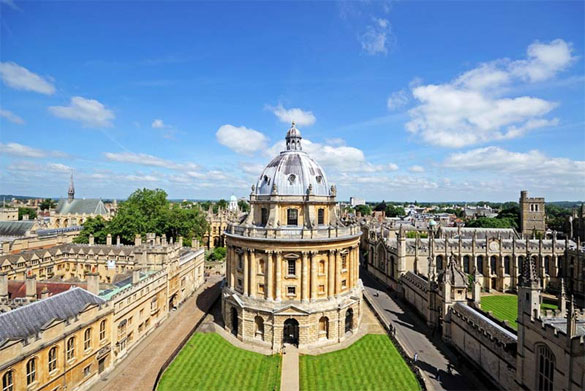 The Women’s Rights Network, amid growing concerns about the current situation in Afghanistan, announced that it will hold a meeting to highlight the issues faced by the women in Afghanistan.
According to Daily Oxford, the meeting will take place on Saturday, December 7 at the University of Oxford, initiated by the Women’s Rights Network (WRN).
The report states that the event will be an overnight vigil, focusing on the “desperate situation of Afghanistan’s women and girls.”
The Women’s Rights Network Afghanistan had also announced last week on the social media platform X about preparations for this event.
The meeting takes place at a time when women and girls in Afghanistan have been deprived of their rights to education, employment, and work. Most recently, the education of girls in fields like midwifery and nursing has been suspended until further notice.
This event serves as a critical platform for raising awareness about the continuing violation of women’s rights in Afghanistan. With the international community’s growing attention to the plight of Afghan women, such initiatives aim to generate support for advocating their rights and push for policy changes.
Source: Www.Khaama.Com
Please click the following URL to read the full text of the original story
https://www.khaama.com/oxford-university-to-host-event-on-women-of-afghanistan/
-----
Breaking the Boys’ Club: How UK Festivals Are Failing Women
08-12-2024
Music festivals are the lifeblood of British summer time. Turning up to a random field with
tent and wellington boots in tow – praying you won’t have to use them and can instead don
your sparkly tops and bucket hats – is a quintessential experience. However, for an industry
we often look to as a beacon of progression, it is shocking to find such a profound level of
inequality at its flagship events. With festivals beginning to reveal their line-ups for 2025, I
wanted to explore just how prevalent this inequality is.
It is clear we are not short of female artists. Over the past year, the charts have been
dominated by women, from newcomers like Sabrina Carpenter, Chappell Roan, and Raye to
seasoned professionals Beyoncé, Lady Gaga, and Charlie XCX. Yet, despite the
prominence of these successful performers, we still fail to achieve equality in festival
bookings. UK festivals feature an average of just 25% female acts, the latest stat for the
2024 festival season. Compared to as little as 5% in 2015 this may seem like progress, but
over the course of 10 years this improvement barely scratches the surface, the measures
being put into place to promote equality at festivals simply are not going far enough.
Male artists in the industry are currently three times more likely to be booked for UK festivals
than their female counterparts. Why? This is a systemic problem spanning the entire music
industry, one of the most egregious offenders of sexism. This inequality begins in education,
where women are more often encouraged to pursue careers in teaching music rather than
trying to break into the industry itself. Women are far less likely to be picked up by talent
scouts, receive investment to produce music or even gain airplay on the radio. This disparity
was highlighted in a 2019 survey, which revealed that only 20% of the artists signed to UK
record labels were women.
It is particularly evident that the biggest players in the festival world are the ones fielding the
fewest female artists. This is even more surprising considering these festivals boast the
highest ticket sales long before their line-ups are announced. These should be the events
taking risks with representation, booking new and unseasoned acts, and giving established
female artists the opportunity to headline. In 2020, Matty Healy of ‘The 1975’ spoke out
about this issue, vowing that his band would not play festivals that failed to achieve equal
representation of male and female artists. In his announcement, he urged other prominent
artists to do the same, adding clauses to their contracts to push festival organisers to give
greater opportunity to female artists. It is clear in this that change will not happen unless
people across the music industry stand united.
When we compare the 2024 line-ups of UK festivals to those of big European festivals like Primavera – which is now achieving an equal gender balance without compromising quality – the failure becomes
glaringly obvious. UK festivals like Glastonbury claim to have achieved 47% male to 53% female artists in their last festival season, however, this stat is grotesquely misleading with the reality being more in the region of 47% all-male acts to just 26% all-female acts. This is down to festivals inflating numbers through a ‘soft’ gendered approach to line-up balance. This approach classifies any band with a single female member as a ‘female act,’ even if the band has four male members. This method undermines many female instrumentalists, overlooks the contributions of women as individual artists, and results in a disproportionately higher percentage of male performers.
A harder, more deliberate approach is needed to ensure greater representation of female
artists at festivals. Unfortunately, as seen with Download Festival’s recent 2025 program
announcement, meaningful change is unlikely to happen any time soon unless greater action
is taken.
Source: Www.Hercampus.Com
-----
Iraqi women in politics: struggles for representation and equality
2024-12-08
Shafaq News/ The Iraqi political arena is witnessing notable transformations amid continuous amendments to electoral laws, with efforts to enhance women's participation in decision-making. Despite advancing in some political positions, Iraqi women still face significant challenges that hinder their effective representation in parliament and government.
The Vice Head of the Iraqi Women's Association, Suhaila Al-Asam, explained to Shafaq News, "Women's representation in the Iraqi parliament remains weak compared to men. This disparity reflects the social and cultural constraints that limit women's participation in politics."
She also pointed out the limited political influence of women, as their participation is often restricted to "women's quota seats," which reduces their actual impact on policy-making.
Political researcher, Nawal Al-Mousawi, said to Shafaq News, "We haven't seen a woman in a leadership position in the State Administration Coalition, and to date, we haven't seen any Arab political entity or party led by a woman. However, in terms of executive roles, the current government features only three women leading ministerial portfolios.”
She also noted that "the electoral law has set a women's quota with a 25% representation, and this is a fixed matter that should not be changed, as altering it could diminish women's opportunities or reduce their presence. On the other hand, new additional laws according to the recent amendments affect the participation of independent women and even men, resulting in a parliament dominated by classical parties that control its decisions based on their preferences, colors, and political beliefs."
Observers believe that the multi-district system is a key factor in enhancing the representation of women and independents in parliament, as it has enabled many independent lawmakers to reach the current parliament. In contrast, the Saint-Lague system is considered more favorable for large parties with broad support bases and substantial financial resources, reducing the opportunities for independents and women outside these entities.
The Leader of The Al-Nahj Al-Watani bloc, MP Ibtisam Al-Hilali, emphasized the importance of the multi-district system for women, stating to Shafaq News, "This system benefits women, and thanks to it, 97 MPs have entered the Iraqi parliament by securing the highest votes."
On the other hand, electoral expert Ahmed Al-Karkhi believed that "women are guaranteed at least 25% representation in parliament, regardless of the electoral system in place, whether it is the Saint-Lague system or the multi-district system. The women’s quota ensures their political representation rights."
According to the new electoral law, the Saint-Lague system will be implemented, with each province becoming a single electoral district, reducing the number of electoral districts in Iraq to just 18, compared to the multi-district system used in the 2021 elections, which divided the country into 83 districts.
The multi-district system relied on the highest votes to win candidates, offering independents a greater chance to enter parliament.
In contrast, observers argue that the Saint-Lague system complicates this process, as it employs mathematical methods that favor large parties, making it more difficult for independents and non-traditional party candidates to win.
The adviser to the State of Law Coalition (SLC), Abbas Al-Mousawi, revealed that calls to amend the electoral law are not confined to the SLC but also include other political blocs. These blocs view the amendment as a crucial step in reshaping Iraq’s political landscape. He noted that while discussions have focused on drafting a new electoral law, no specific draft has been proposed so far.
Regarding the stages the proposed amendment will go through, Al-Mousawi stated, "The Coordination Framework is the main political platform where the proposed amendment will be discussed. After initial agreement within the Framework, the type of the new law will be determined, and then it will move to the State Administration Coalition for consultation with the political blocs involved in the government to ensure consensus."
Al-Mousawi explained that these amendments aim to address issues highlighted by previous electoral laws, such as discrepancies in provincial representation and the marginalization of certain blocs and parties. He said, “The State of Law Coalition seeks to propose an amendment that fosters broader participation from other blocs and ensures their acceptance without substantial objections.”
Observers emphasize that any amendment to the 2018 Electoral Law (No. 12) must incorporate mechanisms that guarantee effective female representation in political leadership, contributing to enhanced decision-making roles for women. They argue that while legal amendments are vital, removing the entrenched social and cultural barriers hindering women's advancement is equally important.
These barriers remain a significant hurdle for women in politics. Political researcher Nawal Al-Mousawi noted, “Women face more social problems than political ones, as the prevailing culture in some Iraqi communities may limit women's roles in politics, with women sometimes seen as unqualified to take on major political responsibilities.” She explained that these perceptions often hinder women from gaining support from political parties or voters.
Al-Mousawi further highlighted the personal risks female politicians face, stating, “Female politicians are often subjected to increasing attacks, especially before elections." She added, "Some women in politics also face threats of violence or harassment, whether directly or indirectly, which discourages many women from engaging in political work."
The State of Law Coalition is pursuing its fourth attempt to amend the electoral law, despite only a year having passed since the third amendment, which was applied in recent provincial council elections but not parliamentary elections. The coalition justifies its efforts by emphasizing the need for a comprehensive law that involves the largest number of voters and reflects citizens’ aspirations.
"State of Law supports a comprehensive electoral law that involves the largest number of citizens and represents their desires. The call for an electoral law does not mean we are in favor of a specific law, but rather it will be agreed upon with political blocs to reach a law that does not have flaws," Al-Mousawi explained.
Activist Suhaila Al-Asam called for an electoral law that goes beyond quotas to ensure meaningful representation. She argued, “While quotas may increase the number of women in parliament, they do not guarantee effective participation if these seats are not given to women with political experience or strong capabilities.”
Al-Asam concluded, “The electoral law that serves women requires introducing effective mechanisms to ensure their true representation in political leadership and decision-making while simultaneously addressing the social and cultural barriers that hinder their advancement.”
Source: Shafaq.Com
https://shafaq.com/en/Report/Iraqi-women-in-politics-struggles-for-representation-and-equality
-----
U.K. could ban biological men from women's change rooms
James Snell
08 Dec 2024
This is welcome news. And it comes from the new Labour government too. Having said that, the new UK PM Kier Starmer may be Labour, but as near as I can tell, he's actually a lot less of a leftist than a lot of people think.
His main purpose in taking over the Labour party seems to have been his own personal desire to get the very toxic Corbyn and his demented cronies out of English politics. And Starmer, a very accomplished former crown prosecutor, succeeded in doing just that.
And then he ended up inheriting the PM title mostly because the Conservatives self-collapsed under the weight of their own idiotic nonsense. So Starmer inherited the PM post more than anything else. Which is a good thing because if Starmer wasn't there, Corbyn would be, and then the UK would be in really deep doo-doo.
So there is a (more or less) sane person at the helm of the UK now. Having said that, the sane person is still presiding over a bunch of committed leftists. It's kind of like if Harper somehow end running the NDP.
So Starmer's task of fixing the broken UK is not going to be easy. But even so, better him doing it than the committed communist and known antisemiteCorbyn.
Source: Www.Westernstandard.News
-----
UK-Sri Lanka Trade Mission highlights export potential of women-led businesses in Jaffna
December 8, 2024
The United Kingdom (UK)-Sri Lanka Trade Mission, co-organised by the International Trade Centre (ITC) and the Sri Lanka Export Development Board (EDB), concluded its Jaffna program on December 4.
The program, a part of the UK Government-funded SheTrades Commonwealth+ Program, provided a platform for women entrepreneurs in Sri Lanka to connect with UK buyers and explore new trade opportunities. It aimed to empower women-led businesses to diversify their export markets, enhance their competitiveness, and drive sustainable economic growth.
The event was opened by Head of Programs, Trade for Development at the Foreign, Commonwealth and Development Office (FCDO) of the UK, Simon Calvert and Director General of the EDB, Ms. ChampikaDharmasena.
Both leaders outlined the importance of empowering women entrepreneurs and enabling their access to international markets to drive inclusive economic growth in Sri Lanka.
One of the key features of the mission was the Market Information Session, led by Calvert. During the session, participants gained insights into the UK market, including sectoral opportunities, export volumes, and how to leverage the Developing Countries Trading Scheme (DCTS). This session provided women-led businesses with the tools and knowledge to expand their reach in the UK market.
The mission also included factory visits to Jaffna-based women-led businesses, where UK buyers were able to explore the capabilities and innovations of local entrepreneurs in sectors such as Agri-food and Apparel. These visits underscored the potential of women entrepreneurs in Jaffna to provide quality, sustainable products to international markets.
Business-to-Business (B2B) meetings were also held, giving women-led businesses the chance to engage directly with UK buyers. These meetings created a platform for setting up valuable business connections, discussing potential partnerships, and showcasing the products of Sri Lankan women entrepreneurs.
This program marks a milestone in strengthening UK-Sri Lanka trade relations, with a strong focus on the growth and development of women-led businesses in Sri Lanka. The partnerships and connections made during the event are expected to create lasting trade opportunities and contribute to Sri Lanka’s broader export development goals.
Source: Www.Sundayobserver.Lk
-----
Former Shariah lawyer, 74, becomes oldest woman to earn PhD in History from UMS
By Malay Mail
08 Dec 2024
KOTA KINABALU, Dec 8 — A 74-year-old former Syariah Court lawyer has become the oldest woman to earn a Doctor of Philosophy (PhD) in History at Universiti Malaysia Sabah (UMS).
Saidatul hopes her accomplishment will inspire others to continue their education, even if they have had to put their studies on hold due to life’s commitments.
“One should not focus too much on age, as the will and spirit to achieve is more important,” she said, acknowledging that pursuing tertiary education later in life is challenging.
Saidatul, who hails from Kota Belud, shared that she chose to study History at UMS to remain close to home, despite being offered a place at Universiti Islam Antarabangsa.
Her academic journey began at Universiti Malaya, where she completed her bachelor’s degree at 44 and her master’s degree at 55 — achievements she pursued after becoming a grandmother.
Earlier, Saidatul was among 359 graduates who received their scrolls from Sabah Yang di-PertuaNegeriTunJuharMahiruddin during the convocation ceremony.
Source: Malay Mail
-----
URL: https://newageislam.com/islam-women-feminism/cambridge-university-women-without-apologise/d/133964