
Cafes Without Hijab, Courts Still Waiting: Iran’s Mixed Signals On Women’s Rights
New Age Islam News Bureau
27 April 2026
· Cafes without hijab, courts still waiting: Iran’s mixed signals on women’s rights
· Activists launch network in Canada to push recognition of ‘gender apartheid’ in Afghanistan
· Researcher: YPJ is not just a military formation, but part of a women's struggle experience
· Arson arrest after fire at packed-out LGBT+ club
· Appeal filed against BNP nominee for reserved women’s seat
· Pregnant Baha’i Woman Among Three Sent to Prison in Iran
· Modest swimwear shapes first women-only day at Riyadh’s Aquarabia water park
· Rojava activists urge inclusion of women’s unit in Syrian army
Compiled by New Age Islam News Bureau
URL: https://newageislam.com/islam-women-feminism/iran-mixed-signals-women-rights-hijab-courts/d/139816
------
Cafes without hijab, courts still waiting: Iran’s mixed signals on women’s rights
April 27, 2026
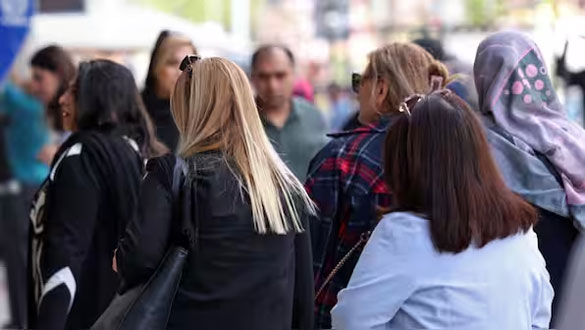
Iranian women walk along a busy street in Tehran. (AFP)
----------------
In recent months, images of women in Tehran appearing in public without headscarves (Hijab) have drawn attention, with scenes of them sitting in cafes or walking through the city becoming more visible. The shift comes amid evolving enforcement of dress rules, but many women say it does not reflect any meaningful change in their rights or freedoms.
“It is not at all a sign of any change in the government in my opinion. Because no achievement has been made regarding women’s rights,” said Elnaz, a 32-year-old painter in Tehran.
“Under the surface, in reality, no real change has taken place in people’s freedom, especially when it comes to women’s basic rights,” she added.
Enforcement shifts but rules remain
Wearing a headscarf in public has been mandatory for women in Iran since shortly after the 1979 Islamic Revolution, long regarded as a core element of the system. While enforcement appears to have eased in parts of Tehran and other cities, the requirement itself remains in place.
This visible shift began following protests in 2022-2023 sparked by the death in custody of Mahsa Amini, who had been detained for allegedly violating the dress code. The trend has continued through subsequent unrest and conflicts, including protests over living costs and ongoing tensions involving Iran, the US and Israel.
Although morality police patrols are less visible in some areas, the situation varies, and women with and without headscarves can often be seen together, particularly in more liberal parts of the capital.
Mixed experiences across the country
For some, the changes mark a moment they once thought impossible. “I’m happy for all of them, because until just three years ago this was only a dream,” said Zahra, a 57-year-old housewife from Isfahan.
However, restrictions still apply in many settings. Women may be summoned by authorities for not wearing a hijab, while cafes can be shut down for failing to enforce the rule. In many cases, headscarves are still required to access banks, educational institutions and official buildings.
Cafe owner Negin described the pressure on businesses: “Beautiful photos of cafes and girls are being shared everywhere, but as cafe owners, we’ve been paying a lot for that.”
“We’ve been treated very harshly over these years, continuing until this day. We’ve been shut down multiple times, fined and had to pay bribes… What makes me even angrier is when they call this ‘freedom’ and they say women are being freer,” she added.
Resistance grows but risks remain
According to Amnesty International, resistance to compulsory veiling has become more widespread, prompting authorities to scale back some forms of enforcement. However, restrictions remain in workplaces, universities and public institutions.
“More women are putting their fear aside each day and trying out what it’s like to go out without hijab, and it’s gradually becoming more widespread,” said Shahrzad, a 39-year-old housewife in Tehran.
“But I don’t see any change in the government system. It’s the same as before, aside from those videos of girls going in front of state news cameras without hijab and saying ‘my leader, my leader, I will sacrifice myself for him’.”
Regional differences highlight uneven change
Experiences differ across Iran. In Mashhad, a major eastern city, observance remains stricter. “Before the 12-day war (against Israel in June), in Mashhad they wouldn’t let us in anywhere without hijab,” said Mahsa, a 32-year-old student.
“Now they do let people in, but unfortunately, we haven’t had the same level of change that people in Tehran have seen over the past three years.”
In Isfahan, enforcement appears to have tightened again in some areas. Farnaz, 41, said she had been summoned to court over hijab observance.
“I don’t see any significant change,” she said.
Maryam, 35, also from Isfahan, noted that women without headscarves may still face restrictions in banks and workplaces. “If you are involved in social or economic activity, you are expected to observe hijab.”
Zahra added that progress has come at a cost, “We paid a very high price to get here”. She warned that the current situation may be temporary, saying authorities could reimpose stricter measures once external pressures ease.
Source: firstpost.com
https://www.firstpost.com/world/cafes-without-hijab-courts-still-waiting-irans-mixed-signals-on-womens-rights-14004740.html
------
Activists launch network in Canada to push recognition of ‘gender apartheid’ in Afghanistan
By Siyar Sirat
APRIL 26, 2026
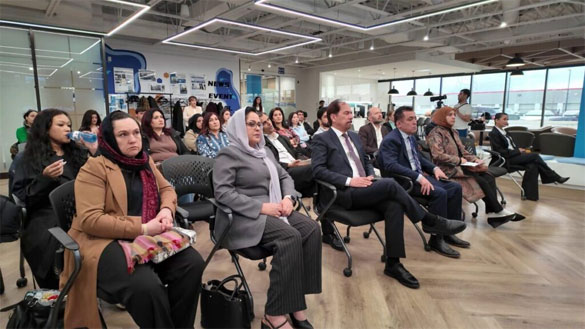
Activists call for global legal action as UN expert urges focus on women’s experiences.
-------------
A group of Afghan women’s rights advocates and human rights activists have launched a new international network in Canada aimed at securing legal recognition of “gender apartheid” in Afghanistan.
The initiative, called the Network on Elimination of Gender Apartheid, or NEGA, was introduced at an event in Toronto on April 24, bringing together activists, policymakers and international rights experts.
Organizers said the network seeks to press governments and international institutions to formally define and criminalize systematic gender-based discrimination under international law, with a particular focus on policies imposed by the Taliban since their return to power in 2021.
“Recognizing gender apartheid is a global and urgent issue, and the world must acknowledge it in Afghanistan,” said Metra Mehran, a human rights activist.
The gathering, held in a hybrid format with both in-person and online participation, included panel discussions and remarks from prominent figures, including Richard Bennett and Heather Barr.
Participants criticized the Taliban’s policies toward women as systematic and institutionalized discrimination.
“Afghanistan has been turned into a prison for women,” said Najla Raheel, a human rights activist. “In such conditions, the world must recognize gender apartheid.”
Bennett said accountability efforts must center on the lived experiences of Afghan women and girls.
“It is essential to listen to the voices of victims and the daily experiences of women under Taliban rule,” he said. “Accountability in Afghanistan is not possible without supporting women and human rights defenders.”
He added that establishing a legal definition of gender apartheid within international frameworks could help governments better understand the nature of Taliban policies and respond more effectively.
Since returning to power, the Taliban have imposed sweeping restrictions on women and girls, including barring them from secondary and higher education, limiting employment opportunities and restricting movement. Rights groups and international organizations have widely condemned these measures as violations of fundamental rights.
Calls to formally recognize “gender apartheid” have gained traction among activists and legal scholars in recent years, though the term has not been formally codified in international law.
Analysts say the launch of NEGA reflects growing efforts among Afghan diaspora communities and international advocates to push for stronger legal and political responses to conditions in Afghanistan.
Source: amu.tv
https://amu.tv/236604/
-----
Researcher: YPJ is not just a military formation, but part of a women's struggle experience
APRIL 26, 2026
Sudanese researcher, development expert, alternative policy advocate, women's rights activist, and political figure, Nimat Koko, emphasized the importance of the Women's Protection Units (YPJ), considering them a fundamental component in protecting women's rights and enhancing their role in political and social life in Syria.
This came during an exclusive interview with ANHA agency, in which Koko discussed the reality of women in the region and their experiences in North and East Syria within various institutions and organizations. These organizations were formed in the context of confronting violence, oppression, and attempts at exclusion, which contributed to the development of a unique organizational and military women's experience in the region.
Naamat Koko explained that the Women's Protection Units (YPJ) were not merely a military formation, but rather emerged within a broader context linked to the experience of the women's movement in the region, which sought to build models of self-defense and organizational structures for women in the face of security and social challenges.
She added that these units have become part of the "struggle legacy of the democratic women's movement" in North and East Syria, as a result of the role they have played over the past years in protecting women and society from the dangers that accompanied the war.
In her remarks, Naamat Koko stated that any targeting of these units or reduction of their role constitutes a direct attack on women's experience in organizing and participating, and on the symbolic struggle they represent in the region. She pointed out that the women who participated in these formations made significant sacrifices to protect their communities and defend their rights.
The researcher and politician also touched upon similar historical experiences in some countries, including Eritrea, where women participated in military action alongside men during periods of liberation. However, she noted that this participation was not met with sufficient recognition after those phases ended, whether through their inclusion in state institutions or full acknowledgment of their roles. She considered these experiences to reflect a recurring pattern linked to the entrenchment of patriarchal structures in a number of political systems.
In discussing the Syrian reality, Naamat Koko argued that the future of women's participation is affected by the intertwining of what she termed "patriarchal and religious institutions" within political and military structures. This, she asserted, could impact the level of women's representation and their ability to reach decision-making positions.
She added that any political transition that fails to guarantee women's effective participation in policymaking and decision-making could undermine the gains achieved in recent years, particularly concerning the experience of women's organizations and their role in public life.
She also pointed out that integrating various armed groups into traditional military institutions without considering the unique experience of women could marginalize the role of the Women's Protection Units (YPJ). She argued that the absence of women from decision-making positions within these structures would limit the possibility of bringing about genuine change in military, social, and political culture.
In closing, Naamat Koko expressed her solidarity with the women fighters in the Autonomous Administration and the YPJ, emphasizing the importance of continuing to support and preserve this experience, as it is a fundamental pillar in protecting women's gains in Syria and the region.
She also called for keeping the issue of the Women's Protection Units (YPJ) at the local and international levels by engaging with international organizations, particularly those concerned with women, peace, and security, and by working to amplify women's voices in relevant UN forums.
She concluded by emphasizing the importance of intensifying media efforts, both domestically and internationally, to highlight the role of women in Syria and to submit memoranda to international bodies involved in the Syrian crisis, to ensure the continuation of discussions about the future participation and role of women in any political process in Syria.
Source: hawarnews.com
https://hawarnews.com/en/researcher-ypj-is-not-just-a-military-formation-but-part-of-a-womens-struggle-experience
------
Arson arrest after fire at packed-out LGBT+ club
Neve Gordon-Farleigh
26 APRIL 2026
A man has been arrested on suspicion of arson with intent to endanger life after a fire at a packed-out LGBT+ nightclub.
Revellers were evacuated in the early hours of Sunday from Pink Punters at Fenny Stratford in Milton Keynes, as flames quickly took hold.
Thames Valley Police said a 51-year-old man from Milton Keynes remained in custody and it urged people not to speculate as to the motive. There were no reports of injuries.
Eyewitness Molly Firman said "out of nowhere" staff and security started screaming "you need to get out now".
"It just didn't seem real in the moment," she said.
"Am I dreaming this? Is it actually happening? Before you knew it, it was just intense."
Firman, from Clophill, Bedfordshire, who said she had visited Pink Punters countless times, was with a group of friends when she saw the flames.
"It was just a normal night - drinks, music, no problems - and then just after two in the morning, me and my girls were outside the cocktail bar... and the fire alarm was going off.
"Out of nowhere all staff and security were screaming, 'you need to get out now'... then [we were] all out on to the road and from the road looking over it felt like in minutes - it wasn't a small fire - but that fire expanded greatly."
Frank McMahon, whose family has owned Pink Punters for 36 years, said he was "heartbroken".
In a statement, he said: "Whilst I am devastated to say that the building itself has been completely destroyed, I am deeply relieved, grateful and proud to confirm that no staff or customers were harmed, and everybody went home safely."
He thanked the fire crews, Pink Punters staff and customers for acting quickly.
"Pink Punters has always been about people, not just bricks and mortar. The building may be gone, but the family, the memories, the spirit and the love remain.
"And let me say this clearly: Pink Punters will be back," he added.
Firman described the blaze as a "surreal experience", with thousands of people watching from the roadside.
"It's truly devastating to say the least," said Firman.
"When I think of going on a night out, that's pretty much the only place I will think of going. If Pink's was not to be here anymore, I think it would affect a lot of people."
Buckinghamshire Fire and Rescue Service said it was called at 02:09 BST to Watling Street, and at its height, 12 appliances were being used to tackle the fire.
A spokesperson said crews were expected to remain at the scene for a "considerable amount of time", including to dampen down hotspots.
Road closures were expected to remain in place for some time, police said.
Ch Supt Emma Baillie, commander for Milton Keynes, said people were evacuated "quickly and effectively".
"At this time it would be too early to comment on any particular motivation for this incident and we would respectfully ask for people not to speculate," she said.
Aaron Harding has worked as a cleaner at the venue for the past five months. He believes about 100 people are employed there
"I'm lost for words," said Harding, who said neither he, or his partner who works behind the bar, were at the venue on Saturday night.
"I can't even imagine what the owners are feeling - what they're going through."
He added: "[The venue] welcomes everyone in no matter your gender, race, ethnicity, all of it.
"They are so welcoming and it is devastating."
Colin Ruggles, 61, lives opposite Pink Punters, and said he woke at 03:00 to the smell of smoke.
"I opened up the lounge curtains just to be blasted with blue lights," he explained.
"When I put my head out the window, what a devastating scene I came across.
"It's horrendous, so many people go to Pinks, so many people work at Pinks.
"The LGBT community are going to be devastated, where else can they go within Milton Keynes to feel safe?"
The Labour MP for Buckingham and Bletchley, Callum Anderson, said he was "deeply concerned" by the fire and said "whoever has been involved in this disgusting incident" should "feel the full force of the law".
"I will be asking my team to liaise closely with the police and with the venue's owners to ensure that all appropriate steps are being taken and that the community is properly supported."
Do you have a story suggestion for Beds, Herts or Bucks? Contact us below.
Source: bbc.com
https://www.bbc.com/news/articles/c14548m75vlo
------
Appeal filed against BNP nominee for reserved women’s seat
26 APRIL 2026
An appeal has been lodged with the Election Commission (EC) challenging the nomination of BNP candidate Madhabi Marma for a reserved women’s seat in the Parliament.
The appeal was filed by Chandra Chakma, central joint secretary of Jatiyatabadi Chhatra Dal, who alleged that Madhabi Marma is currently a member of the Bandarban Hill District Council.
According to Chandra, holding that post disqualifies Madhabi from contesting the seat, making her nomination unlawful.
Appeals against nomination papers for the reserved women’s seats are being accepted at the EC office in Agargaon, Dhaka, from 9:00am to 4:00pm today.
After submitting her appeal, Chandra Chakma said, “Madhabi Marma, as a member of the Bandarban Hill District Council, holds an office of profit. She submitted her nomination paper on April 21 without resigning or following proper legal procedures.”
She further added, “Legally, this makes her nomination invalid. I have requested the Chief Election Commissioner to take necessary steps to cancel it.”
Chandra also mentioned that she herself had sought BNP’s nomination for the reserved women’s seat as she is the central joint secretary of Jatiyatabadi Chhatra Dal.
Rejecting the allegations, Madhabi Marma claimed she had resigned from her post on April 20.
“I have already resigned from that position and submitted copies of my resignation to the relevant authorities,” Madhabi told The Daily Star this afternoon.
When asked whether she mentioned her resignation in the affidavit submitted to the EC, Madhabi said the nomination form did not contain any section for such information.
Meanwhile, the Bandarban Hill District Council authorities confirmed that Madhabi submitted her resignation letter on April 20, but they formally accepted it today.
Council’s executive officer Md Abul Monsur told The Daily Star around 3:30pm that Madhabi had resigned from her post.
Asked when the resignation took effect, he said, “I don’t know that. But I received the copy today.”
The Election Commission announced the schedule for the reserved women’s seat election on April 8. The deadline for submitting nomination papers was April 21.
Earlier, on April 20, BNP nominated 36 candidates for the reserved women’s seats. Madhabi Marma was among those on BNP's list.
Source: thedailystar.net
https://www.thedailystar.net/news/bangladesh/news/appeal-filed-against-bnp-nominee-reserved-womens-seat-4161056
-----
Pregnant Baha’i Woman Among Three Sent to Prison in Iran
APRIL 26, 2026
Three Baha’i women from Rafsanjan have been taken into custody to serve their prison sentences and transferred to Kerman Prison. One of them, Bushra Mostafavi, is currently pregnant.
According to HRANA, the news arm of Human Rights Activists in Iran, Didar Ahmadi, Bushra Mostafavi, and Elna Naeimi were arrested on Saturday, April 25, and moved to Kerman County Prison to begin serving their sentences. The three had earlier been sentenced to four months in prison each by Branch 7 of the Kerman Provincial Court of Appeals. Their trial took place on May 14, 2025, on charges of “propaganda in favor of groups or organizations opposing the Islamic Republic system.”
At the same time, the human rights group Hengaw reported that the appellate judge displayed a discriminatory stance during the proceedings, telling them: “You are Baha’i, and in an Islamic country, you must pay the price for being Baha’i.” Earlier, Branch 3 of the Rafsanjan Criminal Court had acquitted the three women due to a lack of sufficient evidence. However, that decision was later challenged by the Rafsanjan prosecutor.
Didar Ahmadi, Bushra Mostafavi, and Elna (Nahid) Naeimi were first arrested on June 7, 2020, after Ministry of Intelligence agents raided their homes. They were released on bail at a later stage.
Source: iranwire.com
https://iranwire.com/en/news/151681-pregnant-bahai-woman-among-three-sent-to-prison-in-iran/
-----
Modest swimwear shapes first women-only day at Riyadh’s Aquarabia water park
HAJAR ALQUSAYER
April 26, 2026
RIYADH: Visitors to Aquarabia at Qiddiya City highlighted the role of modest swimwear in Saudi leisure spaces as the water park opened for its first-ever women-only day on Friday.
The discussion came after the water park on the outskirts of Riyadh officially opened to the public on Thursday and gave visitors a first glimpse at the women-only days, which will take place every Friday.
There was a swimwear presentation by London-based brand Lanuuk, and visitors who spoke to Arab News highlighted the importance of leisure fashion choices that reflect Muslim identity.
Speaking to Arab News, Joury Al-Qunetah, a 22-year-old Saudi, said fashion remains closely tied to social and religious identity despite growing openness in recent years.
“I do think it’s important that what we wear reflects our values as Muslims and as a society in Saudi Arabia. Over the past few years, there’s definitely been more openness in fashion, which is great, but there’s still a strong sense of identity and modesty that many of us hold onto,” she said.
Al-Qunetah added that the dress code at Aquarabia contributed to creating a comfortable environment for visitors.
“I think it’s a good and necessary step. Having a dress code helps create a space where people feel respected and not out of place. It also shows awareness of the cultural context, which is important for events like this,” she said.
The dress code stipulates that on regular and family days, women are required to wear sleeveless, knee-length swimsuits or burkinis, while bikinis and above-the-knee one-piece designs are not permitted.
When Arab News visited on the women-only day, the guidelines appeared to be somewhat relaxed, although more revealing swimwear remains officially prohibited.
Even with the more modest selection of clothing being presented, some attendees told Arab News that they would not wear the swimwear in gender-mixed environments.
Wejdan Al-Ajmy, a 32-year-old Saudi, said: “I don’t think I would wear most of the pieces in this collection in public settings.
“Some designs feel a bit tight for my personal comfort, even if they’re fashionable. I would definitely wear them during the women-only day but not in a mixed or public environment.”
The pieces combined looser two-piece sets, such as tops paired with wide-cut pants, with longer, mid-thigh tunic styles worn over leggings, as well as loose, below-the-knee kaftan-style outer layers.
Lanuuk cofounder Katleya Nielsen said the brand seeks to offer a range of options rather than define modesty for women.
“I guess from a modesty perspective, we are a multi-coverage brand, so we carry different levels of modesty because we feel that modesty is very unique to each individual and how that’s defined across different cultures and backgrounds,” she said.
“So, we don’t want to be the ones to define that for women. We just want to be here to give options. That’s why you will see a range of coverage across our collection.”
Cofounder Ayesha Mahomed added that the brand aims to combine practicality with design as new leisure destinations emerge in the Kingdom.
“Hopefully, now that we’re here at Aquarabia, people will discover that you can buy swimwear that you can feel good in and use for any space you are going to in terms of water activities,” she said.
“I think there are so many leisure activities coming up at the moment, there are these amazing groundbreaking projects … so I think women should feel empowered to be part of these adventure activities and get out there and feel good and empowered.”
Aquarabia, the Middle East’s largest water park, features 22 rides and attractions with eight themed zones spread across 250,000 sq. meters. There are also an additional seven dry rides and attractions.
Rides include the Junoon Drop, billed as the world’s tallest and longest water coaster. There is also Slithereel, the world’s longest slide wheel, and the artificial wave pool Surftopia, in which the size of the waves can be changed for different skill levels.
Standard day tickets to the theme park start at SR275 ($73) for visitors aged 12 and above, and SR170 for juniors between the ages of 4 and 11. Children under 4 can enter for free after booking via aquarabiaqiddiyacity.com or through the park’s official app.
There is also an annual pass for SR1,200, which allows multiple entries to the park — excluding the Surf Lagoon, Herding Grounds and Aquaticar.
Source: arabnews.com
https://www.arabnews.com/node/2641353/saudi-arabia
--------
Rojava activists urge inclusion of women’s unit in Syrian army
April 26, 2026
ERBIL, Kurdistan Region - Women’s organizations and activists in northeast Syria (Rojava) on Sunday called for the ongoing integration process between Damascus and the Kurdish-led administration to include the Women’s Protection Units (YPJ).
“YPJ has proven to be the most efficient force and the supreme symbol of women's organization throughout Syria,” read a statement from a platform of women’s organizations and activists in Rojava, as cited by the Rojava-affiliated Hawar News. The statement added that the force has been instrumental in fighting the Islamic State (ISIS) and saving “thousands of women and children.”
The YPJ, an all-female force affiliated with the People’s Protection Units (YPG), serves as a backbone of the Syrian Democratic Forces (SDF).
After weeks of clashes between Kurdish forces and Damascus-affiliated groups, both sides reached a 14-point agreement on January 29 to accelerate the stalled process of integrating the SDF into state institutions. The deal includes forming a division for the Kurdish-majority Hasaka province, with the SDF to be incorporated into three brigades.
The activists’ demands include recognizing the YPJ as a regular armed force, maintaining its structure, allowing it to operate in Rojava, and releasing female detainees - numbering 35, 13 of whom were released earlier this month, according to YPJ spokesperson Rukan Jamal.
“The presence of YPJ within the army is a guarantee of the army's commitment to its principles regarding its ability to defend peace and security,” the activists said.
They added that the all-women force represents a “moral compass” for the Syrian army, saying its presence would aid in combating terrorism, protecting women, and maintaining stability.
The YPJ spokesperson told Rudaw earlier in April that the force is seeking to join the SDF brigades as an “independent and equal force.” However, a member of Damascus’s team overseeing the SDF integration said at the time that YPJ fighters cannot join the army but can “volunteer” as members of police forces.
Meanwhile, Elham Ahmad, co-chair of Rojava’s foreign relations department, said Monday that discussions with Damascus about “granting official status to the YPJ” are ongoing, noting that no “new outcomes” have been reached.
Since its establishment as a Kurdish self-governance structure in 2012, Rojava has operated along leftist lines, presenting itself as a promoter of grassroots democracy and equal participation of women in politics and defense.
The current Syrian leadership, which came to power following the ouster of Bashar al-Assad in December 2024, has an Islamist background. The presence of an all-female force with an independent military structure poses a challenge to its more centralized vision of the state.
The SDF, which functions as the de facto military force in Rojava and is a key on-the-ground partner of the US-led Global Coalition to Defeat ISIS, had maintained control of these areas since liberating them from Islamic State (ISIS) to prevent the group’s resurgence.
The activists said Sunday that since the Constitutional Declaration, a 53-article document released in January 2025, does not include any clause restricting military service to men, “this allows room to enhance women's participation in military and security institutions.”
As part of the integration process, Damascus has appointed an SDF-affiliated governor for Hasaka province, assigned a deputy defense minister for SDF-held areas, and named a deputy head for Hasaka’s state-affiliated internal security forces.
Source: rudaw.net
https://www.rudaw.net/english/middleeast/syria/260420261
------
URL: https://newageislam.com/islam-women-feminism/iran-mixed-signals-women-rights-hijab-courts/d/139816