
Bangladeshi Women's Rights Activists Slam Jamaat-E-Islami Over Misogyny
New Age Islam News Bureau
09 February2026
· Bangladeshi Women’s rights activists slam Jamaat-e-Islami over misogyny
· UNAMA Warns of Worsening Conditions for Women and Human Rights in Afghanistan
· Muslim women condemn Kwara killings, seek stronger security
· ‘I’m more than a Muslim Rapper’: Saniya MistriQaiyummuddin on breaking stereotypes and the hijab debate
· Women’s minister: Protection measures in place for girl in Saratok abuse case
· Feb. 8, 1935: Landmark day Turkish women gained political rights
· Iranian Nobel laureate handed further prison sentence, lawyer says
Compiled by New Age Islam News Bureau
-----
Bangladeshi Women’s rights activists slam Jamaat-e-Islami over misogyny
09 Feb 2026
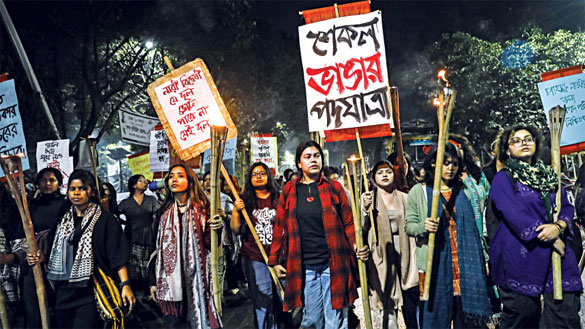
Women from all walks of life, including activists, students, and job holders, took part in the fifth edition of the ‘Shekol Bhangar Jatra’ (March to Break the Shackles) last night, marching from Shahbagh to Kalabagan via Manik Mia Avenue to protest what they described as misogynistic politics and hate speech. The photo was taken in the capital’s Dhanmondi at 1:09am. PHOTO: ORCHID CHAKMA
-----------
Women’s and human rights groups at a protest yesterday condemned what they described as misogynistic politics and hate speech by Jamaat-e-Islami leaders, accusing the party of openly degrading working women and promoting discrimination under the cover of religion.
In a keynote statement read out by Manisha Majumder, a member of Naripokkho, she referred to recent remarks by Jamaat-e-Islami Ameer Shafiqur Rahman, who described working women as equivalent to “prostitutes”.
She also cited an earlier statement in which he called working women “kamla” at a public gathering and told young men not to bring “labourers” home but to bring “queens”.
With the parliamentary election only days away, the organisations criticised what they described as the government’s and the Election Commission’s silence on misogynistic statements and conduct during election campaigning.
The group called for immediate action against any candidate or party engaging in misogynistic speech or behaviour and demanded an end to the use of religion in politics.
The protest was organised by the International Women’s Day Celebration Committee, a platform of 61 women’s and human rights organisations, in front of the National Press Club in Dhaka.
Similar demonstrations under the same banner took place simultaneously in 50 districts outside the capital, organised by Durbar Network and local partner organisations.
The protest aimed to reject misogyny and the misuse of religion in politics and to demand an equal, democratic Bangladesh for women, men and people of the third gender.
Bangladesh has 23.7 million working women employed across agriculture, education, health, nursing, services, industry including the garment sector, office and clerical work, banking, retail and hotel businesses and domestic labour.
The Jamaat leader’s remarks amounted to obscene and demeaning attacks on nearly 25 million working women, Manisha said.
The keynote also referred to an interview given by Shafiqur to Al Jazeera, in which he stated that no woman could ever become the ameer of Jamaat-e-Islami, citing inherent differences between men and women.
Speakers pointed out that Bangladesh has been governed by women prime ministers for more than three decades and that Jamaat-e-Islami had previously been a partner in governments led by women.
Protesters further criticised Jamaat for failing to nominate any women candidates in parliamentary elections despite agreeing to a proposal to allocate at least 5 percent of nominations to women.
While Jamaat’s constitution does not explicitly bar women from becoming party leaders, the party enforces exclusionary practices in reality.
The statement also cited remarks by Jamaat leader MdShamim Ahsan at an election rally in Barguna-2, in which he described the Dhaka University Central Students’ Union as a “drug den and brothel”, and verbal abuse of women and the Women’s Reform Commission by Hefazat-e-Islam leaders at a rally at Dhaka University’s TSC last year.
They also referred to events at Dhaka University involving the promotion of an “ideal woman” narrative and the public defence of individuals accused of harassing women over their clothing.
“We have seen in the manifesto of one political party that all the provisions and benefits for women are framed in terms of their children or childcare, with no mention of their workplace rights or other entitlements -- the focus is entirely on mothers and children, implying that a woman exists only for reproduction,” said KaziGulshan-AraDipa of KarmojibiNari.
Women make up more than half of the country’s population, and if this half remains confined to the home, the economy cannot function.
“Therefore, women must be recognised as full human beings. No discriminatory or hateful remarks against women should ever be tolerated,” she added.
Also yesterday, another group of 11 women’s and human rights activists submitted a memorandum to the Chief Election Commissioner demanding the withdrawal of the remarks, an unconditional public apology to working women and the cancellation of the Jamaat leader’s candidacy under the EC’s code of conduct.
In the memorandum, the signatories expressed deep concern over a statement posted from Shafiqur Rahman’s verified X account, rejecting the party’s claim that the post was the result of hacking.
They noted that no official statement, credible evidence or transparent investigation had been made public.
Media reports regarding the alleged hacking, including contradictory statements from law enforcement and the absence of concrete proof, were cited as further grounds for questioning the claim.
The memorandum noted that for decades, working women in Bangladesh, including those in the garment industry and other sectors, have made vital contributions to their families, society and the national economy through their hard work.
Publicly demeaning these contributions is directly opposed to constitutionally guaranteed equality, human rights, women’s dignity and social justice.
Such statements foster a culture of hatred, discrimination, and violence against women, putting the safety, dignity and work environment of women workers at risk.
Remarks of this irresponsible nature from someone in a political leadership position are entirely unacceptable, it added.
The memorandum was sent by a group of women’s and human rights activists, including MoshrefaMishu, general secretary of the Democratic Revolutionary Party; SaminaLuthfa, a professor at Dhaka University; Shabnam Hafiz, president of the Garment Workers’ Liberation Movement; FerdousAra Rumi, spokesperson of National People’s Alliance; Nafisa Raihana, organiser of the Women’s Political Rights Forum; ZakiaShishir, women’s affairs secretary of the State Reform Movement; TabassumMehenaz Mimi, lawyer and rights activist; Sultana Begum, president of the Green Bangla Garment Workers’ Federation; ShamimAraNeepa, central member of Jonobhashya; MarziaPrabha, member of the Democratic Rights Committee; and the organisation Naripokkho.
Source: thedailystar.net
https://www.thedailystar.net/news/bangladesh/news/womens-rights-activists-slam-jamaat-over-misogyny-4101656
-----
UNAMA Warns of Worsening Conditions for Women and Human Rights in Afghanistan
FEB 08, 2026
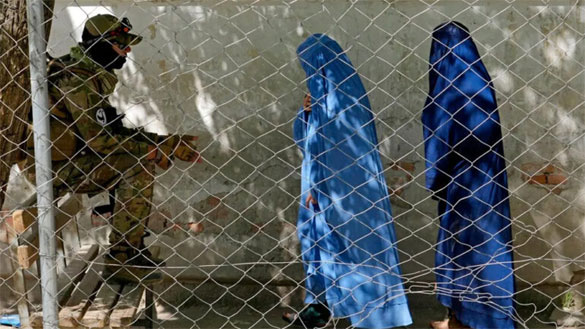
KABUL, AFGHANISTAN – A new report by the United Nations Assistance Mission in Afghanistan (UNAMA) highlights a continued and systematic deterioration of women’s rights and broader human rights conditions across Afghanistan between October and December 2025.
According to UNAMA, Afghan women remain almost entirely excluded from public life. For more than 115 consecutive days, women have been barred from entering United Nations premises nationwide, including female UN staff, contractors, and visitors. Afghan women working with the UN have been forced to operate from home or under restrictive alternative arrangements, as advocacy to lift the ban continues without success.
Access to education for women and girls remains severely restricted. In November, authorities held national medical graduation examinations but prohibited all women from participating. Women and girls have been banned from higher education since December 2022, and from studying at medical institutes since December 2024, further deepening Afghanistan’s gender-based exclusion from professional and academic life.
UNAMA also reports increasing enforcement of restrictive dress codes and limitations on women’s freedom of movement. In Herat, officials from the Department for the Propagation of Virtue and Prevention of Vice carried out campaigns compelling women to wear specific clothing, briefly detaining women deemed non-compliant and denying them access to public transport, markets, healthcare facilities, and government offices. Although the requirement to wear burqas was later eased, authorities continue to prevent women without approved attire from accessing basic services.
Restrictions on women’s mobility were documented across multiple provinces. Women were barred from public spaces, prevented from exercising outdoors, and denied transportation unless accompanied by a male guardian. In some cases, officials reportedly fired guns into the air to disperse women gathered in public areas, reinforcing an atmosphere of fear and intimidation.
Access to healthcare has also been significantly affected. UNAMA documented repeated visits by morality officials to hospitals and clinics in Kandahar and Uruzgan provinces, instructing staff not to admit women patients or allow female healthcare workers to work unless accompanied by a male guardian. These measures have further limited women’s access to essential medical services.
The report notes continued enforcement of the nationwide ban on beauty salons operated by women. Authorities carried out arrests and issued threats against women running salons and, in some cases, their male relatives. The ban, in effect since July 2023, has removed one of the last remaining sources of income for many Afghan women.
Gender-based violence remains a serious concern. While authorities claim to have resolved hundreds of women’s rights-related cases, UNAMA documented numerous incidents of forced marriage, including cases involving girls under 18. In one reported incident, a girl was detained by police on the order of a court after refusing a forced marriage and remains in detention, in violation of existing decrees prohibiting such practices.
UNAMA further reported the continued use of public corporal punishment affecting women and girls. Between October and December, at least 30 women and one girl were subjected to public floggings, often alongside prison sentences, for charges including so-called moral crimes and alleged unlawful relationships.
Overall, UNAMA warns that the cumulative impact of these measures reflects an entrenched pattern of gender-based discrimination and serious human rights violations. The mission emphasizes that Afghan women and girls are being systematically denied education, work, healthcare, freedom of movement, and protection from violence, raising grave concerns about Afghanistan’s compliance with international human rights obligations.
Source: kabulnow.com
https://kabulnow.com/2026/02/unama-warns-of-worsening-conditions-for-women-and-human-rights-in-afghanistan/
------
Muslim women condemn Kwara killings, seek stronger security
February 9, 2026
The Federation of Muslim Women’s Associations in Nigeria has condemned the recent attack on Woro and other villages in Gwanabe Ward I of Kaiama Local Government Area of Kwara State, describing the killings as a tragic assault on peaceful communities.
In a statement made available to PUNCH Online on Monday, the Amirah of FOMWAN, Kwara State chapter, AlhajaBiliqisOladimeji, said the association was deeply saddened by the incident, which led to the loss of lives, destruction of property and displacement of residents.
“The association is deeply saddened and heartbroken by this heinous act of terrorism, which has led to the needless loss of innocent lives, destruction of property and displacement of law-abiding citizens,” the statement read.
FOMWAN warned that attacks targeting Muslim communities pose a serious threat to peaceful coexistence and religious harmony in the state, urging security agencies to intensify intelligence gathering and strengthen security networks to protect lives and property.
The group called on relevant authorities to step up proactive security measures across affected communities and other vulnerable areas of the country.
While acknowledging the efforts of Governor AbdulRahmanAbdulRazaq in supporting security agencies to combat terrorism and criminality, the association urged sustained collaboration among stakeholders to restore lasting peace.
FOMWAN also extended condolences to the families of the victims, the affected communities and the people of Kaiama, praying for the repose of the souls of those killed and the restoration of peace across Kwara State.
PUNCH Online had reported that Governor AbdulRazaq said at least 75 residents were killed during the attack on two villages for resisting extremists who sought to impose a “strange doctrine” on the area.
The governor, who spoke during a visit to Kaiama Local Government Area alongside security chiefs and cabinet members, described the massacre as a cowardly act by terrorist cells.
The attack reportedly targeted Woro and Nuku villages on Tuesday evening, where gunmen allegedly rounded up residents, bound their hands and opened fire indiscriminately.
Confirming the incident, the Kwara State Police Command spokesperson, AdetounEjire-Adeyemi, said the attack began at about 6 p.m.
Source: punchng.com
https://punchng.com/muslim-women-condemn-kwara-killings-seek-stronger-security/?utm_source=auto-read-also&utm_medium=web
-----
‘I’m more than a Muslim Rapper’: Saniya MistriQaiyummuddin on breaking stereotypes and the hijab debate
ShrutiKaushal
Feb 9, 2026
In 2022, amid fierce protests and national debate over the hijab, Saniya MistriQaiyummuddin walked onto the Hunarbaaz stage and let her talent do the talking. Dressed in a pink salwar kameez and hijab, her powerhouse rap performance didn’t just win over the crowd — it brought Karan Johar, Parineeti Chopra, and Mithun Chakraborty to their feet for a standing ovation.
In a digital age fuelled by unsolicited opinions, the lines of basic respect are blurring. Case in point: Bihar CM Nitish Kumar casually pulling at a woman’s hijab at a public event—and then meeting the ensuing firestorm with a deafening silence instead of an apology.
In this atmosphere, when representation matters, and events or incidents are mercilessly scrutinised on the Internet, Saniya MistriQaiyummuddin has emerged as a compelling voice in Indian hip-hop, challenging stereotypes and creating a niche for herself on her own terms—covering important issues through her raps, with her hijab in place.
In an interview with SCREEN, the 19-year-old rapper and poet reflected on her recent track LadkiJeetGayi highlights the struggles rising artists face in the industry. Dissecting the line from the song, “JinkaLaalchiTareeka, Business BanaDete Artist Ka”, Saniya said, “There are a lot of people ready to take advantage of rising artists. An artist earns Rs 100, and sometimes 4–5 people take Rs 10, Rs 20, Rs 30 each. Their greed turns the artist’s passion into a business.”
Much of the media coverage surrounding Saniya centres on her choice to rap while wearing a hijab. But she emphasises that her art is about more than her identity. “I want people to see me as an artist, an activist, a social worker, whatever resonates with them. I never started my art thinking I would become a Muslim rapper. I started because I want everyone to see what I do and what I stand for.”
On challenging narrow narratives about Muslim women, she said, “People often judge Muslim women based on hearsay or stereotypes. Some women choose to follow their religion, some don’t. But it’s not fair to generalise that Muslim women are oppressed. Everyone has their own story.”
While she has faced stares and occasional scepticism from audiences unfamiliar with hijab-wearing performers, she stressed that fellow hip-hop artists have always accepted her. “The hip-hop community has never judged me differently. Sometimes comments from audiences are negative, sometimes positive, but among artists, I’ve felt supported.”
However, the hijab debate has intersected Saniya’s personal and educational life. She recalled how her college in Chembur banned the hijab, forcing her to leave after her first year. “It was strange. They didn’t want girls to wear hijabs, yet everyone was bowing to other rules of dress,” she shared.
Professionally, however, she feels the controversy has not hindered her art. “An artist can come from any community or background. Art is for everyone. It shouldn’t be labelled by religion, caste, or place.” Despite the social and political undertones of her work, she does not see her music as overtly political.
“I represent myself in my art the way I live. I want people to normalise seeing a hijab on a rapper without making it a big issue.”
Born in Govandi, Mumbai, Saniya reflected on the disciplined life she had growing up. “From home to school, and school to home,” she said, adding, “I never bunked school. Most of the time, I didn’t have friends; I used to write in diaries. When my family found out I was starting to write rap, they supported me a lot. They told me, ‘Yes, it will work. Do whatever you want if you think it’s right for you.’”
Crediting her consistency for her growth as an artist, Saniya said, “To be seen in the hip-hop industry, you have to keep creating without worrying about failing. Whenever I feel I should do something, I do it.”
Source: indianexpress.com
https://indianexpress.com/article/entertainment/music/saniya-mistri-qaiyummuddin-on-breaking-stereotypes-and-the-hijab-debate-10513538/
------
Women’s minister: Protection measures in place for girl in Saratok abuse case
09 Feb 2026
KUCHING, Feb 9 — A Social Welfare Department (JKM) protection officer has been stationed at Saratok Hospital to ensure the safety and welfare of an 11-year-old girl suspected of being abused by her adoptive mother in Saratok recently.
Women, Family and Community Development Minister Datuk Seri Nancy Shukri said a counsellor has also been assigned to provide emotional support to the child.
“This case is still under police investigation and the victim has been admitted to Saratok Hospital for medical treatment and examination. We will also discuss temporary placement arrangements for the child.
“For now, no visits by any parties are allowed,” she told reporters after attending the Dayung Young Heritage Leaders Programme (DayungWarisan) here today.
Saratok police chief DSP Mathew Manggie was reported as saying that police had arrested a 47-year-old woman suspected of abusing her adopted child, resulting in physical injuries, in an incident at Taman Kim Hin, Saratok on Feb 5.
Mathew said the case is being investigated under Section 31(1)(a) of the Child Act 2001 following a police report lodged on Feb 7 by a teacher who was concerned about the victim’s safety.
Meanwhile, Nancy said her ministry would continue to carry out advocacy programmes to raise awareness on abuse cases involving both adults and children.
“These programmes aim to increase awareness, and we will also promote the TalianKasih 15999 hotline to help protect individuals.
“Through this hotline, children can also take the initiative to seek help on their own,” she said. — Bernama
Source: malaymail.com
https://www.malaymail.com/news/malaysia/2026/02/09/womens-minister-protection-measures-in-place-for-girl-in-saratok-abuse-case/208619
------
Feb. 8, 1935: Landmark day Turkish women gained political rights
BY DILARA USLU
FEB 08, 2026
Turkish women's attainment of the right to vote and be elected became an important part of the republic's goals of modernization and democratization. Although women had achieved some progress in education and social life in the final years of the Ottoman Empire, they remained deprived of political rights. The intense wars and political turmoil in the Ottoman Empire's final years were among the key reasons for this.
With the establishment of the new Turkish state, emphasis was placed on implementing comprehensive reforms in line with the principle of gender equality. Among these reforms was ensuring women's participation in political life. In 1930, women were granted the right to vote and be elected in municipal elections, and in 1933, they gained the right to be elected to village mukhtars and elder councils. The final step was taken on Dec. 5, 1934, with the amendment to the Constitution, granting women the right to vote and be elected as members of parliament. Following this constitutional amendment, the general elections held on Feb. 8, 1935, became the first elections in which Turkish women actually exercised their political rights.
AfetInan's contributions
Sociologist and historian AfetInan played an important role in establishing the intellectual and scientific foundation for this process. She was one of the pioneers among the intellectuals of the Republican era who addressed the issue of women's rights within an academic framework. Her work on the position of women in Turkish history is particularly valuable.
Through her academic work, conferences and meetings with Mustafa Kemal Atatürk, the founding father of the republic, Inan advocated the view that women's participation in political life was essential for a democratic society. In this context, she was not only a supporter of the process of granting women the right to vote and be elected, but also an intellectual who contributed to establishing the intellectual foundations of this right.
Inan's influence on women's participation in political life became even more apparent with an incident in 1930. She was teaching a citizenship course at the Music Teachers' School during the 1929-1930 academic year. One day in this class, to help her students understand elections, she held a mock election in the classroom. When a female student won the election, one of the male students objected to the result, saying that according to the law, only men can vote, but Inan let female students vote too. In that period, women had neither the right to vote nor the right to be elected. Deeply saddened by this incident, Inan told Atatürk about it. The pasha consulted with lawyers and asked AfetInan to research the subject. Following the work of expert lawyers in the field, on April 3, 1930, Law No. 1580 granted Turkish women the right to vote and be elected in municipal elections.
Inan completed the research task assigned to her by Atatürk and gave a lecture titled “Universal Suffrage for Women” at the Ankara TürkOcağı on April 3, 1930. She stated at the outset that she would address the issue of women's suffrage and spoke about different forms of government in a democratic regime. In the second part, she touched upon the situation of women and how this situation was experienced in other countries. At the end of her speech, she expressed why women needed to participate fully in political life. The discussions following this conference bore their first fruit on Oct. 26, 1933. Law No. 2349 granted Turkish women the right to vote and be elected to village councils and as village mukhtar.
Historic step for women's rights
However, the issue of women's rights in general elections remained unresolved. In 1934, Atatürk and IsmetInönü, who was prime minister at the time, worked through the night. After this, a proposal for constitutional amendments was submitted to the Grand National Assembly of Türkiye (TBMM). On Dec. 5, 1934, Articles 10 and 11 of the Constitution were amended, granting every Turkish woman the right to vote at the age of 22 and to be elected at the age of 30.
Feb. 8, 1935, is a historic turning point in terms of Turkish women's participation in the country's administration. In the general elections held on this date, Turkish women exercised their right to vote and be elected for the first time, not only going to the polls but also effectively gaining the right to be represented in the TBMM.
With the proclamation of the republic, fundamental transformations were aimed at in all areas of social life, and gender equality was one of the cornerstones of this transformation. The rights granted in municipal elections in 1930 and in village muhktar elections in 1933 were crowned with the granting of the right to vote and be elected as members of Parliament to women with the amendment to the Constitution on Dec. 5, 1934. Following this legal regulation, the elections held on Feb. 8, 1935, marked a moment when the reforms in this area came to life and took concrete form.
In 1935, 18 female members of Parliament entered the TBMM, taking their place in the country's political life. Considering the global conditions of the time, this was an extremely important step that set an example for other countries. Women in many European countries gained these rights later than in Türkiye. Women's first participation in elections became one of the most important agenda items of the election period. Both in the press of the period and in Parliament, the necessity and importance of granting women the right to vote were emphasized, and the issue remained on the agenda through cartoons and opinion pieces.
Feb. 8, 1935, is not just an election date; it symbolizes Turkish women gaining their most important civil right, their presence in the country's administration and their place in decision-making mechanisms. This is also a result of the republic's ideal of modernization and women's long struggle. While Atatürk's leadership was decisive in this achievement, İnan's contributions, which complemented the scientific aspect of the issue, played an important role in shaping the process.
As we mark the 91st anniversary today, it is of great importance to understand the historical process, to appreciate the value of these rights that have been achieved and to take them further. The step taken by Turkish women on Feb. 8, 1935, continues to live on as a valuable legacy on the path to democracy.
Source: dailysabah.com
https://www.dailysabah.com/opinion/op-ed/feb-8-1935-landmark-day-turkish-women-gained-political-rights
-----
Iranian Nobel laureate handed further prison sentence, lawyer says
FEB 09, 2026
Aleks Phillips
Nobel Peace Prize winner NargesMohammadi has been handed further prison sentences of seven-and-a-half years by an Iranian court, her lawyer has said.
The human rights activist was sentenced to six years for "gathering and collusion", and one-and-a-half years for "propaganda activities" by a court in the north-eastern city of Mashhad, Mostafa Nili announced on social media on Sunday.
Mohammadi was arrested in December for making "provocative remarks" at a memorial ceremony, Iranian authorities said at the time. Her family said she was taken to hospital after being beaten during the arrest.
The 53-year-old was made a Nobel laureate in 2023 for activism against the oppression of women in Iran.
Nili, who spoke to Mohammadi for the first time since 14 December, said she had also been handed a two-year ban on leaving the country and two years of exile to the eastern Khusf region.
The Narges Foundation, which supports her, described the hearing on Saturday as a "sham" and explained she had begun a hunger strike on 2 February.
Nili said she had been taken to hospital three days ago "due to her poor physical condition" before being returned to the detention centre she is being held in.
"When she began to explain the events and how she was detained, the phone was disconnected."
Mohammadi's husband, TaghiRahmani, said she offered no defence while in court due to her "steadfast" belief that "this judiciary holds no legitimacy" and that the proceedings were "a mere charade with a pre-determined end".
"Though she was likely forced to attend, she remained silent - she did not utter a single word, nor did she sign a single paper."
He described the sentence to the BBC as "cruel and very unfair", and called on human rights organisations to protest against the ruling.
Meanwhile, Kiana Rahmani, Mohammadi's daughter, said she was "gravely concerned" for her mother.
Mohammadi has already spent more than 10 years of her life in prison. The Narges Foundation says the latest sentence brings the total time she has been ordered to spend in prison to 44 years.
Since 2021, she has been serving a 13-year sentence for "propaganda activity against the state" and "collusion against state security", charges she denies.
The activist was given temporary release from Tehran's notorious Evin prison for three weeks in December 2024 on medical grounds.
She was expected to return to prison soon after, where she was serving multiple sentences.
The most recent arrest came as she attended a memorial for KhosrowAlikordi, a lawyer who had been found dead in his office in early December.
Norway-based group Iran Human Rights has called for an independent inquiry to establish how he died, saying the circumstances surrounding his death were "suspicious".
The Narges Foundation previously said eyewitnesses had seen Mohammadi being attacked by around 15 plainclothes agents of the regime while at the memorial event, and that some were seen pulling her hair and beating her with clubs and batons.
Mashhad prosecutor Hasan Hematifar told reporters that Mohammadi had been among 39 people arrested, and she and Alikordi's brother had encouraged those present "to chant norm-breaking slogans" and "disturb the peace".
Mohammadi was among signatories of a petition that expressed criticism of the Iranian authorities and held Iran's Supreme Leader Ayatollah Ali Khamenei responsible for what it called "crimes against humanity" over the killing of protesters during unrest that began in late December.
The US-based Human Rights Activists News Agency says it has counted more than 50,000 arrests related to the demonstrations and had confirmed at least 6,961 deaths.
The petition called for the prosecution of those acting on Khamenei's orders and an end to the Islamic Republic.
Four prominent Iranian activists - identified as AbdollahMomeni, Mehdi Mahmoudian, Vida Rabbani and GhorbanBehzadian-Nejad - have also been arrested since 31 January for their contribution to the petition.
TaghiRahmani urged the release of "all political prisoners in Iran".
Source: bbc.com
https://www.bbc.com/news/articles/clygw161wzvo